Steven Jacobs Deputy editor at Street Fight
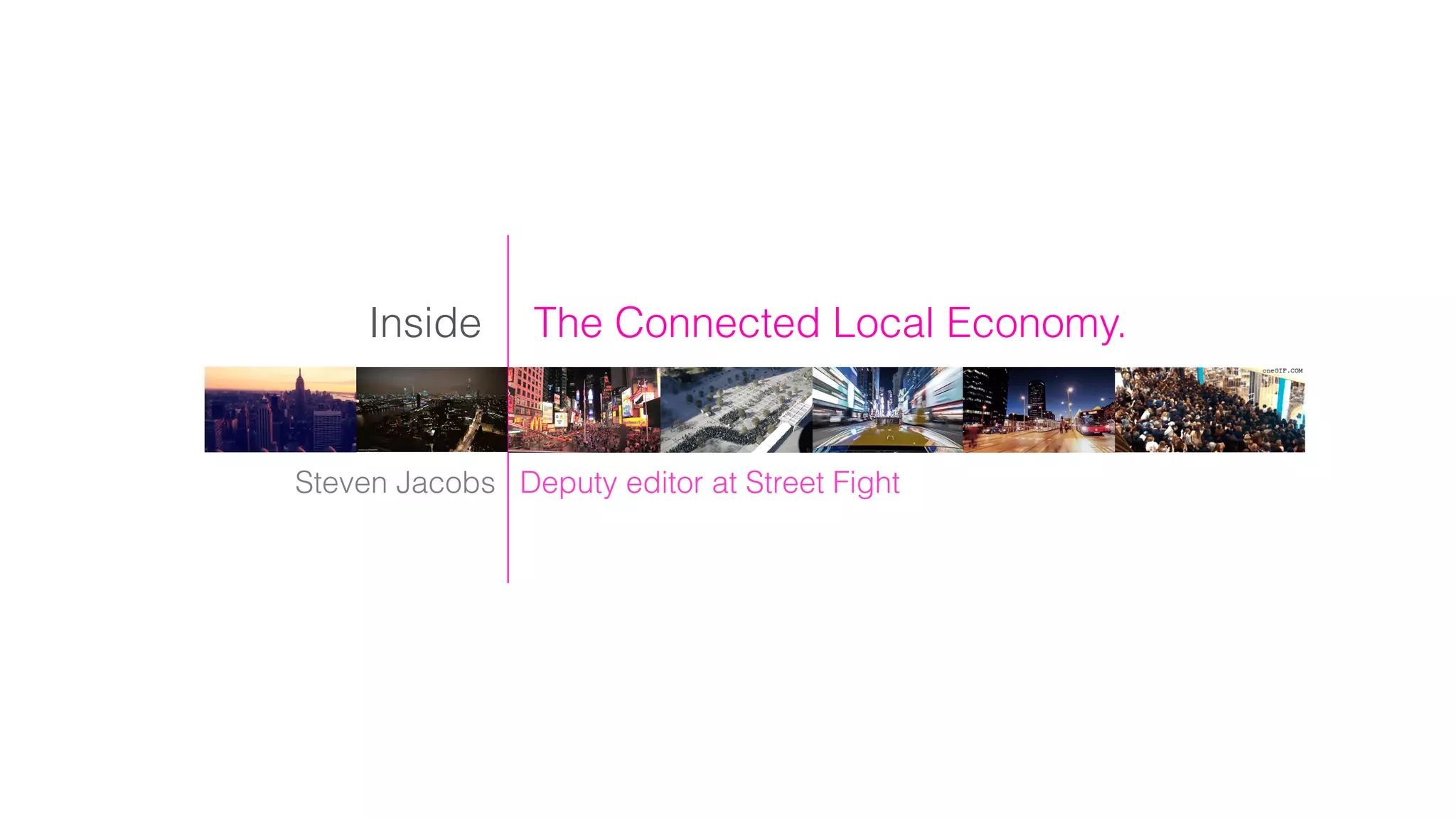
Inside The Connected Local Economy.
What is local?
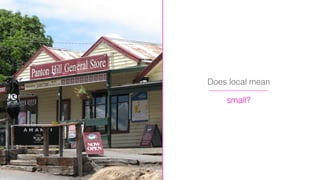
small?
Does local mean
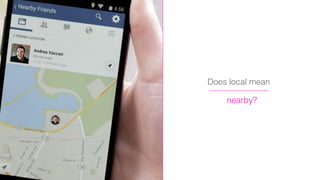
nearby?
Does local mean
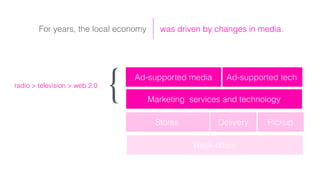
Stores Delivery Pickup
Marketing services and technology
Back-office
{radio > television > web 2.0
For years, the local economy was driven by changes in media.
Ad-supported techAd-supported media
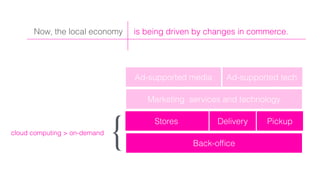
Stores Delivery Pickup
Back-office{cloud computing > on-demand
Now, the local economy is being driven by changes in commerce.
Marketing services and technology
Ad-supported techAd-supported media
The local economy is
the lattice of industries that help us
buy and sell in the real-world.
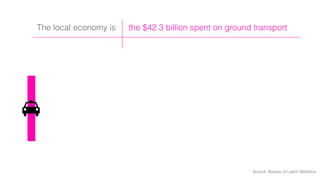
the $42.3 billion spent on ground transportThe local economy is
Source: Bureau of Labor Statistics
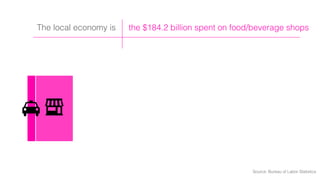
the $184.2 billion spent on food/beverage shopsThe local economy is
Source: Bureau of Labor Statistics
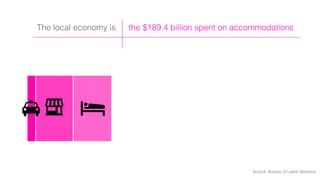
the $189.4 billion spent on accommodationsThe local economy is
Source: Bureau of Labor Statistics
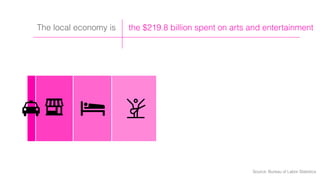
the $219.8 billion spent on arts and entertainmentThe local economy is
Source: Bureau of Labor Statistics
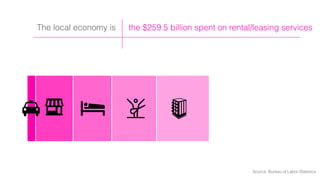
the $259.5 billion spent on rental/leasing servicesThe local economy is
Source: Bureau of Labor Statistics
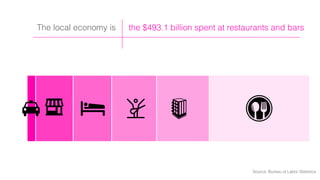
The local economy is the $493.1 billion spent at restaurants and bars
Source: Bureau of Labor Statistics
Over the past decade a virtual economy has emerged.
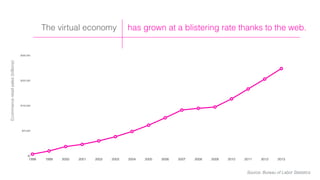
has grown at a blistering rate thanks to the web.The virtual economy
$0
$75,000
$150,000
$225,000
$300,000
1998 1999 2000 2001 2002 2003 2004 2005 2006 2007 2008 2009 2010 2011 2012 2013
Ecommerceretailsales(billions)
Source: Bureau of Labor Statistics
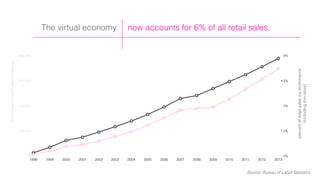
now accounts for 6% of all retail sales.The virtual economy
0%
1.5%
3%
4.5%
6%
$0
$75,000
$150,000
$225,000
$300,000
1998 1999 2000 2001 2002 2003 2004 2005 2006 2007 2008 2009 2010 2011 2012 2013
percentofretailsalesviaecommerce
(includingnon-store)
ecommerceretailsales(billions)
Source: Bureau of Labor Statistics
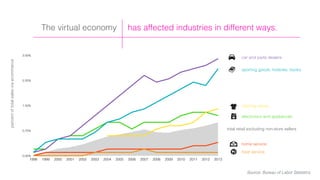
has affected industries in different ways.The virtual economy
0.00%
0.75%
1.50%
2.25%
3.00%
1998 1999 2000 2001 2002 2003 2004 2005 2006 2007 2008 2009 2010 2011 2012 2013
sporting goods, hobbies, books
clothing stores
car and parts dealers
electronics and appliances
home service
food service
total retail excluding non-store sellers
percentoftotalsalesviaecommerce
Source: Bureau of Labor Statistics
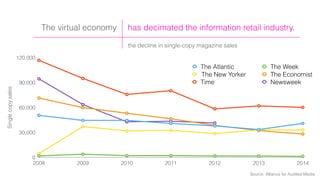
has decimated the information retail industry.The virtual economy
the decline in single-copy magazine sales
Singlecopysales
0
30,000
60,000
90,000
120,000
2008 2009 2010 2011 2012 2013 2014
The Atlantic The Week
The New Yorker The Economist
Time Newsweek
Source: Alliance for Audited Media
The virtual economy
but our relationship with it has
change so much
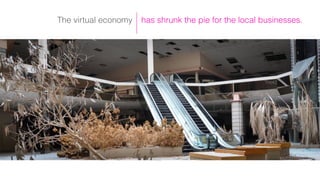
has shrunk the pie for the local businesses.
The brick-and-mortar
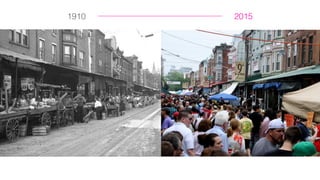
world has change so little
but our relationship with it has
change so much.
1910 2015
“We were promised flying cars,
and instead what we got
was 140 characters.”
— Peter Thiel
Behind every place
There is a system that manages
how people move through it.
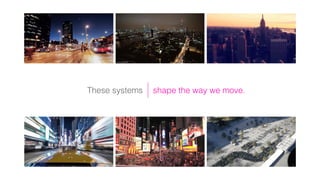
shape the way we move.These systems
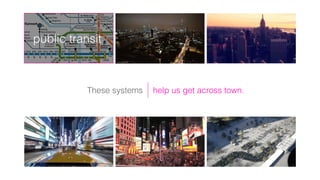
help us get across town.
public transit
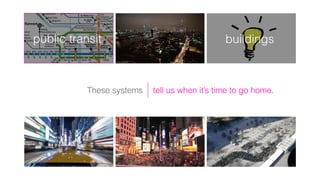
These systems
tell us when it’s time to go home.
buildings
These systems
public transit
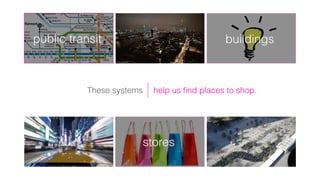
help us find places to shop.
buildings
stores
These systems
public transit
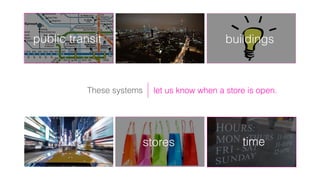
let us know when a store is open.
time
buildings
stores
These systems
public transit
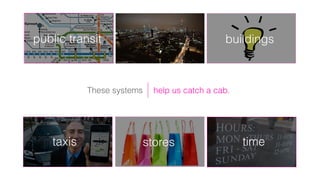
help us catch a cab.
taxis time
buildings
stores
These systems
public transit
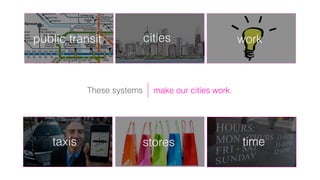
make our cities work.
taxis
workcities
These systems
public transit
timestores
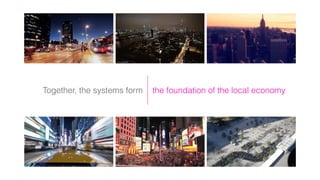
Together, the systems form the foundation of the local economy
As these systems come online the way we move through the world changes.
The connected local economy is reinventing our relationship with the store
workcitiespublic transit
taxis timestores
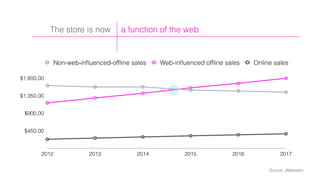
$450.00
$900.00
$1,350.00
$1,800.00
2012 2013 2014 2015 2016 2017
Non-web-influenced-offline sales Web-influenced offline sales Online sales
Source: eMarketer
a function of the webThe store is now
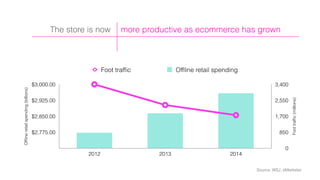
Foottraffic(millions)
0
850
1,700
2,550
3,400
Offlineretailspending(billions)
$2,775.00
$2,850.00
$2,925.00
$3,000.00
2012 2013 2014
Foot traffic Offline retail spending
Source: WSJ, eMarketer
more productive as ecommerce has grownThe store is now
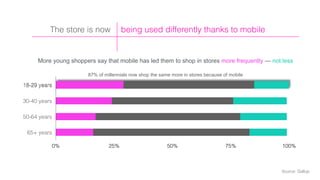
18-29 years
30-40 years
50-64 years
65+ years
0% 25% 50% 75% 100%
18-29 years
More young shoppers say that mobile has led them to shop in stores more frequently — not less
87% of millennials now shop the same more in stores because of mobile
Source: Gallup
being used differently thanks to mobileThe store is now
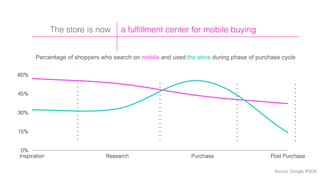
0%
15%
30%
45%
60%
Inspiration Research Purchase Post Purchase
Percentage of shoppers who search on mobile and used the store during phase of purchase cycle
Source: Google IPSOS
a fulfillment center for mobile buyingThe store is now
In order to compete
the local economy needs to
reinvent its information infrastructure
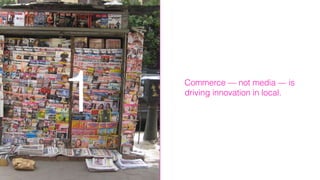
1 Commerce — not media — is
driving innovation in local.
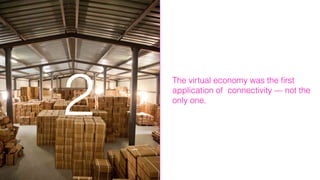
The virtual economy was the first
application of connectivity — not the
only one.
2
The story of “local” today is the
story of the connectivity
reinventing the information
systems that govern the way we
move through the world.33
Steven Jacobs
Deputy Editor at Street Fight
steven@streetfightmag.com

Inside the Connected Local Economy

  • 1.
    Steven Jacobs Deputyeditor at Street Fight Inside The Connected Local Economy.
  • 2.
  • 3.
  • 4.
  • 5.
    Stores Delivery Pickup Marketingservices and technology Back-office {radio > television > web 2.0 For years, the local economy was driven by changes in media. Ad-supported techAd-supported media
  • 6.
    Stores Delivery Pickup Back-office{cloudcomputing > on-demand Now, the local economy is being driven by changes in commerce. Marketing services and technology Ad-supported techAd-supported media
  • 7.
    The local economyis the lattice of industries that help us buy and sell in the real-world.
  • 8.
    the $42.3 billionspent on ground transportThe local economy is Source: Bureau of Labor Statistics
  • 9.
    the $184.2 billionspent on food/beverage shopsThe local economy is Source: Bureau of Labor Statistics
  • 10.
    the $189.4 billionspent on accommodationsThe local economy is Source: Bureau of Labor Statistics
  • 11.
    the $219.8 billionspent on arts and entertainmentThe local economy is Source: Bureau of Labor Statistics
  • 12.
    the $259.5 billionspent on rental/leasing servicesThe local economy is Source: Bureau of Labor Statistics
  • 13.
    The local economyis the $493.1 billion spent at restaurants and bars Source: Bureau of Labor Statistics
  • 14.
    Over the pastdecade a virtual economy has emerged.
  • 15.
    has grown ata blistering rate thanks to the web.The virtual economy $0 $75,000 $150,000 $225,000 $300,000 1998 1999 2000 2001 2002 2003 2004 2005 2006 2007 2008 2009 2010 2011 2012 2013 Ecommerceretailsales(billions) Source: Bureau of Labor Statistics
  • 16.
    now accounts for6% of all retail sales.The virtual economy 0% 1.5% 3% 4.5% 6% $0 $75,000 $150,000 $225,000 $300,000 1998 1999 2000 2001 2002 2003 2004 2005 2006 2007 2008 2009 2010 2011 2012 2013 percentofretailsalesviaecommerce (includingnon-store) ecommerceretailsales(billions) Source: Bureau of Labor Statistics
  • 17.
    has affected industriesin different ways.The virtual economy 0.00% 0.75% 1.50% 2.25% 3.00% 1998 1999 2000 2001 2002 2003 2004 2005 2006 2007 2008 2009 2010 2011 2012 2013 sporting goods, hobbies, books clothing stores car and parts dealers electronics and appliances home service food service total retail excluding non-store sellers percentoftotalsalesviaecommerce Source: Bureau of Labor Statistics
  • 18.
    has decimated theinformation retail industry.The virtual economy the decline in single-copy magazine sales Singlecopysales 0 30,000 60,000 90,000 120,000 2008 2009 2010 2011 2012 2013 2014 The Atlantic The Week The New Yorker The Economist Time Newsweek Source: Alliance for Audited Media
  • 19.
    The virtual economy butour relationship with it has change so much has shrunk the pie for the local businesses.
  • 20.
    The brick-and-mortar world haschange so little but our relationship with it has change so much.
  • 21.
  • 22.
    “We were promisedflying cars, and instead what we got was 140 characters.” — Peter Thiel
  • 23.
    Behind every place Thereis a system that manages how people move through it.
  • 24.
    shape the waywe move.These systems
  • 25.
    help us getacross town. public transit These systems
  • 26.
    tell us whenit’s time to go home. buildings These systems public transit
  • 27.
    help us findplaces to shop. buildings stores These systems public transit
  • 28.
    let us knowwhen a store is open. time buildings stores These systems public transit
  • 29.
    help us catcha cab. taxis time buildings stores These systems public transit
  • 30.
    make our citieswork. taxis workcities These systems public transit timestores
  • 31.
    Together, the systemsform the foundation of the local economy
  • 32.
    As these systemscome online the way we move through the world changes.
  • 33.
    The connected localeconomy is reinventing our relationship with the store workcitiespublic transit taxis timestores
  • 34.
    $450.00 $900.00 $1,350.00 $1,800.00 2012 2013 20142015 2016 2017 Non-web-influenced-offline sales Web-influenced offline sales Online sales Source: eMarketer a function of the webThe store is now
  • 35.
    Foottraffic(millions) 0 850 1,700 2,550 3,400 Offlineretailspending(billions) $2,775.00 $2,850.00 $2,925.00 $3,000.00 2012 2013 2014 Foottraffic Offline retail spending Source: WSJ, eMarketer more productive as ecommerce has grownThe store is now
  • 36.
    18-29 years 30-40 years 50-64years 65+ years 0% 25% 50% 75% 100% 18-29 years More young shoppers say that mobile has led them to shop in stores more frequently — not less 87% of millennials now shop the same more in stores because of mobile Source: Gallup being used differently thanks to mobileThe store is now
  • 37.
    0% 15% 30% 45% 60% Inspiration Research PurchasePost Purchase Percentage of shoppers who search on mobile and used the store during phase of purchase cycle Source: Google IPSOS a fulfillment center for mobile buyingThe store is now
  • 38.
    In order tocompete the local economy needs to reinvent its information infrastructure
  • 39.
    1 Commerce —not media — is driving innovation in local.
  • 40.
    The virtual economywas the first application of connectivity — not the only one. 2
  • 41.
    The story of“local” today is the story of the connectivity reinventing the information systems that govern the way we move through the world.33
  • 42.
    Steven Jacobs Deputy Editorat Street Fight steven@streetfightmag.com