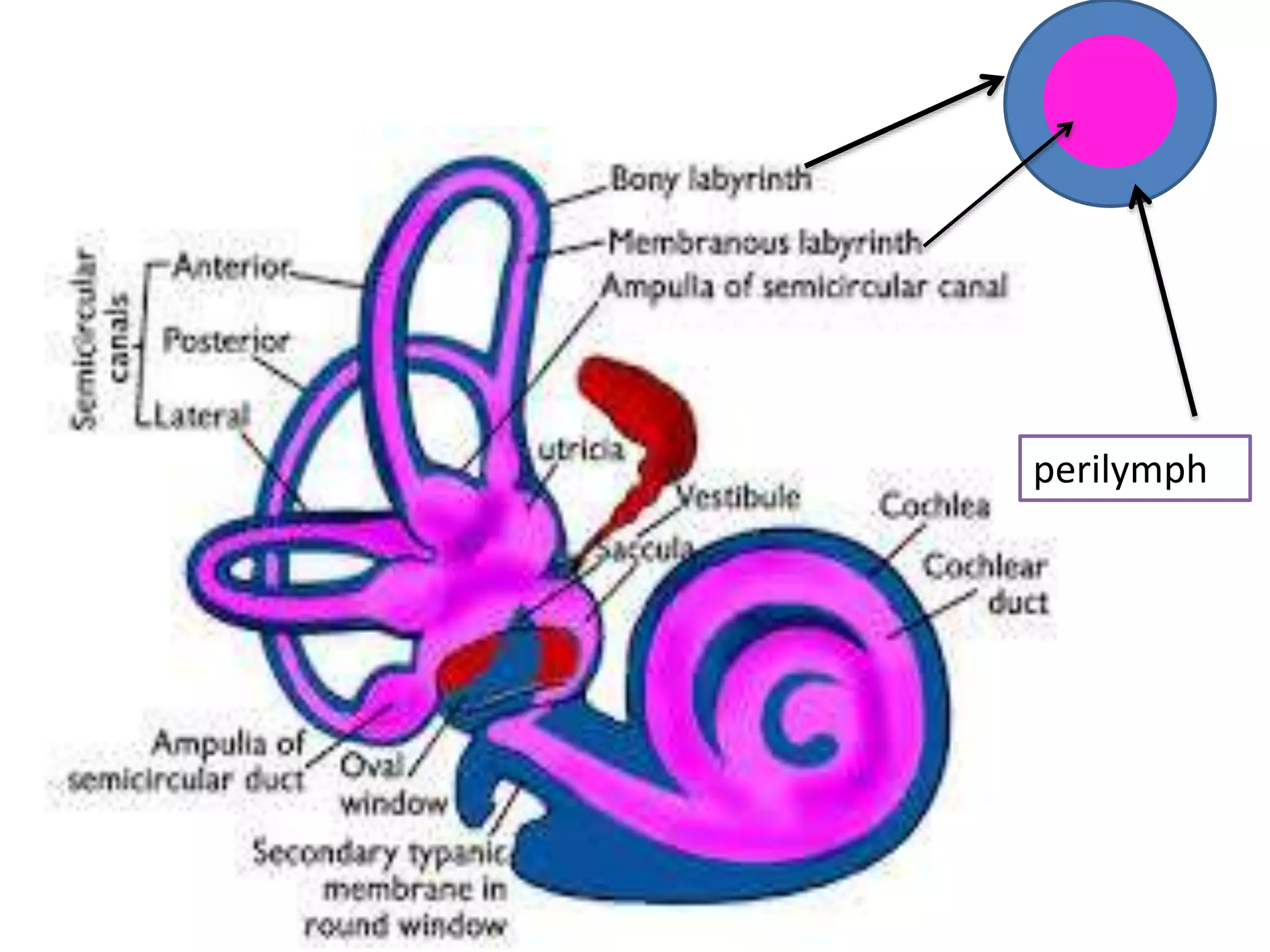
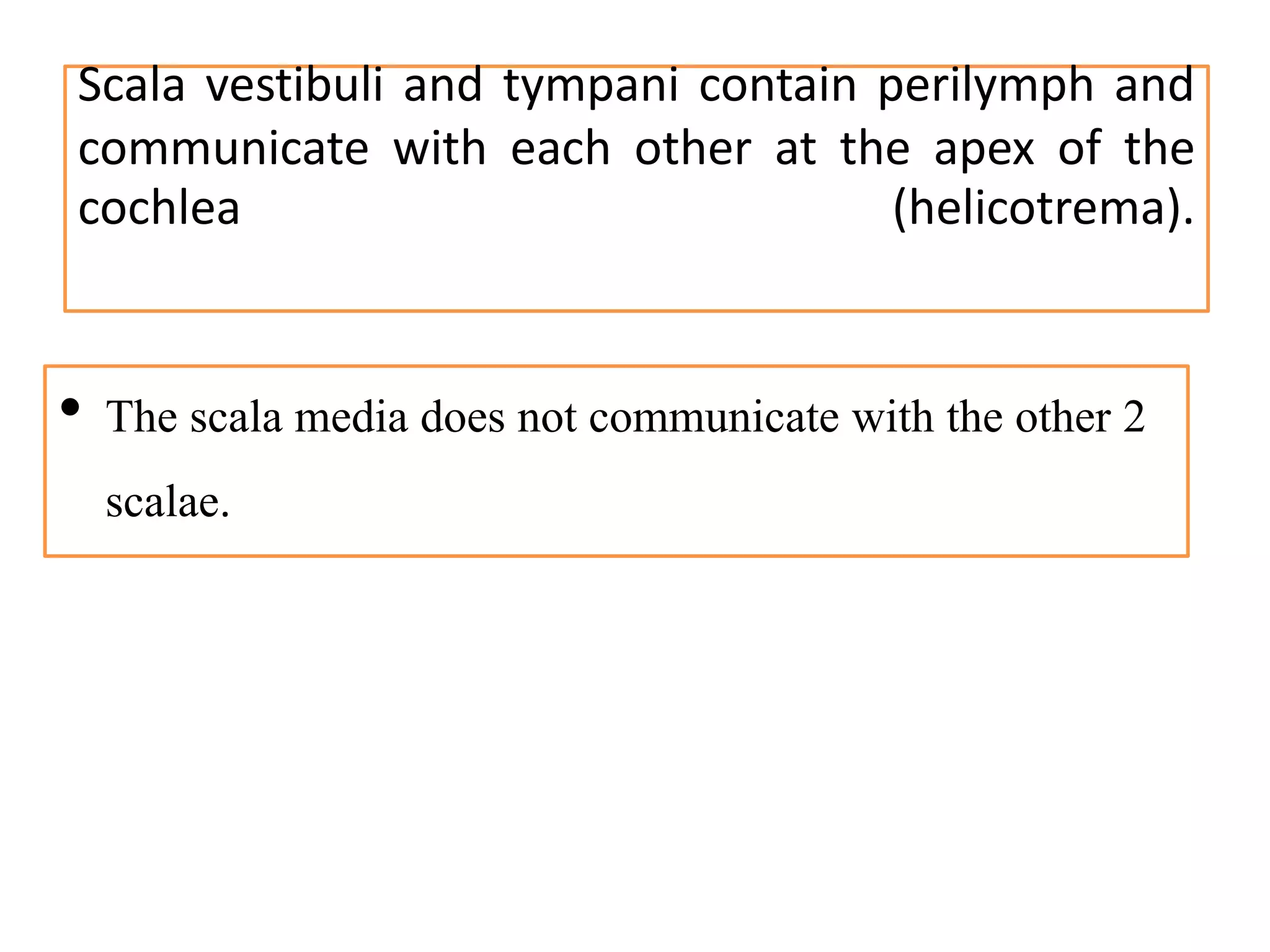
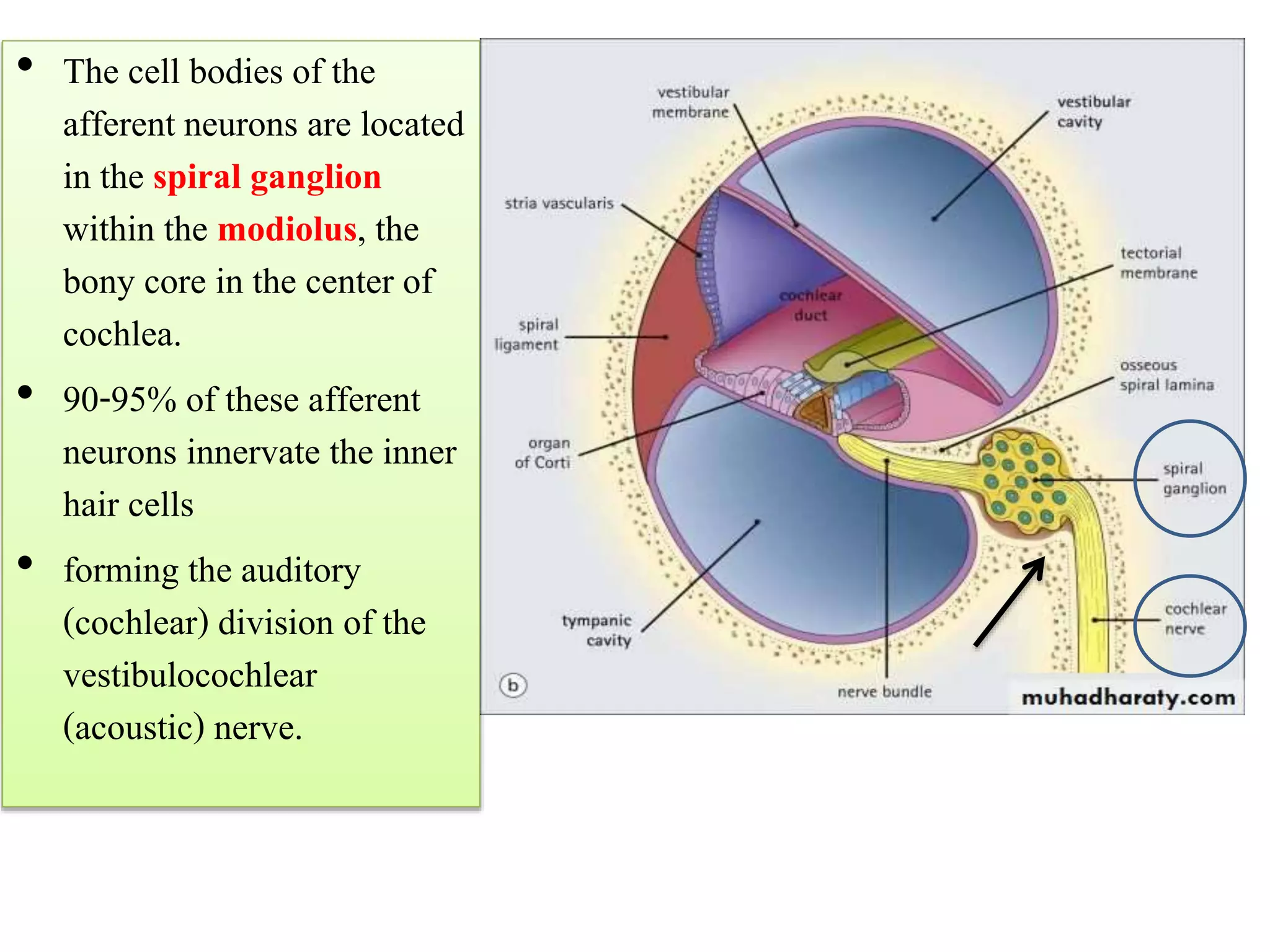
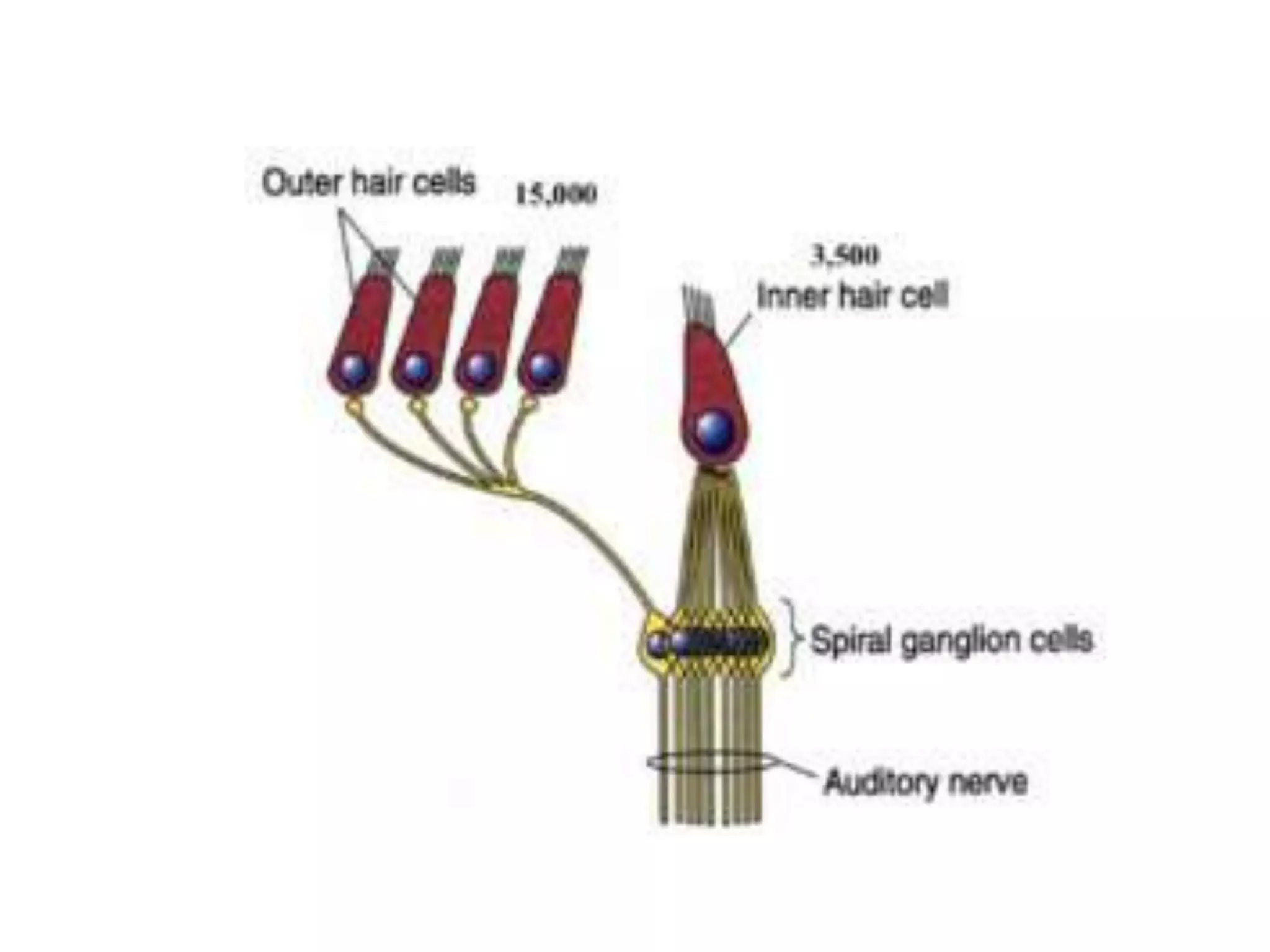
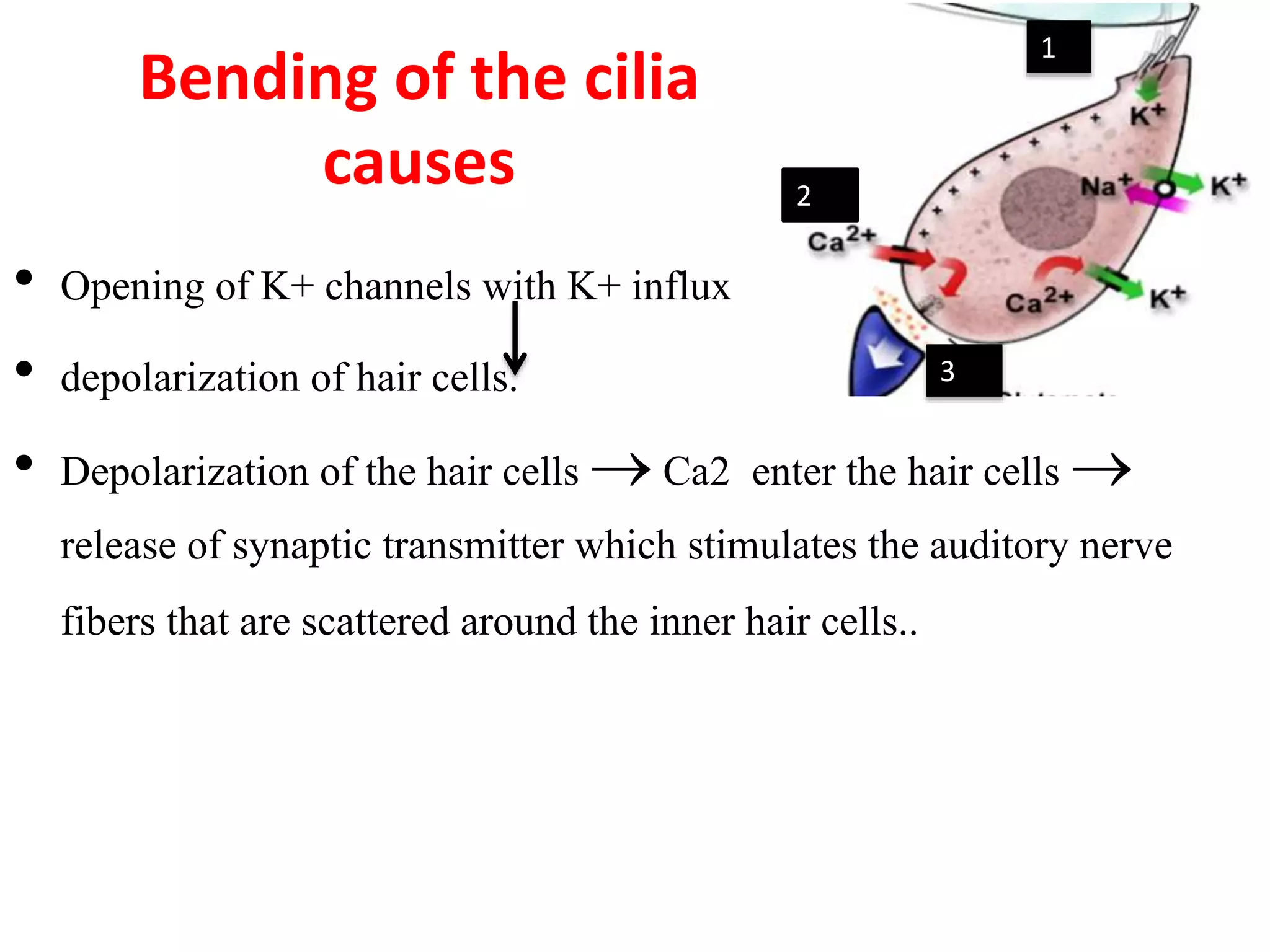
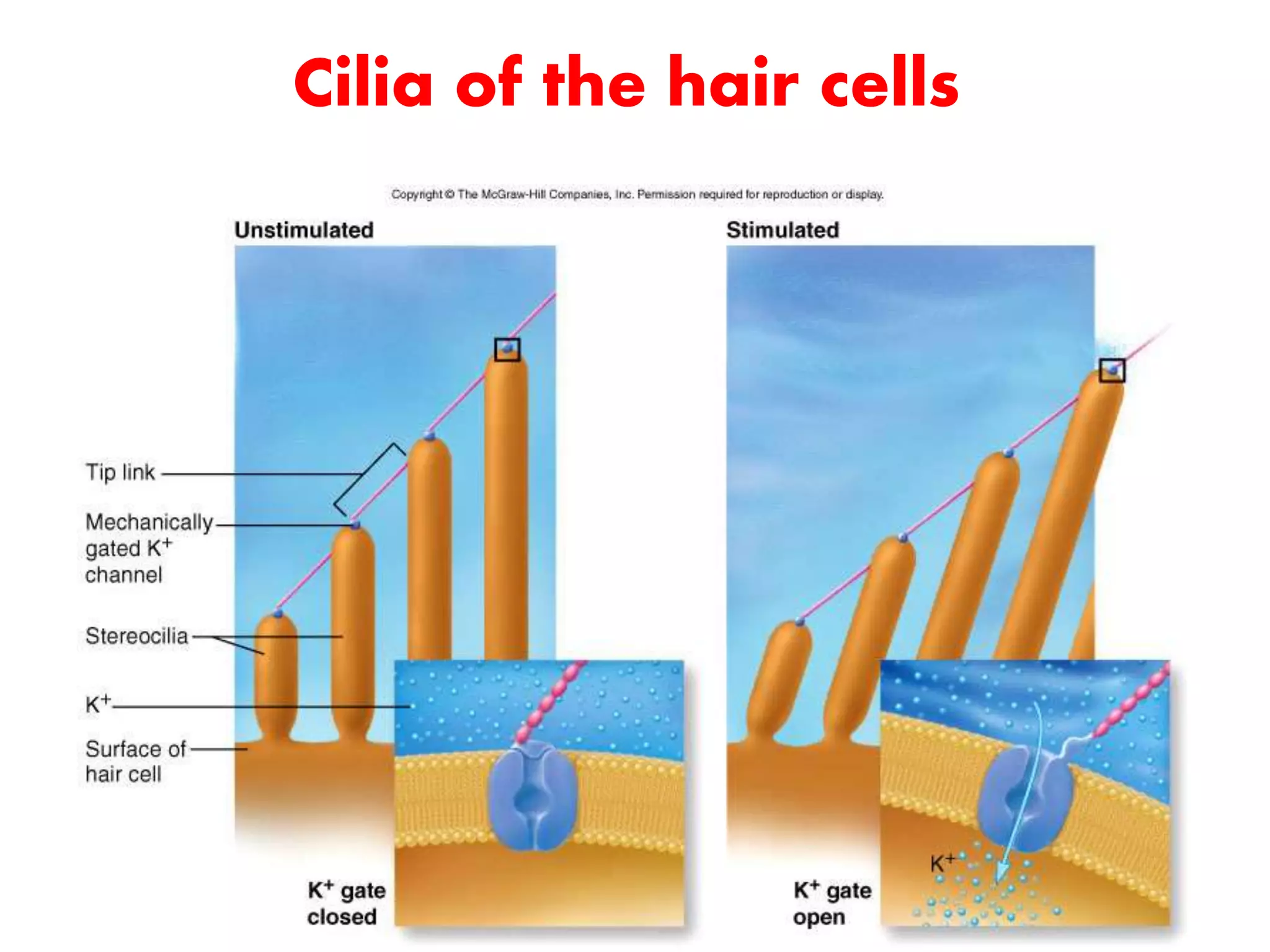
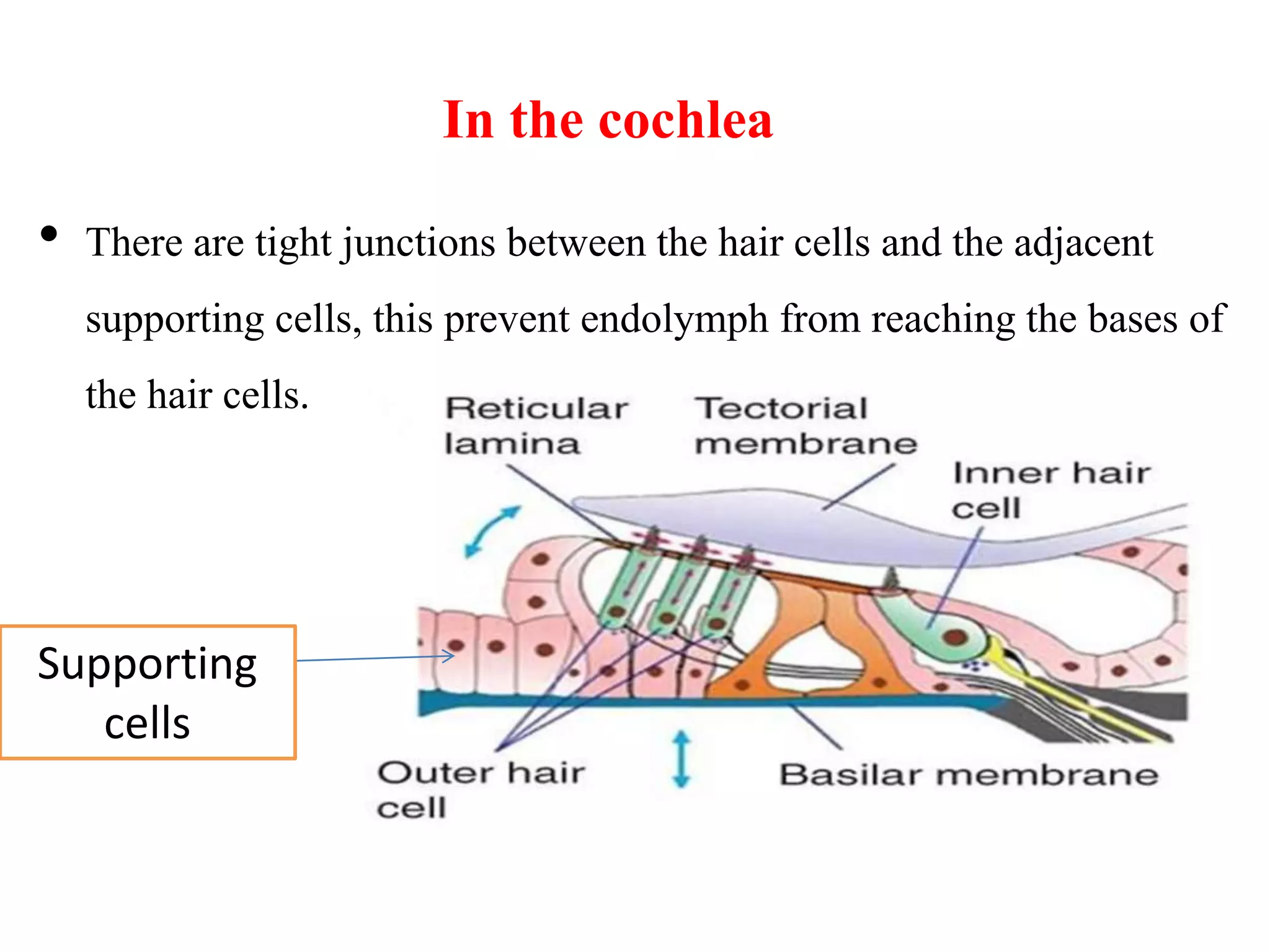
The inner ear contains the cochlea, which is a coiled tube divided into three chambers that contain fluid. Within the cochlea sits the organ of Corti, which contains hair cells that detect sound vibrations. When sound waves cause the basilar membrane to vibrate, the hair cells bend, opening potassium channels and triggering an electrical signal in the auditory nerve. This signal is transmitted to the brain, where it is perceived as sound. The inner ear thus uses fluid-filled chambers and hair cell vibrations to detect sounds and enable hearing.