Inhalations
Prepared by : Miss Aisha Akhter
Inhalations
• Definition:
• Inhalation is any drug or solution of drugs administered by the
• nasal or oral respiratory route.
• Inhalation (also known as inspiration) is the movement of air from
• the external environment, through the air ways, and into the alveoli.
Common conditions:
• Inhalation therapy is a traditional treatment in chronic asthma and
chronic
• bronchitis.
• Emphysema, (Shortness of breath)
• Bronchiectasis (a disease of lungs in which there is permanent
• enlargement of airways of lungs resulting chronic cough with mucus
production, coughing up blood and chest pain).
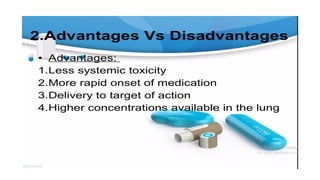
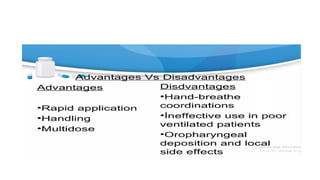
Advantages and disadvantages
Advantages:
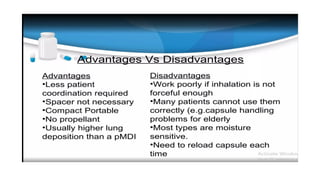
• Less systemic toxicity
• More rapid onset of medication
• Delivery to target of action
• Higher concentrations available in the lungs.
Disadvantages:
• Time and effort consuming
• Limitation of delivery device
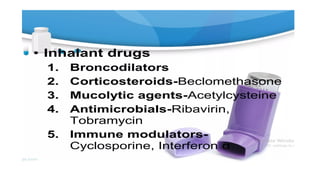
Inhalant drugs
• Anti-allergic agents
• Bronchodilators
• Anesthetics
• Mucolytic Agents
• Antimicrobials
Devices for Inhalation
• Selections of device includes:
• Inhalers:
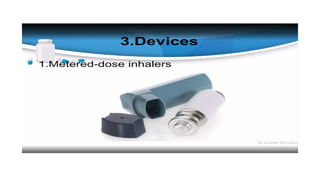
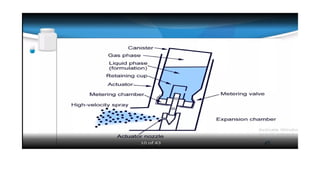
• Metered dose inhaler, MDI
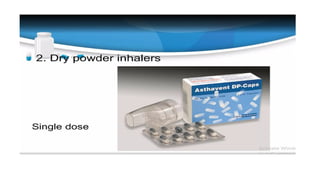
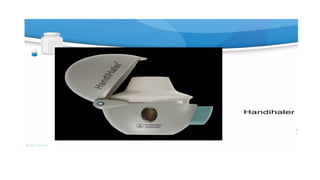
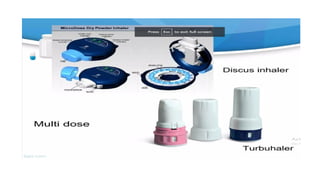
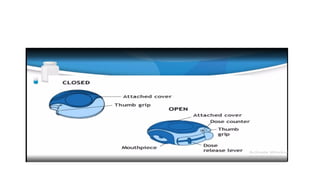
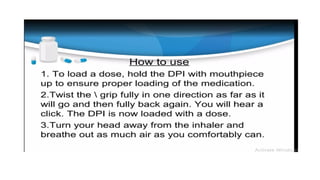
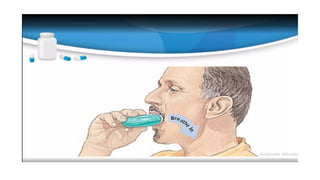
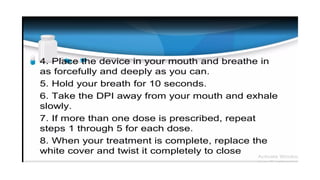
• Dry powder inhaler, DPI
• Nebulizer: (small volume, large volume, ultrasonic)
• Humidifiers
• Inhalers
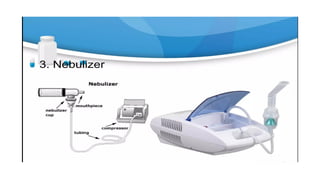
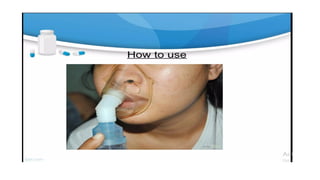
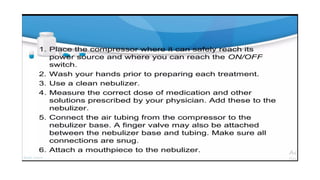
Nebulizers
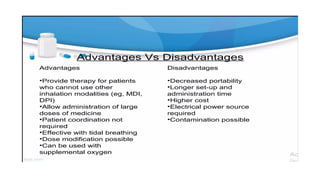
• A Nebulizer is a medical device that a person with Asthma or another
Respiratory condition can use to administer medication directly and
quickly to the lungs.
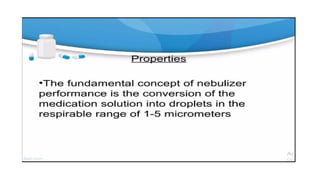
• A Nebulizer turns liquid medicine into a very fine mist that a person
can inhale through a face mask or Mouth piece and the medicine
goes straight into the lungs and the respiratory system where it is
needed.
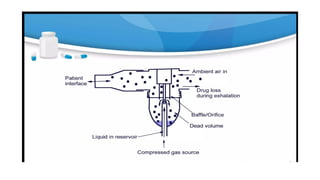
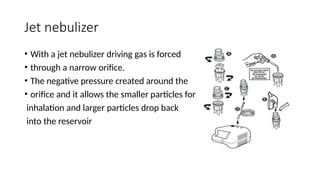
Jet nebulizer
• With a jet nebulizer driving gas is forced
• through a narrow orifice.
• The negative pressure created around the
• orifice and it allows the smaller particles for
inhalation and larger particles drop back
into the reservoir
Humidification
• A device to provide humidification of the air ways may be considered if either the
normal means of humidifying the air ways or the mucociliary mediators are not
functioning effectively.
•
• Conway (1992) hypothesizes that humidification by water or saline aerosol produces
an increase in depth of the ciliary and mucus layers, thereby decreasing viscosity
and enhancing the shearing of secretions by huffing or coughing.
•
• Humidification may be indicated to assist clearance of secretions when the clearance
mechanisms is not optimally effective or when the normal heat or moisture
exchange system of the upper airways is by passed by an endotracheal or
tracheostomy tube.
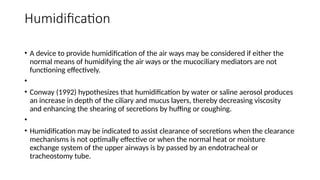
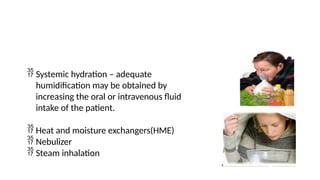
 Systemic hydration – adequate
humidification may be obtained by
increasing the oral or intravenous fluid
intake of the patient.
 Heat and moisture exchangers(HME)
 Nebulizer
 Steam inhalation

Inhalation dosage form (Theory) (6).pptx pharmaceutical practice

  • 1.
    Inhalations Prepared by :Miss Aisha Akhter
  • 2.
    Inhalations • Definition: • Inhalationis any drug or solution of drugs administered by the • nasal or oral respiratory route. • Inhalation (also known as inspiration) is the movement of air from • the external environment, through the air ways, and into the alveoli.
  • 3.
    Common conditions: • Inhalationtherapy is a traditional treatment in chronic asthma and chronic • bronchitis. • Emphysema, (Shortness of breath) • Bronchiectasis (a disease of lungs in which there is permanent • enlargement of airways of lungs resulting chronic cough with mucus production, coughing up blood and chest pain).
  • 4.
    Advantages and disadvantages Advantages: •Less systemic toxicity • More rapid onset of medication • Delivery to target of action • Higher concentrations available in the lungs. Disadvantages: • Time and effort consuming • Limitation of delivery device
  • 5.
    Inhalant drugs • Anti-allergicagents • Bronchodilators • Anesthetics • Mucolytic Agents • Antimicrobials
  • 6.
    Devices for Inhalation •Selections of device includes: • Inhalers: • Metered dose inhaler, MDI • Dry powder inhaler, DPI • Nebulizer: (small volume, large volume, ultrasonic) • Humidifiers • Inhalers
  • 39.
    Nebulizers • A Nebulizeris a medical device that a person with Asthma or another Respiratory condition can use to administer medication directly and quickly to the lungs. • A Nebulizer turns liquid medicine into a very fine mist that a person can inhale through a face mask or Mouth piece and the medicine goes straight into the lungs and the respiratory system where it is needed.
  • 40.
    Jet nebulizer • Witha jet nebulizer driving gas is forced • through a narrow orifice. • The negative pressure created around the • orifice and it allows the smaller particles for inhalation and larger particles drop back into the reservoir
  • 41.
    Humidification • A deviceto provide humidification of the air ways may be considered if either the normal means of humidifying the air ways or the mucociliary mediators are not functioning effectively. • • Conway (1992) hypothesizes that humidification by water or saline aerosol produces an increase in depth of the ciliary and mucus layers, thereby decreasing viscosity and enhancing the shearing of secretions by huffing or coughing. • • Humidification may be indicated to assist clearance of secretions when the clearance mechanisms is not optimally effective or when the normal heat or moisture exchange system of the upper airways is by passed by an endotracheal or tracheostomy tube.
  • 42.
     Systemic hydration– adequate humidification may be obtained by increasing the oral or intravenous fluid intake of the patient.  Heat and moisture exchangers(HME)  Nebulizer  Steam inhalation