Downloaded 24 times

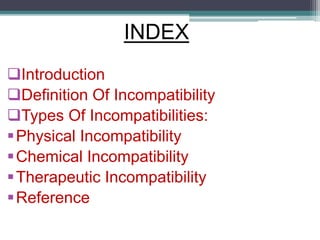
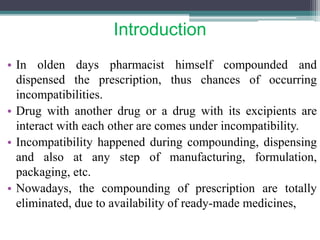
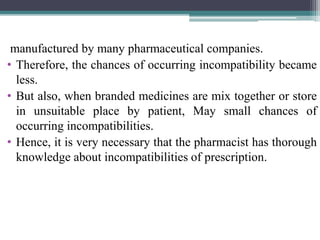
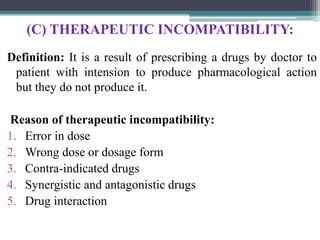
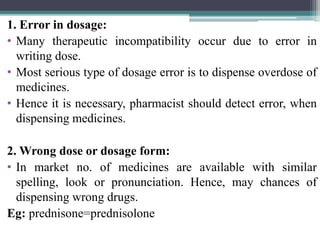
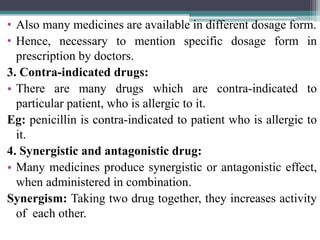
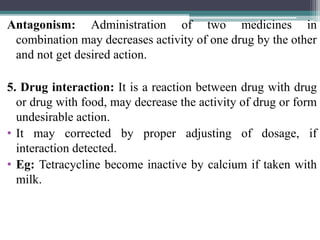

This document discusses different types of incompatibilities that can occur in prescriptions, including physical, chemical, and therapeutic incompatibilities. Physical incompatibilities involve changes in a medication's appearance, taste, or odor due to issues like immiscibility, insolubility, or precipitation. Chemical incompatibilities occur due to chemical reactions between ingredients and can be detected by precipitation, effervescence, decomposition, or color changes. Therapeutic incompatibilities arise when medications do not produce their intended pharmacological effect, often due to dosing errors, prescribing contraindicated drugs, or drug interactions. The document provides examples of each type of incompatibility and methods for correcting physical and chemical issues.


