Infection Control Inservice
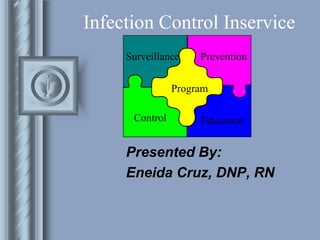
     Surveillance    Prevention


                Program

      Control        Education


     Presented By:
     Eneida Cruz, DNP, RN
Infection
Elements of Infection
  – A SOURCE of infection
  – A TRANSMITTER of infection
  – A SUSCEPTIBLE HOST
Sources of Infection:
  –   Food
  –   Feces
  –   Fomities (furniture, toliets, floors, etc.)
  –   Finger
  –   Contaminated personal protective equipment
      (ie, gloves)
Infection, cont’d
 Causes of Infection:
  –   Virus
  –   Bacteria
  –   Parasite
  –   Fungi
 Diseases caused by Infection:
  –   Cold/Flu
  –   Lyme’s Disease
  –   AIDS
  –   Urinary and Kidney Infections
  –   Strep Throat
  –   Pink Eye
  –   Boils
Infection Control Overview
 Infection Control Program
  – Infection Control Consultant

 Policies & Procedures
  – Clinical Manual Policies
     •   C.46.A - C.46.M
     •   Exposure Control Plan
     •   TB Screening
     •   Influenza Program

 Regulatory
  – DOHSS
  – JCAHO
  – OSHA
Infection Control Activities
 Semi-Annual Infection Control Survey &
  Risk Assessment
 Clinical Activities
  – Patient Education
  – Pre - Procedure Phone Calls
  – Post Procedure Phone Calls
 QA Activities
  – QA Audit Form
  – Monthly Hand Hygiene Monitoring Tool
 Infection Control Report
  – MR Review
Infection Control Activities, cont’d

 Environmental Services Plan
   – Environment of Care Survey
   – Quality Inspection Reports
 Staff Education
   – Annual Mandatory Inservice
   – As needed
 Logs
   – Needlestick Injury Log
   – Blood/Body Fluids Exposure Log
Infectious Diseases
Tuberculosis (TB)
  – Spread by tiny germs that can float in
    the air
  – Anyone nearby can breathe TB germs
    into his/her lungs
  – TB germs can live in your body without
    making you sick
  – TB skin test (PPD) done annually
Bloodborne Diseases
 Hepatitis B (HBV)
  – An illness of the liver caused by infection
    with the Hepatitis B Virus
  – Vaccine Series
 Hepatitis C (HCV)
  – Similar to HBV
  – No vaccine available
 HIV/AIDS
  – A condition in which the body’s immune
    system breaks down
Needlestick Injuries
 800,000 needlesticks estimated annually
  by OSHA in the U.S.
 Needlestick injuries occur when staff:
   – dispose of needles
   – collect and dispose of materials used
     during patient care procedures
   – administer injections
   – draw blood
   – handle trash or dirty linens where
     needles have been inappropriately
     discarded
Needlestick Injuries, cont’d.
Prevent Injuries by utilizing
  – Sharp Disposable System
  – Needle Devices
  – Needleless IV Connector
  – Self-Resheathing Needle
Report all NEEDLESTICK INJURIES
  – Policy C.46.F
  – Log
  – Incident Report
  – Medical Care
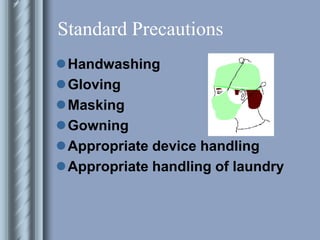
Standard Precautions
Handwashing
Gloving
Masking
Gowning
Appropriate device handling
Appropriate handling of laundry
Latex Allergy
Reaction to certain proteins in latex
 rubber
Risk to Health care workers
 developing latex allergy
The most common reaction is
  – Irritant Contact Dermatitis
    • dry, itchy, irritated areas on the skin
  – Allergic Contact Dermatitis (sometimes
    called Chemical Sensitivity Dermatitis)
    • skin rash similar to that of poison ivy
Latex Allergy, cont’d.
Policy C.54.A
Clinical Activities
  – Patient Care
    • Latex Allergy Signs
  – Supplies
    • All medical supplies are latex free unless
      otherwise documented on package, i.e.,
      Foley Catheters contain latex.
Environmental Cleaning
Surface Disinfectant Cloths
Room Turnover
  – Posted in each procedure room and in
    the recovery room
  – Wipe down all surface areas, stretcher,
    pillow, B/P cuff, monitors, etc.
Medical Equipment
Single use devices discard after use
Reusable devices must be cleaned
 and maintained according to
 manufacturer’s instructions
Cleaning
  – Enzymatic cleaner
  – Sponges/pipe cleaners
High Level Disinfection (HLD)
  – Test strips
  – Temperature
  – Log sheet
Infection Control Prevention
Handwashing


      Protect yourself and others

Infection control

  • 1.
    Infection Control Inservice Surveillance Prevention Program Control Education Presented By: Eneida Cruz, DNP, RN
  • 2.
    Infection Elements of Infection – A SOURCE of infection – A TRANSMITTER of infection – A SUSCEPTIBLE HOST Sources of Infection: – Food – Feces – Fomities (furniture, toliets, floors, etc.) – Finger – Contaminated personal protective equipment (ie, gloves)
  • 3.
    Infection, cont’d  Causesof Infection: – Virus – Bacteria – Parasite – Fungi  Diseases caused by Infection: – Cold/Flu – Lyme’s Disease – AIDS – Urinary and Kidney Infections – Strep Throat – Pink Eye – Boils
  • 4.
    Infection Control Overview Infection Control Program – Infection Control Consultant  Policies & Procedures – Clinical Manual Policies • C.46.A - C.46.M • Exposure Control Plan • TB Screening • Influenza Program  Regulatory – DOHSS – JCAHO – OSHA
  • 5.
    Infection Control Activities Semi-Annual Infection Control Survey & Risk Assessment  Clinical Activities – Patient Education – Pre - Procedure Phone Calls – Post Procedure Phone Calls  QA Activities – QA Audit Form – Monthly Hand Hygiene Monitoring Tool  Infection Control Report – MR Review
  • 6.
    Infection Control Activities,cont’d  Environmental Services Plan – Environment of Care Survey – Quality Inspection Reports  Staff Education – Annual Mandatory Inservice – As needed  Logs – Needlestick Injury Log – Blood/Body Fluids Exposure Log
  • 7.
    Infectious Diseases Tuberculosis (TB) – Spread by tiny germs that can float in the air – Anyone nearby can breathe TB germs into his/her lungs – TB germs can live in your body without making you sick – TB skin test (PPD) done annually
  • 8.
    Bloodborne Diseases  HepatitisB (HBV) – An illness of the liver caused by infection with the Hepatitis B Virus – Vaccine Series  Hepatitis C (HCV) – Similar to HBV – No vaccine available  HIV/AIDS – A condition in which the body’s immune system breaks down
  • 9.
    Needlestick Injuries  800,000needlesticks estimated annually by OSHA in the U.S.  Needlestick injuries occur when staff: – dispose of needles – collect and dispose of materials used during patient care procedures – administer injections – draw blood – handle trash or dirty linens where needles have been inappropriately discarded
  • 10.
    Needlestick Injuries, cont’d. PreventInjuries by utilizing – Sharp Disposable System – Needle Devices – Needleless IV Connector – Self-Resheathing Needle Report all NEEDLESTICK INJURIES – Policy C.46.F – Log – Incident Report – Medical Care
  • 11.
  • 12.
    Latex Allergy Reaction tocertain proteins in latex rubber Risk to Health care workers developing latex allergy The most common reaction is – Irritant Contact Dermatitis • dry, itchy, irritated areas on the skin – Allergic Contact Dermatitis (sometimes called Chemical Sensitivity Dermatitis) • skin rash similar to that of poison ivy
  • 13.
    Latex Allergy, cont’d. PolicyC.54.A Clinical Activities – Patient Care • Latex Allergy Signs – Supplies • All medical supplies are latex free unless otherwise documented on package, i.e., Foley Catheters contain latex.
  • 14.
    Environmental Cleaning Surface DisinfectantCloths Room Turnover – Posted in each procedure room and in the recovery room – Wipe down all surface areas, stretcher, pillow, B/P cuff, monitors, etc.
  • 15.
    Medical Equipment Single usedevices discard after use Reusable devices must be cleaned and maintained according to manufacturer’s instructions Cleaning – Enzymatic cleaner – Sponges/pipe cleaners High Level Disinfection (HLD) – Test strips – Temperature – Log sheet
  • 16.