Volvo Eicher Commercial Vehicles (VECV) is a joint venture between Volvo Group and Eicher Motors that manufactures commercial vehicles. The intern completed a two-week time study of non-automotive engine peripherals production at VECV. The time study involved direct observation using a stopwatch to measure cycle times and identify value-added versus non-value added activities. Key findings were that the cycle time for a CPCB 1 engine was 52 minutes with 88% for value-added activities, and the cycle time for a CPCB 2 engine was 58 minutes with 88% for value-added activities. The time study aims to improve efficiency and reduce costs.
Two weeks IndustrialTraining
on
Time study of Non auto Engine Peripherals
COMPLETED AT
Volvo Eicher Commercial Vehicles
Submitted By:
Rhythm Khandelwal
2.
About VECV
• EicherMotors is a commercial vehicle manufacturer in India. The company's
origins date back to 1948, when Goodearth Company was established for the
distribution and service of imported tractors.
• In 1959, the Eicher Tractor Corporation of India Private Ltd. was established,
jointly with the Eicher tractor company, a German tractor manufacturer.
• In 1960, the first tractor produced in India was put on the market.
• Since 1965 Eicher in India has been completely owned by Indian shareholders.
• The German Eicher tractor was partly owned by Massey-Ferguson from 1970,
when they bought 30 percent. Massey-Ferguson bought out the German
company in 1973.
• In February 1990, Eicher Goodearth bought 26% stake in Enfield India Ltd and
by 1993 Eicher acquired a majority stake (60% equity shareholding) in Enfield
India.
• In July 2008, EML and Volvo Group's 50:50 joint venture VE Commercial
Vehicles (VECV) designs, manufactures and markets commercial vehicles,
engineering components and provides engineering design.
3.
DEPARTMENTS IN VECV
HUMAN RESOURCE
MANUFACTURING OPERATIONS
• LIGHT AND MEDIUM DUTY ASSEMBLY LINE
• HEAVY DUTY ASSEMBLY LINE
• ENGINE AND TRANSMISSION LINE
• MACHINE SHOP
• METHOD SHOP
• CAB TRIM SHOP
• WELD SHOP
• QUALITY CONTROL
• REAR AXLE LINE
• PAINT SHOP
REALIABILTY SHOP
VECHICLE PROTOTYPE
PRODUCT DESIGN AND DEVLOPMENT
4.
TIME STUDY
• Timestudy is a work measurement technique for recording the time of
performing a certain specific job or its element carried out under specific
condition and for analyzing the data so as to obtain the time necessary for
an operator to carry out at a defined rate of performance.
• Time study is a method of direct observation. A trained observer watches
the job and records data as the job is being performed over a number of
cycles.
Time Study Equipments:
The equipments used for time study are-
• Stop watch (Digital)
• Video Camera etc.
5.
Terminologies Related toTime Study :
• Cycle time describes how long it takes to complete a specific task from start to
finish. Cycle time includes process time, during which a unit is acted upon to bring
it closer to an output, and delay time, during which a unit of work is spent waiting
to take the next action. Cycle time can be measured with a stop watch.
• Takt time, derived from the German word Taktzeit, it means the rate at which we need
to produce our product in order to satisfy customer demand. Takt time cannot be
measured with a stop watch. It can only be calculated.
• Value-added costs are the raw materials, direct labor, equipment and machinery
expenses used in creating your products. Value-added costs also include the costs
of holding goods in work in process and storing finished goods.
Value-added costs include the costs of purchasing our merchandise, transporting
the merchandise and storing merchandise. Value-added costs are the activities
that make money for our business.
6.
• Non-value-added costsdo not add value to our product or merchandise. Non-value-
added costs often have a negative return in that they increase our costs without adding
value. Reworking defective products, product inspections and quality control are non-
value-added costs.
Overproduction leads to higher storage costs and increases your non-valued-added costs.
Excessive time spent processing and expediting orders due to missed deadlines or
defective production are non-value-added costs.
7.
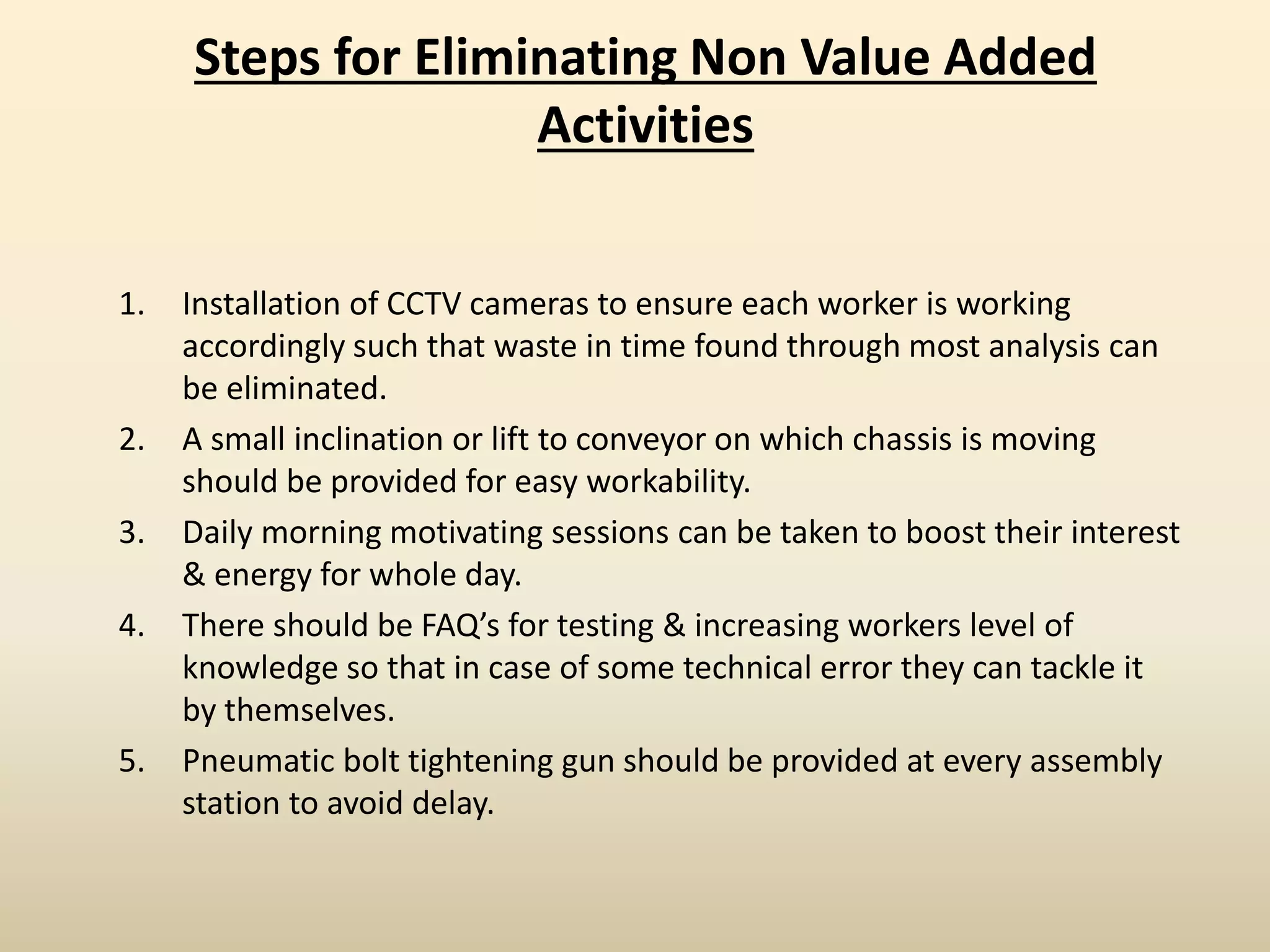
Steps for EliminatingNon Value Added
Activities
1. Installation of CCTV cameras to ensure each worker is working
accordingly such that waste in time found through most analysis can
be eliminated.
2. A small inclination or lift to conveyor on which chassis is moving
should be provided for easy workability.
3. Daily morning motivating sessions can be taken to boost their interest
& energy for whole day.
4. There should be FAQ’s for testing & increasing workers level of
knowledge so that in case of some technical error they can tackle it
by themselves.
5. Pneumatic bolt tightening gun should be provided at every assembly
station to avoid delay.
8.
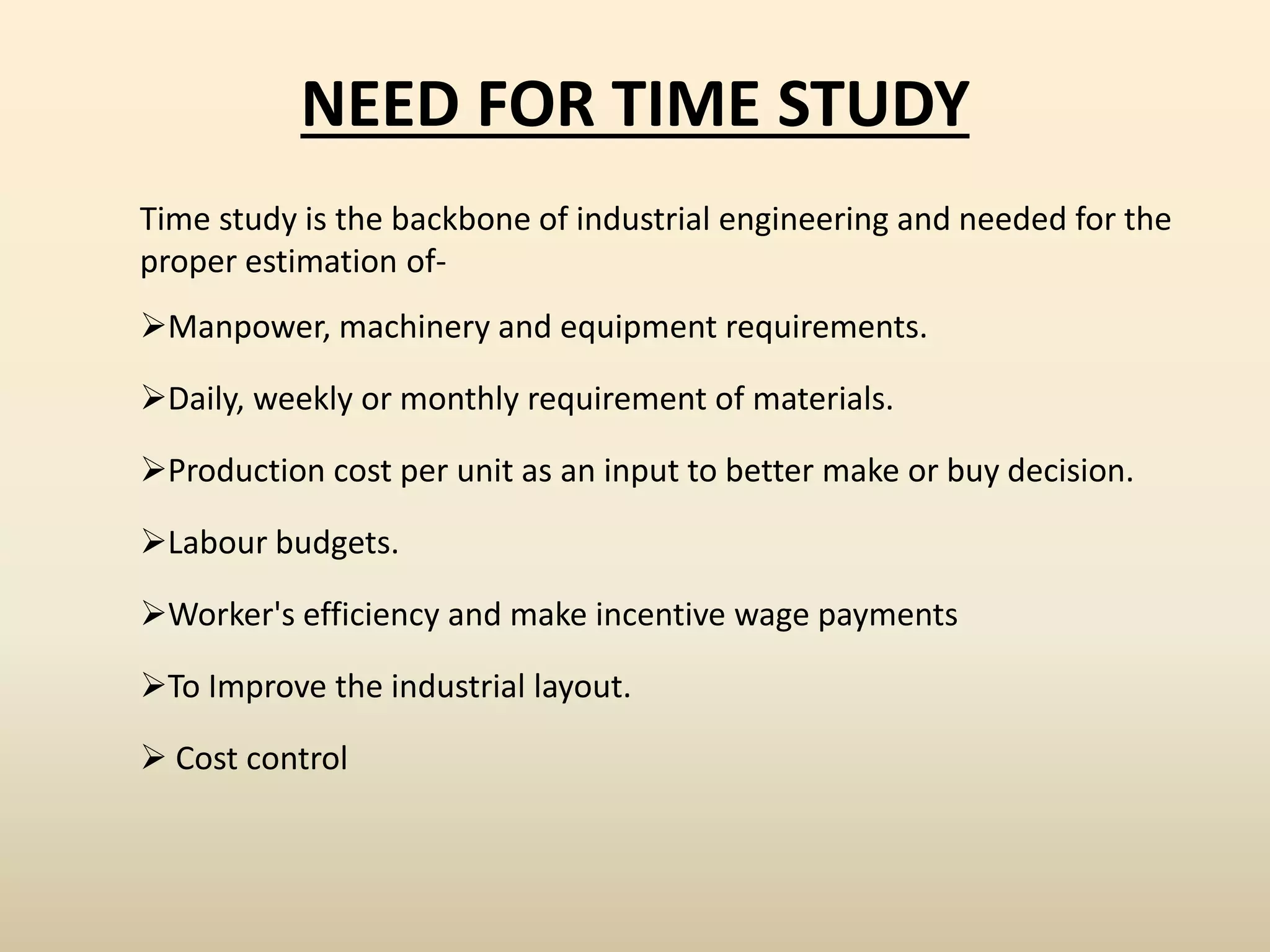
NEED FOR TIMESTUDY
Time study is the backbone of industrial engineering and needed for the
proper estimation of-
Manpower, machinery and equipment requirements.
Daily, weekly or monthly requirement of materials.
Production cost per unit as an input to better make or buy decision.
Labour budgets.
Worker's efficiency and make incentive wage payments
To Improve the industrial layout.
Cost control
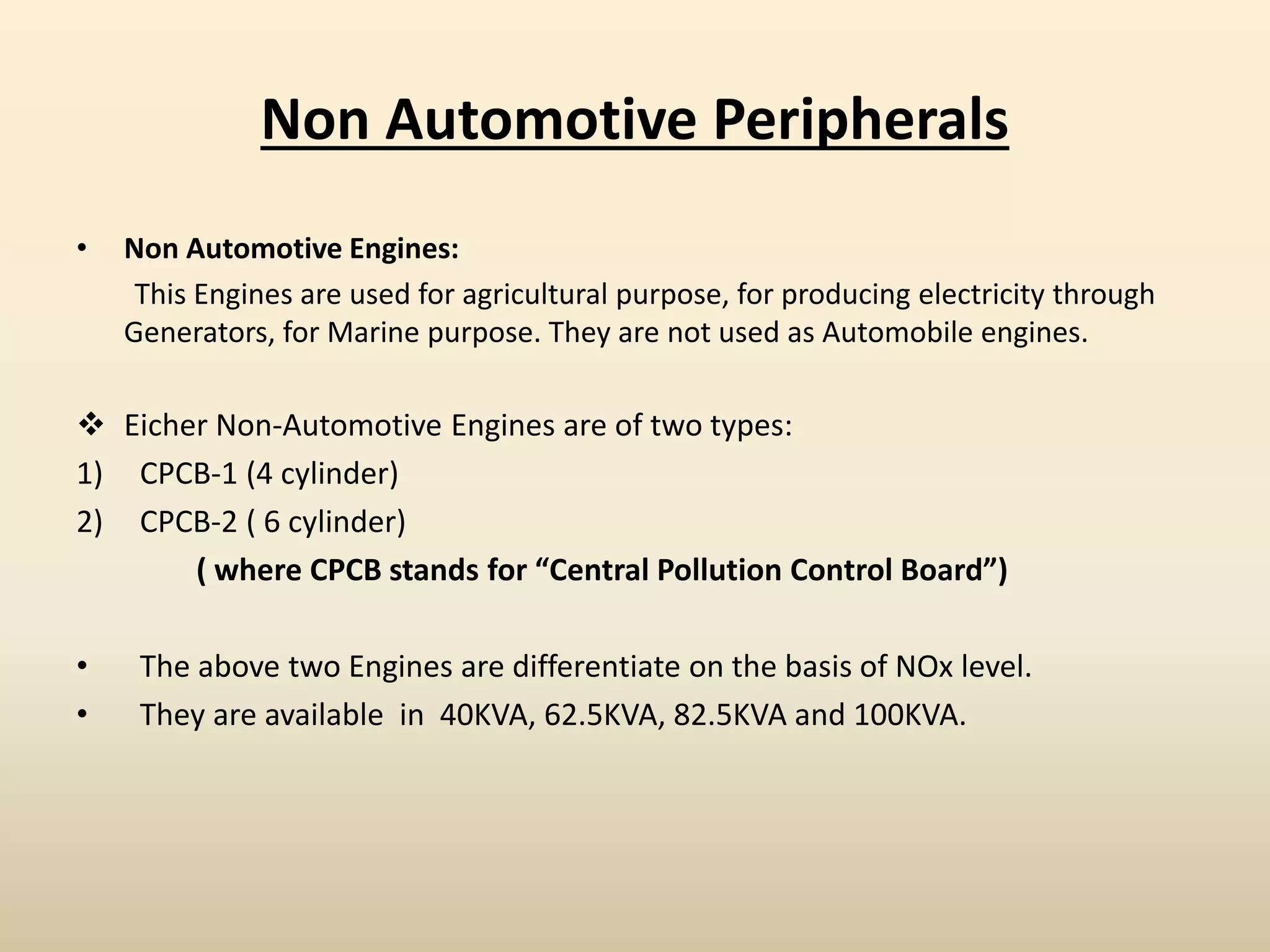
Non Automotive Peripherals
•Non Automotive Engines:
This Engines are used for agricultural purpose, for producing electricity through
Generators, for Marine purpose. They are not used as Automobile engines.
Eicher Non-Automotive Engines are of two types:
1) CPCB-1 (4 cylinder)
2) CPCB-2 ( 6 cylinder)
( where CPCB stands for “Central Pollution Control Board”)
• The above two Engines are differentiate on the basis of NOx level.
• They are available in 40KVA, 62.5KVA, 82.5KVA and 100KVA.
Key Peripherals usedin Non Automotive
Engines
• Air cleaner and its bracket
• Air duct assembly
• Radiator and its bracket
• Radiator fan
• Fuel filter
• ECU
• Harness wire and clips
• Choke switch
• Solenoid with Solenoid bracket
• Vacuum solenoid valve
• Rpm sensor
• Identification Number Plate
• Coolant tank
• Hose for Radiator, intercooler (outlet and inlet)
16.
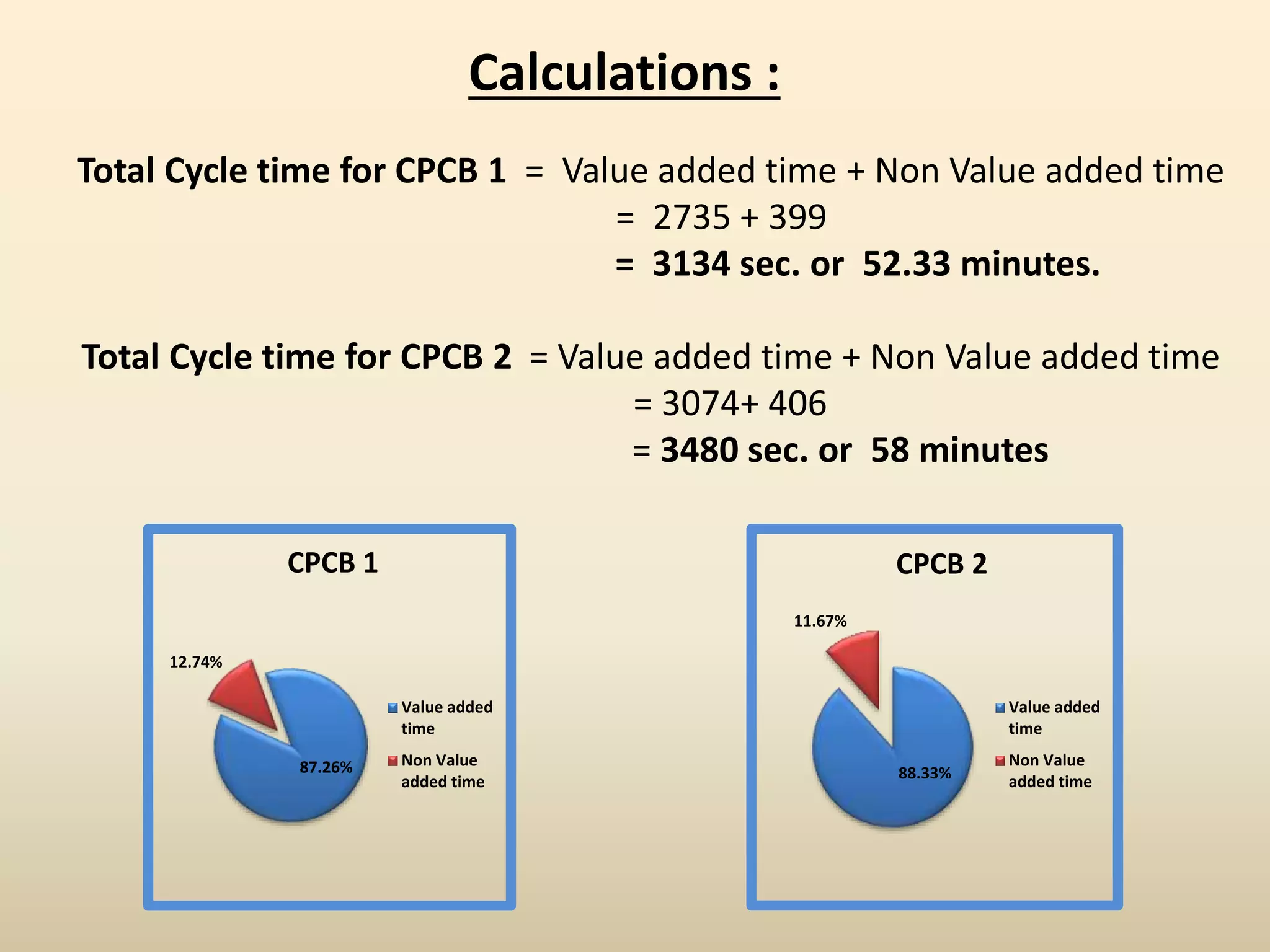
Calculations :
Total Cycletime for CPCB 1 = Value added time + Non Value added time
= 2735 + 399
= 3134 sec. or 52.33 minutes.
Total Cycle time for CPCB 2 = Value added time + Non Value added time
= 3074+ 406
= 3480 sec. or 58 minutes
87.26%
12.74%
CPCB 1
Value added
time
Non Value
added time 88.33%
11.67%
CPCB 2
Value added
time
Non Value
added time








![1. SIH2025-IDEA-Presentation-Format[1].pptx](https://cdn.slidesharecdn.com/ss_thumbnails/1-251204091914-b1bb69d5-thumbnail.jpg?width=640&height=640&fit=bounds)


