INDUCTION OF PARTURITION
• Its also known as inducing labor — is prompting the
uterus to contract during pregnancy before labor
begins on its own for a vaginal birth.
• Inducing labor recommend for various reasons,
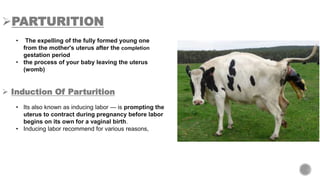
PARTURITION
• The expelling of the fully formed young one
from the mother's uterus after the completion
gestation period
• the process of your baby leaving the uterus
(womb)
 Induction Of Parturition
 Misidentification of a breeding female
 Accidental breeding of a very young heifer, and
 Unwanted pregnancy
 To prevent dystocia due to feto-pelvic disproportion
 INDICATIONS
During Normal Gestation
• Abortion
• Fetal maceration
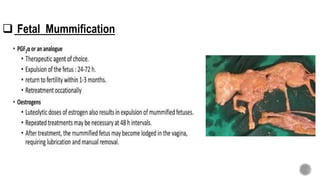
• Fetal mummification
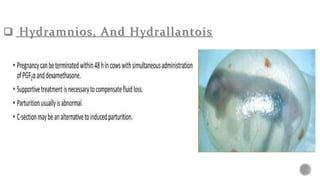
• Hydramnios, and hydrallantois.
During Abnormal Gestation
The most common problem associated with the induction of parturition in cows is retention of the fetal membranes.
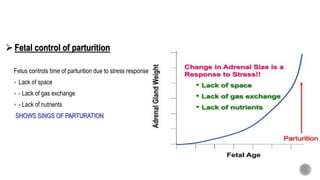
Fetus controls time of parturition due to stress response
 Lack of space
 - Lack of gas exchange
 - Lack of nutrients
SHOWS SINGS OF PARTURATION
 Fetal control of parturition
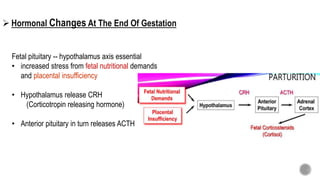
Fetal pituitary -- hypothalamus axis essential
• increased stress from fetal nutritional demands
and placental insufficiency
• Hypothalamus release CRH
(Corticotropin releasing hormone)
• Anterior pituitary in turn releases ACTH
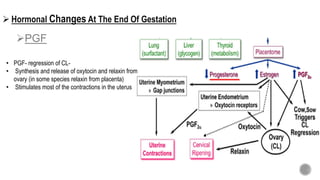
 Hormonal Changes At The End Of Gestation
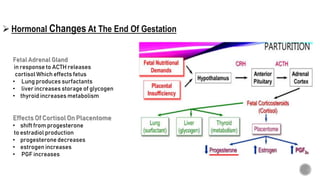
Fetal Adrenal Gland
in response to ACTH releases
cortisol Which effects fetus
• Lung produces surfactants
• liver increases storage of glycogen
• thyroid increases metabolism
Effects Of Cortisol On Placentome
• shift from progesterone
to estradiol production
• progesterone decreases
• estrogen increases
• PGF increases
 Hormonal Changes At The End Of Gestation
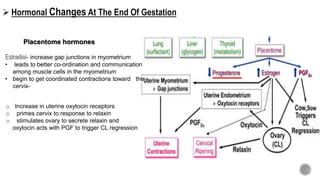
o Increase in uterine oxytocin receptors
o primes cervix to response to relaxin
o stimulates ovary to secrete relaxin and
oxytocin acts with PGF to trigger CL regression
 Hormonal Changes At The End Of Gestation
Placentome hormones
Estradiol- increase gap junctions in myometrium
• leads to better co-ordination and communication
among muscle cells in the myometrium
• begin to get coordinated contractions toward the
cervix-
 Hormonal Changes At The End Of Gestation
PGF
• PGF- regression of CL-
• Synthesis and release of oxytocin and relaxin from
ovary (in some species relaxin from placenta)
• Stimulates most of the contractions in the uterus
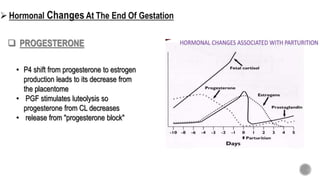
• P4 shift from progesterone to estrogen
production leads to its decrease from
the placentome
• PGF stimulates luteolysis so
progesterone from CL decreases
• release from "progesterone block"
 PROGESTERONE
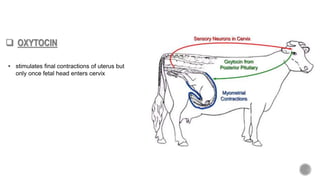
• stimulates final contractions of uterus but
only once fetal head enters cervix
 OXYTOCIN
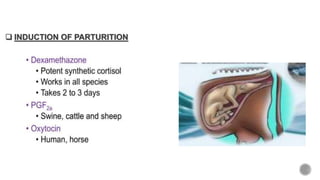
 INDUCTION OF PARTURITION
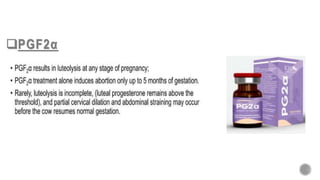
PGF2α
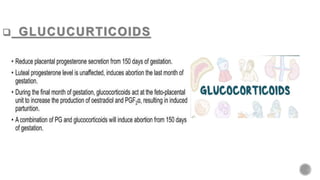
 GLUCUCURTICOIDS
 Termination Of Pregnancy
INDUCTION OF PARTURITION COW
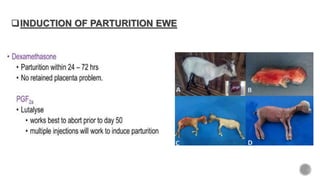
INDUCTION OF PARTURITION EWE
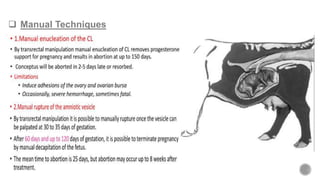
 Manual Techniques
 Hydramnios, And Hydrallantois
 Fetal Mummification
REFERENCE
https://www.s.net/MahalingeshwaraMali/induction-of-parturition-amp-elective-
termination-of-pregnancy
R.A Mcfeely and V. K. Ganjam -Induction of parturition in farm animal 1976, 7 (2, 151-156.
Thank you

induction of parturition.pptx

  • 1.
  • 2.
    • Its alsoknown as inducing labor — is prompting the uterus to contract during pregnancy before labor begins on its own for a vaginal birth. • Inducing labor recommend for various reasons, PARTURITION • The expelling of the fully formed young one from the mother's uterus after the completion gestation period • the process of your baby leaving the uterus (womb)  Induction Of Parturition
  • 3.
     Misidentification ofa breeding female  Accidental breeding of a very young heifer, and  Unwanted pregnancy  To prevent dystocia due to feto-pelvic disproportion  INDICATIONS During Normal Gestation • Abortion • Fetal maceration • Fetal mummification • Hydramnios, and hydrallantois. During Abnormal Gestation The most common problem associated with the induction of parturition in cows is retention of the fetal membranes.
  • 4.
    Fetus controls timeof parturition due to stress response  Lack of space  - Lack of gas exchange  - Lack of nutrients SHOWS SINGS OF PARTURATION  Fetal control of parturition
  • 5.
    Fetal pituitary --hypothalamus axis essential • increased stress from fetal nutritional demands and placental insufficiency • Hypothalamus release CRH (Corticotropin releasing hormone) • Anterior pituitary in turn releases ACTH  Hormonal Changes At The End Of Gestation
  • 6.
    Fetal Adrenal Gland inresponse to ACTH releases cortisol Which effects fetus • Lung produces surfactants • liver increases storage of glycogen • thyroid increases metabolism Effects Of Cortisol On Placentome • shift from progesterone to estradiol production • progesterone decreases • estrogen increases • PGF increases  Hormonal Changes At The End Of Gestation
  • 7.
    o Increase inuterine oxytocin receptors o primes cervix to response to relaxin o stimulates ovary to secrete relaxin and oxytocin acts with PGF to trigger CL regression  Hormonal Changes At The End Of Gestation Placentome hormones Estradiol- increase gap junctions in myometrium • leads to better co-ordination and communication among muscle cells in the myometrium • begin to get coordinated contractions toward the cervix-
  • 8.
     Hormonal ChangesAt The End Of Gestation PGF • PGF- regression of CL- • Synthesis and release of oxytocin and relaxin from ovary (in some species relaxin from placenta) • Stimulates most of the contractions in the uterus
  • 9.
    • P4 shiftfrom progesterone to estrogen production leads to its decrease from the placentome • PGF stimulates luteolysis so progesterone from CL decreases • release from "progesterone block"  PROGESTERONE
  • 10.
    • stimulates finalcontractions of uterus but only once fetal head enters cervix  OXYTOCIN
  • 11.
     INDUCTION OFPARTURITION
  • 12.
  • 13.
  • 14.
  • 15.
  • 16.
  • 17.
  • 18.
     Hydramnios, AndHydrallantois
  • 19.
  • 20.
  • 21.