University graduates’ workplace language needs as perceived by employersInstructor: Dr. Pi-Ying HsuPresenter: Wei – Ting ChienDate: April 13, 20101
Citation Lehtonen, T., & Karjalainen, S. (2008). University graduates’ workplace language needs as perceived by employers. System, 36, 492-503.2
Contents I. Introduction II. Literature Review III. MethodologyIV. Discussion & ConclusionV. Reflection3
BackgroundFinland is a bilingual country. (Finnish/Swedish)4Employees in the public sector are required to  be able to function in these two official  language.(Lehtonen & Karjalainen, 2008)
BackgroundThere is an apparent need for English at work, and the  knowledge of some other foreign languages is assumed to be a bonus. 5(Huhta, 1999)
BackgroundAll university graduates are required to show they are proficient in both official languages of the country and at least one foreign language.(Finland, 2004)6
BackgroundStudents’ future careers and language skills needed at workplace should be largely emphasized by language educators at universities.                               (Lehtonen & Karjalainen, 2008)7
Purpose of the studyto investigate the language needs of university graduates at today’s workplace according to the views of their employers8
Literature ReviewIndividuals working in a particular context are expected to have specific skills in a particular language, and that the language often differs from that used in other contexts.                                                              (Dlaska, 1999)9
Literature ReviewThere is a insufficient attention of workplace language needs in language teaching at universities.(London communique, 2007) 10
Literature ReviewGraduates’ need for language skills should be paid enough attention by language course designers to bridge the gap between language    teaching and the linguistic needs of the workplace.                                          (Horppu & Niskanen, 2004)11
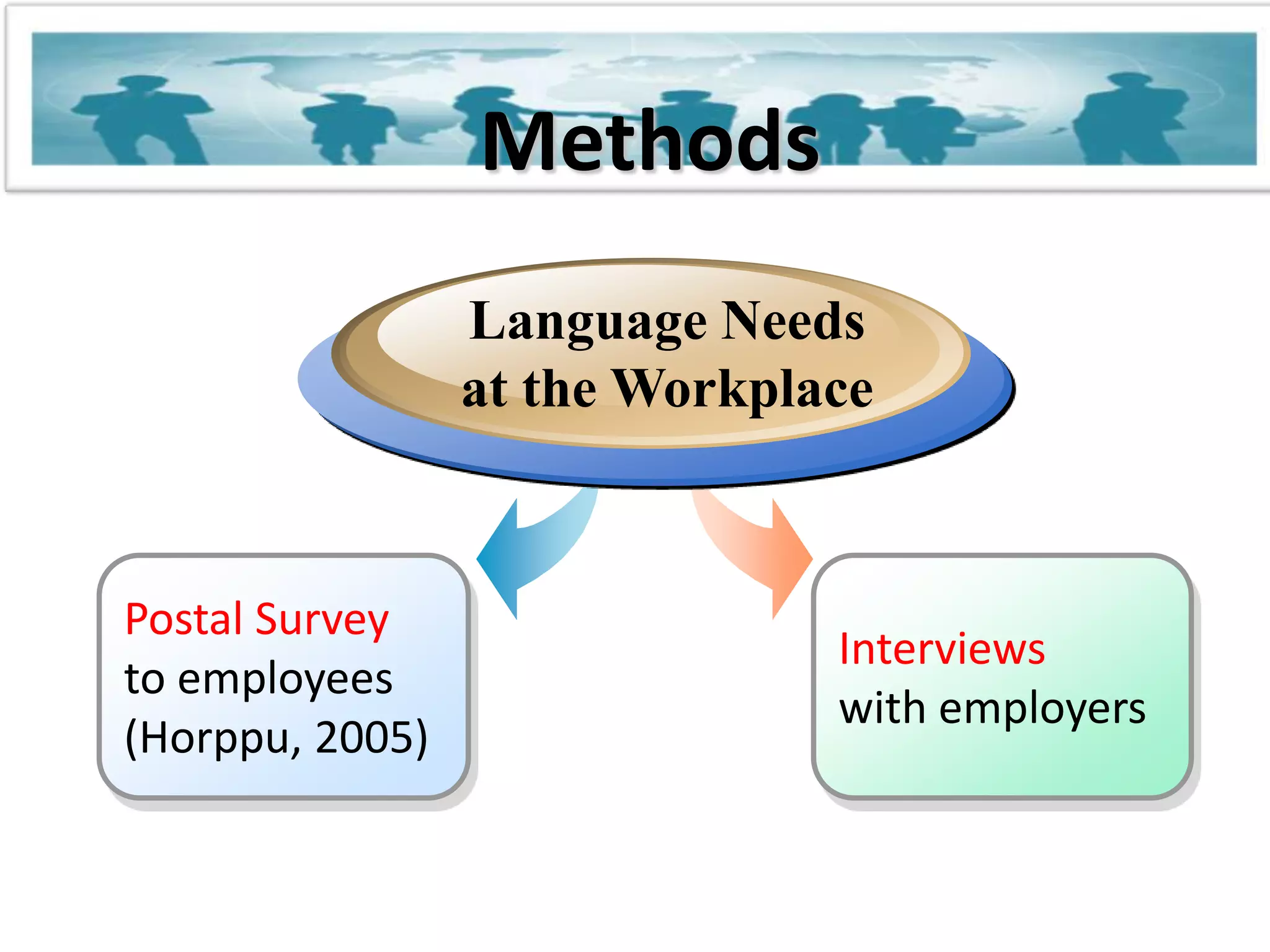
MethodsLanguage Needs at the WorkplaceInterviewswith employersPostal Survey to employees (Horppu, 2005)
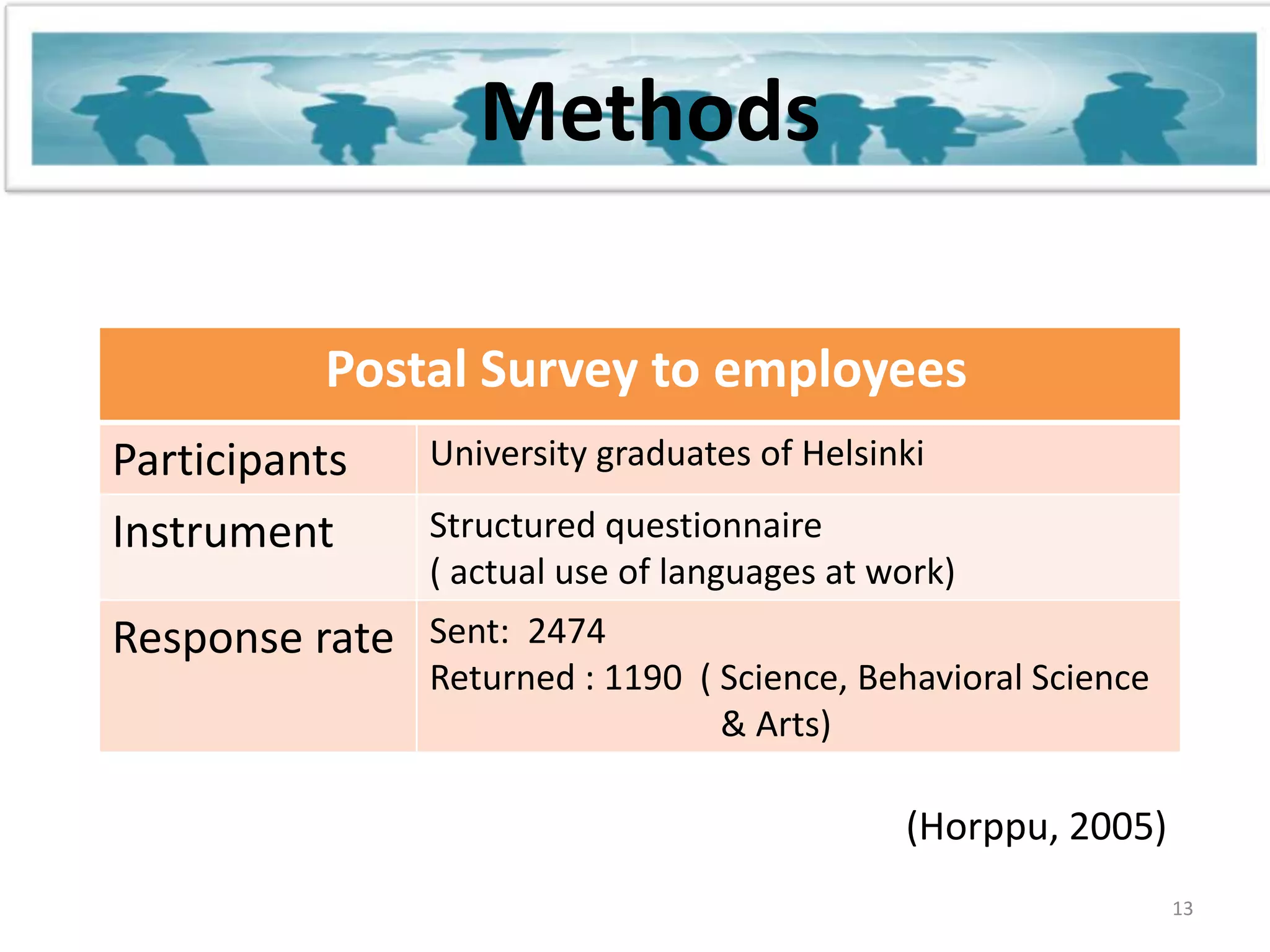
Methods13(Horppu, 2005)
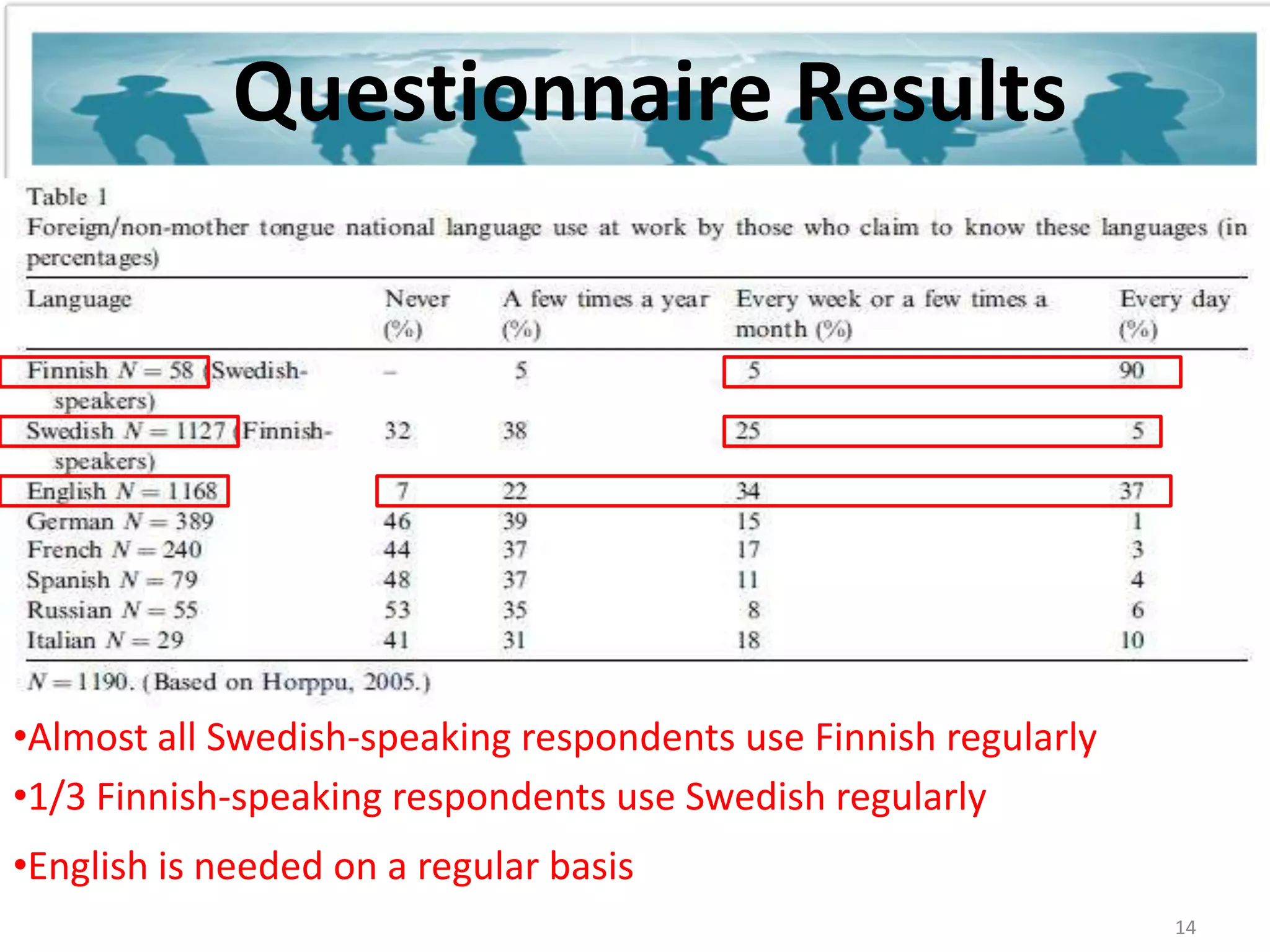
Questionnaire ResultsAlmost all Swedish-speaking respondents use Finnish regularly
1/3 Finnish-speaking respondents use Swedish regularly
English is needed on a regular basis14
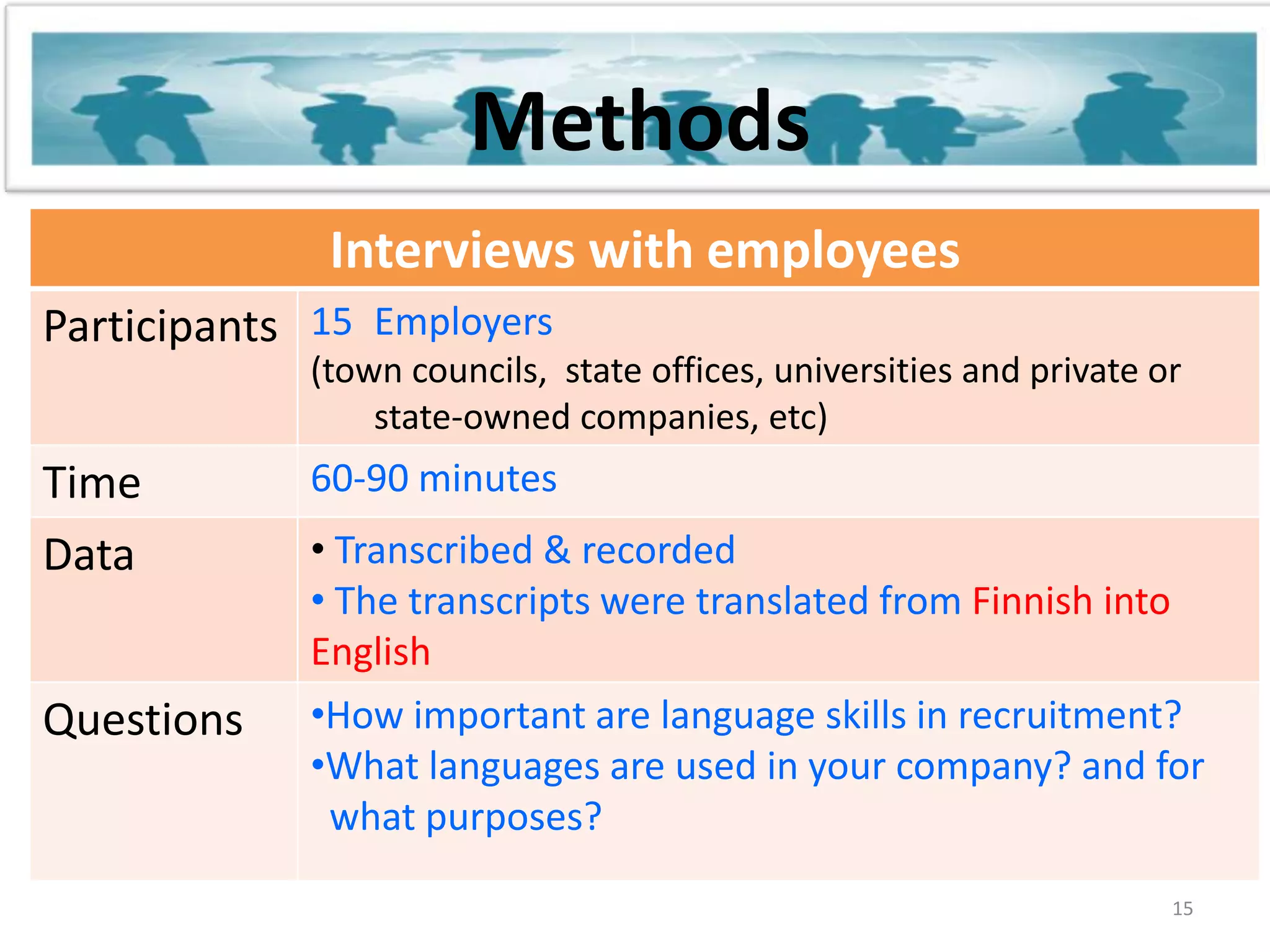
Methods15
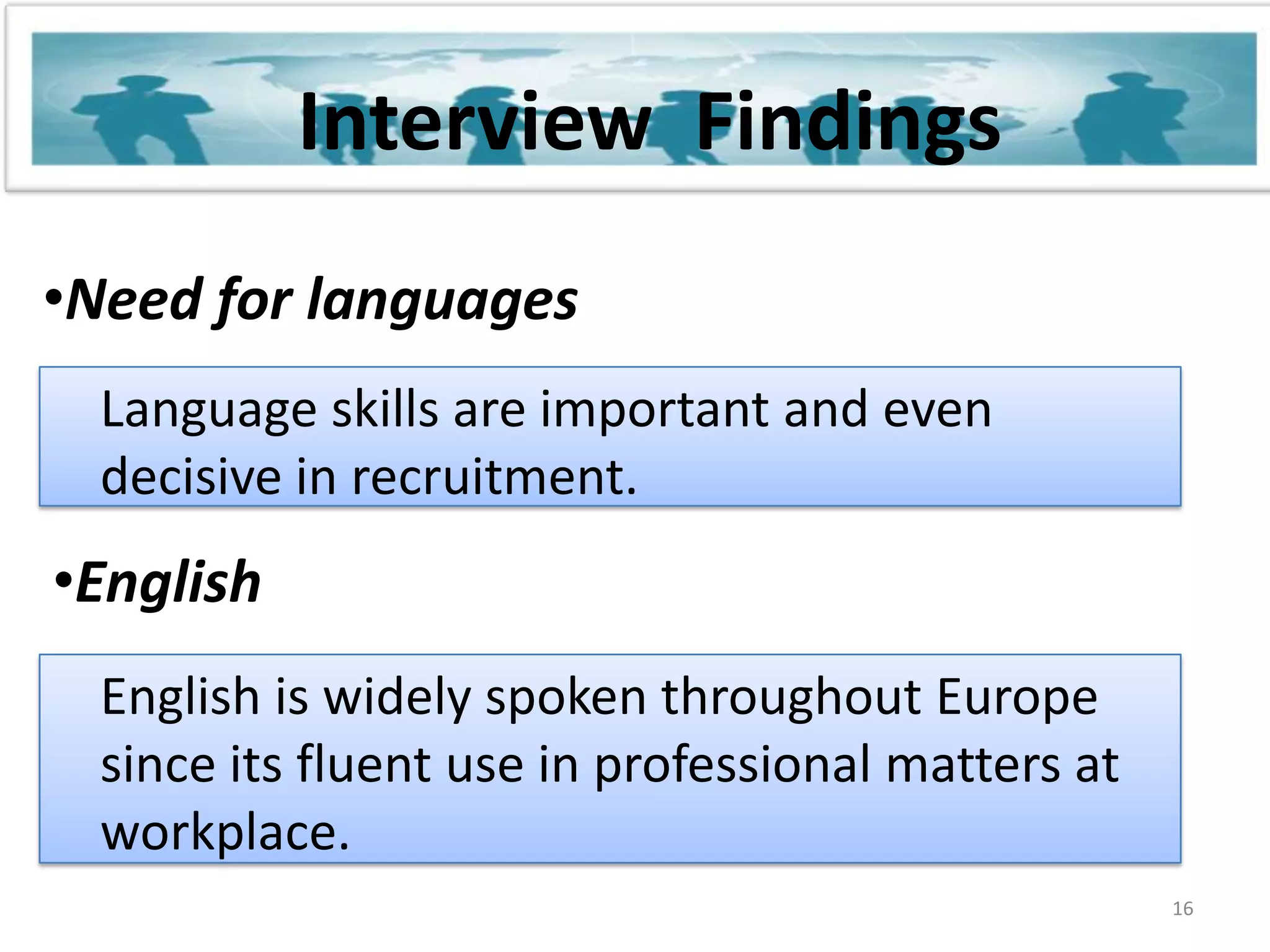
Interview  FindingsNeed for languages 	Language skills are important and even decisive in recruitment.English 16	English is widely spoken throughout Europe since its fluent use in professional matters at workplace.
17Interview  Findings The national languages of the country  Finnish and Swedish are required at the workplace, but  the majority  of language speakers do not be proficient at both official languages at the same time.
18Interview  FindingsLevel of knowledge 	Good communication, presentation skills, confidence to use a foreign language and the ability to interact and adapt to various  cultural conditions	Knowing  one or two foreign language proficiently is more useful than several languages at an elementary level.
19Interview  FindingsKnowledge of culture(s) needed Graduates are required  to have cross-cultural knowledge since the workplaces are in the multi-culture contexts.
Discussions & Implications The demanding plurilingual workplaceLearning to use two or more languages in one situation20
Discussions & Implications Communication paramount in preparing students for real life
Cultural sensitivity21

Individual Presentation 413

  • 1.
    University graduates’ workplacelanguage needs as perceived by employersInstructor: Dr. Pi-Ying HsuPresenter: Wei – Ting ChienDate: April 13, 20101
  • 2.
    Citation Lehtonen, T.,& Karjalainen, S. (2008). University graduates’ workplace language needs as perceived by employers. System, 36, 492-503.2
  • 3.
    Contents I. IntroductionII. Literature Review III. MethodologyIV. Discussion & ConclusionV. Reflection3
  • 4.
    BackgroundFinland is abilingual country. (Finnish/Swedish)4Employees in the public sector are required to be able to function in these two official language.(Lehtonen & Karjalainen, 2008)
  • 5.
    BackgroundThere is anapparent need for English at work, and the knowledge of some other foreign languages is assumed to be a bonus. 5(Huhta, 1999)
  • 6.
    BackgroundAll university graduatesare required to show they are proficient in both official languages of the country and at least one foreign language.(Finland, 2004)6
  • 7.
    BackgroundStudents’ future careersand language skills needed at workplace should be largely emphasized by language educators at universities. (Lehtonen & Karjalainen, 2008)7
  • 8.
    Purpose of thestudyto investigate the language needs of university graduates at today’s workplace according to the views of their employers8
  • 9.
    Literature ReviewIndividuals workingin a particular context are expected to have specific skills in a particular language, and that the language often differs from that used in other contexts. (Dlaska, 1999)9
  • 10.
    Literature ReviewThere isa insufficient attention of workplace language needs in language teaching at universities.(London communique, 2007) 10
  • 11.
    Literature ReviewGraduates’ needfor language skills should be paid enough attention by language course designers to bridge the gap between language teaching and the linguistic needs of the workplace. (Horppu & Niskanen, 2004)11
  • 12.
    MethodsLanguage Needs atthe WorkplaceInterviewswith employersPostal Survey to employees (Horppu, 2005)
  • 13.
  • 14.
    Questionnaire ResultsAlmost allSwedish-speaking respondents use Finnish regularly
  • 15.
  • 16.
    English is neededon a regular basis14
  • 17.
  • 18.
    Interview FindingsNeedfor languages Language skills are important and even decisive in recruitment.English 16 English is widely spoken throughout Europe since its fluent use in professional matters at workplace.
  • 19.
    17Interview FindingsThe national languages of the country Finnish and Swedish are required at the workplace, but the majority of language speakers do not be proficient at both official languages at the same time.
  • 20.
    18Interview FindingsLevelof knowledge Good communication, presentation skills, confidence to use a foreign language and the ability to interact and adapt to various cultural conditions Knowing one or two foreign language proficiently is more useful than several languages at an elementary level.
  • 21.
    19Interview FindingsKnowledgeof culture(s) needed Graduates are required to have cross-cultural knowledge since the workplaces are in the multi-culture contexts.
  • 22.
    Discussions & ImplicationsThe demanding plurilingual workplaceLearning to use two or more languages in one situation20
  • 23.
    Discussions & ImplicationsCommunication paramount in preparing students for real life
  • 24.
  • 25.
    ConclusionForeign language skillsare important basic components of professional academic skills.University graduates are expected to use foreign languages in advanced level.knowledge of some other languages is advantaged for employees at workplace.Cultural competence is needed at a international communication. 22
  • 26.
    Reflection Collecting sufficientqualitative data since the interviewees are from different fields.Providing interview protocolGiving valuable suggestions to language teaching courses at universityGiving supportive ideas to conducting similar researches in other contextsNot providing the sample questionnaire23
  • 27.
    Thanks for yourattention!24