Languages and Careers


         How can languages
           work for you?
What is the
jobs market for
individuals with
 language skills?
‘in an increasingly competitive job market,
it is clear that foreign language proficiency adds
    significant value to a candidate’s portfolio of
    skills, and can give them a real competitive
             edge when applying for jobs’

     CBI Education and Skills Survey, 2009
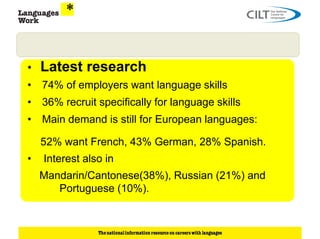
•   Latest research
•   74% of employers want language skills
•   36% recruit specifically for language skills
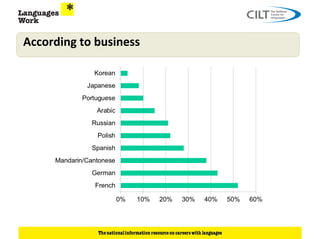
•   Main demand is still for European languages:

    52% want French, 43% German, 28% Spanish.
•   Interest also in
    Mandarin/Cantonese(38%), Russian (21%) and
       Portuguese (10%).
According to business
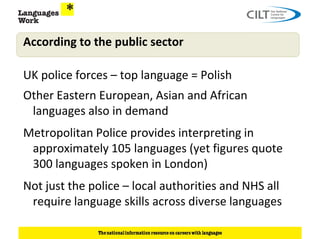
According to the public sector

UK police forces – top language = Polish
Other Eastern European, Asian and African
 languages also in demand
Metropolitan Police provides interpreting in
 approximately 105 languages (yet figures quote
 300 languages spoken in London)
Not just the police – local authorities and NHS all
 require language skills across diverse languages
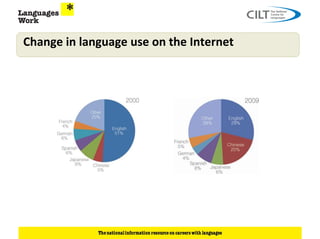
Change in language use on the Internet
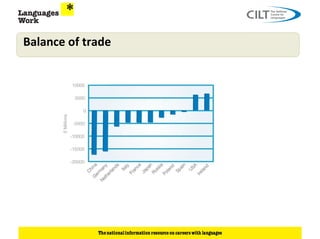
Balance of trade
• ‘I can’t think of a single career area where language skills
  are not an advantage’
       Rachel Usher, Independent Schools Careers Organisation
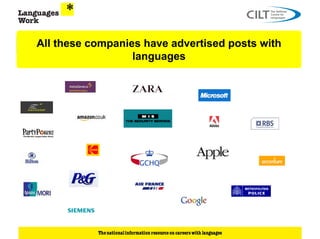
All these companies have advertised posts with
                  languages
Vacancies for linguists include

• Jobs where languages are integral
• Jobs where languages are an added bonus
• Jobs where languages are an indicator of general ability and
  outlook

             The languages required were diverse –
               there’s no ‘one’ language to learn
Vorsprung durch Technik

Sectors where languages were used included:

 IT, creative and media, retail, law, finance,
 business, energies and utilities, manufacturing,
 computer games production, construction,
 property management, engineering, tourism,
 hospitality, central and local government
Because you’re worth it


       • ‘Our company offers international career
         opportunities for which we need talented,
         multilingual individuals’
                           Alexander Snelling, L’Oréal UK Ltd
Public services
‘Paramedics often don’t have the time to find an
  interpreter, like a hospital does. They need information
  quickly and so it’s great if paramedics speak the
  language of a family that doesn’t speak good English’
                           Brian Goodwin, Ambulance Service Association.
Retail
• High level of interaction with the public
• Customers more likely to buy if addressed in own
  language
• Increased multilingualism
  (tourism, diversity, globalisation)
Some home truths
• UK employers are not all language-aware, but they are
  becoming more so
• They can, and do, recruit internationally
• They don’t just want language skills
• They want the right mix of skills for their company
Understanding what employers want


•   ‘an international dimension’
•   ‘ability to build relationships’
•   ‘awareness of cultural differences’
•   ‘team-working, oral communication, problem-solving’
Where can I find out more?
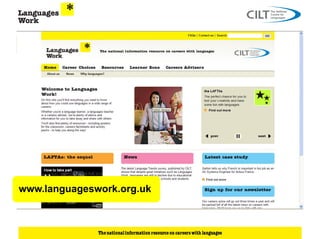
www.languageswork.org.uk
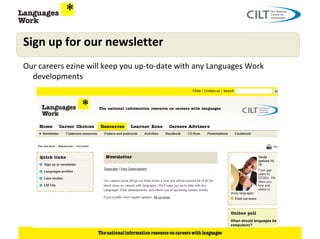
Sign up for our newsletter
Our careers ezine will keep you up-to-date with any Languages Work
  developments

Language show 2010 languages work presentation

  • 1.
    Languages and Careers How can languages work for you?
  • 2.
    What is the jobsmarket for individuals with language skills?
  • 3.
    ‘in an increasinglycompetitive job market, it is clear that foreign language proficiency adds significant value to a candidate’s portfolio of skills, and can give them a real competitive edge when applying for jobs’ CBI Education and Skills Survey, 2009
  • 4.
    Latest research • 74% of employers want language skills • 36% recruit specifically for language skills • Main demand is still for European languages: 52% want French, 43% German, 28% Spanish. • Interest also in Mandarin/Cantonese(38%), Russian (21%) and Portuguese (10%).
  • 5.
  • 6.
    According to thepublic sector UK police forces – top language = Polish Other Eastern European, Asian and African languages also in demand Metropolitan Police provides interpreting in approximately 105 languages (yet figures quote 300 languages spoken in London) Not just the police – local authorities and NHS all require language skills across diverse languages
  • 7.
    Change in languageuse on the Internet
  • 8.
  • 9.
    • ‘I can’tthink of a single career area where language skills are not an advantage’ Rachel Usher, Independent Schools Careers Organisation
  • 10.
    All these companieshave advertised posts with languages
  • 11.
    Vacancies for linguistsinclude • Jobs where languages are integral • Jobs where languages are an added bonus • Jobs where languages are an indicator of general ability and outlook The languages required were diverse – there’s no ‘one’ language to learn
  • 12.
    Vorsprung durch Technik Sectorswhere languages were used included: IT, creative and media, retail, law, finance, business, energies and utilities, manufacturing, computer games production, construction, property management, engineering, tourism, hospitality, central and local government
  • 13.
    Because you’re worthit • ‘Our company offers international career opportunities for which we need talented, multilingual individuals’ Alexander Snelling, L’Oréal UK Ltd
  • 15.
    Public services ‘Paramedics oftendon’t have the time to find an interpreter, like a hospital does. They need information quickly and so it’s great if paramedics speak the language of a family that doesn’t speak good English’ Brian Goodwin, Ambulance Service Association.
  • 16.
    Retail • High levelof interaction with the public • Customers more likely to buy if addressed in own language • Increased multilingualism (tourism, diversity, globalisation)
  • 17.
    Some home truths •UK employers are not all language-aware, but they are becoming more so • They can, and do, recruit internationally • They don’t just want language skills • They want the right mix of skills for their company
  • 18.
    Understanding what employerswant • ‘an international dimension’ • ‘ability to build relationships’ • ‘awareness of cultural differences’ • ‘team-working, oral communication, problem-solving’
  • 19.
    Where can Ifind out more?
  • 20.
  • 24.
    Sign up forour newsletter Our careers ezine will keep you up-to-date with any Languages Work developments