Indian folk music  is diverse because of India's vast cultural diversity. It has many forms including  bhangra ,  lavani ,  dandiya  and Rajasthani. Folk music has been influential on classical music, which is viewed as a higher art form. Instruments and styles have impacted classical ragas. It is also not uncommon for major writers, saints and poets to have large musical libraries and traditions to their name, often sung in  thumri  (semi-classical) style. Most of the folk music of India is dance-oriented. Indian folk music
Types of dance-oriented folk music  Bhangra Lavani Dandiya Rajasthani
Bhangra Bhangra  is a form of  dance -oriented  folk music  that has become a  pop  sensation in the  United Kingdom . The present musical style is derived from the traditional musical accompaniment to the folk dance of  Punjab  called by the same name,  bhangra .
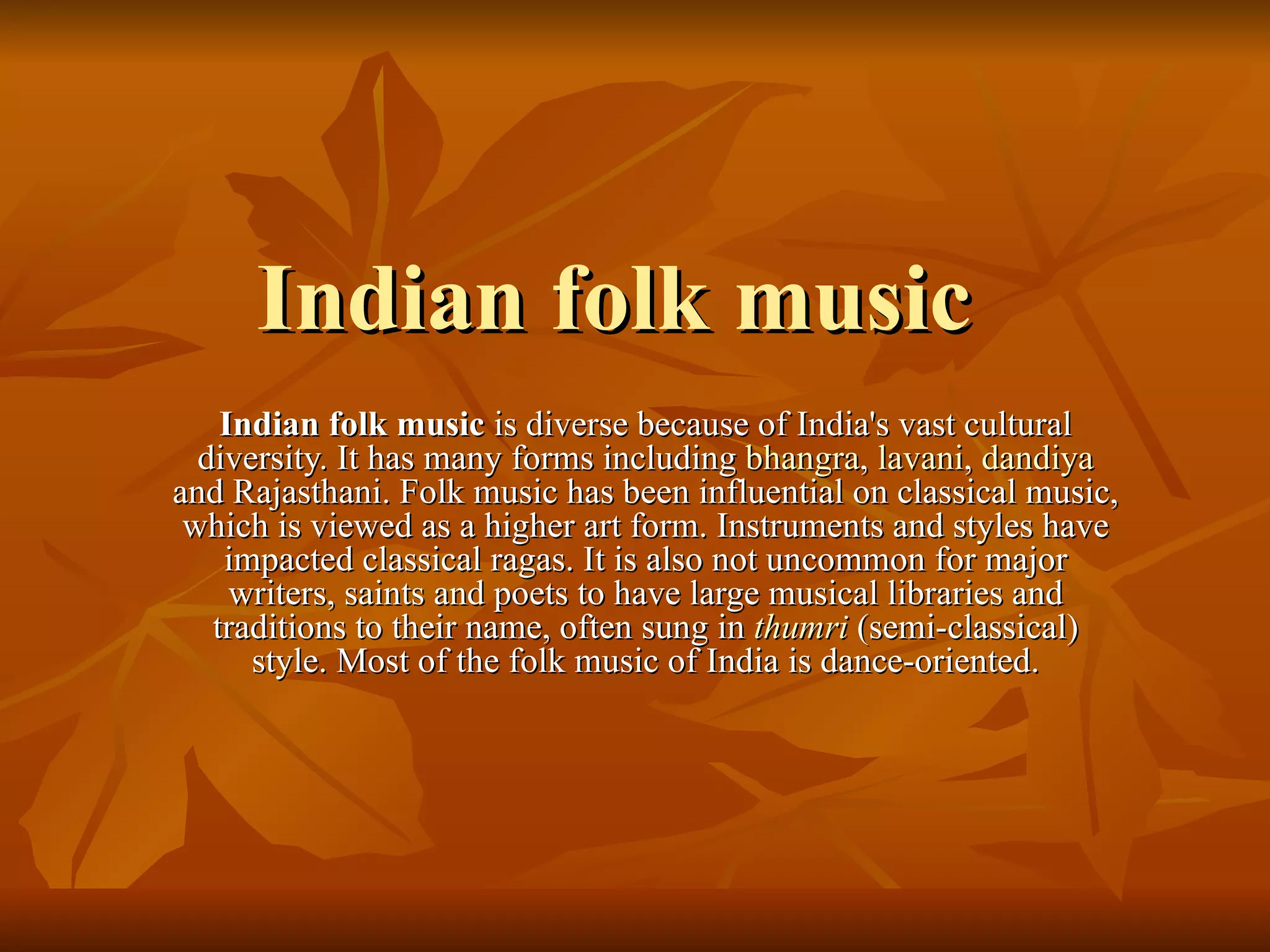
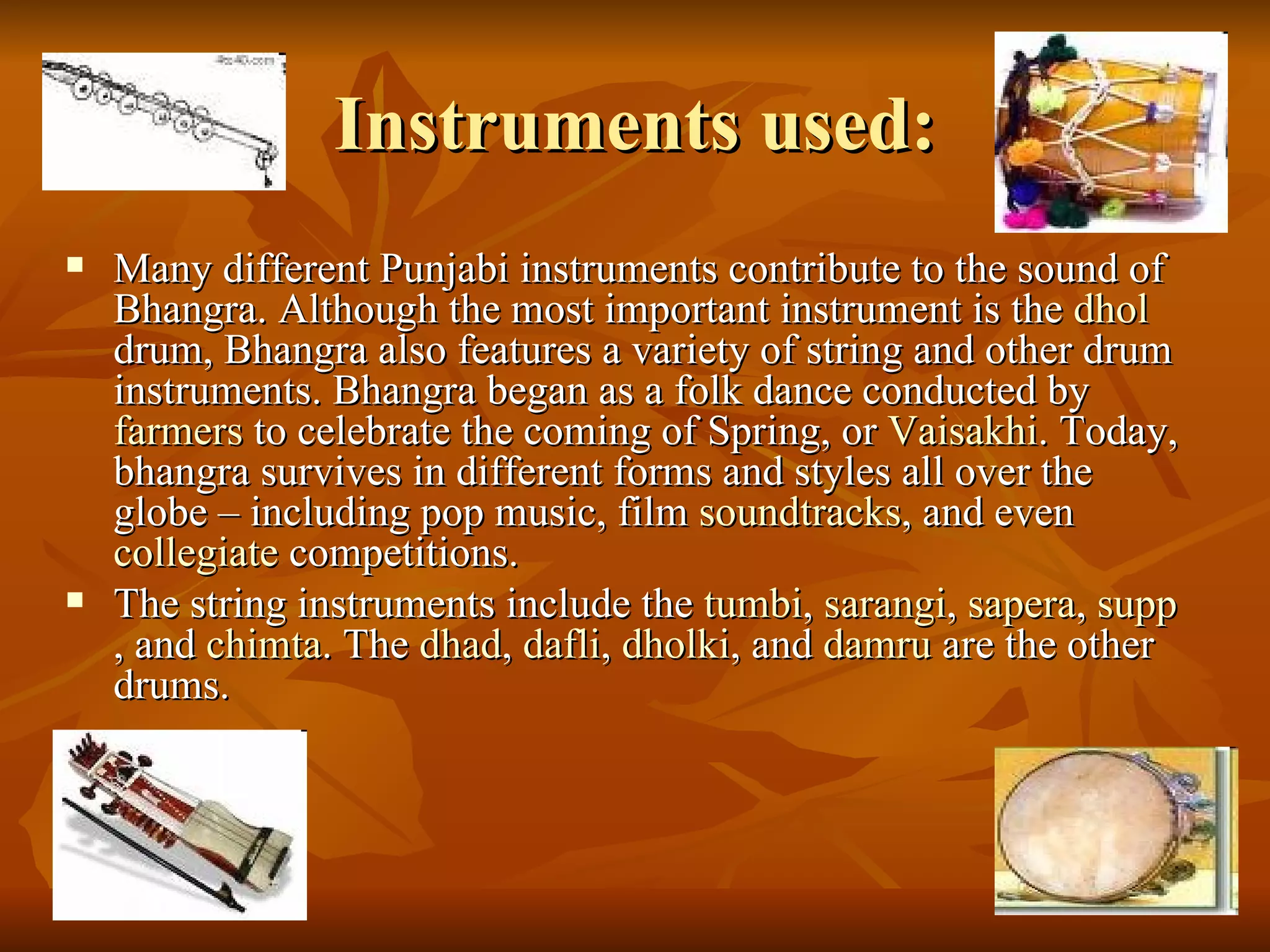
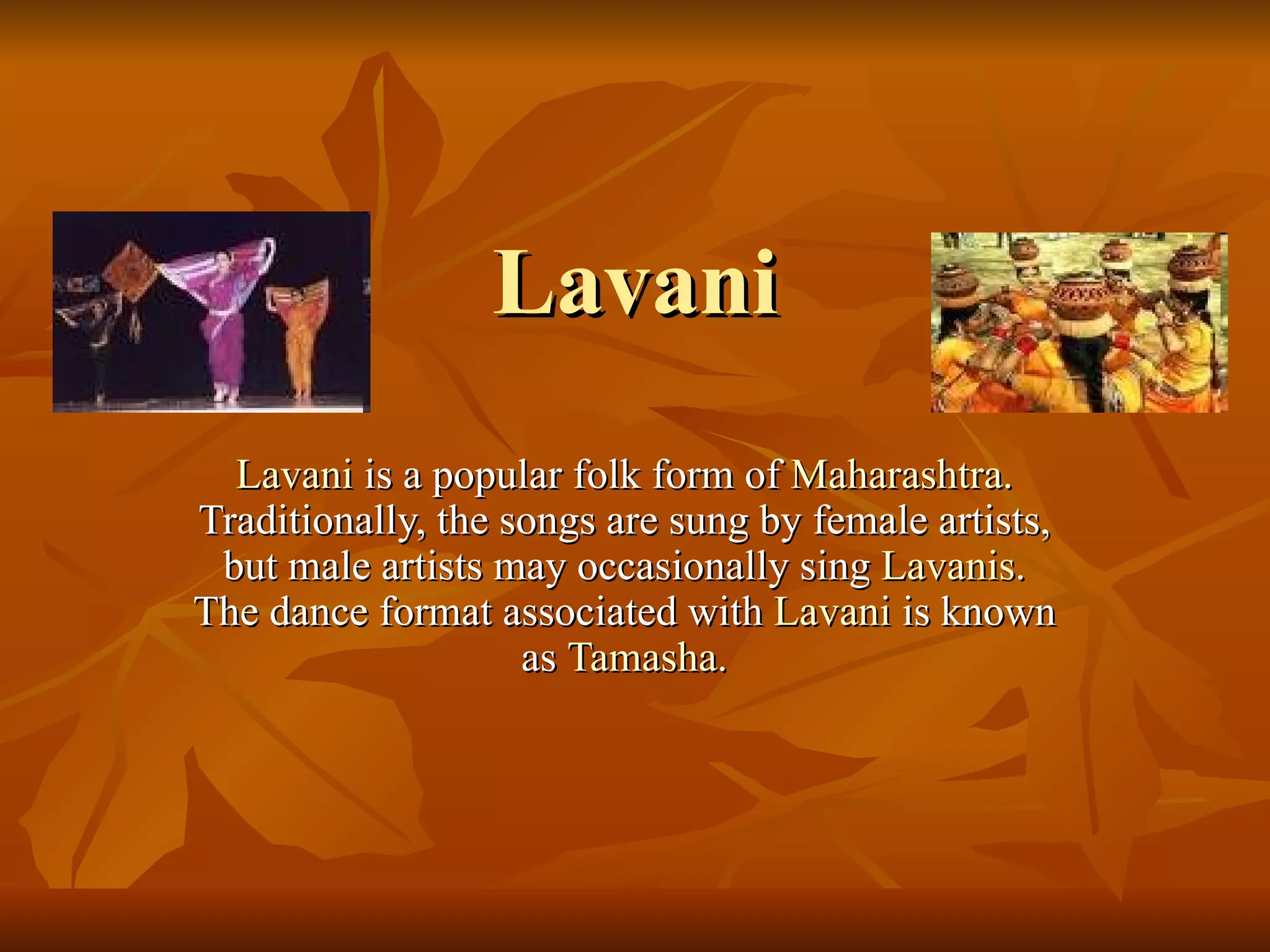
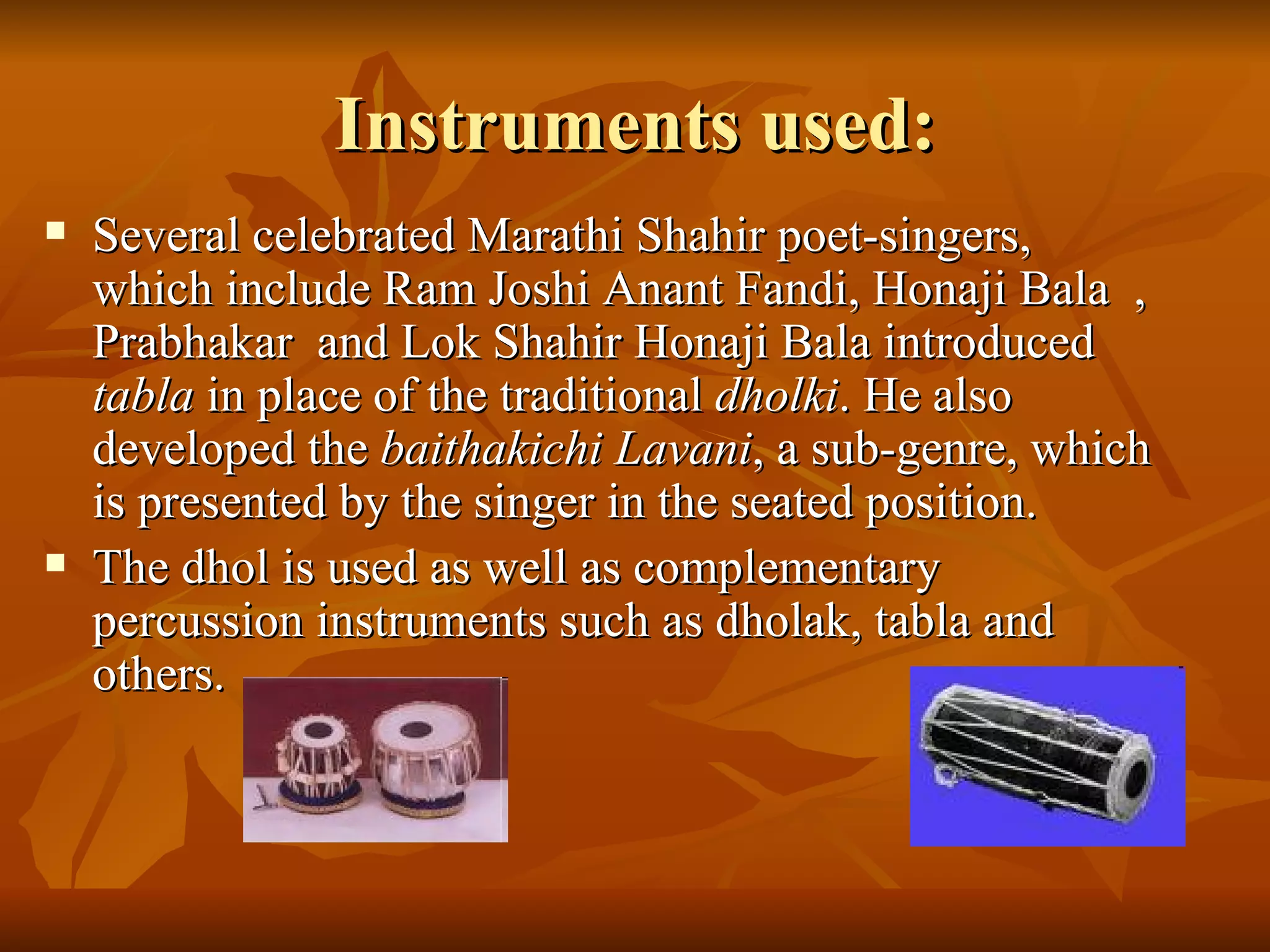
Instruments used: Many different Punjabi instruments contribute to the sound of Bhangra. Although the most important instrument is the  dhol  drum, Bhangra also features a variety of string and other drum instruments. Bhangra began as a folk dance conducted by  farmers  to celebrate the coming of Spring, or  Vaisakhi . Today, bhangra survives in different forms and styles all over the globe – including pop music, film  soundtracks , and even  collegiate  competitions. The string instruments include the  tumbi ,  sarangi ,  sapera ,  supp , and  chimta . The  dhad ,  dafli ,  dholki , and  damru  are the other drums.
Lavani Lavani  is a popular folk form of  Maharashtra . Traditionally, the songs are sung by female artists, but male artists may occasionally sing  Lavanis . The dance format associated with  Lavani  is known as  Tamasha .
Instruments used: Several celebrated Marathi Shahir poet-singers, which include Ram Joshi Anant Fandi, Honaji Bala  , Prabhakar  and Lok Shahir Honaji Bala introduced  tabla  in place of the traditional  dholki . He also developed the  baithakichi Lavani , a sub-genre, which is presented by the singer in the seated position. The dhol is used as well as complementary percussion instruments such as dholak, tabla and others.
Dandiya Dandiya  is a form of dance-oriented folk music that has also been adapted for pop music worldwide. The present musical style is derived from the traditional musical accompaniment to the folk dance of  Dandiya  called by the same name, dandiya.
Instruments used: Originating as devotional  Garba  dances, which were always performed in Durga's honour, this dance form is actually the staging of a mock-fight between the Goddess and  Mahishasura , the mighty demon-king, and is nicknamed "The Sword Dance". During the dance, dancers energetically whirl and move their feet and arms in a complicated,  choreographed  manner to the tune of the music with various rhythms. The  dhol  is used as well as complementary percussion instruments such as the dholak, tabla and others. The  sticks  ( dandiya s) of the dance represent the  sword  of Durga.
Rajasthani The age old traditional heritage of Rajasthan has enriched its music and dance immensely. Be it the melody of folk music or the beat of tribal percussion, Rajasthan amazes its tourists with.  Rajasthani music  has a diverse collection of musician  castes , including langas, sapera, bhopa, jogi and  manganiyar bejewelled treasure of music and dance
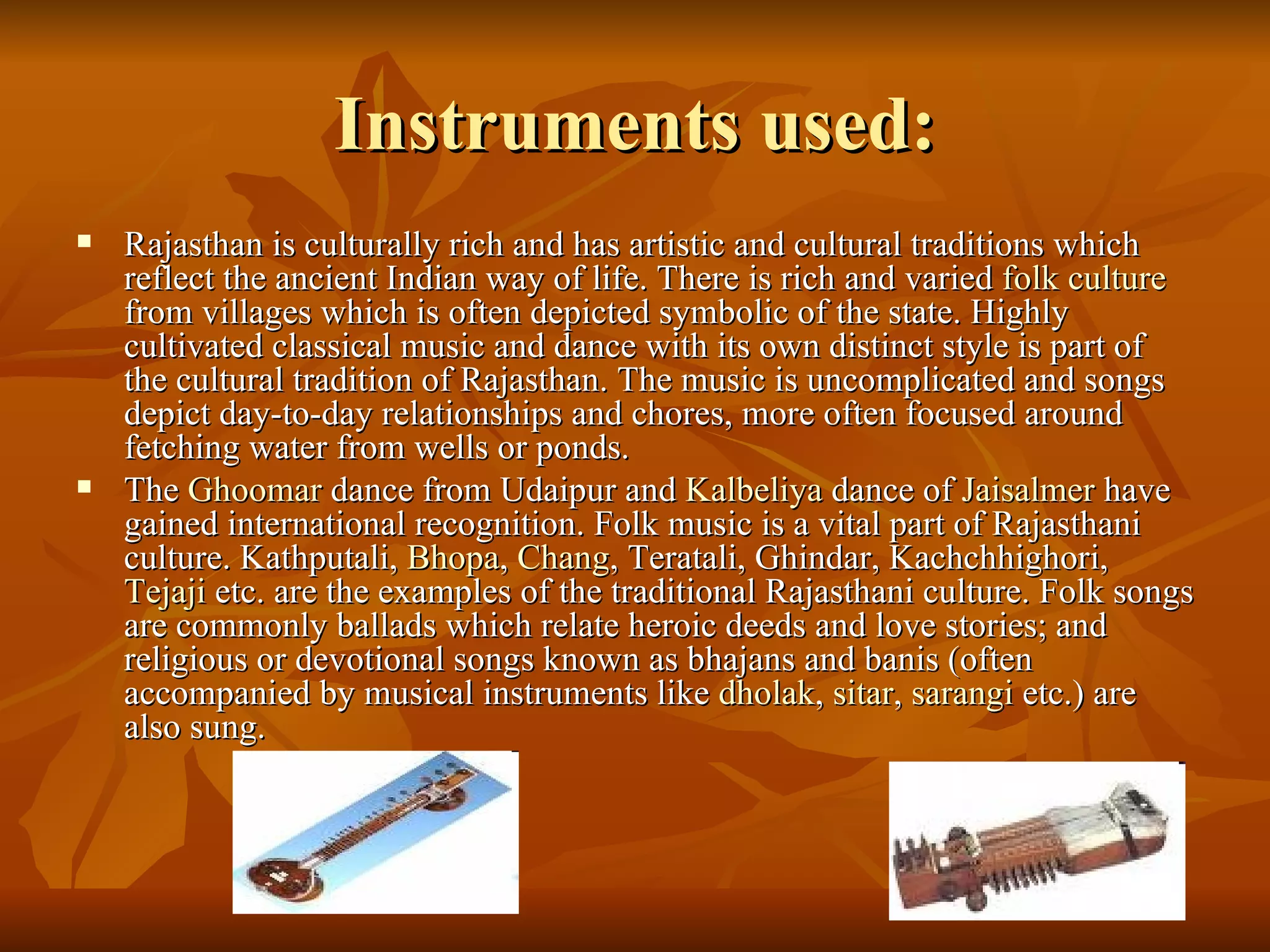
Instruments used: Rajasthan is culturally rich and has artistic and cultural traditions which reflect the ancient Indian way of life. There is rich and varied  folk culture  from villages which is often depicted symbolic of the state. Highly cultivated classical music and dance with its own distinct style is part of the cultural tradition of Rajasthan. The music is uncomplicated and songs depict day-to-day relationships and chores, more often focused around fetching water from wells or ponds. The  Ghoomar  dance from Udaipur and  Kalbeliya  dance of  Jaisalmer  have gained international recognition. Folk music is a vital part of Rajasthani culture. Kathputali,  Bhopa ,  Chang , Teratali, Ghindar, Kachchhighori,  Tejaji  etc. are the examples of the traditional Rajasthani culture. Folk songs are commonly ballads which relate heroic deeds and love stories; and religious or devotional songs known as bhajans and banis (often accompanied by musical instruments like  dholak ,  sitar ,  sarangi  etc.) are also sung.
  INDIA IS NOT JUST A PLACE. India is not just a people.  India is the celestial music, And inside that music   Anybody from any corner of the globe   Can find the real significance of life.  -  Sri Chinmoy

Indian folk music

  • 1.
    Indian folk music is diverse because of India's vast cultural diversity. It has many forms including bhangra , lavani , dandiya and Rajasthani. Folk music has been influential on classical music, which is viewed as a higher art form. Instruments and styles have impacted classical ragas. It is also not uncommon for major writers, saints and poets to have large musical libraries and traditions to their name, often sung in thumri (semi-classical) style. Most of the folk music of India is dance-oriented. Indian folk music
  • 2.
    Types of dance-orientedfolk music Bhangra Lavani Dandiya Rajasthani
  • 3.
    Bhangra Bhangra is a form of dance -oriented folk music that has become a pop sensation in the United Kingdom . The present musical style is derived from the traditional musical accompaniment to the folk dance of Punjab called by the same name, bhangra .
  • 4.
    Instruments used: Manydifferent Punjabi instruments contribute to the sound of Bhangra. Although the most important instrument is the dhol drum, Bhangra also features a variety of string and other drum instruments. Bhangra began as a folk dance conducted by farmers to celebrate the coming of Spring, or Vaisakhi . Today, bhangra survives in different forms and styles all over the globe – including pop music, film soundtracks , and even collegiate competitions. The string instruments include the tumbi , sarangi , sapera , supp , and chimta . The dhad , dafli , dholki , and damru are the other drums.
  • 5.
    Lavani Lavani is a popular folk form of Maharashtra . Traditionally, the songs are sung by female artists, but male artists may occasionally sing Lavanis . The dance format associated with Lavani is known as Tamasha .
  • 6.
    Instruments used: Severalcelebrated Marathi Shahir poet-singers, which include Ram Joshi Anant Fandi, Honaji Bala , Prabhakar and Lok Shahir Honaji Bala introduced tabla in place of the traditional dholki . He also developed the baithakichi Lavani , a sub-genre, which is presented by the singer in the seated position. The dhol is used as well as complementary percussion instruments such as dholak, tabla and others.
  • 7.
    Dandiya Dandiya is a form of dance-oriented folk music that has also been adapted for pop music worldwide. The present musical style is derived from the traditional musical accompaniment to the folk dance of Dandiya called by the same name, dandiya.
  • 8.
    Instruments used: Originatingas devotional Garba dances, which were always performed in Durga's honour, this dance form is actually the staging of a mock-fight between the Goddess and Mahishasura , the mighty demon-king, and is nicknamed "The Sword Dance". During the dance, dancers energetically whirl and move their feet and arms in a complicated, choreographed manner to the tune of the music with various rhythms. The dhol is used as well as complementary percussion instruments such as the dholak, tabla and others. The sticks ( dandiya s) of the dance represent the sword of Durga.
  • 9.
    Rajasthani The ageold traditional heritage of Rajasthan has enriched its music and dance immensely. Be it the melody of folk music or the beat of tribal percussion, Rajasthan amazes its tourists with. Rajasthani music has a diverse collection of musician castes , including langas, sapera, bhopa, jogi and manganiyar bejewelled treasure of music and dance
  • 10.
    Instruments used: Rajasthanis culturally rich and has artistic and cultural traditions which reflect the ancient Indian way of life. There is rich and varied folk culture from villages which is often depicted symbolic of the state. Highly cultivated classical music and dance with its own distinct style is part of the cultural tradition of Rajasthan. The music is uncomplicated and songs depict day-to-day relationships and chores, more often focused around fetching water from wells or ponds. The Ghoomar dance from Udaipur and Kalbeliya dance of Jaisalmer have gained international recognition. Folk music is a vital part of Rajasthani culture. Kathputali, Bhopa , Chang , Teratali, Ghindar, Kachchhighori, Tejaji etc. are the examples of the traditional Rajasthani culture. Folk songs are commonly ballads which relate heroic deeds and love stories; and religious or devotional songs known as bhajans and banis (often accompanied by musical instruments like dholak , sitar , sarangi etc.) are also sung.
  • 11.
      INDIA ISNOT JUST A PLACE. India is not just a people. India is the celestial music, And inside that music   Anybody from any corner of the globe   Can find the real significance of life. - Sri Chinmoy