 Introduction
 Types of Dances
 Bidesia
 Chhau
 Bhangra
 Rouf
 Gotipua
 Dandiya
 Bihu
 Facts & Statistics
 Snapshots of Indian
Folk Dance
.
We dance for
laughter, we dance for
tears, we dance for
madness, we dance
for fears, we dance for
hopes, we dance for
screams, we are the
dancers, we create the
dreams.
Dance is a symbol of communication which brings out
the innermost feelings. It depicts the cultural aspects of
a civilization.
India is having a treasure of a variety of folk
dances. The origin of Indian folk dances forms can be
traced to different parts of the country.
Each form of dance represents the culture
and ethos of a particular region or a group of people.
Most of the Indian dances describe & explain the Indian
art of living.
Here is What we have to say!
Now, From Here We’ll take a glance at some of
the folk dances of India.
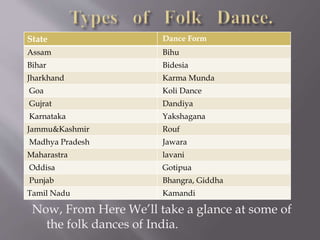
State Dance Form
Assam Bihu
Bihar Bidesia
Jharkhand Karma Munda
Goa Koli Dance
Gujrat Dandiya
Karnataka Yakshagana
Jammu&Kashmir Rouf
Madhya Pradesh Jawara
Maharastra lavani
Oddisa Gotipua
Punjab Bhangra, Giddha
Tamil Nadu Kamandi
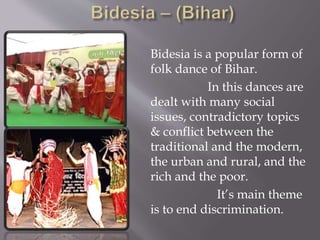
Bidesia is a popular form of
folk dance of Bihar.
In this dances are
dealt with many social
issues, contradictory topics
& conflict between the
traditional and the modern,
the urban and rural, and the
rich and the poor.
It’s main theme
is to end discrimination.
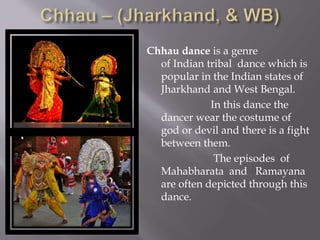
Chhau dance is a genre
of Indian tribal dance which is
popular in the Indian states of
Jharkhand and West Bengal.
In this dance the
dancer wear the costume of
god or devil and there is a fight
between them.
The episodes of
Mahabharata and Ramayana
are often depicted through this
dance.
Bhangra, a folk dance form, is
performed with zest,
enthusiasm and energy in
Punjab.
In this, Men
perform Bhangra, while the
ladies perform their own fierce,
elegant, dance called Giddha.
Bhangra dance is a also
a important part in the
Harvesting festival Baisakh.
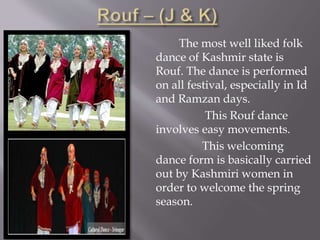
The most well liked folk
dance of Kashmir state is
Rouf. The dance is performed
on all festival, especially in Id
and Ramzan days.
This Rouf dance
involves easy movements.
This welcoming
dance form is basically carried
out by Kashmiri women in
order to welcome the spring
season.
Gotipua is a traditional dance
form in the state of Orissa.
It has been
performed in Orissa for
centuries by young boys,
who dress as women to
praise Jagannath and Krishn
a.
In this Dance ,the
young boys perform
acrobats depicting the life of
Radha & Krishna.
Dandiya is the famous folk
dance of Gujrat. It is the
featured dances of Navratri
evenings in Gujarat.
The sticks of the dance
represent the sword of
Durga.
The main difference
between Garba & Dandiya is
that Garba is performed
before 'Aarti' while Dandiya
is performed after it.
The Bihu dance is a folk dance
from the Indian state of Assam
related to the festival of Bihu.
This joyous dance is
performed by both young men
and women, and is
characterized by brisk dance
steps, rapid hand movement.
This dance form is
especially played in the
harvesting season.
 First archeological proof of dance comes
from the 9 thousand year old cave paintings
in India.
 Womens were not alloweded to dance in
Public till 1861 except in palaces.
 In India, Tamil Nadu is having maximum no.
of folk dance which is about 15 types of Folk
Dances.
 There are around 300 types of Dance form
present in India.
GotipuaBhangra Karakattam
Dappu Kali
Rouf
BihuChhau
We have many different types of folk dances but the
feeling behind all folk and tribal dances is to bind
people as one. By the folk dance people also devote
towards nature and our mother earth.
so, we should proud to be having
such varieties in India.
By:-
● Chandra Prakash Garg
● Mukul Kumar
Class - 7
Takshila School,Gaya

Indian folk dance

  • 2.
     Introduction  Typesof Dances  Bidesia  Chhau  Bhangra  Rouf  Gotipua  Dandiya  Bihu  Facts & Statistics  Snapshots of Indian Folk Dance . We dance for laughter, we dance for tears, we dance for madness, we dance for fears, we dance for hopes, we dance for screams, we are the dancers, we create the dreams.
  • 3.
    Dance is asymbol of communication which brings out the innermost feelings. It depicts the cultural aspects of a civilization. India is having a treasure of a variety of folk dances. The origin of Indian folk dances forms can be traced to different parts of the country. Each form of dance represents the culture and ethos of a particular region or a group of people. Most of the Indian dances describe & explain the Indian art of living. Here is What we have to say!
  • 4.
    Now, From HereWe’ll take a glance at some of the folk dances of India. State Dance Form Assam Bihu Bihar Bidesia Jharkhand Karma Munda Goa Koli Dance Gujrat Dandiya Karnataka Yakshagana Jammu&Kashmir Rouf Madhya Pradesh Jawara Maharastra lavani Oddisa Gotipua Punjab Bhangra, Giddha Tamil Nadu Kamandi
  • 5.
    Bidesia is apopular form of folk dance of Bihar. In this dances are dealt with many social issues, contradictory topics & conflict between the traditional and the modern, the urban and rural, and the rich and the poor. It’s main theme is to end discrimination.
  • 6.
    Chhau dance isa genre of Indian tribal dance which is popular in the Indian states of Jharkhand and West Bengal. In this dance the dancer wear the costume of god or devil and there is a fight between them. The episodes of Mahabharata and Ramayana are often depicted through this dance.
  • 7.
    Bhangra, a folkdance form, is performed with zest, enthusiasm and energy in Punjab. In this, Men perform Bhangra, while the ladies perform their own fierce, elegant, dance called Giddha. Bhangra dance is a also a important part in the Harvesting festival Baisakh.
  • 8.
    The most wellliked folk dance of Kashmir state is Rouf. The dance is performed on all festival, especially in Id and Ramzan days. This Rouf dance involves easy movements. This welcoming dance form is basically carried out by Kashmiri women in order to welcome the spring season.
  • 9.
    Gotipua is atraditional dance form in the state of Orissa. It has been performed in Orissa for centuries by young boys, who dress as women to praise Jagannath and Krishn a. In this Dance ,the young boys perform acrobats depicting the life of Radha & Krishna.
  • 10.
    Dandiya is thefamous folk dance of Gujrat. It is the featured dances of Navratri evenings in Gujarat. The sticks of the dance represent the sword of Durga. The main difference between Garba & Dandiya is that Garba is performed before 'Aarti' while Dandiya is performed after it.
  • 11.
    The Bihu danceis a folk dance from the Indian state of Assam related to the festival of Bihu. This joyous dance is performed by both young men and women, and is characterized by brisk dance steps, rapid hand movement. This dance form is especially played in the harvesting season.
  • 12.
     First archeologicalproof of dance comes from the 9 thousand year old cave paintings in India.  Womens were not alloweded to dance in Public till 1861 except in palaces.  In India, Tamil Nadu is having maximum no. of folk dance which is about 15 types of Folk Dances.  There are around 300 types of Dance form present in India.
  • 13.
  • 14.
    We have manydifferent types of folk dances but the feeling behind all folk and tribal dances is to bind people as one. By the folk dance people also devote towards nature and our mother earth. so, we should proud to be having such varieties in India.
  • 15.
    By:- ● Chandra PrakashGarg ● Mukul Kumar Class - 7 Takshila School,Gaya