India
India is the
seventh
largest
country and
the second
most
populous.
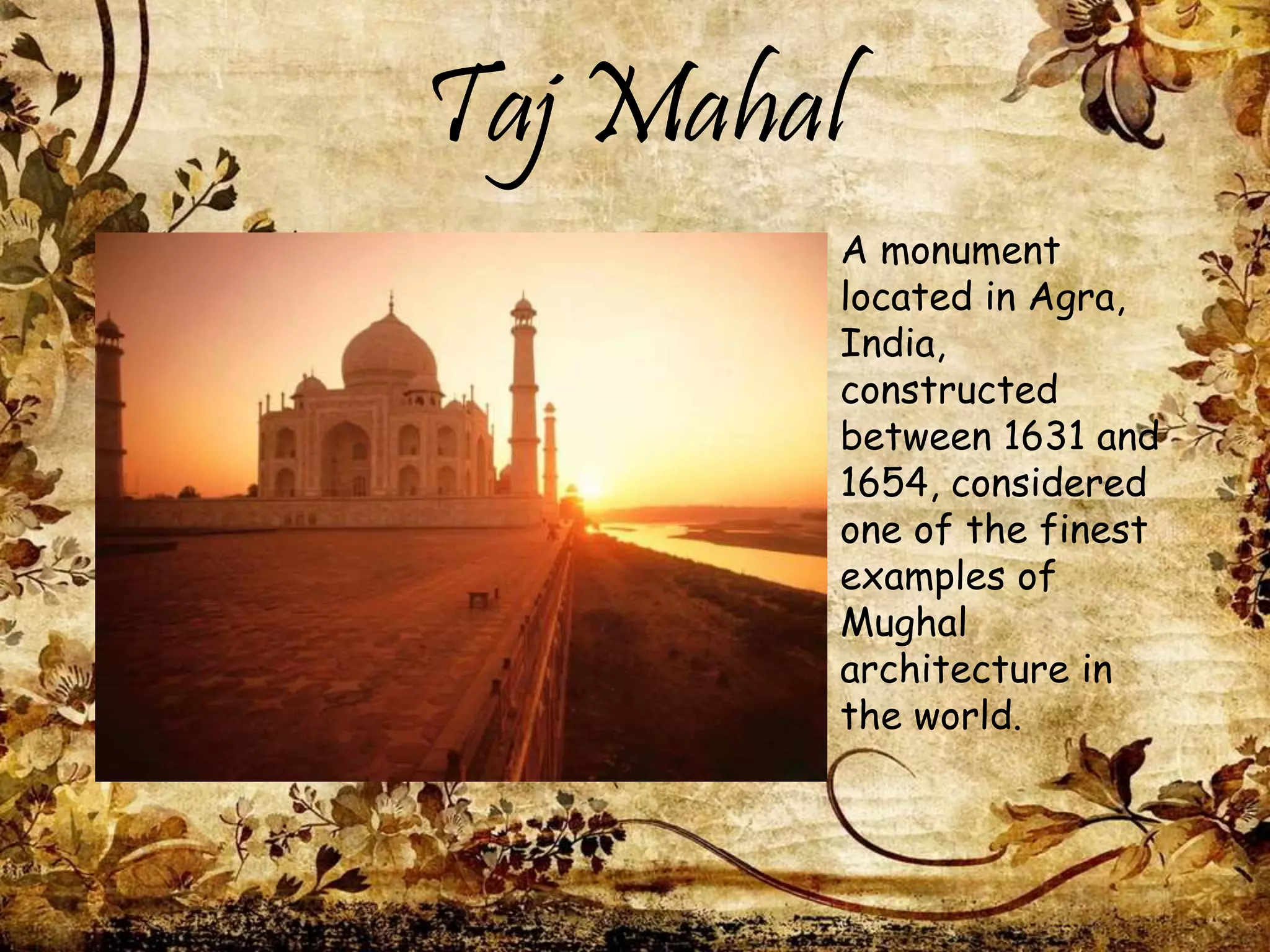
Taj Mahal
A monument
located in Agra,
India,
constructed
between 1631 and
1654, considered
one of the finest
examples of
Mughal
architecture in
the world.
Music of India
• Includes multiple varieties of folk, popular,
pop, classical music and R&B. India's classical
music tradition, including Carnatic and
Hindustani music, has a history spanning
millennia and developed over several eras. It
remains fundamental to the lives of Indians
today as sources of spiritual inspiration,
cultural expression and pure entertainment.
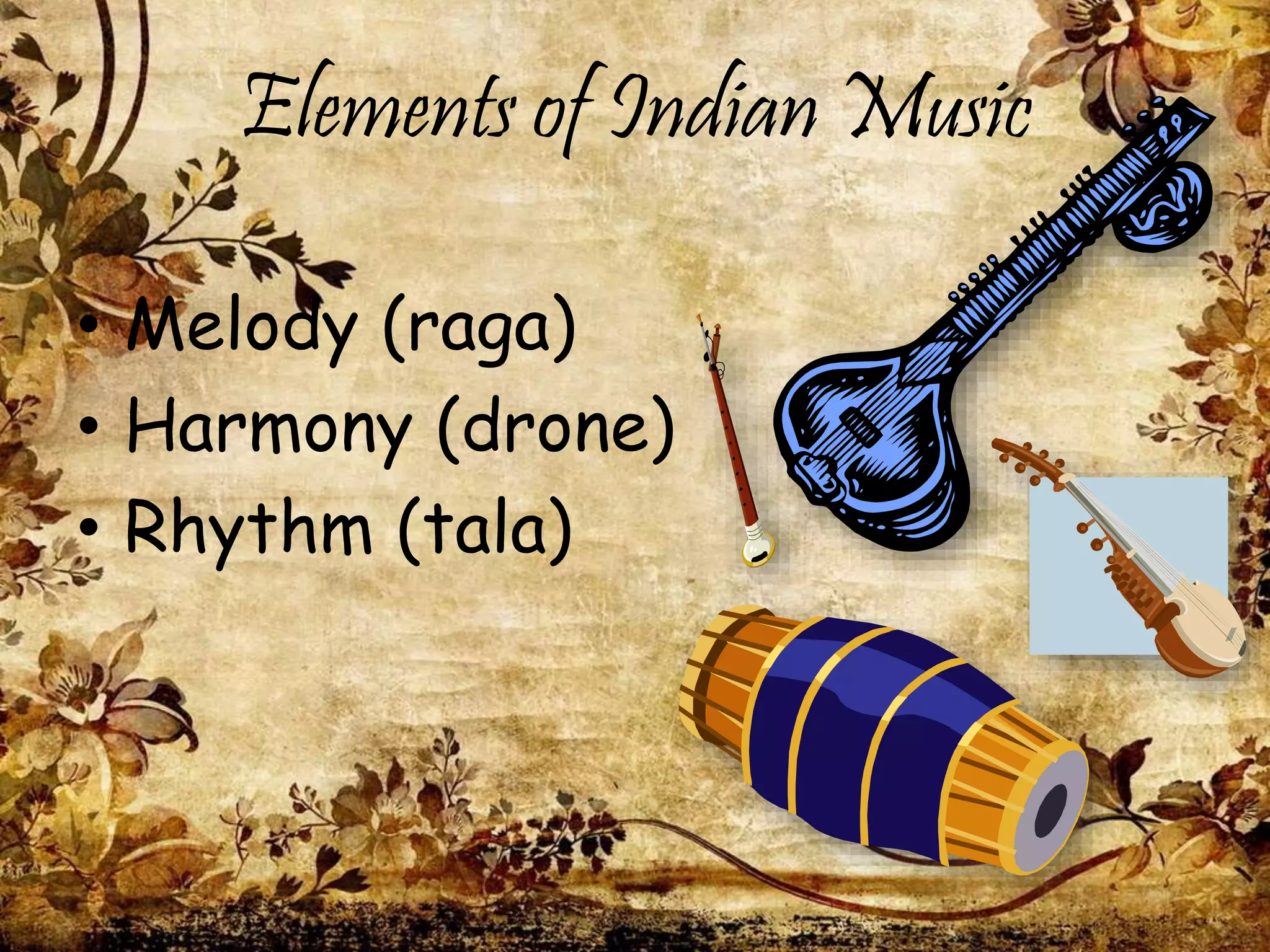
Elements of Indian Music
• Melody (raga)
• Harmony (drone)
• Rhythm (tala)
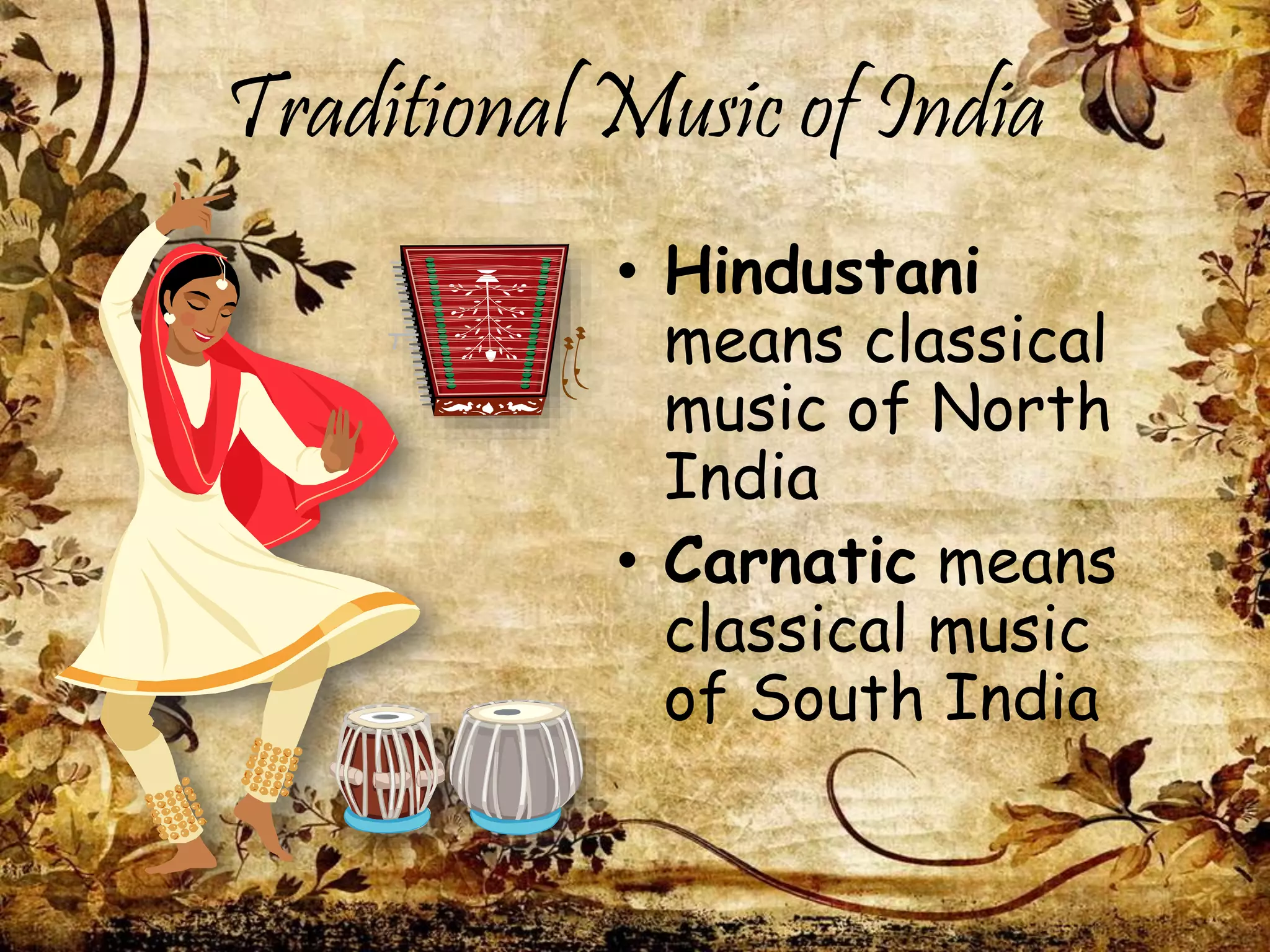
Traditional Music of India
• Hindustani
means classical
music of North
India
• Carnatic means
classical music
of South India
Hindustani Music
An Indian classical music tradition that
goes back to Vedic times around 1000 BC.
It further developed on the 13th and 14th
centuries AD with Persian influences and
from existing religious and folk music.
Carnatic Music
• It is based on historical developments that can
be traced to the 15th - 16th centuries AD and
thereafter.
• However, the form itself is reputed to have been
one of the gifts bestowed on man by the gods of
Hindu mythology.
• It is one of the oldest musical forms that
continue to survive today.
Bhangra Music
• Lively form of music that originated in the
Punjab region to celebrate Vaisakhi.
• During the last thirty years, it has enjoyed a
surge in popularity worldwide, both in
traditional form and as a fusion with genres
such as hip-hop, and in such forms it has
become a pop sensation in the United Kingdom
and North America.
Uttarakhandi Music
• This pure and blessed music have the feel and
the touch, related to nature.
• Related to the various festivals, religious
traditions, folk stories and simple life of the
people of Uttarakhand.
• True reflection of the Cultural Heritage and
the way people live their lives in the
Himalayas.
Lavani Music
• It comes from the word ‘’Lavanya’’ which
means beauty.
• The most popular forms of music that is
practiced all over Maharashtra.
• Songs are sung by female artists
• Male artists may occasionally sing Lavanis.
Rajasthan Music
• It has a very diverse cultural collection of
musician castes, including Langas, Sapera,
Bhopa, Jogi and Manganiyar.
• A soulful, full-throated music with
Harmonious diversity.
• It’s haunting melody evokes from a variety
of delightfully primitive looking instruments.
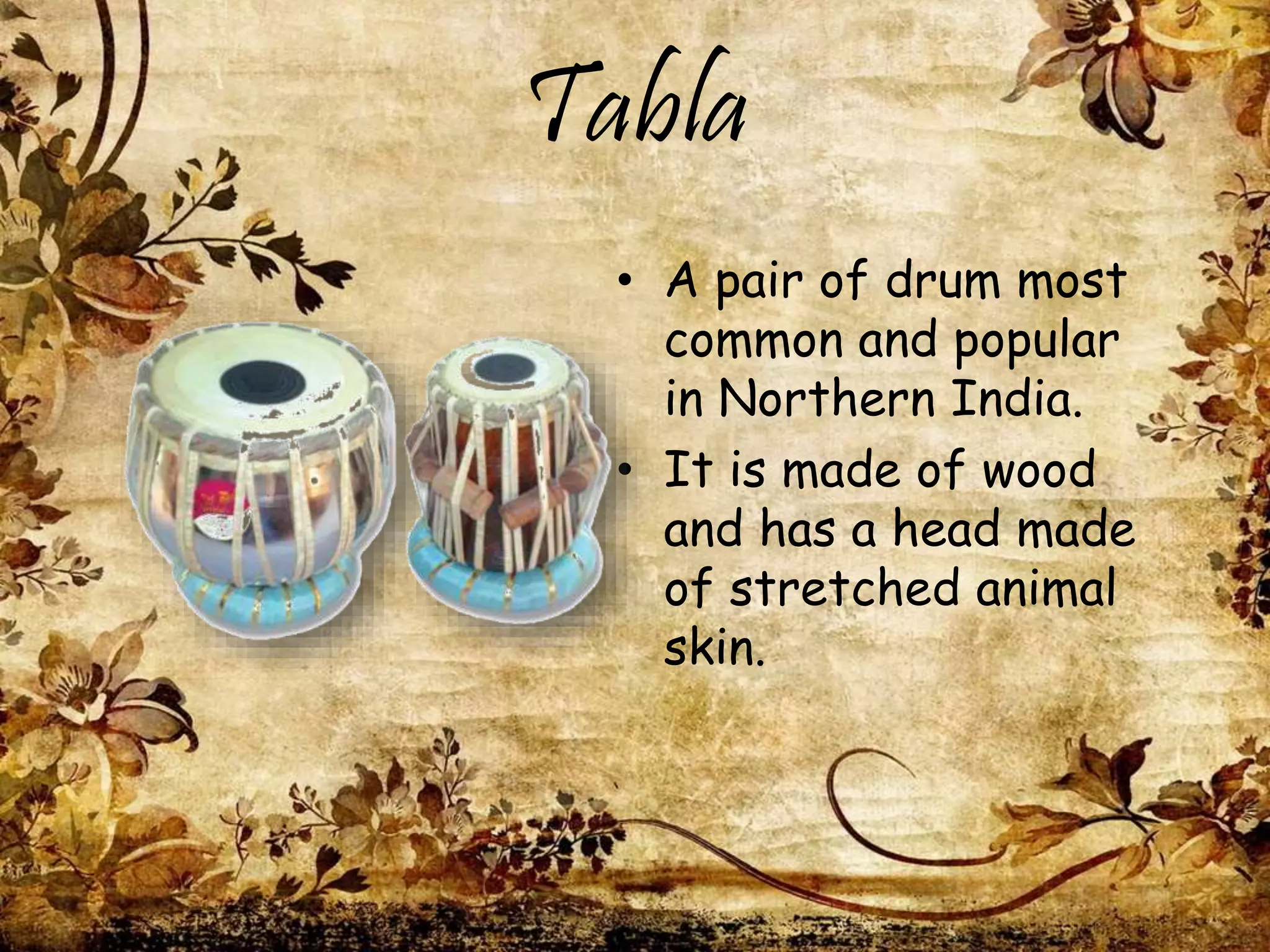
Tabla
• A pair of drum most
common and popular
in Northern India.
• It is made of wood
and has a head made
of stretched animal
skin.
Mridangam
• The classical drum
of Southern India.
• Made of clay.
• It is a double-
headed drum.
• It is played between
the thighs of the
drum player.
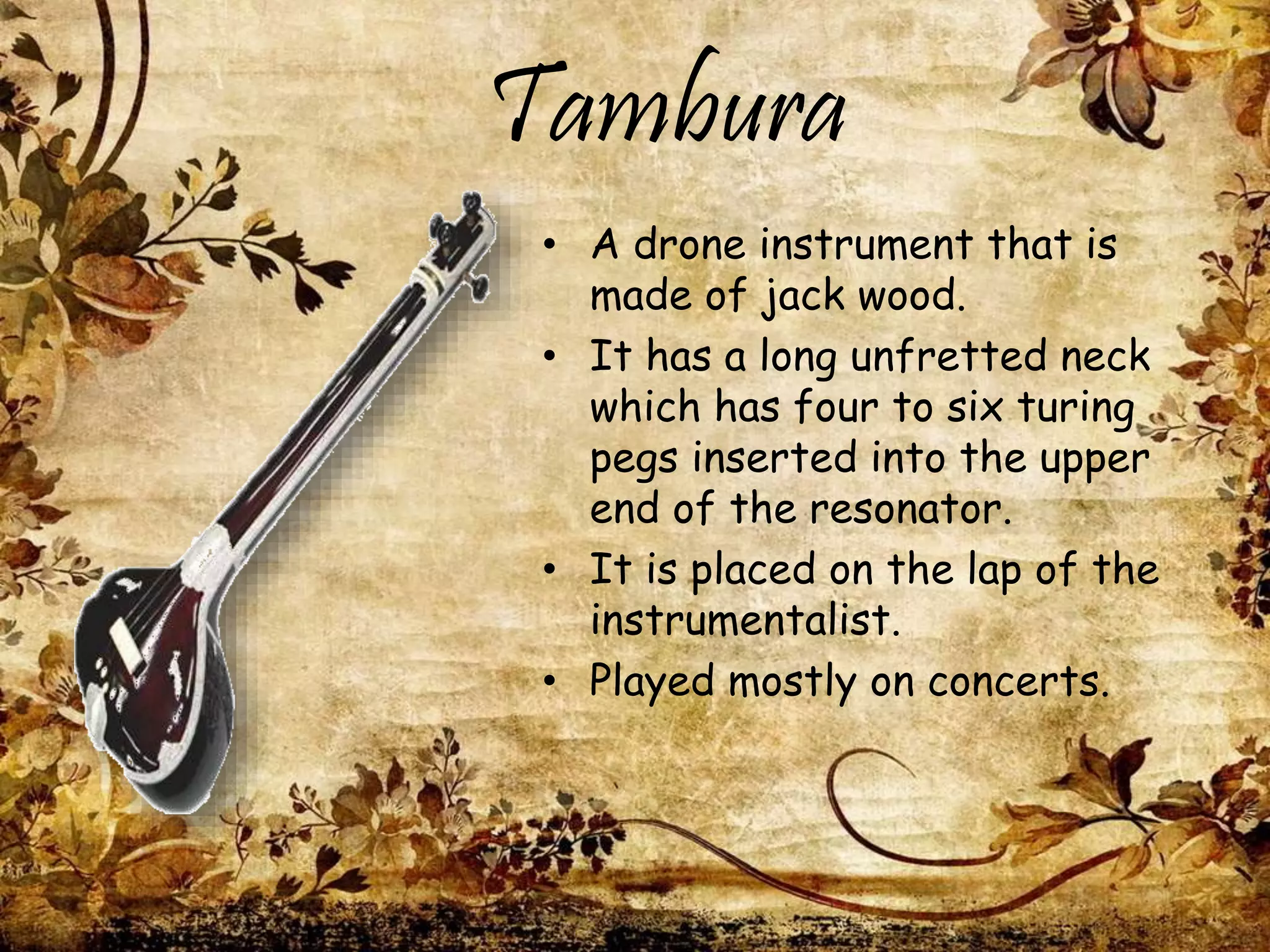
Tambura
• A drone instrument that is
made of jack wood.
• It has a long unfretted neck
which has four to six turing
pegs inserted into the upper
end of the resonator.
• It is placed on the lap of the
instrumentalist.
• Played mostly on concerts.
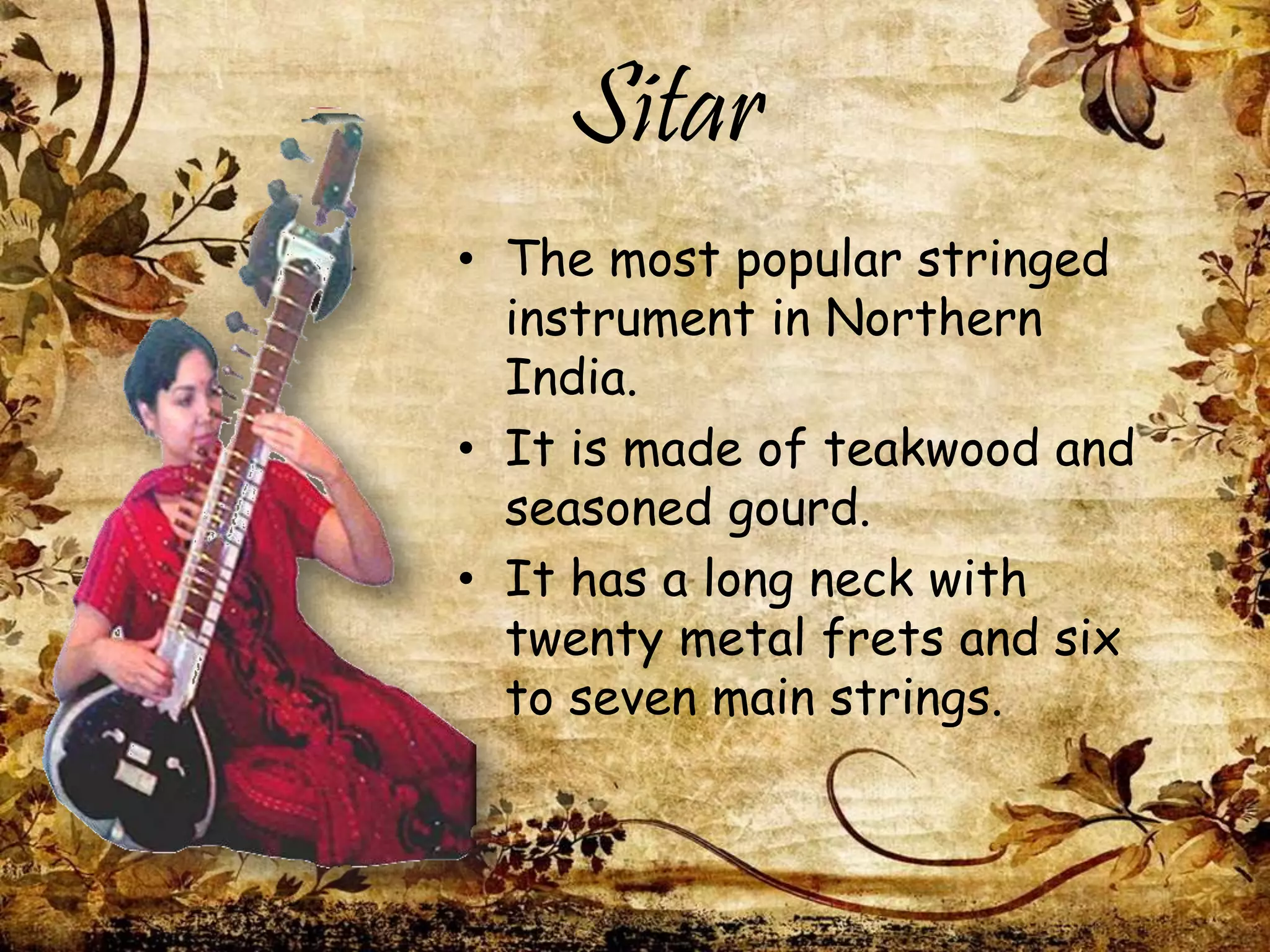
Sitar
• The most popular stringed
instrument in Northern
India.
• It is made of teakwood and
seasoned gourd.
• It has a long neck with
twenty metal frets and six
to seven main strings.
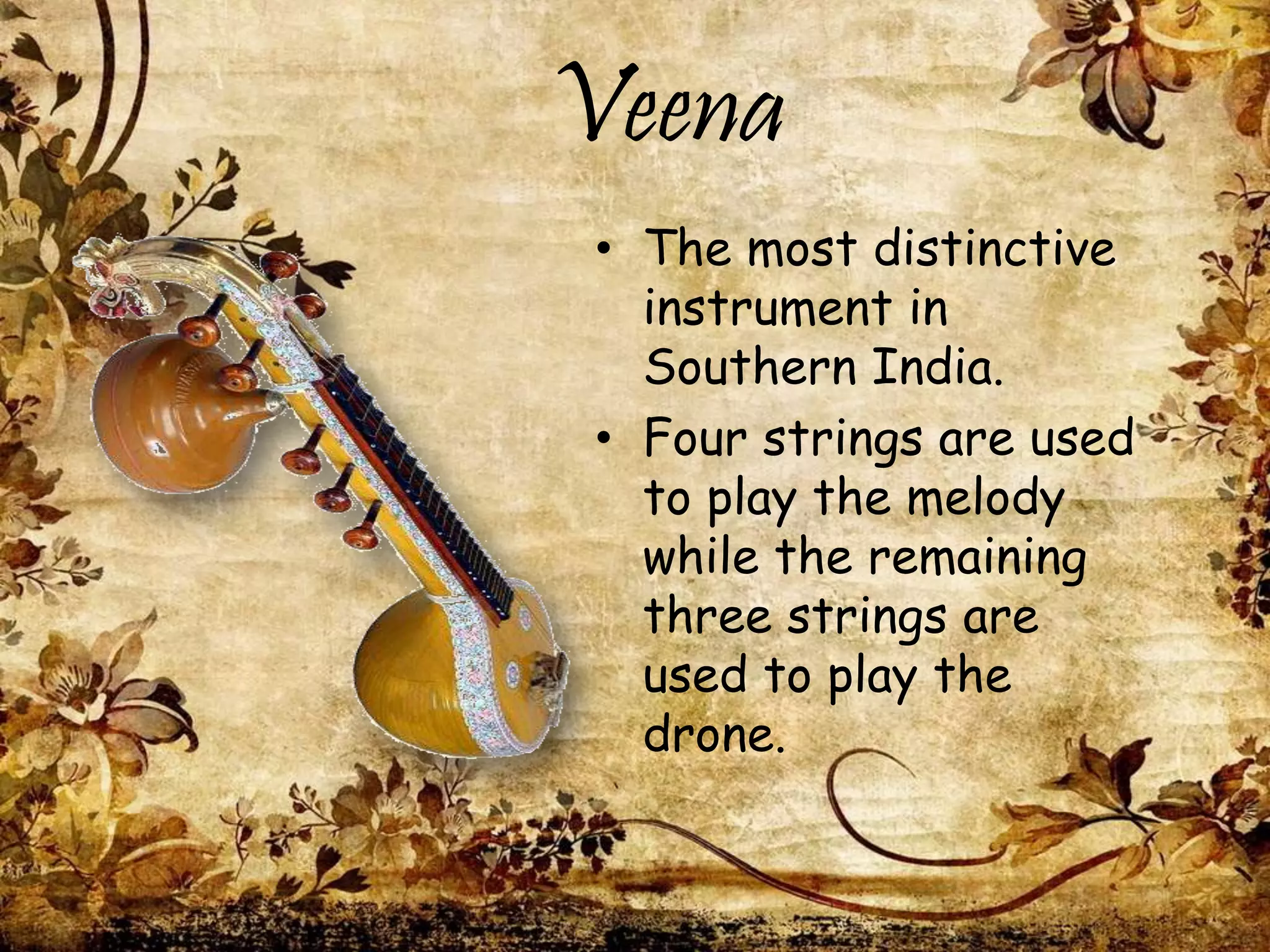
Veena
• The most distinctive
instrument in
Southern India.
• Four strings are used
to play the melody
while the remaining
three strings are
used to play the
drone.
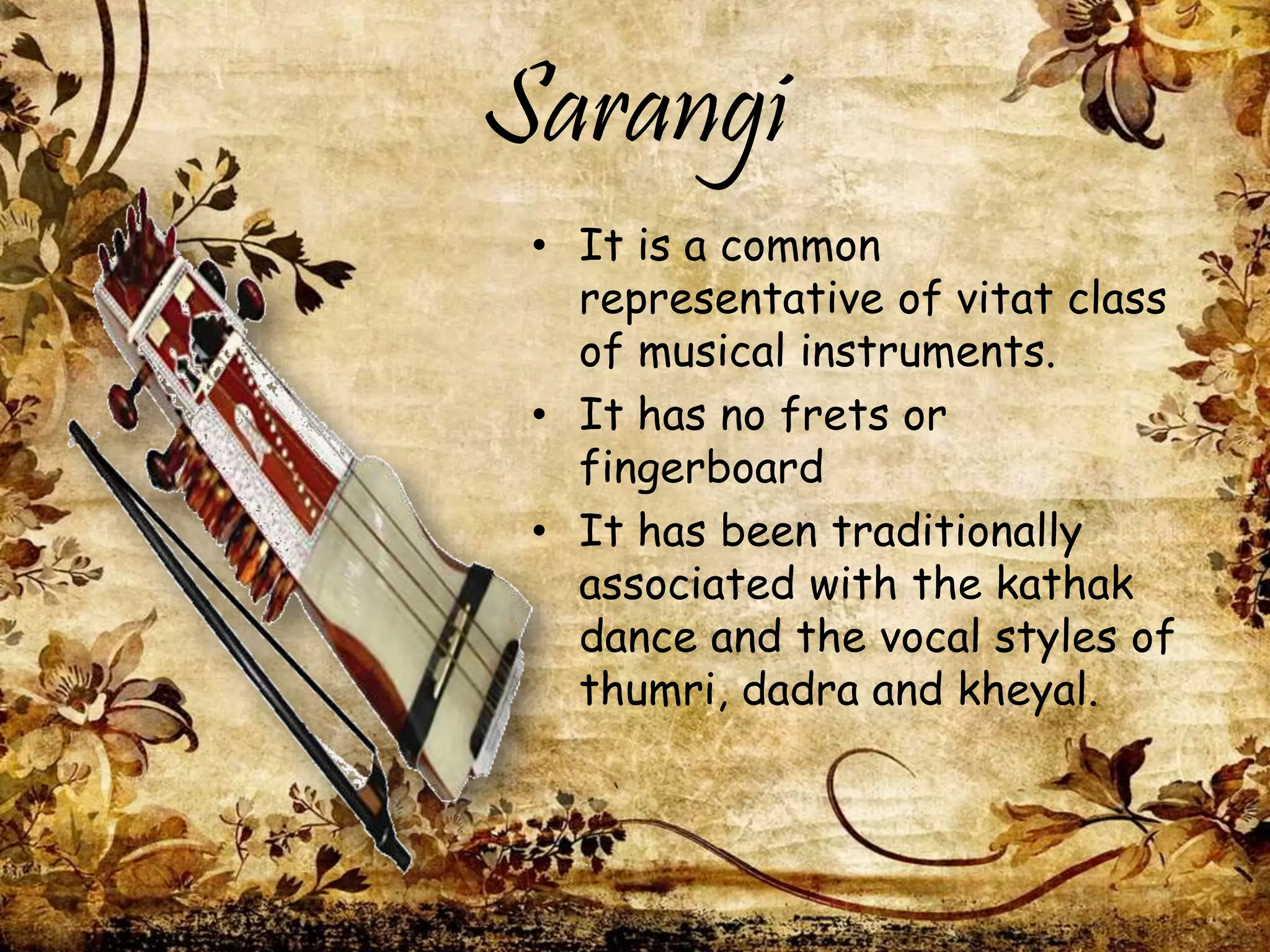
Sarangi
• It is a common
representative of vitat class
of musical instruments.
• It has no frets or
fingerboard
• It has been traditionally
associated with the kathak
dance and the vocal styles of
thumri, dadra and kheyal.
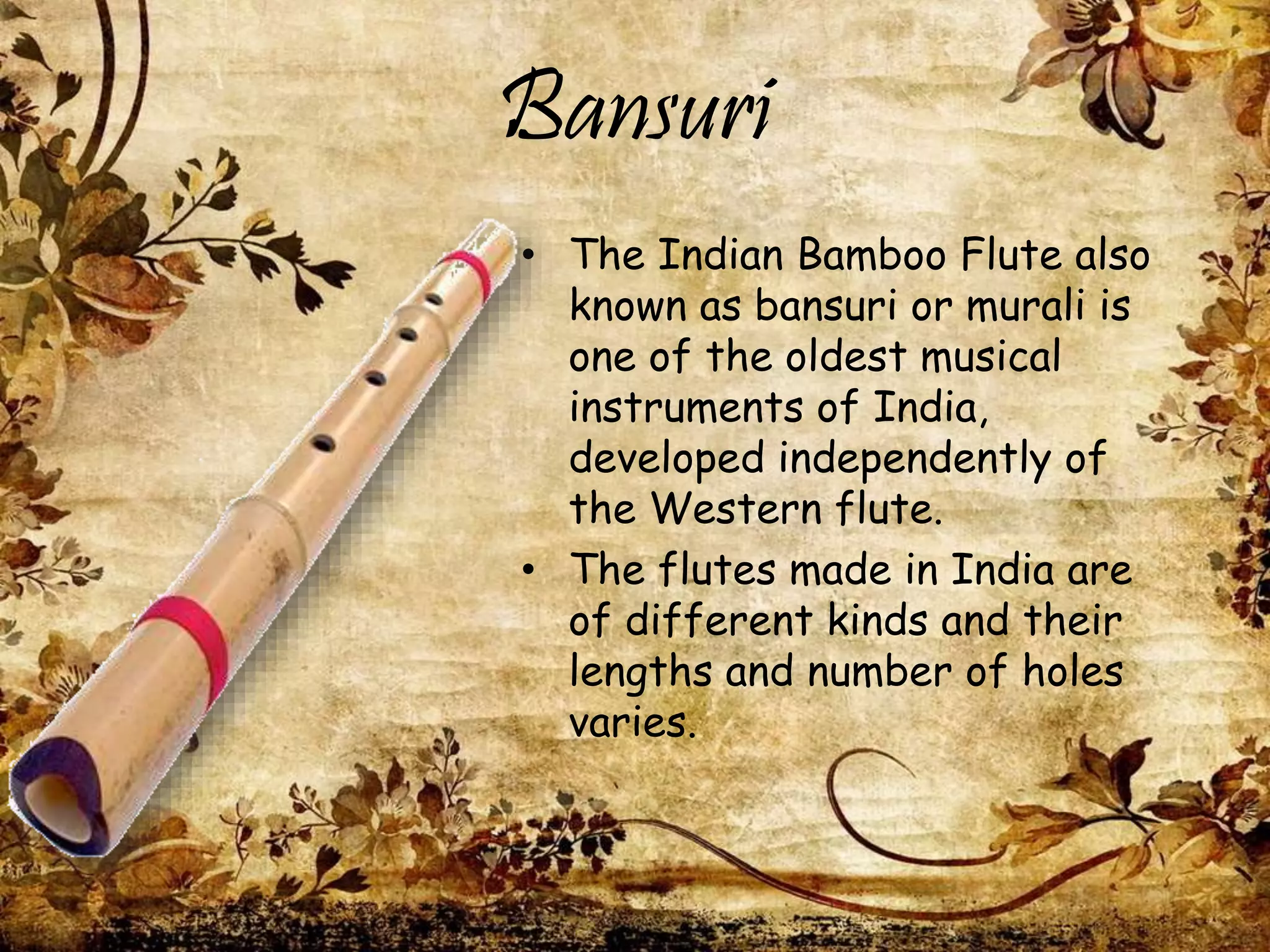
Bansuri
• The Indian Bamboo Flute also
known as bansuri or murali is
one of the oldest musical
instruments of India,
developed independently of
the Western flute.
• The flutes made in India are
of different kinds and their
lengths and number of holes
varies.
Shehnai
• A double-reed conical oboe
of North India.
• It is made of wood, except
for a flaring metal bell
attached to the bottom of
the instrument.
• It is difficult to play, as
the musician must master a
wide range of finely
nuanced embouchure and
fingering techniques.
Jal Tarang
• Also known as
“waves in the
water”
• a water
xylophone.
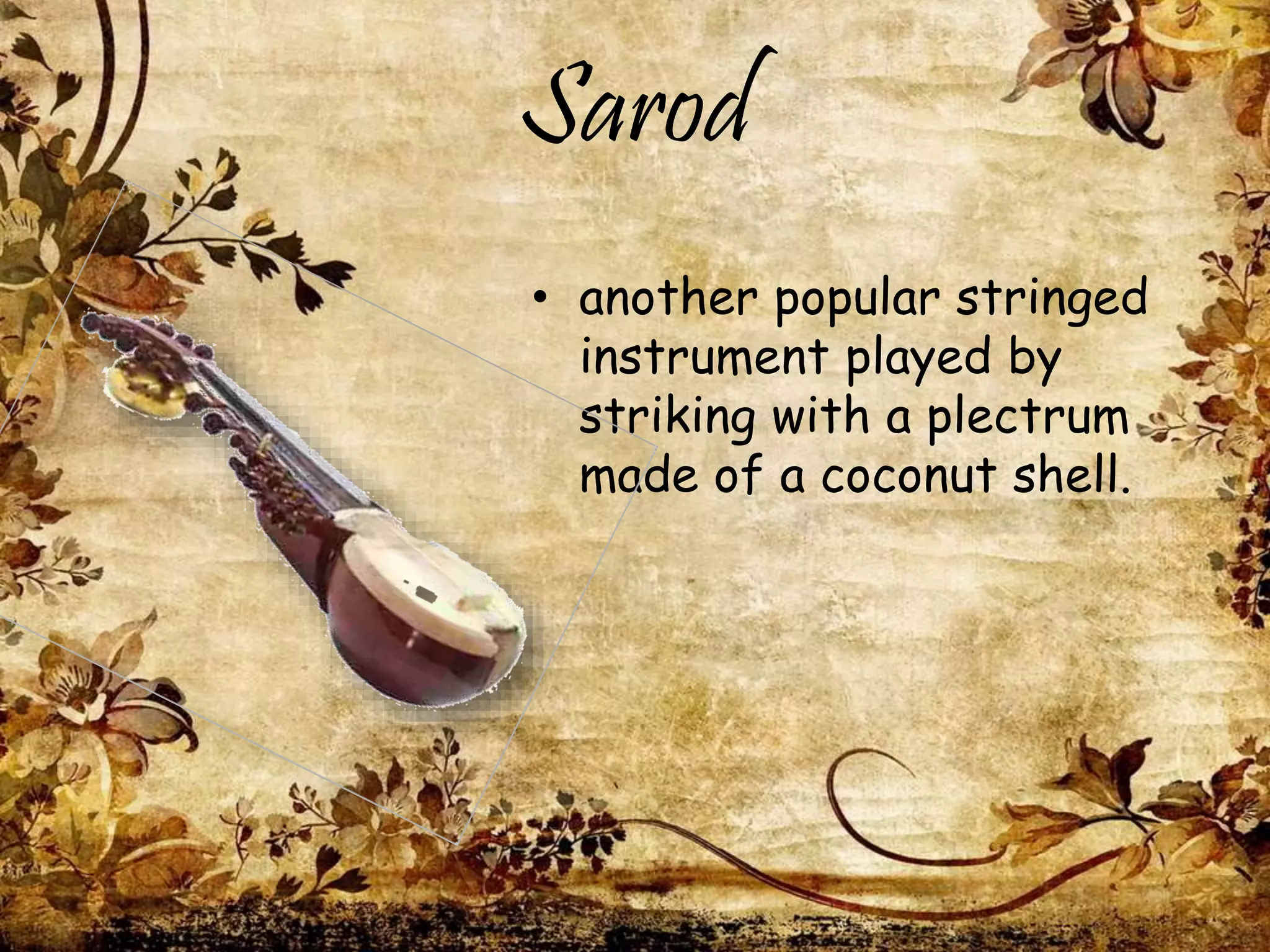
Sarod
• another popular stringed
instrument played by
striking with a plectrum
made of a coconut shell.
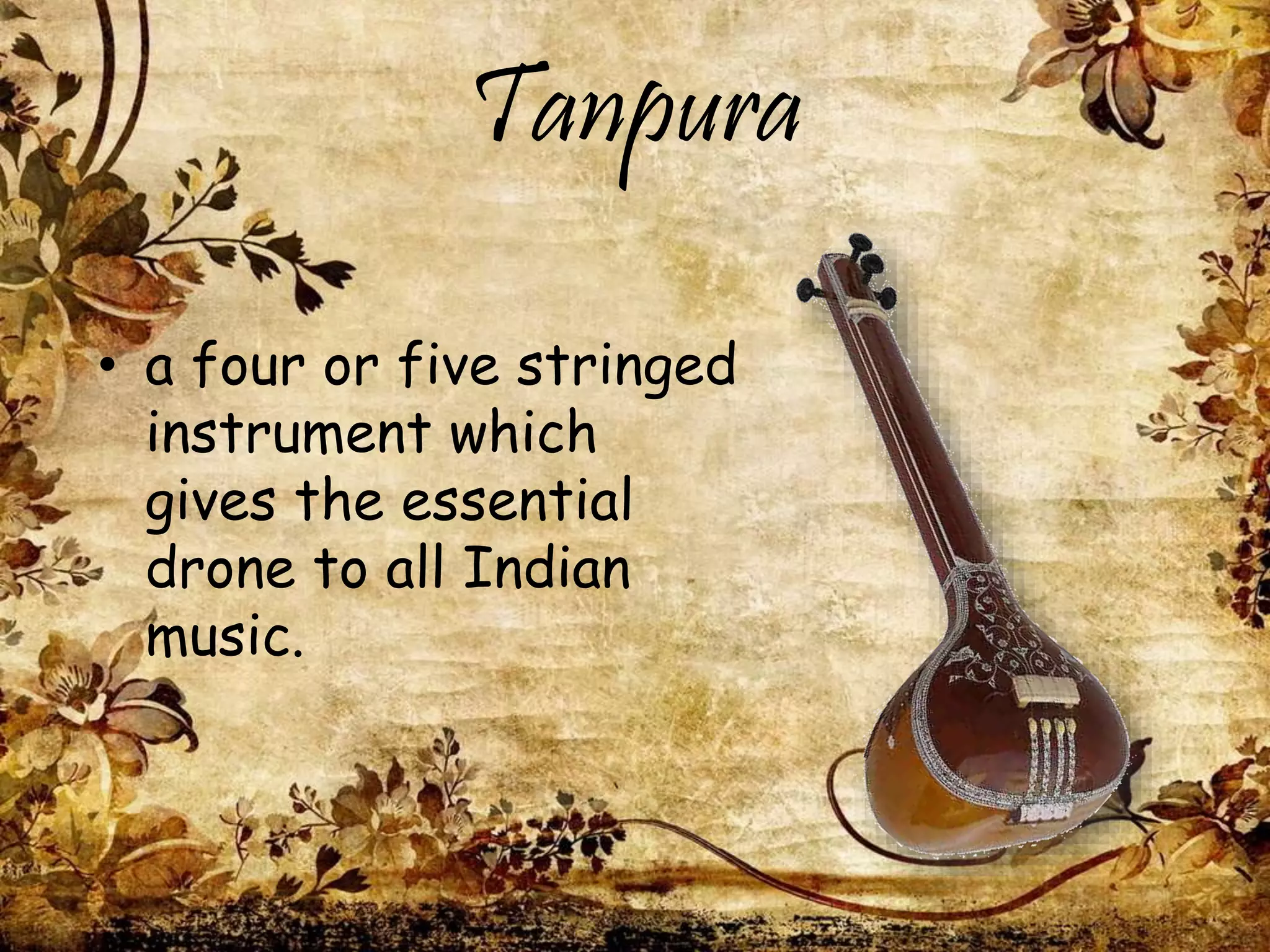
Tanpura
• a four or five stringed
instrument which
gives the essential
drone to all Indian
music.
Esraj
• It is played with a bow
and has many strings. It
is one of the major
instruments of Northern
India.
Santoor
• It is a Northern Indian
instrument originating
from Kashmir. It has
more than a hundred
strings.
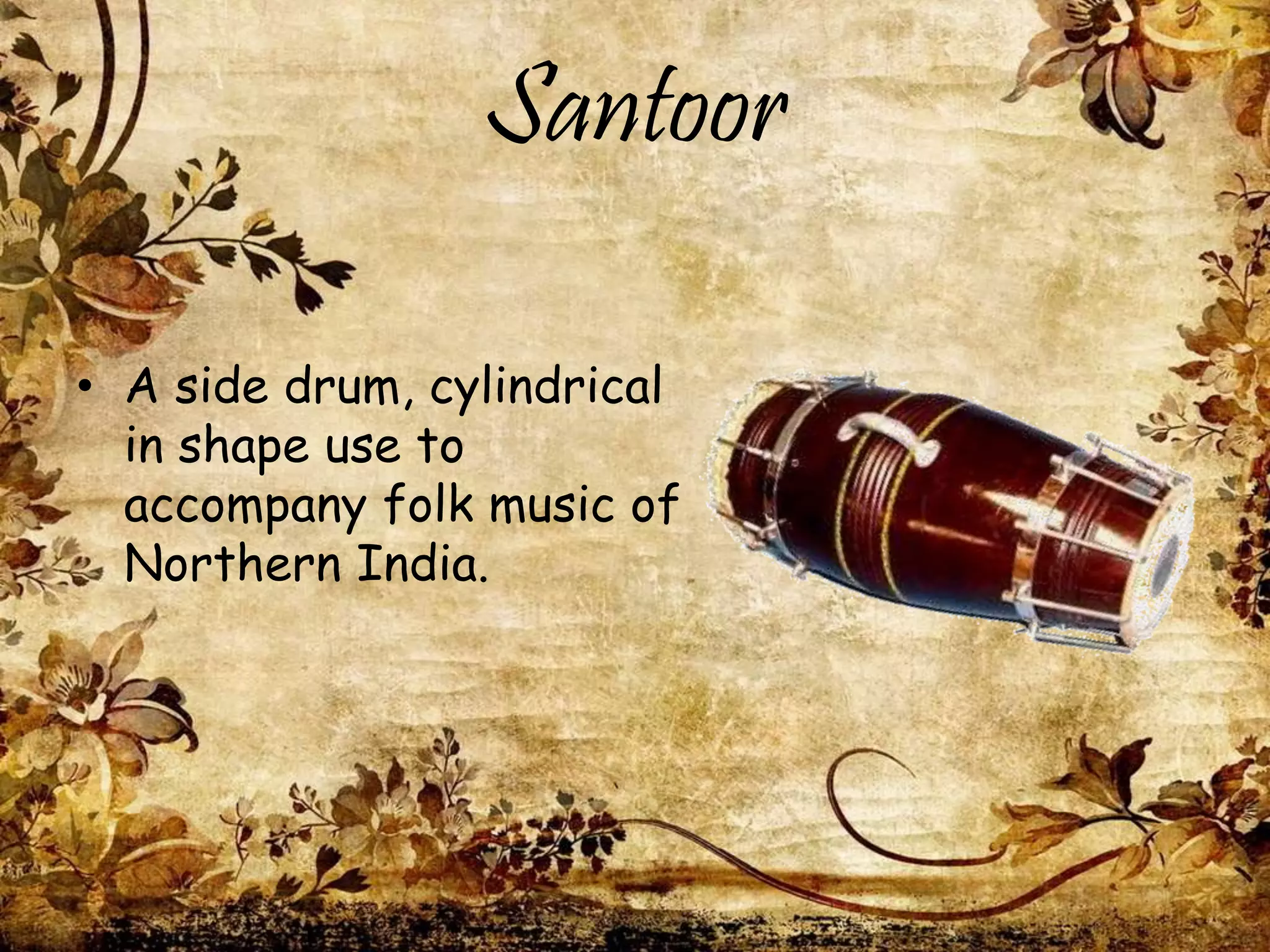
Santoor
• A side drum, cylindrical
in shape use to
accompany folk music of
Northern India.
Ravi Shankar
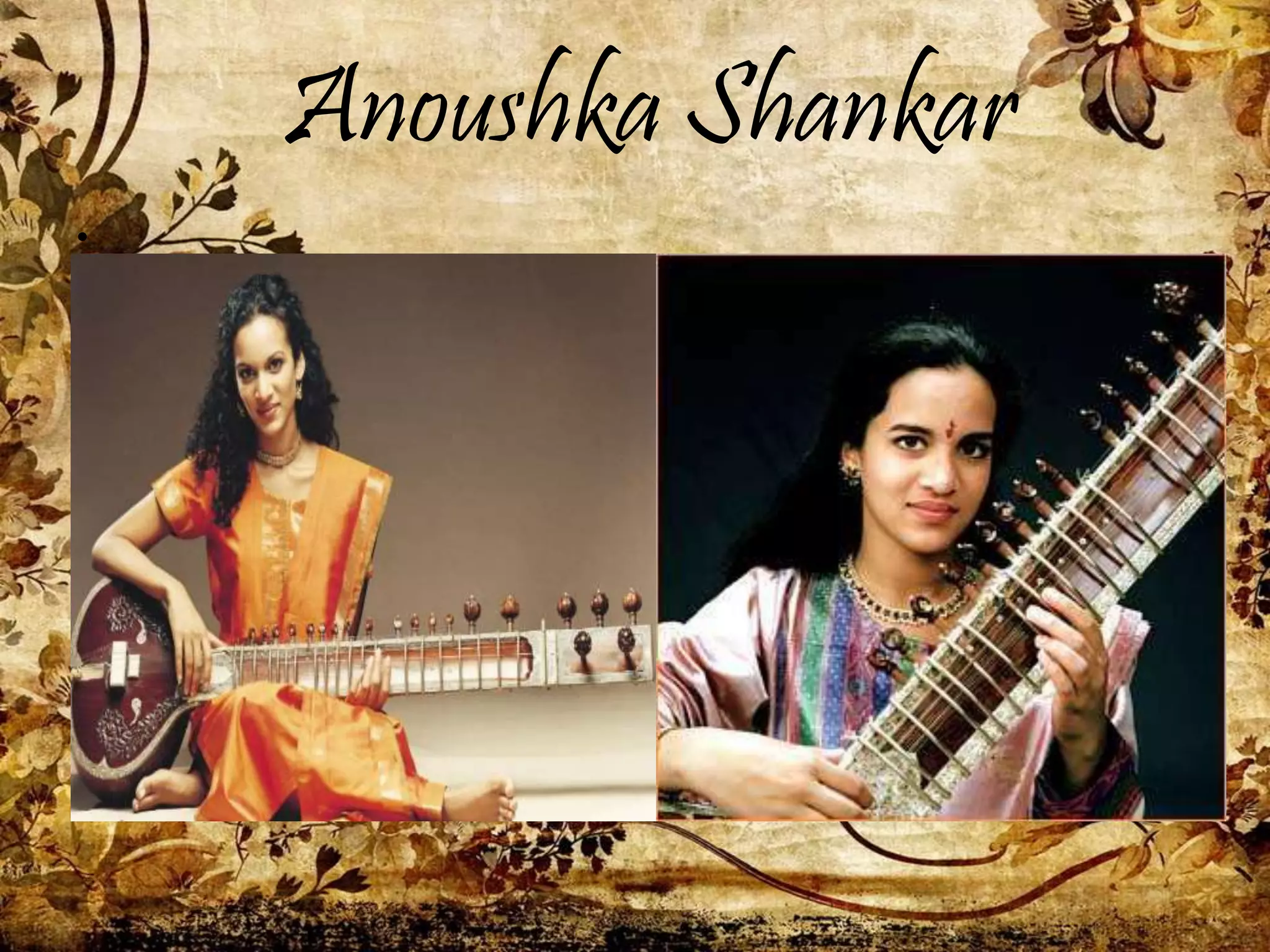
Anoushka Shankar
•
Norah Jones
• .
Indian Music

Indian Music

  • 2.
    India India is the seventh largest countryand the second most populous.
  • 3.
    Taj Mahal A monument locatedin Agra, India, constructed between 1631 and 1654, considered one of the finest examples of Mughal architecture in the world.
  • 5.
    Music of India •Includes multiple varieties of folk, popular, pop, classical music and R&B. India's classical music tradition, including Carnatic and Hindustani music, has a history spanning millennia and developed over several eras. It remains fundamental to the lives of Indians today as sources of spiritual inspiration, cultural expression and pure entertainment.
  • 6.
    Elements of IndianMusic • Melody (raga) • Harmony (drone) • Rhythm (tala)
  • 7.
    Traditional Music ofIndia • Hindustani means classical music of North India • Carnatic means classical music of South India
  • 8.
    Hindustani Music An Indianclassical music tradition that goes back to Vedic times around 1000 BC. It further developed on the 13th and 14th centuries AD with Persian influences and from existing religious and folk music.
  • 9.
    Carnatic Music • Itis based on historical developments that can be traced to the 15th - 16th centuries AD and thereafter. • However, the form itself is reputed to have been one of the gifts bestowed on man by the gods of Hindu mythology. • It is one of the oldest musical forms that continue to survive today.
  • 11.
    Bhangra Music • Livelyform of music that originated in the Punjab region to celebrate Vaisakhi. • During the last thirty years, it has enjoyed a surge in popularity worldwide, both in traditional form and as a fusion with genres such as hip-hop, and in such forms it has become a pop sensation in the United Kingdom and North America.
  • 12.
    Uttarakhandi Music • Thispure and blessed music have the feel and the touch, related to nature. • Related to the various festivals, religious traditions, folk stories and simple life of the people of Uttarakhand. • True reflection of the Cultural Heritage and the way people live their lives in the Himalayas.
  • 13.
    Lavani Music • Itcomes from the word ‘’Lavanya’’ which means beauty. • The most popular forms of music that is practiced all over Maharashtra. • Songs are sung by female artists • Male artists may occasionally sing Lavanis.
  • 14.
    Rajasthan Music • Ithas a very diverse cultural collection of musician castes, including Langas, Sapera, Bhopa, Jogi and Manganiyar. • A soulful, full-throated music with Harmonious diversity. • It’s haunting melody evokes from a variety of delightfully primitive looking instruments.
  • 18.
    Tabla • A pairof drum most common and popular in Northern India. • It is made of wood and has a head made of stretched animal skin.
  • 20.
    Mridangam • The classicaldrum of Southern India. • Made of clay. • It is a double- headed drum. • It is played between the thighs of the drum player.
  • 21.
    Tambura • A droneinstrument that is made of jack wood. • It has a long unfretted neck which has four to six turing pegs inserted into the upper end of the resonator. • It is placed on the lap of the instrumentalist. • Played mostly on concerts.
  • 22.
    Sitar • The mostpopular stringed instrument in Northern India. • It is made of teakwood and seasoned gourd. • It has a long neck with twenty metal frets and six to seven main strings.
  • 24.
    Veena • The mostdistinctive instrument in Southern India. • Four strings are used to play the melody while the remaining three strings are used to play the drone.
  • 25.
    Sarangi • It isa common representative of vitat class of musical instruments. • It has no frets or fingerboard • It has been traditionally associated with the kathak dance and the vocal styles of thumri, dadra and kheyal.
  • 26.
    Bansuri • The IndianBamboo Flute also known as bansuri or murali is one of the oldest musical instruments of India, developed independently of the Western flute. • The flutes made in India are of different kinds and their lengths and number of holes varies.
  • 28.
    Shehnai • A double-reedconical oboe of North India. • It is made of wood, except for a flaring metal bell attached to the bottom of the instrument. • It is difficult to play, as the musician must master a wide range of finely nuanced embouchure and fingering techniques.
  • 29.
    Jal Tarang • Alsoknown as “waves in the water” • a water xylophone.
  • 30.
    Sarod • another popularstringed instrument played by striking with a plectrum made of a coconut shell.
  • 31.
    Tanpura • a fouror five stringed instrument which gives the essential drone to all Indian music.
  • 33.
    Esraj • It isplayed with a bow and has many strings. It is one of the major instruments of Northern India.
  • 34.
    Santoor • It isa Northern Indian instrument originating from Kashmir. It has more than a hundred strings.
  • 35.
    Santoor • A sidedrum, cylindrical in shape use to accompany folk music of Northern India.
  • 37.
  • 38.
  • 39.