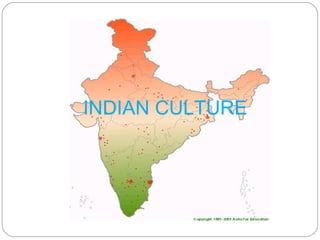
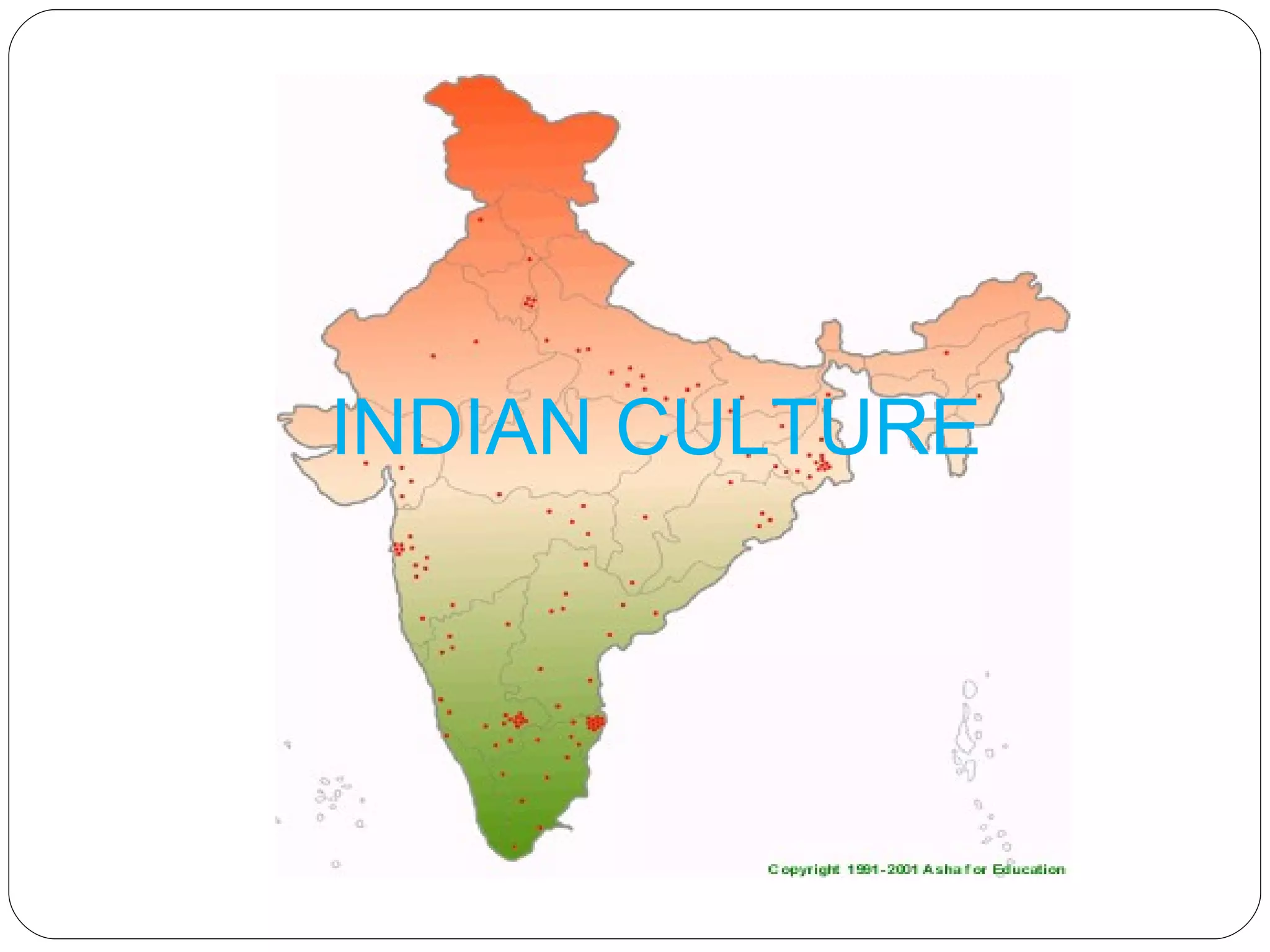



INDIAN CULTURE
Presented by
Lakshmidhar
Vijay
Santhoshi Swapna


                Under the guidance of
                    KIRANMAYI
                ASST professor
               English department
A RISING STAR IN THE
NEW MILLENNIUM
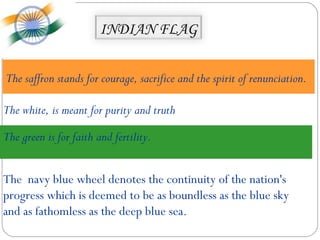
INDIAN FLAG


The saffron stands for courage, sacrifice and the spirit of renunciation.

The white, is meant for purity and truth

The green is for faith and fertility.


The navy blue wheel denotes the continuity of the nation's
progress which is deemed to be as boundless as the blue sky
and as fathomless as the deep blue sea.
5,000 year old civilization
325 languages spoken – 1,652 dialects
18 official languages
28 states, 5 union territories
3.28 million sq. kilometers - Area
7,516 kilometers - Coastline
1,000,000,000 people in 2000
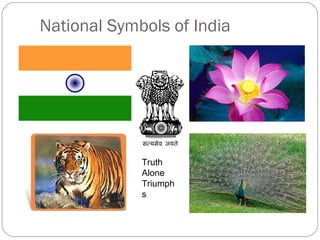
National Symbols of India


             Truth
             Alone
             Triumph
             s
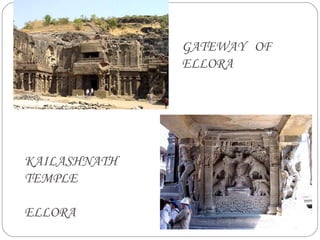
GATEWAY OF
              ELLORA


KAILASHNATH
TEMPLE

ELLORA
THE OVERVIEW OF AJANTA CAVES
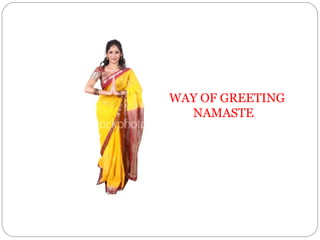
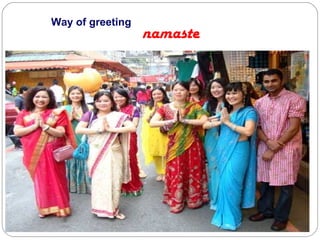
WAY OF GREETING
  NAMASTE
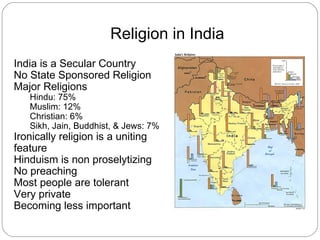
Religion in India
India is a Secular Country
No State Sponsored Religion
Major Religions
   Hindu: 75%
   Muslim: 12%
   Christian: 6%
   Sikh, Jain, Buddhist, & Jews: 7%
Ironically religion is a uniting
feature
Hinduism is non proselytizing
No preaching
Most people are tolerant
Very private
Becoming less important
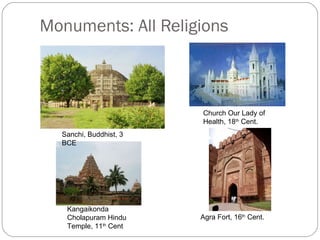
Monuments: All Religions


                        Church Our Lady of
                        Health, 18th Cent.
  Sanchi, Buddhist, 3
  BCE


   Kangaikonda
   Cholapuram Hindu     Agra Fort, 16th Cent.
   Temple, 11th Cent
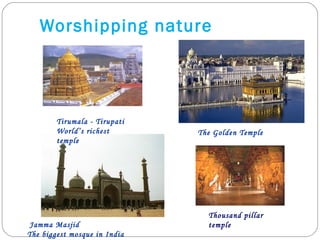
Worshipping nature


        Tirumala - Tirupati
        World’s richest       The Golden Temple
        temple


                                Thousand pillar
 Jamma Masjid                   temple
The biggest mosque in India
India - God’s own country
Celebrates more than 65 festivals
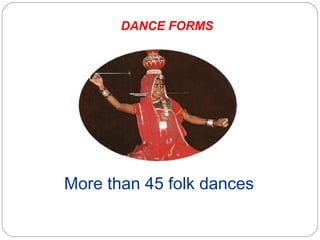
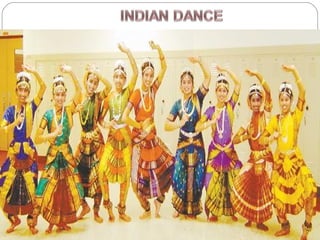
DANCE FORMS


More than 45 folk dances
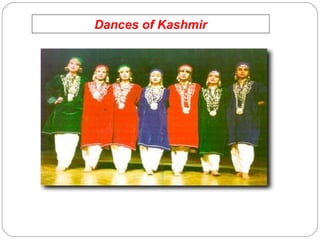
Dances of Kashmir
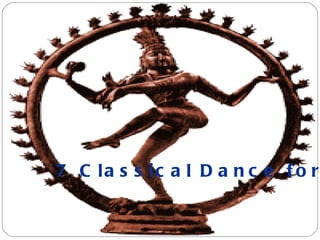
7 C la s s ic a l D a n c e f o r
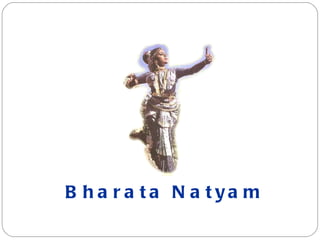
B h a r a ta N a tya m
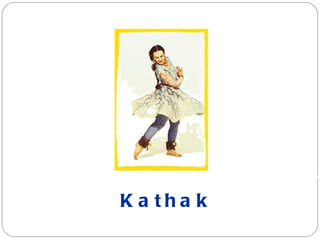
K a tha k
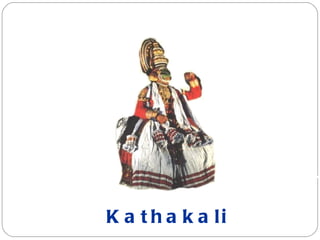
K a t h a k a li
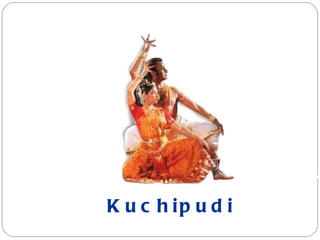
K u c h ip u d i
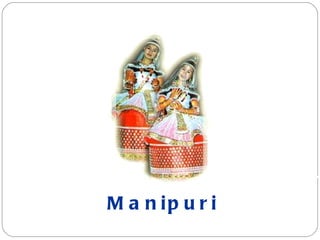
M a n ip u r i
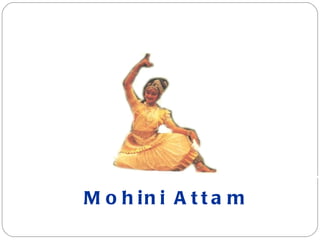
M o h in i A t t a m
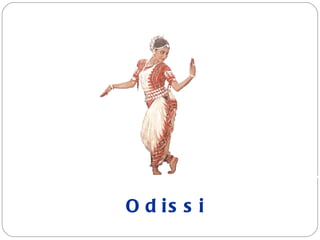
O d is s i
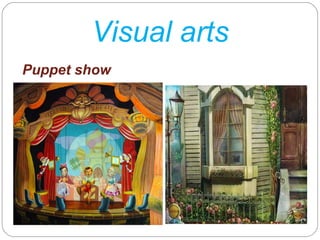
Visual arts
Puppet show
More than 15 vocal forms


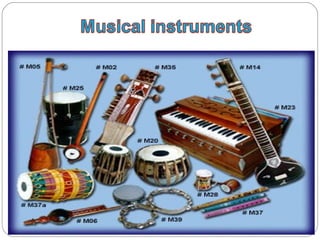
More than 60 music instruments
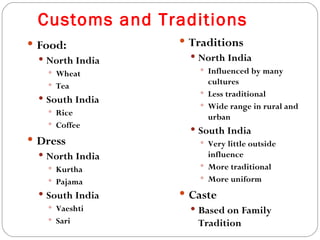
Customs and Traditions
 Food:            Traditions
   North India      North India
     Wheat            Influenced by many
     Tea               cultures
                       Less traditional
   South India
                       Wide range in rural and
     Rice
                        urban
     Coffee
                     South India
 Dress                Very little outside
   North India         influence
     Kurtha           More traditional
     Pajama           More uniform

   South India    Caste
     Vaeshti        Based on Family
     Sari
                      Tradition
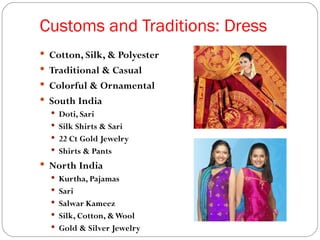
Customs and Traditions: Dress
 Cotton, Silk, & Polyester
 Traditional & Casual
 Colorful & Ornamental
 South India
   Doti, Sari
   Silk Shirts & Sari
   22 Ct Gold Jewelry
   Shirts & Pants
 North India
   Kurtha, Pajamas
   Sari
   Salwar Kameez
   Silk, Cotton, & Wool
   Gold & Silver Jewelry
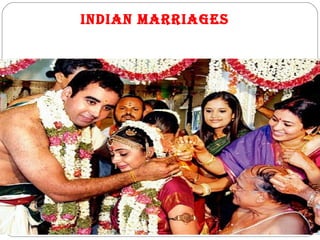
INDIAN MARRIAGES
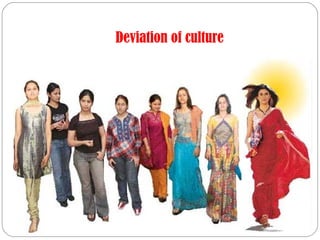
Deviation of culture
Way of greeting
                  namaste
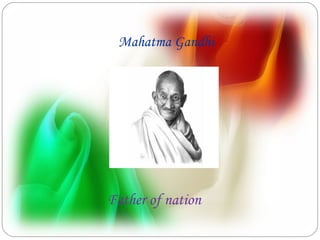
Mahatma Gandhi


Father of nation
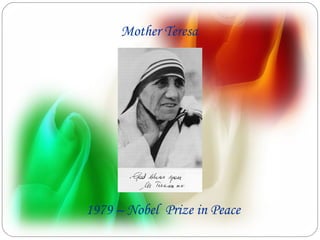
Mother Teresa


1979 – Nobel Prize in Peace
Conclusions
 India is in Transition
 Middle Class is Gaining Economic Status
 There is a Widening Gap Between Rich and Poor
 Small Percentage is Very Rich
 Social System may not be Ready
 There is no Economic Safety Net
 Young Entrepreneurs should Embrace Rural Folks
   Grameen Bank of Bangladesh
   Micro Lending
   Technological Empowerment
 Government Should Enforce Fair Distribution of Wealth
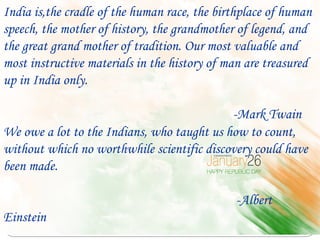
India is,the cradle of the human race, the birthplace of human
speech, the mother of history, the grandmother of legend, and
the great grand mother of tradition. Our most valuable and
most instructive materials in the history of man are treasured
up in India only.

                                            -Mark Twain
We owe a lot to the Indians, who taught us how to count,
without which no worthwhile scientific discovery could have
been made.

                                              -Albert
Einstein
Be Proud of Being an
    Indian


    jAI hIND
Any queries?
Indian culture.lakshmidhar

Indian culture.lakshmidhar

  • 1.
  • 2.
    Presented by Lakshmidhar Vijay Santhoshi Swapna Under the guidance of KIRANMAYI ASST professor English department
  • 3.
    A RISING STARIN THE NEW MILLENNIUM
  • 4.
    INDIAN FLAG The saffronstands for courage, sacrifice and the spirit of renunciation. The white, is meant for purity and truth The green is for faith and fertility. The navy blue wheel denotes the continuity of the nation's progress which is deemed to be as boundless as the blue sky and as fathomless as the deep blue sea.
  • 5.
    5,000 year oldcivilization 325 languages spoken – 1,652 dialects 18 official languages 28 states, 5 union territories 3.28 million sq. kilometers - Area 7,516 kilometers - Coastline 1,000,000,000 people in 2000
  • 6.
    National Symbols ofIndia Truth Alone Triumph s
  • 8.
    GATEWAY OF ELLORA KAILASHNATH TEMPLE ELLORA
  • 9.
    THE OVERVIEW OFAJANTA CAVES
  • 10.
  • 11.
    Religion in India Indiais a Secular Country No State Sponsored Religion Major Religions Hindu: 75% Muslim: 12% Christian: 6% Sikh, Jain, Buddhist, & Jews: 7% Ironically religion is a uniting feature Hinduism is non proselytizing No preaching Most people are tolerant Very private Becoming less important
  • 12.
    Monuments: All Religions Church Our Lady of Health, 18th Cent. Sanchi, Buddhist, 3 BCE Kangaikonda Cholapuram Hindu Agra Fort, 16th Cent. Temple, 11th Cent
  • 13.
    Worshipping nature Tirumala - Tirupati World’s richest The Golden Temple temple Thousand pillar Jamma Masjid temple The biggest mosque in India
  • 14.
    India - God’sown country Celebrates more than 65 festivals
  • 15.
    DANCE FORMS More than45 folk dances
  • 16.
  • 17.
    7 C las s ic a l D a n c e f o r
  • 18.
    B h ar a ta N a tya m
  • 19.
  • 20.
    K a th a k a li
  • 21.
    K u ch ip u d i
  • 22.
    M a nip u r i
  • 23.
    M o hin i A t t a m
  • 24.
    O d iss i
  • 26.
  • 27.
    More than 15vocal forms More than 60 music instruments
  • 29.
    Customs and Traditions Food:  Traditions  North India  North India  Wheat  Influenced by many  Tea cultures  Less traditional  South India  Wide range in rural and  Rice urban  Coffee  South India  Dress  Very little outside  North India influence  Kurtha  More traditional  Pajama  More uniform  South India  Caste  Vaeshti  Based on Family  Sari Tradition
  • 30.
    Customs and Traditions:Dress  Cotton, Silk, & Polyester  Traditional & Casual  Colorful & Ornamental  South India  Doti, Sari  Silk Shirts & Sari  22 Ct Gold Jewelry  Shirts & Pants  North India  Kurtha, Pajamas  Sari  Salwar Kameez  Silk, Cotton, & Wool  Gold & Silver Jewelry
  • 31.
  • 32.
  • 33.
  • 34.
  • 35.
    Mother Teresa 1979 –Nobel Prize in Peace
  • 36.
    Conclusions  India isin Transition  Middle Class is Gaining Economic Status  There is a Widening Gap Between Rich and Poor  Small Percentage is Very Rich  Social System may not be Ready  There is no Economic Safety Net  Young Entrepreneurs should Embrace Rural Folks  Grameen Bank of Bangladesh  Micro Lending  Technological Empowerment  Government Should Enforce Fair Distribution of Wealth
  • 37.
    India is,the cradleof the human race, the birthplace of human speech, the mother of history, the grandmother of legend, and the great grand mother of tradition. Our most valuable and most instructive materials in the history of man are treasured up in India only. -Mark Twain We owe a lot to the Indians, who taught us how to count, without which no worthwhile scientific discovery could have been made. -Albert Einstein
  • 38.
    Be Proud ofBeing an Indian jAI hIND
  • 39.

Editor's Notes

  • #7 National symbols of India.
  • #13 Tourism in India
  • #30 Insert a picture illustrating a custom or tradition here.
  • #31 Insert a picture illustrating a custom or tradition here.
  • #37 Insert a picture illustrating a custom or tradition here.