Life Skill
Development
Identify life skills developed by 4-H
                            members.
Life Skill Development
 • Life Skills – competencies that help
   people function well in their
   environments.
 • Learned in sequential steps related
   to their age and developmental
   stage.
 • Acquired through “learn-by-doing”
   activities.
Targeting Life Skills Model
HEAD
HEART
HANDS
HEALTH
Explain the components of the
  Experiential Learning Model
Experiential Learning Model
 • Process for youth to learn through a
   carefully planned experience
   followed by leader-led discussion
   questions
 • Basis for 4-H activity manuals
"Learn by Doing"
 • We remember:
   –   10% of what we   read
   –   20% of what we   hear
   –   30% of what we   see
   –   50% of what we   see and hear
   –   70% of what we   see, hear and discuss
   –   90% of what we   see, hear, discuss and
       practice
 • You can tell or show members how
   to do something, but the actual
   experience of doing it themselves is
   the best way to reinforce learning
90%


                  70%


            50%


      30%


10%
Experiential Learning Model
Experience… “Just do it!”
 • Action on the part of the learner
 • Leader provides guidance, but is not
   directive
 • Goal is for youth to “experience” the
   activity to develop life skills
 • Opportunities for practice
Share… “What happened?”
 • Ask the group some of the following
   questions…
   –   What   did you do?
   –   What   happened?
   –   What   did it feel like to do this?
   –   What   was most difficult? Easiest?
Process… “What’s important?”
 • Ask questions to focus on thinking
   about the process…
   – How was the experience conducted?
   – How was the activity performed?
   – What steps did you complete during this
     activity?
   – What problems did you encounter? How
     did you overcome them?
Generalize… “So what?”
 • Focus questions on individual
   experiences…
   – What did you learn or discover?
   – How does what you learned relate to
     other things you have been doing?
   – What skill did you practice? What similar
     experiences have you had with learning
     this skill?
Apply… “Now what?”
 • Emphasize how this activity helped
   the members learn subject matter
   skills and practice life skills.
   – How does what you learned relate to
     other parts of your life?
   – How can you use what you learned?
   – How might this experience change the
     way you will approach a similar task in
     the future?
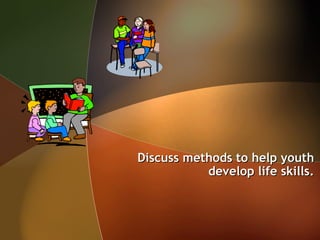
Discuss methods to help youth
           develop life skills.
Methods used in 4-H to help
youth develop life skills
 •   4-H projects
 •   Activity manuals
 •   Demonstrations/Public Speaking
 •   Judging events
 •   Skill-a-thons
 •   Project workshops
 •   Educational trips
 •   Resume building
 •   Camp Counselors
Skill-a-thon

 • Method to involve 4-H members and
   parents
 • Challenging, non-competitive, learn-by-
   doing activities
 • Series of mini learning stations with
   assistants at each station
 • Participants rotate from station to station
   to perform the given task
Planning a Skill-a-thon
 • Determine subject matter for stations.
 • Create realistic tasks to complete at each
   station.
 • Delegate responsibility for securing
   adequate equipment and supplies.
 • Identify an assistant for each station
   (youth or adult) familiar with the topic.
 • Identify volunteer to divide group into
   teams of 2-4 and to assign each team to a
   workstation.
 • Advertise event to members and parents.
Conducting a Skill-a-thon

 • Set up stations
 • Divide group into teams by age
 • Allow teams to experience activities
 • Listen to answers and presentations
 • Ask questions to help build on
   presentation
 • Praise efforts
 • Review major points and appropriate
   solutions
 • Evaluate the skill-a-thon

Lifeskills2

  • 1.
  • 2.
    Identify life skillsdeveloped by 4-H members.
  • 3.
    Life Skill Development • Life Skills – competencies that help people function well in their environments. • Learned in sequential steps related to their age and developmental stage. • Acquired through “learn-by-doing” activities.
  • 4.
  • 5.
  • 6.
  • 7.
  • 8.
  • 9.
    Explain the componentsof the Experiential Learning Model
  • 10.
    Experiential Learning Model • Process for youth to learn through a carefully planned experience followed by leader-led discussion questions • Basis for 4-H activity manuals
  • 11.
    "Learn by Doing" • We remember: – 10% of what we read – 20% of what we hear – 30% of what we see – 50% of what we see and hear – 70% of what we see, hear and discuss – 90% of what we see, hear, discuss and practice • You can tell or show members how to do something, but the actual experience of doing it themselves is the best way to reinforce learning
  • 12.
    90% 70% 50% 30% 10%
  • 13.
  • 14.
    Experience… “Just doit!” • Action on the part of the learner • Leader provides guidance, but is not directive • Goal is for youth to “experience” the activity to develop life skills • Opportunities for practice
  • 15.
    Share… “What happened?” • Ask the group some of the following questions… – What did you do? – What happened? – What did it feel like to do this? – What was most difficult? Easiest?
  • 16.
    Process… “What’s important?” • Ask questions to focus on thinking about the process… – How was the experience conducted? – How was the activity performed? – What steps did you complete during this activity? – What problems did you encounter? How did you overcome them?
  • 17.
    Generalize… “So what?” • Focus questions on individual experiences… – What did you learn or discover? – How does what you learned relate to other things you have been doing? – What skill did you practice? What similar experiences have you had with learning this skill?
  • 18.
    Apply… “Now what?” • Emphasize how this activity helped the members learn subject matter skills and practice life skills. – How does what you learned relate to other parts of your life? – How can you use what you learned? – How might this experience change the way you will approach a similar task in the future?
  • 19.
    Discuss methods tohelp youth develop life skills.
  • 20.
    Methods used in4-H to help youth develop life skills • 4-H projects • Activity manuals • Demonstrations/Public Speaking • Judging events • Skill-a-thons • Project workshops • Educational trips • Resume building • Camp Counselors
  • 21.
    Skill-a-thon • Methodto involve 4-H members and parents • Challenging, non-competitive, learn-by- doing activities • Series of mini learning stations with assistants at each station • Participants rotate from station to station to perform the given task
  • 22.
    Planning a Skill-a-thon • Determine subject matter for stations. • Create realistic tasks to complete at each station. • Delegate responsibility for securing adequate equipment and supplies. • Identify an assistant for each station (youth or adult) familiar with the topic. • Identify volunteer to divide group into teams of 2-4 and to assign each team to a workstation. • Advertise event to members and parents.
  • 23.
    Conducting a Skill-a-thon • Set up stations • Divide group into teams by age • Allow teams to experience activities • Listen to answers and presentations • Ask questions to help build on presentation • Praise efforts • Review major points and appropriate solutions • Evaluate the skill-a-thon