Index Number
Index Numbers
• Composite Index Number
• Univariate Index Number
• Fixed Index Number
• Chain Index Number
Composite Index Number
• A composite index number measures the variation in the value of a
composite number defined as the aggregate of a set of elementary
numbers (for example, the consumer price index measures the
variation in the prices of 1,000 varieties of products in a single
index number).
• When index number is calculated by using group of variable, it is
called Composite Index Number.
Univariate Index Number
• When index number is calculated from a single variable, it is
called Univariate Index Number
• The construction univariate index number is a simple idea.
Price Index Number
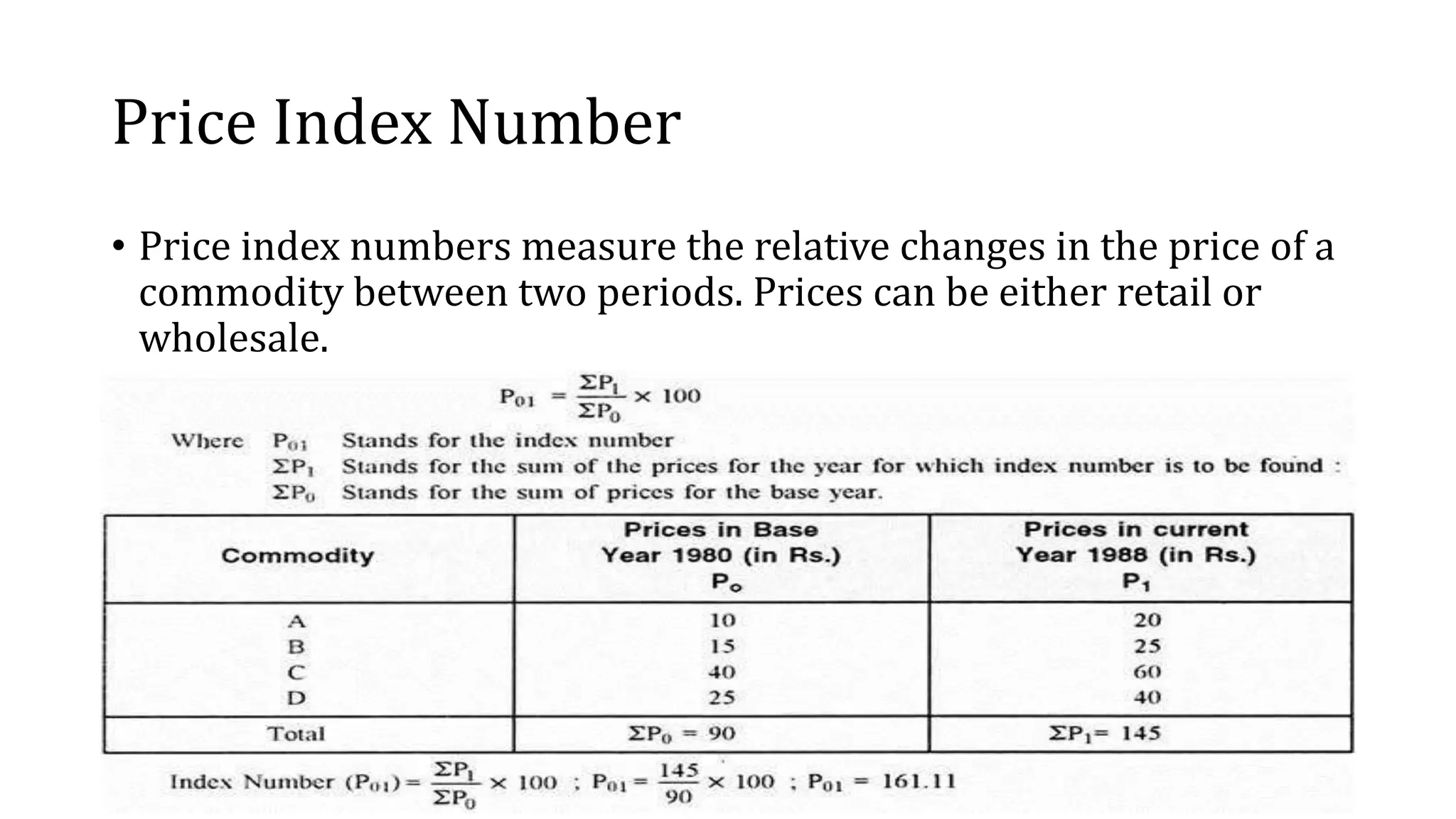
• Price index numbers measure the relative changes in the price of a
commodity between two periods. Prices can be either retail or
wholesale.
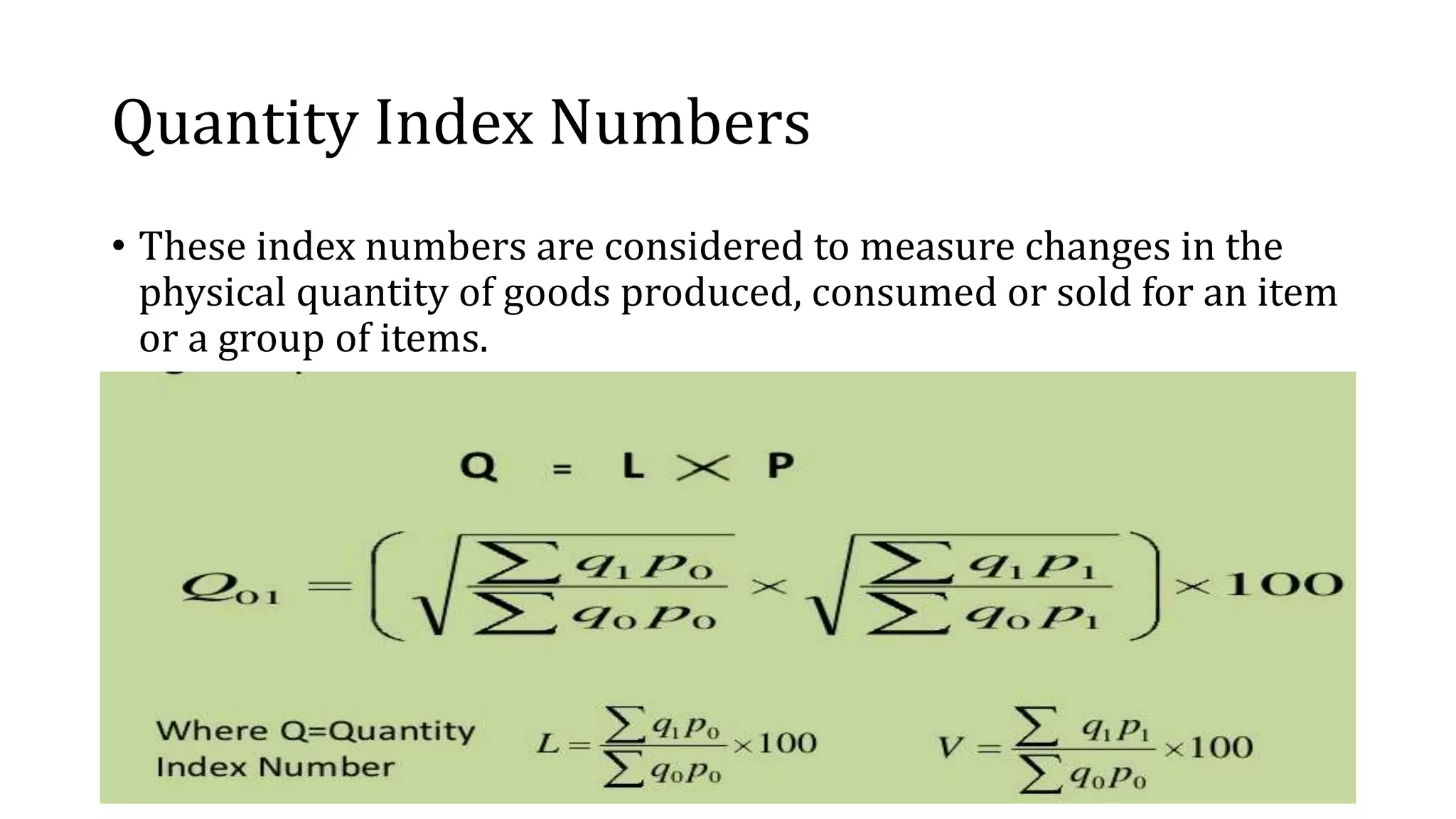
Quantity Index Numbers
• These index numbers are considered to measure changes in the
physical quantity of goods produced, consumed or sold for an item
or a group of items.
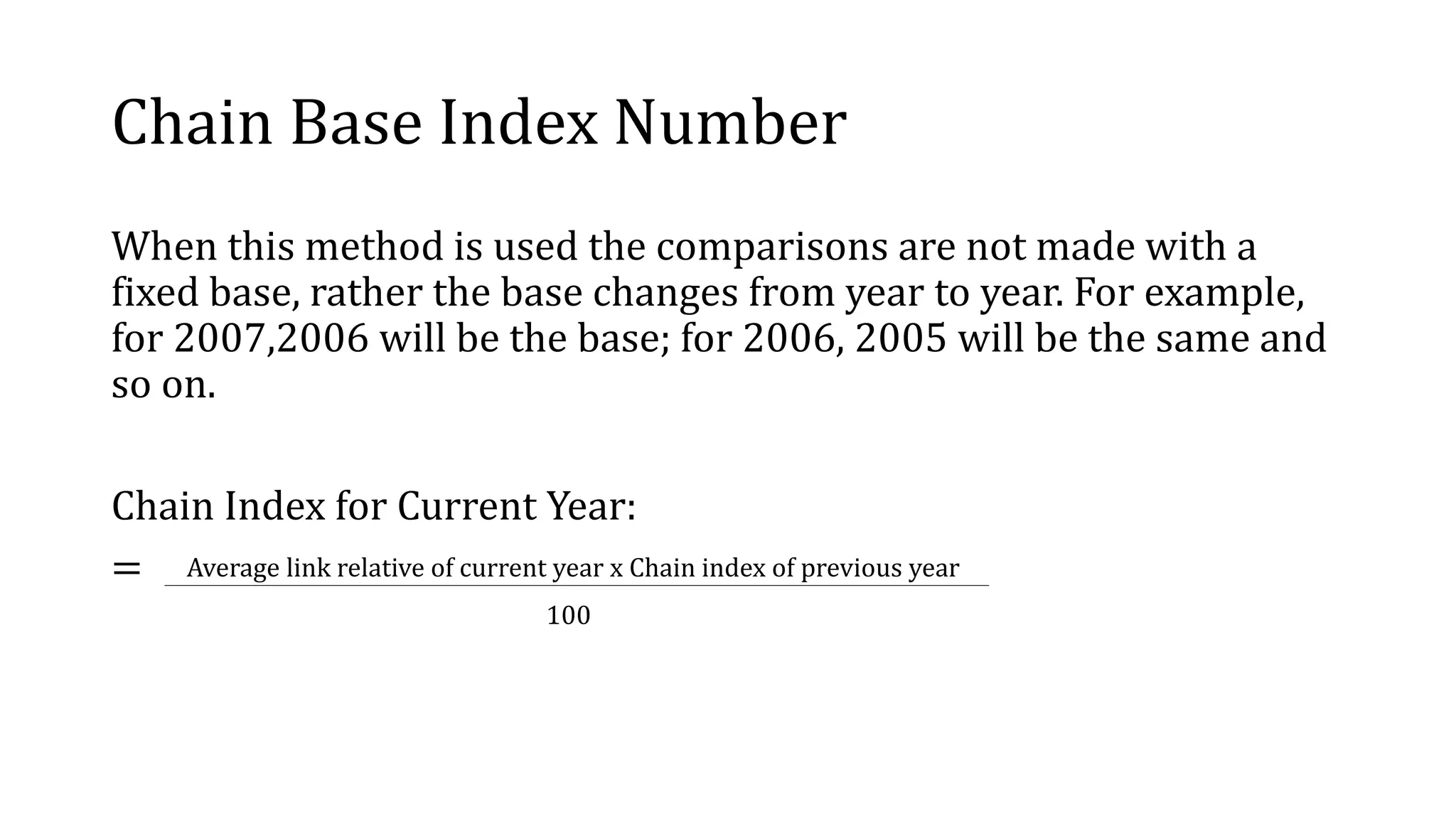
Chain Base Index Number
When this method is used the comparisons are not made with a
fixed base, rather the base changes from year to year. For example,
for 2007,2006 will be the base; for 2006, 2005 will be the same and
so on.
Chain Index for Current Year:
= Average link relative of current year x Chain index of previous year
100
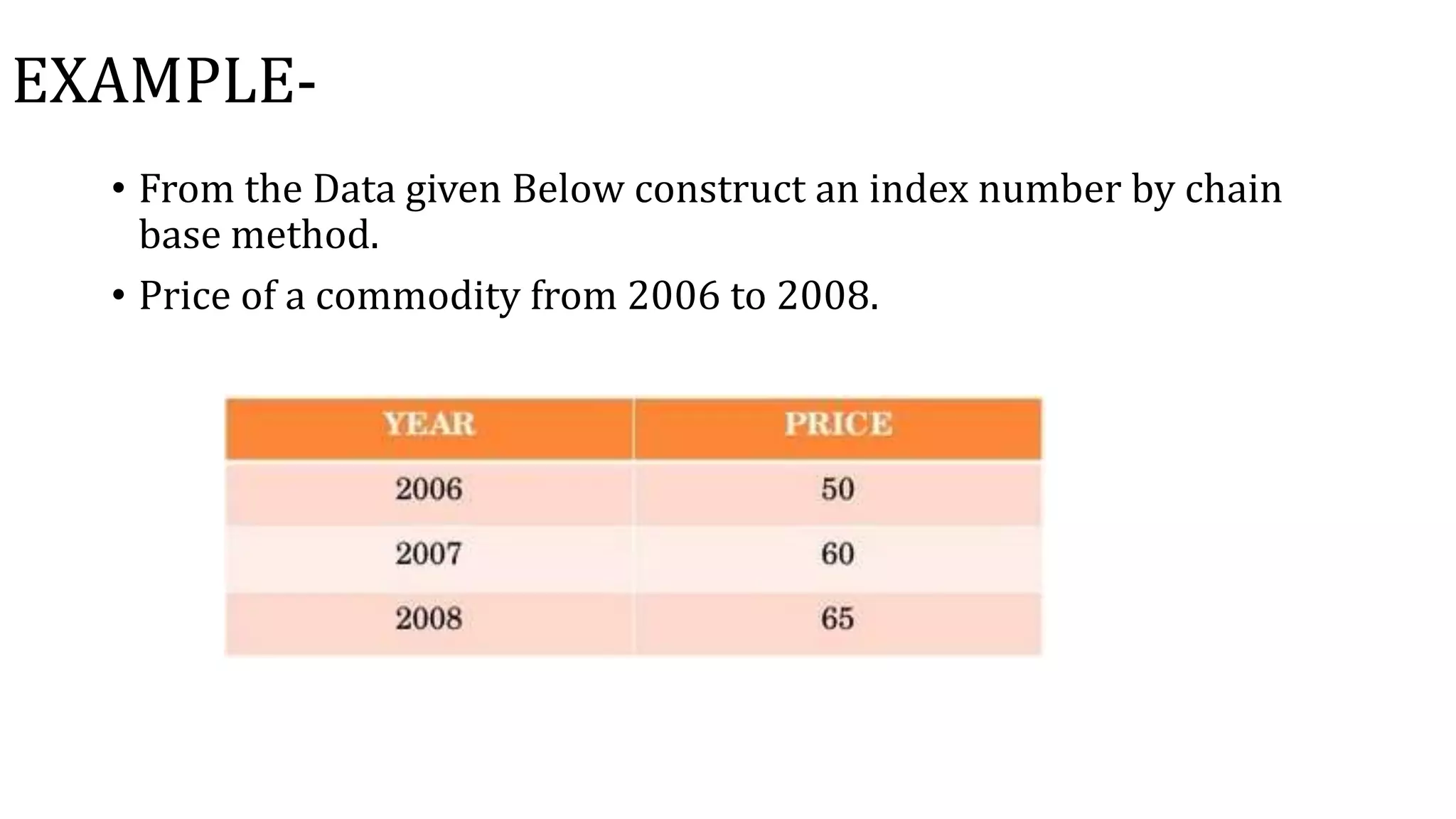
EXAMPLE-
• From the Data given Below construct an index number by chain
base method.
• Price of a commodity from 2006 to 2008.
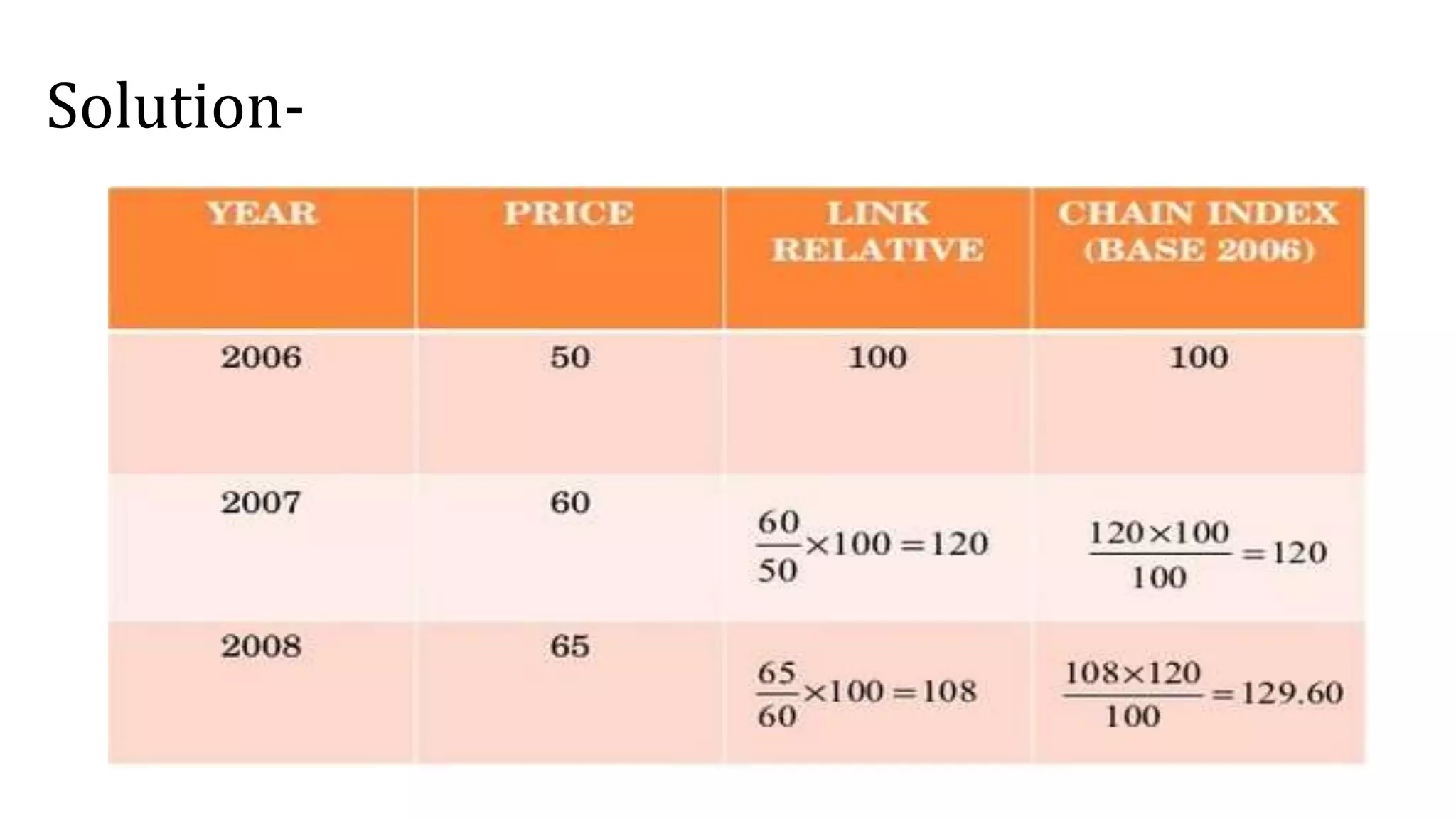
Solution-
Limitations:
• Provides relative changes only
• Lack of Perfect Accuracy
• Difference between purpose and method of construction
• Ignores qualitative changes
• Manipulations are possible
• There may be errors in the choice of base periods or weights.
• Comparisons of changes in variables over long periods are not reliable
• They are not capable of being used for any other purpose than the one
for which they have been constructed particularly.

Index Number

  • 1.
  • 2.
    Index Numbers • CompositeIndex Number • Univariate Index Number • Fixed Index Number • Chain Index Number
  • 3.
    Composite Index Number •A composite index number measures the variation in the value of a composite number defined as the aggregate of a set of elementary numbers (for example, the consumer price index measures the variation in the prices of 1,000 varieties of products in a single index number). • When index number is calculated by using group of variable, it is called Composite Index Number.
  • 5.
    Univariate Index Number •When index number is calculated from a single variable, it is called Univariate Index Number • The construction univariate index number is a simple idea.
  • 6.
    Price Index Number •Price index numbers measure the relative changes in the price of a commodity between two periods. Prices can be either retail or wholesale.
  • 7.
    Quantity Index Numbers •These index numbers are considered to measure changes in the physical quantity of goods produced, consumed or sold for an item or a group of items.
  • 8.
    Chain Base IndexNumber When this method is used the comparisons are not made with a fixed base, rather the base changes from year to year. For example, for 2007,2006 will be the base; for 2006, 2005 will be the same and so on. Chain Index for Current Year: = Average link relative of current year x Chain index of previous year 100
  • 9.
    EXAMPLE- • From theData given Below construct an index number by chain base method. • Price of a commodity from 2006 to 2008.
  • 10.
  • 11.
    Limitations: • Provides relativechanges only • Lack of Perfect Accuracy • Difference between purpose and method of construction • Ignores qualitative changes • Manipulations are possible • There may be errors in the choice of base periods or weights. • Comparisons of changes in variables over long periods are not reliable • They are not capable of being used for any other purpose than the one for which they have been constructed particularly.