
Presented By:-
TAUSIF ARSHAD
SONU KR. PRASAD
SHUBHANKAR
ADITYA AMIRITAS
DEEPSHIKHA
PRASHU JINESH JAIN
 What is IND AS ?
 Reason for Adoption
 Roadmap for Implementation
 Phase 1: Voluntary
 Phase 1: Mandatory
 Phase 2: Mandatory
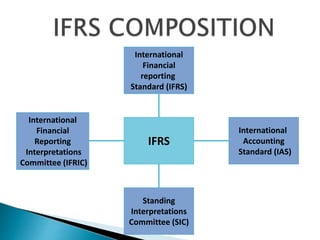
 IFRS Composition
 Advantages
 Impact on Companies
 Why should we know IND AS ?
 Applicability
 Exempted Companies
Indian Accounting Standards
Set of accounting standards notified by
the Ministry of Corporate Affairs
Converged with International Financial
Reporting Standards (IFRS).
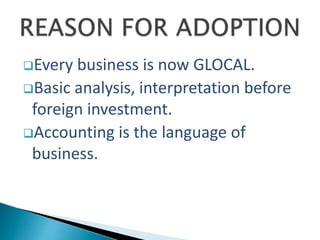
Every business is now GLOCAL.
Basic analysis, interpretation before
foreign investment.
Accounting is the language of
business.
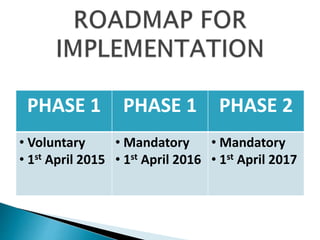
PHASE 1 PHASE 1 PHASE 2
• Voluntary
• 1st April 2015
• Mandatory
• 1st April 2016
• Mandatory
• 1st April 2017
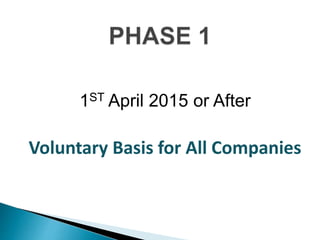
1ST April 2015 or After
Voluntary Basis for All Companies
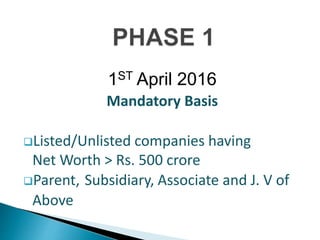
1ST April 2016
Mandatory Basis
Listed/Unlisted companies having
Net Worth > Rs. 500 crore
Parent, Subsidiary, Associate and J. V of
Above
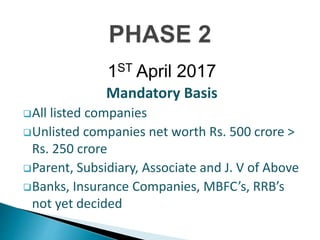
1ST April 2017
Mandatory Basis
All listed companies
Unlisted companies net worth Rs. 500 crore >
Rs. 250 crore
Parent, Subsidiary, Associate and J. V of Above
Banks, Insurance Companies, MBFC’s, RRB’s
not yet decided
International
Financial
Reporting
Interpretations
Committee (IFRIC)
Standing
Interpretations
Committee (SIC)
International
Accounting
Standard (IAS)
International
Financial
reporting
Standard (IFRS)
IFRS
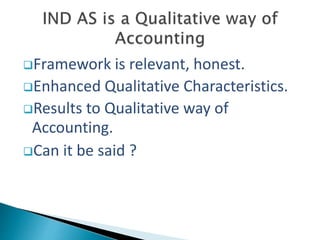
Framework is relevant, honest.
Enhanced Qualitative Characteristics.
Results to Qualitative way of
Accounting.
Can it be said ?
“I love today more
than yesterday but
less than tomorrow.
Lets dream for the
better future.”
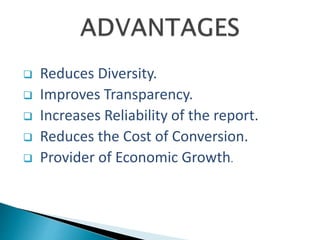
 Reduces Diversity.
 Improves Transparency.
 Increases Reliability of the report.
 Reduces the Cost of Conversion.
 Provider of Economic Growth.
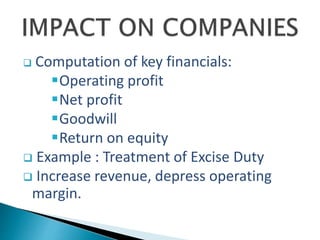
 Computation of key financials:
Operating profit
Net profit
Goodwill
Return on equity
 Example : Treatment of Excise Duty
 Increase revenue, depress operating
margin.
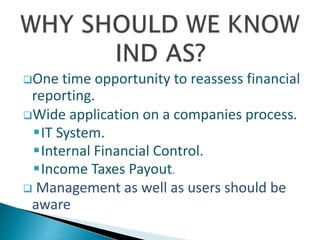
One time opportunity to reassess financial
reporting.
Wide application on a companies process.
IT System.
Internal Financial Control.
Income Taxes Payout.
 Management as well as users should be
aware
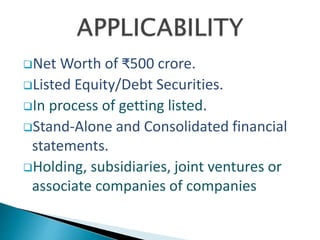
Net Worth of ₹500 crore.
Listed Equity/Debt Securities.
In process of getting listed.
Stand-Alone and Consolidated financial
statements.
Holding, subsidiaries, joint ventures or
associate companies of companies
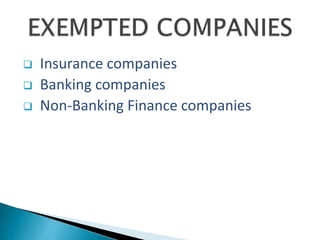
 Insurance companies
 Banking companies
 Non-Banking Finance companies

IND AS . An Overview

  • 2.
    Presented By:- TAUSIF ARSHAD SONUKR. PRASAD SHUBHANKAR ADITYA AMIRITAS DEEPSHIKHA PRASHU JINESH JAIN
  • 3.
     What isIND AS ?  Reason for Adoption  Roadmap for Implementation  Phase 1: Voluntary  Phase 1: Mandatory  Phase 2: Mandatory  IFRS Composition  Advantages  Impact on Companies  Why should we know IND AS ?  Applicability  Exempted Companies
  • 4.
    Indian Accounting Standards Setof accounting standards notified by the Ministry of Corporate Affairs Converged with International Financial Reporting Standards (IFRS).
  • 5.
    Every business isnow GLOCAL. Basic analysis, interpretation before foreign investment. Accounting is the language of business.
  • 6.
    PHASE 1 PHASE1 PHASE 2 • Voluntary • 1st April 2015 • Mandatory • 1st April 2016 • Mandatory • 1st April 2017
  • 7.
    1ST April 2015or After Voluntary Basis for All Companies
  • 8.
    1ST April 2016 MandatoryBasis Listed/Unlisted companies having Net Worth > Rs. 500 crore Parent, Subsidiary, Associate and J. V of Above
  • 9.
    1ST April 2017 MandatoryBasis All listed companies Unlisted companies net worth Rs. 500 crore > Rs. 250 crore Parent, Subsidiary, Associate and J. V of Above Banks, Insurance Companies, MBFC’s, RRB’s not yet decided
  • 10.
  • 11.
    Framework is relevant,honest. Enhanced Qualitative Characteristics. Results to Qualitative way of Accounting. Can it be said ?
  • 12.
    “I love todaymore than yesterday but less than tomorrow. Lets dream for the better future.”
  • 13.
     Reduces Diversity. Improves Transparency.  Increases Reliability of the report.  Reduces the Cost of Conversion.  Provider of Economic Growth.
  • 14.
     Computation ofkey financials: Operating profit Net profit Goodwill Return on equity  Example : Treatment of Excise Duty  Increase revenue, depress operating margin.
  • 15.
    One time opportunityto reassess financial reporting. Wide application on a companies process. IT System. Internal Financial Control. Income Taxes Payout.  Management as well as users should be aware
  • 16.
    Net Worth of₹500 crore. Listed Equity/Debt Securities. In process of getting listed. Stand-Alone and Consolidated financial statements. Holding, subsidiaries, joint ventures or associate companies of companies
  • 17.
     Insurance companies Banking companies  Non-Banking Finance companies