Incorporating Blue Carbon
in REDD+
Daniel Murdiyarso
What is blue carbon?
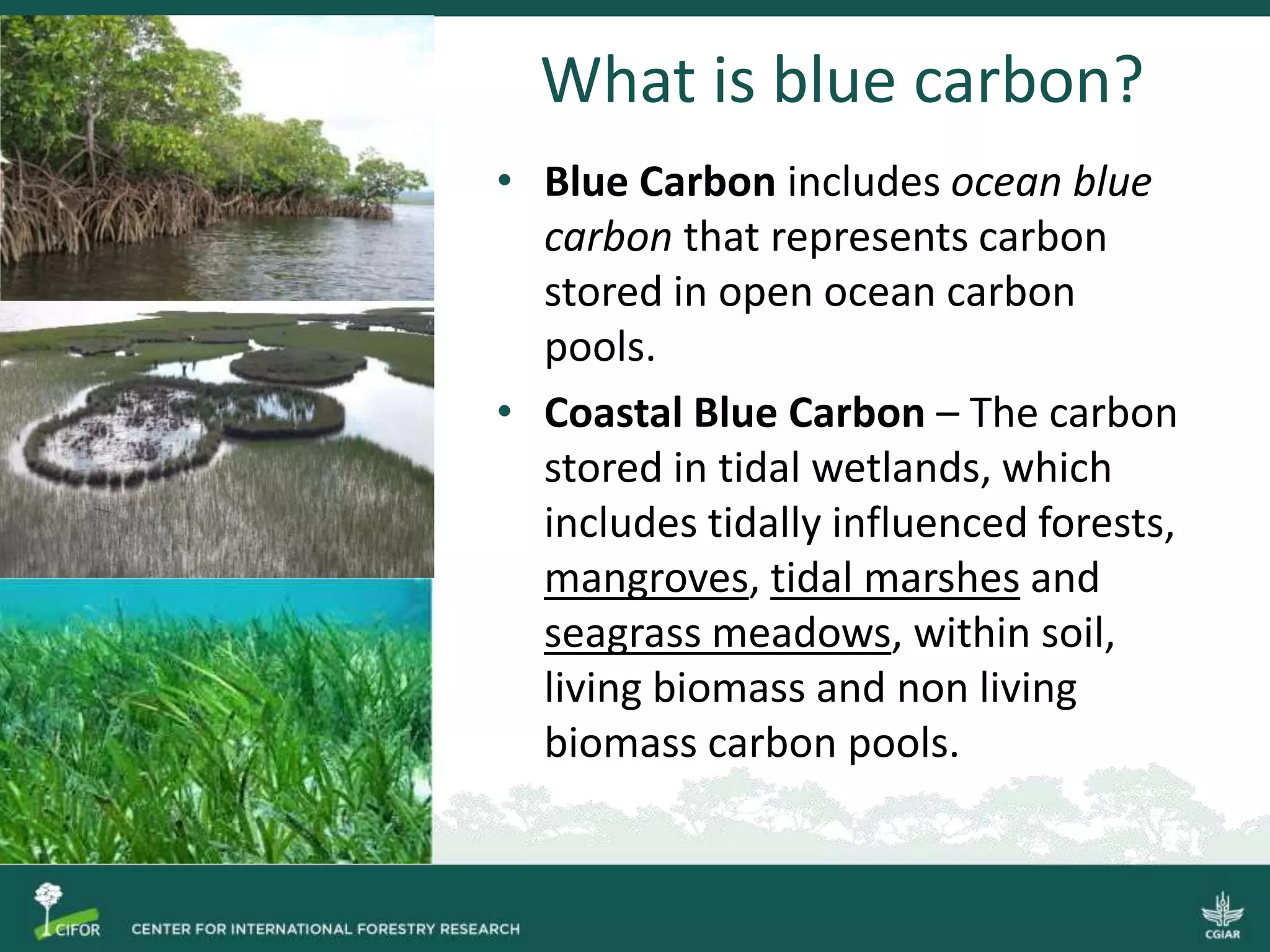
• Blue Carbon includes ocean blue
carbon that represents carbon
stored in open ocean carbon
pools.
• Coastal Blue Carbon – The carbon
stored in tidal wetlands, which
includes tidally influenced forests,
mangroves, tidal marshes and
seagrass meadows, within soil,
living biomass and non living
biomass carbon pools.
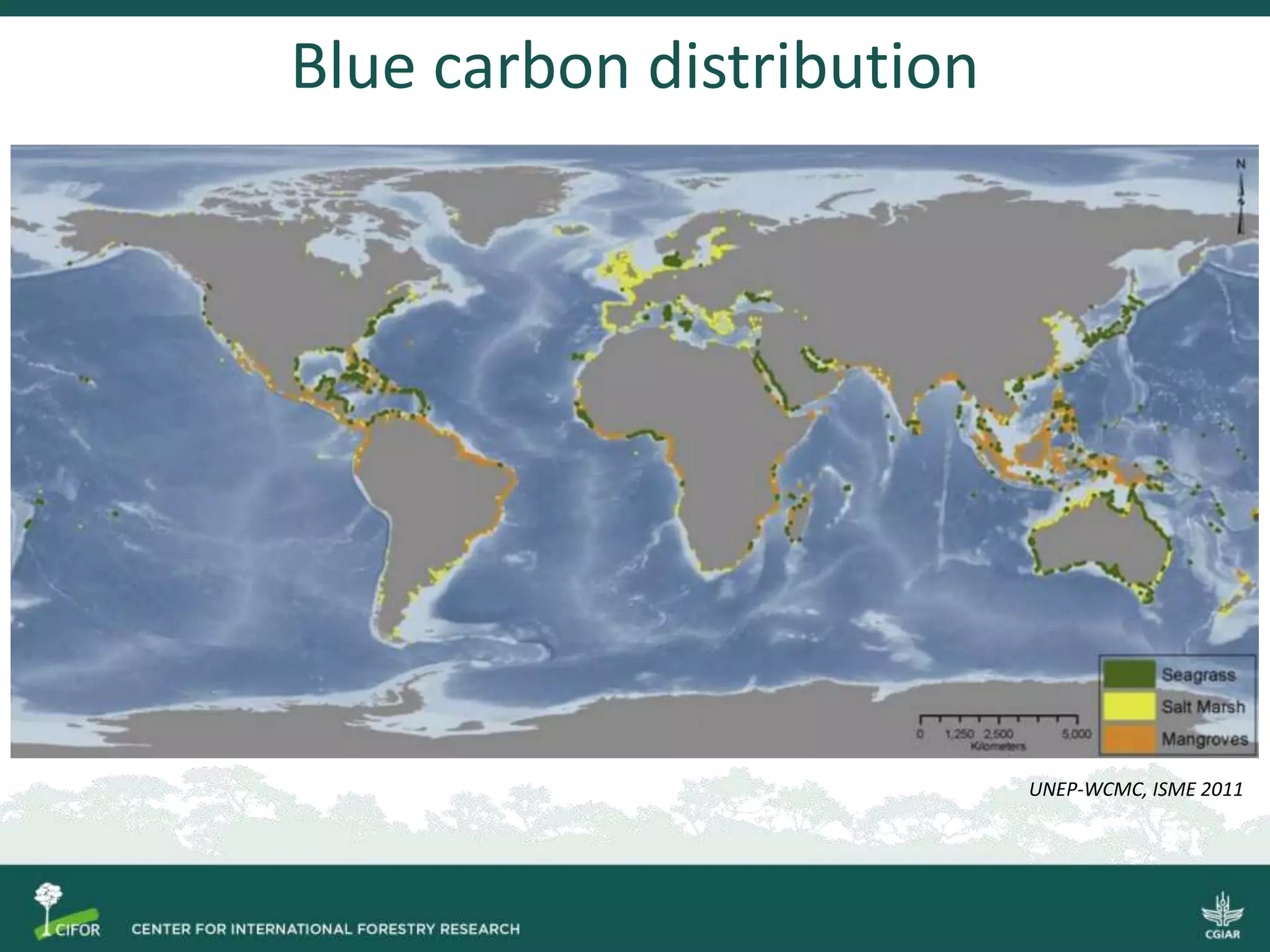
Blue carbon distribution
UNEP-WCMC, ISME 2011
McLeod et al. (2011)
20 x
Carbon burial rates
3-4 x
Ecosystem C stocks
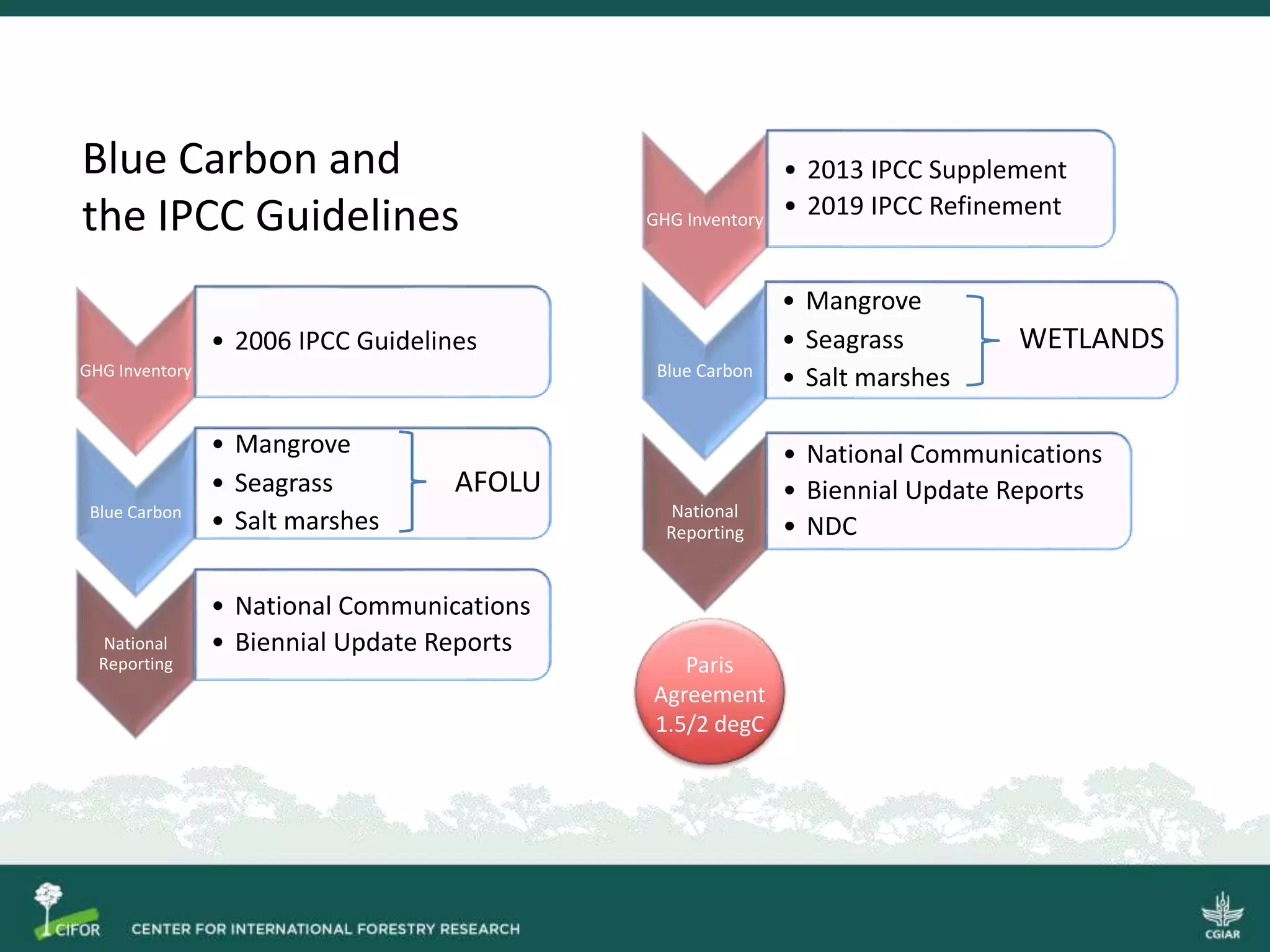
GHG Inventory
• 2006 IPCC Guidelines
Blue Carbon
• Mangrove
• Seagrass AFOLU
• Salt marshes
National
Reporting
• National Communications
• Biennial Update Reports
Paris
Agreement
1.5/2 degC
GHG Inventory
• 2013 IPCC Supplement
• 2019 IPCC Refinement
Blue Carbon
• Mangrove
• Seagrass WETLANDS
• Salt marshes
National
Reporting
• National Communications
• Biennial Update Reports
• NDC
Blue Carbon and
the IPCC Guidelines
Challenge: Indonesian case
• Area: 2.9 Mha (MoF 2009)
• Ecosystem C stocks 1,083 Mg C ha–1
• Soil (80%)
• Biomass (20%)
• Total C stocks: 3.14 Pg C
• Deforestation
• Rate 52,000 ha/yr (FAO 2007)
• Relatively small (6% total forest loss)
• Emission rate: 190 Gg CO2eq yr-1
 30% GHG emissions land sector
Murdiyarso et al. 2015. Nature CC
Opportunity: FREL to improve
Source: MOEF 2015
Opportunity: regulation to enhance
• Restoration &
conservation
• Public awareness
• Capacity building
• Database
Sustainable
Development Goals
• SDG 14
• Target 14.2
KEMENKO/
BAPPENAS
MHA
MOEF
MMAF
CSO
Paris Agreement
• NAMA, REDD, JMA
• NDC, BUR
Subnational
Source: Murdiyarso 2018
• Mangroves have
disproportionately large C
storage, hence huge potential for
CC mitigation
• REDD+ could be one of the
mechanisms that Indonesia can
pursue to include Blue Carbon
• The existing FREL may be
improved to accommodate the
inclusion of Blue Carbon
Concluding remarks
Thank you
www.cifor.org/swamp

Incorporating Blue Carbon in REDD+

  • 1.
    Incorporating Blue Carbon inREDD+ Daniel Murdiyarso
  • 2.
    What is bluecarbon? • Blue Carbon includes ocean blue carbon that represents carbon stored in open ocean carbon pools. • Coastal Blue Carbon – The carbon stored in tidal wetlands, which includes tidally influenced forests, mangroves, tidal marshes and seagrass meadows, within soil, living biomass and non living biomass carbon pools.
  • 3.
  • 4.
    McLeod et al.(2011) 20 x Carbon burial rates
  • 5.
  • 6.
    GHG Inventory • 2006IPCC Guidelines Blue Carbon • Mangrove • Seagrass AFOLU • Salt marshes National Reporting • National Communications • Biennial Update Reports Paris Agreement 1.5/2 degC GHG Inventory • 2013 IPCC Supplement • 2019 IPCC Refinement Blue Carbon • Mangrove • Seagrass WETLANDS • Salt marshes National Reporting • National Communications • Biennial Update Reports • NDC Blue Carbon and the IPCC Guidelines
  • 7.
    Challenge: Indonesian case •Area: 2.9 Mha (MoF 2009) • Ecosystem C stocks 1,083 Mg C ha–1 • Soil (80%) • Biomass (20%) • Total C stocks: 3.14 Pg C • Deforestation • Rate 52,000 ha/yr (FAO 2007) • Relatively small (6% total forest loss) • Emission rate: 190 Gg CO2eq yr-1  30% GHG emissions land sector Murdiyarso et al. 2015. Nature CC
  • 8.
    Opportunity: FREL toimprove Source: MOEF 2015
  • 9.
    Opportunity: regulation toenhance • Restoration & conservation • Public awareness • Capacity building • Database Sustainable Development Goals • SDG 14 • Target 14.2 KEMENKO/ BAPPENAS MHA MOEF MMAF CSO Paris Agreement • NAMA, REDD, JMA • NDC, BUR Subnational Source: Murdiyarso 2018
  • 10.
    • Mangroves have disproportionatelylarge C storage, hence huge potential for CC mitigation • REDD+ could be one of the mechanisms that Indonesia can pursue to include Blue Carbon • The existing FREL may be improved to accommodate the inclusion of Blue Carbon Concluding remarks
  • 11.

Editor's Notes

  • #5 Scientific community has recognized the wide range of services that coastal ecosystems can provide Salt marshes, mangroves, and seagrass meadows are unique ecosystems that support aquatic biodiversity, provide hatching ground and nursery for fish, protect coastal zones from storm surges, wave and tsunami They are also large storehouse of coastal Blue Carbon The rates of C burial of these coastal ecosystems is significantly higher than any terrestrial ecosystems Notably, mangrove is capable of capturing and storing C, as large as five times than lowland tropical forests that are mostly reside in sediments Intact coastal BC has to be protected for CC mitigation and human well-being.
  • #6 However, mangroves are among the most threatened and rapidly disappearing natural ecosystem Deforestation rate of around 13 Mha of mangrove, mainly for aquaculture development is well above 1% per year GHG emissions due to unsustainable coastal development is up to 1 Billion tons of CO2-eq per annum or 20% of emission from global deforestation It is resulting a global economic loss of US$ 6-40 B Mangrove conversions also leave millions of hectares of abandoned and degraded coastal wetlands