Inclusive DesignInclusive Design
Thinking beyond accessibilityThinking beyond accessibility
drupalcampnj.org/node/57drupalcampnj.org/node/57
@DrupalCampNJ@DrupalCampNJ
Mike MilesMike Miles
Genuine ( )wearegenuine.com
Dev(up); ( )developingup.com
All the internet places: mikemiles86
We all have one thing in commonWe all have one thing in common
We want to make a positive impact on as manyWe want to make a positive impact on as many
people as possiblepeople as possible
Inclusive Design is...Inclusive Design is...
Planning considerations to ensure that a product,
service and/or environment is usable by everyone to
the greatest extent possible.
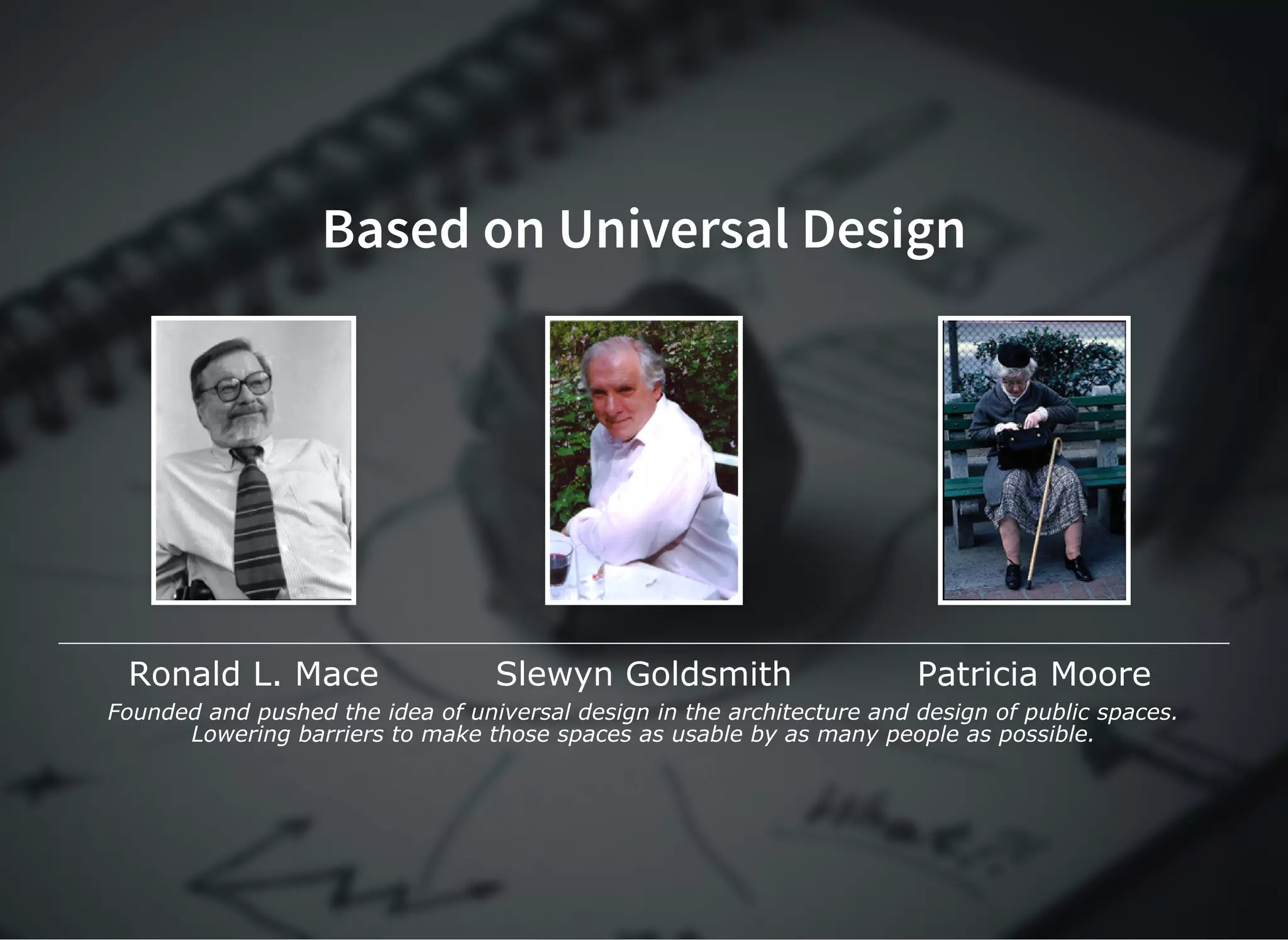
Based on Universal DesignBased on Universal Design
Ronald L. Mace Slewyn Goldsmith Patricia Moore
Founded and pushed the idea of universal design in the architecture and design of public spaces.
Lowering barriers to make those spaces as usable by as many people as possible.
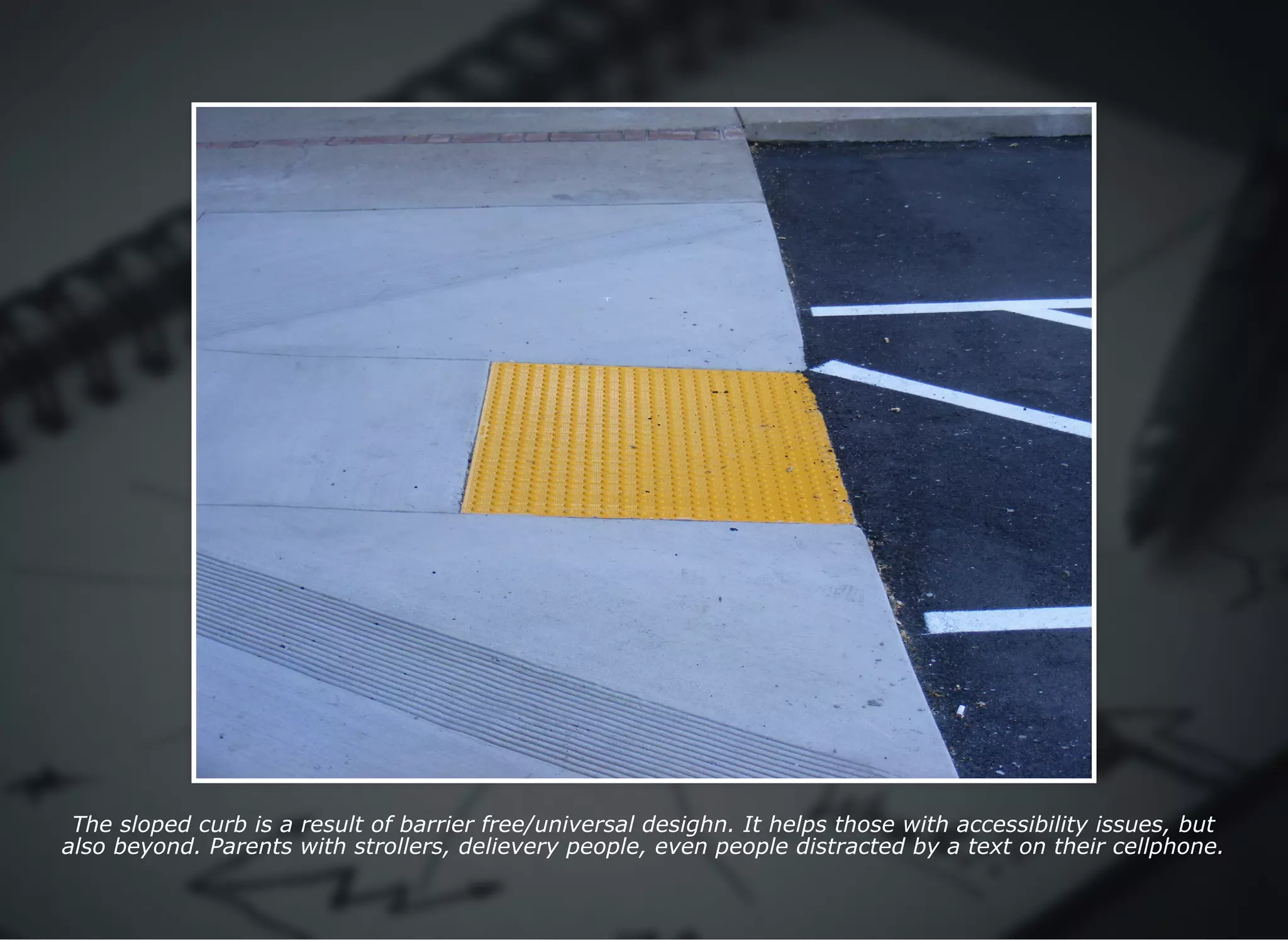
The sloped curb is a result of barrier free/universal desighn. It helps those with accessibility issues, but
also beyond. Parents with strollers, delievery people, even people distracted by a text on their cellphone.
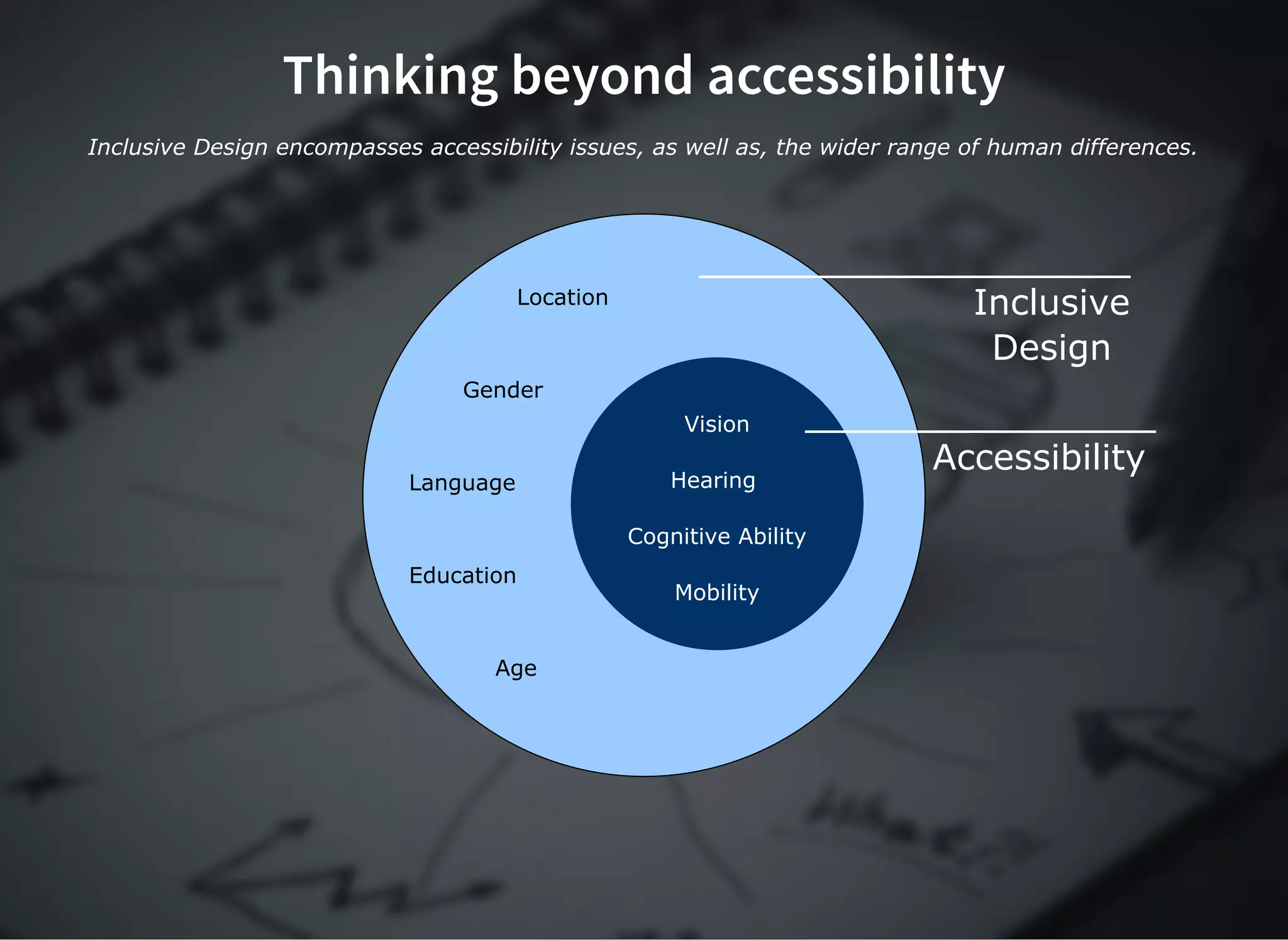
Thinking beyond accessibilityThinking beyond accessibility
Inclusive Design encompasses accessibility issues, as well as, the wider range of human differences.
Inclusive
Design
Location
Gender
Language
Education
Age
Accessibility
Vision 
Hearing  
Cognitive Ability 
Mobility
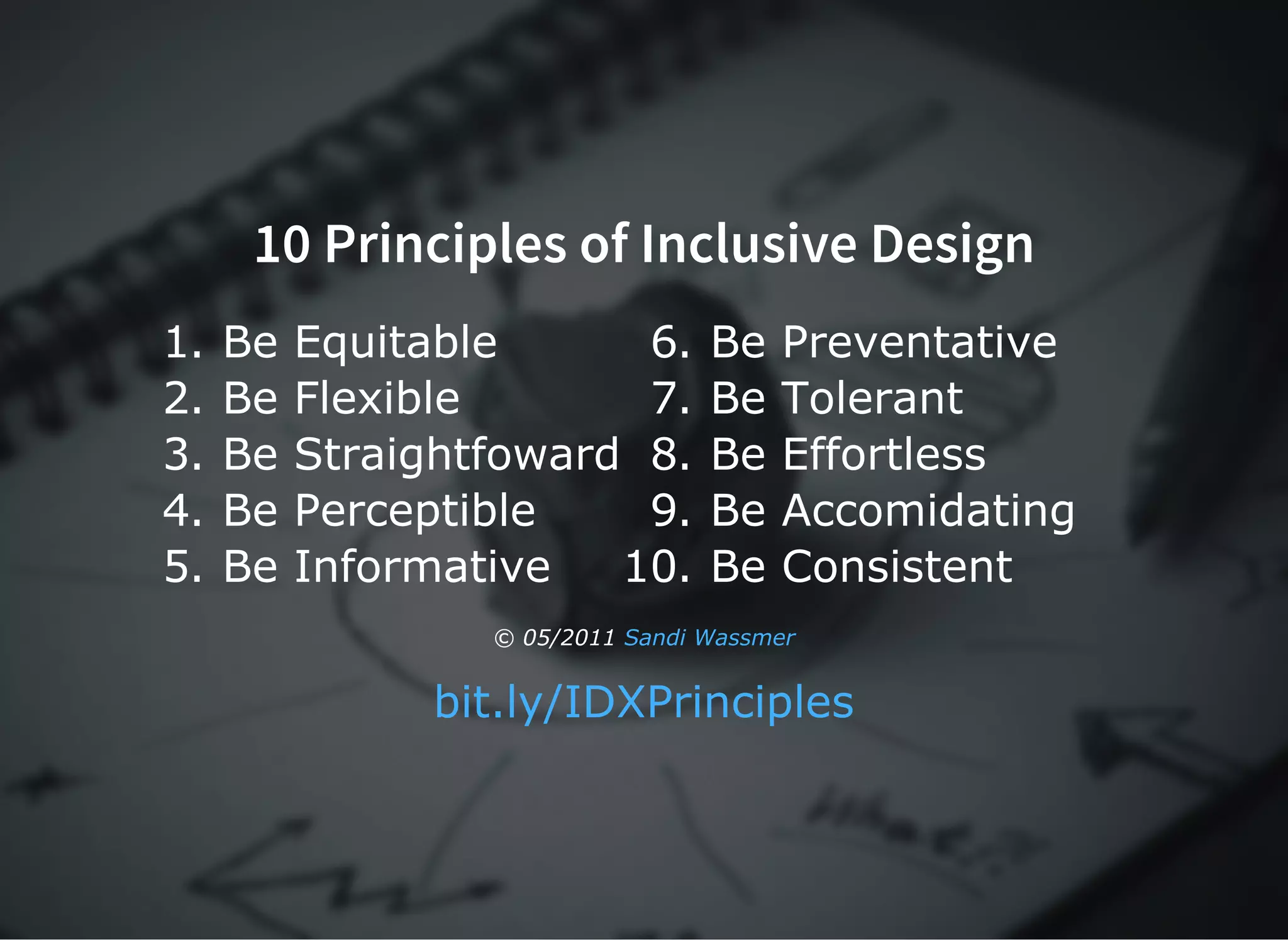
10 Principles of Inclusive Design10 Principles of Inclusive Design
1. Be Equitable
2. Be Flexible
3. Be Straightfoward
4. Be Perceptible
5. Be Informative
6. Be Preventative
7. Be Tolerant
8. Be Effortless
9. Be Accomidating
10. Be Consistent
© 05/2011 Sandi Wassmer
bit.ly/IDXPrinciples
Four Pillars of Inclusive DesignFour Pillars of Inclusive Design
I. No user is average
II. Every user deserves equal access
III. Provide understandable content for every user
IV. Every user deserves our trust and respect
©  09/2016 CC4.0 Mike Miles
I. No user is averageI. No user is average
In 1952 the Air force had a problem, their new jets were not performing well. The issue? The cockpit was
designed for the "average" pilot, for someone who did not exist. It was not until they designed to
accomidate the actual differences of pilots did performance improve.
The Myth of AverageThe Myth of Average
"If you design for the average, you are literally
designing for nobody."
­ Todd Rose
bit.ly/IDXAvgMyth
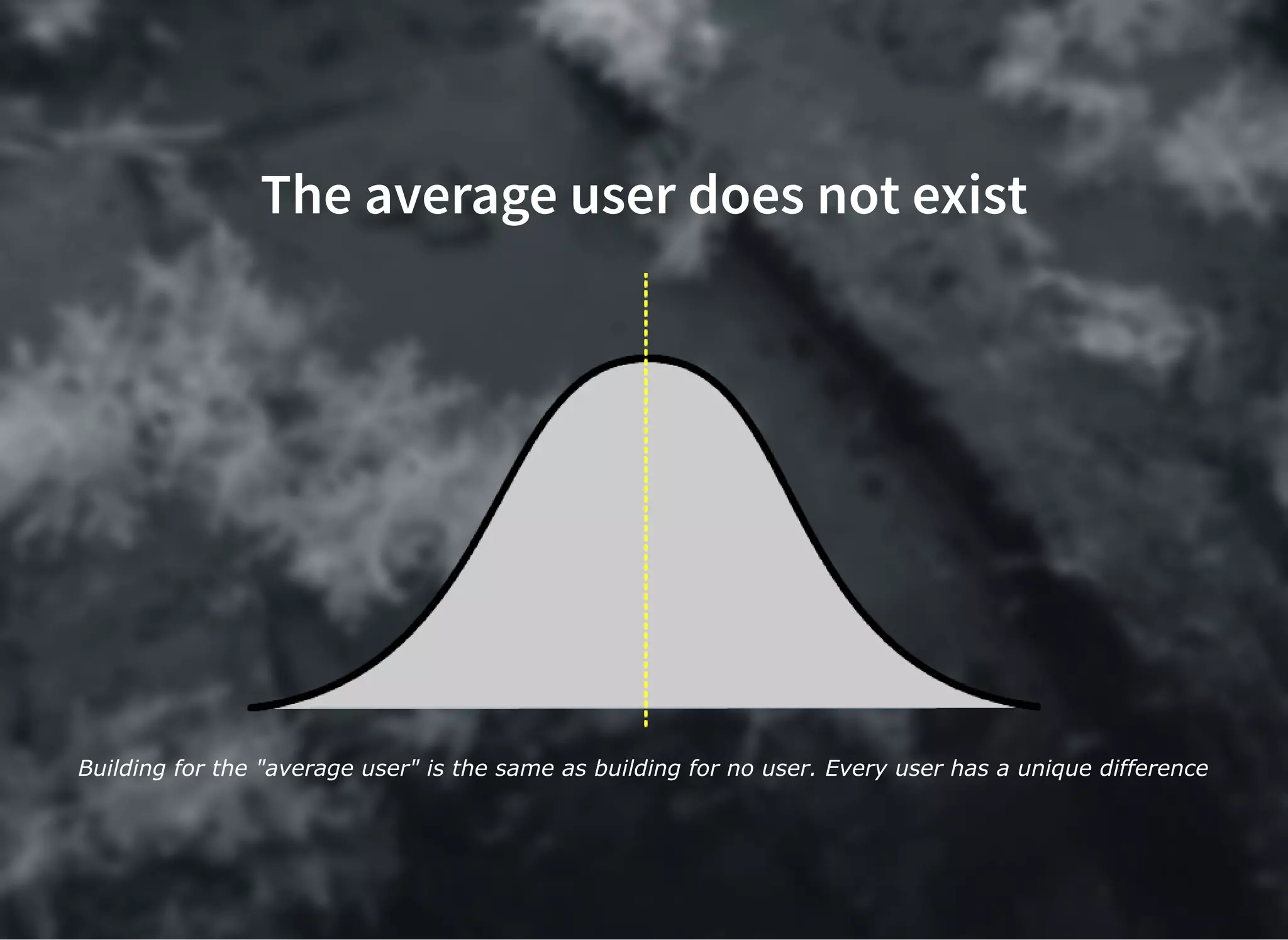
The average user does not existThe average user does not exist
Building for the "average user" is the same as building for no user. Every user has a unique difference
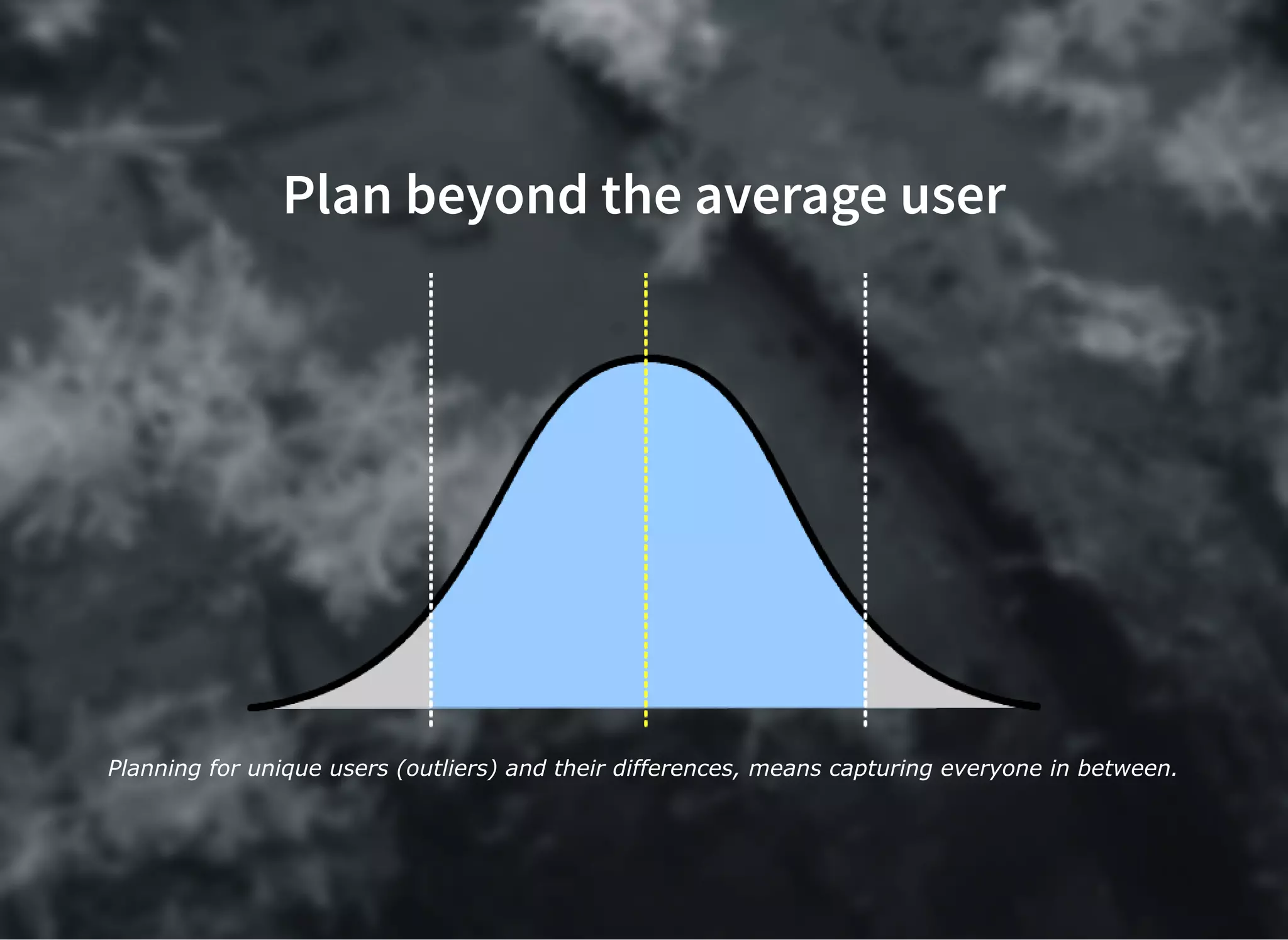
Plan beyond the average userPlan beyond the average user
Planning for unique users (outliers) and their differences, means capturing everyone in between.
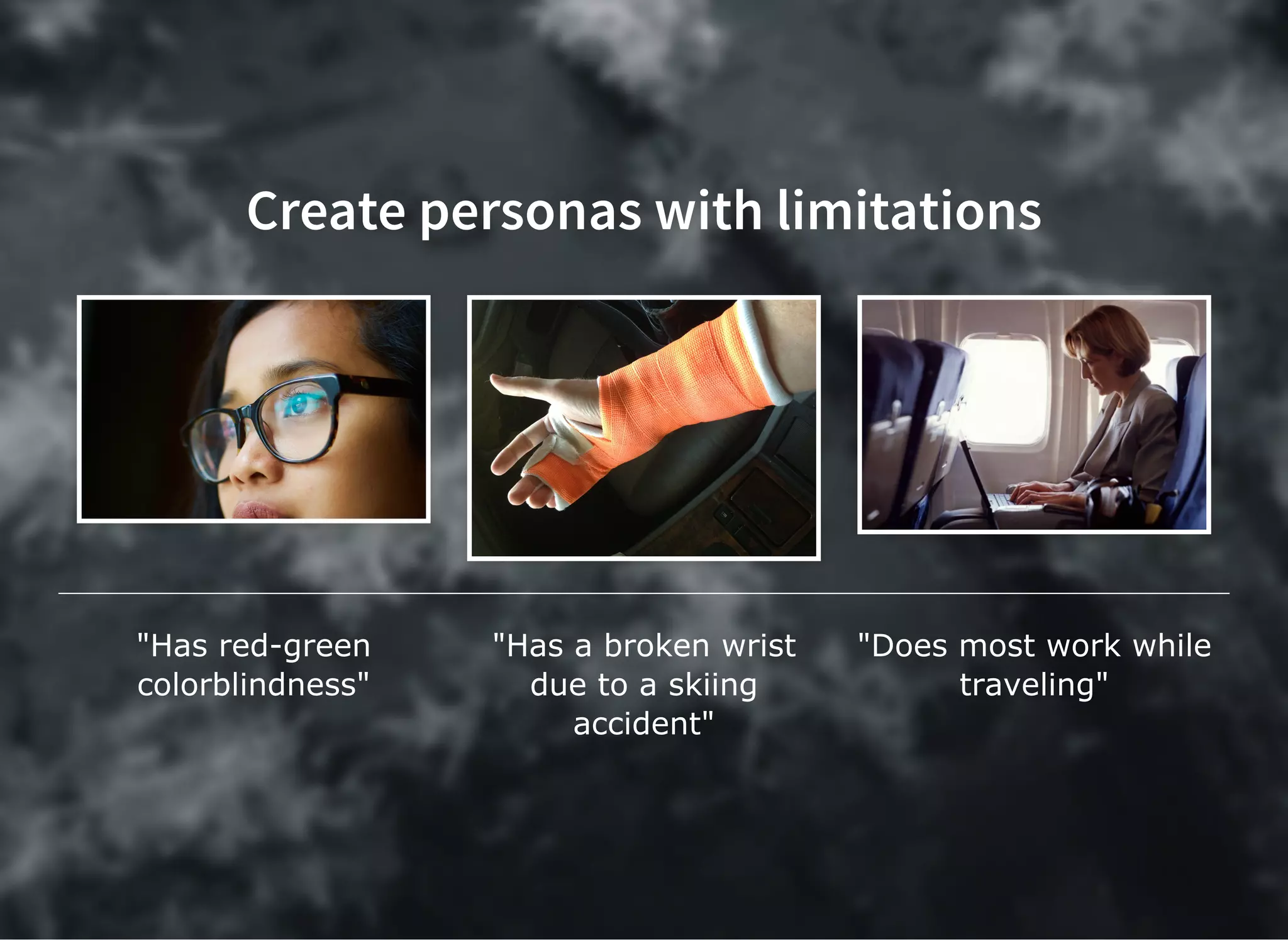
Create personas with limitationsCreate personas with limitations
"Has red­green
colorblindness"
"Has a broken wrist
due to a skiing
accident"
"Does most work while
traveling"
II. Every user deserves equal accessII. Every user deserves equal access
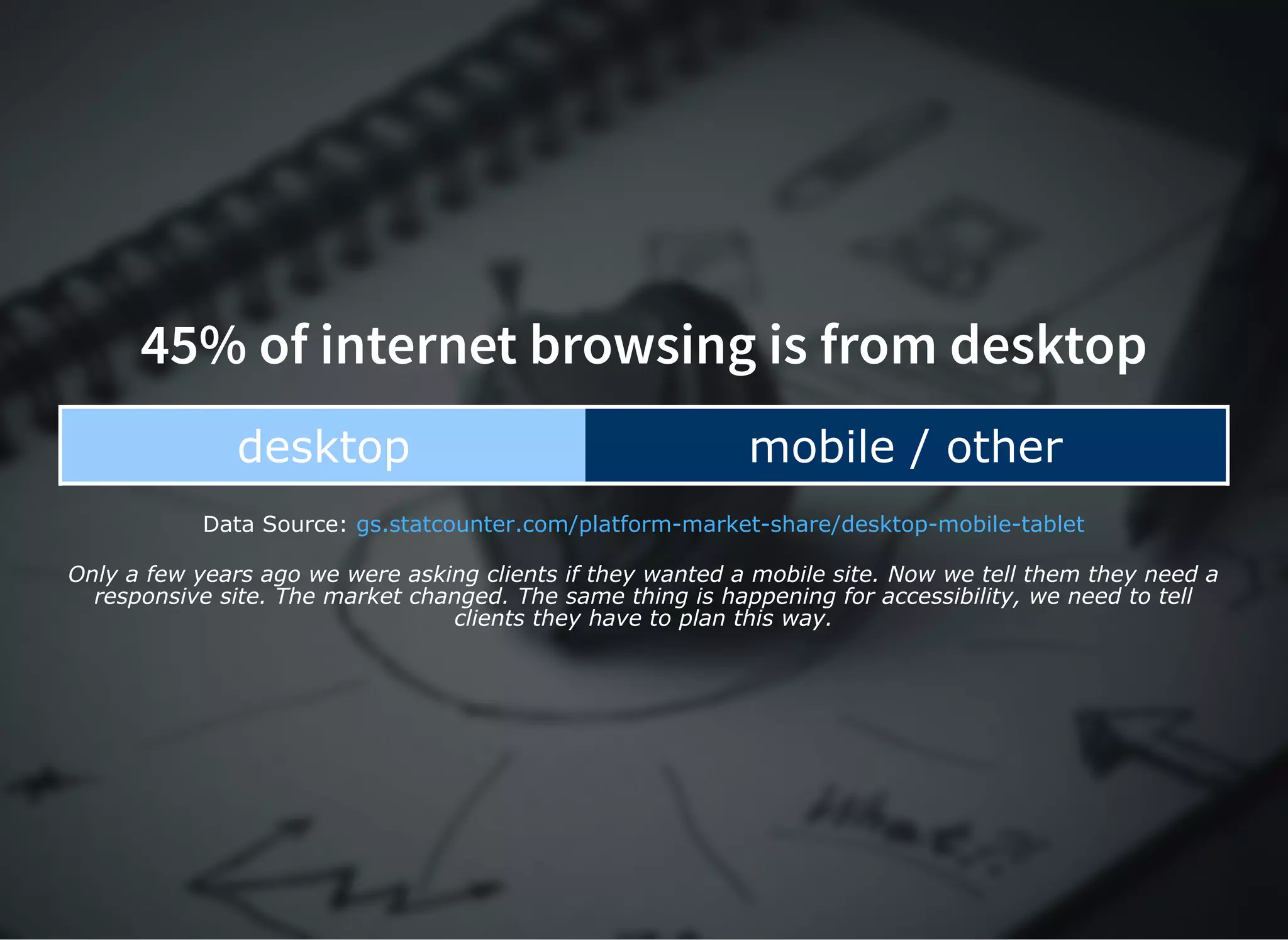
45% of internet browsing is from desktop45% of internet browsing is from desktop
desktop mobile / other
Data Source: gs.statcounter.com/platform­market­share/desktop­mobile­tablet
Only a few years ago we were asking clients if they wanted a mobile site. Now we tell them they need a
responsive site. The market changed. The same thing is happening for accessibility, we need to tell
clients they have to plan this way.
Structure in a way that makes senseStructure in a way that makes sense
Use semantic markup, 
Use progressive design to deliver experience
Prioritize what needs to be loaded
bit.ly/IDXSemBBC
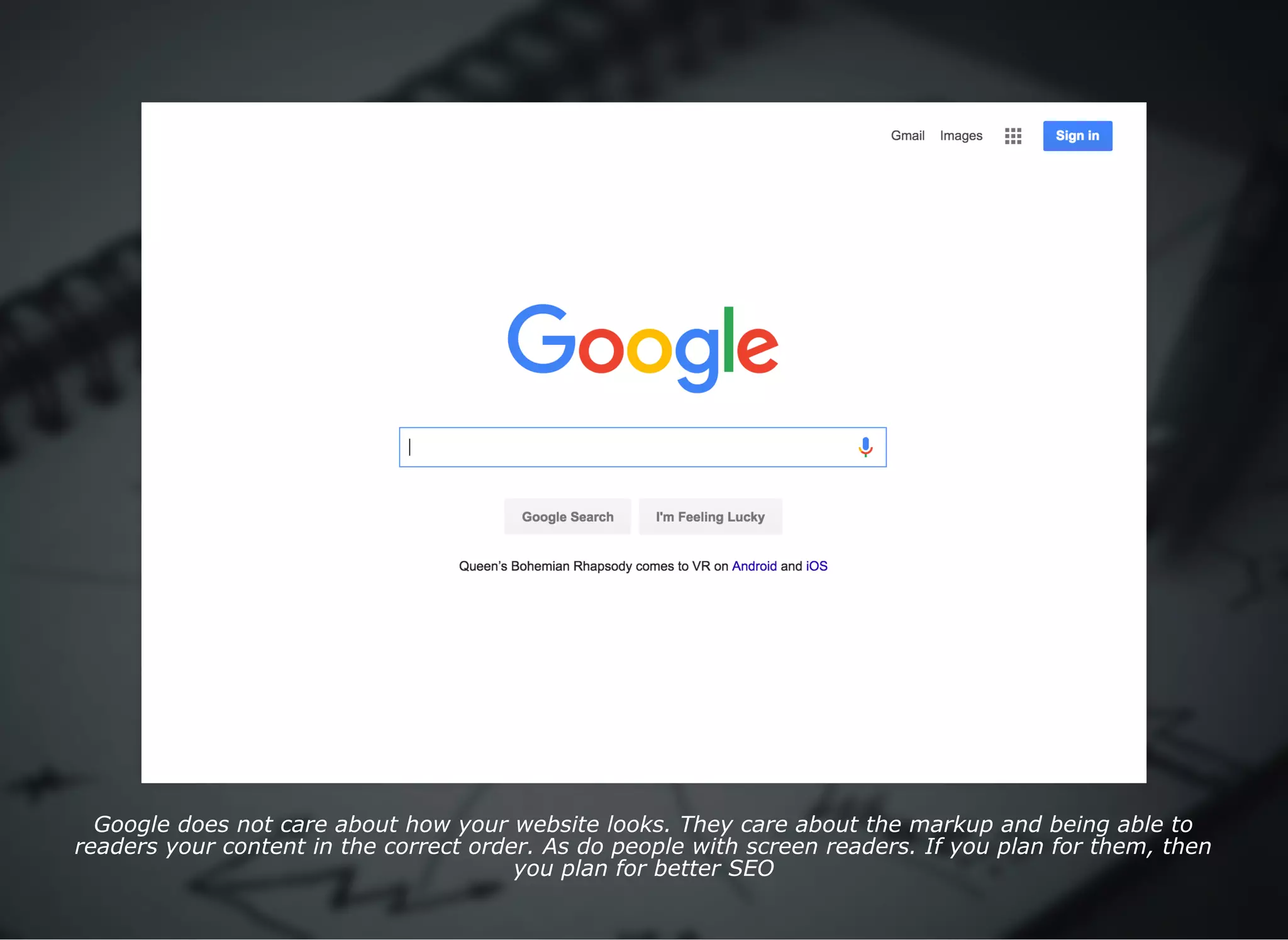
Google does not care about how your website looks. They care about the markup and being able to
readers your content in the correct order. As do people with screen readers. If you plan for them, then
you plan for better SEO
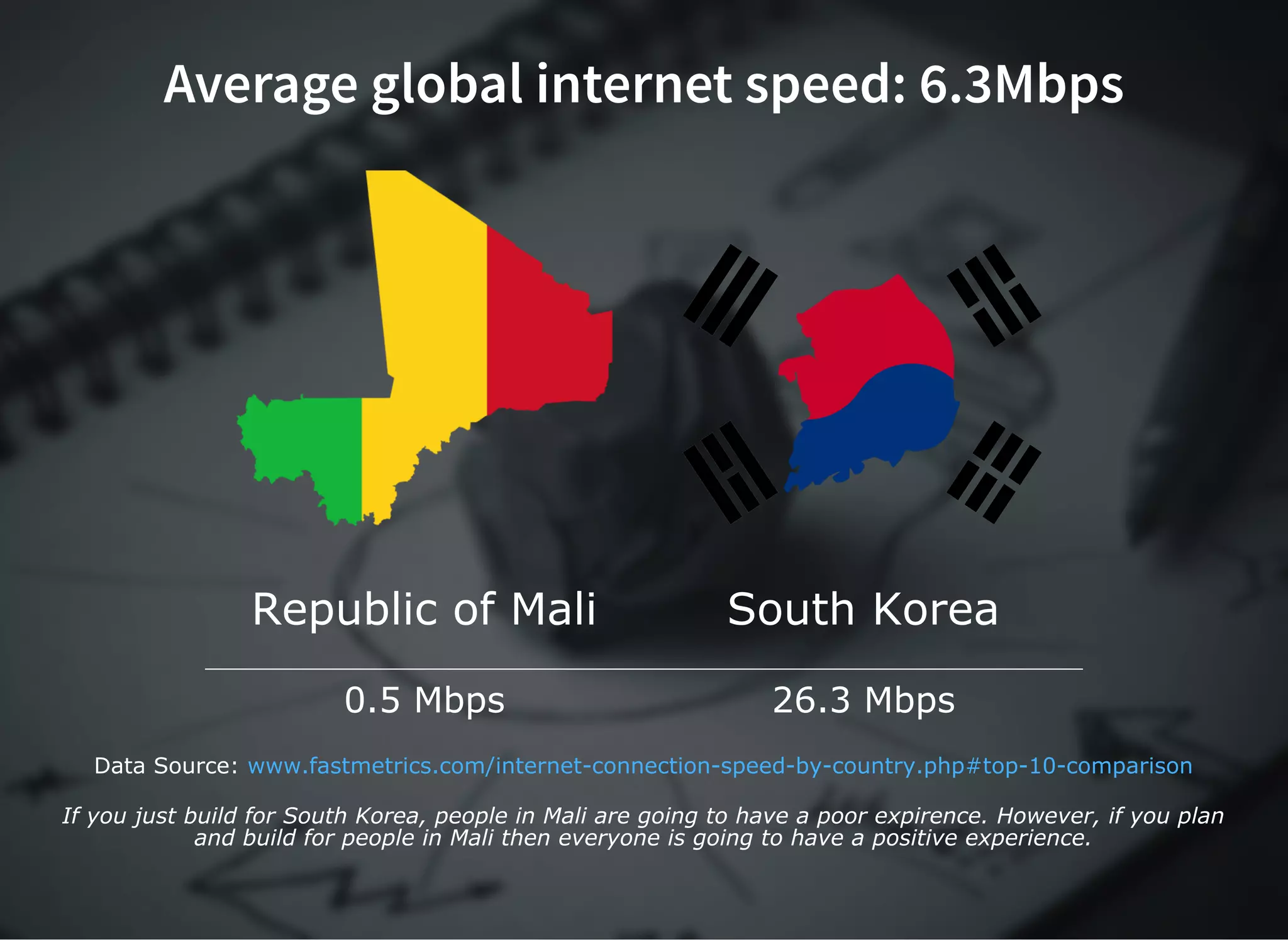
Average global internet speed: 6.3MbpsAverage global internet speed: 6.3Mbps
Republic of Mali South Korea
0.5 Mbps 26.3 Mbps
Data Source: www.fastmetrics.com/internet­connection­speed­by­country.php#top­10­comparison
If you just build for South Korea, people in Mali are going to have a poor expirence. However, if you plan
and build for people in Mali then everyone is going to have a positive experience.
Artificially limit yourselfArtificially limit yourself
Use tools to throttle connection
Disable JavaScript
Can you navigate without a mouse?
III. Provide understandable content toIII. Provide understandable content to
every userevery user
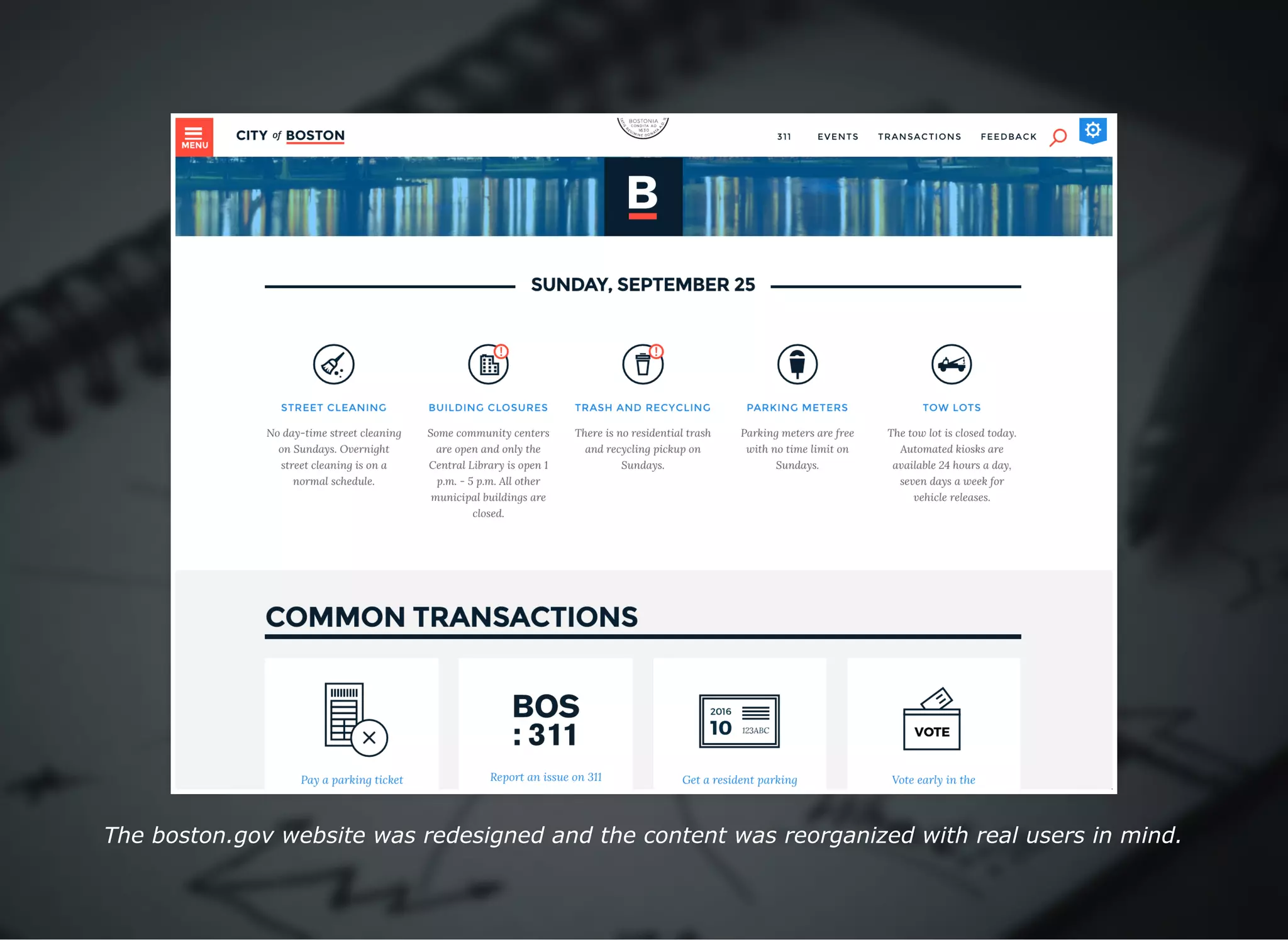
The boston.gov website was redesigned and the content was reorganized with real users in mind.
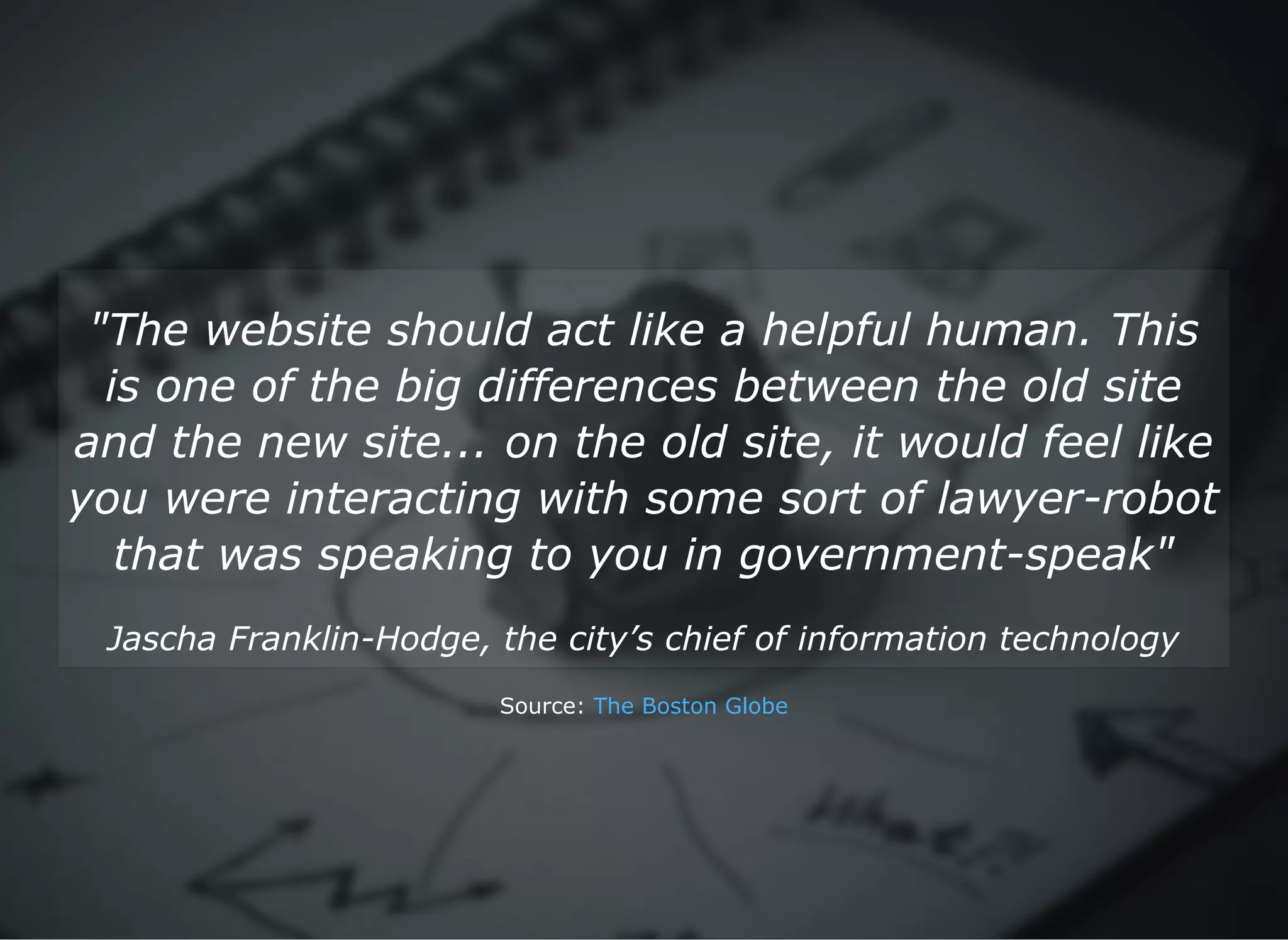
"The website should act like a helpful human. This
is one of the big differences between the old site
and the new site... on the old site, it would feel like
you were interacting with some sort of lawyer­robot
that was speaking to you in government­speak"
Jascha Franklin­Hodge, the city’s chief of information technology
Source: The Boston Globe
Be clear and directBe clear and direct
Use simple phrasing and avoid jargon
Pay attention to font, spacing, line length
Be meaningful, tools to check readability
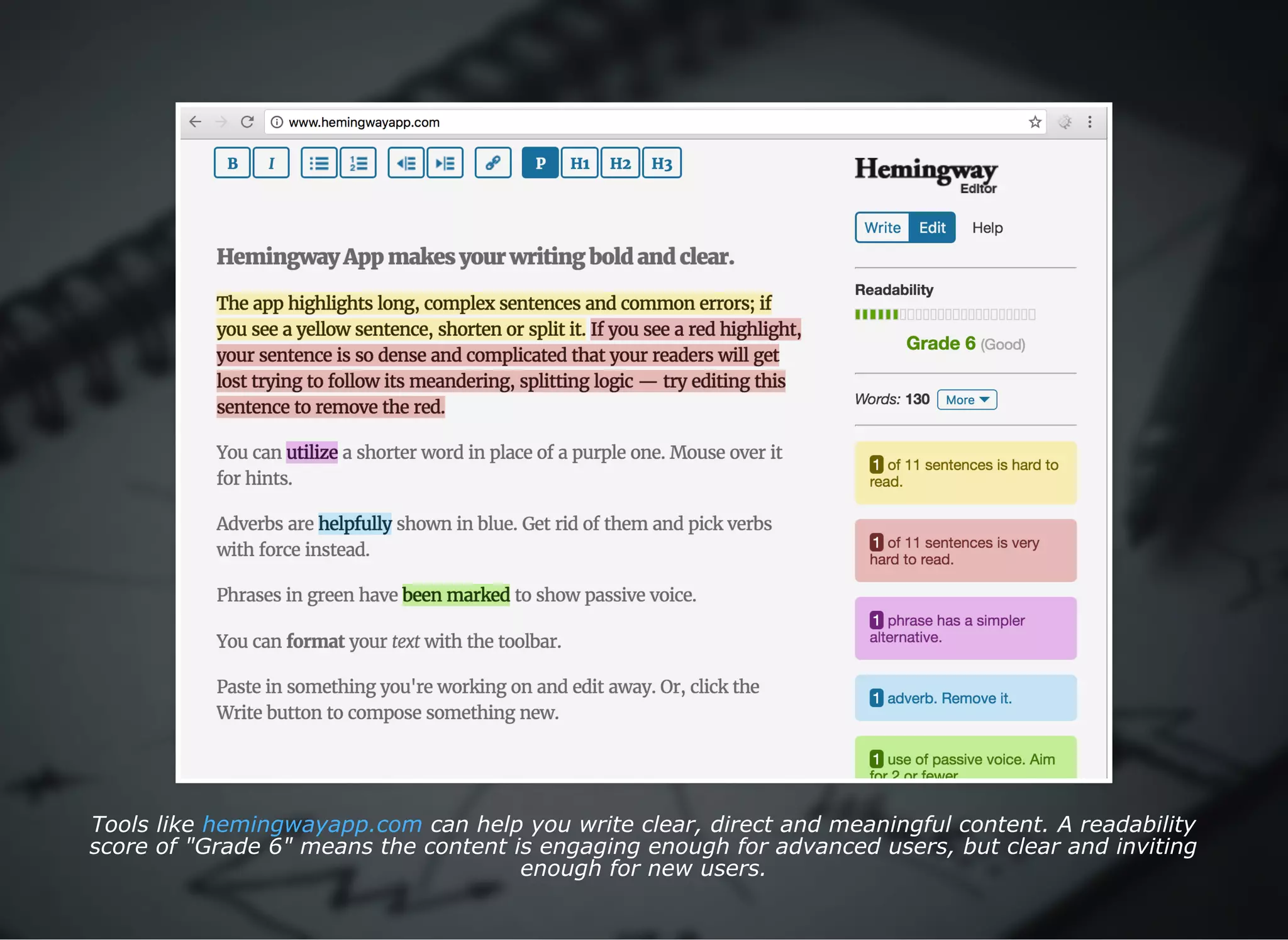
Tools like   can help you write clear, direct and meaningful content. A readability
score of "Grade 6" means the content is engaging enough for advanced users, but clear and inviting
enough for new users.
hemingwayapp.com
Inform and guideInform and guide
Display useful error messaging
Plan a user's journey
Provide contextual relations
The boston.gov website feature contextually linked sections such as street cleaning and tow lots.
IV. Provide every user with trust andIV. Provide every user with trust and
respectrespect
Inclusive Design: Excluding no genderInclusive Design: Excluding no gender
"The easiest way to do inclusive design? Stop
asking about gender!"
­ Sarah Leren
bit.ly/IDXGender
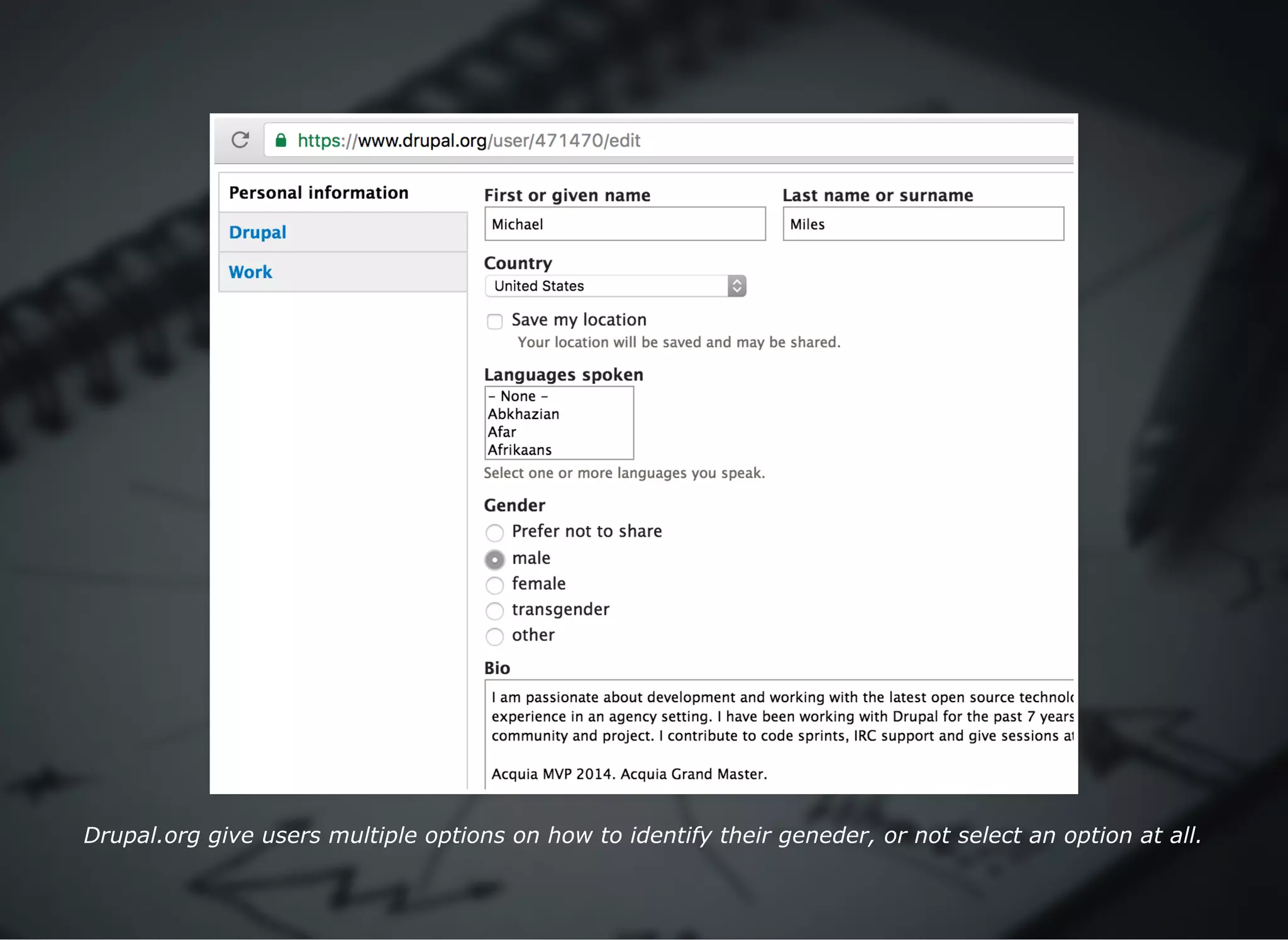
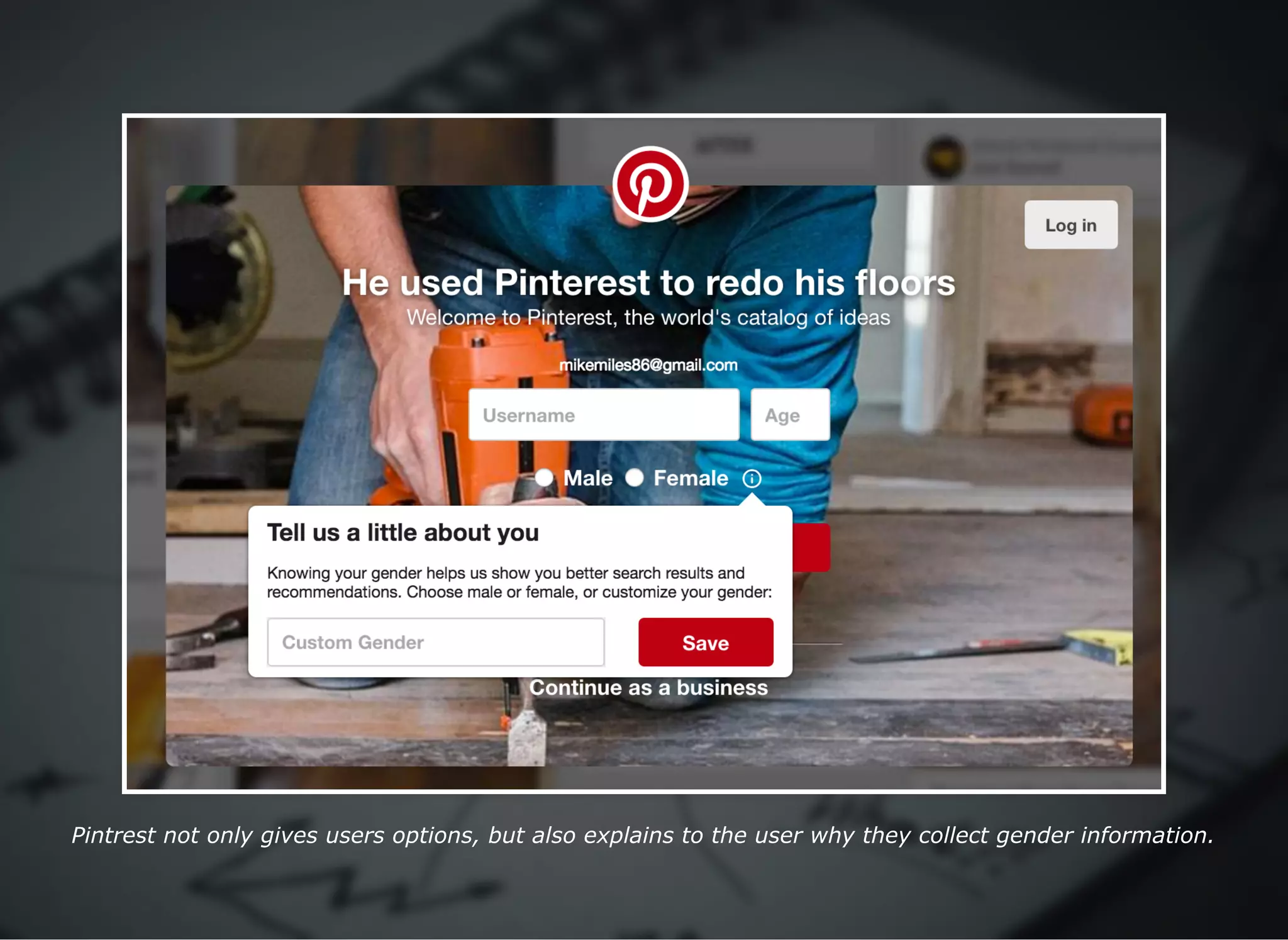
Drupal.org give users multiple options on how to identify their geneder, or not select an option at all.
Collect only the information you needCollect only the information you need
Ask "Why do we need this data?"
Ask "What options can we give users?"
Ask "Why should users give this to us?"
Pintrest not only gives users options, but also explains to the user why they collect gender information.
Be responsible with dataBe responsible with data
Explain how the data is used
Explain how the data is protected
Give users control of their data
Four Pillars of Inclusive DesignFour Pillars of Inclusive Design
I. No user is average
II. Every user deserves equal access
III. Provide understandable content for every user
IV. Every user deserves our trust and respect
If we agree to these four pillars when building our applications, then we have to think differently.
We make a positive impact on as manyWe make a positive impact on as many
people as possiblepeople as possible
And if we follow the four pillars, then we will reach a wider audience.
ResourcesResources
 
This presentation
 
Presentation Slides
 
10 Principles of Inclusive Design
 
The Myth of Average
 
BBC Semantic guidelines
 
Inclusive Design: Excluding No Gender
bit.ly/NJCampIDX bit.ly/NJCampIDXSlides

bit.ly/IDXPrinciples bit.ly/IDXAvgMyth
bit.ly/IDXSemBBC bit.ly/IDXGender
 @DrupalCampNJ  #InventTogether Inclusive Design /  Michael Miles
Thank You!Thank You!
@mikemiles86@mikemiles86

Inclusive Design: Thinking beyond accessibility