The Problem
In today’sworld, objects, tools and systems are not
made diversely and are too specific for certain uses.
This puts limits on groups of people such as those with
disabilities or of different ages.
3.
Universal
Design
(from an adaptivePOV)
The process of designing an environment so that it
can be accessed, understood and used by all people
regardless of their age, size, ability or disability.
4.
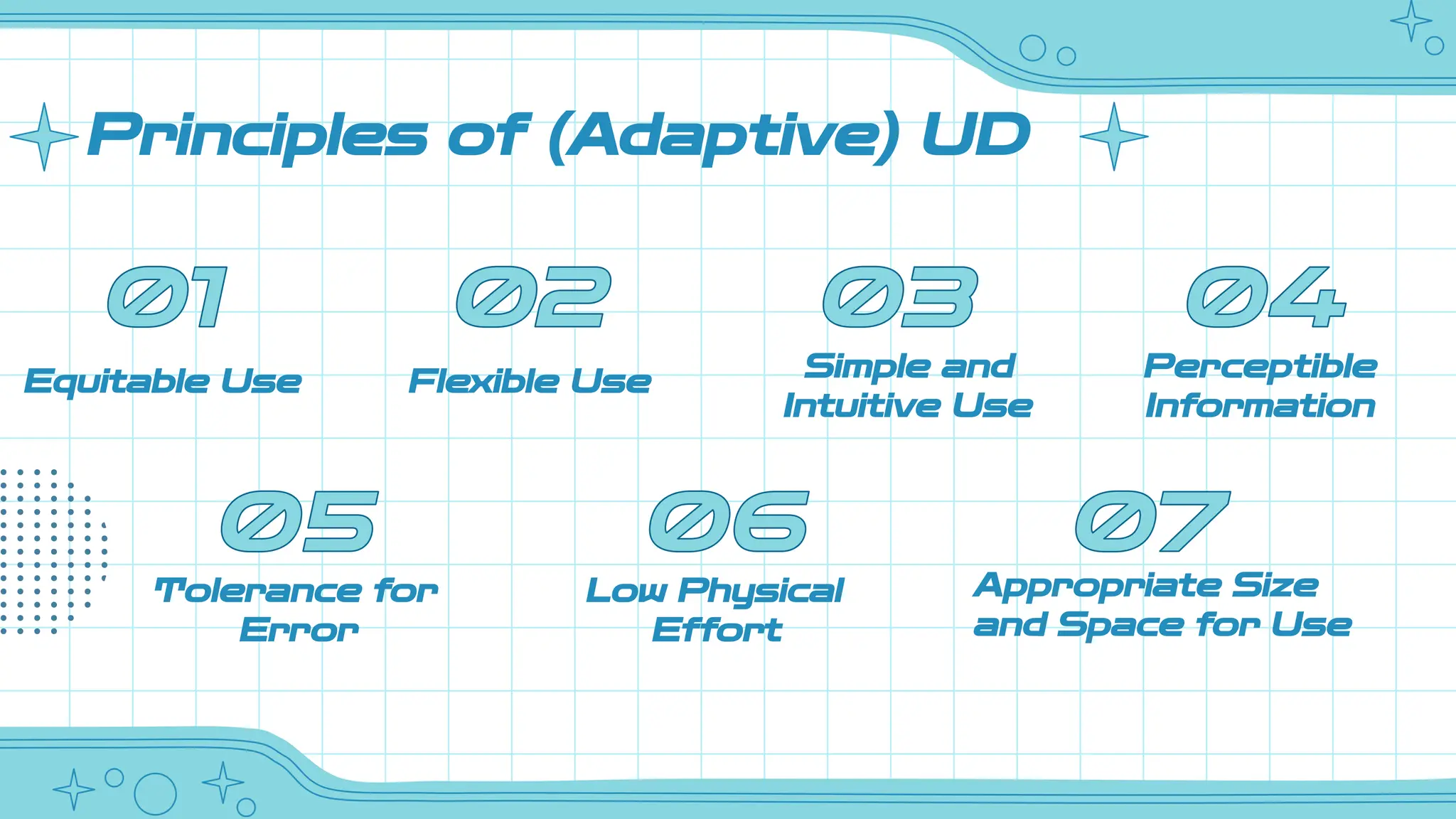
Equitable Use
Principles of(Adaptive) UD
Appropriate Size
and Space for Use
Flexible Use
Tolerance for
Error
Perceptible
Information
Low Physical
Effort
Simple and
Intuitive Use
5.
Equitable Use
Same orsimilar use for a wide variety of users
Can you think of any examples??
6.
Equitable Use
What makesa design equitable in use for all?
● Similar function for all users
● Does not stigmatize users
○ Age
○ Income
○ Ability
○ Gender
○ Race/Ethnicity
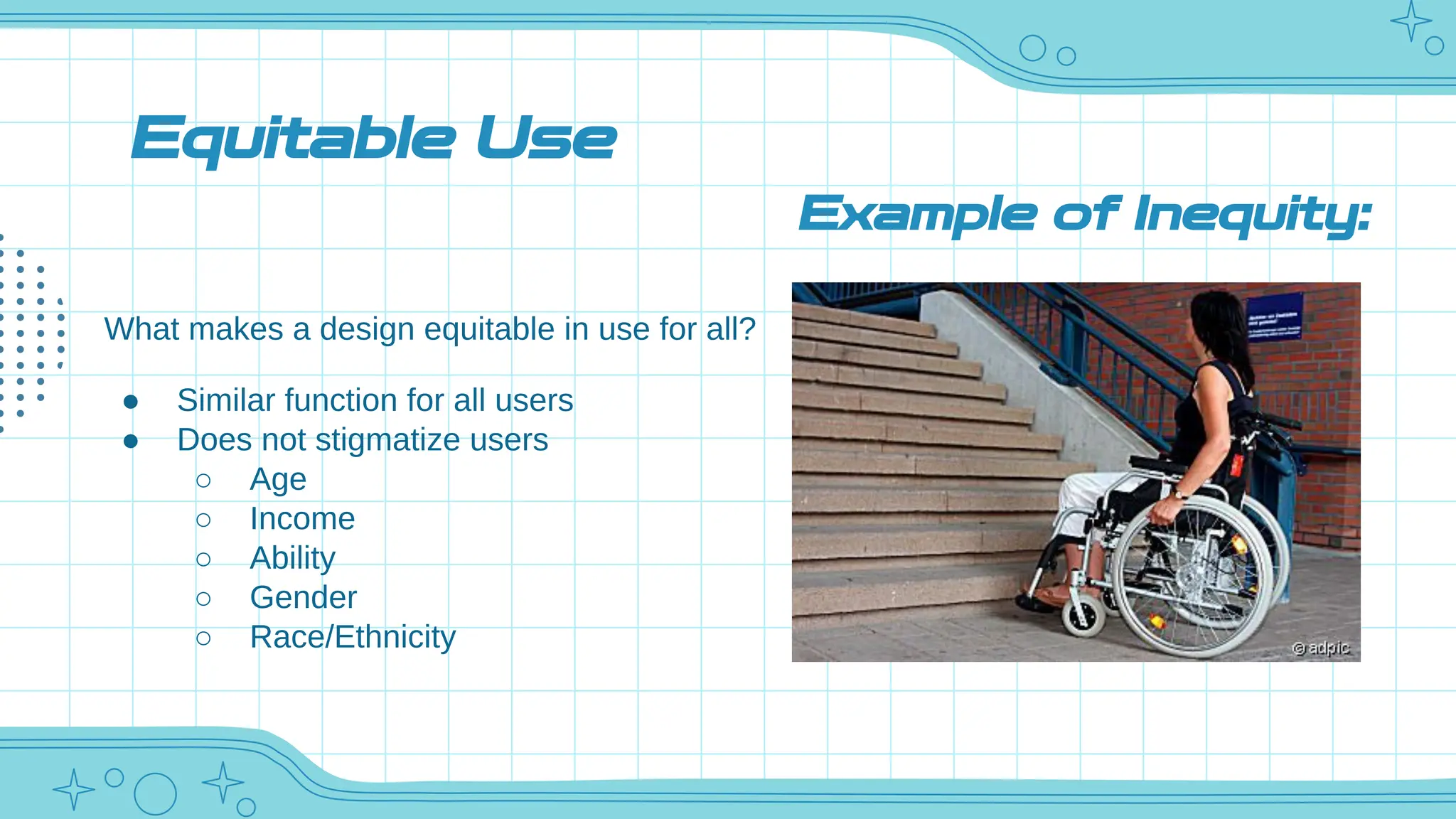
Example of Inequity:
Flexible Use
What makesa flexible design?
● Variety of options of use
● Variables examples:
○ Accessible to both hands
○ Sloped entrances
○ Audio or text options
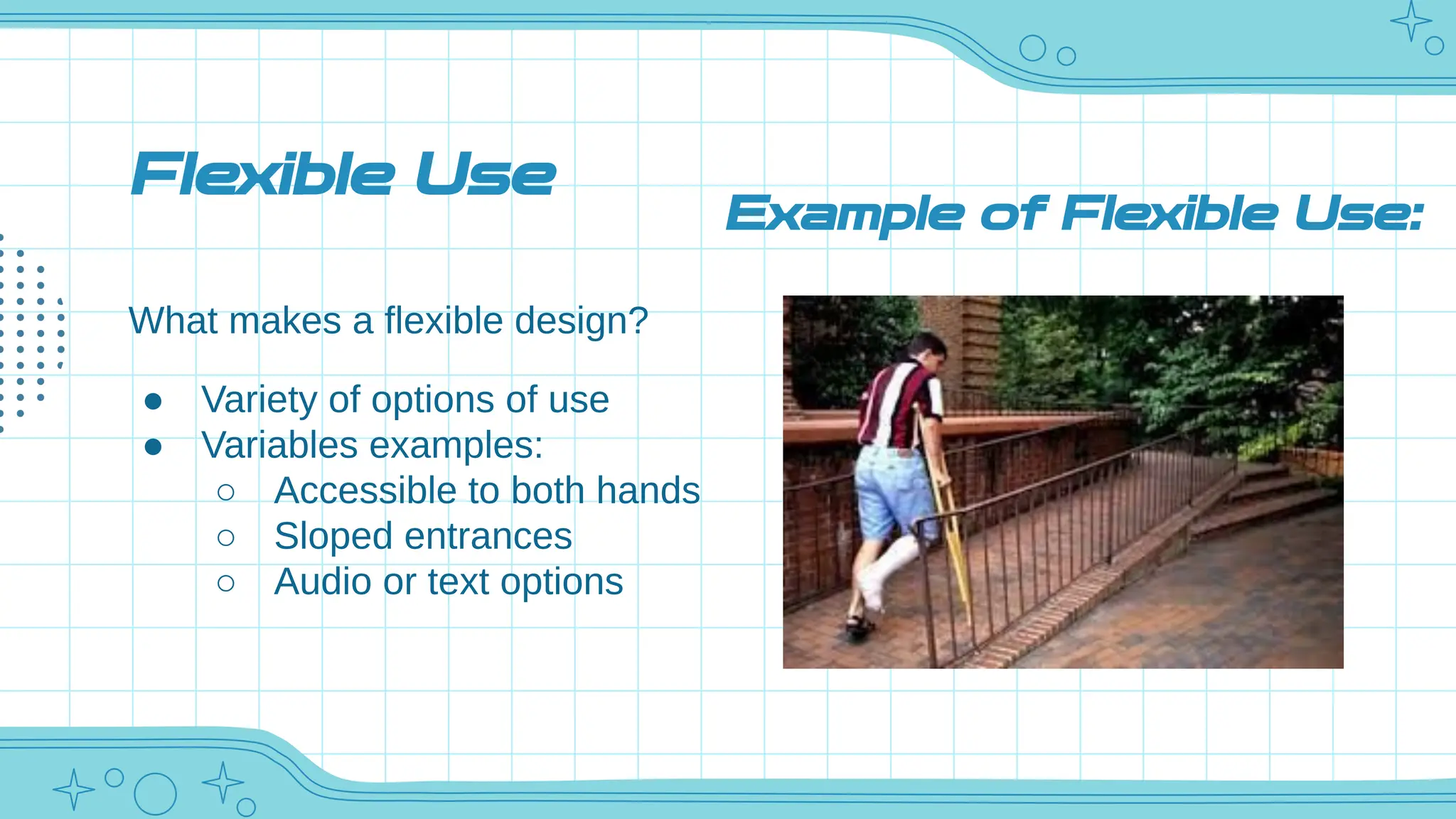
Example of Flexible Use:
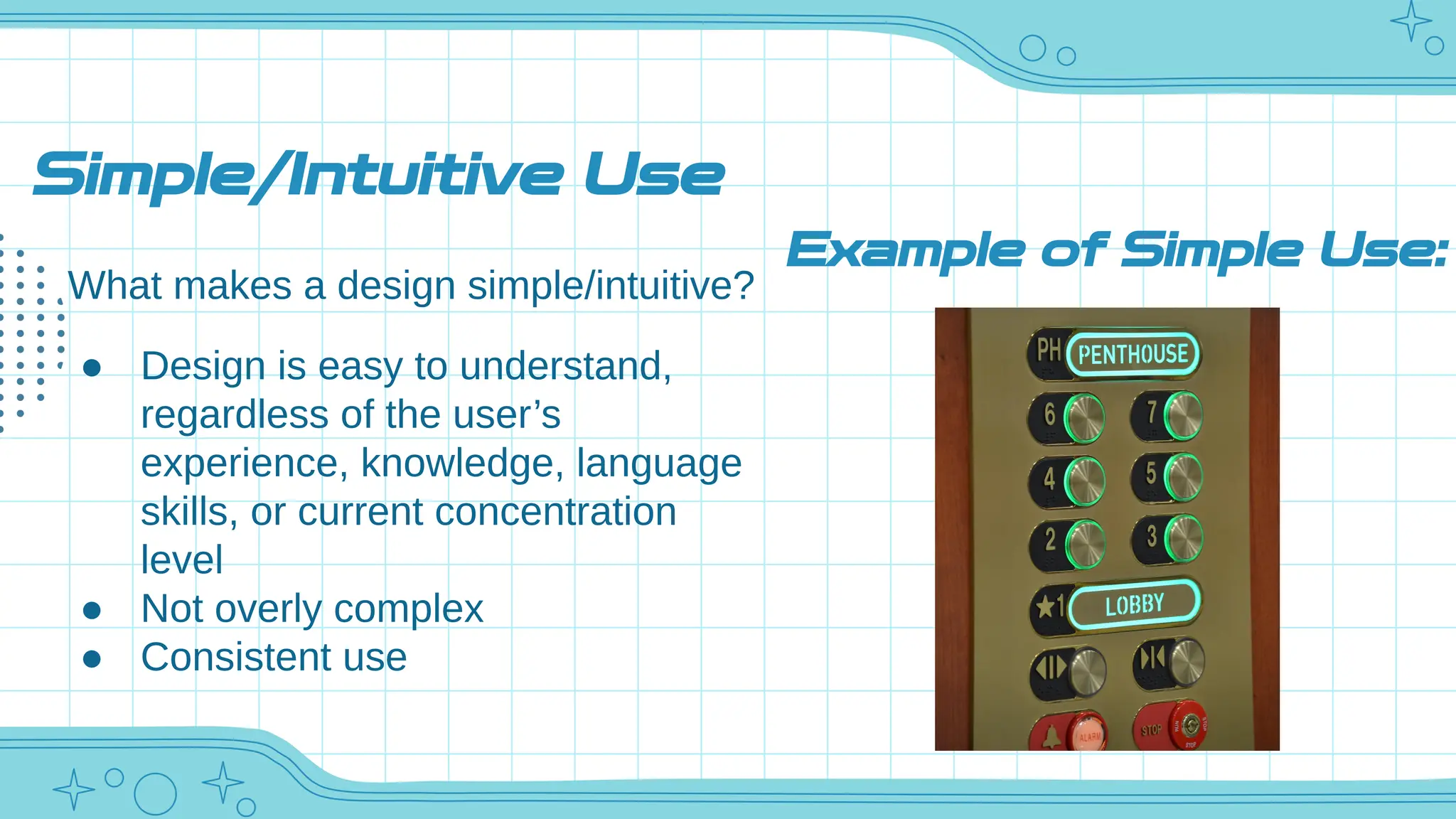
Simple/Intuitive Use
What makesa design simple/intuitive?
● Design is easy to understand,
regardless of the user’s
experience, knowledge, language
skills, or current concentration
level
● Not overly complex
● Consistent use
Example of Simple Use:
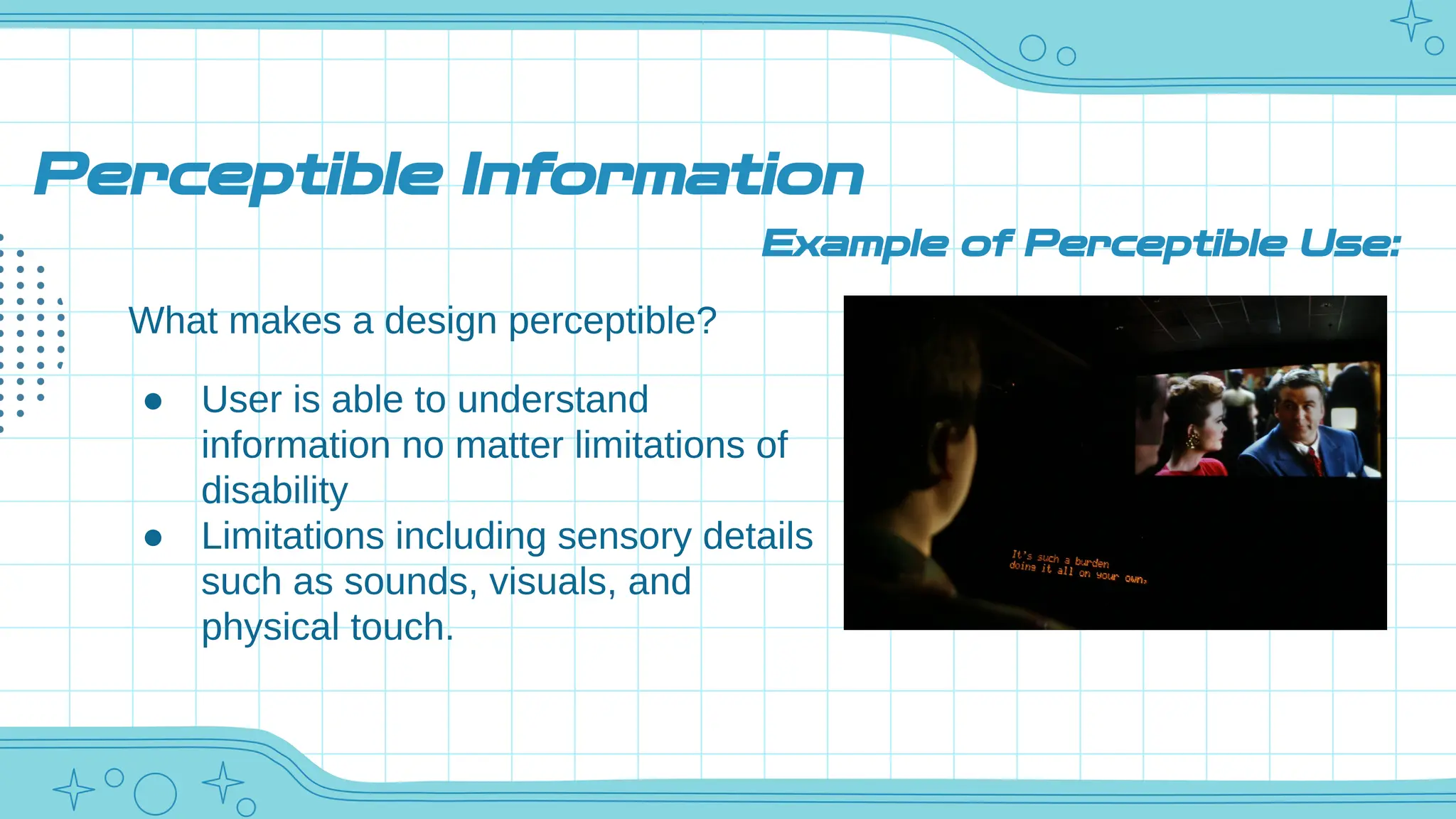
Perceptible Information
What makesa design perceptible?
● User is able to understand
information no matter limitations of
disability
● Limitations including sensory details
such as sounds, visuals, and
physical touch.
Example of Perceptible Use:
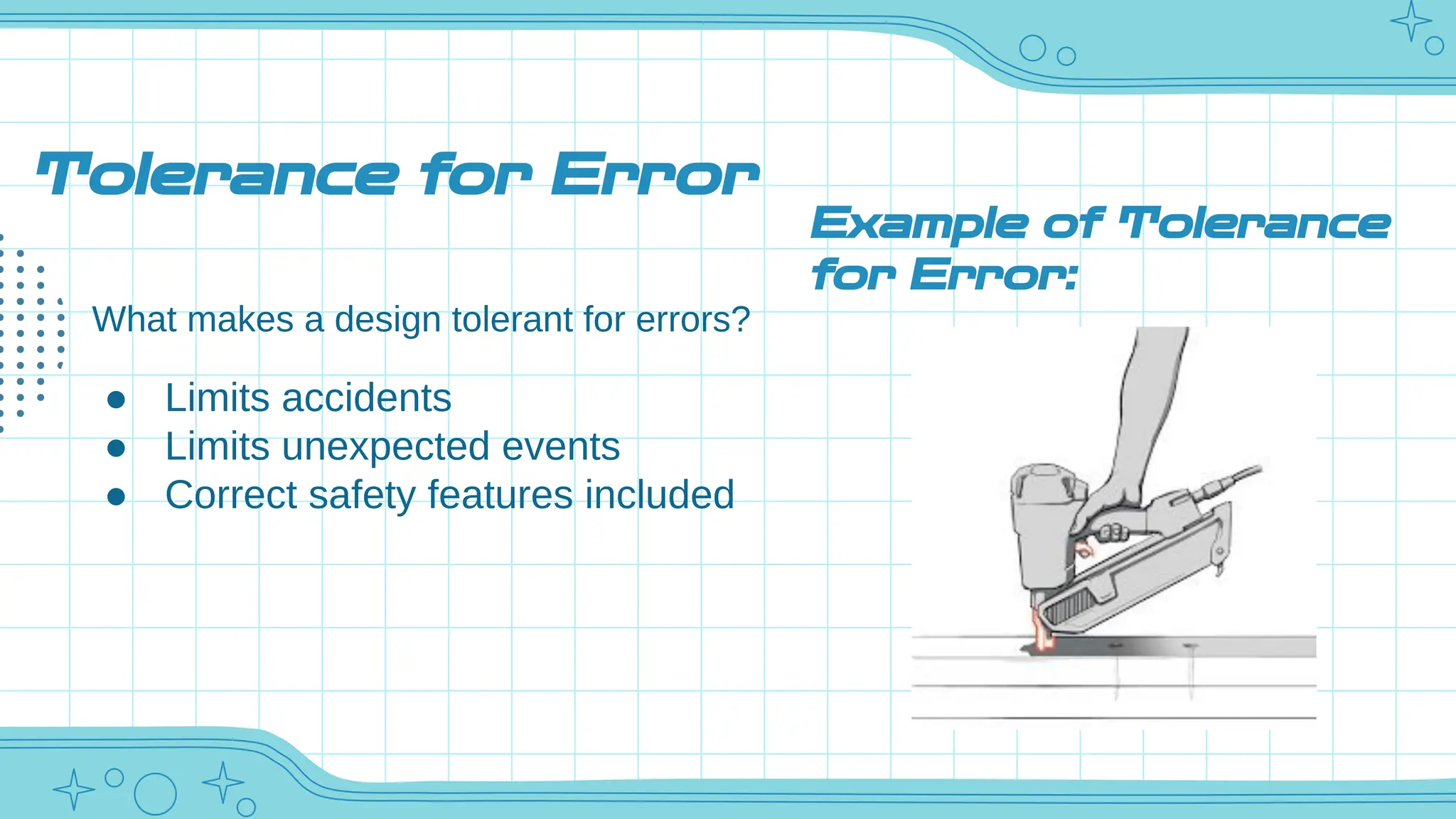
Tolerance for Error
Whatmakes a design tolerant for errors?
● Limits accidents
● Limits unexpected events
● Correct safety features included
Example of Tolerance
for Error:
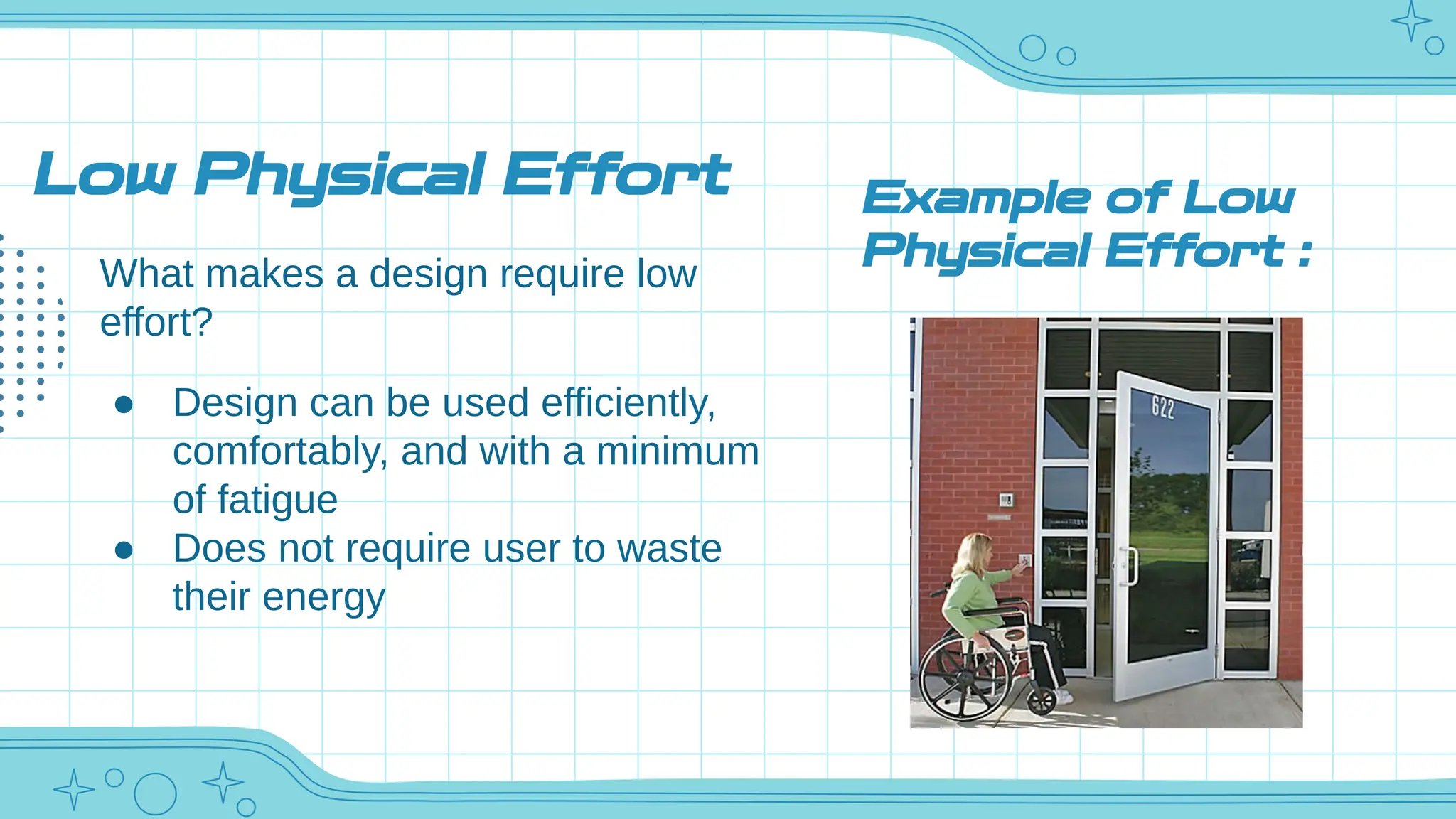
Low Physical Effort
Whatmakes a design require low
effort?
● Design can be used efficiently,
comfortably, and with a minimum
of fatigue
● Does not require user to waste
their energy
Example of Low
Physical Effort :
17.
Size and Spacefor
approach and use
Size is appropriate and considered for action/use
Can you think of any examples??
18.
Size and Spacefor approach and use
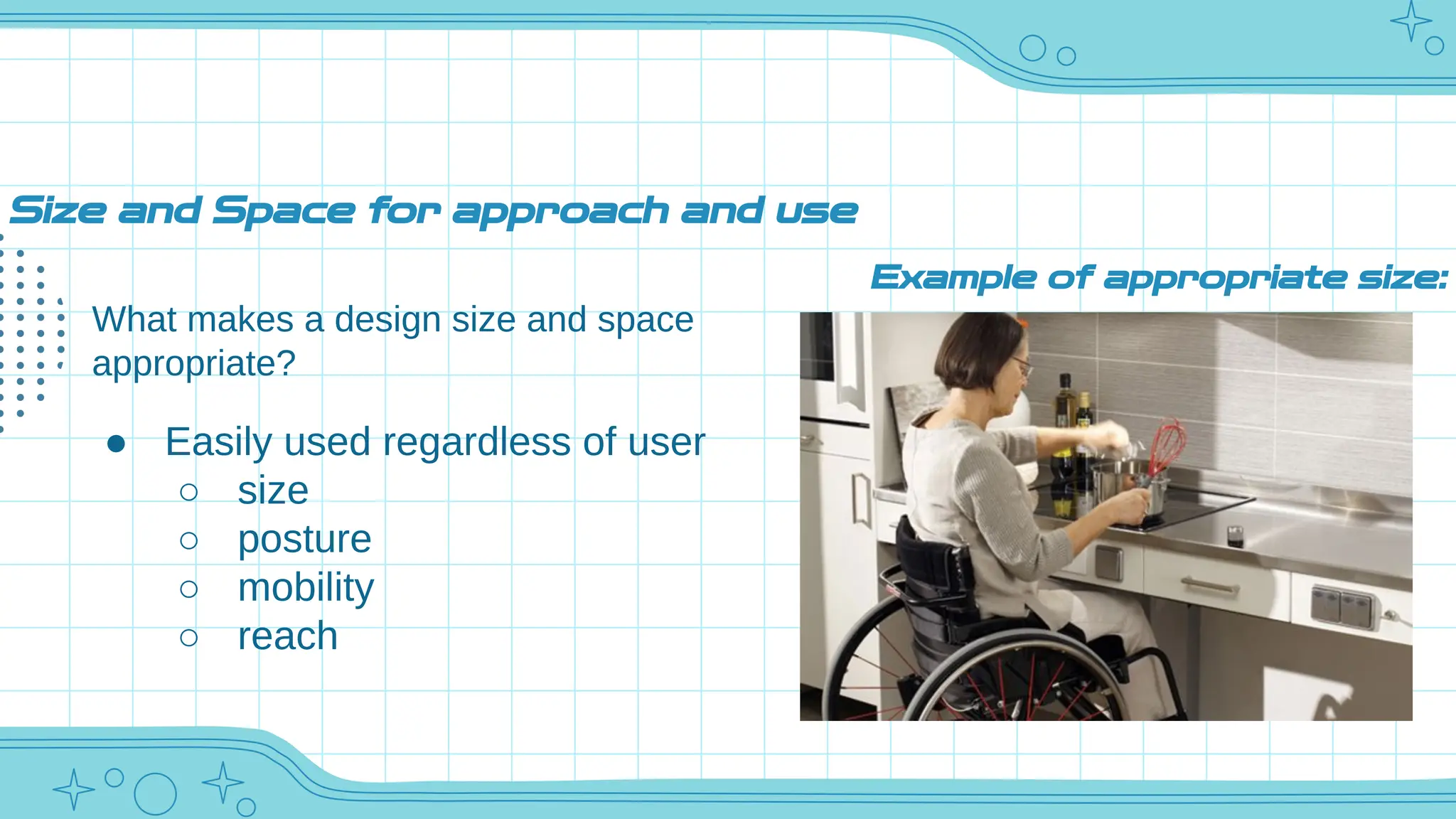
What makes a design size and space
appropriate?
● Easily used regardless of user
○ size
○ posture
○ mobility
○ reach
Example of appropriate size:


![iStat Menus 7.20 Crack for MacOS 2026 Full Version [Latest] pptx](https://cdn.slidesharecdn.com/ss_thumbnails/softwareoverview-251207191544-22b737dc-thumbnail.jpg?width=640&height=640&fit=bounds)
![CleanMyMac X v5.2.8 Crack for MacOS Full Version [Latest] pptx](https://cdn.slidesharecdn.com/ss_thumbnails/softwareoverview-251207194121-a81f0142-thumbnail.jpg?width=640&height=640&fit=bounds)


![Wondershare Filmora 15.0.11 Crack for Mac Key Full Download [Latest] pptx](https://cdn.slidesharecdn.com/ss_thumbnails/software-251207184836-1d16ba16-thumbnail.jpg?width=640&height=640&fit=bounds)
![PowerISO 9.2 Mac Crack + Serial Key Free Download 2026 [Latest] Software.pptx](https://cdn.slidesharecdn.com/ss_thumbnails/software-251207185653-5d5700e6-thumbnail.jpg?width=640&height=640&fit=bounds)


![WinRAR Crack 7.13 Final Mac Keygen 2026 Download [Latest] Software.pptx](https://cdn.slidesharecdn.com/ss_thumbnails/software-251207185858-eb450678-thumbnail.jpg?width=640&height=640&fit=bounds)
![AnyTrans for iOS 8.9.14.20251127 With Crack for MacOS [Latest] pptx](https://cdn.slidesharecdn.com/ss_thumbnails/softwareoverview-251207190907-2316965f-thumbnail.jpg?width=640&height=640&fit=bounds)
