Sit Dolor Aet
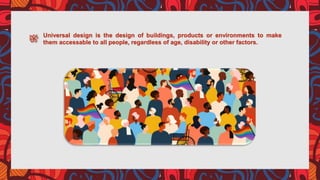
Universal design is the design of buildings, products or environments to make
them accessable to all people, regardless of age, disability or other factors.
An environment should be designed to meet the needs of all people who wish to use
it. This is not a special requirement, for the benefit of only a minority of the population.
It is a fundamental condition of good design.
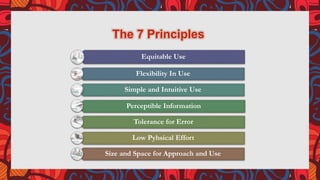
Equitable Use
Flexibility In Use
Simple and Intuitive Use
Perceptible Information
Tolerance for Error
Low Pyhsical Effort
Size and Space for Approach and Use
The 7 Principles
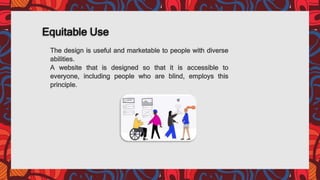
Equitable Use
The design is useful and marketable to people with diverse
abilities.
A website that is designed so that it is accessible to
everyone, including people who are blind, employs this
principle.
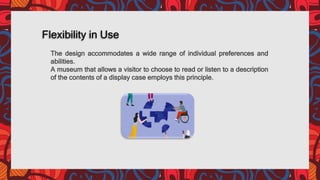
Flexibility in Use
The design accommodates a wide range of individual preferences and
abilities.
A museum that allows a visitor to choose to read or listen to a description
of the contents of a display case employs this principle.
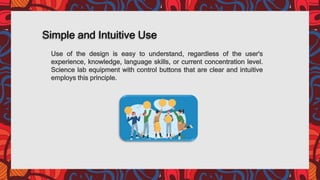
Simple and Intuitive Use
Use of the design is easy to understand, regardless of the user's
experience, knowledge, language skills, or current concentration level.
Science lab equipment with control buttons that are clear and intuitive
employs this principle.
Perceptible Information
The design communicates necessary information effectively to the user,
regardless of ambient conditions or the user's sensory abilities.
Video captioning employs this principle.
Tolerance For Error
The design minimizes hazards and the adverse consequences
of accidental or unintended actions.
An educational software program that provides guidance when
the user makes an inappropriate selection employs this
principle.
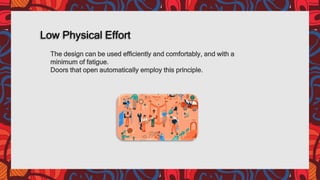
Low Physical Effort
The design can be used efficiently and comfortably, and with a
minimum of fatigue.
Doors that open automatically employ this principle.
Size and Space For Approach and Use
The design provides appropriate size and space for approach, reach,
manipulation, and use, regardless of the user's body size, posture, or
mobility.
A science lab with adjustable tables employs this principle.
DesignForAll
ThankYou
Universal Design Presentation

Universal Design Presentation

  • 1.
  • 2.
    Universal design isthe design of buildings, products or environments to make them accessable to all people, regardless of age, disability or other factors.
  • 3.
    An environment shouldbe designed to meet the needs of all people who wish to use it. This is not a special requirement, for the benefit of only a minority of the population. It is a fundamental condition of good design.
  • 4.
    Equitable Use Flexibility InUse Simple and Intuitive Use Perceptible Information Tolerance for Error Low Pyhsical Effort Size and Space for Approach and Use The 7 Principles
  • 5.
    Equitable Use The designis useful and marketable to people with diverse abilities. A website that is designed so that it is accessible to everyone, including people who are blind, employs this principle.
  • 6.
    Flexibility in Use Thedesign accommodates a wide range of individual preferences and abilities. A museum that allows a visitor to choose to read or listen to a description of the contents of a display case employs this principle.
  • 7.
    Simple and IntuitiveUse Use of the design is easy to understand, regardless of the user's experience, knowledge, language skills, or current concentration level. Science lab equipment with control buttons that are clear and intuitive employs this principle.
  • 8.
    Perceptible Information The designcommunicates necessary information effectively to the user, regardless of ambient conditions or the user's sensory abilities. Video captioning employs this principle.
  • 9.
    Tolerance For Error Thedesign minimizes hazards and the adverse consequences of accidental or unintended actions. An educational software program that provides guidance when the user makes an inappropriate selection employs this principle.
  • 10.
    Low Physical Effort Thedesign can be used efficiently and comfortably, and with a minimum of fatigue. Doors that open automatically employ this principle.
  • 11.
    Size and SpaceFor Approach and Use The design provides appropriate size and space for approach, reach, manipulation, and use, regardless of the user's body size, posture, or mobility. A science lab with adjustable tables employs this principle.
  • 12.