Incident Response
Table Top Exercises
Eric Vanderburg, MBA, CISSP
June 19, 2008
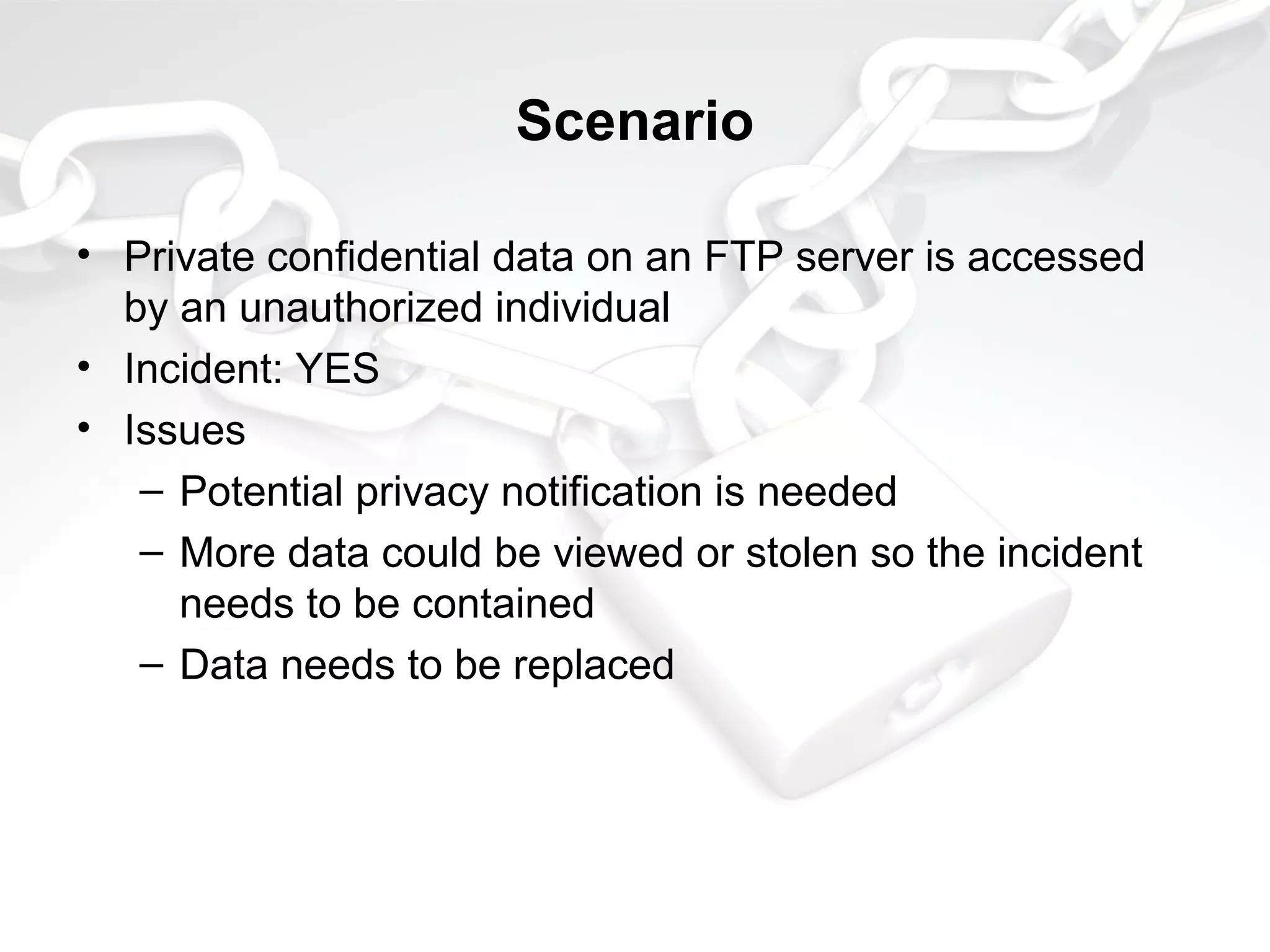
Scenario
• Private confidential data on an FTP server is accessed
by an unauthorized individual
• Incident: YES
• Issues
– Potential privacy notification is needed
– More data could be viewed or stolen so the incident
needs to be contained
– Data needs to be replaced
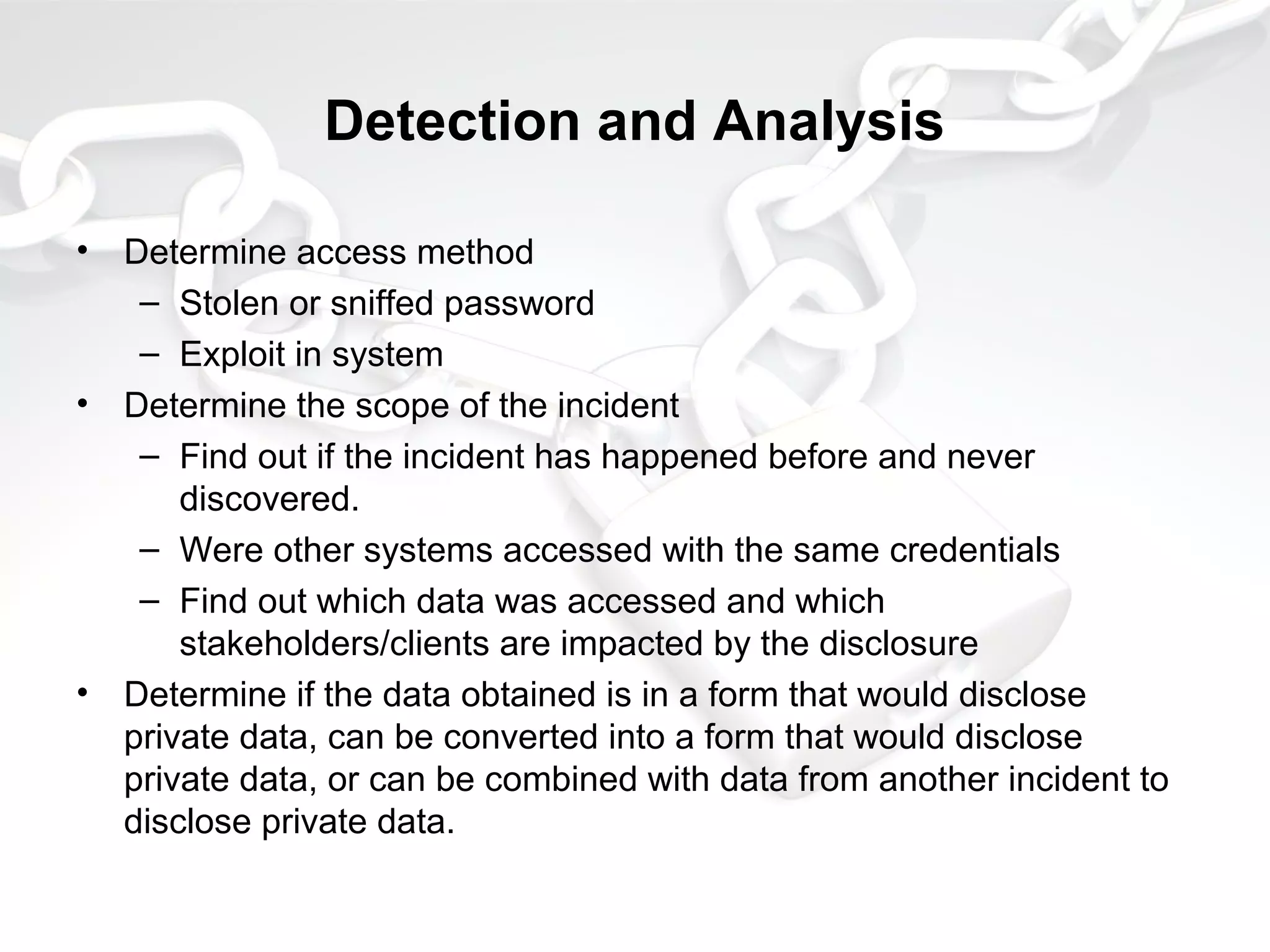
Detection and Analysis
• Determine access method
– Stolen or sniffed password
– Exploit in system
• Determine the scope of the incident
– Find out if the incident has happened before and never
discovered.
– Were other systems accessed with the same credentials
– Find out which data was accessed and which
stakeholders/clients are impacted by the disclosure
• Determine if the data obtained is in a form that would disclose
private data, can be converted into a form that would disclose
private data, or can be combined with data from another incident to
disclose private data.
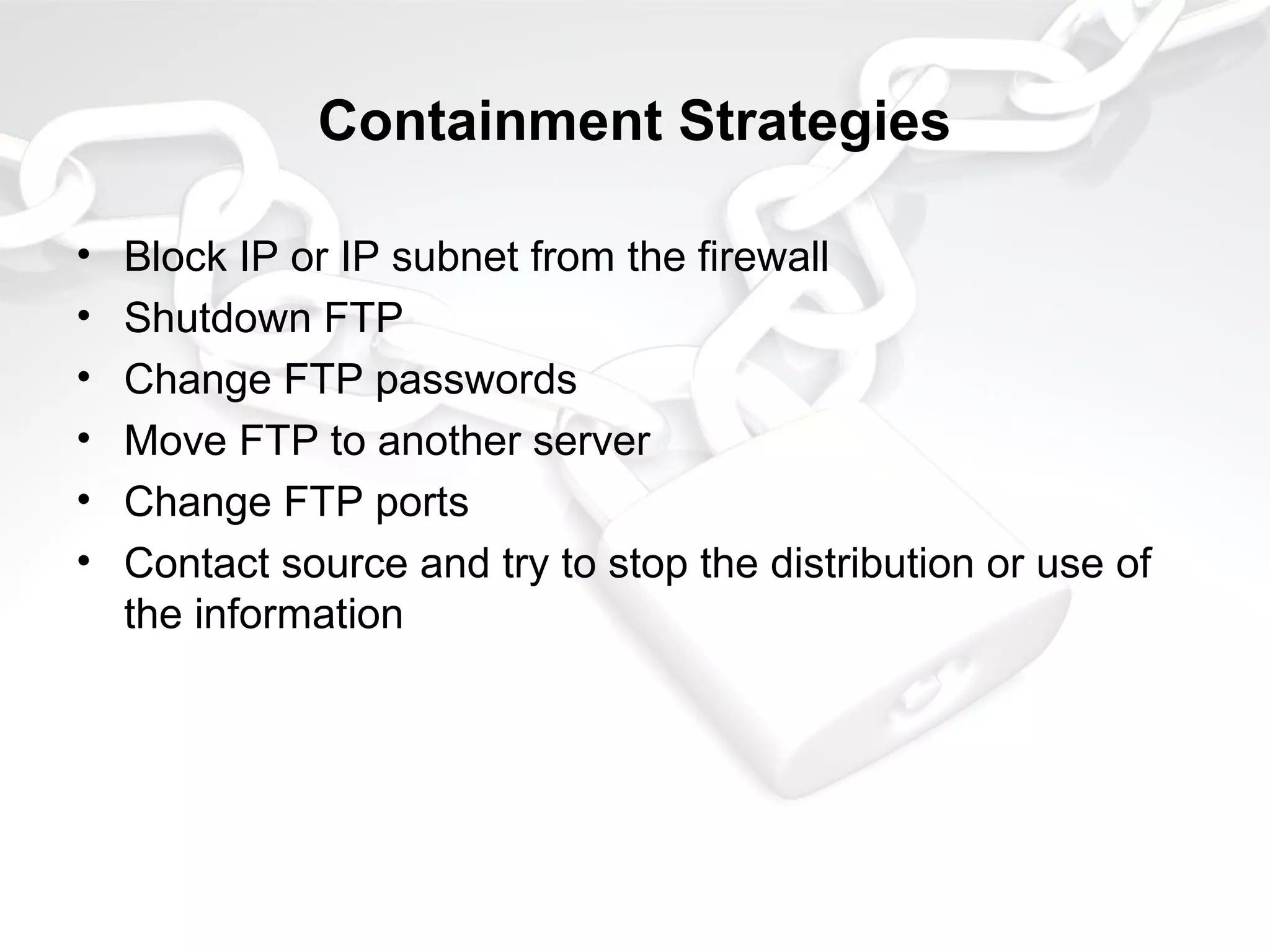
Containment Strategies
• Block IP or IP subnet from the firewall
• Shutdown FTP
• Change FTP passwords
• Move FTP to another server
• Change FTP ports
• Contact source and try to stop the distribution or use of
the information
Recovery
• Restore data from backup
• Request that the client resend the data
Post-incident Activities
• Attendees:
– Management
• CEO / Senior Partner
• COO
• Network Operations Manager
• Litigation Support Manager
– Public Relations Analyst
– Sales Manager (Facilitator)
– IT Staff
• Senior Network Engineer
• Network Engineer
• FTP Administrator
• Network Analyst
Preventing Future Occurrences
• Set timeout on FTP site
• Set alerts on FTP events
• Encrypt username and password or require VPN for FTP
• Set FTP server to only respond to specific IP addresses
• Configure Firewall rules for FTP ports to only allow traffic
from specific pre-approved IP addresses or subnets.

Incident response table top exercises

  • 1.
    Incident Response Table TopExercises Eric Vanderburg, MBA, CISSP June 19, 2008
  • 2.
    Scenario • Private confidentialdata on an FTP server is accessed by an unauthorized individual • Incident: YES • Issues – Potential privacy notification is needed – More data could be viewed or stolen so the incident needs to be contained – Data needs to be replaced
  • 3.
    Detection and Analysis •Determine access method – Stolen or sniffed password – Exploit in system • Determine the scope of the incident – Find out if the incident has happened before and never discovered. – Were other systems accessed with the same credentials – Find out which data was accessed and which stakeholders/clients are impacted by the disclosure • Determine if the data obtained is in a form that would disclose private data, can be converted into a form that would disclose private data, or can be combined with data from another incident to disclose private data.
  • 4.
    Containment Strategies • BlockIP or IP subnet from the firewall • Shutdown FTP • Change FTP passwords • Move FTP to another server • Change FTP ports • Contact source and try to stop the distribution or use of the information
  • 5.
    Recovery • Restore datafrom backup • Request that the client resend the data
  • 6.
    Post-incident Activities • Attendees: –Management • CEO / Senior Partner • COO • Network Operations Manager • Litigation Support Manager – Public Relations Analyst – Sales Manager (Facilitator) – IT Staff • Senior Network Engineer • Network Engineer • FTP Administrator • Network Analyst
  • 7.
    Preventing Future Occurrences •Set timeout on FTP site • Set alerts on FTP events • Encrypt username and password or require VPN for FTP • Set FTP server to only respond to specific IP addresses • Configure Firewall rules for FTP ports to only allow traffic from specific pre-approved IP addresses or subnets.