Nairobi- Kenya The 3rd-5th November 2015
By M. Patrice Lagnon SEWADE, Agro-industrial
Coordinator of SOJAGNON
www.sojagnon.org
Improving rural soybean processors'
income through processing and
packaging in Benin
• Background
• Current state of soybean milk
packaging
• Possible improvements
Outline
 Soybean is one of the most processed agricultural products
In Benin, mainly in rural areas
 This processing activity that significantly contributes to
fighting against food insecurity is an important source of
income for women processors.
 SOJAGNON with other partners (researchers and farmers)
formed a consortium to respond to a call for proposals
launched by PAEPARD (a project funded by the EC and
managed by FARA)
Background (1/2)
 The project intends to improve soybean milk and soybean
afitin (a local taste enhancer) processing technologies
produced by rural women
 Women processors who are the beneficiaries of the project
are gathered into small units of small scale processing.
Background (2/2)
 Based on 1 liter, soy milk is composed of 37 g of protein
whereas cow milk contains only 35 g
 Soy milk is then richer in protein
 Considering this aspect, people consume more soy milk,
especially children for growth
 It helps strengthen food and nutritional security
 Therefore, soybean milk demand is high in Benin.
Soy milk demand in Benin
 Processors are facing challenges to have access to
appropriate packaging.
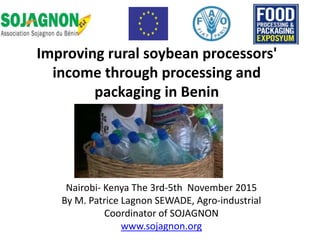
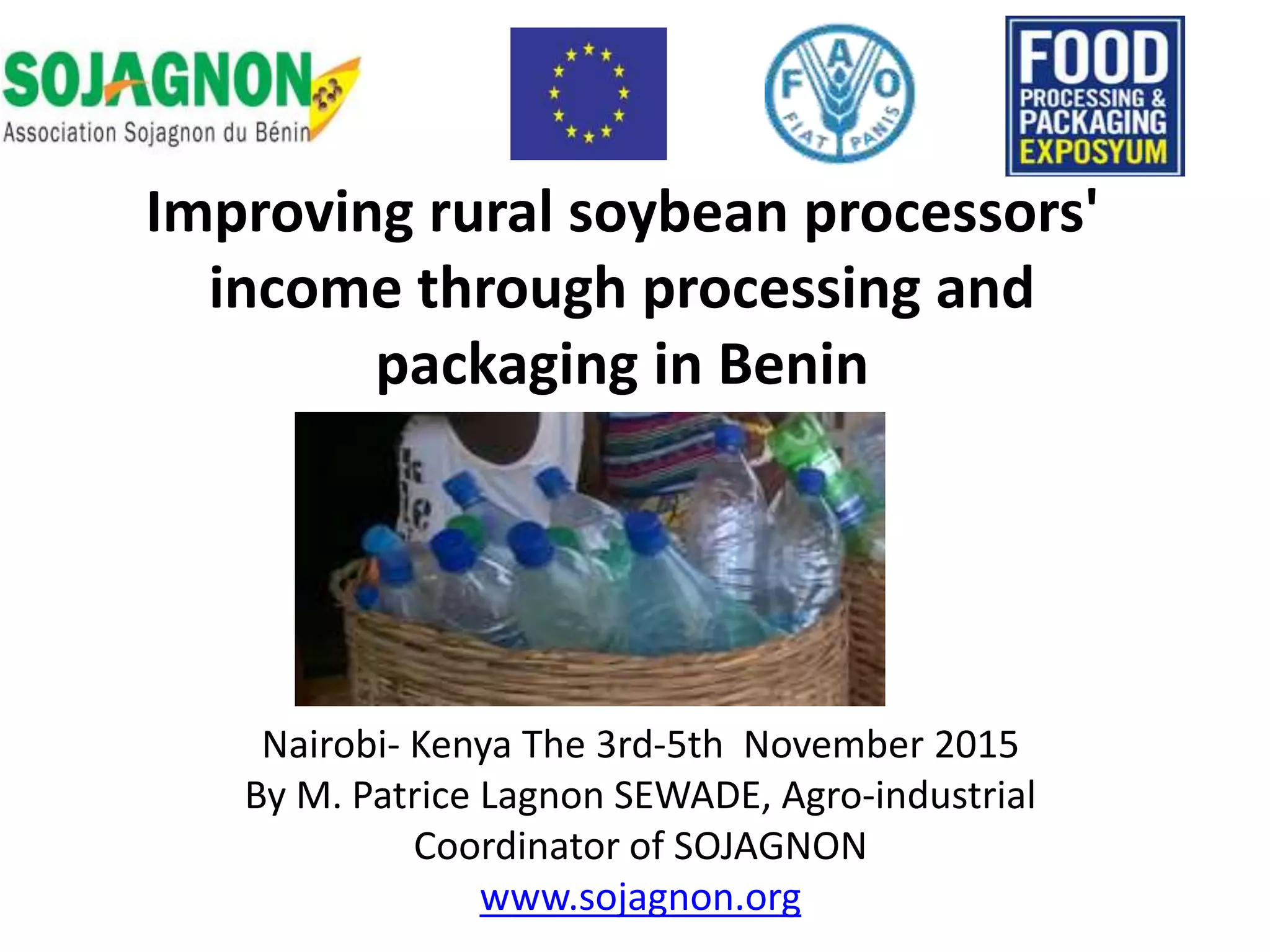
 For instance, they re-use bottle plastics to package milk
 These plastics are often plastics that clients from bars or
restaurants throw away after drinking the content
Current state of soybean
milk packaging (1/4)
 The hygienic state of these packaging is doubtful and leads to
the reluctance of consumers to buy the products
 This reduces the competitiveness of local soy milk processors
 Consumers are actually looking for soy milk which are
properly packaged to be assured of the quality of the
product
Current state of soybean
milk packaging (2/4)
 Processors are aware of this limitation but they experience
difficulties to have access to packages
 The other issue is the shelf life of soy-bean milk that can’t go
beyond one day under room temperature.
 Researchers are working to prolong the shelf life so that the
milk can be transported over long distance to cities where
demand is high
Current state of soybean
milk packaging (3/4)
Current state of soybean milk packaging (4/4)
 Changes in the processing sector partly depends on the
types of packaging available and this offer must evolve to
keep pace with demand
 To overcome the challenge of packaging, AGRIPAT INDUSTRY
is proposing a sustainable and adapted mechanism of
support to processors
 This consists in creating and strengthening business links
between processors and packaging manufacturers.
Possible
improvements
 We would like to acknowledge all our partners who directly
or indirectly support our activities:
 EC, PAEPARD, FARA, WOTRO, University of Abomey-Calavi,
Wagenigen University, University of Lisbon, INRAB, FUPRO
and others
Acknowledgement
Improving rural soybean processors' income through processing and packaging in Benin

Improving rural soybean processors' income through processing and packaging in Benin

  • 1.
    Nairobi- Kenya The3rd-5th November 2015 By M. Patrice Lagnon SEWADE, Agro-industrial Coordinator of SOJAGNON www.sojagnon.org Improving rural soybean processors' income through processing and packaging in Benin
  • 2.
    • Background • Currentstate of soybean milk packaging • Possible improvements Outline
  • 3.
     Soybean isone of the most processed agricultural products In Benin, mainly in rural areas  This processing activity that significantly contributes to fighting against food insecurity is an important source of income for women processors.  SOJAGNON with other partners (researchers and farmers) formed a consortium to respond to a call for proposals launched by PAEPARD (a project funded by the EC and managed by FARA) Background (1/2)
  • 4.
     The projectintends to improve soybean milk and soybean afitin (a local taste enhancer) processing technologies produced by rural women  Women processors who are the beneficiaries of the project are gathered into small units of small scale processing. Background (2/2)
  • 5.
     Based on1 liter, soy milk is composed of 37 g of protein whereas cow milk contains only 35 g  Soy milk is then richer in protein  Considering this aspect, people consume more soy milk, especially children for growth  It helps strengthen food and nutritional security  Therefore, soybean milk demand is high in Benin. Soy milk demand in Benin
  • 6.
     Processors arefacing challenges to have access to appropriate packaging.  For instance, they re-use bottle plastics to package milk  These plastics are often plastics that clients from bars or restaurants throw away after drinking the content Current state of soybean milk packaging (1/4)
  • 7.
     The hygienicstate of these packaging is doubtful and leads to the reluctance of consumers to buy the products  This reduces the competitiveness of local soy milk processors  Consumers are actually looking for soy milk which are properly packaged to be assured of the quality of the product Current state of soybean milk packaging (2/4)
  • 8.
     Processors areaware of this limitation but they experience difficulties to have access to packages  The other issue is the shelf life of soy-bean milk that can’t go beyond one day under room temperature.  Researchers are working to prolong the shelf life so that the milk can be transported over long distance to cities where demand is high Current state of soybean milk packaging (3/4)
  • 9.
    Current state ofsoybean milk packaging (4/4)
  • 10.
     Changes inthe processing sector partly depends on the types of packaging available and this offer must evolve to keep pace with demand  To overcome the challenge of packaging, AGRIPAT INDUSTRY is proposing a sustainable and adapted mechanism of support to processors  This consists in creating and strengthening business links between processors and packaging manufacturers. Possible improvements
  • 11.
     We wouldlike to acknowledge all our partners who directly or indirectly support our activities:  EC, PAEPARD, FARA, WOTRO, University of Abomey-Calavi, Wagenigen University, University of Lisbon, INRAB, FUPRO and others Acknowledgement