


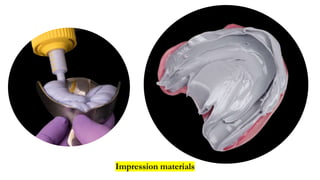
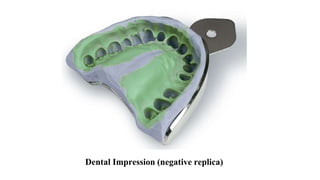


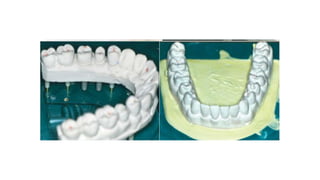


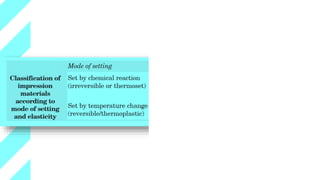




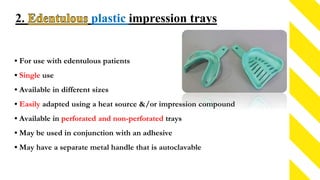
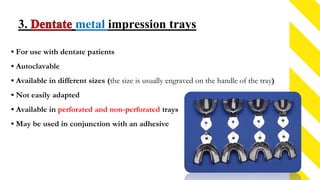

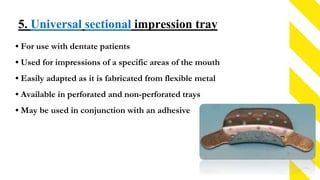


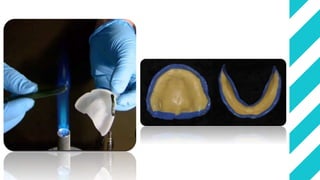

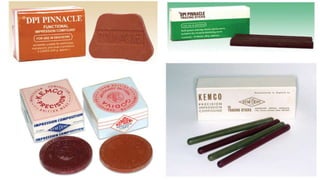


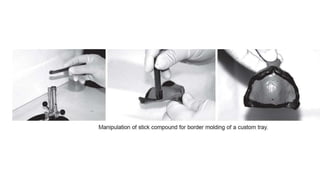


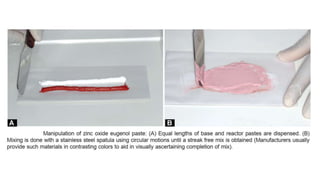




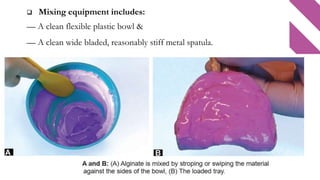

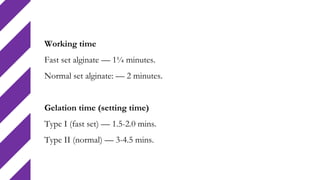


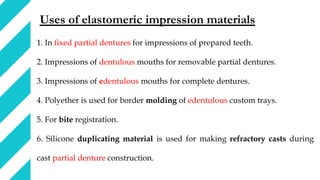


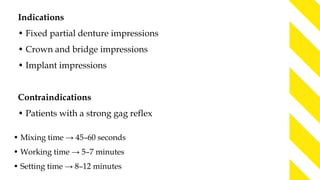


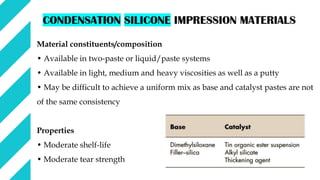


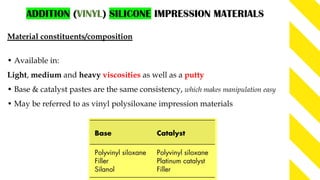


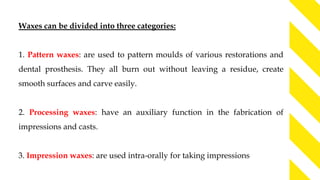


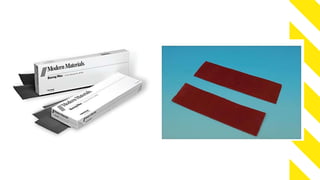


Dental impression materials are used to create negative replicas of oral structures that are then used to produce positive models. There are several types of impression materials classified by their setting properties and uses. Alginate is the most commonly used elastic impression material due to its ease of use and ability to accurately capture detail. It works well for impressions in mouths with undercuts or excess saliva. Alginate must be mixed properly and used within a short working time to achieve accurate impressions. Rigid materials like impression compound and zinc oxide eugenol paste are suitable for edentulous impressions where reproduction of fine details is not essential.


