Implementation of SAs
Progress of an Audit
Peer Review Documentation
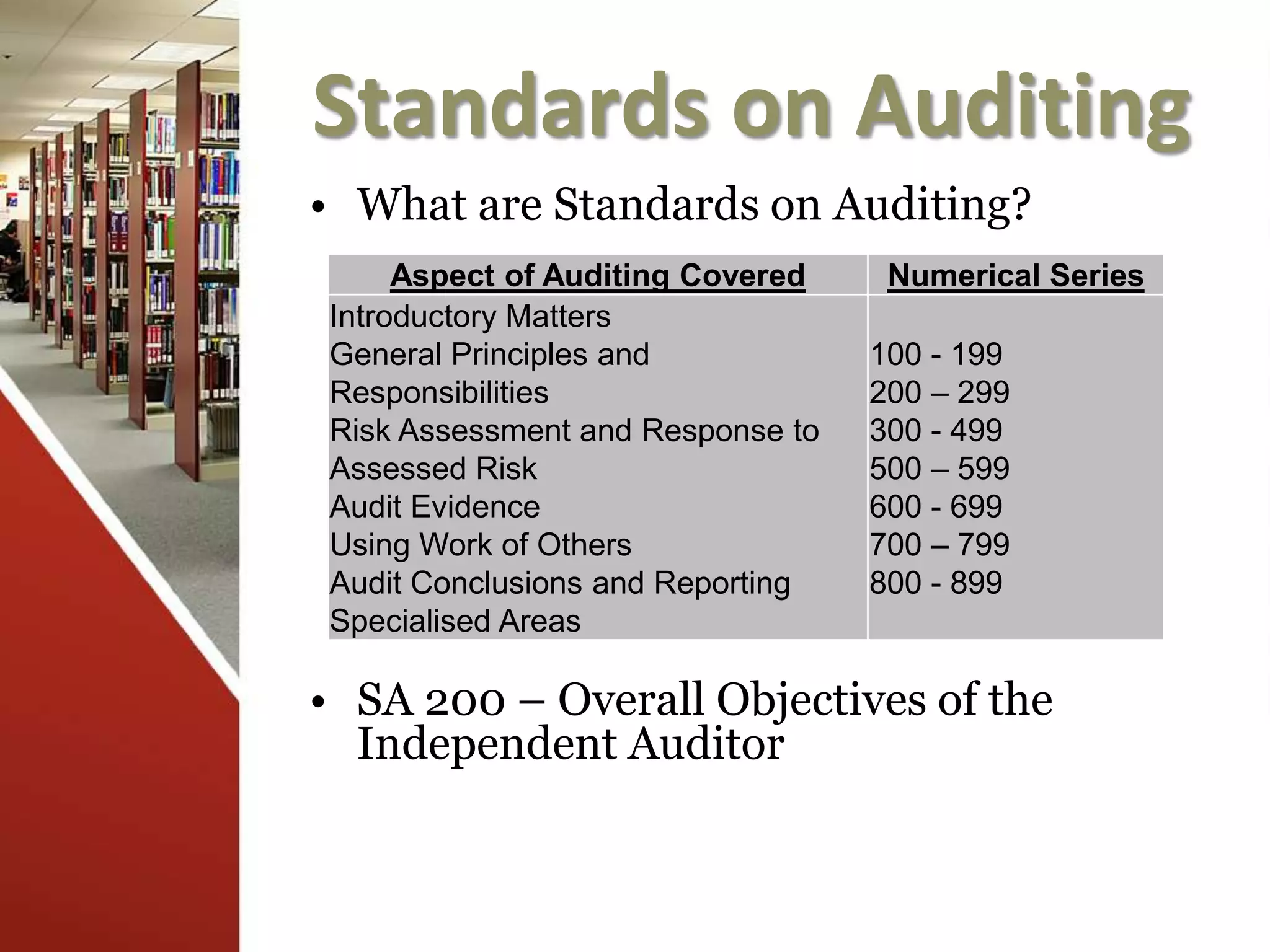
Standards on Auditing
• What are Standards on Auditing?
     Aspect of Auditing Covered    Numerical Series
Introductory Matters
General Principles and            100 - 199
Responsibilities                  200 – 299
Risk Assessment and Response to   300 - 499
Assessed Risk                     500 – 599
Audit Evidence                    600 - 699
Using Work of Others              700 – 799
Audit Conclusions and Reporting   800 - 899
Specialised Areas

• SA 200 – Overall Objectives of the
  Independent Auditor
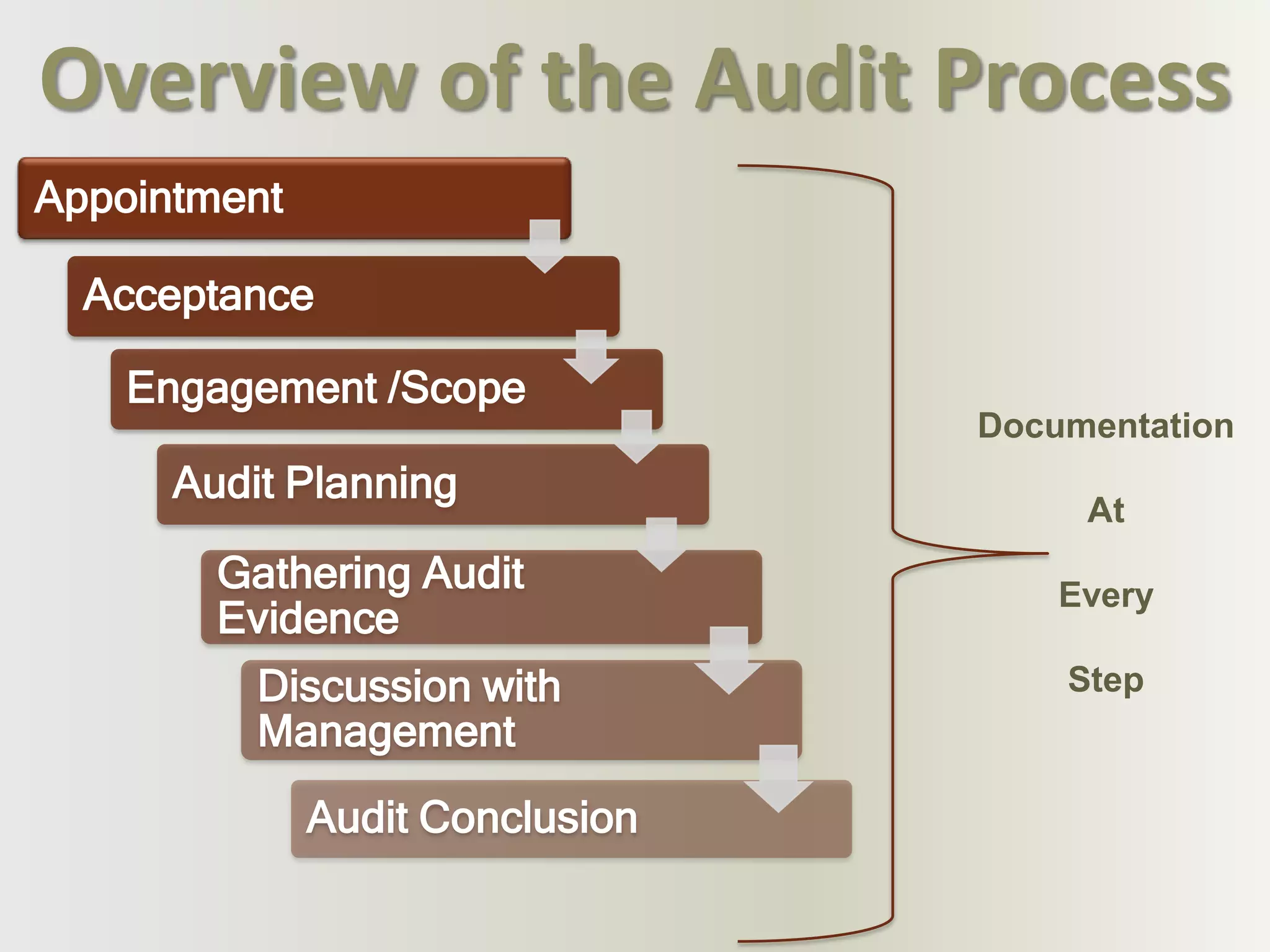
Overview of the Audit Process
Appointment

  Acceptance

    Engagement /Scope
                                 Documentation
      Audit Planning
                                      At
        Gathering Audit              Every
        Evidence
          Discussion with            Step
          Management
              Audit Conclusion
Commencement of Audit
Appointment
 i. Appointment Letter
 ii. Copy of AGM resolution / other relevant resolution
 iii. Quoting FRN

Acceptance
 i. Eligibility as per sec 224(1B) of the Companies Act, 1956
 ii. NOC from the previous auditor
 iii.Acceptance letter
 iv.Form 23B to be filed with ROC in case of company
     audits as per Sec 224 (1A)

Engagement
     Engagement letter
      (SA 210 – Agreeing the terms of Audit Engagement)
Audit Planning

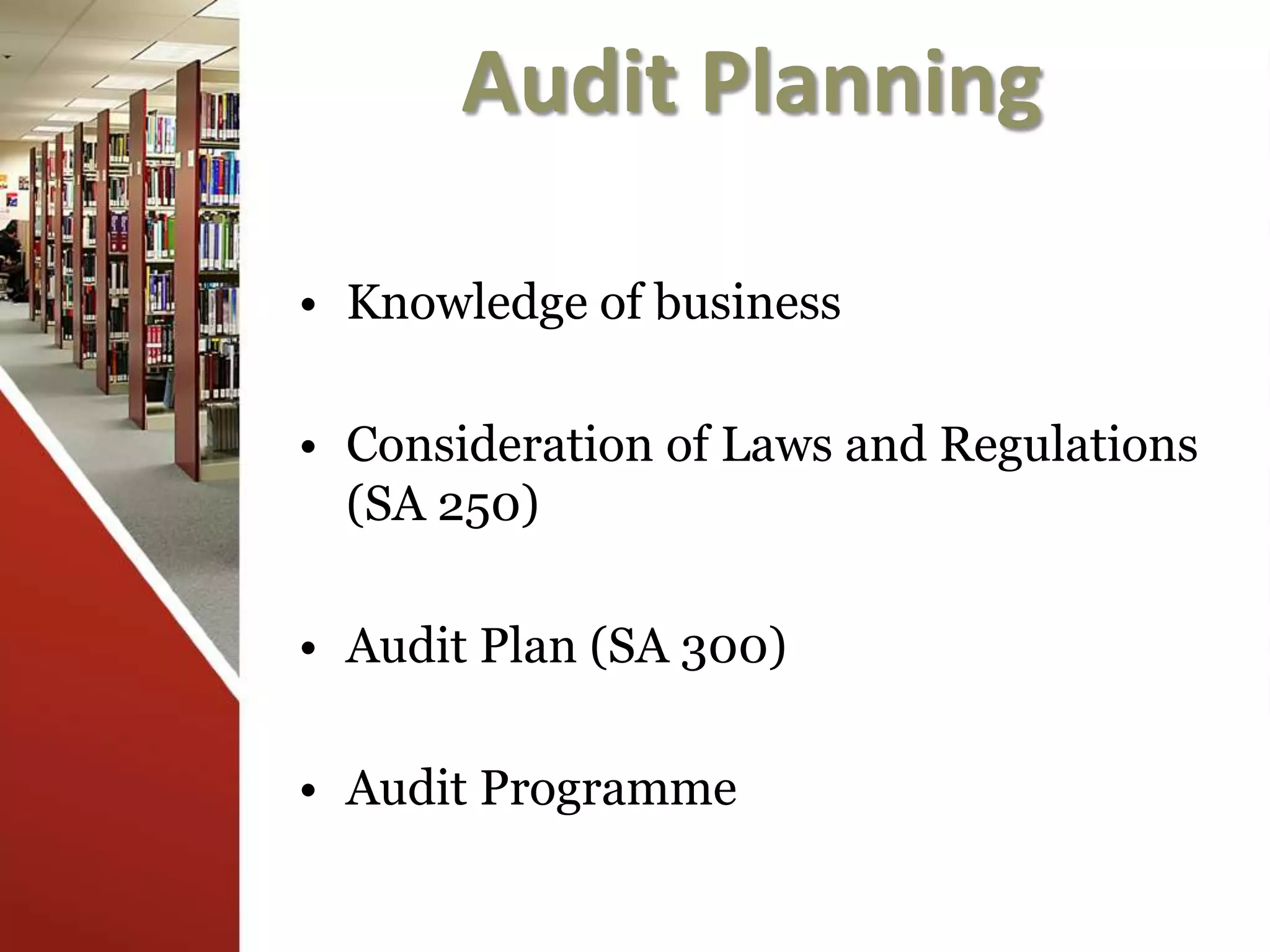
• Knowledge of business

• Consideration of Laws and Regulations
  (SA 250)

• Audit Plan (SA 300)

• Audit Programme
Audit Risk & Assessment

1. What is audit risk?
 • Mix of inherent, control & detection risk


2. How to assess risk?
 • Making inquiries of management and others
 • Analytical procedures
 • General observation and inspection


3. Review of LY’s working papers
• Assessment of entity’s control risk-
  Internal controls

• Discussion with the audit team and
  setting of materiality and the
  responses to assessed risk

• Fraud detection and responses to
  fraud
Sampling
• Identification of universe

• Stratification

• Determination of sample size

• Types of selection methods:
  - Random selection
  - Systematic selection
  - Haphazard selection

SICOM
Gathering Audit Evidence
   Opening balance tracing –

 SA 510- Initial Audit Engagement

 Vouching-
• (Occurrence, measurement ,rights and
  obligation of the transaction)

 Leger scrutiny-
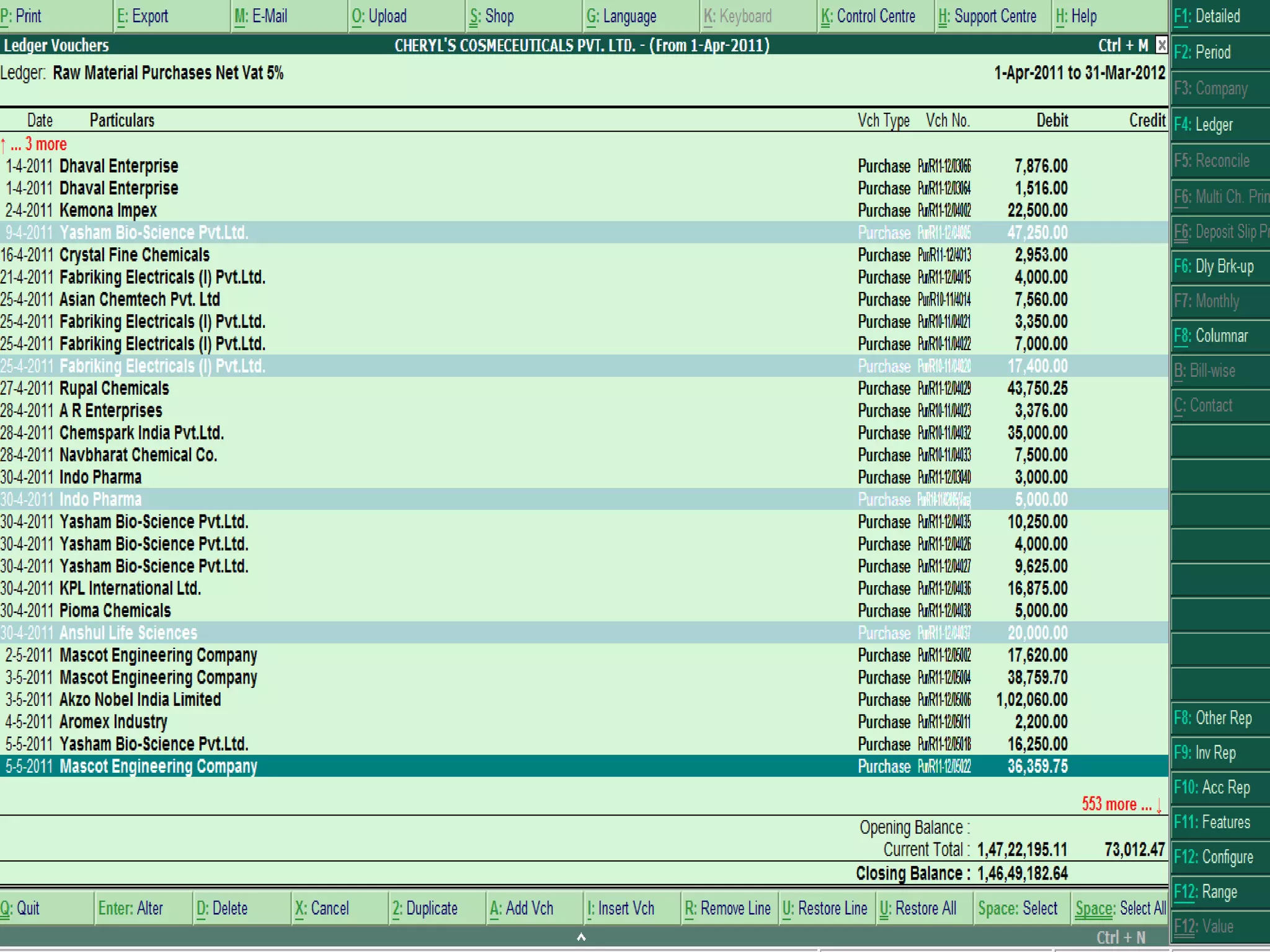
• Analysis of ledger
  balances, classification, presentation

                                      Contd…
Continued…..
SA 520 - Analytical Procedures:
• Profitability Ratios
• Management Efficiency Ratios
• Market Ratios

SA 540-Auditing and accounting estimate:
• Obtaining an Understanding of How Management
  Makes the Accounting Estimates

• External confirmation procedure

• SA 600 – Using the work of another auditor
• SA 610 – Using the work of Internal Auditor(s)
• SA 620 – Using the work of an Auditor’s Expert
Comparison
SA 550- Related party V/s AS 18-Related Party
  disclosure

SA 560- Subsequent Event V/s AS-4 events
  occurring after balance sheet date


SA 570- Going concern V/s AS- 1 Disclosure of
  accounting policies
Discussion with Management
Communication by the Auditor
 Should be in writing
 Should be communicated on timely basis
 Audit communication is treated as Audit
  Evidence

SA 260 (Revised): Communication With
those Charged With Governance
Audit Conclusion
SA 700 - Forming an opinion and reporting on Financial
Statements

The minimum content that has to be there in the audit report

Firm’s Registration Number (FRN) in audit report
As per Para. A36 of SA 700 (Revised)

Opinions of Auditor – Unmodified / Unqualified
Opinion, Qualified Opinion, Adverse Opinion, Disclaimer of
Opinion

SA 705 deals with Modifications to the opinion in the
Independent Auditor’s Report.

SA 706 deals Emphasis of matter paragraphs and other
matter paragraphs in the independent auditor’s report.
 Audit Documentation (SA 230)
   • What does Audit Documentation (Audit
     File) include?

 SA 580 (Revised): Written Representations

 Importance of Audit Documentation

 What should be the logical sequence of
  dates in audit documentation?
Peer Review Documentation
 Meaning:

As per the Statement on Peer Review, Peer Review means an
examination and review of the systems and procedures to
determine whether they have been put in place by the practice
unit for ensuring the quality of attestation services as
envisaged and implied / mandated by the Technical
Standards and whether these were effective or not during the
period under review.

 Objective

   Scope
 Documentation:
   The Statement on Peer Review does not lay down
    any documentation requirements for the practice
    unit. However, it suggests that certain minimum
    records that represent the adequacy of quality
    control policies and procedures followed by the
    practice unit must be maintained.


                 Records to be
                  maintained

  Mandatory Records, i.e.,       Recommendatory
  Working Papers as per SA           Records
  230 on “Documentation”
Permanent File:
  i.Permanent File contains matters which don’t change very
  often.

 ii. This file may be updated during structural changes in the
     auditee’s information.


Current File:
  i. Current file contains matters relating to audit of a single
       period.
  ii. The content of working papers is guided by
       factors, v.i.z., completeness, accuracy, clarity, under
       standing, legibility and neatness.
  iii. Generally, each individual assigned to an audit engagement
       should prepare working papers in such a manner that a
       professional not connected with the engagement may later
       examine such working papers and be able to determine
       that the work was performed in accordance with the
       standards on auditing.
Audit Documentation
 Audit Documentation – The record of audit
  procedures performed, relevance audit evidence obtained
  and conclusions the auditor reached.

 Audit file – One or more folders or other storage
  media, in physical or electronic form, containing the
  records that comprise the audit documentation for a
  specific engagement.

 Purpose of audit documentation

 Content of Audit Documentation

 Assembly of final audit file

 Ownership of Audit Documentation
Implementation of SAs, Audit Process Flow

Implementation of SAs, Audit Process Flow

  • 1.
    Implementation of SAs Progressof an Audit Peer Review Documentation
  • 2.
    Standards on Auditing •What are Standards on Auditing? Aspect of Auditing Covered Numerical Series Introductory Matters General Principles and 100 - 199 Responsibilities 200 – 299 Risk Assessment and Response to 300 - 499 Assessed Risk 500 – 599 Audit Evidence 600 - 699 Using Work of Others 700 – 799 Audit Conclusions and Reporting 800 - 899 Specialised Areas • SA 200 – Overall Objectives of the Independent Auditor
  • 3.
    Overview of theAudit Process Appointment Acceptance Engagement /Scope Documentation Audit Planning At Gathering Audit Every Evidence Discussion with Step Management Audit Conclusion
  • 4.
    Commencement of Audit Appointment i. Appointment Letter ii. Copy of AGM resolution / other relevant resolution iii. Quoting FRN Acceptance i. Eligibility as per sec 224(1B) of the Companies Act, 1956 ii. NOC from the previous auditor iii.Acceptance letter iv.Form 23B to be filed with ROC in case of company audits as per Sec 224 (1A) Engagement Engagement letter (SA 210 – Agreeing the terms of Audit Engagement)
  • 5.
    Audit Planning • Knowledgeof business • Consideration of Laws and Regulations (SA 250) • Audit Plan (SA 300) • Audit Programme
  • 6.
    Audit Risk &Assessment 1. What is audit risk? • Mix of inherent, control & detection risk 2. How to assess risk? • Making inquiries of management and others • Analytical procedures • General observation and inspection 3. Review of LY’s working papers
  • 7.
    • Assessment ofentity’s control risk- Internal controls • Discussion with the audit team and setting of materiality and the responses to assessed risk • Fraud detection and responses to fraud
  • 8.
    Sampling • Identification ofuniverse • Stratification • Determination of sample size • Types of selection methods: - Random selection - Systematic selection - Haphazard selection SICOM
  • 12.
    Gathering Audit Evidence  Opening balance tracing –  SA 510- Initial Audit Engagement  Vouching- • (Occurrence, measurement ,rights and obligation of the transaction)  Leger scrutiny- • Analysis of ledger balances, classification, presentation Contd…
  • 13.
    Continued….. SA 520 -Analytical Procedures: • Profitability Ratios • Management Efficiency Ratios • Market Ratios SA 540-Auditing and accounting estimate: • Obtaining an Understanding of How Management Makes the Accounting Estimates • External confirmation procedure • SA 600 – Using the work of another auditor • SA 610 – Using the work of Internal Auditor(s) • SA 620 – Using the work of an Auditor’s Expert
  • 14.
    Comparison SA 550- Relatedparty V/s AS 18-Related Party disclosure SA 560- Subsequent Event V/s AS-4 events occurring after balance sheet date SA 570- Going concern V/s AS- 1 Disclosure of accounting policies
  • 15.
    Discussion with Management Communicationby the Auditor  Should be in writing  Should be communicated on timely basis  Audit communication is treated as Audit Evidence SA 260 (Revised): Communication With those Charged With Governance
  • 16.
    Audit Conclusion SA 700- Forming an opinion and reporting on Financial Statements The minimum content that has to be there in the audit report Firm’s Registration Number (FRN) in audit report As per Para. A36 of SA 700 (Revised) Opinions of Auditor – Unmodified / Unqualified Opinion, Qualified Opinion, Adverse Opinion, Disclaimer of Opinion SA 705 deals with Modifications to the opinion in the Independent Auditor’s Report. SA 706 deals Emphasis of matter paragraphs and other matter paragraphs in the independent auditor’s report.
  • 17.
     Audit Documentation(SA 230) • What does Audit Documentation (Audit File) include?  SA 580 (Revised): Written Representations  Importance of Audit Documentation  What should be the logical sequence of dates in audit documentation?
  • 18.
    Peer Review Documentation Meaning: As per the Statement on Peer Review, Peer Review means an examination and review of the systems and procedures to determine whether they have been put in place by the practice unit for ensuring the quality of attestation services as envisaged and implied / mandated by the Technical Standards and whether these were effective or not during the period under review.  Objective  Scope
  • 19.
     Documentation:  The Statement on Peer Review does not lay down any documentation requirements for the practice unit. However, it suggests that certain minimum records that represent the adequacy of quality control policies and procedures followed by the practice unit must be maintained. Records to be maintained Mandatory Records, i.e., Recommendatory Working Papers as per SA Records 230 on “Documentation”
  • 20.
    Permanent File: i.Permanent File contains matters which don’t change very often. ii. This file may be updated during structural changes in the auditee’s information. Current File: i. Current file contains matters relating to audit of a single period. ii. The content of working papers is guided by factors, v.i.z., completeness, accuracy, clarity, under standing, legibility and neatness. iii. Generally, each individual assigned to an audit engagement should prepare working papers in such a manner that a professional not connected with the engagement may later examine such working papers and be able to determine that the work was performed in accordance with the standards on auditing.
  • 21.
    Audit Documentation  AuditDocumentation – The record of audit procedures performed, relevance audit evidence obtained and conclusions the auditor reached.  Audit file – One or more folders or other storage media, in physical or electronic form, containing the records that comprise the audit documentation for a specific engagement.  Purpose of audit documentation  Content of Audit Documentation  Assembly of final audit file  Ownership of Audit Documentation