IMPLANTABLE DRUG
DELIVERY SYSTEMS
By: Ankita Kanshide
Maratha Mandal’s College of Pharmacy
INTRODUCTION:
Implantable drug delivery systems allow targeted and localized
drug delivery and may achieve a therapeutic effect with lower
concentrations of drugs. As a result, they may minimize potential side-
effects of therapy, while offering the opportunity for increased patient
compliance. This type of system also has the potential to deliver drugs
which would normally be unsuitable orally, because it avoids first pass
metabolism and chemical degradation in the stomach and intestine,
thus, increasing bioavailability.
IMPLANTS
• Implants are small sterile solid masses
consisting of a highly purified drug made
by compression or molding or extrusion.
• Implants are drug delivery systems which
provide controlled delivery of drug over a
period of time at the site of implantation.
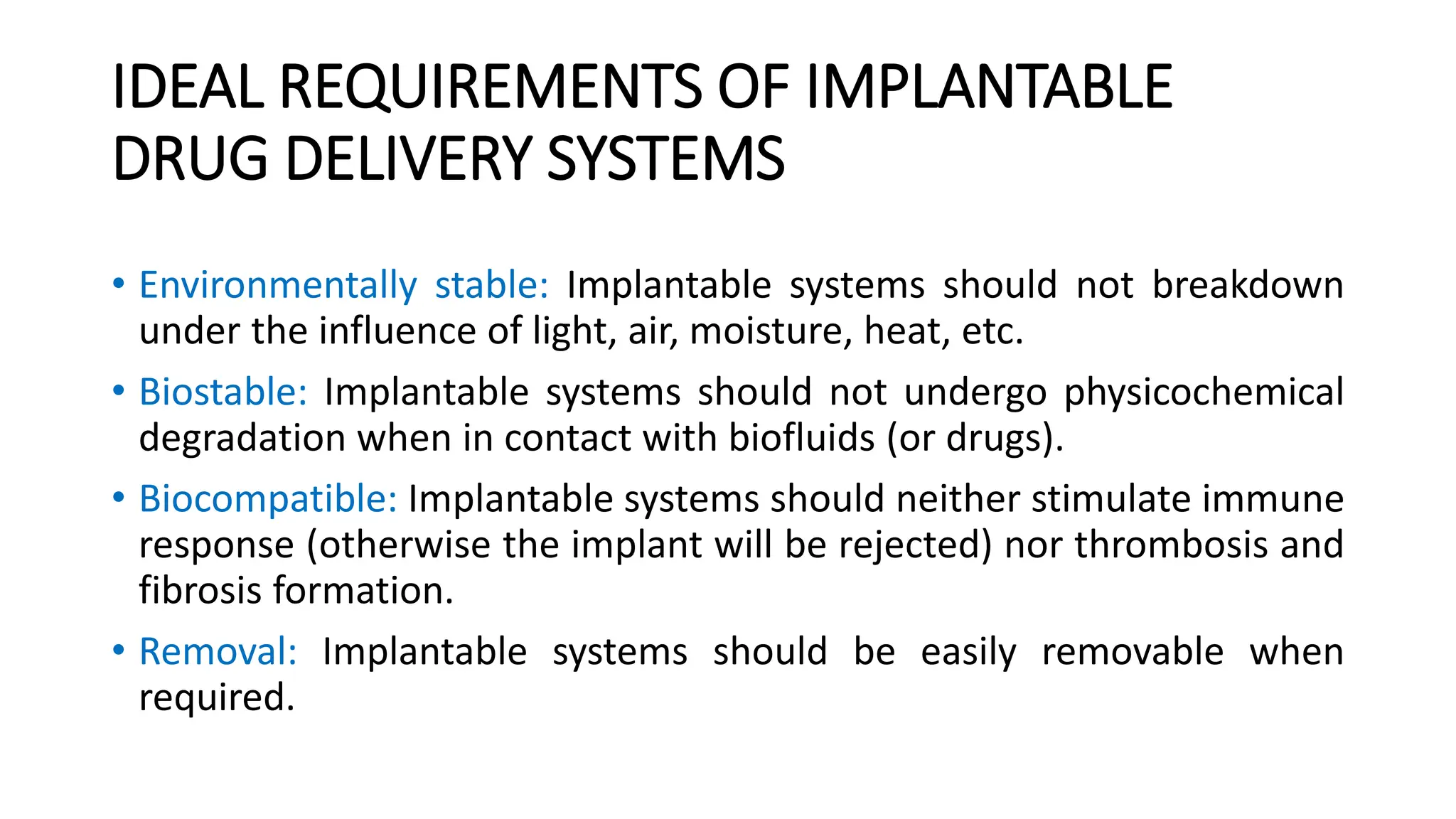
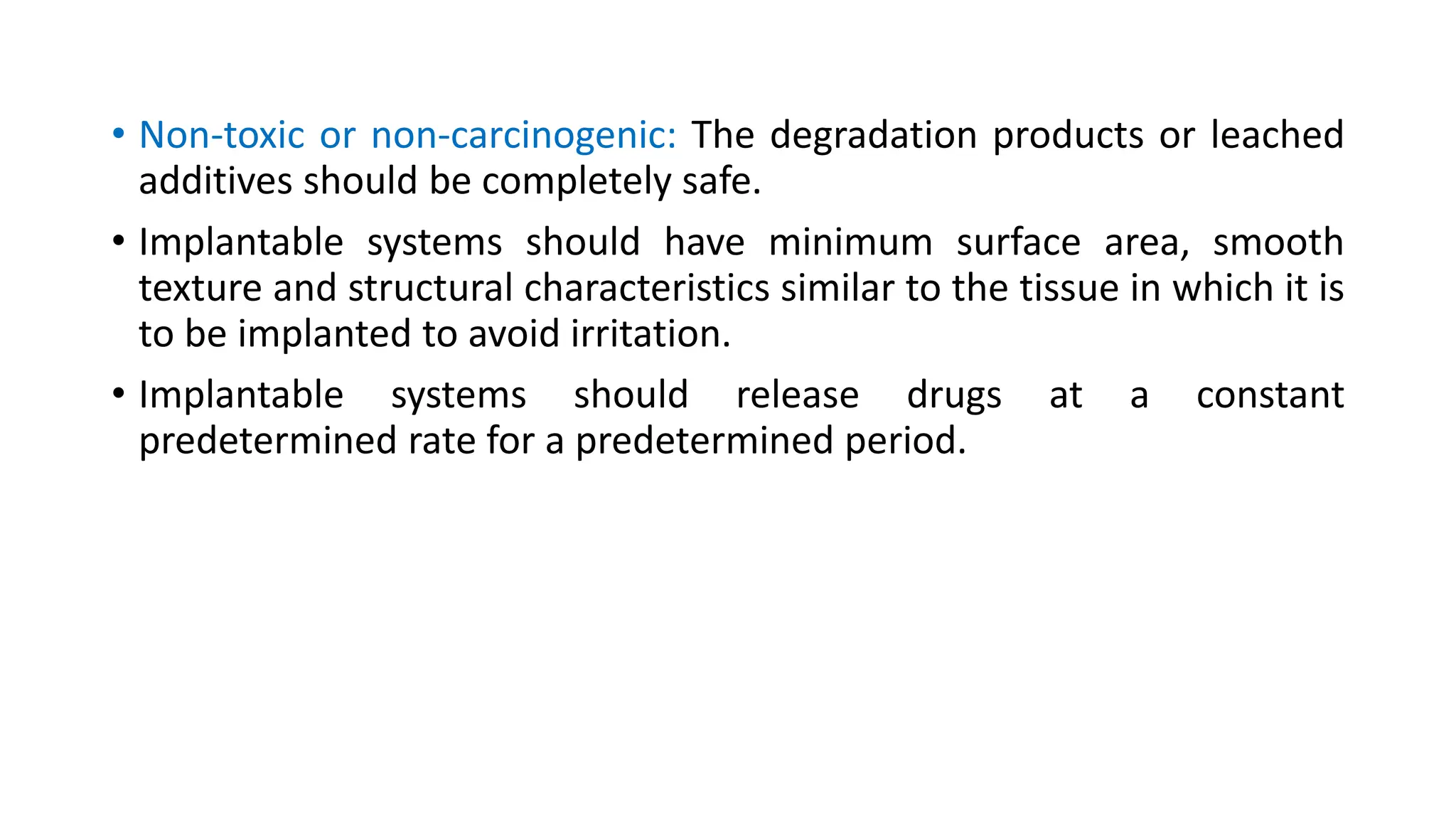
• Implants are intended for implantation in
the body’s subcutaneous or intramuscular
tissue by a minor surgical incision or
injected through a large bore needle.
IDEAL REQUIREMENTS OF IMPLANTABLE
DRUG DELIVERY SYSTEMS
• Environmentally stable: Implantable systems should not breakdown
under the influence of light, air, moisture, heat, etc.
• Biostable: Implantable systems should not undergo physicochemical
degradation when in contact with biofluids (or drugs).
• Biocompatible: Implantable systems should neither stimulate immune
response (otherwise the implant will be rejected) nor thrombosis and
fibrosis formation.
• Removal: Implantable systems should be easily removable when
required.
• Non-toxic or non-carcinogenic: The degradation products or leached
additives should be completely safe.
• Implantable systems should have minimum surface area, smooth
texture and structural characteristics similar to the tissue in which it is
to be implanted to avoid irritation.
• Implantable systems should release drugs at a constant
predetermined rate for a predetermined period.
ADVANTAGES:
• Compliance: By reducing the frequency of drug administration over
the entire period of treatment implant improve patient compliance.
Patient can forget to take a medicine, but drug delivery from an
implant is not dependent of patient input.
• Stability: Implants are environmentally stable they do not breakdown
under the influence of heat, light, air and moisture. They are stable
and safe and have good mechanical strength.
• Improved drug delivery: The drug is distributed locally or in systemic
circulation with least interference by metabolic or biological barriers.
• Controlled release: Implants are available which deliver drugs by zero
order controlled release kinetics. So that dosing frequency is reduced,
and patient compliance is increased. It leads to enhanced
effectiveness and reduce side effects.
• Targeted drug delivery: This system of drug delivery is targeted and
localized and, thereby, therapeutic effects are realized at a lower drug
concentration.
• Invasive: To initiate therapy either a minor or a major surgical
procedure is required to initiate therapy. Appropriate surgical
personnel is required for this, and may be time-consuming. This
causes some scar formation at the site of implantation and surgery
related complications. Also it might lead to uncomfortable feeling for
the patient wearing the device.
• Device failure: If the device may fail to work for some reason, this
again requires surgical involvement to correct.
• Biocompatibility issues: Concerns over body reactions to a foreign
substance often increase the issues of biocompatibility and safety of
an implant.
DISADVANTAGES:
• Termination: Osmotic pumps and non-biodegradable polymeric
implants also are surgically recovered at the end of therapy. Although
surgical recovery is not required in biodegradable polymeric implants.
• Limited to potent drugs: In order to minimize patient’s discomfort the
size of an implant is usually kept small. Therefore most implants have
a limited loading capacity so that frequently only somewhat potent
medicines such as hormones may be appropriate for delivery by
implantable devices.
• Possibility of adverse reactions: A high concentration of the drug
delivered by an implantable device at the implantation site may
produce adverse reactions.
CLASSIFICATION OF IMPLANTABLE DRUG
DELIVERY SYSTEMS:
1. Passive Implants
2. Dynamic or Active Implants
1. Passive Implants:
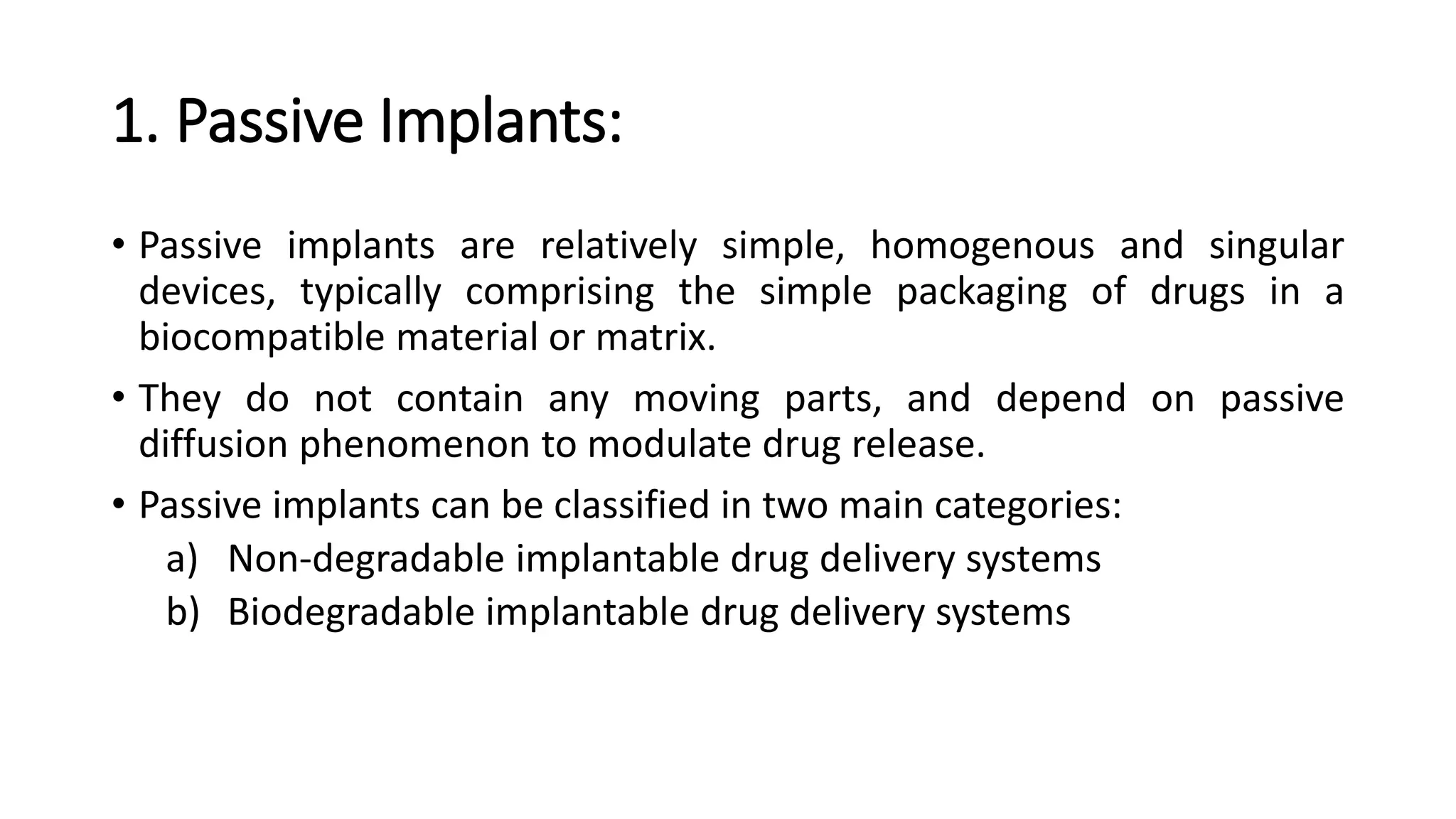
• Passive implants are relatively simple, homogenous and singular
devices, typically comprising the simple packaging of drugs in a
biocompatible material or matrix.
• They do not contain any moving parts, and depend on passive
diffusion phenomenon to modulate drug release.
• Passive implants can be classified in two main categories:
a) Non-degradable implantable drug delivery systems
b) Biodegradable implantable drug delivery systems
a) Non-degradable implantable drug delivery systems:
• These are commonly prepared using polymers
such as silicones, poly(urethanes), poly(acrylates)
or copolymers such as poly(ethylene vinyl
acetate).
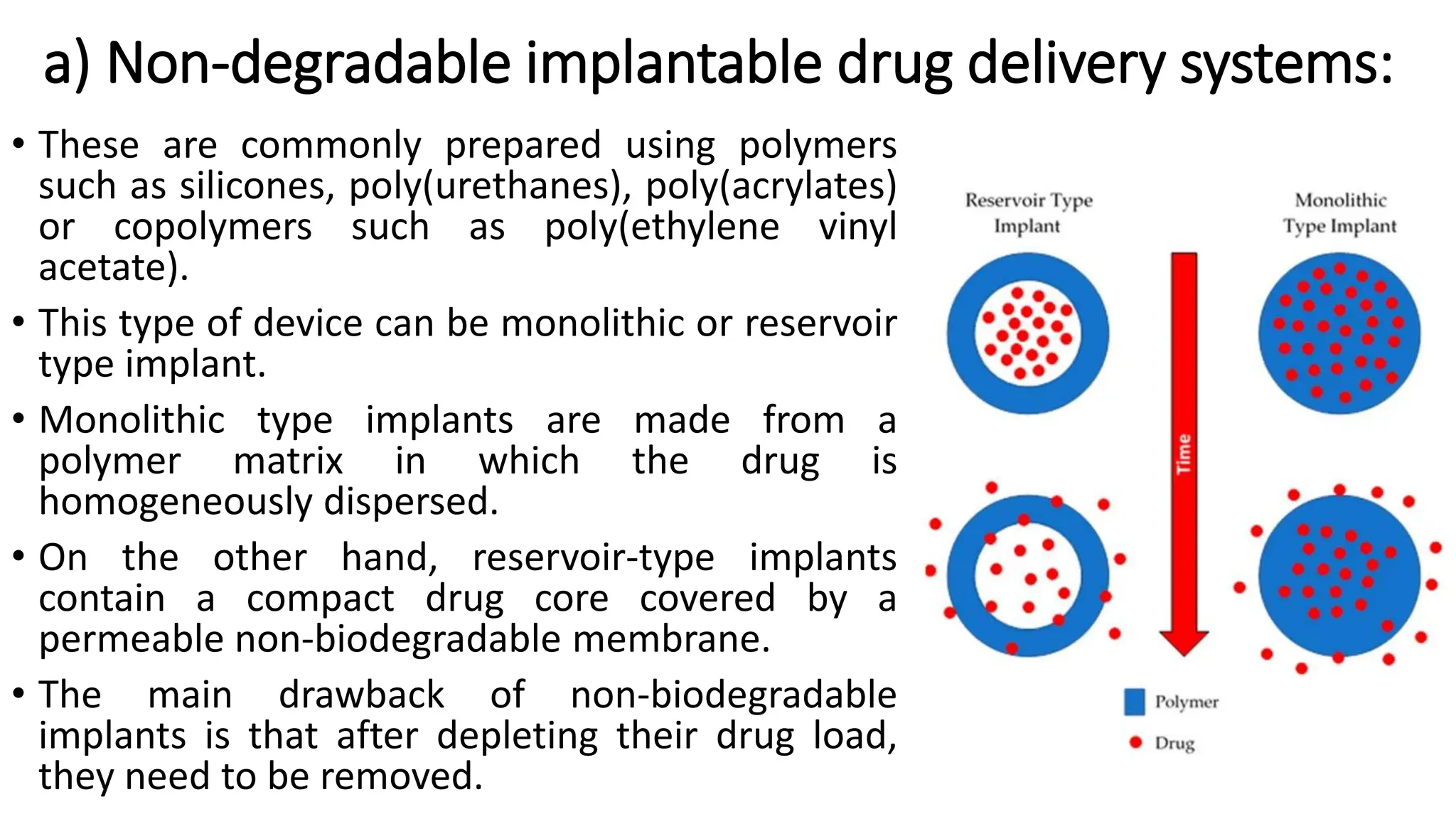
• This type of device can be monolithic or reservoir
type implant.
• Monolithic type implants are made from a
polymer matrix in which the drug is
homogeneously dispersed.
• On the other hand, reservoir-type implants
contain a compact drug core covered by a
permeable non-biodegradable membrane.
• The main drawback of non-biodegradable
implants is that after depleting their drug load,
they need to be removed.
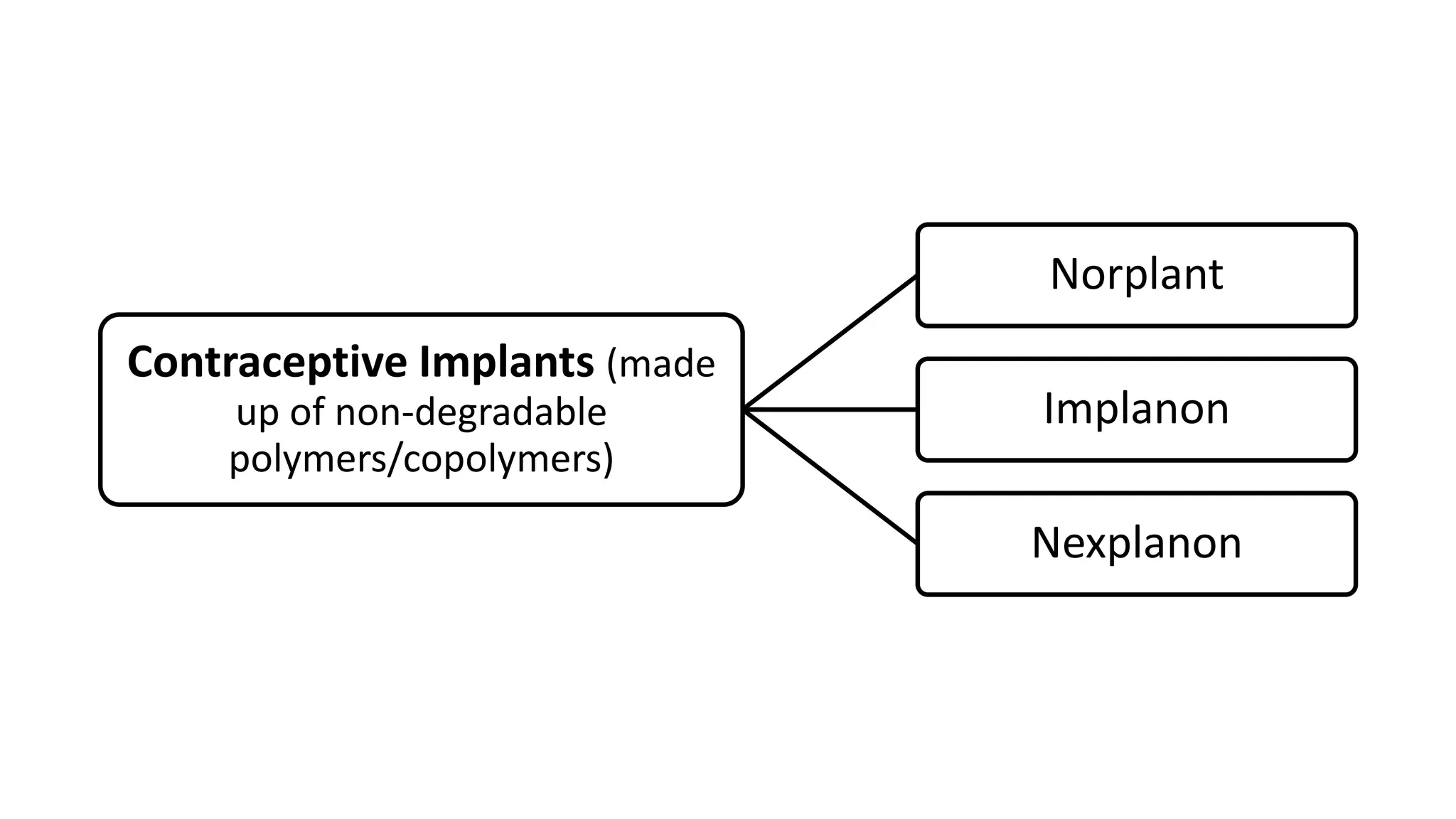
Contraceptive Implants (made
up of non-degradable
polymers/copolymers)
Norplant
Implanon
Nexplanon
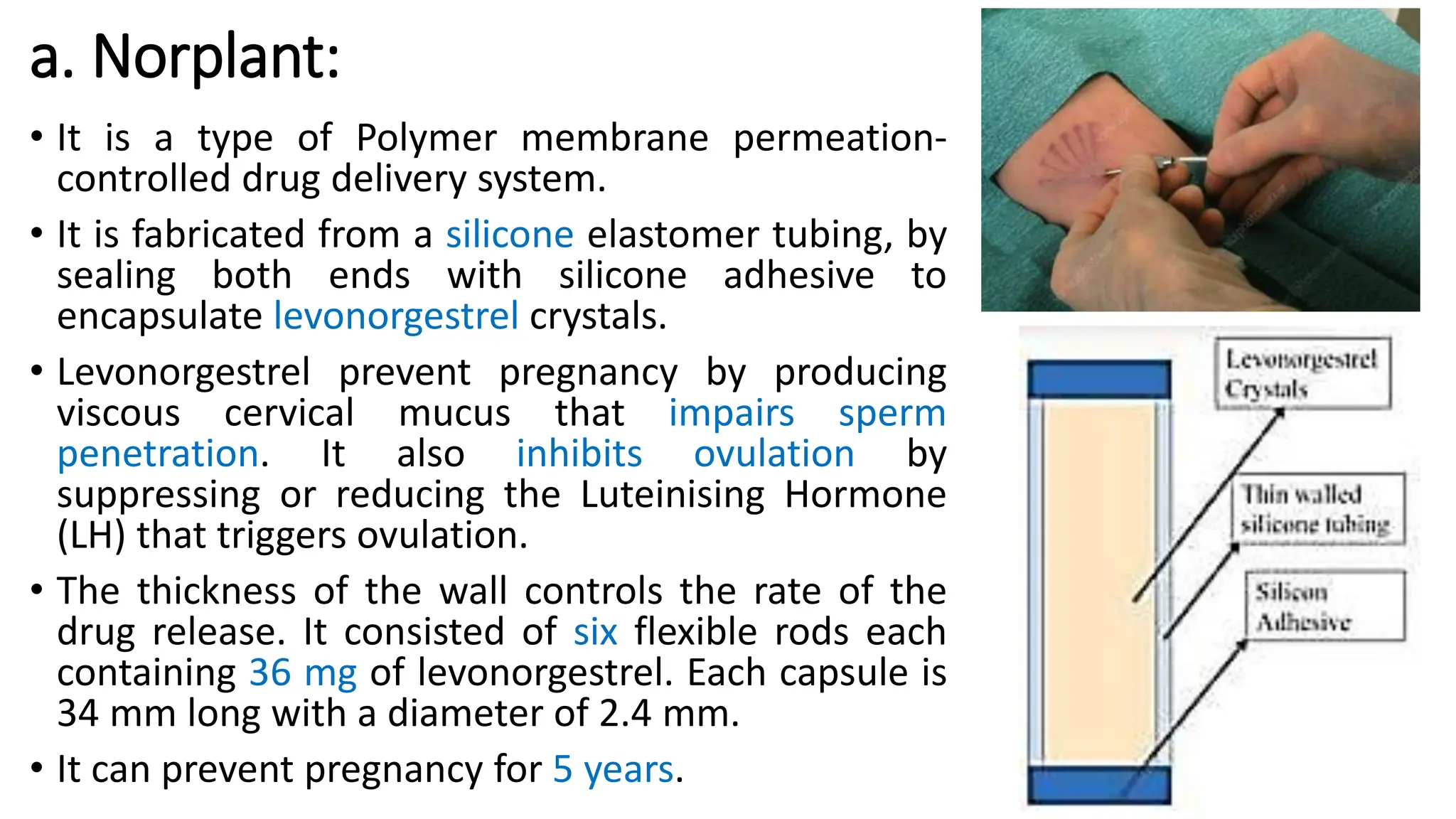
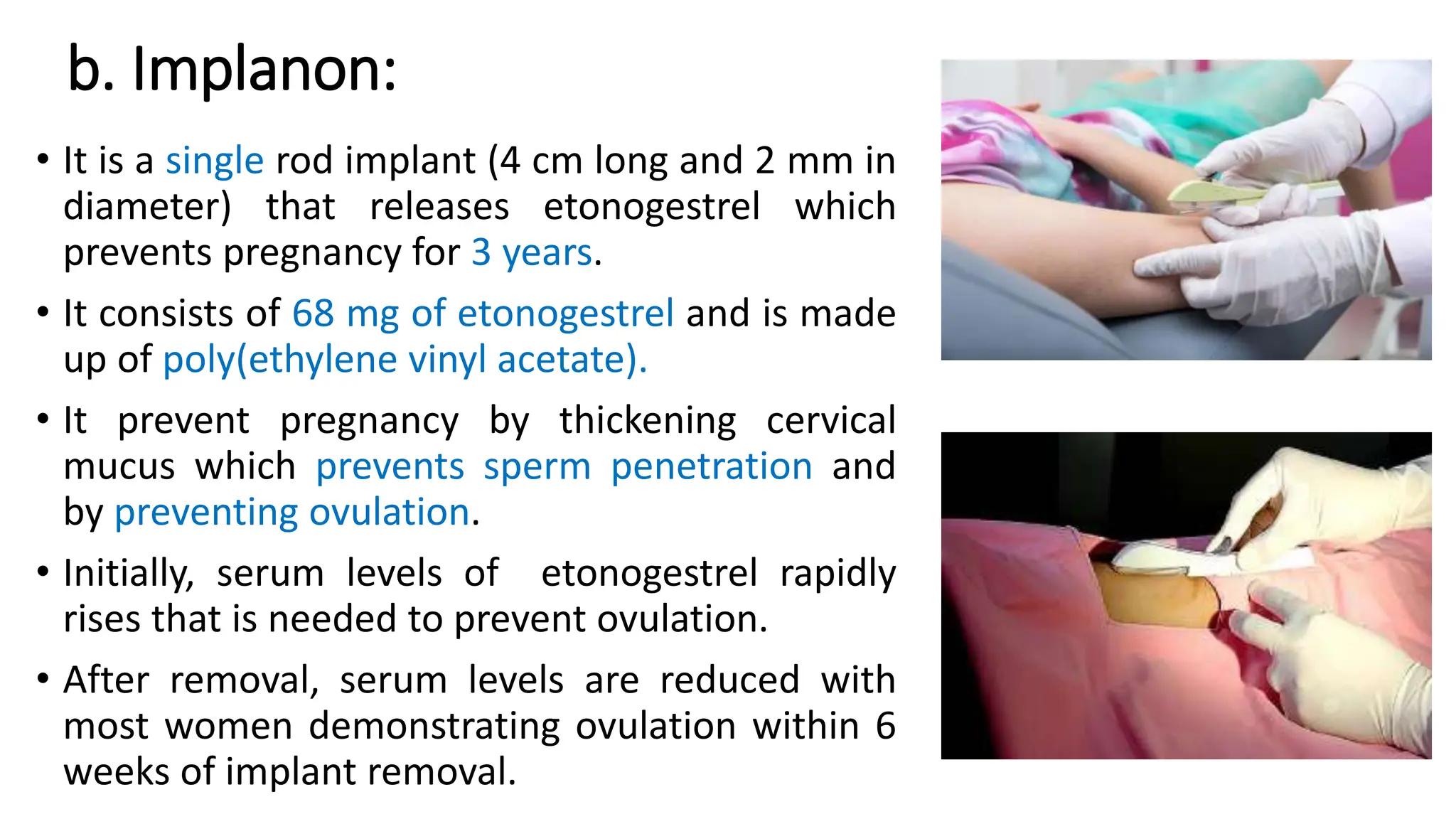
a. Norplant:
• It is a type of Polymer membrane permeation-
controlled drug delivery system.
• It is fabricated from a silicone elastomer tubing, by
sealing both ends with silicone adhesive to
encapsulate levonorgestrel crystals.
• Levonorgestrel prevent pregnancy by producing
viscous cervical mucus that impairs sperm
penetration. It also inhibits ovulation by
suppressing or reducing the Luteinising Hormone
(LH) that triggers ovulation.
• The thickness of the wall controls the rate of the
drug release. It consisted of six flexible rods each
containing 36 mg of levonorgestrel. Each capsule is
34 mm long with a diameter of 2.4 mm.
• It can prevent pregnancy for 5 years.
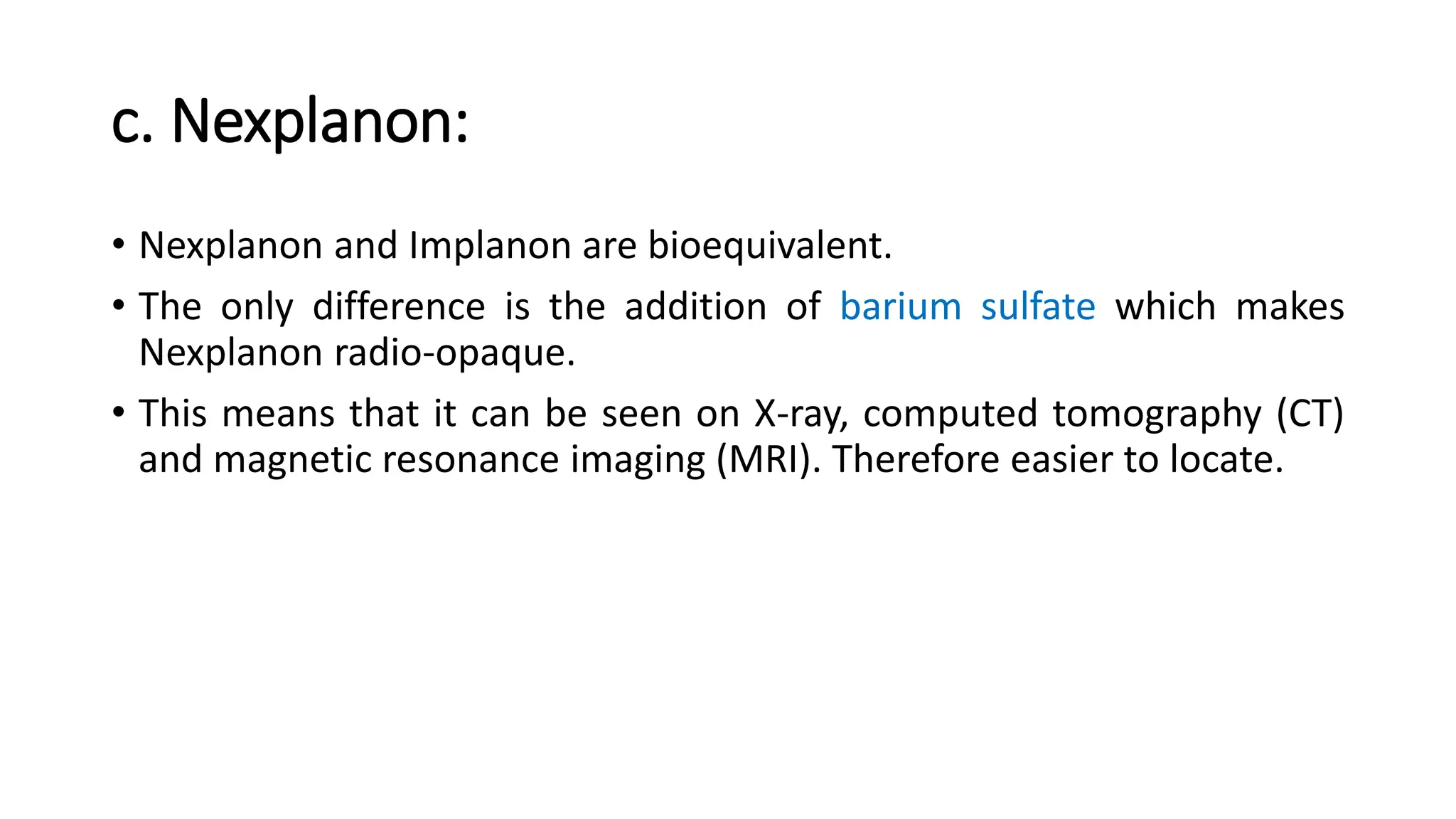
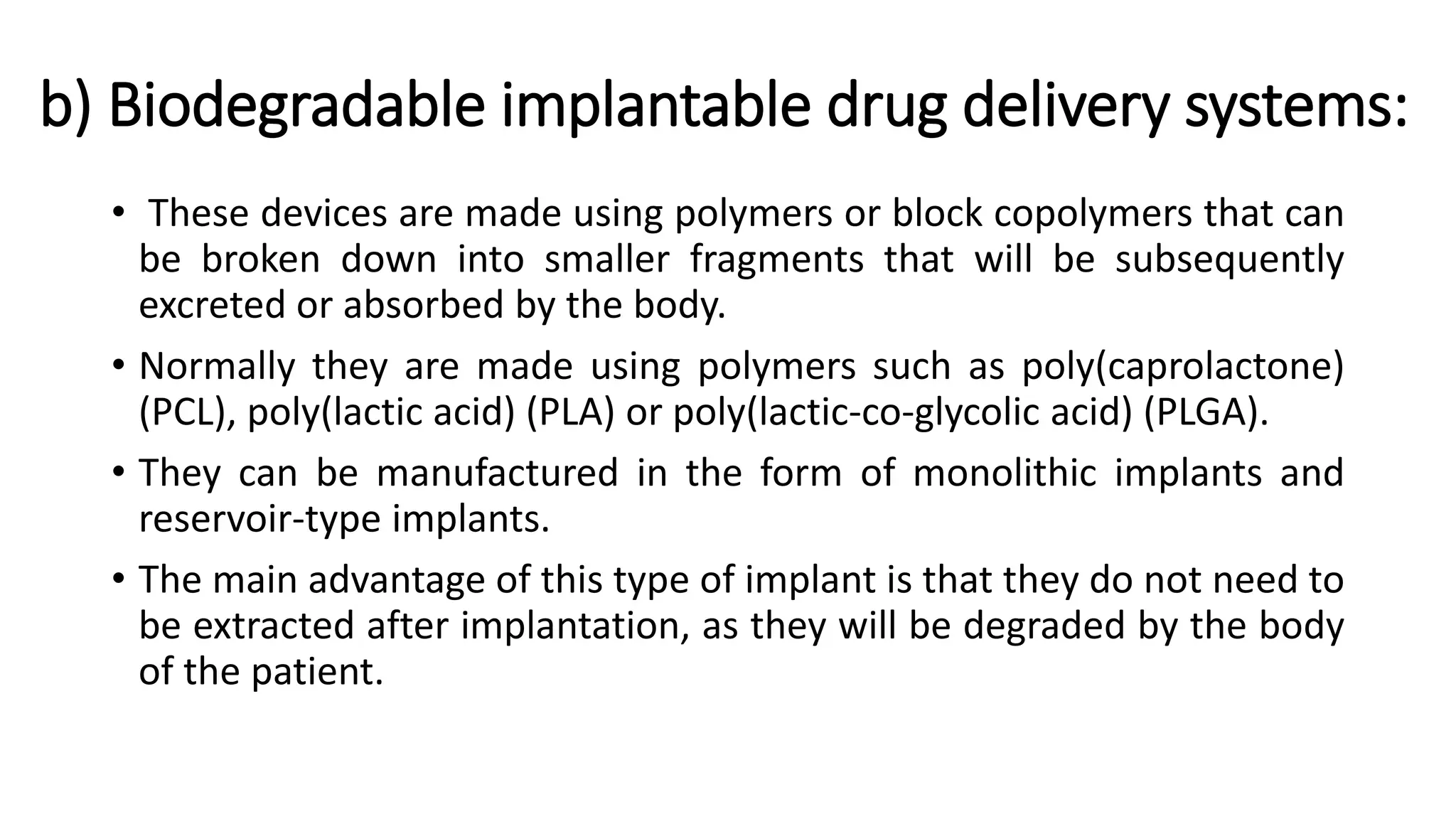
b. Implanon:
• It is a single rod implant (4 cm long and 2 mm in
diameter) that releases etonogestrel which
prevents pregnancy for 3 years.
• It consists of 68 mg of etonogestrel and is made
up of poly(ethylene vinyl acetate).
• It prevent pregnancy by thickening cervical
mucus which prevents sperm penetration and
by preventing ovulation.
• Initially, serum levels of etonogestrel rapidly
rises that is needed to prevent ovulation.
• After removal, serum levels are reduced with
most women demonstrating ovulation within 6
weeks of implant removal.
c. Nexplanon:
• Nexplanon and Implanon are bioequivalent.
• The only difference is the addition of barium sulfate which makes
Nexplanon radio-opaque.
• This means that it can be seen on X-ray, computed tomography (CT)
and magnetic resonance imaging (MRI). Therefore easier to locate.
b) Biodegradable implantable drug delivery systems:
• These devices are made using polymers or block copolymers that can
be broken down into smaller fragments that will be subsequently
excreted or absorbed by the body.
• Normally they are made using polymers such as poly(caprolactone)
(PCL), poly(lactic acid) (PLA) or poly(lactic-co-glycolic acid) (PLGA).
• They can be manufactured in the form of monolithic implants and
reservoir-type implants.
• The main advantage of this type of implant is that they do not need to
be extracted after implantation, as they will be degraded by the body
of the patient.
• The drawback of this particular type of device are:
i. They are more complex to develop than the non-biodegradable
ones.
ii. The range of potential materials that can be used is reduced,
and the regulatory requirements are stricter as the material will
be left behind in the body.
2. Dynamic or Active Implants
• Dynamic or Active implant systems harness a positive driving force to
enable and control drug release. As a result, these are able to
modulate drug doses and delivery rates much more precisely than
passive systems.
• This system comes at a higher cost.
• Implantable pump systems:
It is difficult to control dosing for many drugs when using
biodegradable or non-degradable delivery systems.
Pump systems have been used to provide the higher precision and
remote control needed in these situations.
Pump systems offer a number of advantages, such as evasion of
the GI tract, avoidance of repeated injections, and improved
release rates (faster than diffusion-limited systems).
Implantable pumps primarily utilize the following devices to
generate pressure gradients and enable controlled drug release:
a. Osmotic pumps
b. Propellant infusion pumps
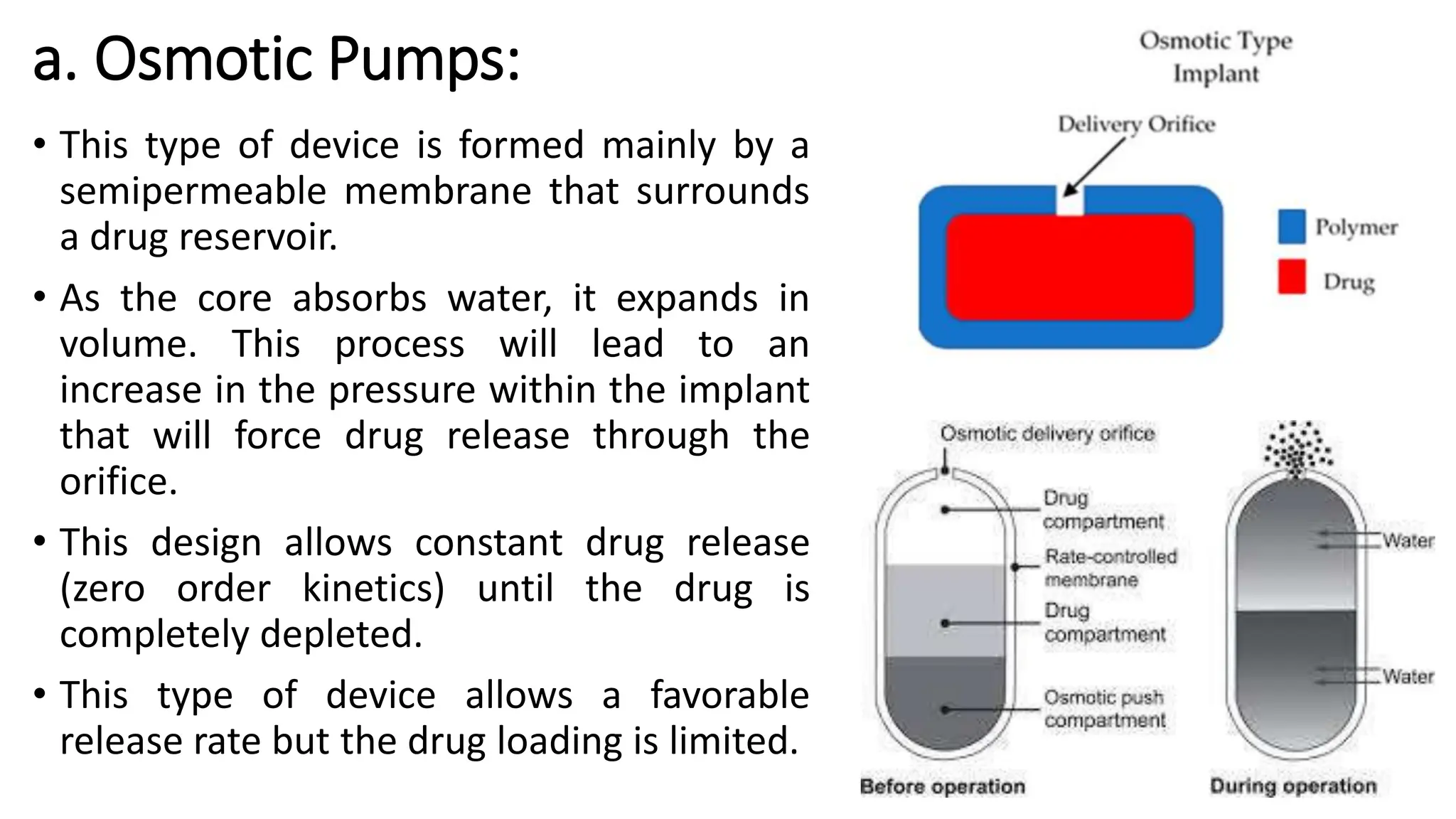
a. Osmotic Pumps:
• This type of device is formed mainly by a
semipermeable membrane that surrounds
a drug reservoir.
• As the core absorbs water, it expands in
volume. This process will lead to an
increase in the pressure within the implant
that will force drug release through the
orifice.
• This design allows constant drug release
(zero order kinetics) until the drug is
completely depleted.
• This type of device allows a favorable
release rate but the drug loading is limited.
Osmotic agent/Osmogen:
• Osmotic agents are essential ingredient of the osmotic formulations,
They maintain the osmotic pressure inside the device and thus
provide the controlled release.
• Osmotic agents usually are ionic compounds consisting of either
inorganic salts such as sodium chloride, potassium chloride
magnesium sulphate, sodium sulphate, potassium sulphate and
sodium bicarbonate.
• Additionally, sugars such as glucose, sorbitol, sucrose and inorganic
salts of carbohydrates can also act as effective osmotic agents.
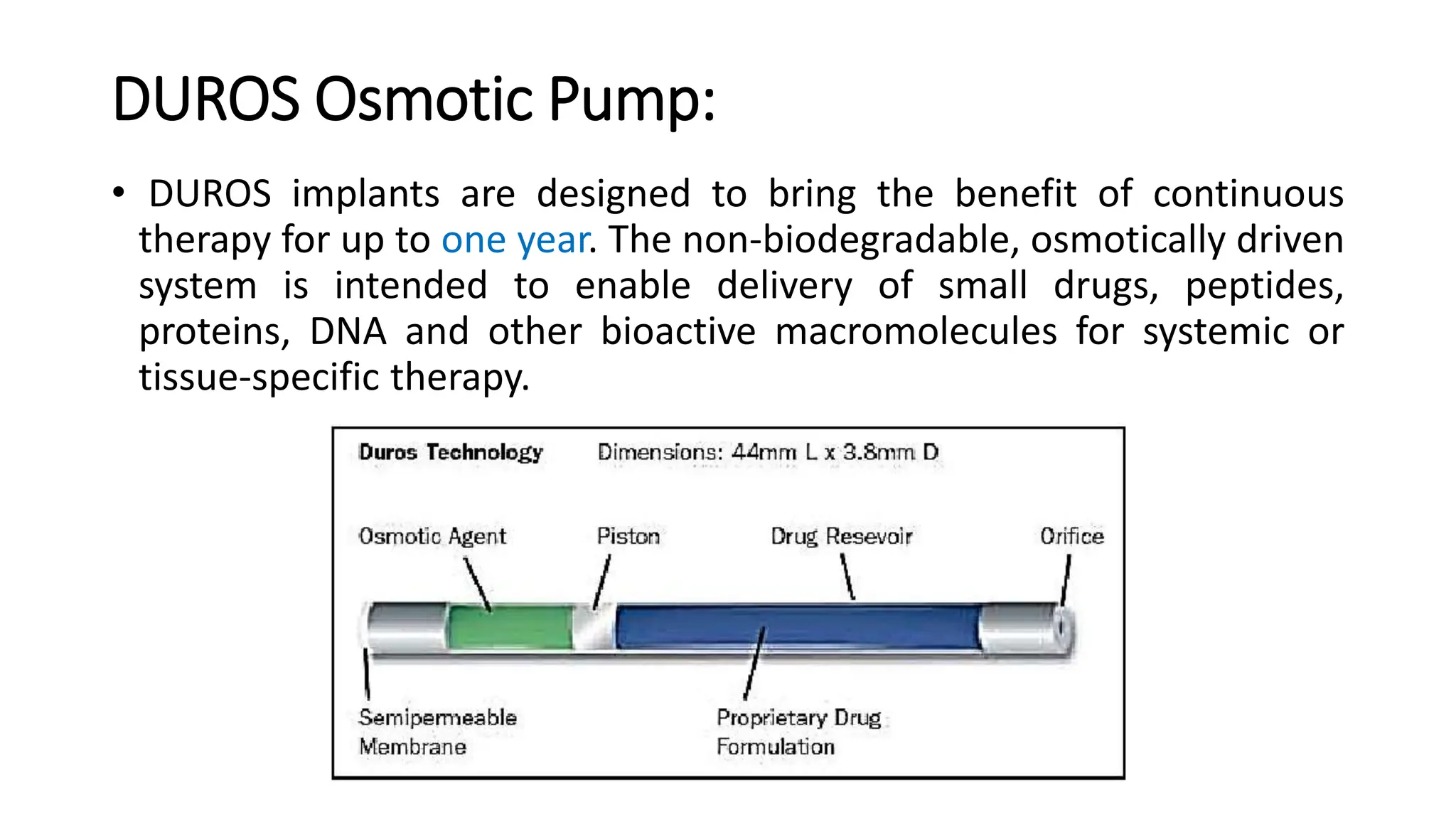
DUROS Osmotic Pump:
• DUROS implants are designed to bring the benefit of continuous
therapy for up to one year. The non-biodegradable, osmotically driven
system is intended to enable delivery of small drugs, peptides,
proteins, DNA and other bioactive macromolecules for systemic or
tissue-specific therapy.
• Design: Implantable drug-dispensing osmotic pump, shaped as a
small rod with titanium housing.
• Mechanism: Through osmosis, water from the body is slowly drawn
through the semi-permeable membrane into the pump by osmotic
agent residing in the engine compartment, which expands the
osmotic agent and displaces a piston to dispense small amounts of
drug formulation from the drug reservoir through the orifice.
• Application: Systemic or site-specific administration of a drug
ALZET Osmotic Pump:
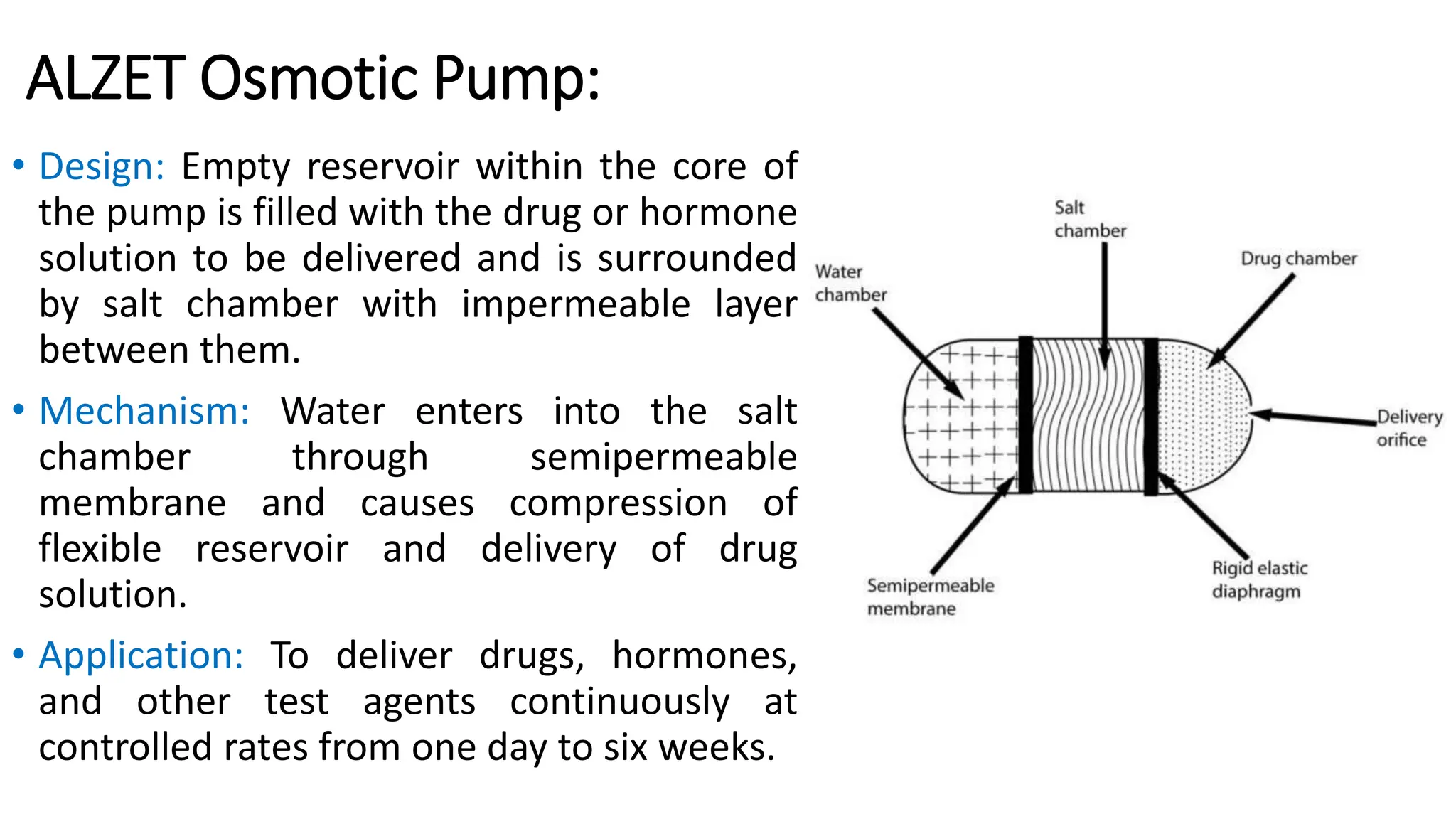
• Design: Empty reservoir within the core of
the pump is filled with the drug or hormone
solution to be delivered and is surrounded
by salt chamber with impermeable layer
between them.
• Mechanism: Water enters into the salt
chamber through semipermeable
membrane and causes compression of
flexible reservoir and delivery of drug
solution.
• Application: To deliver drugs, hormones,
and other test agents continuously at
controlled rates from one day to six weeks.
b. Propellant infusion pumps:
• The volume of drug osmotic pumps can store and release is limited.
To encounter this deficit, propellant gas can be used instead of
osmotic agent to generate a zero-order release.
• Compressible medium (gas) allows for a larger volume of drug to be
stored and released.
• Propellant infusion pumps are the devices that rely on thermal
expansion of a gaseous propellant to force drug delivery.
• Mechanism: As the device heats to body temperature, the gaseous
propellant expands and forces drug delivery.
• Application: Insulin delivery, Anticoagulant therapy and Cancer
therapy.
MECHANISM OF DRUG RELEASE FROM
IMPLANTABLE POLYMERIC DRUG DELIVERY SYSTEMS
1. Passive diffusion: The drug release from nondegradable systems of
both reservoir and matrix type designs is mediated by passive
diffusion.
2. Matrix degradation: The drug release from biodegradable polymeric
systems is controlled either by diffusion, degradation or a
combination of both. The degradation-controlled mechanism
happens when the diffusion rate of a drug is less than the
degradation rate of a polymer carrier. The drug is released
concurrently with the polymer degradation.
3. Osmosis: The drug release from osmotic pumps is mediated by
osmosis.
APPLICATIONS:
1. Women’s health (contraception)
2. Chronic diseases:
 Cardiovascular disease
 Cancer
 Diabetes
 Ocular therapy (ocusert)
 Pain management
 Tuberculosis
 Dental application
 Immunization
 Neurology and central nervous system health
THANK YOU

IMPLANTABLE DRUG DELIVERY SYSTEMS and it's application

  • 1.
    IMPLANTABLE DRUG DELIVERY SYSTEMS By:Ankita Kanshide Maratha Mandal’s College of Pharmacy
  • 2.
    INTRODUCTION: Implantable drug deliverysystems allow targeted and localized drug delivery and may achieve a therapeutic effect with lower concentrations of drugs. As a result, they may minimize potential side- effects of therapy, while offering the opportunity for increased patient compliance. This type of system also has the potential to deliver drugs which would normally be unsuitable orally, because it avoids first pass metabolism and chemical degradation in the stomach and intestine, thus, increasing bioavailability.
  • 3.
    IMPLANTS • Implants aresmall sterile solid masses consisting of a highly purified drug made by compression or molding or extrusion. • Implants are drug delivery systems which provide controlled delivery of drug over a period of time at the site of implantation. • Implants are intended for implantation in the body’s subcutaneous or intramuscular tissue by a minor surgical incision or injected through a large bore needle.
  • 4.
    IDEAL REQUIREMENTS OFIMPLANTABLE DRUG DELIVERY SYSTEMS • Environmentally stable: Implantable systems should not breakdown under the influence of light, air, moisture, heat, etc. • Biostable: Implantable systems should not undergo physicochemical degradation when in contact with biofluids (or drugs). • Biocompatible: Implantable systems should neither stimulate immune response (otherwise the implant will be rejected) nor thrombosis and fibrosis formation. • Removal: Implantable systems should be easily removable when required.
  • 5.
    • Non-toxic ornon-carcinogenic: The degradation products or leached additives should be completely safe. • Implantable systems should have minimum surface area, smooth texture and structural characteristics similar to the tissue in which it is to be implanted to avoid irritation. • Implantable systems should release drugs at a constant predetermined rate for a predetermined period.
  • 6.
    ADVANTAGES: • Compliance: Byreducing the frequency of drug administration over the entire period of treatment implant improve patient compliance. Patient can forget to take a medicine, but drug delivery from an implant is not dependent of patient input. • Stability: Implants are environmentally stable they do not breakdown under the influence of heat, light, air and moisture. They are stable and safe and have good mechanical strength. • Improved drug delivery: The drug is distributed locally or in systemic circulation with least interference by metabolic or biological barriers.
  • 7.
    • Controlled release:Implants are available which deliver drugs by zero order controlled release kinetics. So that dosing frequency is reduced, and patient compliance is increased. It leads to enhanced effectiveness and reduce side effects. • Targeted drug delivery: This system of drug delivery is targeted and localized and, thereby, therapeutic effects are realized at a lower drug concentration.
  • 8.
    • Invasive: Toinitiate therapy either a minor or a major surgical procedure is required to initiate therapy. Appropriate surgical personnel is required for this, and may be time-consuming. This causes some scar formation at the site of implantation and surgery related complications. Also it might lead to uncomfortable feeling for the patient wearing the device. • Device failure: If the device may fail to work for some reason, this again requires surgical involvement to correct. • Biocompatibility issues: Concerns over body reactions to a foreign substance often increase the issues of biocompatibility and safety of an implant. DISADVANTAGES:
  • 9.
    • Termination: Osmoticpumps and non-biodegradable polymeric implants also are surgically recovered at the end of therapy. Although surgical recovery is not required in biodegradable polymeric implants. • Limited to potent drugs: In order to minimize patient’s discomfort the size of an implant is usually kept small. Therefore most implants have a limited loading capacity so that frequently only somewhat potent medicines such as hormones may be appropriate for delivery by implantable devices. • Possibility of adverse reactions: A high concentration of the drug delivered by an implantable device at the implantation site may produce adverse reactions.
  • 10.
    CLASSIFICATION OF IMPLANTABLEDRUG DELIVERY SYSTEMS: 1. Passive Implants 2. Dynamic or Active Implants
  • 11.
    1. Passive Implants: •Passive implants are relatively simple, homogenous and singular devices, typically comprising the simple packaging of drugs in a biocompatible material or matrix. • They do not contain any moving parts, and depend on passive diffusion phenomenon to modulate drug release. • Passive implants can be classified in two main categories: a) Non-degradable implantable drug delivery systems b) Biodegradable implantable drug delivery systems
  • 12.
    a) Non-degradable implantabledrug delivery systems: • These are commonly prepared using polymers such as silicones, poly(urethanes), poly(acrylates) or copolymers such as poly(ethylene vinyl acetate). • This type of device can be monolithic or reservoir type implant. • Monolithic type implants are made from a polymer matrix in which the drug is homogeneously dispersed. • On the other hand, reservoir-type implants contain a compact drug core covered by a permeable non-biodegradable membrane. • The main drawback of non-biodegradable implants is that after depleting their drug load, they need to be removed.
  • 13.
    Contraceptive Implants (made upof non-degradable polymers/copolymers) Norplant Implanon Nexplanon
  • 14.
    a. Norplant: • Itis a type of Polymer membrane permeation- controlled drug delivery system. • It is fabricated from a silicone elastomer tubing, by sealing both ends with silicone adhesive to encapsulate levonorgestrel crystals. • Levonorgestrel prevent pregnancy by producing viscous cervical mucus that impairs sperm penetration. It also inhibits ovulation by suppressing or reducing the Luteinising Hormone (LH) that triggers ovulation. • The thickness of the wall controls the rate of the drug release. It consisted of six flexible rods each containing 36 mg of levonorgestrel. Each capsule is 34 mm long with a diameter of 2.4 mm. • It can prevent pregnancy for 5 years.
  • 15.
    b. Implanon: • Itis a single rod implant (4 cm long and 2 mm in diameter) that releases etonogestrel which prevents pregnancy for 3 years. • It consists of 68 mg of etonogestrel and is made up of poly(ethylene vinyl acetate). • It prevent pregnancy by thickening cervical mucus which prevents sperm penetration and by preventing ovulation. • Initially, serum levels of etonogestrel rapidly rises that is needed to prevent ovulation. • After removal, serum levels are reduced with most women demonstrating ovulation within 6 weeks of implant removal.
  • 16.
    c. Nexplanon: • Nexplanonand Implanon are bioequivalent. • The only difference is the addition of barium sulfate which makes Nexplanon radio-opaque. • This means that it can be seen on X-ray, computed tomography (CT) and magnetic resonance imaging (MRI). Therefore easier to locate.
  • 17.
    b) Biodegradable implantabledrug delivery systems: • These devices are made using polymers or block copolymers that can be broken down into smaller fragments that will be subsequently excreted or absorbed by the body. • Normally they are made using polymers such as poly(caprolactone) (PCL), poly(lactic acid) (PLA) or poly(lactic-co-glycolic acid) (PLGA). • They can be manufactured in the form of monolithic implants and reservoir-type implants. • The main advantage of this type of implant is that they do not need to be extracted after implantation, as they will be degraded by the body of the patient.
  • 18.
    • The drawbackof this particular type of device are: i. They are more complex to develop than the non-biodegradable ones. ii. The range of potential materials that can be used is reduced, and the regulatory requirements are stricter as the material will be left behind in the body.
  • 19.
    2. Dynamic orActive Implants • Dynamic or Active implant systems harness a positive driving force to enable and control drug release. As a result, these are able to modulate drug doses and delivery rates much more precisely than passive systems. • This system comes at a higher cost. • Implantable pump systems: It is difficult to control dosing for many drugs when using biodegradable or non-degradable delivery systems. Pump systems have been used to provide the higher precision and remote control needed in these situations.
  • 20.
    Pump systems offera number of advantages, such as evasion of the GI tract, avoidance of repeated injections, and improved release rates (faster than diffusion-limited systems). Implantable pumps primarily utilize the following devices to generate pressure gradients and enable controlled drug release: a. Osmotic pumps b. Propellant infusion pumps
  • 21.
    a. Osmotic Pumps: •This type of device is formed mainly by a semipermeable membrane that surrounds a drug reservoir. • As the core absorbs water, it expands in volume. This process will lead to an increase in the pressure within the implant that will force drug release through the orifice. • This design allows constant drug release (zero order kinetics) until the drug is completely depleted. • This type of device allows a favorable release rate but the drug loading is limited.
  • 22.
    Osmotic agent/Osmogen: • Osmoticagents are essential ingredient of the osmotic formulations, They maintain the osmotic pressure inside the device and thus provide the controlled release. • Osmotic agents usually are ionic compounds consisting of either inorganic salts such as sodium chloride, potassium chloride magnesium sulphate, sodium sulphate, potassium sulphate and sodium bicarbonate. • Additionally, sugars such as glucose, sorbitol, sucrose and inorganic salts of carbohydrates can also act as effective osmotic agents.
  • 23.
    DUROS Osmotic Pump: •DUROS implants are designed to bring the benefit of continuous therapy for up to one year. The non-biodegradable, osmotically driven system is intended to enable delivery of small drugs, peptides, proteins, DNA and other bioactive macromolecules for systemic or tissue-specific therapy.
  • 24.
    • Design: Implantabledrug-dispensing osmotic pump, shaped as a small rod with titanium housing. • Mechanism: Through osmosis, water from the body is slowly drawn through the semi-permeable membrane into the pump by osmotic agent residing in the engine compartment, which expands the osmotic agent and displaces a piston to dispense small amounts of drug formulation from the drug reservoir through the orifice. • Application: Systemic or site-specific administration of a drug
  • 25.
    ALZET Osmotic Pump: •Design: Empty reservoir within the core of the pump is filled with the drug or hormone solution to be delivered and is surrounded by salt chamber with impermeable layer between them. • Mechanism: Water enters into the salt chamber through semipermeable membrane and causes compression of flexible reservoir and delivery of drug solution. • Application: To deliver drugs, hormones, and other test agents continuously at controlled rates from one day to six weeks.
  • 26.
    b. Propellant infusionpumps: • The volume of drug osmotic pumps can store and release is limited. To encounter this deficit, propellant gas can be used instead of osmotic agent to generate a zero-order release. • Compressible medium (gas) allows for a larger volume of drug to be stored and released. • Propellant infusion pumps are the devices that rely on thermal expansion of a gaseous propellant to force drug delivery. • Mechanism: As the device heats to body temperature, the gaseous propellant expands and forces drug delivery. • Application: Insulin delivery, Anticoagulant therapy and Cancer therapy.
  • 27.
    MECHANISM OF DRUGRELEASE FROM IMPLANTABLE POLYMERIC DRUG DELIVERY SYSTEMS 1. Passive diffusion: The drug release from nondegradable systems of both reservoir and matrix type designs is mediated by passive diffusion. 2. Matrix degradation: The drug release from biodegradable polymeric systems is controlled either by diffusion, degradation or a combination of both. The degradation-controlled mechanism happens when the diffusion rate of a drug is less than the degradation rate of a polymer carrier. The drug is released concurrently with the polymer degradation. 3. Osmosis: The drug release from osmotic pumps is mediated by osmosis.
  • 28.
    APPLICATIONS: 1. Women’s health(contraception) 2. Chronic diseases:  Cardiovascular disease  Cancer  Diabetes  Ocular therapy (ocusert)  Pain management  Tuberculosis  Dental application  Immunization  Neurology and central nervous system health
  • 29.