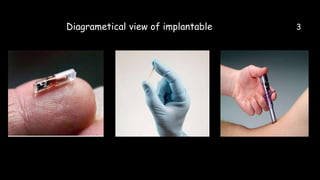
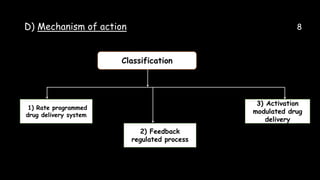
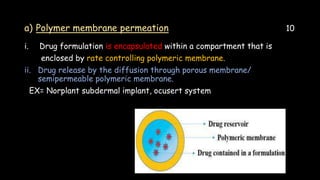
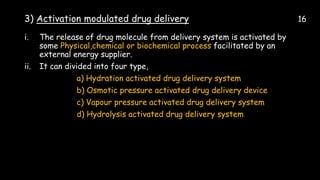
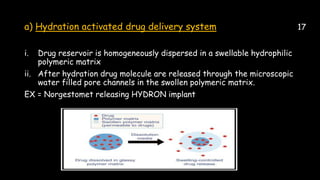
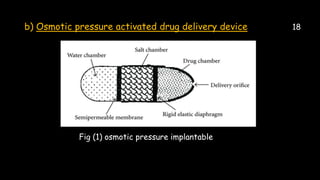
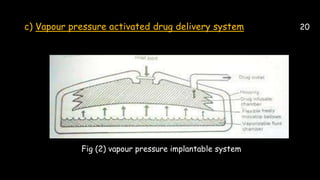
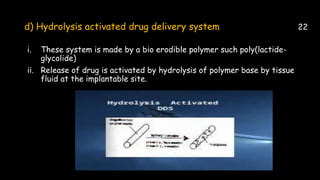
This document describes an implantable drug delivery system. Implantable devices are small, sterile solid masses made through compression, molding or extrusion of purified drugs. They are implanted under the skin through minor surgery or injection and provide continuous release of drugs like insulin, steroids, antibiotics over long periods of time. Implantable devices have advantages like controlled drug delivery, improved patient compliance, targeted delivery and bypassing first-pass metabolism but also have disadvantages like requiring minor surgery, inability to easily discontinue therapy and potential device failures. The document goes on to describe different mechanisms of drug release including rate-programmed, feedback-regulated and activation-modulated systems.