Imperfect Progressive and Preterite
Imperfect Progressive and Preterite 
• Do you remember the present 
progressive? 
• It’s used when a person wants 
to say that an action is 
happening “right now.”
Imperfect Progressive and Preterite 
• It uses the present tense of 
estar + the present participle. 
• No puedo ir al cine. Estoy 
estudiando para el examen.
Imperfect Progressive and Preterite 
• To describe something that was 
taking place over a period of time in 
the past, use the imperfect 
progressive, which uses the 
imperfect tense of estar + the 
present participle.
Imperfect Progressive and Preterite 
• Estaba esquiando cuando me 
caí y me torcí la rodilla. 
• I was skiing when I fell and 
sprained my knee.
Imperfect Progressive and Preterite 
• The present and imperfect 
progressive tenses use the same 
irregular present participles.
Imperfect Progressive and Preterite 
• Remember, to form the present 
participle of -ir stem-changing 
verbs, e changes to i and o 
changes to u:
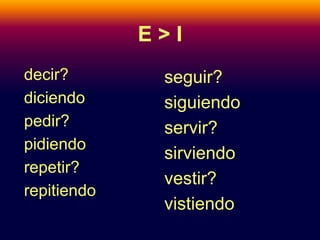
E > I 
decir? 
diciendo 
pedir? 
pidiendo 
repetir? 
repitiendo 
seguir? 
siguiendo 
servir? 
sirviendo 
vestir? 
vistiendo
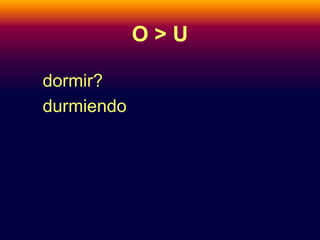
O > U 
dormir? 
durmiendo
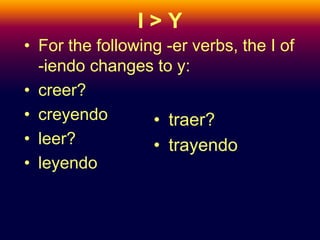
I > Y 
• For the following -er verbs, the I of 
-iendo changes to y: 
• creer? 
• creyendo 
• traer? 
• leer? 
• trayendo 
• leyendo
Imperfect Progressive and Preterite 
• When you use pronouns with the 
imperfect progressive, you can put 
them before estar or attach them to 
the participle.
Imperfect Progressive and Preterite 
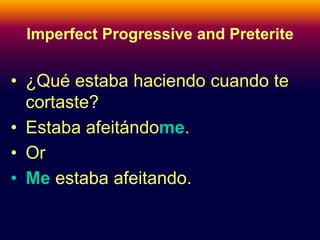
• ¿Qué estaba haciendo cuando te 
cortaste? 
• Estaba afeitándome. 
• Or 
• Me estaba afeitando.
Imperfect Progressive and Preterite 
• Note that the imperfect progressive 
describes what was taking place 
while the preterite tells a specific 
occurance in the past or interrupts 
the action.
Imperfect Progressive and Preterite 
• Ella estaba corriendo cuando se 
lastimó el tobillo.

Imperfectprogressive

  • 1.
  • 2.
    Imperfect Progressive andPreterite • Do you remember the present progressive? • It’s used when a person wants to say that an action is happening “right now.”
  • 3.
    Imperfect Progressive andPreterite • It uses the present tense of estar + the present participle. • No puedo ir al cine. Estoy estudiando para el examen.
  • 4.
    Imperfect Progressive andPreterite • To describe something that was taking place over a period of time in the past, use the imperfect progressive, which uses the imperfect tense of estar + the present participle.
  • 5.
    Imperfect Progressive andPreterite • Estaba esquiando cuando me caí y me torcí la rodilla. • I was skiing when I fell and sprained my knee.
  • 6.
    Imperfect Progressive andPreterite • The present and imperfect progressive tenses use the same irregular present participles.
  • 7.
    Imperfect Progressive andPreterite • Remember, to form the present participle of -ir stem-changing verbs, e changes to i and o changes to u:
  • 8.
    E > I decir? diciendo pedir? pidiendo repetir? repitiendo seguir? siguiendo servir? sirviendo vestir? vistiendo
  • 9.
    O > U dormir? durmiendo
  • 10.
    I > Y • For the following -er verbs, the I of -iendo changes to y: • creer? • creyendo • traer? • leer? • trayendo • leyendo
  • 11.
    Imperfect Progressive andPreterite • When you use pronouns with the imperfect progressive, you can put them before estar or attach them to the participle.
  • 12.
    Imperfect Progressive andPreterite • ¿Qué estaba haciendo cuando te cortaste? • Estaba afeitándome. • Or • Me estaba afeitando.
  • 13.
    Imperfect Progressive andPreterite • Note that the imperfect progressive describes what was taking place while the preterite tells a specific occurance in the past or interrupts the action.
  • 14.
    Imperfect Progressive andPreterite • Ella estaba corriendo cuando se lastimó el tobillo.