The Impact On Continuous
Processing
By Prandeep Borah
MSF Pharmacy, GFSU
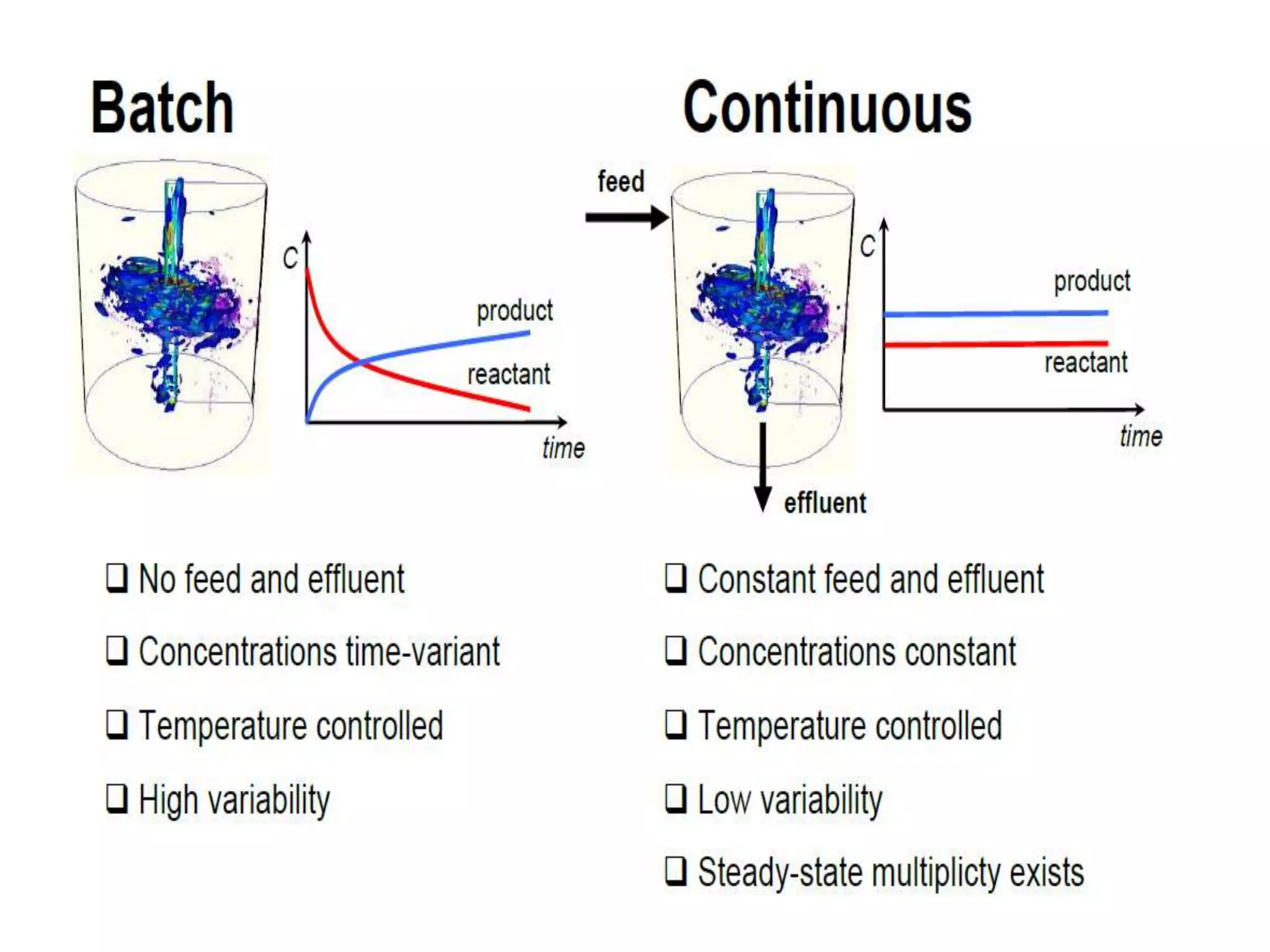
• Batch processing :
FDA’s current definition of a batch as ‘a
specific quantity of a drug or other material that
is intended to have uniform character and quality,
within specified limits, and is produced according
to a single manufacturing order during the same
cycle of manufacture’.
• The production volumes for most drugs are
relatively small; tens of tonnes per annum rather
than thousands of tonnes.
• The control systems associated with such batch
plant tend to be generic rather than specific to
any particular molecule.
Disadvantages of Batch Manufacturing:
• Defined batch size (output quantity driven by batch
size)
• Multiple, sequential process steps
• Many interruptions between/during process steps
• Long waiting times between single process steps
• Numerous transport steps between process steps
• Lengthy throughput times from start to finish
• High levels of raw material and intermediate
inventories
• Extensive validation and scale-up activities needed
• Quality measured by in-process sampling and end-
product testing
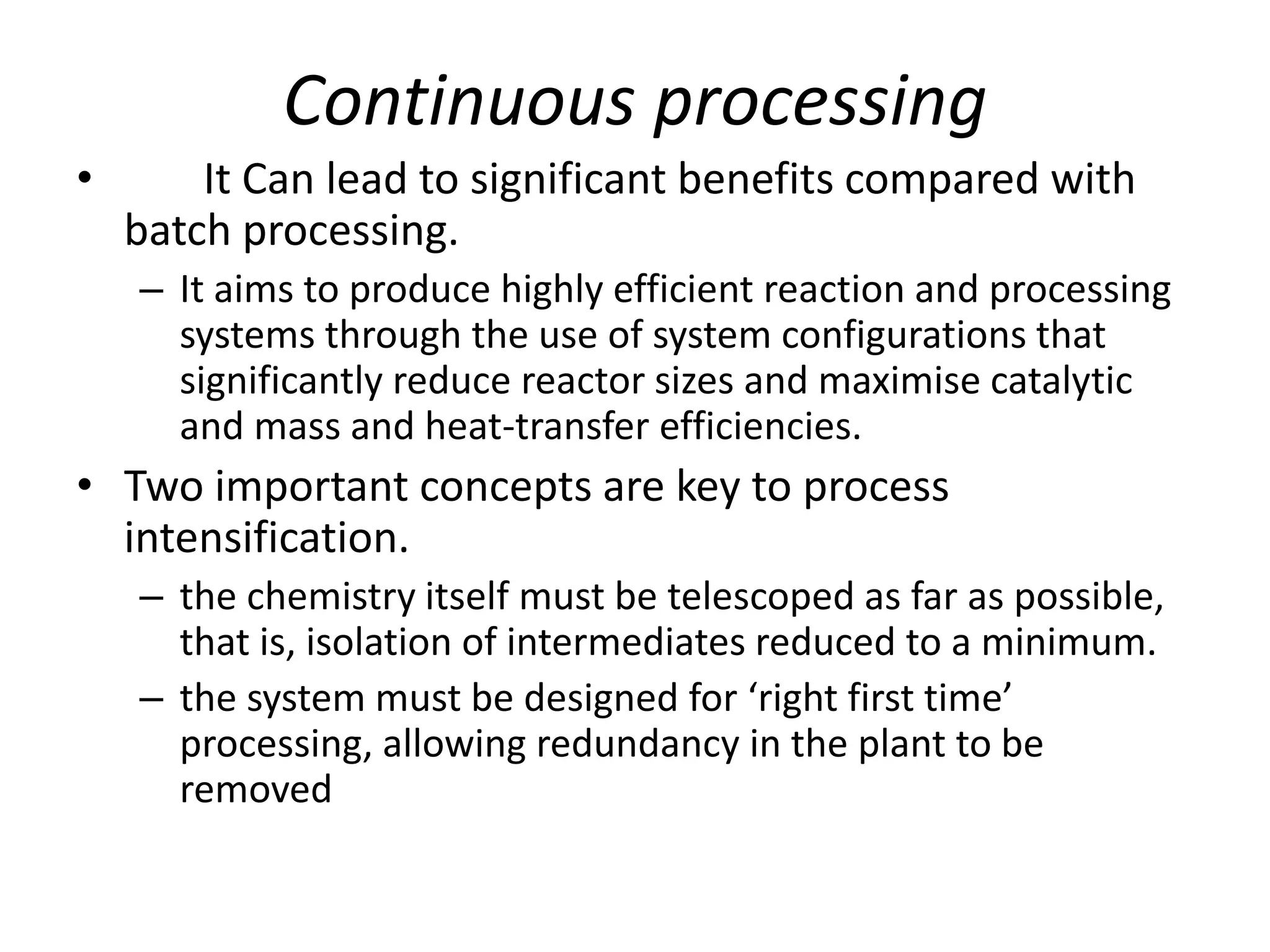
Continuous processing
• It Can lead to significant benefits compared with
batch processing.
– It aims to produce highly efficient reaction and processing
systems through the use of system configurations that
significantly reduce reactor sizes and maximise catalytic
and mass and heat-transfer efficiencies.
• Two important concepts are key to process
intensification.
– the chemistry itself must be telescoped as far as possible,
that is, isolation of intermediates reduced to a minimum.
– the system must be designed for ‘right first time’
processing, allowing redundancy in the plant to be
removed
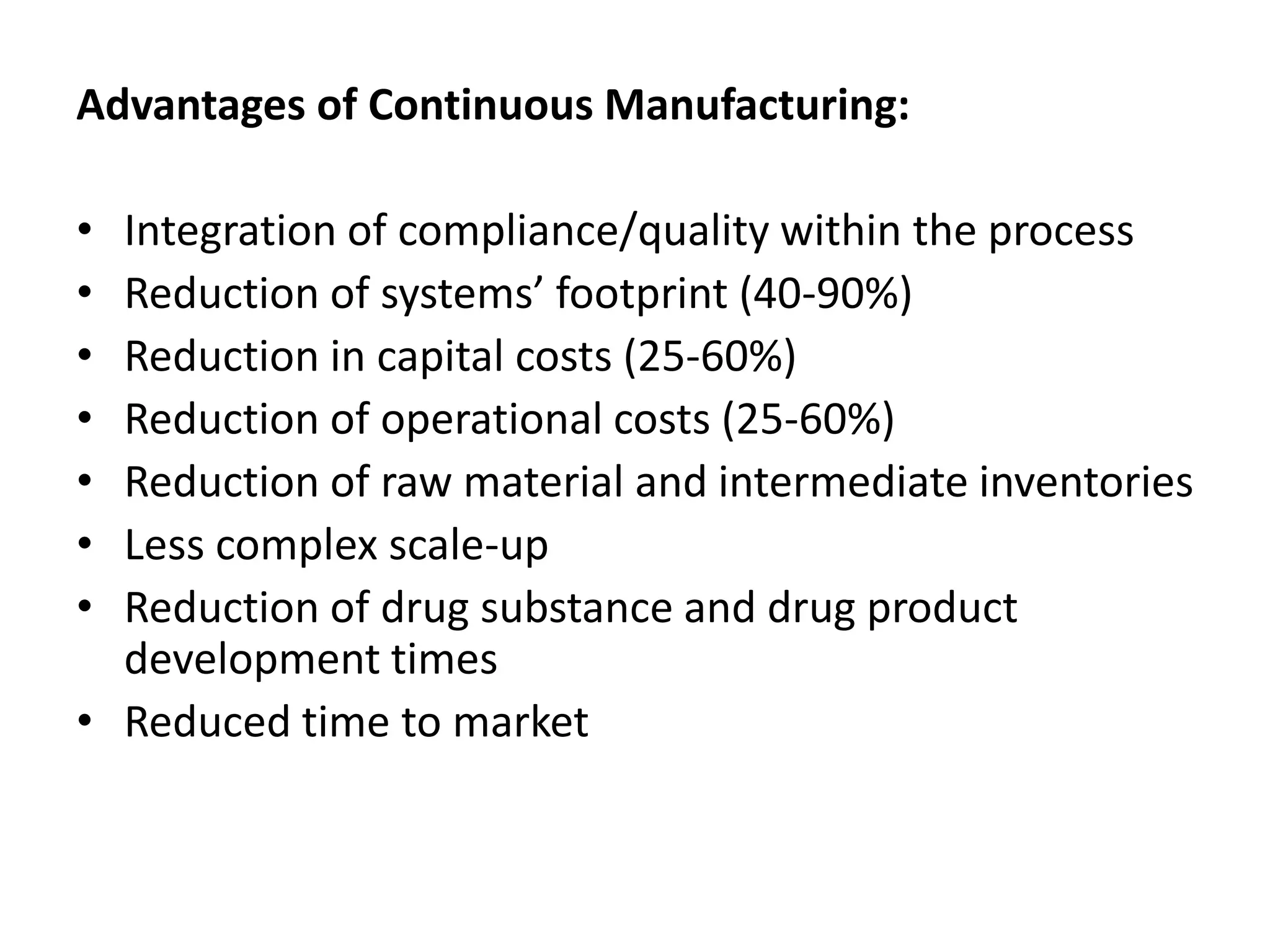
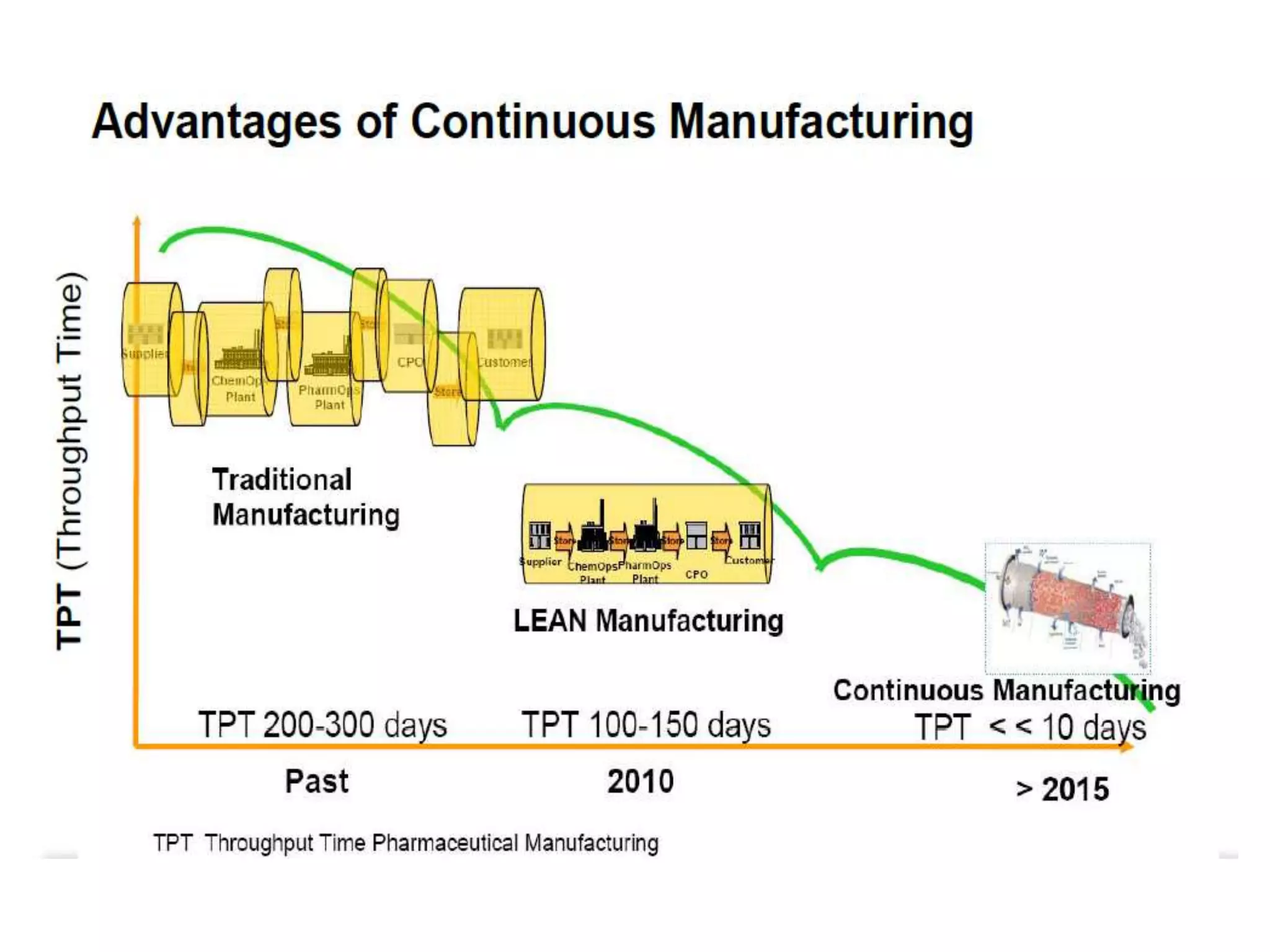
Advantages of Continuous Manufacturing:
• Integration of compliance/quality within the process
• Reduction of systems’ footprint (40-90%)
• Reduction in capital costs (25-60%)
• Reduction of operational costs (25-60%)
• Reduction of raw material and intermediate inventories
• Less complex scale-up
• Reduction of drug substance and drug product
development times
• Reduced time to market
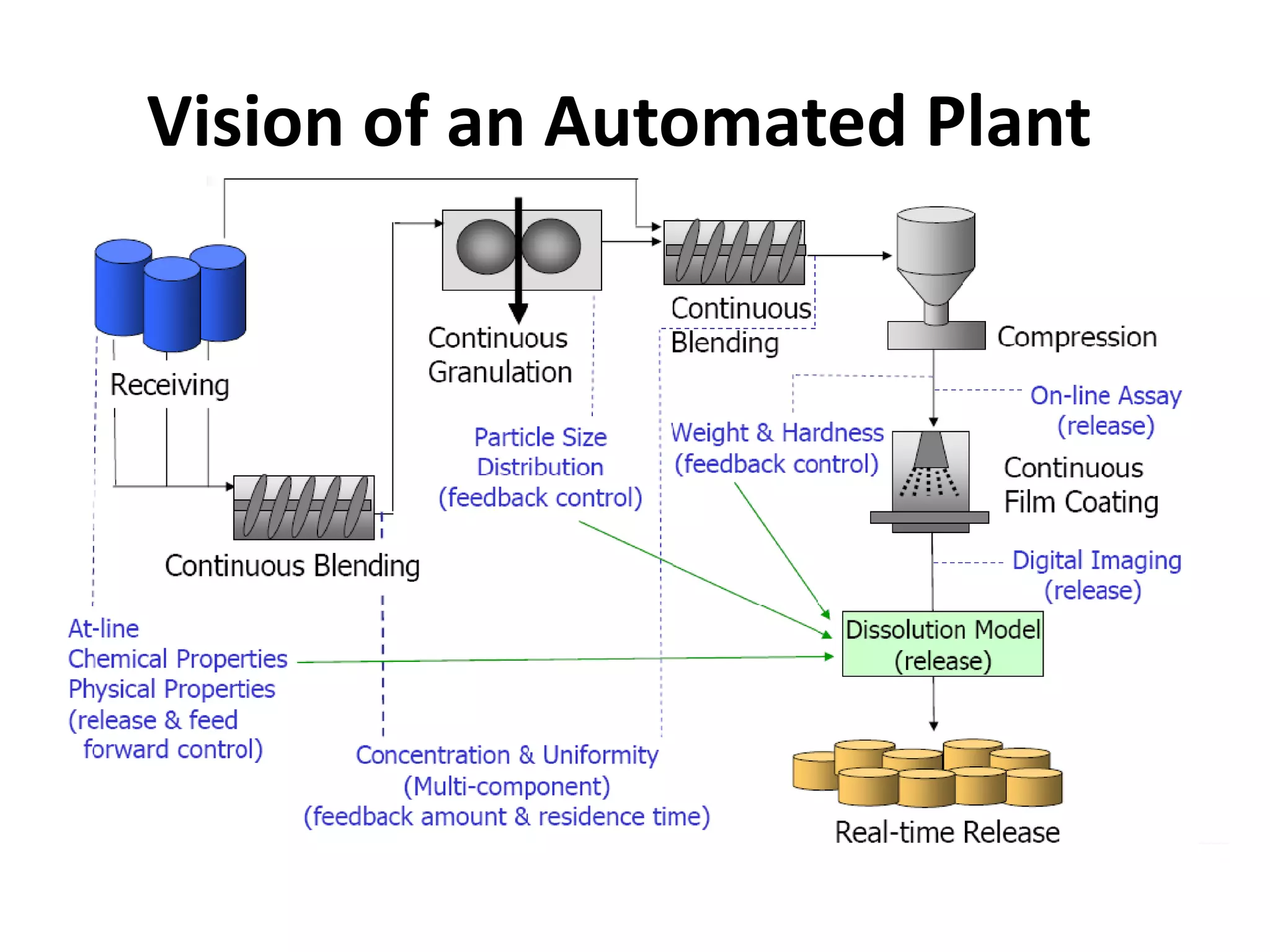
Vision of an Automated Plant
• Disadvantages/Challenges of CM:
• Not right for every process
• Dedicated equipment and facilities required
• Process technology under-developed
• Advanced & robust PAT and control approaches
required
• Many sensors do not exist (e.g., powder flow
rate, impurities, etc.)
• Single point of failure that can bring down the
whole plant
• Exceptional events management required
• Regulatory framework is under-developed
Process Analytical Technology
PAT is a system for designing, analysing
and controlling manufacturing through timely
measurement (i.e. during processing) of
critical quality and performance attributes of
raw and in-process materials and processes,
with the goal of ensuring final product quality.
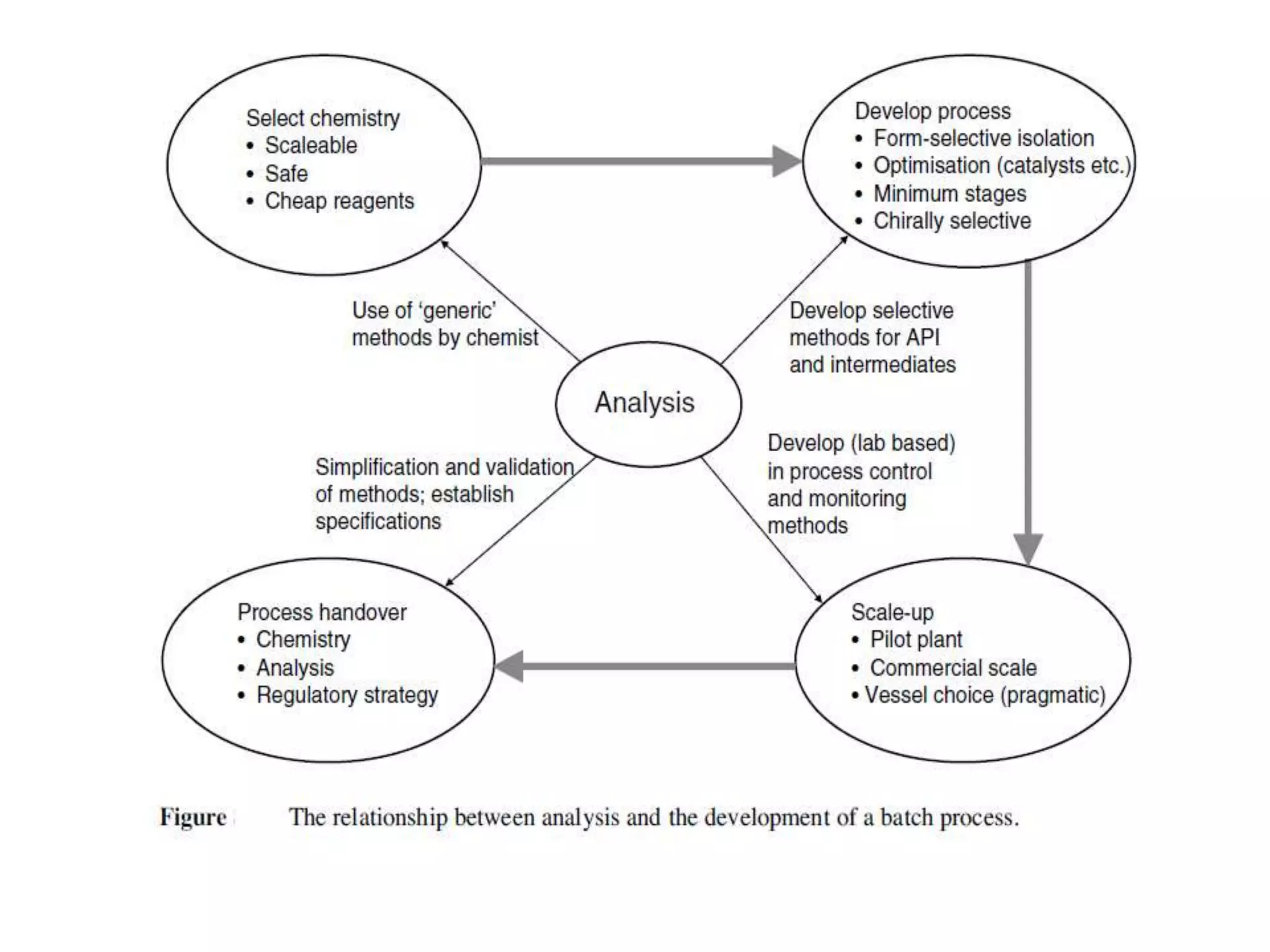
Analytical strategies
• Batch processes:
the role of analysis in the traditional
development of batch processes has been
essentially laboratory based, univariate and
off-line.
– One advantage of laboratory-based analytical data
is that the quality of the results can be checked at
every stage of their production, from validation of
the method, through the use of system suitability
checks to ensure fitness for purpose at the time of
use to final checking and transcription of the data.
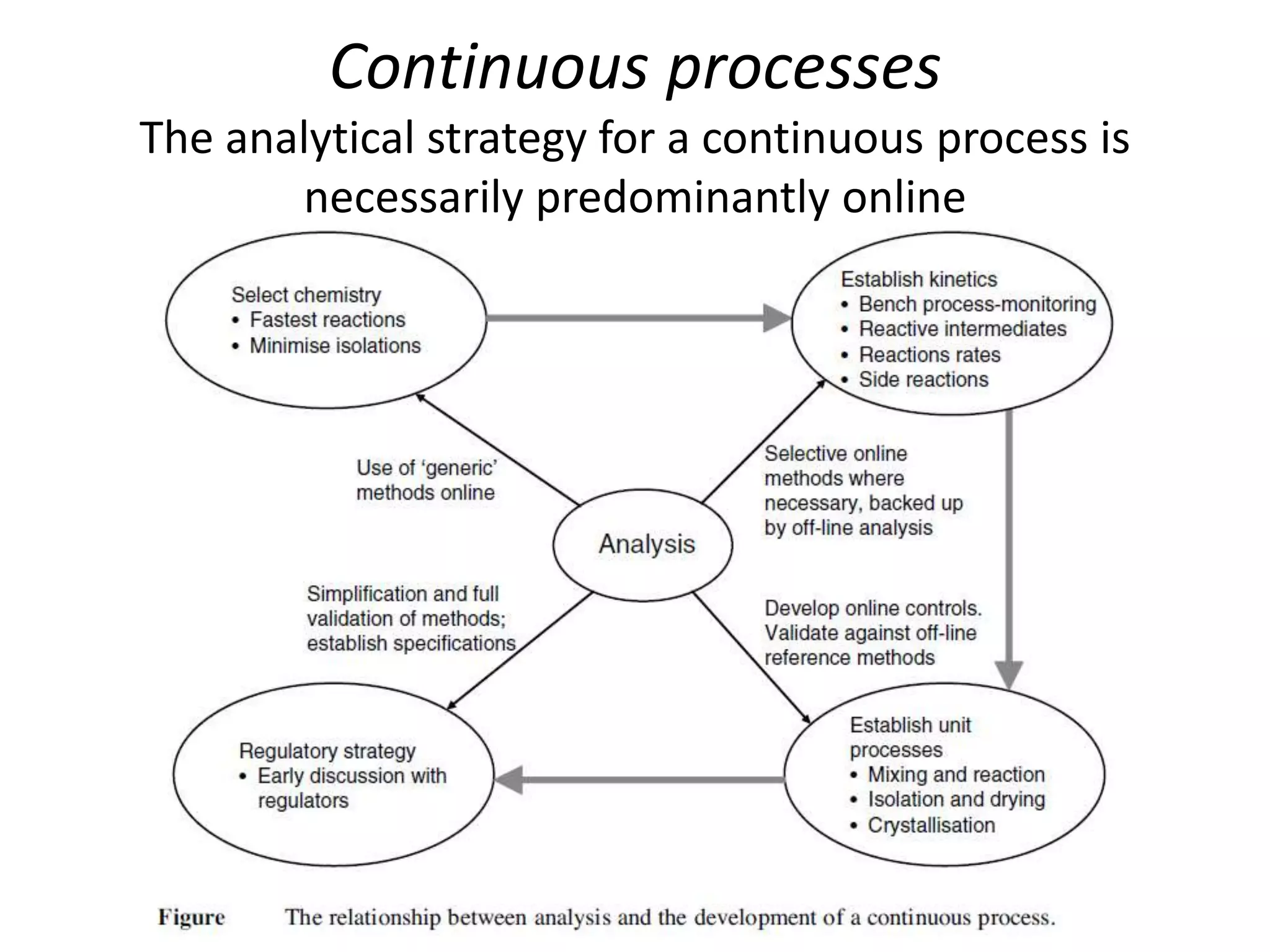
Continuous processes
The analytical strategy for a continuous process is
necessarily predominantly online
THANK YOU

Impact on continous processing

  • 1.
    The Impact OnContinuous Processing By Prandeep Borah MSF Pharmacy, GFSU
  • 2.
    • Batch processing: FDA’s current definition of a batch as ‘a specific quantity of a drug or other material that is intended to have uniform character and quality, within specified limits, and is produced according to a single manufacturing order during the same cycle of manufacture’. • The production volumes for most drugs are relatively small; tens of tonnes per annum rather than thousands of tonnes. • The control systems associated with such batch plant tend to be generic rather than specific to any particular molecule.
  • 3.
    Disadvantages of BatchManufacturing: • Defined batch size (output quantity driven by batch size) • Multiple, sequential process steps • Many interruptions between/during process steps • Long waiting times between single process steps • Numerous transport steps between process steps • Lengthy throughput times from start to finish • High levels of raw material and intermediate inventories • Extensive validation and scale-up activities needed • Quality measured by in-process sampling and end- product testing
  • 5.
    Continuous processing • ItCan lead to significant benefits compared with batch processing. – It aims to produce highly efficient reaction and processing systems through the use of system configurations that significantly reduce reactor sizes and maximise catalytic and mass and heat-transfer efficiencies. • Two important concepts are key to process intensification. – the chemistry itself must be telescoped as far as possible, that is, isolation of intermediates reduced to a minimum. – the system must be designed for ‘right first time’ processing, allowing redundancy in the plant to be removed
  • 6.
    Advantages of ContinuousManufacturing: • Integration of compliance/quality within the process • Reduction of systems’ footprint (40-90%) • Reduction in capital costs (25-60%) • Reduction of operational costs (25-60%) • Reduction of raw material and intermediate inventories • Less complex scale-up • Reduction of drug substance and drug product development times • Reduced time to market
  • 8.
    Vision of anAutomated Plant
  • 10.
    • Disadvantages/Challenges ofCM: • Not right for every process • Dedicated equipment and facilities required • Process technology under-developed • Advanced & robust PAT and control approaches required • Many sensors do not exist (e.g., powder flow rate, impurities, etc.) • Single point of failure that can bring down the whole plant • Exceptional events management required • Regulatory framework is under-developed
  • 11.
    Process Analytical Technology PATis a system for designing, analysing and controlling manufacturing through timely measurement (i.e. during processing) of critical quality and performance attributes of raw and in-process materials and processes, with the goal of ensuring final product quality.
  • 12.
    Analytical strategies • Batchprocesses: the role of analysis in the traditional development of batch processes has been essentially laboratory based, univariate and off-line. – One advantage of laboratory-based analytical data is that the quality of the results can be checked at every stage of their production, from validation of the method, through the use of system suitability checks to ensure fitness for purpose at the time of use to final checking and transcription of the data.
  • 14.
    Continuous processes The analyticalstrategy for a continuous process is necessarily predominantly online
  • 15.