IMPACT OF
DEVELOPMENT
COOPERATION
WHAT DO WE KNOW?
4th JUNE 2015
HELSINKI, FINLAND
#kehityskeskustelu2015
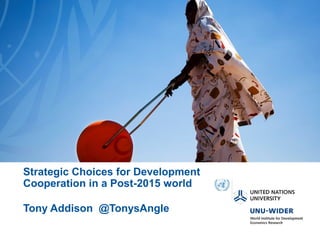
Strategic Choices for Development
Cooperation in a Post-2015 world
Tony Addison @TonysAngle
Overview
• Development Co-operation in its broadest sense
• Official aid is just one arm of development finance
• Many players: big to small
• Countries vary in the size & ambition of their official
aid, their business engagement, NGOs,
philanthropy, diaspora remittances etc
• Geopolitical baggage v poverty/humanitarian focus
• Keep Calm. Less ideology please!
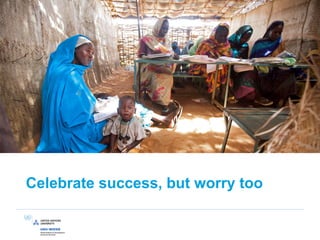
Celebrate success, but worry too
5
00001
1
1
1
1
1
1
2
3
3
3
Otherconditi
Intrapartum
relatedevents
Pretermbirth
complications
Measles
Diarrhoea
Pneumonia
2000
Meningitis
NeonatalTet
Malaria
Neonatal
Pneumonia
Otherconditi
neonatal
Neonatalseps
meningitis
Neonatal
diarrhea
injury
Congenital
abnormalities
AIDS
2010
73
570
<20% decline from 2000 to 2010
20-30% decline from 2000 to 2010
>30% decline from 2000 to 2010
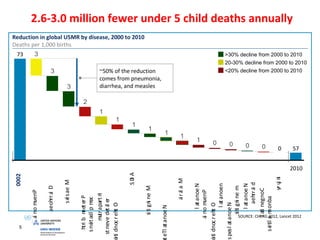
~50% of the reduction
comes from pneumonia,
diarrhea, and measles
Reduction in global U5MR by disease, 2000 to 2010
Deaths per 1,000 births
SOURCE: CHERG 2012, Lancet 2012
2.6-3.0 million fewer under 5 child deaths annually
Celebrate & worry about:
• Reduction in global poverty
• Reduced infant & maternal mortality
• Helped (some) countries out of conflict
Success has many parents: communities, civil society,
governments, NGOs, official donors (aid helped via:
restoring growth, human development, maybe
peace)
Worries: war, refugees + IDPs, disease (Ebola),
climate, human rights, corruption, democracy
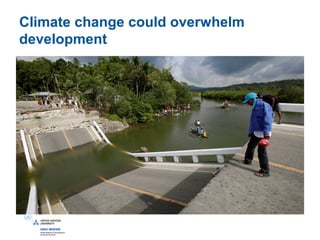
Climate change could overwhelm
development
Strategic Lens – what should rich
countries do?
Fundamental questions: how much focus on:
•climate change (& how)?
•fragility & conflict? (& how)?
•existing country partners?
•poorest people & the poorest countries? (Low-income v
Middle-Income countries, poor in MICs v poor in LICs)
•In making their choices, donor countries need to think
about:
•uncertainty & risk; achieving more impact via leverage;
engaging more of their citizens in action
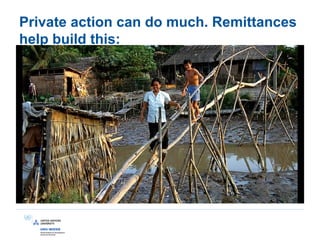
Private action can do much. Remittances
help build this:
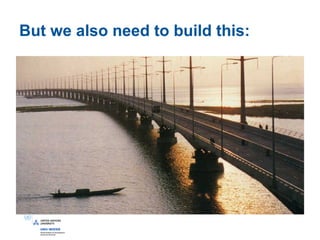
But we also need to build this:
Areas of Strategic Choice:
For donor country:
•Thematic specialization (breadth v depth;
experience)
•Bilateral v multilateral action (ownership of results,
tail wags the multilateral dog?)
•Which countries (LICs v MICs) : MIC poverty
•Beyond aid? “All of Government” approaches
3 theme ideas: gender equality / economic
transformation / fiscal system
Gender Equality
• No inclusive growth if it does not fully incorporate
ability of citizens, regardless of gender
• DAC monitors commitments to gender equality – about
15% of all screened aid has this objective
• 15% is too low (see
www.recom.wider.unu.edu/gender)
• Highest in education: 30% of all screened aid. Health:
maternal health a priority but family planning too low
• Aid for gender equality languishes in productive sectors
e.g. women farmers
• Small livelihood projects; little at scale
To conclude: future of development
partnership
• Depending on a country’s level of ambition:
• Small & medium-sized players can develop technical &
area specialisms that greatly enhance their impact
• Position the development agency as a global leader in
analysis & practice on a limited number of themes
• Engage in helping partner countries use knowledge
networks to achieve social & economic transformation
• Aid works – when well-designed & implemented – but
avoid the trap of ideology
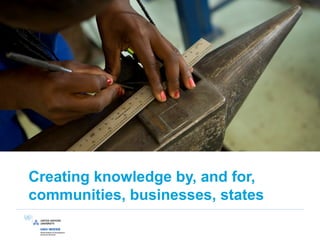
Creating knowledge by, and for,
communities, businesses, states
www.wider.unu.edu
Helsinki, Finland
IMPACT OF
DEVELOPMENT
COOPERATION
WHAT DO WE KNOW?
4th JUNE 2015
HELSINKI, FINLAND
#kehityskeskustelu2015
Results on the
Ground
An Independent Review of Finnish Aid
Ritva Reinikka
June 4, 2015
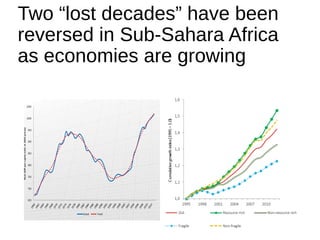
Two “lost decades” have been
reversed in Sub-Sahara Africa
as economies are growing
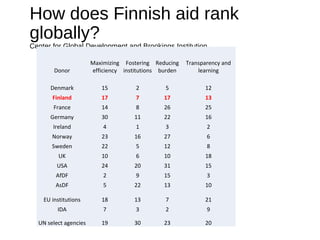
How does Finnish aid rank
globally?
Center for Global Development and Brookings Institution
Donor
Maximizing
efficiency
Fostering
institutions
Reducing
burden
Transparency and
learning
Denmark 15 2 5 12
Finland 17 7 17 13
France 14 8 26 25
Germany 30 11 22 16
Ireland 4 1 3 2
Norway 23 16 27 6
Sweden 22 5 12 8
UK 10 6 10 18
USA 24 20 31 15
AfDF 2 9 15 3
AsDF 5 22 13 10
EU institutions 18 13 7 21
IDA 7 3 2 9
UN select agencies 19 30 23 20
Bilateral Government-to-
Government aid
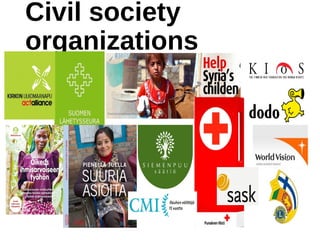
Civil society
organizations
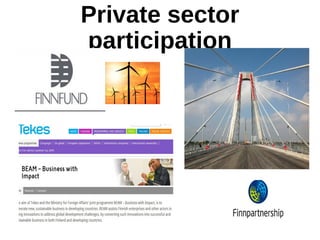
Private sector
participation
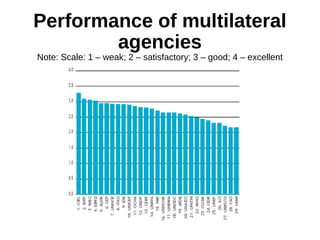
Performance of multilateral
agencies
Note: Scale: 1 – weak; 2 – satisfactory; 3 – good; 4 – excellent
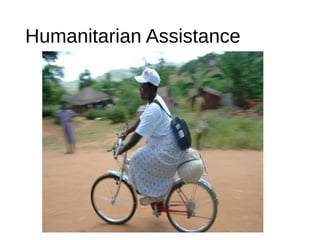
Humanitarian Assistance
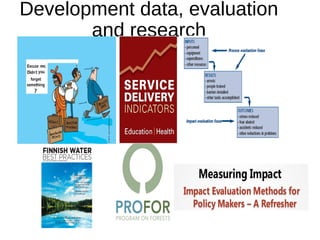
Development data, evaluation
and research
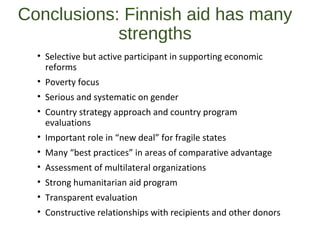
Conclusions: Finnish aid has many
strengths
• Selective but active participant in supporting economic
reforms
• Poverty focus
• Serious and systematic on gender
• Country strategy approach and country program
evaluations
• Important role in “new deal” for fragile states
• Many “best practices” in areas of comparative advantage
• Assessment of multilateral organizations
• Strong humanitarian aid program
• Transparent evaluation
• Constructive relationships with recipients and other donors
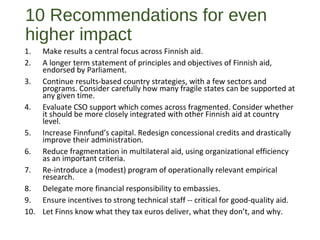
10 Recommendations for even
higher impact
1. Make results a central focus across Finnish aid.
2. A longer term statement of principles and objectives of Finnish aid,
endorsed by Parliament.
3. Continue results-based country strategies, with a few sectors and
programs. Consider carefully how many fragile states can be supported at
any given time.
4. Evaluate CSO support which comes across fragmented. Consider whether
it should be more closely integrated with other Finnish aid at country
level.
5. Increase Finnfund’s capital. Redesign concessional credits and drastically
improve their administration.
6. Reduce fragmentation in multilateral aid, using organizational efficiency
as an important criteria.
7. Re-introduce a (modest) program of operationally relevant empirical
research.
8. Delegate more financial responsibility to embassies.
9. Ensure incentives to strong technical staff -- critical for good-quality aid.
10. Let Finns know what they tax euros deliver, what they don’t, and why.
IMPACT OF
DEVELOPMENT
COOPERATION
WHAT DO WE KNOW?
4th JUNE 2015
HELSINKI, FINLAND
#kehityskeskustelu2015

Impact of development cooperation

  • 1.
    IMPACT OF DEVELOPMENT COOPERATION WHAT DOWE KNOW? 4th JUNE 2015 HELSINKI, FINLAND #kehityskeskustelu2015
  • 2.
    Strategic Choices forDevelopment Cooperation in a Post-2015 world Tony Addison @TonysAngle
  • 3.
    Overview • Development Co-operationin its broadest sense • Official aid is just one arm of development finance • Many players: big to small • Countries vary in the size & ambition of their official aid, their business engagement, NGOs, philanthropy, diaspora remittances etc • Geopolitical baggage v poverty/humanitarian focus • Keep Calm. Less ideology please!
  • 4.
  • 5.
    5 00001 1 1 1 1 1 1 2 3 3 3 Otherconditi Intrapartum relatedevents Pretermbirth complications Measles Diarrhoea Pneumonia 2000 Meningitis NeonatalTet Malaria Neonatal Pneumonia Otherconditi neonatal Neonatalseps meningitis Neonatal diarrhea injury Congenital abnormalities AIDS 2010 73 570 <20% decline from2000 to 2010 20-30% decline from 2000 to 2010 >30% decline from 2000 to 2010 ~50% of the reduction comes from pneumonia, diarrhea, and measles Reduction in global U5MR by disease, 2000 to 2010 Deaths per 1,000 births SOURCE: CHERG 2012, Lancet 2012 2.6-3.0 million fewer under 5 child deaths annually
  • 6.
    Celebrate & worryabout: • Reduction in global poverty • Reduced infant & maternal mortality • Helped (some) countries out of conflict Success has many parents: communities, civil society, governments, NGOs, official donors (aid helped via: restoring growth, human development, maybe peace) Worries: war, refugees + IDPs, disease (Ebola), climate, human rights, corruption, democracy
  • 7.
    Climate change couldoverwhelm development
  • 8.
    Strategic Lens –what should rich countries do? Fundamental questions: how much focus on: •climate change (& how)? •fragility & conflict? (& how)? •existing country partners? •poorest people & the poorest countries? (Low-income v Middle-Income countries, poor in MICs v poor in LICs) •In making their choices, donor countries need to think about: •uncertainty & risk; achieving more impact via leverage; engaging more of their citizens in action
  • 9.
    Private action cando much. Remittances help build this:
  • 10.
    But we alsoneed to build this:
  • 11.
    Areas of StrategicChoice: For donor country: •Thematic specialization (breadth v depth; experience) •Bilateral v multilateral action (ownership of results, tail wags the multilateral dog?) •Which countries (LICs v MICs) : MIC poverty •Beyond aid? “All of Government” approaches 3 theme ideas: gender equality / economic transformation / fiscal system
  • 12.
    Gender Equality • Noinclusive growth if it does not fully incorporate ability of citizens, regardless of gender • DAC monitors commitments to gender equality – about 15% of all screened aid has this objective • 15% is too low (see www.recom.wider.unu.edu/gender) • Highest in education: 30% of all screened aid. Health: maternal health a priority but family planning too low • Aid for gender equality languishes in productive sectors e.g. women farmers • Small livelihood projects; little at scale
  • 13.
    To conclude: futureof development partnership • Depending on a country’s level of ambition: • Small & medium-sized players can develop technical & area specialisms that greatly enhance their impact • Position the development agency as a global leader in analysis & practice on a limited number of themes • Engage in helping partner countries use knowledge networks to achieve social & economic transformation • Aid works – when well-designed & implemented – but avoid the trap of ideology
  • 14.
    Creating knowledge by,and for, communities, businesses, states
  • 15.
  • 16.
    IMPACT OF DEVELOPMENT COOPERATION WHAT DOWE KNOW? 4th JUNE 2015 HELSINKI, FINLAND #kehityskeskustelu2015
  • 17.
    Results on the Ground AnIndependent Review of Finnish Aid Ritva Reinikka June 4, 2015
  • 18.
    Two “lost decades”have been reversed in Sub-Sahara Africa as economies are growing
  • 19.
    How does Finnishaid rank globally? Center for Global Development and Brookings Institution Donor Maximizing efficiency Fostering institutions Reducing burden Transparency and learning Denmark 15 2 5 12 Finland 17 7 17 13 France 14 8 26 25 Germany 30 11 22 16 Ireland 4 1 3 2 Norway 23 16 27 6 Sweden 22 5 12 8 UK 10 6 10 18 USA 24 20 31 15 AfDF 2 9 15 3 AsDF 5 22 13 10 EU institutions 18 13 7 21 IDA 7 3 2 9 UN select agencies 19 30 23 20
  • 20.
  • 21.
  • 22.
  • 23.
    Performance of multilateral agencies Note:Scale: 1 – weak; 2 – satisfactory; 3 – good; 4 – excellent
  • 24.
  • 25.
  • 26.
    Conclusions: Finnish aidhas many strengths • Selective but active participant in supporting economic reforms • Poverty focus • Serious and systematic on gender • Country strategy approach and country program evaluations • Important role in “new deal” for fragile states • Many “best practices” in areas of comparative advantage • Assessment of multilateral organizations • Strong humanitarian aid program • Transparent evaluation • Constructive relationships with recipients and other donors
  • 27.
    10 Recommendations foreven higher impact 1. Make results a central focus across Finnish aid. 2. A longer term statement of principles and objectives of Finnish aid, endorsed by Parliament. 3. Continue results-based country strategies, with a few sectors and programs. Consider carefully how many fragile states can be supported at any given time. 4. Evaluate CSO support which comes across fragmented. Consider whether it should be more closely integrated with other Finnish aid at country level. 5. Increase Finnfund’s capital. Redesign concessional credits and drastically improve their administration. 6. Reduce fragmentation in multilateral aid, using organizational efficiency as an important criteria. 7. Re-introduce a (modest) program of operationally relevant empirical research. 8. Delegate more financial responsibility to embassies. 9. Ensure incentives to strong technical staff -- critical for good-quality aid. 10. Let Finns know what they tax euros deliver, what they don’t, and why.
  • 28.
    IMPACT OF DEVELOPMENT COOPERATION WHAT DOWE KNOW? 4th JUNE 2015 HELSINKI, FINLAND #kehityskeskustelu2015