IMMUNIZATION
 Submitted to
 Respected paraveen William
 Faculty College of Nursing
vmmc & sjh
 Submitted by
 Mehroon nissa
 Enrollment No : 75250306619
 Bsc (H) Nursing 4th year
DEFINATION OF IMMUNIZATION
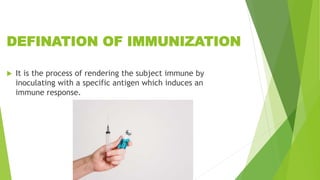
 It is the process of rendering the subject immune by
inoculating with a specific antigen which induces an
immune response.
Types of Immunity
 Active immunity;
 It is produced by administering vaccine or toxoid.
 Long lasting.
 Passive immunity;
 It is produced by administering immunoglobulins
 This produces immediate protection which only lasts for
some weeks or month
Herd Immunity
 Herd immunity exists if the number of people in a
community who have active immunity against an infection
exceeds a critical level .
 If this level is achieved then even non-vaccinated
individuals are protected from getting the disease .
Vaccine
 The vaccine is usually a protein similar to part of a
virulent infectious organism that can be recognized by the
individual’s immune system, which then produces
antibodies or cell-mediated immunity against the antigen
in the vaccine .
Type of Vaccines
 Live attenuated vaccine
 A virulent organism is weakened so that it produces an
antigenic response without the serious consequences of a
wild organism infection .
 Killed or inactivated vaccines
 Prepared from preformed antigen inactivated by heat, phenol
, formaldehyde or some other means.
 Conjugated Vaccines
 Conjugated with other antigens in an attempt to improve the
immunological response.
 Toxoids
 These are toxins , which have been rendered non-toxic by
treatment with formaldehyde, but their antigenicity is
maintained.
Antibacterial Vaccines
 Live attenuated bacteria:
 BCG, oral typhoid
 Killed bacteria:
 Pertussis , Cholera and injectable typhoid.
 Toxoids:
 Diphtheria, Tetanus.
 Polysaccharide vaccines :
 Meningococcal, Pneumococcal, H. Influenzae type b.
Antiviral Vaccines
 Live attenuated virus:
 Oral poliomyelitis, measles , mumps, rubella, and yellow
fever.
 Completely inactivated virus:
 Influenza, injectable polio, Rabies.
 Genetically engineered vaccines:
 Hepatitis B
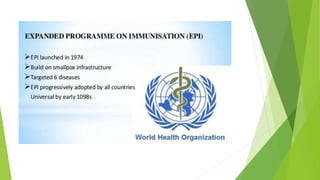
Expanded Program on Immunization
of India- Launched in 1974
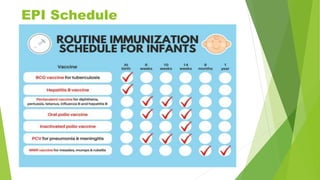
EPI Schedule
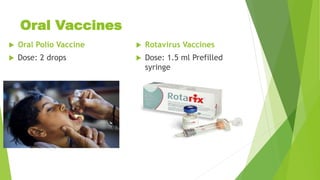
Oral Vaccines
 Oral Polio Vaccine
 Dose: 2 drops
 Rotavirus Vaccines
 Dose: 1.5 ml Prefilled
syringe
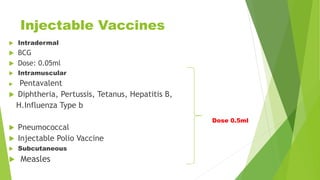
Injectable Vaccines
 Intradermal
 BCG
 Dose: 0.05ml
 Intramuscular
 Pentavalent
 Diphtheria, Pertussis, Tetanus, Hepatitis B,
H.Influenza Type b
 Pneumococcal
 Injectable Polio Vaccine
 Subcutaneous
 Measles
Dose 0.5ml
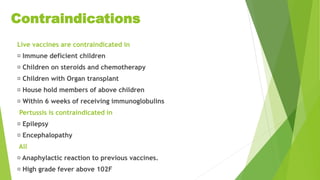
Contraindications
Live vaccines are contraindicated in
Immune deficient children
Children on steroids and chemotherapy
Children with Organ transplant
House hold members of above children
Within 6 weeks of receiving immunoglobulins
Pertussis is contraindicated in
Epilepsy
Encephalopathy
All
Anaphylactic reaction to previous vaccines.
High grade fever above 102F
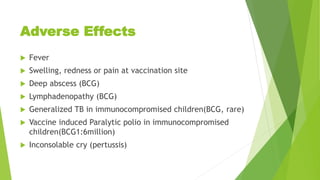
Adverse Effects
 Fever
 Swelling, redness or pain at vaccination site
 Deep abscess (BCG)
 Lymphadenopathy (BCG)
 Generalized TB in immunocompromised children(BCG, rare)
 Vaccine induced Paralytic polio in immunocompromised
children(BCG1:6million)
 Inconsolable cry (pertussis)
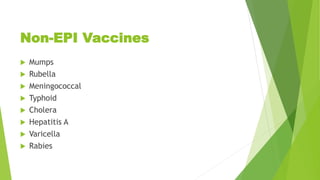
Non-EPI Vaccines
 Mumps
 Rubella
 Meningococcal
 Typhoid
 Cholera
 Hepatitis A
 Varicella
 Rabies
THANK YOU

IMMUNIZATION.pptx

  • 1.
    IMMUNIZATION  Submitted to Respected paraveen William  Faculty College of Nursing vmmc & sjh  Submitted by  Mehroon nissa  Enrollment No : 75250306619  Bsc (H) Nursing 4th year
  • 2.
    DEFINATION OF IMMUNIZATION It is the process of rendering the subject immune by inoculating with a specific antigen which induces an immune response.
  • 3.
    Types of Immunity Active immunity;  It is produced by administering vaccine or toxoid.  Long lasting.  Passive immunity;  It is produced by administering immunoglobulins  This produces immediate protection which only lasts for some weeks or month
  • 4.
    Herd Immunity  Herdimmunity exists if the number of people in a community who have active immunity against an infection exceeds a critical level .  If this level is achieved then even non-vaccinated individuals are protected from getting the disease .
  • 5.
    Vaccine  The vaccineis usually a protein similar to part of a virulent infectious organism that can be recognized by the individual’s immune system, which then produces antibodies or cell-mediated immunity against the antigen in the vaccine .
  • 6.
    Type of Vaccines Live attenuated vaccine  A virulent organism is weakened so that it produces an antigenic response without the serious consequences of a wild organism infection .  Killed or inactivated vaccines  Prepared from preformed antigen inactivated by heat, phenol , formaldehyde or some other means.  Conjugated Vaccines  Conjugated with other antigens in an attempt to improve the immunological response.  Toxoids  These are toxins , which have been rendered non-toxic by treatment with formaldehyde, but their antigenicity is maintained.
  • 7.
    Antibacterial Vaccines  Liveattenuated bacteria:  BCG, oral typhoid  Killed bacteria:  Pertussis , Cholera and injectable typhoid.  Toxoids:  Diphtheria, Tetanus.  Polysaccharide vaccines :  Meningococcal, Pneumococcal, H. Influenzae type b.
  • 8.
    Antiviral Vaccines  Liveattenuated virus:  Oral poliomyelitis, measles , mumps, rubella, and yellow fever.  Completely inactivated virus:  Influenza, injectable polio, Rabies.  Genetically engineered vaccines:  Hepatitis B
  • 9.
    Expanded Program onImmunization of India- Launched in 1974
  • 11.
  • 12.
    Oral Vaccines  OralPolio Vaccine  Dose: 2 drops  Rotavirus Vaccines  Dose: 1.5 ml Prefilled syringe
  • 13.
    Injectable Vaccines  Intradermal BCG  Dose: 0.05ml  Intramuscular  Pentavalent  Diphtheria, Pertussis, Tetanus, Hepatitis B, H.Influenza Type b  Pneumococcal  Injectable Polio Vaccine  Subcutaneous  Measles Dose 0.5ml
  • 14.
    Contraindications Live vaccines arecontraindicated in Immune deficient children Children on steroids and chemotherapy Children with Organ transplant House hold members of above children Within 6 weeks of receiving immunoglobulins Pertussis is contraindicated in Epilepsy Encephalopathy All Anaphylactic reaction to previous vaccines. High grade fever above 102F
  • 15.
    Adverse Effects  Fever Swelling, redness or pain at vaccination site  Deep abscess (BCG)  Lymphadenopathy (BCG)  Generalized TB in immunocompromised children(BCG, rare)  Vaccine induced Paralytic polio in immunocompromised children(BCG1:6million)  Inconsolable cry (pertussis)
  • 16.
    Non-EPI Vaccines  Mumps Rubella  Meningococcal  Typhoid  Cholera  Hepatitis A  Varicella  Rabies
  • 17.