Immunity
Dr. Hala Bashir Hashmi
Community medicine
Learning objectives
2
 To UNDERSTAND the immune system and
how vaccines work in individuals and
populations
 UNDERSTAND following terms:
 immunity, immunization,
 Vaccine, Vaccination
 Antibody , antigen
 Herd immunity
Learning Objectives
3
 To understand the differences between Passive and
Active immunity
 To understand how vaccines work
 To understand the differences between inactivated
vaccines, toxoids and live vaccines
 Vaccination reactions, indications and
contraindications
Definitions:
• Immune system = cells, tissues, and molecules that
mediate resistance to infections
• Immunology = study of structure and function of the
immune system
• “ it is a branch of biomedical science that covers the
study of all aspects of the immune system in all
organisms”
• Immunity = resistance of a host to pathogens and
their toxic effects
• “Immunity is a biological term that describes a state of
having sufficient biological defenses to avoid
infection, disease or other unwanted biological
invasion”
• Immune response = collective and coordinated
response to the introduction of foreign substances in
an individual mediated by the cells and molecules of
the immune system
Antigen
6
 A live or inactivated substance (e.g. protein
or polysaccharide) capable of producing
an immune response
 “Anything that can be bound by an
antibody”
Immunogen:
It is a substance that is able to provoke an adaptive
immune response if injected on its own.
Immunogenicity:
Ability to induce humoral or cell mediated immune
response
Antigenicity:
Ability to combine specifically with the final products of
the immune response.
Immunisation vs. Vaccination
8
 Vaccination means administration of
antigenic material ( vaccine) to stimulate the
immune system to develop adaptive
immunity to disease.
 Immunization is the process whereby a
person is made immune or resistant to an
infectious disease, by administration of
vaccine.
means both receiving a vaccine and becoming immune to a disease,
as a result of being vaccinated
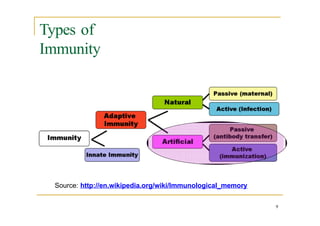
Types of
Immunity
9
Source: http://en.wikipedia.org/wiki/Immunological_memory
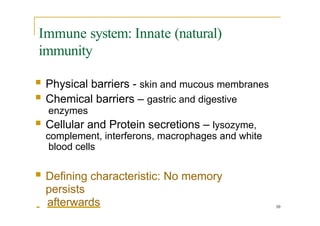
Immune system: Innate (natural)
immunity
10
 Physical barriers - skin and mucous membranes
 Chemical barriers – gastric and digestive
enzymes
 Cellular and Protein secretions – lysozyme,
complement, interferons, macrophages and white
blood cells
 Defining characteristic: No memory
persists
afterwards
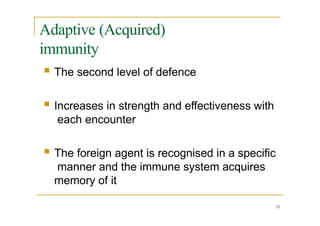
Adaptive (Acquired)
immunity
11
 The second level of defence
 Increases in strength and effectiveness with
each encounter
 The foreign agent is recognised in a specific
manner and the immune system acquires
memory of it
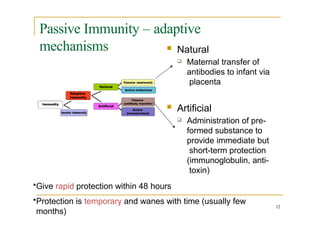
Passive Immunity – adaptive
mechanisms
12
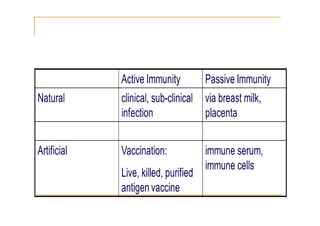
 Natural
 Maternal transfer of
antibodies to infant via
placenta
 Artificial
 Administration of pre-
formed substance to
provide immediate but
short-term protection
(immunoglobulin, anti-
toxin)
•Give rapid protection within 48 hours
•Protection is temporary and wanes with time (usually few
months)
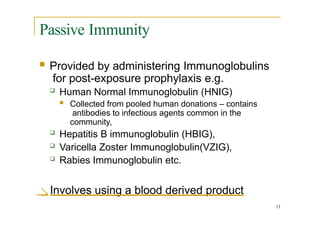
Passive Immunity
13
 Provided by administering Immunoglobulins
for post-exposure prophylaxis e.g.
 Human Normal Immunoglobulin (HNIG)
 Collected from pooled human donations – contains
antibodies to infectious agents common in the
community,
 Hepatitis B immunoglobulin (HBIG),
 Varicella Zoster Immunoglobulin(VZIG),
 Rabies Immunoglobulin etc.
 Involves using a blood derived product
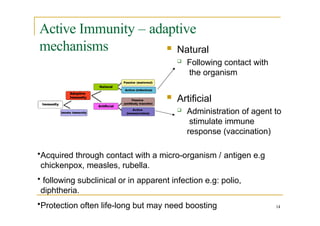
Active Immunity – adaptive
mechanisms
14
 Natural
 Following contact with
the organism
 Artificial
 Administration of agent to
stimulate immune
response (vaccination)
•Acquired through contact with a micro-organism / antigen e.g
chickenpox, measles, rubella.
• following subclinical or in apparent infection e.g: polio,
diphtheria.
•Protection often life-long but may need boosting
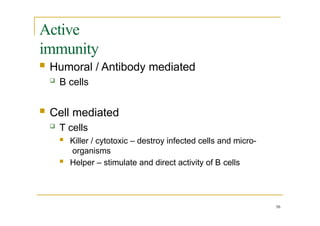
Active
immunity
16
 Humoral / Antibody mediated
 B cells
 Cell mediated
 T cells
 Killer / cytotoxic – destroy infected cells and micro-
organisms
 Helper – stimulate and direct activity of B cells
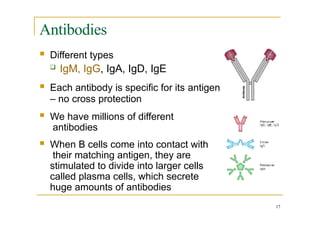
Antibodies
17
 Different types
 IgM, IgG, IgA, IgD, IgE
 Each antibody is specific for its antigen
– no cross protection
 We have millions of different
antibodies
 When B cells come into contact with
their matching antigen, they are
stimulated to divide into larger cells
called plasma cells, which secrete
huge amounts of antibodies
Antibodies - functions
18
 These antibodies circulate and attack the micro-organisms that
have not yet infected cells
 Antibodies gather on the micro-organism’s surface
 This blocks adhesion / cell entry of the antigen
 Neutralises and prevents organism’s replication
 Signals (cytokines) macrophages and other wbcs to come
 Kills organism via complement proteins – lysis
 Neutralises toxin
 Goal of vaccines is to stimulate this response
Ig G
• 80% of total immunoglobulin
• Secreted in high quantities in secondary exposures
• Cross the placenta
• Major functions
• neutralize microbes and toxins
• opsonize antigens for phagocytosis
• activate the complement
• protect the newborn
• 4-fold rise or fall indicates active infection
• A single positive sample indicates past exposure
Ig M
• Secreted initially during primary infection
• 6% of total immunoglobulins
• Cannot cross the placenta
• Major functions
• secreted first during primary
exposure
• activates the complement
•Presence in newborn means infection
•Single positive sample in serum or CSF indicates recent or active infection
•Used to detect early phase of infection
Ig A
• 13% of immunoglobulins
• present in body secretions
• it provides primary defense mechanism at the mucous
membrane
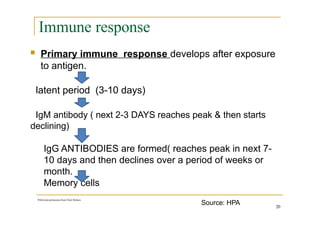
Immune response
 Primary immune response develops after exposure
to antigen.
latent period (3-10 days)
IgM antibody ( next 2-3 DAYS reaches peak & then starts
declining)
IgG ANTIBODIES are formed( reaches peak in next 7-
10 days and then declines over a period of weeks or
month.
Memory cells
With kind permission from Nick Holmes
Source: HPA 20
 Secondary immune response is faster and more
powerful
 Predominantly IgG antibody
 It has shorter latent period
 More rapid production of antibody
 Response is maintained for longer period of time
 Immune response and immunological memory cells
are basis of vaccination and revaccination
Memory
cells
24
 After the body has eliminated the infection some
of the B and T cells are converted into memory
cells
 These can quickly divide into the specialised B
and T cells if re-exposure to the infection occurs
 The immune system’s capacity to have a
memory of previous encounters with an infection
is the basis for vaccination.
Immunizing agents
Vaccines
Immunoglobulins
antitoxins
Aim of an ideal
vaccine
26
 To produce the same immune protection
which usually follows natural infection but
without causing disease
 To generate long-lasting immunity
 To interrupt spread of infection
How vaccines
work
27
 Induce active immunity
 Immunity and immunologic memory similar to
natural infection but without risk of disease
 Immunological memory allows
 Rapid recognition and response to infection
 Prevents or modifies effects of disease
Immune response to an ideal
vaccine:
28
 Vaccine is taken up by antigen-presenting cells
 activates both T and B cells to give memory cells

antigen persists to continue to recruit B
memory cells and produce high affinity antibody
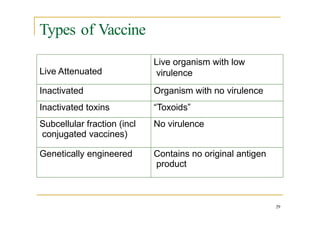
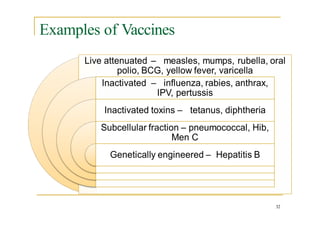
Types of Vaccine
29
Live Attenuated
Live organism with low
virulence
Inactivated Organism with no virulence
Inactivated toxins “Toxoids”
Subcellular fraction (incl
conjugated vaccines)
No virulence
Genetically engineered Contains no original antigen
product
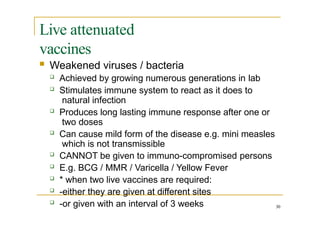
Live attenuated
vaccines
30
 Weakened viruses / bacteria
 Achieved by growing numerous generations in lab
 Stimulates immune system to react as it does to
natural infection
 Produces long lasting immune response after one or
two doses
 Can cause mild form of the disease e.g. mini measles
which is not transmissible
 CANNOT be given to immuno-compromised persons
 E.g. BCG / MMR / Varicella / Yellow Fever
 * when two live vaccines are required:
 -either they are given at different sites
 -or given with an interval of 3 weeks
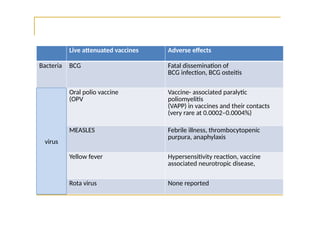
Live attenuated vaccines Adverse effects
Bacteria BCG Fatal dissemination of
BCG infection, BCG osteitis
Oral polio vaccine
(OPV
Vaccine- associated paralytic
poliomyelitis
(VAPP) in vaccines and their contacts
(very rare at 0.0002–0.0004%)
MEASLES Febrile illness, thrombocytopenic
purpura, anaphylaxis
Yellow fever Hypersensitivity reaction, vaccine
associated neurotropic disease,
Rota virus None reported
virus
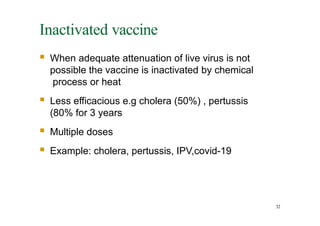
Inactivated vaccine
32
 When adequate attenuation of live virus is not
possible the vaccine is inactivated by chemical
process or heat
 Less efficacious e.g cholera (50%) , pertussis
(80% for 3 years
 Multiple doses
 Example: cholera, pertussis, IPV,covid-19
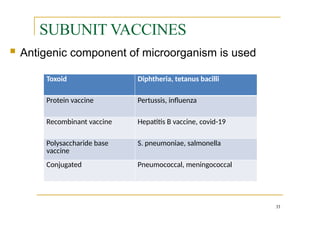
SUBUNIT VACCINES
33
 Antigenic component of microorganism is used
Toxoid Diphtheria, tetanus bacilli
Protein vaccine Pertussis, influenza
Recombinant vaccine Hepatitis B vaccine, covid-19
Polysaccharide base
vaccine
S. pneumoniae, salmonella
Conjugated Pneumococcal, meningococcal
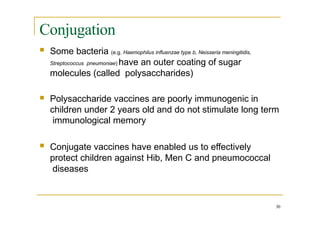
Conjugation
 Some bacteria (e.g. Haemophilus influenzae type b, Neisseria meningitidis,
Streptococcus pneumoniae) have an outer coating of sugar
molecules (called polysaccharides)
 Polysaccharide vaccines are poorly immunogenic in
children under 2 years old and do not stimulate long term
immunological memory
 Conjugate vaccines have enabled us to effectively
protect children against Hib, Men C and pneumococcal
diseases
30
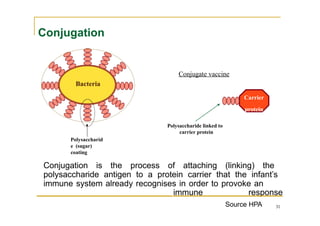
Carrier
protein
Polysaccharide linked to
carrier protein
Conjugate vaccine
Bacteria
Polysaccharid
e (sugar)
coating
Conjugation
Conjugation is the process of attaching (linking) the
polysaccharide antigen to a protein carrier that the infant’s
immune system already recognises in order to provoke an
immune response
Source HPA 31
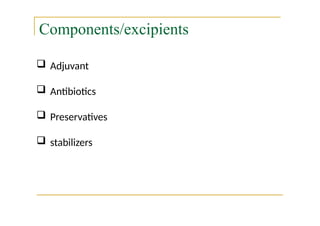
Components/excipients
 Adjuvant
 Antibiotics
 Preservatives
 stabilizers
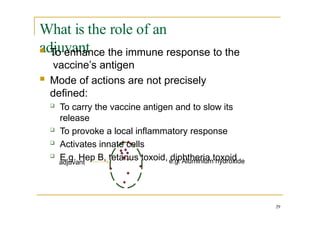
What is the role of an
adjuvant
 To enhance the immune response to the
vaccine’s antigen
 Mode of actions are not precisely
defined:
 To carry the vaccine antigen and to slow its
release
 To provoke a local inflammatory response
 Activates innate cells
 E.g. Hep B, tetanus toxoid, diphtheria toxoid
adjuvant e.g. Aluminium hydroxide
29
Examples of Vaccines
32
Live Attenuated Vaccines
 Disadvantage
 May reproduce features of the disease
as sub- clinical or mild form of the
infection
 May revert to virulent form (e.g.
OPV)
 Cannot be given to
immunosuppressed or pregnant
patients
39
 Advantage
 Potent, response close to
the optimal naturally
acquired immune response
Inactive Vaccines
40
 Advantages
 Cannot cause infection
 Can be given to
immunosuppressed and
pregnant individuals
 Disadvantages
 Less immunogenic and
require addition of
adjuvants and booster
doses
Do vaccines overload the immune
system?
41
 Within hours of birth, a baby’s gastrointestinal &
respiratory tract are heavily colonised with bacteria
 Rather than overwhelming the immune system, vaccines
help stimulate and strengthen it
 Immune systems need stimulation to develop well:
allergies may result from too little immune stimulation in
our cleaner environments
 There is no evidence that vaccines can overload the
immune system. The immune system is designed to deal
with a constant stream of foreign antigens on the
surface and inside our bodies.
Vaccine failures
42
 Primary failure
 an individual fails to make an adequate immune
response to the initial vaccination (e.g. in about 10%
of measles and mumps vaccine recipients)
 Infection possible any time post vaccination
 Secondary failure
 an individual makes an adequate immune response
initially but then immunity wanes over time
 a feature of most inactivated vaccines, hence the need
for boosters
Immunoglobulins
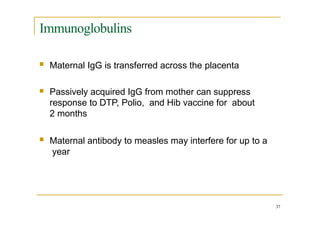
 Maternal IgG is transferred across the placenta
 Passively acquired IgG from mother can suppress
response to DTP, Polio, and Hib vaccine for about
2 months
 Maternal antibody to measles may interfere for up to a
year
37
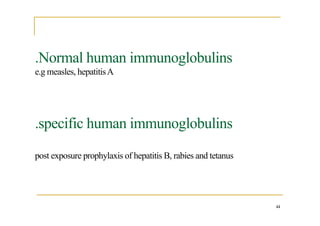
.Normal human immunoglobulins
e.g measles, hepatitisA
.specific human immunoglobulins
post exposure prophylaxis of hepatitis B, rabies and tetanus
44
45
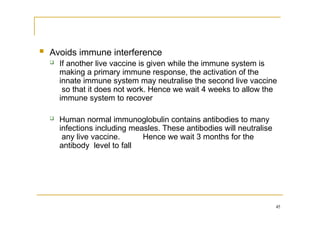
 Avoids immune interference
 If another live vaccine is given while the immune system is
making a primary immune response, the activation of the
innate immune system may neutralise the second live vaccine
so that it does not work. Hence we wait 4 weeks to allow the
immune system to recover
 Human normal immunoglobulin contains antibodies to many
infections including measles. These antibodies will neutralise
any live vaccine. Hence we wait 3 months for the
antibody level to fall
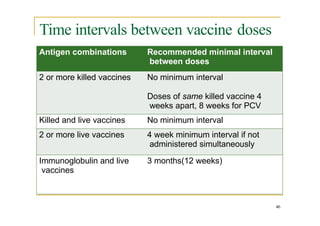
Time intervals between vaccine doses
46
Antigen combinations Recommended minimal interval
between doses
2 or more killed vaccines No minimum interval
Doses of same killed vaccine 4
weeks apart, 8 weeks for PCV
Killed and live vaccines No minimum interval
2 or more live vaccines 4 week minimum interval if not
administered simultaneously
Immunoglobulin and live
vaccines
3 months(12 weeks)
Adverse event following immunization (AEFI)
47
 Vaccine reaction
 Immunization error
 Co-incident
Brain stroming
Some vaccines against bacterial infections contain inactivated
substances or chemicals (toxins and other compounds) that those
bacteria make.
A. True
B. False
Fever and soreness at the site of the injection are two mild
reactions that may occur after getting a vaccine.
A. True
B. False
Dynamics of transmission
49
 If an infection is to persist, each infected
individual must, on average, transmit that
infection to at least one other individual.
If this does not occur, the infection will
disappear progressively from the population
What is herd
immunity?
50
 The indirect protection from infection of
susceptible members of the population, and
the protection of the population as a whole,
which is brought about by the presence of
immune individuals
Herd immunity
51
 To achieve herd immunity the percentage of
individuals who need to be vaccinated
depends on the disease and the vaccines
used.
 Only for transmissible infectious diseases
Why herd immunity is
important
 No vaccine is 100% effective e.g. measles
vaccine is 90- 95% effective so out of every 100
children given the vaccine 5-10 will not be
protected
 Some people unable to receive live vaccines e.g
the immunocompromised
 Herd immunity is the most effective way of
protecting people who do not respond to
vaccines or can’t be given them for medical
reasons
48
example
Polio
Diphtheria
Small pox eradication
Measles
Cold chain
Summar
y
55
1. It is possible to provide passive immunity by using
immunoglobulins or active immunity by using vaccines. There
are different types of vaccine manufactured by different
methods
2. Vaccines contain antigens resembling those of natural
infections and stimulate the immune system to make a primary
response and a memory response . Booster doses of vaccine
reinforce the memory response
3. Knowledge of how vaccines stimulate the immune system can
be applied to answering questions such as scheduling intervals,
age-dependent responses, the basis for non-response in some
individuals, herd immunity and elimination of infection.
56
 kPark Textbook of preventive and social medicine 25th.pdf
 Immunity and How Vaccines Work, NIO
http://www.immunisation.ie/en/Downloads/TrainingManual/PDFFile_16731_en.pdf
 How Vaccines Work, HPA, UK
www.hpa.org.uk/webc/hpawebfile/hpaweb_c/1279888300493
 Core Topic 2 Training Slides, HPA, UK 2012
http://www.hpa.org.uk/EventsProfessionalTraining/HealthProtectionAcademy/AdditionalOpportunitiesAndInformation/ImmunisationTrainingResources/hp
acadvacc05SlideSetsforCoreCurriculumTeaching/
 Concepts of Immunity, HPA
www.hpa.org.uk/webc/HPAwebFile/HPAweb_C/1279889319696
 How Vaccines Work, NIH – National Institute of Allergy and
Infectious Disease US
www.niaid.nih.gov/topics/vaccines/understanding/pages/howwork.aspx
 The Science of Immunisation; Q&A. Australian Academy of Science
2012
www.science.org.au/immunisation.html
 Power Point Lecture Presentations for Biology; 8th Edition, Neil
Campbell & Jane Reece. 2008
https://www.google.ie/url?sa=t&rct=j&q=&esrc=s&source=web&cd=5&cad=rja&ved=0CEcQFjAE&url=http%3A%2F%2Fwww.unc.edu%2Fcourses%2F20
06spring%2Fenvr%2F133%2F001%2FENVR133_Lecture9.ppt&ei=wphzUp3CJeqw7Abf5ICIBA&usg=AFQjCNG5vLdm66i_7FmexsigYiui7OG2pA

Immunity and Vaccines LECTURE. pptx

  • 1.
    Immunity Dr. Hala BashirHashmi Community medicine
  • 2.
    Learning objectives 2  ToUNDERSTAND the immune system and how vaccines work in individuals and populations  UNDERSTAND following terms:  immunity, immunization,  Vaccine, Vaccination  Antibody , antigen  Herd immunity
  • 3.
    Learning Objectives 3  Tounderstand the differences between Passive and Active immunity  To understand how vaccines work  To understand the differences between inactivated vaccines, toxoids and live vaccines  Vaccination reactions, indications and contraindications
  • 4.
    Definitions: • Immune system= cells, tissues, and molecules that mediate resistance to infections • Immunology = study of structure and function of the immune system • “ it is a branch of biomedical science that covers the study of all aspects of the immune system in all organisms”
  • 5.
    • Immunity =resistance of a host to pathogens and their toxic effects • “Immunity is a biological term that describes a state of having sufficient biological defenses to avoid infection, disease or other unwanted biological invasion” • Immune response = collective and coordinated response to the introduction of foreign substances in an individual mediated by the cells and molecules of the immune system
  • 6.
    Antigen 6  A liveor inactivated substance (e.g. protein or polysaccharide) capable of producing an immune response  “Anything that can be bound by an antibody”
  • 7.
    Immunogen: It is asubstance that is able to provoke an adaptive immune response if injected on its own. Immunogenicity: Ability to induce humoral or cell mediated immune response Antigenicity: Ability to combine specifically with the final products of the immune response.
  • 8.
    Immunisation vs. Vaccination 8 Vaccination means administration of antigenic material ( vaccine) to stimulate the immune system to develop adaptive immunity to disease.  Immunization is the process whereby a person is made immune or resistant to an infectious disease, by administration of vaccine. means both receiving a vaccine and becoming immune to a disease, as a result of being vaccinated
  • 9.
  • 10.
    Immune system: Innate(natural) immunity 10  Physical barriers - skin and mucous membranes  Chemical barriers – gastric and digestive enzymes  Cellular and Protein secretions – lysozyme, complement, interferons, macrophages and white blood cells  Defining characteristic: No memory persists afterwards
  • 11.
    Adaptive (Acquired) immunity 11  Thesecond level of defence  Increases in strength and effectiveness with each encounter  The foreign agent is recognised in a specific manner and the immune system acquires memory of it
  • 12.
    Passive Immunity –adaptive mechanisms 12  Natural  Maternal transfer of antibodies to infant via placenta  Artificial  Administration of pre- formed substance to provide immediate but short-term protection (immunoglobulin, anti- toxin) •Give rapid protection within 48 hours •Protection is temporary and wanes with time (usually few months)
  • 13.
    Passive Immunity 13  Providedby administering Immunoglobulins for post-exposure prophylaxis e.g.  Human Normal Immunoglobulin (HNIG)  Collected from pooled human donations – contains antibodies to infectious agents common in the community,  Hepatitis B immunoglobulin (HBIG),  Varicella Zoster Immunoglobulin(VZIG),  Rabies Immunoglobulin etc.  Involves using a blood derived product
  • 14.
    Active Immunity –adaptive mechanisms 14  Natural  Following contact with the organism  Artificial  Administration of agent to stimulate immune response (vaccination) •Acquired through contact with a micro-organism / antigen e.g chickenpox, measles, rubella. • following subclinical or in apparent infection e.g: polio, diphtheria. •Protection often life-long but may need boosting
  • 16.
    Active immunity 16  Humoral /Antibody mediated  B cells  Cell mediated  T cells  Killer / cytotoxic – destroy infected cells and micro- organisms  Helper – stimulate and direct activity of B cells
  • 17.
    Antibodies 17  Different types IgM, IgG, IgA, IgD, IgE  Each antibody is specific for its antigen – no cross protection  We have millions of different antibodies  When B cells come into contact with their matching antigen, they are stimulated to divide into larger cells called plasma cells, which secrete huge amounts of antibodies
  • 18.
    Antibodies - functions 18 These antibodies circulate and attack the micro-organisms that have not yet infected cells  Antibodies gather on the micro-organism’s surface  This blocks adhesion / cell entry of the antigen  Neutralises and prevents organism’s replication  Signals (cytokines) macrophages and other wbcs to come  Kills organism via complement proteins – lysis  Neutralises toxin  Goal of vaccines is to stimulate this response
  • 19.
    Ig G • 80%of total immunoglobulin • Secreted in high quantities in secondary exposures • Cross the placenta • Major functions • neutralize microbes and toxins • opsonize antigens for phagocytosis • activate the complement • protect the newborn • 4-fold rise or fall indicates active infection • A single positive sample indicates past exposure
  • 20.
    Ig M • Secretedinitially during primary infection • 6% of total immunoglobulins • Cannot cross the placenta • Major functions • secreted first during primary exposure • activates the complement •Presence in newborn means infection •Single positive sample in serum or CSF indicates recent or active infection •Used to detect early phase of infection
  • 21.
    Ig A • 13%of immunoglobulins • present in body secretions • it provides primary defense mechanism at the mucous membrane
  • 22.
    Immune response  Primaryimmune response develops after exposure to antigen. latent period (3-10 days) IgM antibody ( next 2-3 DAYS reaches peak & then starts declining) IgG ANTIBODIES are formed( reaches peak in next 7- 10 days and then declines over a period of weeks or month. Memory cells With kind permission from Nick Holmes Source: HPA 20
  • 23.
     Secondary immuneresponse is faster and more powerful  Predominantly IgG antibody  It has shorter latent period  More rapid production of antibody  Response is maintained for longer period of time  Immune response and immunological memory cells are basis of vaccination and revaccination
  • 24.
    Memory cells 24  After thebody has eliminated the infection some of the B and T cells are converted into memory cells  These can quickly divide into the specialised B and T cells if re-exposure to the infection occurs  The immune system’s capacity to have a memory of previous encounters with an infection is the basis for vaccination.
  • 25.
  • 26.
    Aim of anideal vaccine 26  To produce the same immune protection which usually follows natural infection but without causing disease  To generate long-lasting immunity  To interrupt spread of infection
  • 27.
    How vaccines work 27  Induceactive immunity  Immunity and immunologic memory similar to natural infection but without risk of disease  Immunological memory allows  Rapid recognition and response to infection  Prevents or modifies effects of disease
  • 28.
    Immune response toan ideal vaccine: 28  Vaccine is taken up by antigen-presenting cells  activates both T and B cells to give memory cells  antigen persists to continue to recruit B memory cells and produce high affinity antibody
  • 29.
    Types of Vaccine 29 LiveAttenuated Live organism with low virulence Inactivated Organism with no virulence Inactivated toxins “Toxoids” Subcellular fraction (incl conjugated vaccines) No virulence Genetically engineered Contains no original antigen product
  • 30.
    Live attenuated vaccines 30  Weakenedviruses / bacteria  Achieved by growing numerous generations in lab  Stimulates immune system to react as it does to natural infection  Produces long lasting immune response after one or two doses  Can cause mild form of the disease e.g. mini measles which is not transmissible  CANNOT be given to immuno-compromised persons  E.g. BCG / MMR / Varicella / Yellow Fever  * when two live vaccines are required:  -either they are given at different sites  -or given with an interval of 3 weeks
  • 31.
    Live attenuated vaccinesAdverse effects Bacteria BCG Fatal dissemination of BCG infection, BCG osteitis Oral polio vaccine (OPV Vaccine- associated paralytic poliomyelitis (VAPP) in vaccines and their contacts (very rare at 0.0002–0.0004%) MEASLES Febrile illness, thrombocytopenic purpura, anaphylaxis Yellow fever Hypersensitivity reaction, vaccine associated neurotropic disease, Rota virus None reported virus
  • 32.
    Inactivated vaccine 32  Whenadequate attenuation of live virus is not possible the vaccine is inactivated by chemical process or heat  Less efficacious e.g cholera (50%) , pertussis (80% for 3 years  Multiple doses  Example: cholera, pertussis, IPV,covid-19
  • 33.
    SUBUNIT VACCINES 33  Antigeniccomponent of microorganism is used Toxoid Diphtheria, tetanus bacilli Protein vaccine Pertussis, influenza Recombinant vaccine Hepatitis B vaccine, covid-19 Polysaccharide base vaccine S. pneumoniae, salmonella Conjugated Pneumococcal, meningococcal
  • 34.
    Conjugation  Some bacteria(e.g. Haemophilus influenzae type b, Neisseria meningitidis, Streptococcus pneumoniae) have an outer coating of sugar molecules (called polysaccharides)  Polysaccharide vaccines are poorly immunogenic in children under 2 years old and do not stimulate long term immunological memory  Conjugate vaccines have enabled us to effectively protect children against Hib, Men C and pneumococcal diseases 30
  • 35.
    Carrier protein Polysaccharide linked to carrierprotein Conjugate vaccine Bacteria Polysaccharid e (sugar) coating Conjugation Conjugation is the process of attaching (linking) the polysaccharide antigen to a protein carrier that the infant’s immune system already recognises in order to provoke an immune response Source HPA 31
  • 36.
  • 37.
    What is therole of an adjuvant  To enhance the immune response to the vaccine’s antigen  Mode of actions are not precisely defined:  To carry the vaccine antigen and to slow its release  To provoke a local inflammatory response  Activates innate cells  E.g. Hep B, tetanus toxoid, diphtheria toxoid adjuvant e.g. Aluminium hydroxide 29
  • 38.
  • 39.
    Live Attenuated Vaccines Disadvantage  May reproduce features of the disease as sub- clinical or mild form of the infection  May revert to virulent form (e.g. OPV)  Cannot be given to immunosuppressed or pregnant patients 39  Advantage  Potent, response close to the optimal naturally acquired immune response
  • 40.
    Inactive Vaccines 40  Advantages Cannot cause infection  Can be given to immunosuppressed and pregnant individuals  Disadvantages  Less immunogenic and require addition of adjuvants and booster doses
  • 41.
    Do vaccines overloadthe immune system? 41  Within hours of birth, a baby’s gastrointestinal & respiratory tract are heavily colonised with bacteria  Rather than overwhelming the immune system, vaccines help stimulate and strengthen it  Immune systems need stimulation to develop well: allergies may result from too little immune stimulation in our cleaner environments  There is no evidence that vaccines can overload the immune system. The immune system is designed to deal with a constant stream of foreign antigens on the surface and inside our bodies.
  • 42.
    Vaccine failures 42  Primaryfailure  an individual fails to make an adequate immune response to the initial vaccination (e.g. in about 10% of measles and mumps vaccine recipients)  Infection possible any time post vaccination  Secondary failure  an individual makes an adequate immune response initially but then immunity wanes over time  a feature of most inactivated vaccines, hence the need for boosters
  • 43.
    Immunoglobulins  Maternal IgGis transferred across the placenta  Passively acquired IgG from mother can suppress response to DTP, Polio, and Hib vaccine for about 2 months  Maternal antibody to measles may interfere for up to a year 37
  • 44.
    .Normal human immunoglobulins e.gmeasles, hepatitisA .specific human immunoglobulins post exposure prophylaxis of hepatitis B, rabies and tetanus 44
  • 45.
    45  Avoids immuneinterference  If another live vaccine is given while the immune system is making a primary immune response, the activation of the innate immune system may neutralise the second live vaccine so that it does not work. Hence we wait 4 weeks to allow the immune system to recover  Human normal immunoglobulin contains antibodies to many infections including measles. These antibodies will neutralise any live vaccine. Hence we wait 3 months for the antibody level to fall
  • 46.
    Time intervals betweenvaccine doses 46 Antigen combinations Recommended minimal interval between doses 2 or more killed vaccines No minimum interval Doses of same killed vaccine 4 weeks apart, 8 weeks for PCV Killed and live vaccines No minimum interval 2 or more live vaccines 4 week minimum interval if not administered simultaneously Immunoglobulin and live vaccines 3 months(12 weeks)
  • 47.
    Adverse event followingimmunization (AEFI) 47  Vaccine reaction  Immunization error  Co-incident
  • 48.
    Brain stroming Some vaccinesagainst bacterial infections contain inactivated substances or chemicals (toxins and other compounds) that those bacteria make. A. True B. False Fever and soreness at the site of the injection are two mild reactions that may occur after getting a vaccine. A. True B. False
  • 49.
    Dynamics of transmission 49 If an infection is to persist, each infected individual must, on average, transmit that infection to at least one other individual. If this does not occur, the infection will disappear progressively from the population
  • 50.
    What is herd immunity? 50 The indirect protection from infection of susceptible members of the population, and the protection of the population as a whole, which is brought about by the presence of immune individuals
  • 51.
    Herd immunity 51  Toachieve herd immunity the percentage of individuals who need to be vaccinated depends on the disease and the vaccines used.  Only for transmissible infectious diseases
  • 52.
    Why herd immunityis important  No vaccine is 100% effective e.g. measles vaccine is 90- 95% effective so out of every 100 children given the vaccine 5-10 will not be protected  Some people unable to receive live vaccines e.g the immunocompromised  Herd immunity is the most effective way of protecting people who do not respond to vaccines or can’t be given them for medical reasons 48
  • 53.
  • 54.
  • 55.
    Summar y 55 1. It ispossible to provide passive immunity by using immunoglobulins or active immunity by using vaccines. There are different types of vaccine manufactured by different methods 2. Vaccines contain antigens resembling those of natural infections and stimulate the immune system to make a primary response and a memory response . Booster doses of vaccine reinforce the memory response 3. Knowledge of how vaccines stimulate the immune system can be applied to answering questions such as scheduling intervals, age-dependent responses, the basis for non-response in some individuals, herd immunity and elimination of infection.
  • 56.
    56  kPark Textbookof preventive and social medicine 25th.pdf  Immunity and How Vaccines Work, NIO http://www.immunisation.ie/en/Downloads/TrainingManual/PDFFile_16731_en.pdf  How Vaccines Work, HPA, UK www.hpa.org.uk/webc/hpawebfile/hpaweb_c/1279888300493  Core Topic 2 Training Slides, HPA, UK 2012 http://www.hpa.org.uk/EventsProfessionalTraining/HealthProtectionAcademy/AdditionalOpportunitiesAndInformation/ImmunisationTrainingResources/hp acadvacc05SlideSetsforCoreCurriculumTeaching/  Concepts of Immunity, HPA www.hpa.org.uk/webc/HPAwebFile/HPAweb_C/1279889319696  How Vaccines Work, NIH – National Institute of Allergy and Infectious Disease US www.niaid.nih.gov/topics/vaccines/understanding/pages/howwork.aspx  The Science of Immunisation; Q&A. Australian Academy of Science 2012 www.science.org.au/immunisation.html  Power Point Lecture Presentations for Biology; 8th Edition, Neil Campbell & Jane Reece. 2008 https://www.google.ie/url?sa=t&rct=j&q=&esrc=s&source=web&cd=5&cad=rja&ved=0CEcQFjAE&url=http%3A%2F%2Fwww.unc.edu%2Fcourses%2F20 06spring%2Fenvr%2F133%2F001%2FENVR133_Lecture9.ppt&ei=wphzUp3CJeqw7Abf5ICIBA&usg=AFQjCNG5vLdm66i_7FmexsigYiui7OG2pA