Did you know your body fights off millions of invaders
every day—without you even noticing?"
"Today,we’re going to explore how this incredible system works inside us and act likes
a superhero team working 24/7 to protect us"
In the early 1900s,smallpox infected and killed millions worldwide.It was one of
the deadliest diseases in human history. Today,thanks to vaccines, smallpox is
completely eradicated
“In the early 1900s,polio paralyzed thousands of children worldwide. Today,
thanks to vaccines,polio is nearly eradicated.
“Imagine two students.One gets sick all the time,the other rarely does.
What’s their secret?
It’s all about immunity!”
- Dr. Jatin Chhaya
Immunity & Immunizing Agents
Question can be asked
Short Note:
 LiveVaccine
 KilledVaccine
 Live vaccineVs KilledVaccine
 Active Immunity
 Passive Immunity
 Active ImmunityVs Passive Immunity
 Herd immunity
 Immunizing Agents
 Immunoglobulins
What is Immunity and its Type?
 Immunity is the body's defense mechanism against harmful
pathogens, such as bacteria, viruses, fungi, and toxins.
 It enables the body to identify and eliminate these invaders,
preventing infections and maintaining overall health.
There are two main types of immunity: innate immunity and
adaptive immunity.
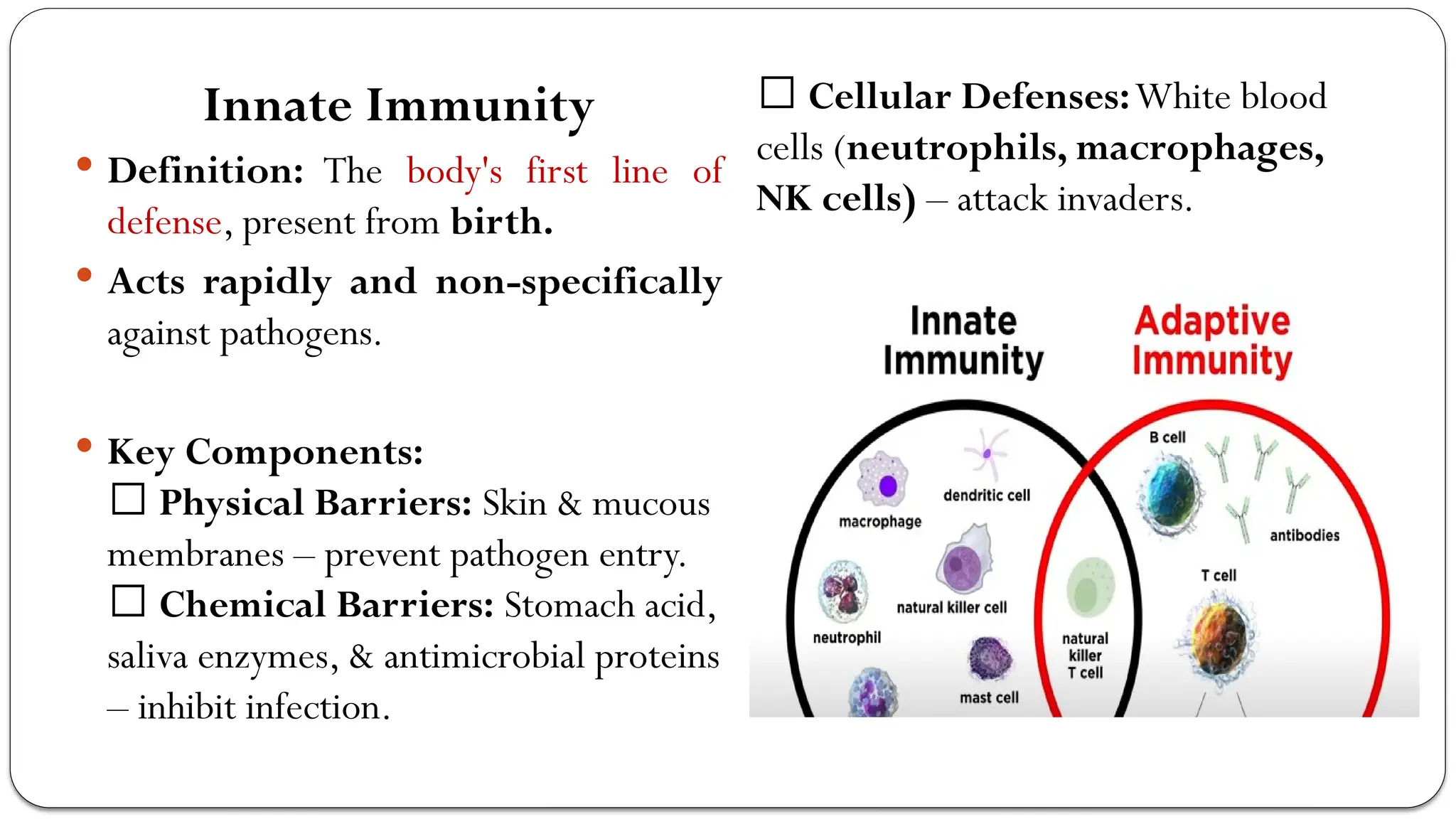
Innate Immunity
 Definition: The body's first line of
defense, present from birth.
 Acts rapidly and non-specifically
against pathogens.
 Key Components:
✅ Physical Barriers: Skin & mucous
membranes – prevent pathogen entry.
✅ Chemical Barriers: Stomach acid,
saliva enzymes, & antimicrobial proteins
– inhibit infection.
✅ Cellular Defenses:White blood
cells (neutrophils, macrophages,
NK cells) – attack invaders.
Adaptive(Acquired) Immunity
 Develops over time when the
body is exposed to pathogens or
through vaccination.
 Involves memory cells that
recognize and respond faster
to the same infection in the future.
 Example: Once you get
chickenpox, your body
“remembers” the virus and
prevents reinfection.
 This specific defense discuss for the
convenience under heading of Active
and Passive immunity.
 Active Immunity (Long-Lasting,
Self-Developed)
 Acquired through exposure to
pathogens (e.g., infection or
vaccination).
 Naturally Acquired Active
Immunity
 immunity that develops when an
individual is exposed to a pathogen in the
natural environment.
 exposure triggers the immune system to
recognize the pathogen and mount a
defense, leading to the production of
memory cells for long-term immunity.
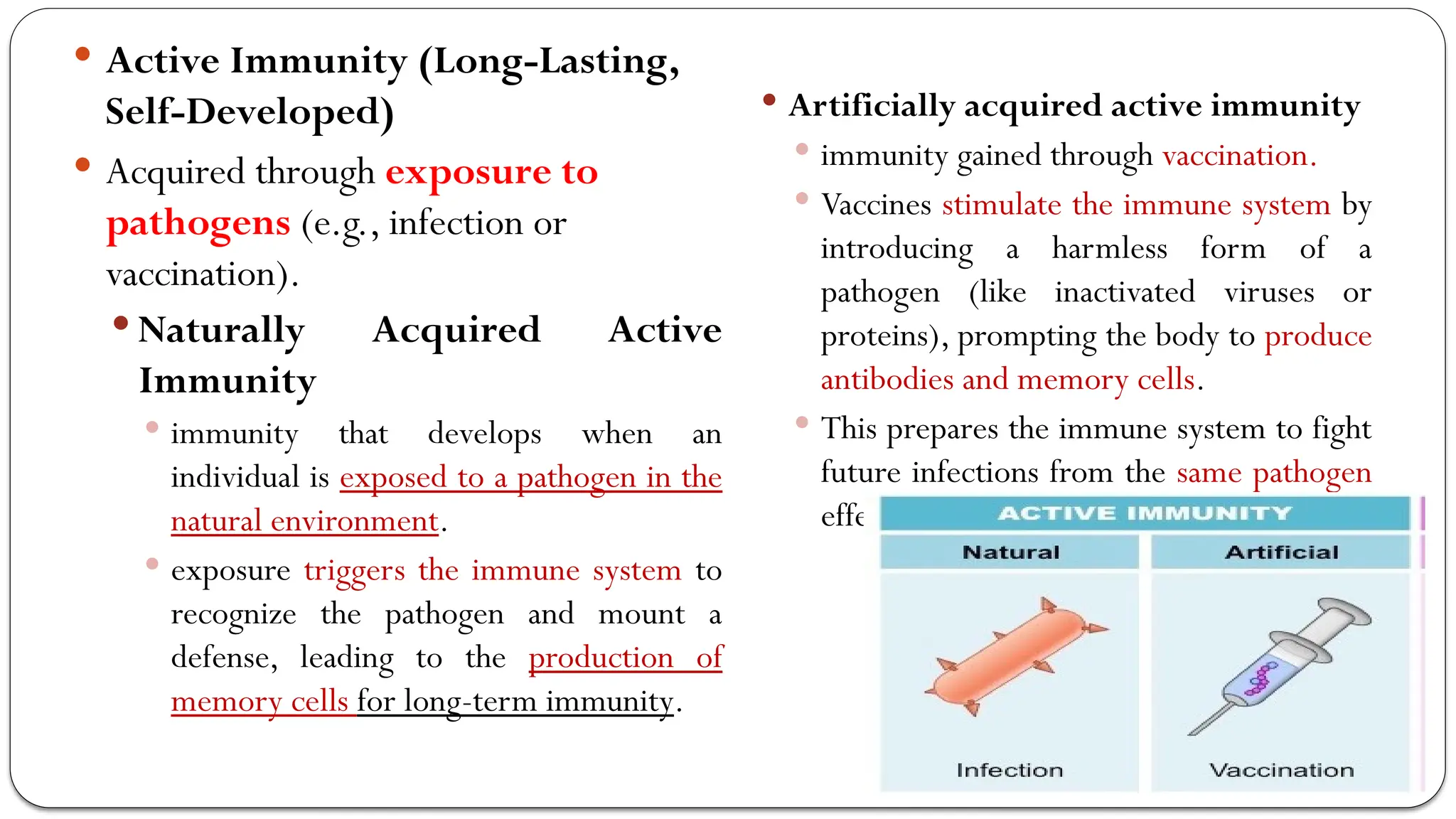
 Artificially acquired active immunity
 immunity gained through vaccination.
 Vaccines stimulate the immune system by
introducing a harmless form of a
pathogen (like inactivated viruses or
proteins), prompting the body to produce
antibodies and memory cells.
 This prepares the immune system to fight
future infections from the same pathogen
effectively.
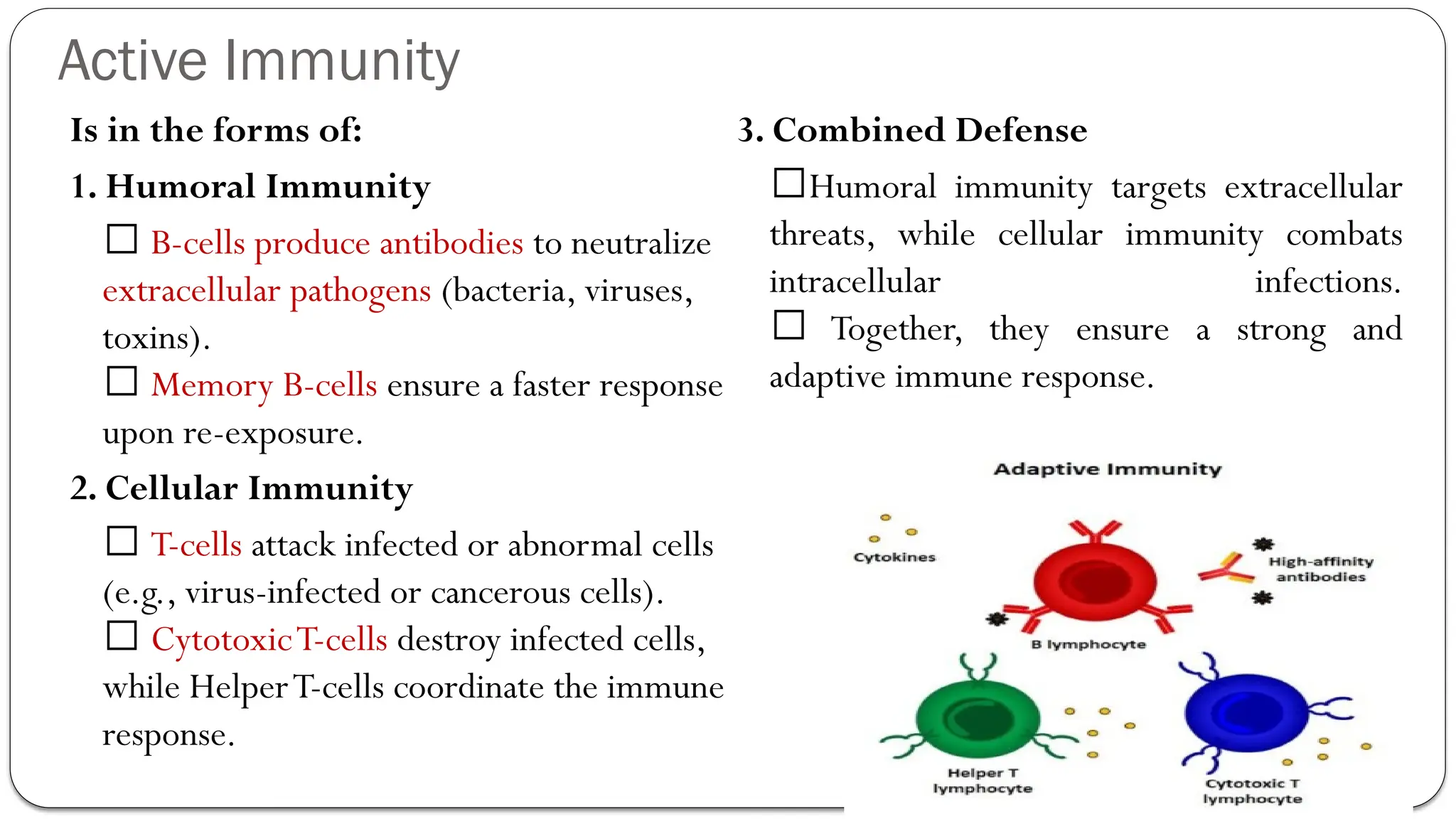
Active Immunity
Is in the forms of:
1. Humoral Immunity
🔹 B-cells produce antibodies to neutralize
extracellular pathogens (bacteria, viruses,
toxins).
🔹 Memory B-cells ensure a faster response
upon re-exposure.
2. Cellular Immunity
🔹 T-cells attack infected or abnormal cells
(e.g., virus-infected or cancerous cells).
🔹 CytotoxicT-cells destroy infected cells,
while HelperT-cells coordinate the immune
response.
3. Combined Defense
🔹Humoral immunity targets extracellular
threats, while cellular immunity combats
intracellular infections.
🔹 Together, they ensure a strong and
adaptive immune response.
 Passive Immunity (Temporary,
Received from Another Source)
 transfer of active immunity in the form
of readymade antibodies from one
individual to another.
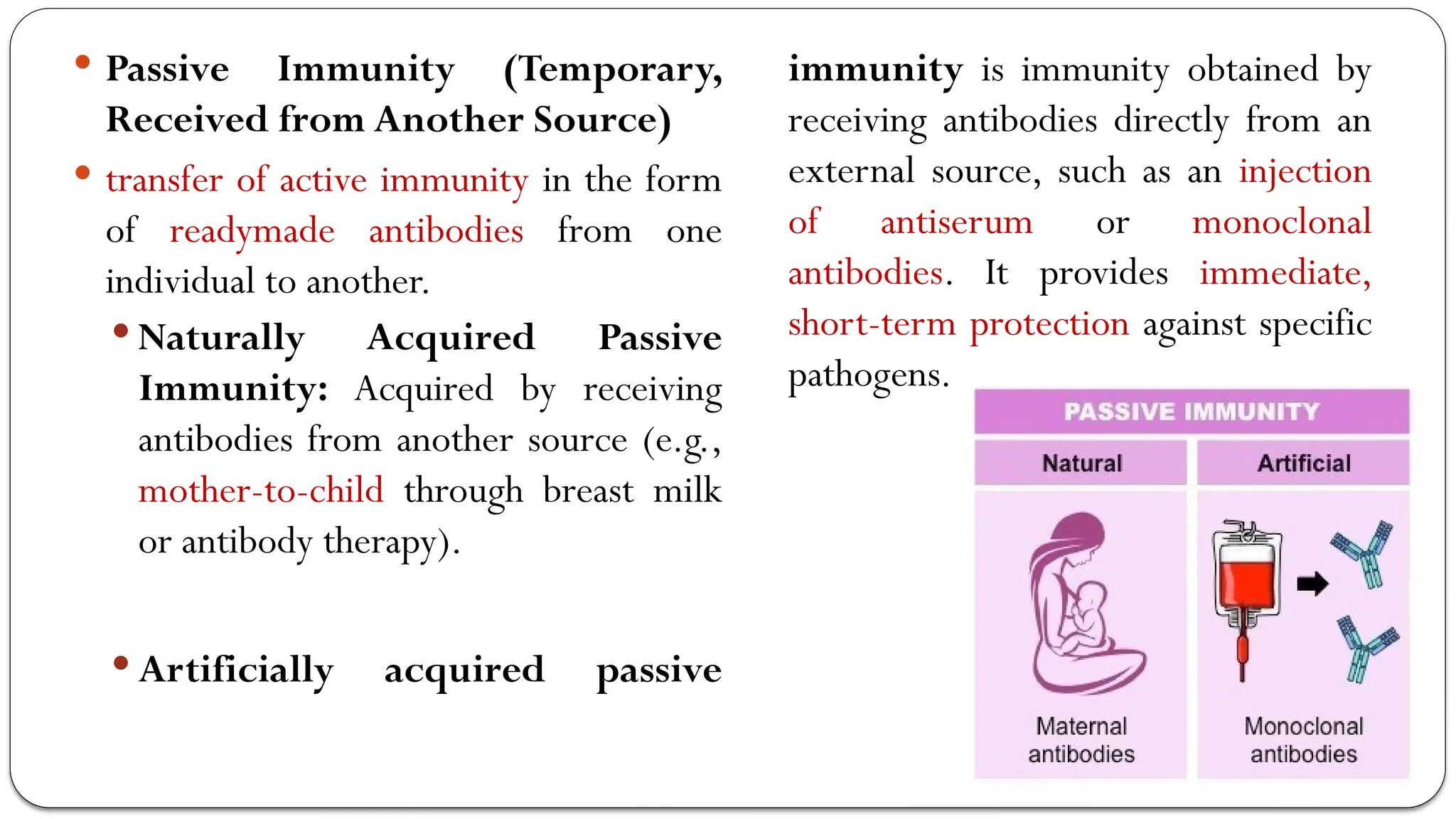
 Naturally Acquired Passive
Immunity: Acquired by receiving
antibodies from another source (e.g.,
mother-to-child through breast milk
or antibody therapy).
 Artificially acquired passive
immunity is immunity obtained by
receiving antibodies directly from an
external source, such as an injection
of antiserum or monoclonal
antibodies. It provides immediate,
short-term protection against specific
pathogens.
Passive Immunity:
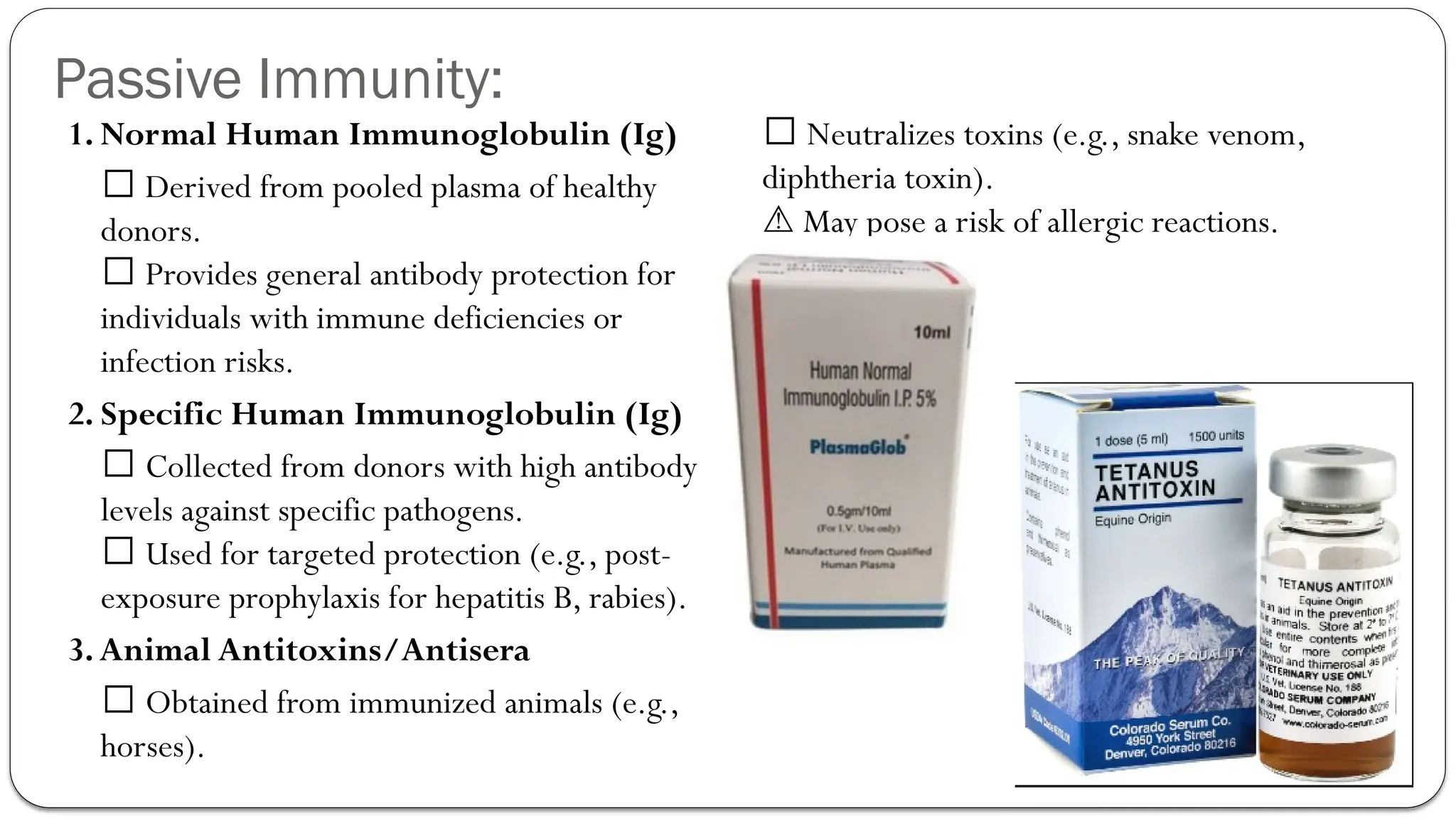
1. Normal Human Immunoglobulin (Ig)
✅ Derived from pooled plasma of healthy
donors.
✅ Provides general antibody protection for
individuals with immune deficiencies or
infection risks.
2. Specific Human Immunoglobulin (Ig)
✅ Collected from donors with high antibody
levels against specific pathogens.
✅ Used for targeted protection (e.g., post-
exposure prophylaxis for hepatitis B, rabies).
3.Animal Antitoxins/Antisera
✅ Obtained from immunized animals (e.g.,
horses).
✅ Neutralizes toxins (e.g., snake venom,
diphtheria toxin).
May pose a risk of allergic reactions.
⚠️
Herd Immunity
13
 Level of resistance of a community or group of people to a particular disease.
 Provides an immunological barrier to the spread of disease in
population
E.g. when an infectious disease is introduced in ‘virgin’ population, with a very
low or no immunity, the attack and the case fatality rates tend to be very high
involving all susceptible.
14
Herd Immunity
15
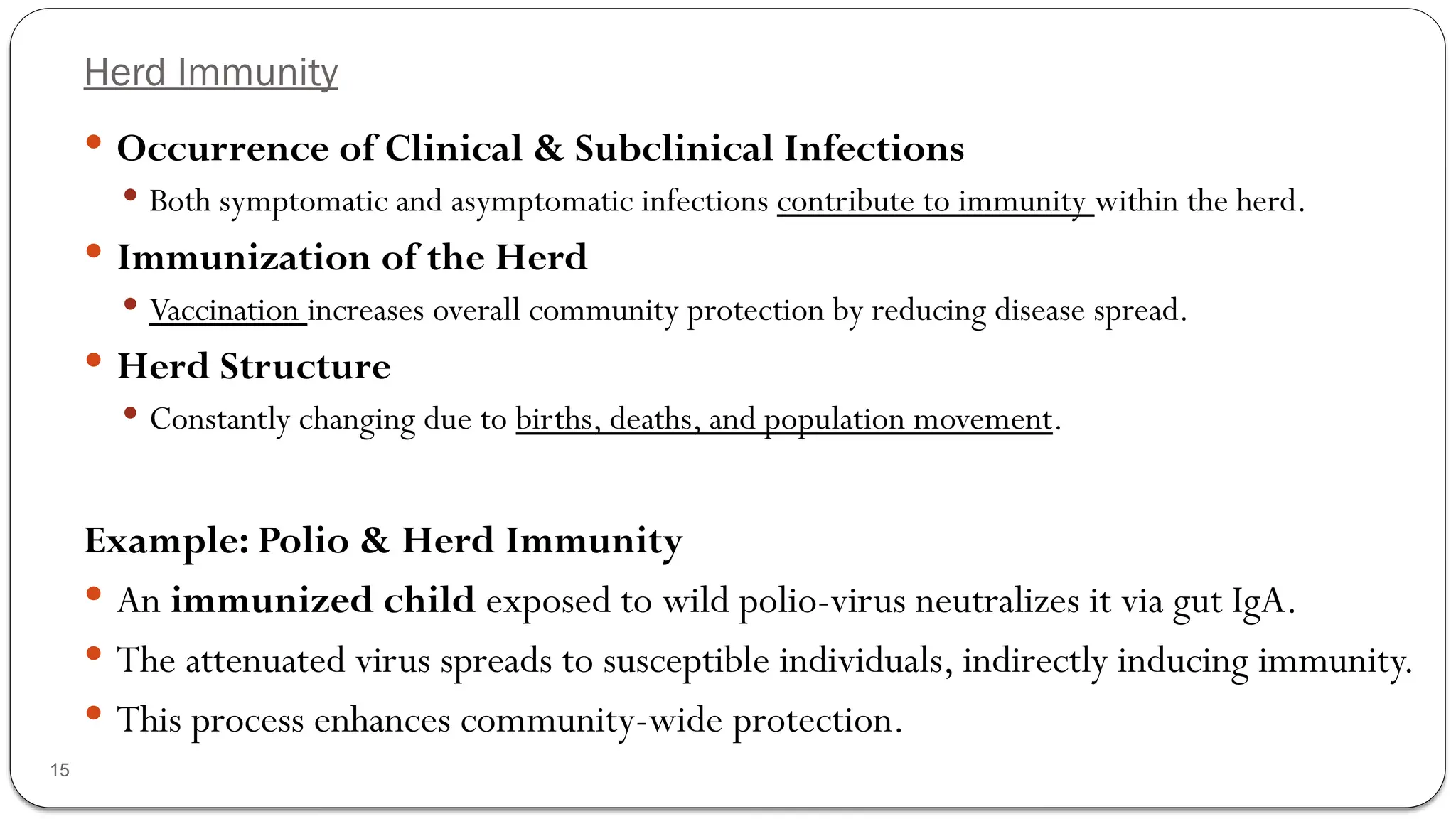
 Occurrence of Clinical & Subclinical Infections
 Both symptomatic and asymptomatic infections contribute to immunity within the herd.
 Immunization of the Herd
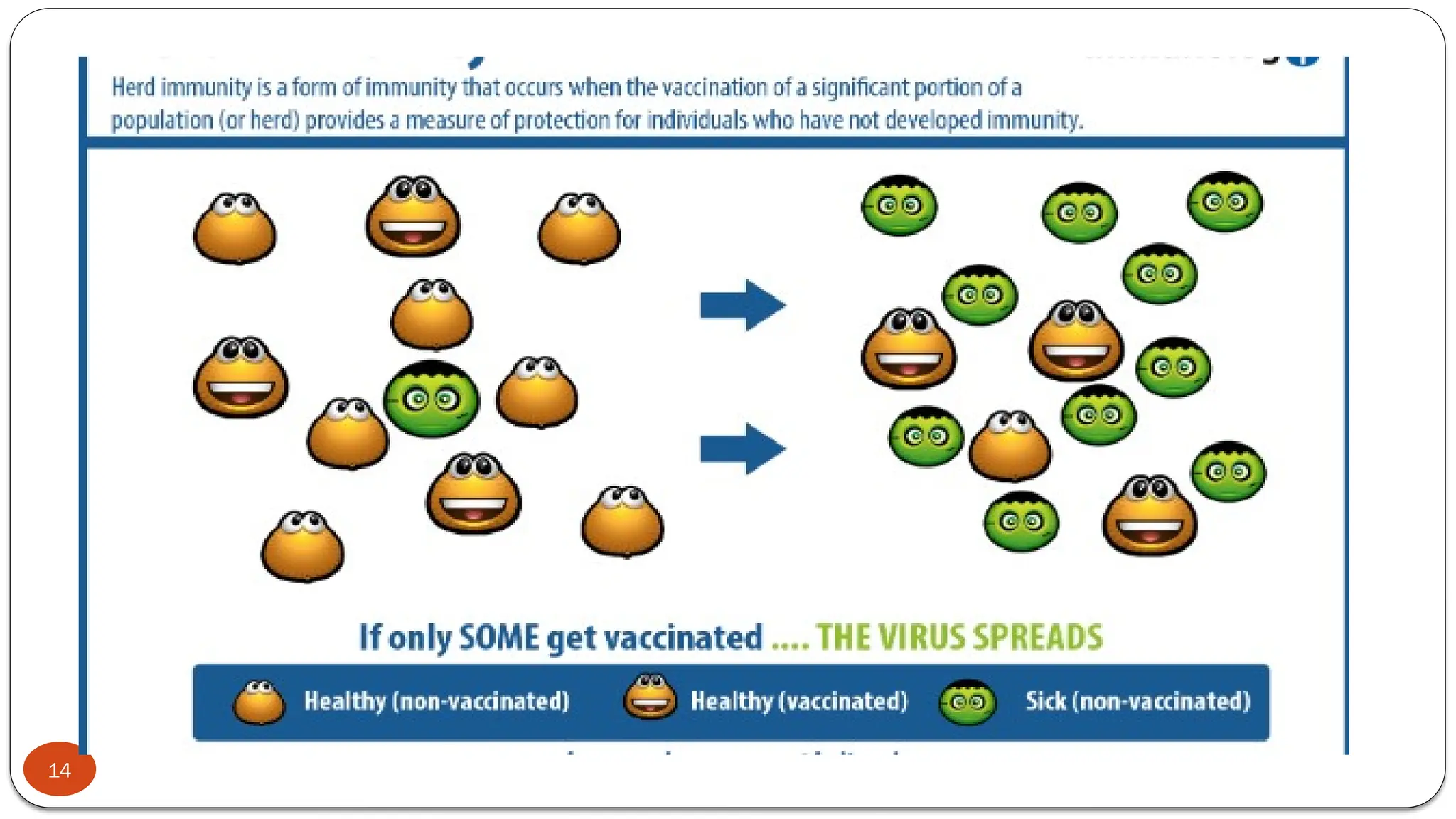
 Vaccination increases overall community protection by reducing disease spread.
 Herd Structure
 Constantly changing due to births, deaths, and population movement.
Example: Polio & Herd Immunity
 An immunized child exposed to wild polio-virus neutralizes it via gut IgA.
 The attenuated virus spreads to susceptible individuals, indirectly inducing immunity.
 This process enhances community-wide protection.
The immunizing agents can be classified as
1. Vaccines,
2. Immunoglobulin and
3. Antisera
IMMUNIZING AGENTS
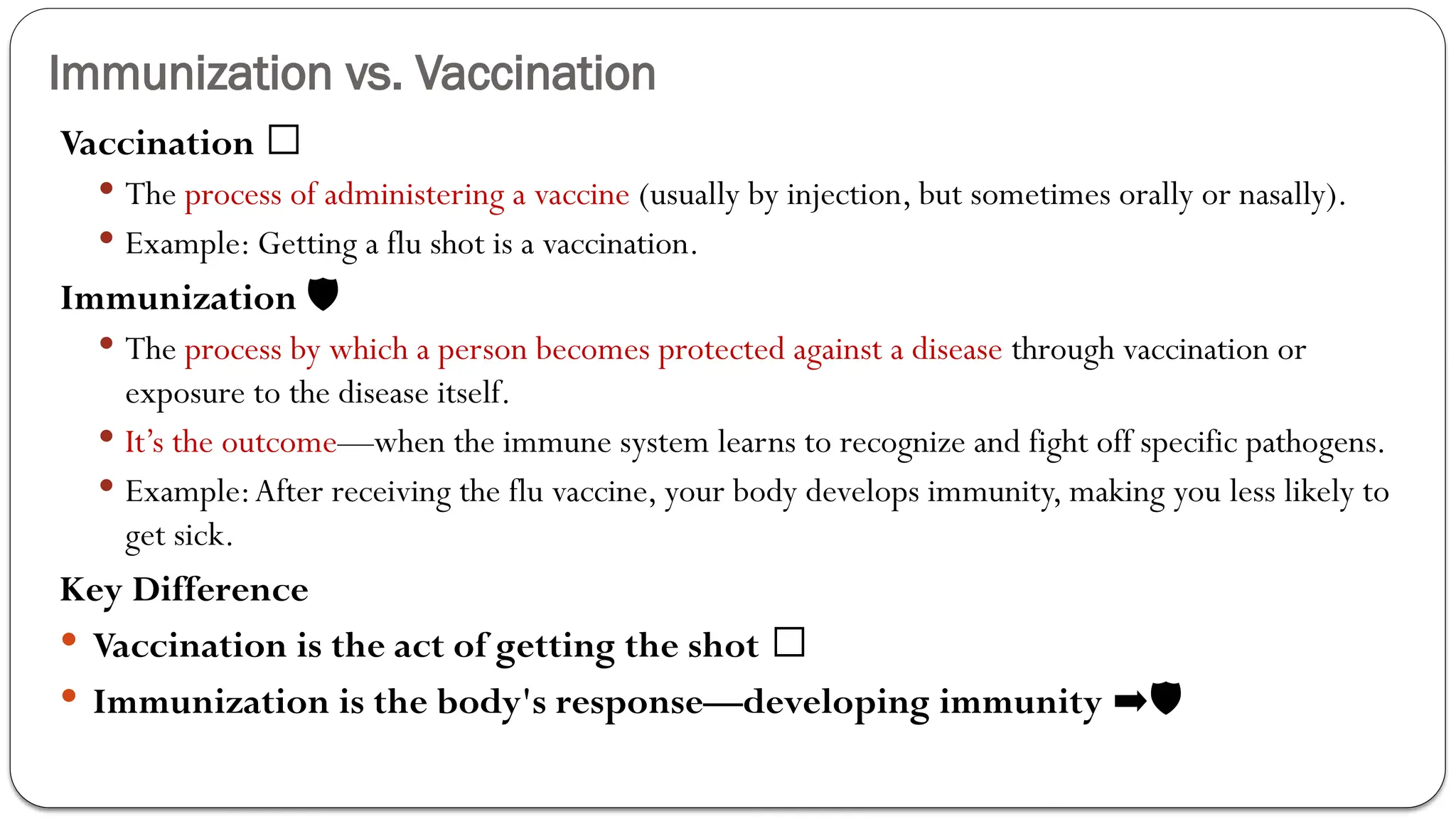
Immunization vs. Vaccination
Vaccination 🏥
 The process of administering a vaccine (usually by injection, but sometimes orally or nasally).
 Example: Getting a flu shot is a vaccination.
Immunization 🛡
 The process by which a person becomes protected against a disease through vaccination or
exposure to the disease itself.
 It’s the outcome—when the immune system learns to recognize and fight off specific pathogens.
 Example:After receiving the flu vaccine, your body develops immunity, making you less likely to
get sick.
Key Difference
 Vaccination is the act of getting the shot 💉
 Immunization is the body's response—developing immunity ➡🛡
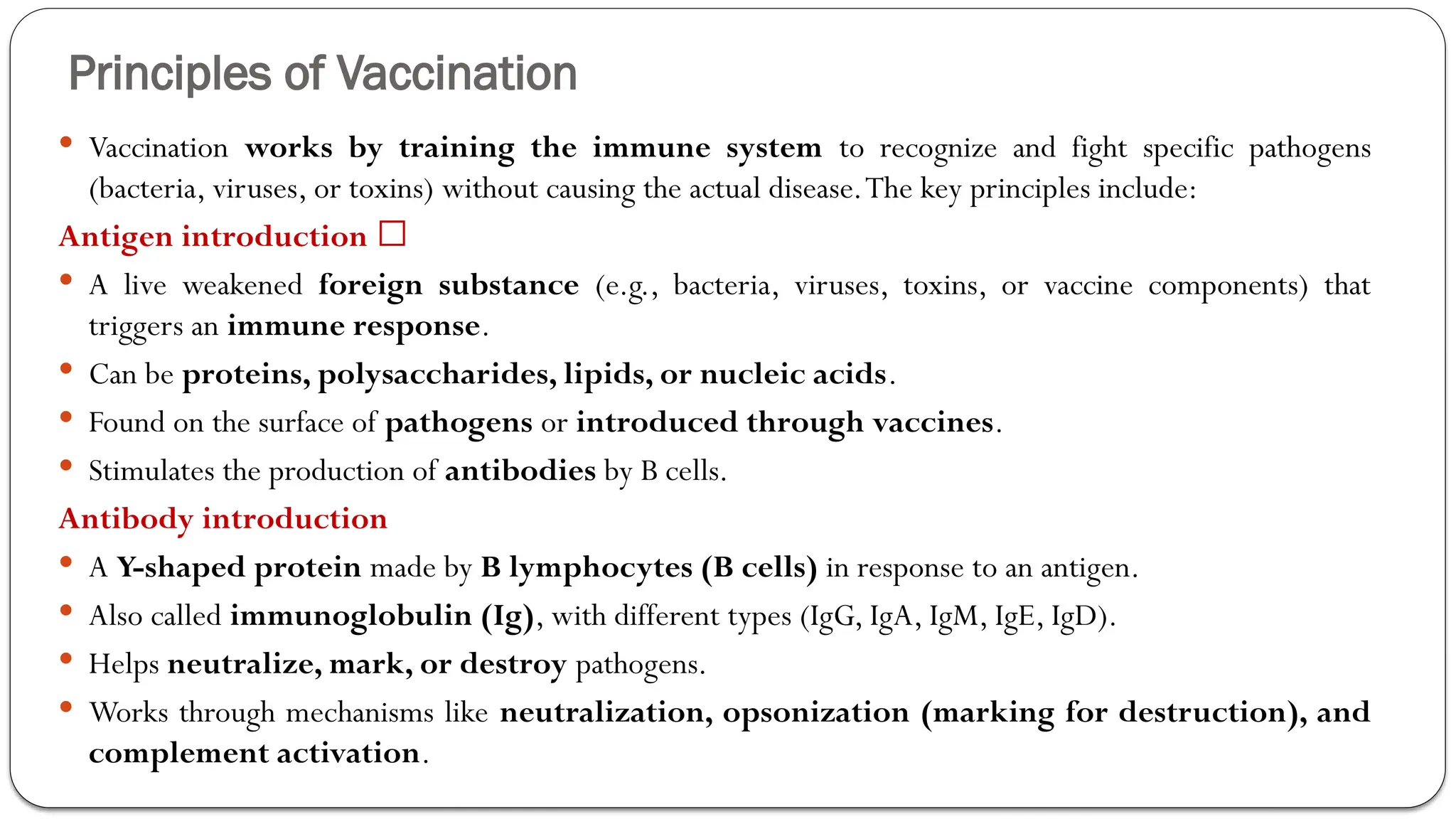
Principles of Vaccination
 Vaccination works by training the immune system to recognize and fight specific pathogens
(bacteria, viruses, or toxins) without causing the actual disease.The key principles include:
Antigen introduction 🦠
 A live weakened foreign substance (e.g., bacteria, viruses, toxins, or vaccine components) that
triggers an immune response.
 Can be proteins, polysaccharides, lipids, or nucleic acids.
 Found on the surface of pathogens or introduced through vaccines.
 Stimulates the production of antibodies by B cells.
Antibody introduction
 A Y-shaped protein made by B lymphocytes (B cells) in response to an antigen.
 Also called immunoglobulin (Ig), with different types (IgG, IgA, IgM, IgE, IgD).
 Helps neutralize, mark, or destroy pathogens.
 Works through mechanisms like neutralization, opsonization (marking for destruction), and
complement activation.
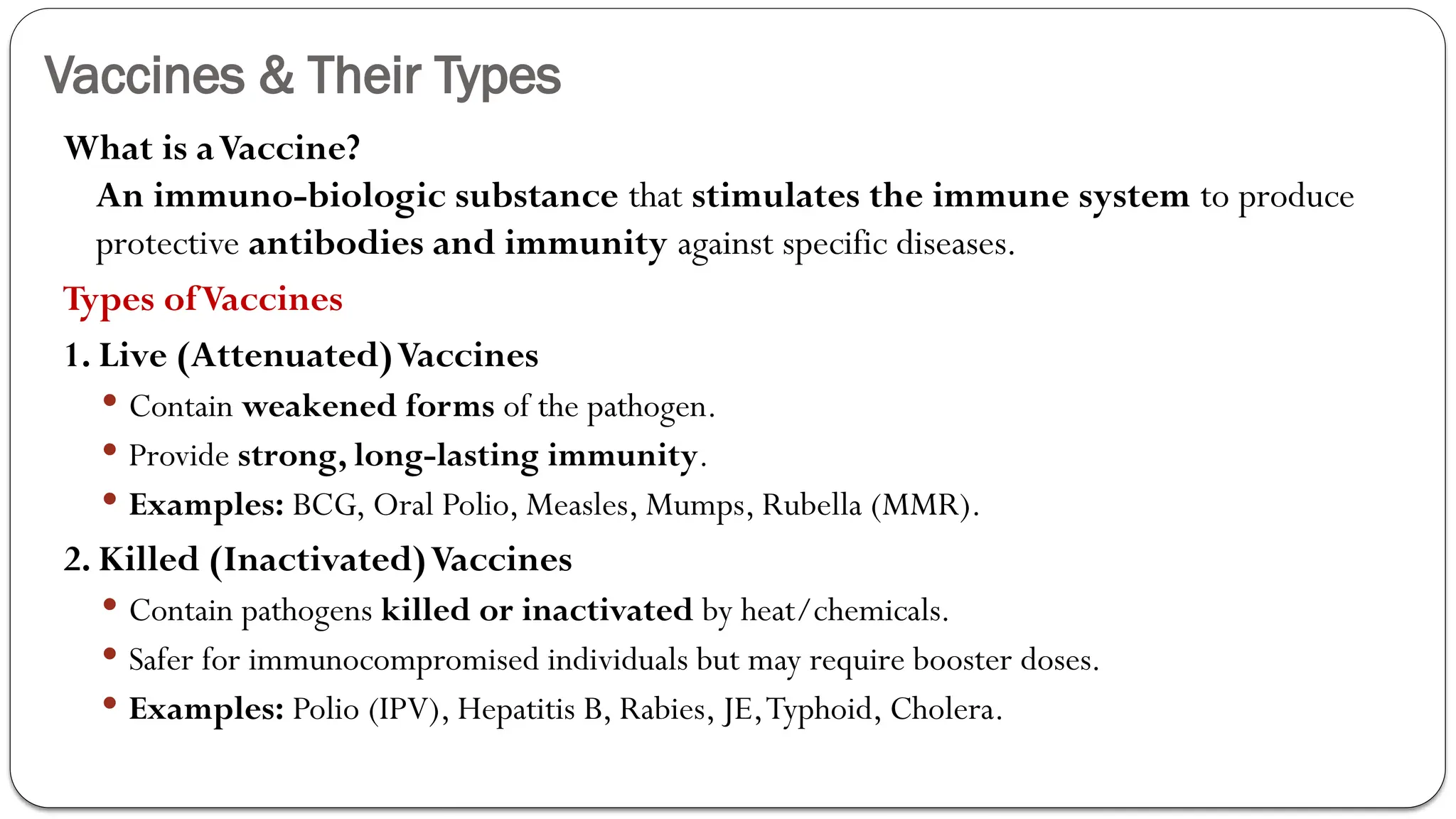
Vaccines & Their Types
What is aVaccine?
An immuno-biologic substance that stimulates the immune system to produce
protective antibodies and immunity against specific diseases.
Types ofVaccines
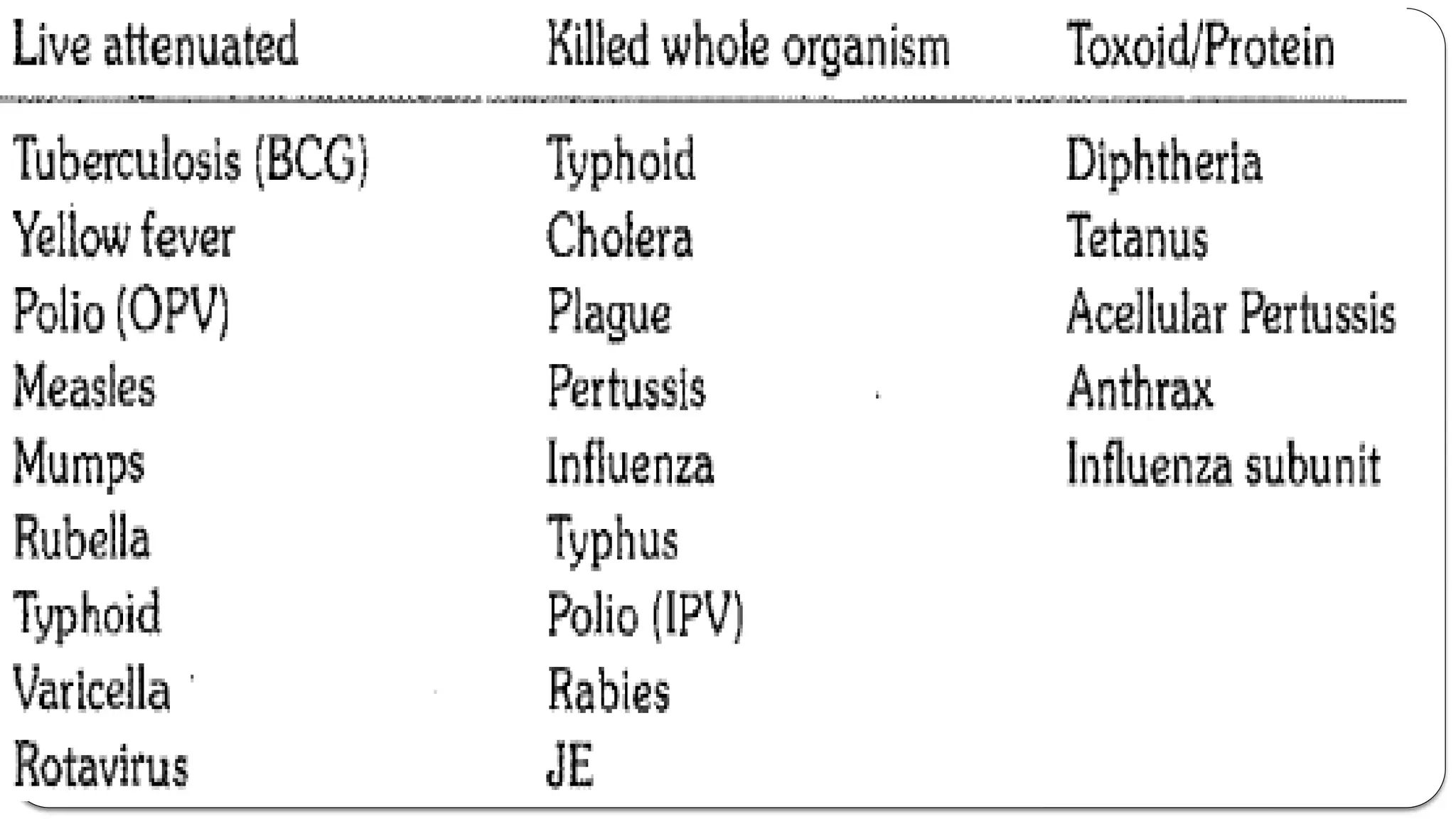
1. Live (Attenuated)Vaccines
 Contain weakened forms of the pathogen.
 Provide strong, long-lasting immunity.
 Examples: BCG, Oral Polio, Measles, Mumps, Rubella (MMR).
2. Killed (Inactivated)Vaccines
 Contain pathogens killed or inactivated by heat/chemicals.
 Safer for immunocompromised individuals but may require booster doses.
 Examples: Polio (IPV), Hepatitis B, Rabies, JE,Typhoid, Cholera.
3. Subunit vaccines:
Toxoids
✅ Contain inactivated toxins produced by pathogens.
✅ Stimulate immunity against the toxin, not the organism.
✅ Examples:Tetanus, Diphtheria toxoids.
Cellular FractionVaccines
✅ Use specific components of a pathogen (proteins or polysaccharides).
✅ Examples: Pneumococcal, Meningococcal vaccines.
CombinationVaccines
✅ Contain multiple antigens in a single injection.
✅ Provide protection against multiple diseases.
✅ Example: Pentavalent (Diphtheria,Tetanus, Pertussis, Hepatitis B, Hib).
Live vaccine:
 Live vaccines contain weakened (attenuated)
versions of the pathogen that can replicate in
the body without causing severe disease.
Examples of LiveVaccines
 BCG (for tuberculosis)
 Measles, Mumps, and Rubella (MMR)
 Oral PolioVaccine (OPV)
 Varicella (chickenpox)
 Yellow Fever
 Rotavirus
Why Are LiveVaccines Effective?
 Stronger Immune Response – The
weakened pathogen multiplies inside the
body, providing a higher antigenic dose.
 Engages Different Tissues – Some
vaccines target specific tissues, like the
intestinal mucosa in the case of oral polio.
 Long-Lasting Immunity – A single
dose is often sufficient, but booster doses
ensure full immunity.
Special Considerations & Contraindications 🚨
 Not for Immunocompromised Individuals – Avoid in people with HIV, leukemia,
lymphoma, or those on immunosuppressive therapy.
 Not Recommended During Pregnancy – Unless the risk of infection is higher than
the risk to the fetus.
 Storage Matters – Live vaccines must be kept at proper temperatures to remain effective.
Dosing & Administration
 When two live vaccines are needed, they should be given at the same time (different
sites) or spaced at least 3 weeks apart.
 Some, like measles vaccine, provide 95–98% protection with one dose, but a second dose
ensures full immunity.
 Polio vaccine needs three or more spaced doses for full effectiveness.
Inactivated (Killed)Vaccines 🏥
 Inactivated vaccines are made by growing
viruses or bacteria in culture and then
inactivating (killing) them using heat or
chemicals (e.g., formalin).These vaccines
stimulate an immune response without the
risk of causing disease.
Examples of InactivatedVaccines
 Inactivated PolioVaccine (IPV)
 Hepatitis AVaccine
 RabiesVaccine
 Influenza (Flu Shot, not nasal spray)
 Pertussis (Whooping Cough) – part of
DTaP vaccine
Key Characteristics
 ✅ Safe for immunocompromised
individuals – Since the pathogen is killed, it
cannot replicate in the body.
✅ Cannot cause disease – Unlike live
vaccines, they do not multiply, reducing risks.
❌ Less effective than live vaccines –They
require multiple doses and booster shots to
maintain immunity.
Dose & Efficacy
 Typically requires a primary series of 2–3
doses to generate a strong immune response.
 Booster doses are often required to maintain
long-term protection.
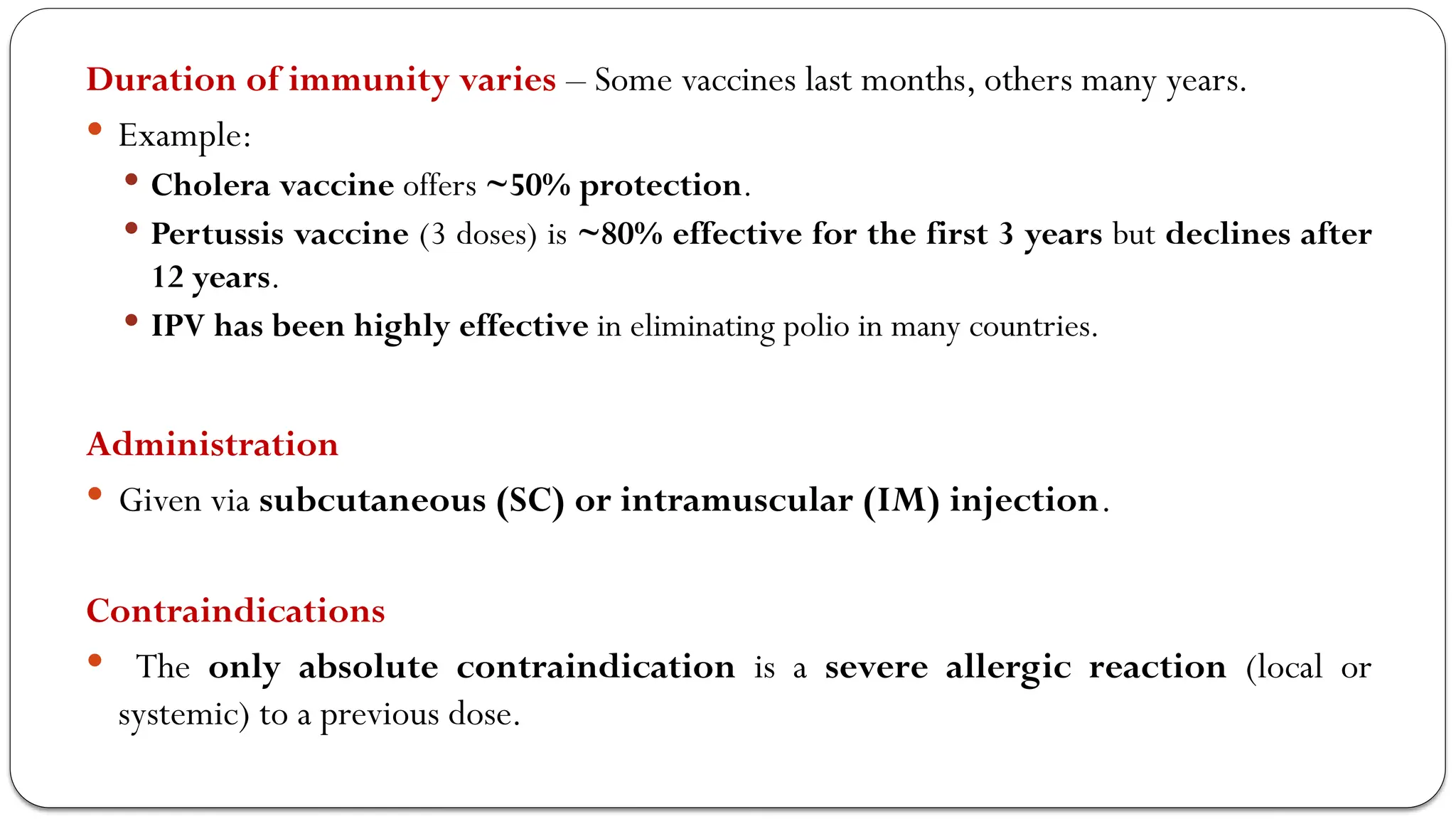
Duration of immunity varies – Some vaccines last months, others many years.
 Example:
 Cholera vaccine offers ~50% protection.
 Pertussis vaccine (3 doses) is ~80% effective for the first 3 years but declines after
12 years.
 IPV has been highly effective in eliminating polio in many countries.
Administration
 Given via subcutaneous (SC) or intramuscular (IM) injection.
Contraindications
 The only absolute contraindication is a severe allergic reaction (local or
systemic) to a previous dose.
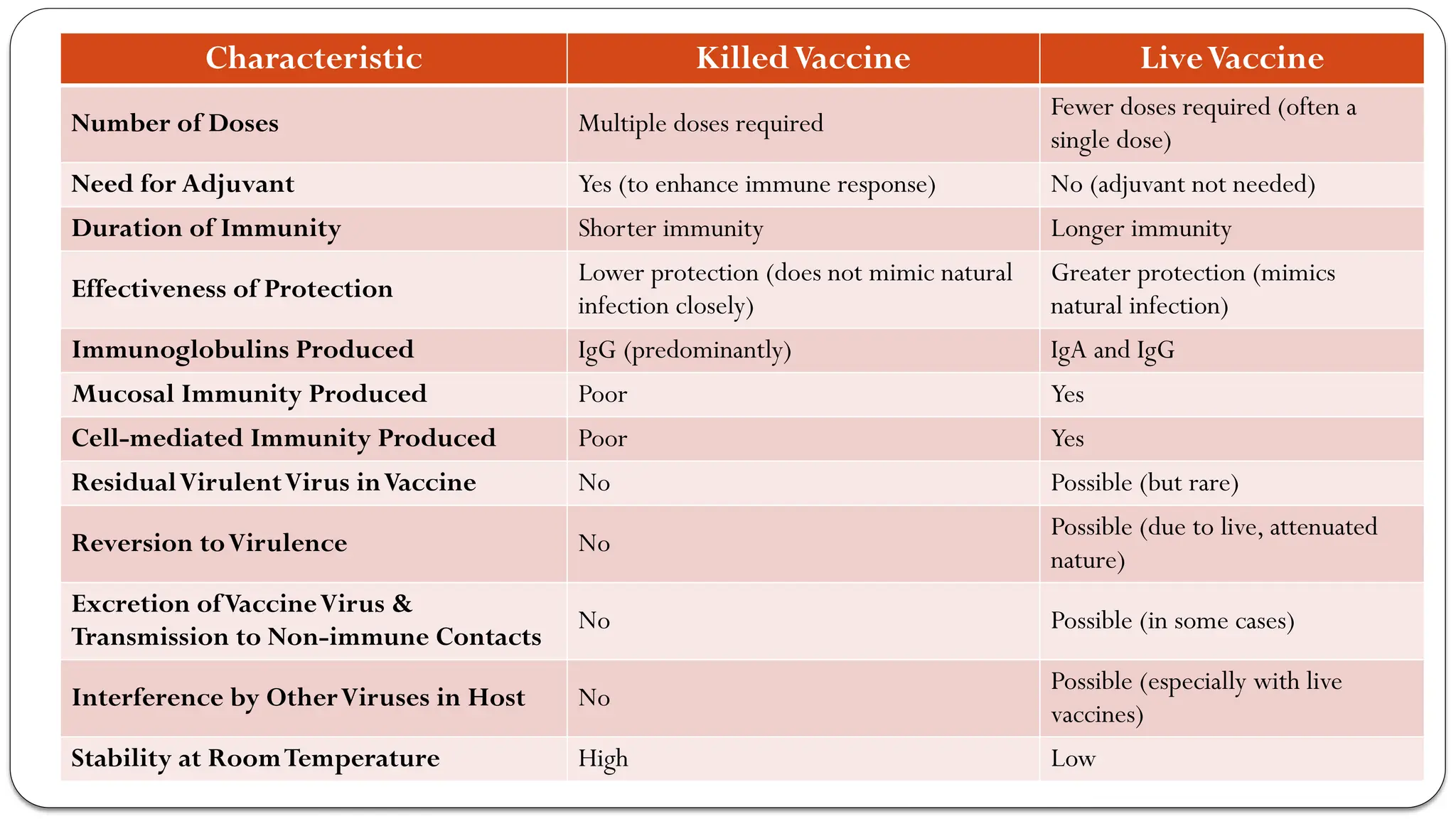
Characteristic KilledVaccine LiveVaccine
Number of Doses Multiple doses required
Fewer doses required (often a
single dose)
Need for Adjuvant Yes (to enhance immune response) No (adjuvant not needed)
Duration of Immunity Shorter immunity Longer immunity
Effectiveness of Protection
Lower protection (does not mimic natural
infection closely)
Greater protection (mimics
natural infection)
Immunoglobulins Produced IgG (predominantly) IgA and IgG
Mucosal Immunity Produced Poor Yes
Cell-mediated Immunity Produced Poor Yes
ResidualVirulentVirus inVaccine No Possible (but rare)
Reversion toVirulence No
Possible (due to live, attenuated
nature)
Excretion ofVaccineVirus &
Transmission to Non-immune Contacts
No Possible (in some cases)
Interference by OtherViruses in Host No
Possible (especially with live
vaccines)
Stability at RoomTemperature High Low
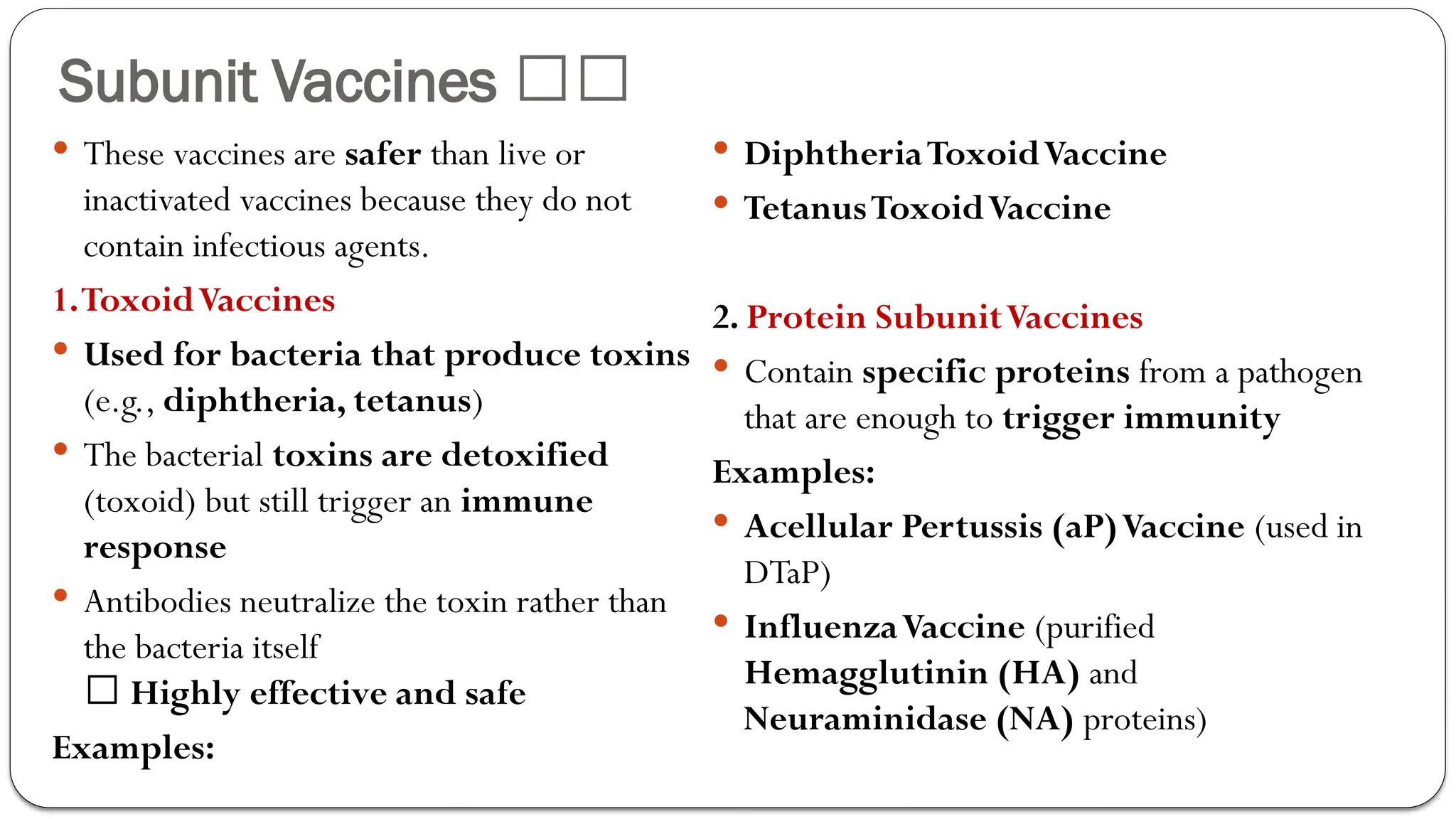
Subunit Vaccines 🏥💉
 These vaccines are safer than live or
inactivated vaccines because they do not
contain infectious agents.
1.ToxoidVaccines
 Used for bacteria that produce toxins
(e.g., diphtheria, tetanus)
 The bacterial toxins are detoxified
(toxoid) but still trigger an immune
response
 Antibodies neutralize the toxin rather than
the bacteria itself
✅ Highly effective and safe
Examples:
 DiphtheriaToxoidVaccine
 TetanusToxoidVaccine
2. Protein SubunitVaccines
 Contain specific proteins from a pathogen
that are enough to trigger immunity
Examples:
 Acellular Pertussis (aP)Vaccine (used in
DTaP)
 InfluenzaVaccine (purified
Hemagglutinin (HA) and
Neuraminidase (NA) proteins)
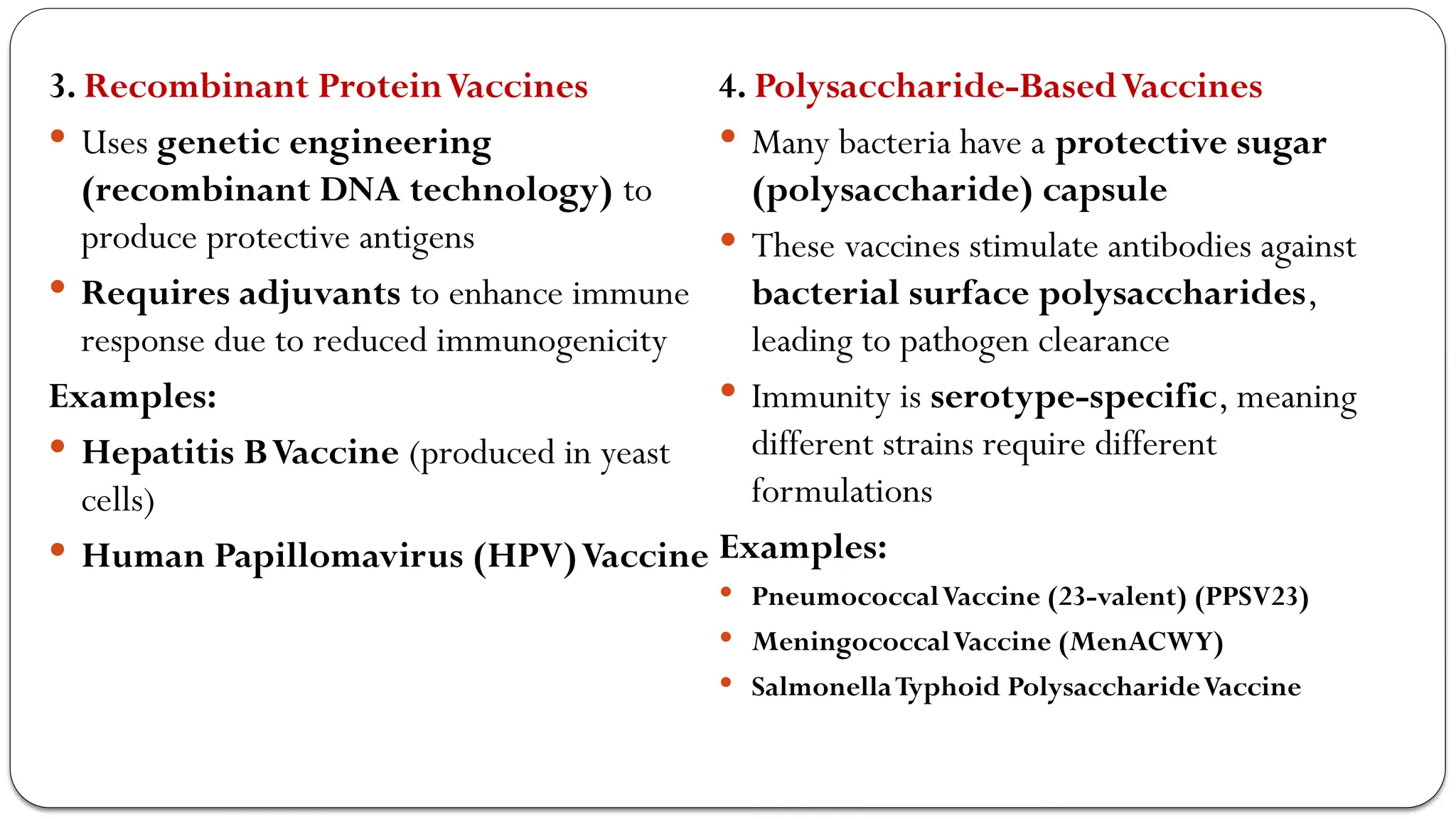
3. Recombinant ProteinVaccines
 Uses genetic engineering
(recombinant DNA technology) to
produce protective antigens
 Requires adjuvants to enhance immune
response due to reduced immunogenicity
Examples:
 Hepatitis BVaccine (produced in yeast
cells)
 Human Papillomavirus (HPV)Vaccine
4. Polysaccharide-BasedVaccines
 Many bacteria have a protective sugar
(polysaccharide) capsule
 These vaccines stimulate antibodies against
bacterial surface polysaccharides,
leading to pathogen clearance
 Immunity is serotype-specific, meaning
different strains require different
formulations
Examples:
 PneumococcalVaccine (23-valent) (PPSV23)
 MeningococcalVaccine (MenACWY)
 SalmonellaTyphoid PolysaccharideVaccine
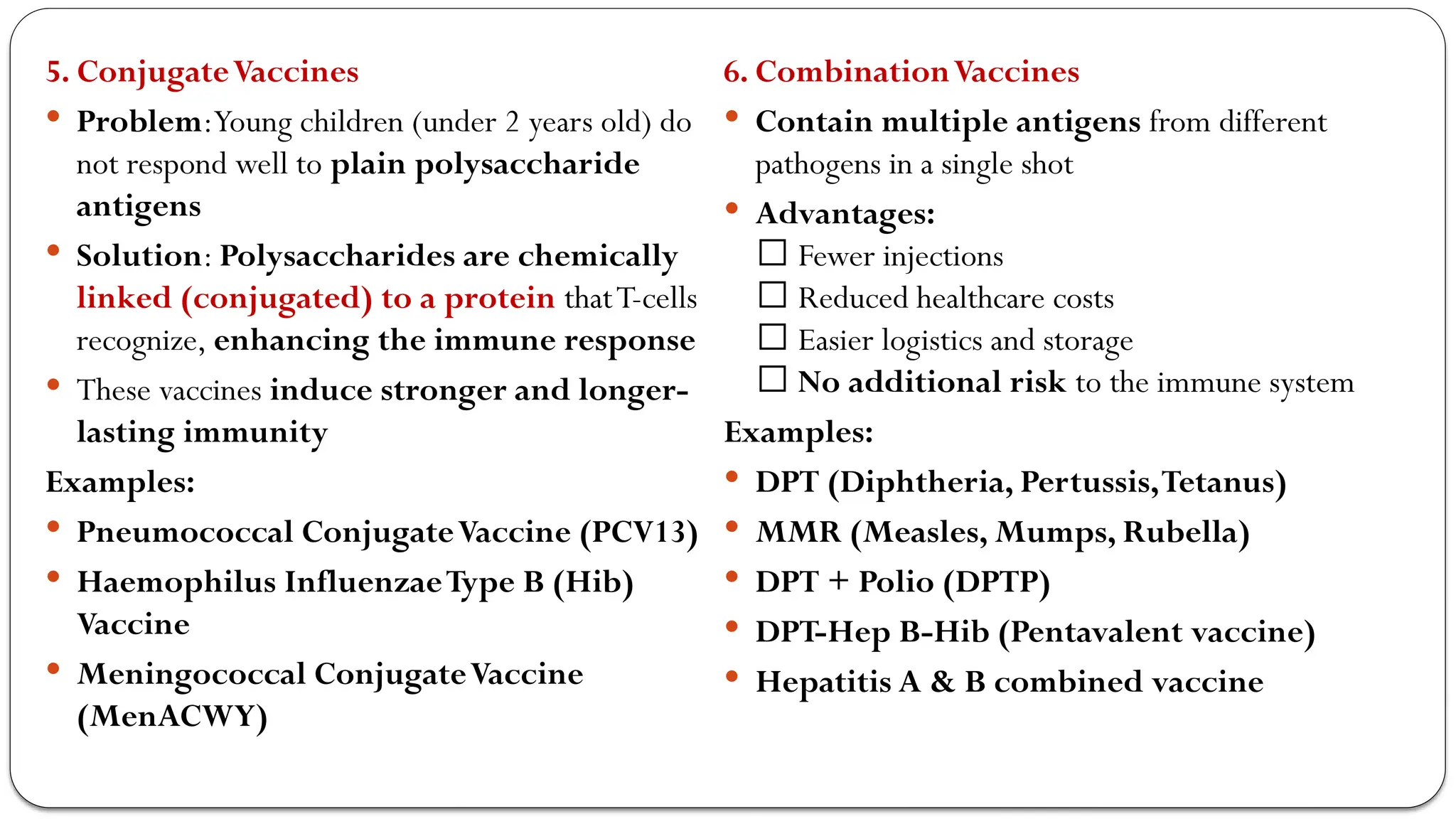
5. ConjugateVaccines
 Problem:Young children (under 2 years old) do
not respond well to plain polysaccharide
antigens
 Solution: Polysaccharides are chemically
linked (conjugated) to a protein thatT-cells
recognize, enhancing the immune response
 These vaccines induce stronger and longer-
lasting immunity
Examples:
 Pneumococcal ConjugateVaccine (PCV13)
 Haemophilus InfluenzaeType B (Hib)
Vaccine
 Meningococcal ConjugateVaccine
(MenACWY)
6. CombinationVaccines
 Contain multiple antigens from different
pathogens in a single shot
 Advantages:
✅ Fewer injections
✅ Reduced healthcare costs
✅ Easier logistics and storage
✅ No additional risk to the immune system
Examples:
 DPT (Diphtheria, Pertussis,Tetanus)
 MMR (Measles, Mumps, Rubella)
 DPT + Polio (DPTP)
 DPT-Hep B-Hib (Pentavalent vaccine)
 Hepatitis A & B combined vaccine
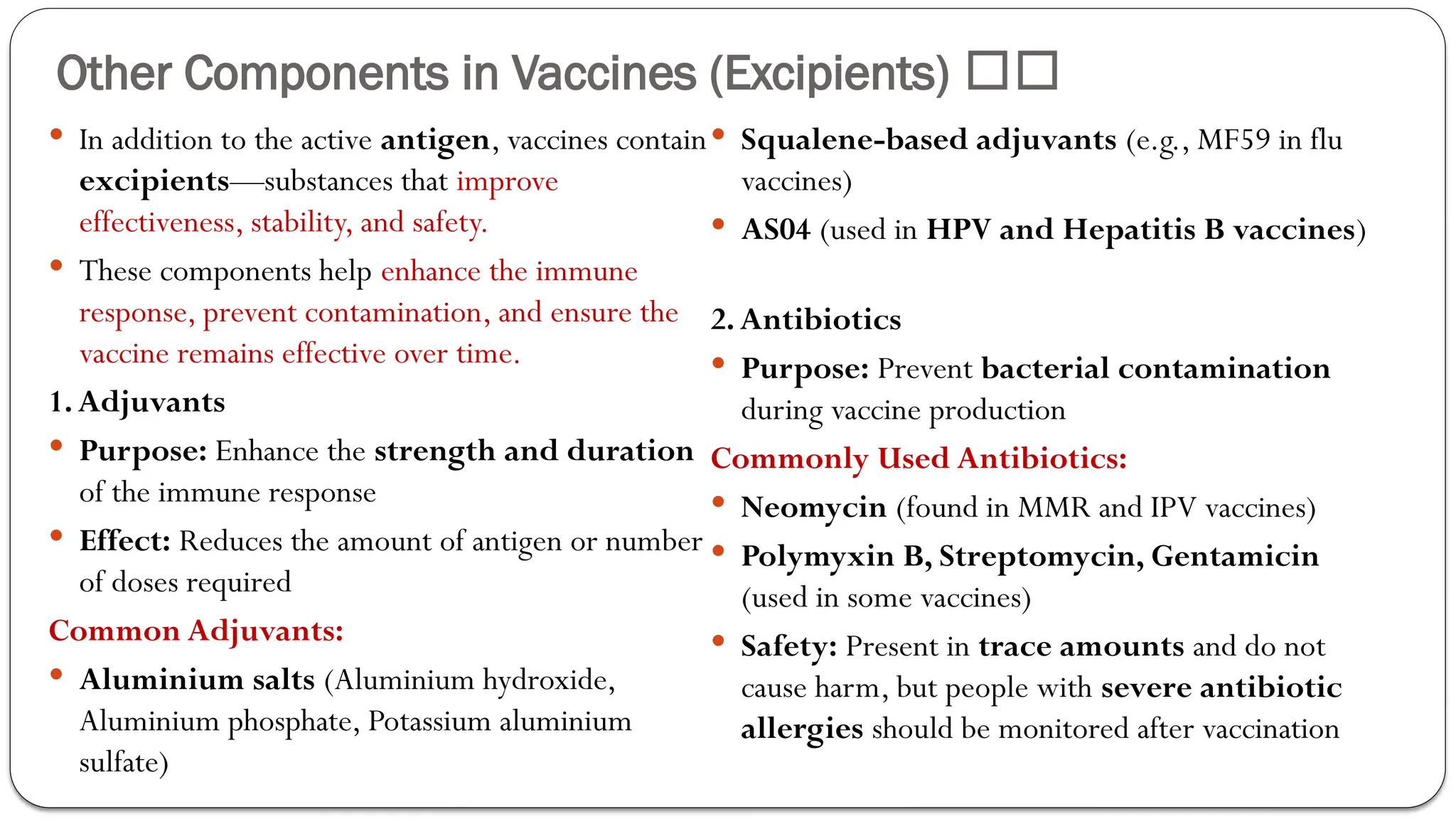
Other Components in Vaccines (Excipients) 🏥💉
 In addition to the active antigen, vaccines contain
excipients—substances that improve
effectiveness, stability, and safety.
 These components help enhance the immune
response, prevent contamination, and ensure the
vaccine remains effective over time.
1.Adjuvants
 Purpose: Enhance the strength and duration
of the immune response
 Effect: Reduces the amount of antigen or number
of doses required
Common Adjuvants:
 Aluminium salts (Aluminium hydroxide,
Aluminium phosphate, Potassium aluminium
sulfate)
 Squalene-based adjuvants (e.g., MF59 in flu
vaccines)
 AS04 (used in HPV and Hepatitis B vaccines)
2.Antibiotics
 Purpose: Prevent bacterial contamination
during vaccine production
Commonly Used Antibiotics:
 Neomycin (found in MMR and IPV vaccines)
 Polymyxin B, Streptomycin, Gentamicin
(used in some vaccines)
 Safety: Present in trace amounts and do not
cause harm, but people with severe antibiotic
allergies should be monitored after vaccination
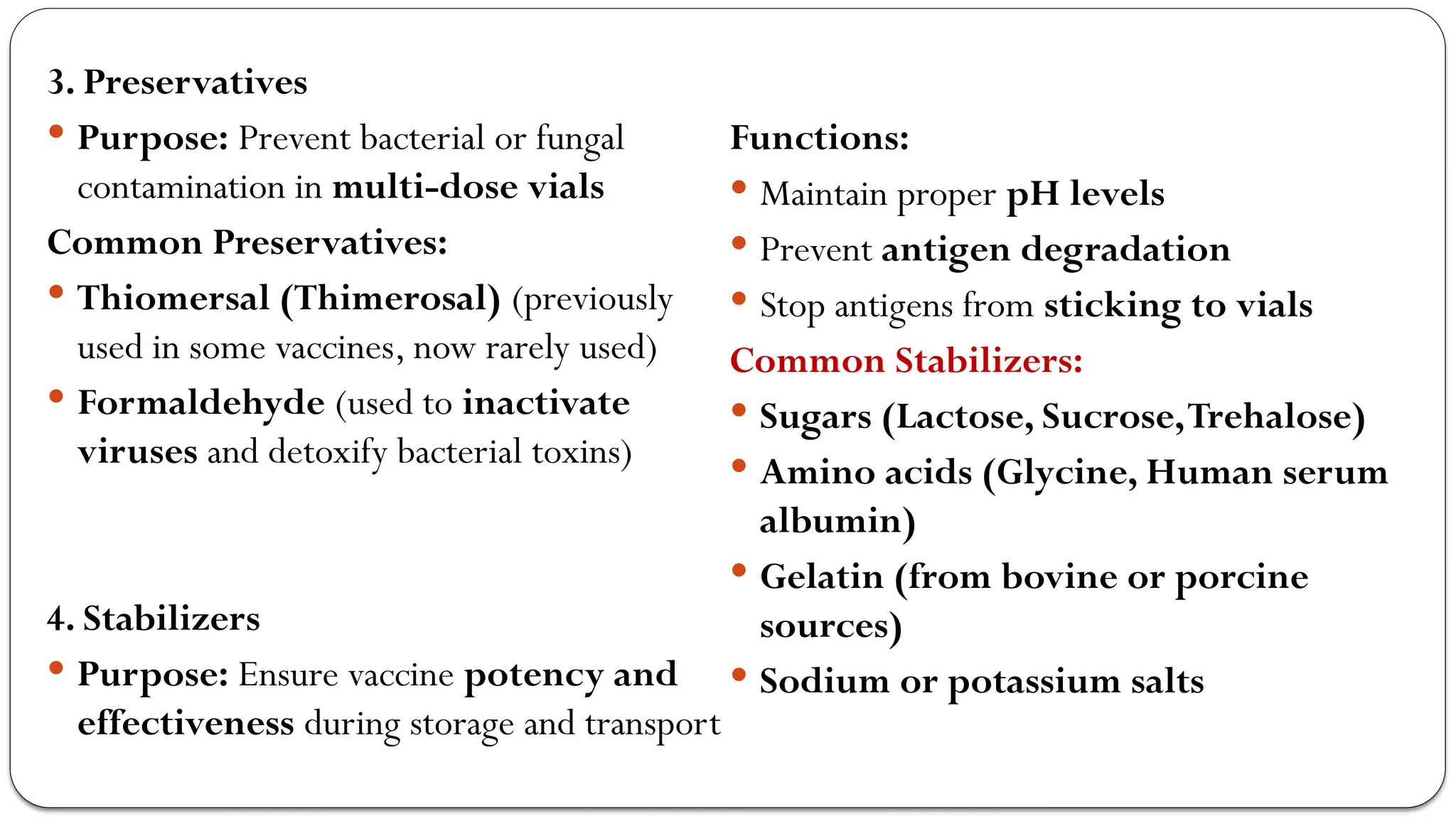
3. Preservatives
 Purpose: Prevent bacterial or fungal
contamination in multi-dose vials
Common Preservatives:
 Thiomersal (Thimerosal) (previously
used in some vaccines, now rarely used)
 Formaldehyde (used to inactivate
viruses and detoxify bacterial toxins)
4. Stabilizers
 Purpose: Ensure vaccine potency and
effectiveness during storage and transport
Functions:
 Maintain proper pH levels
 Prevent antigen degradation
 Stop antigens from sticking to vials
Common Stabilizers:
 Sugars (Lactose, Sucrose,Trehalose)
 Amino acids (Glycine, Human serum
albumin)
 Gelatin (from bovine or porcine
sources)
 Sodium or potassium salts
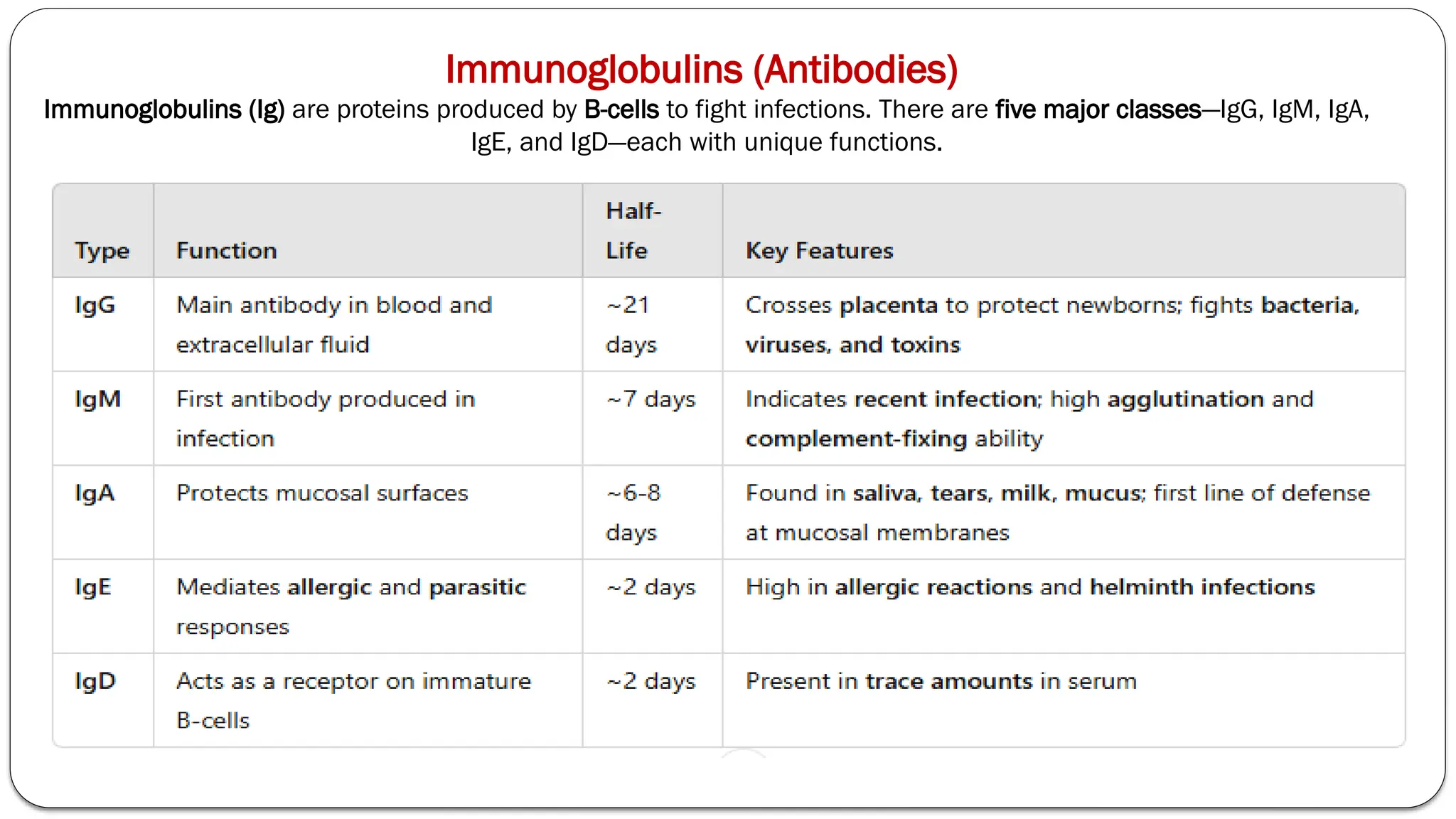
Immunoglobulins (Antibodies)
Immunoglobulins (Ig) are proteins produced by B-cells to fight infections. There are five major classes—IgG, IgM, IgA,
IgE, and IgD—each with unique functions.
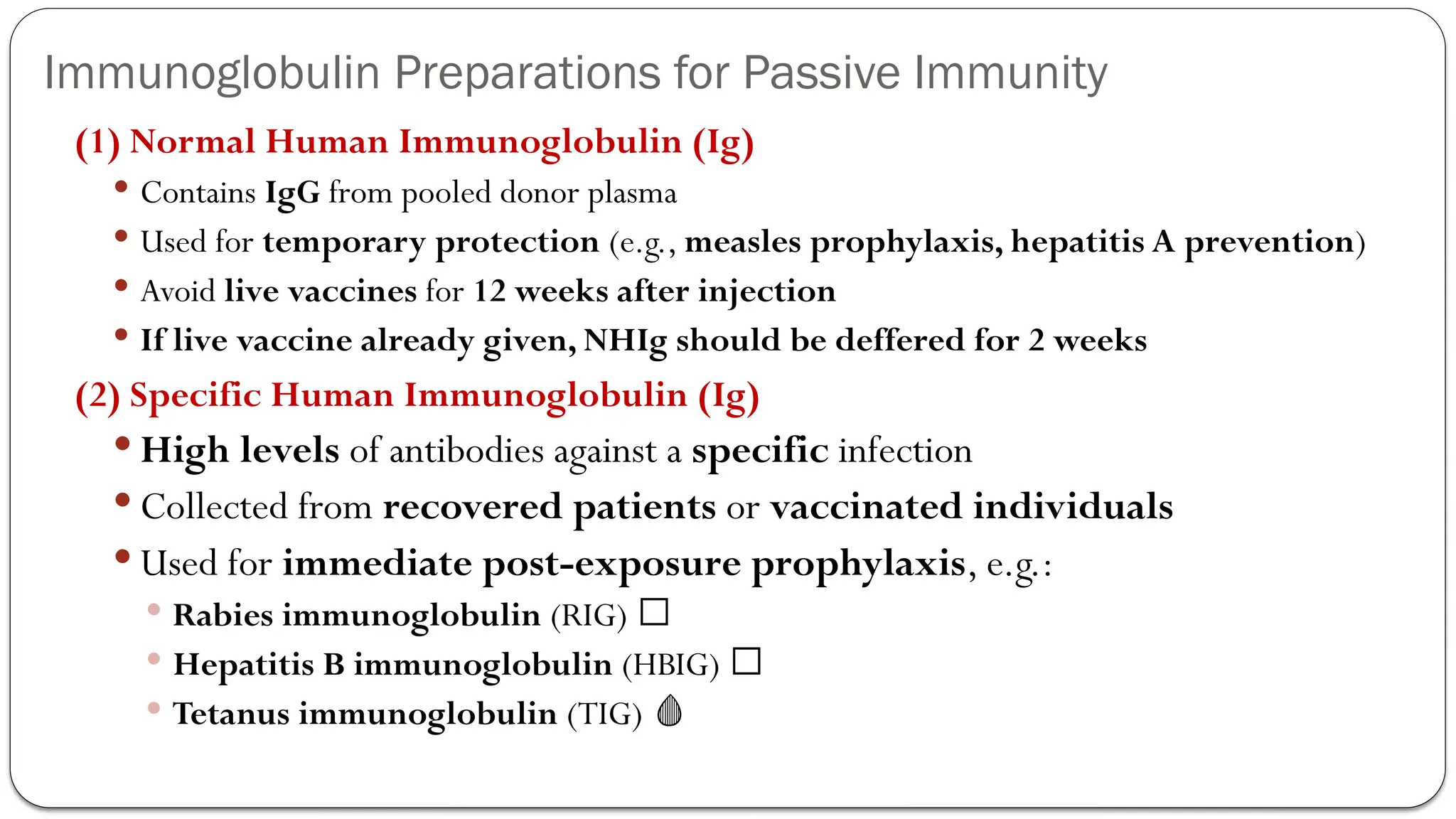
Immunoglobulin Preparations for Passive Immunity
(1) Normal Human Immunoglobulin (Ig)
 Contains IgG from pooled donor plasma
 Used for temporary protection (e.g., measles prophylaxis, hepatitis A prevention)
 Avoid live vaccines for 12 weeks after injection
 If live vaccine already given, NHIg should be deffered for 2 weeks
(2) Specific Human Immunoglobulin (Ig)
 High levels of antibodies against a specific infection
 Collected from recovered patients or vaccinated individuals
 Used for immediate post-exposure prophylaxis, e.g.:
 Rabies immunoglobulin (RIG) 🦇
 Hepatitis B immunoglobulin (HBIG) 🦠
 Tetanus immunoglobulin (TIG) 🩸
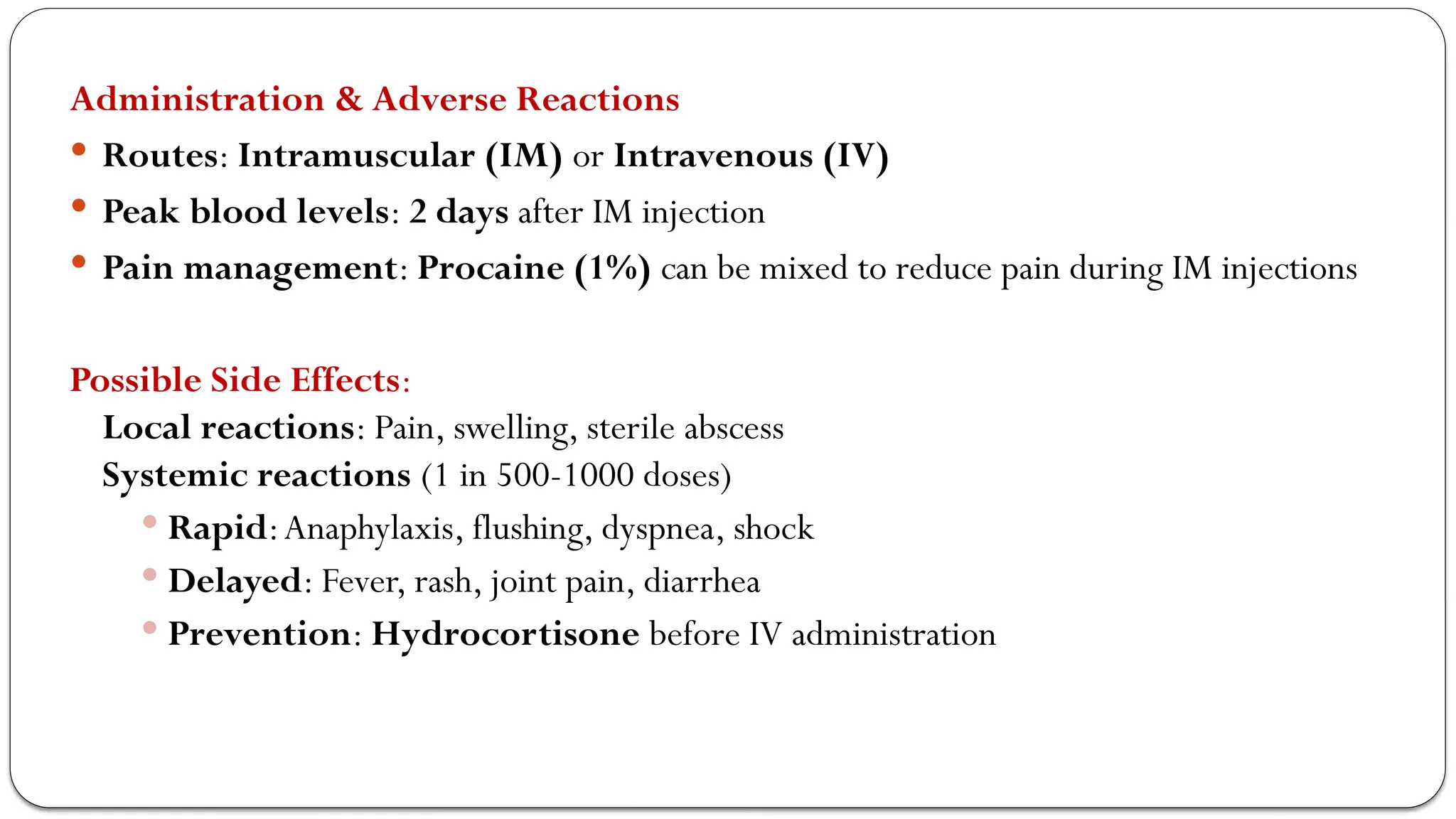
Administration & Adverse Reactions
 Routes: Intramuscular (IM) or Intravenous (IV)
 Peak blood levels: 2 days after IM injection
 Pain management: Procaine (1%) can be mixed to reduce pain during IM injections
Possible Side Effects:
Local reactions: Pain, swelling, sterile abscess
Systemic reactions (1 in 500-1000 doses)
 Rapid:Anaphylaxis, flushing, dyspnea, shock
 Delayed: Fever, rash, joint pain, diarrhea
 Prevention: Hydrocortisone before IV administration
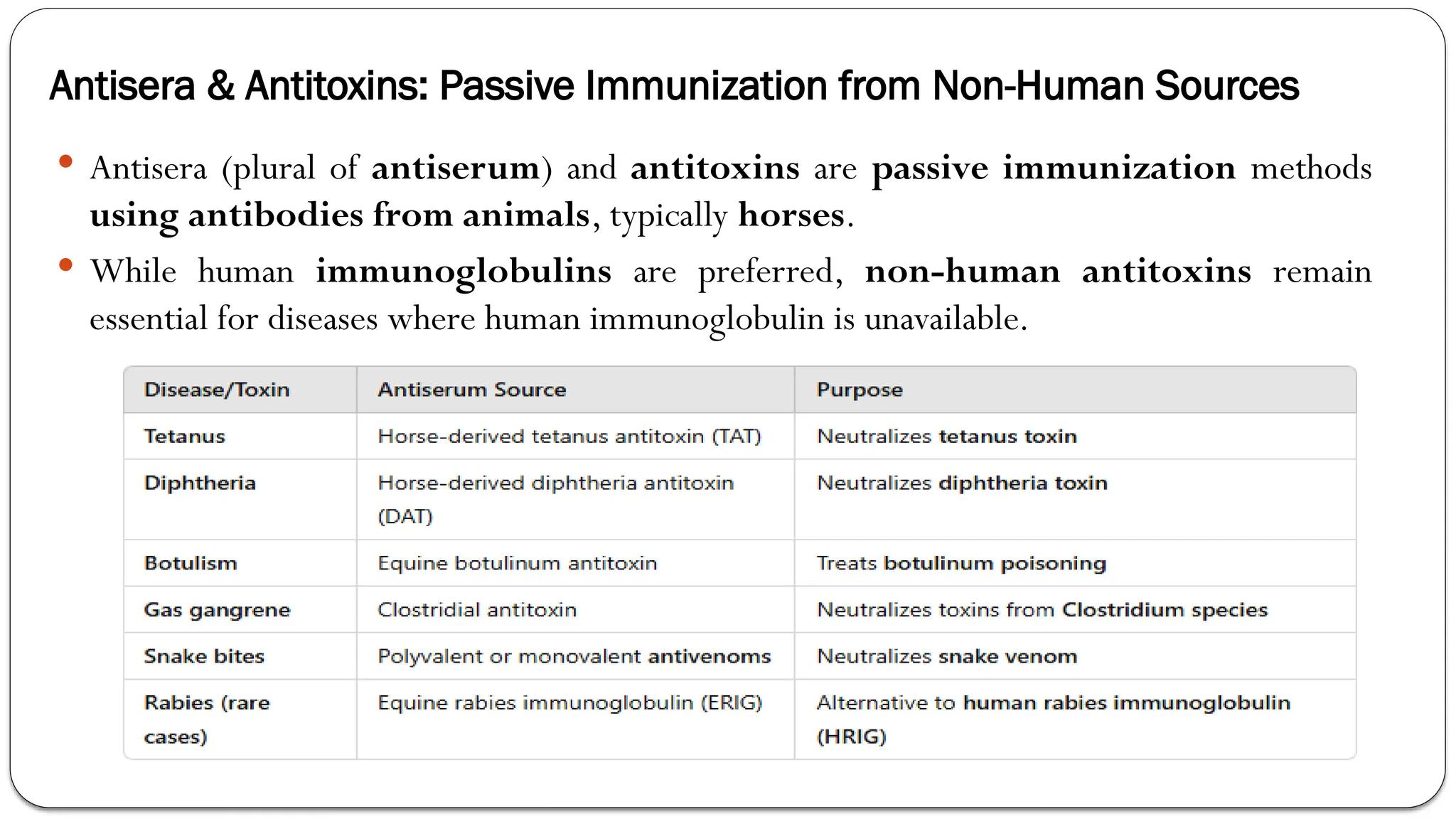
Antisera & Antitoxins: Passive Immunization from Non-Human Sources
 Antisera (plural of antiserum) and antitoxins are passive immunization methods
using antibodies from animals, typically horses.
 While human immunoglobulins are preferred, non-human antitoxins remain
essential for diseases where human immunoglobulin is unavailable.
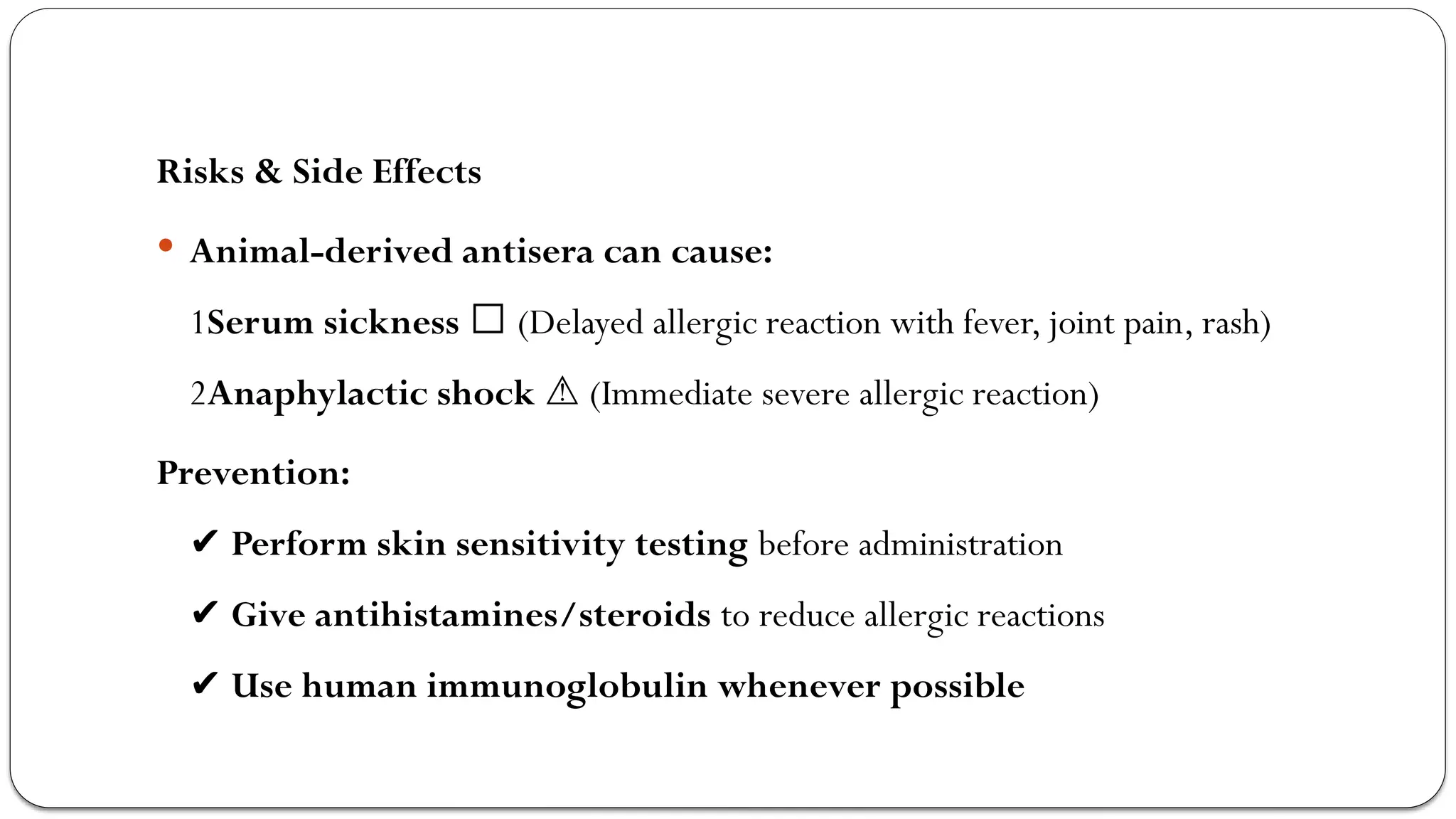
Risks & Side Effects
 Animal-derived antisera can cause:
1Serum sickness 🤒 (Delayed allergic reaction with fever, joint pain, rash)
2Anaphylactic shock (Immediate severe allergic reaction)
⚠️
Prevention:
✔️Perform skin sensitivity testing before administration
✔️Give antihistamines/steroids to reduce allergic reactions
✔️Use human immunoglobulin whenever possible
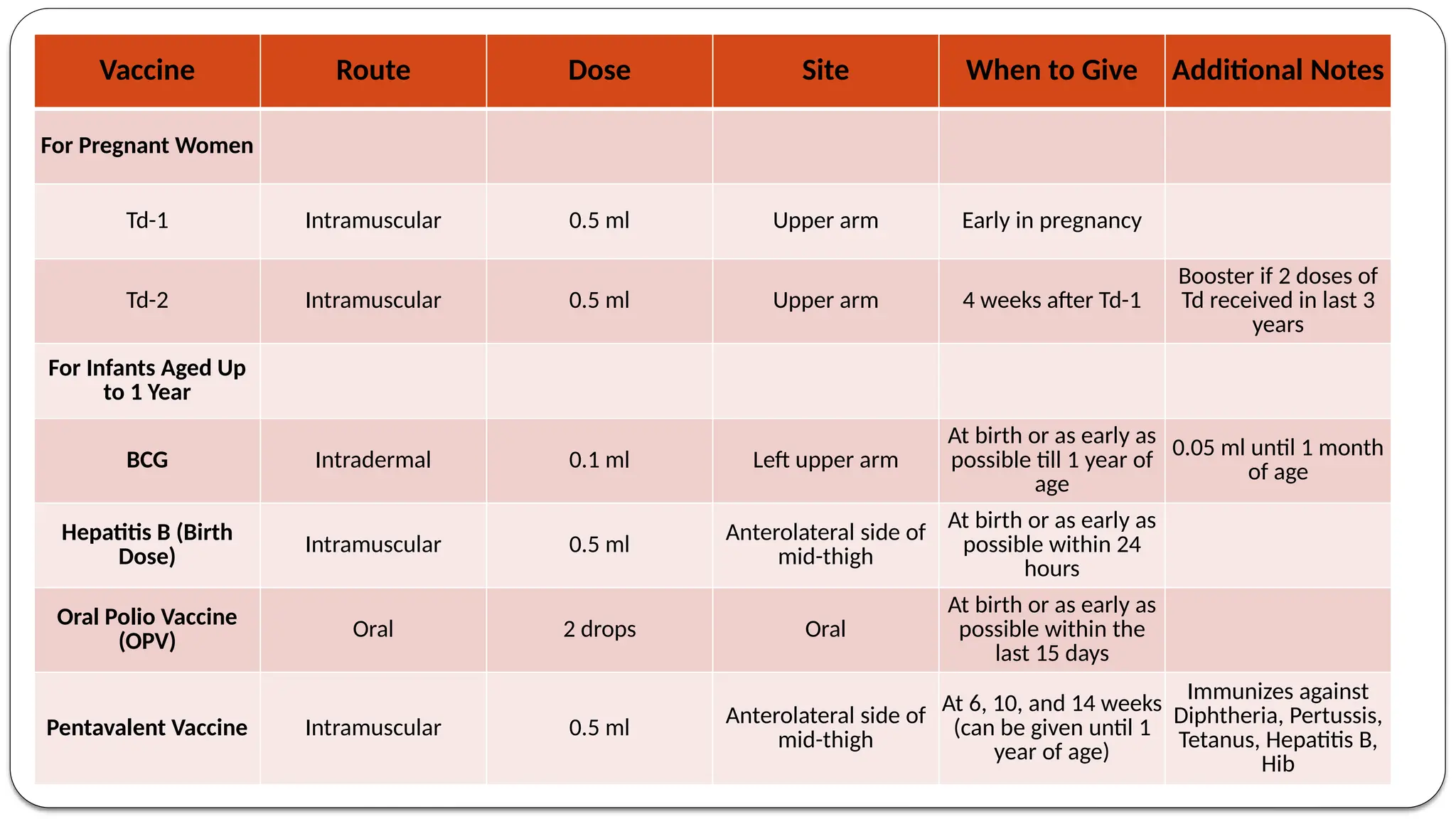
Vaccine Route Dose Site When to Give Additional Notes
For Pregnant Women
Td-1 Intramuscular 0.5 ml Upper arm Early in pregnancy
Td-2 Intramuscular 0.5 ml Upper arm 4 weeks after Td-1
Booster if 2 doses of
Td received in last 3
years
For Infants Aged Up
to 1 Year
BCG Intradermal 0.1 ml Left upper arm
At birth or as early as
possible till 1 year of
age
0.05 ml until 1 month
of age
Hepatitis B (Birth
Dose)
Intramuscular 0.5 ml
Anterolateral side of
mid-thigh
At birth or as early as
possible within 24
hours
Oral Polio Vaccine
(OPV)
Oral 2 drops Oral
At birth or as early as
possible within the
last 15 days
Pentavalent Vaccine Intramuscular 0.5 ml
Anterolateral side of
mid-thigh
At 6, 10, and 14 weeks
(can be given until 1
year of age)
Immunizes against
Diphtheria, Pertussis,
Tetanus, Hepatitis B,
Hib
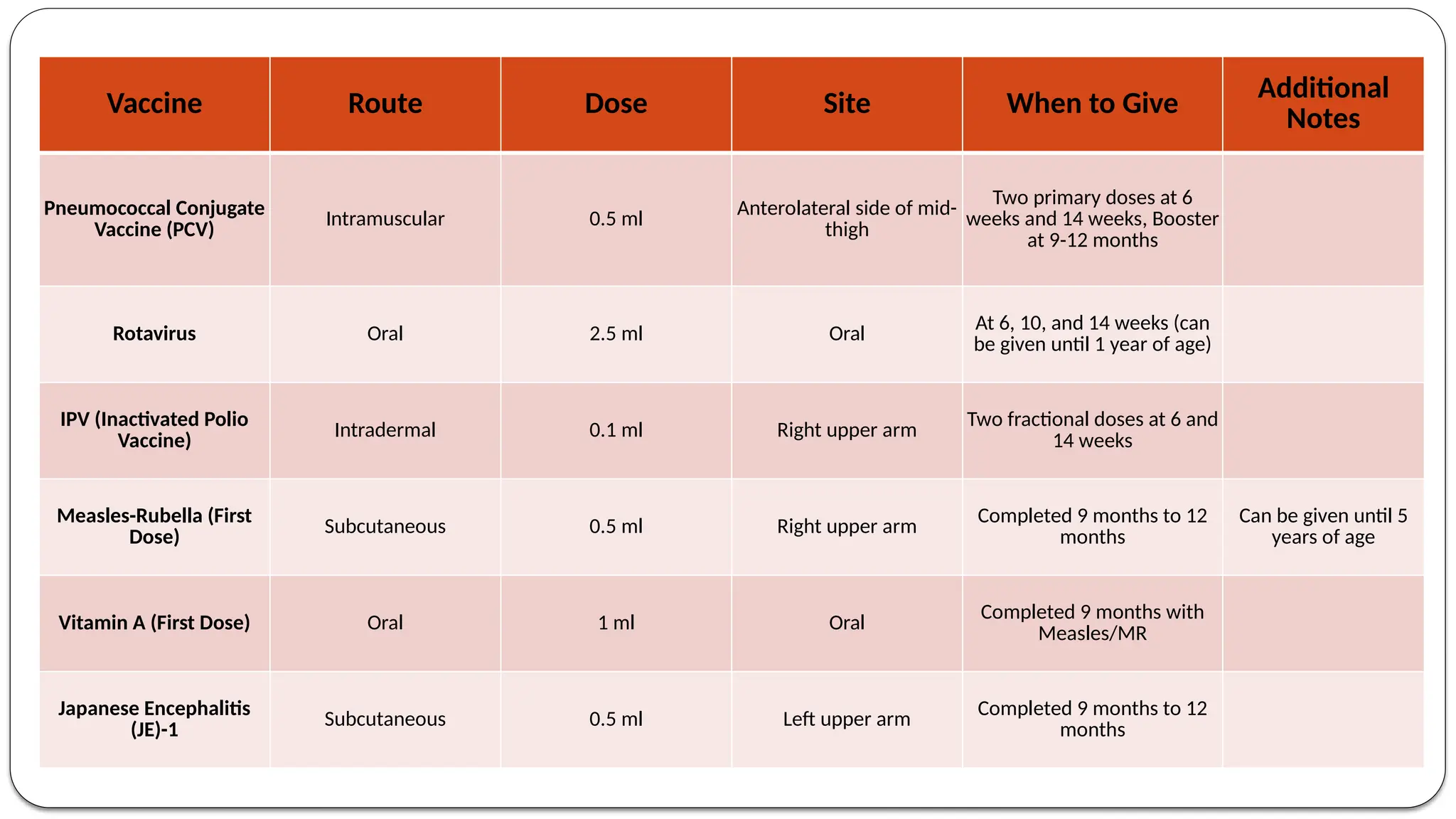
Vaccine Route Dose Site When to Give
Additional
Notes
Pneumococcal Conjugate
Vaccine (PCV)
Intramuscular 0.5 ml Anterolateral side of mid-
thigh
Two primary doses at 6
weeks and 14 weeks, Booster
at 9-12 months
Rotavirus Oral 2.5 ml Oral
At 6, 10, and 14 weeks (can
be given until 1 year of age)
IPV (Inactivated Polio
Vaccine) Intradermal 0.1 ml Right upper arm
Two fractional doses at 6 and
14 weeks
Measles-Rubella (First
Dose)
Subcutaneous 0.5 ml Right upper arm
Completed 9 months to 12
months
Can be given until 5
years of age
Vitamin A (First Dose) Oral 1 ml Oral
Completed 9 months with
Measles/MR
Japanese Encephalitis
(JE)-1
Subcutaneous 0.5 ml Left upper arm Completed 9 months to 12
months
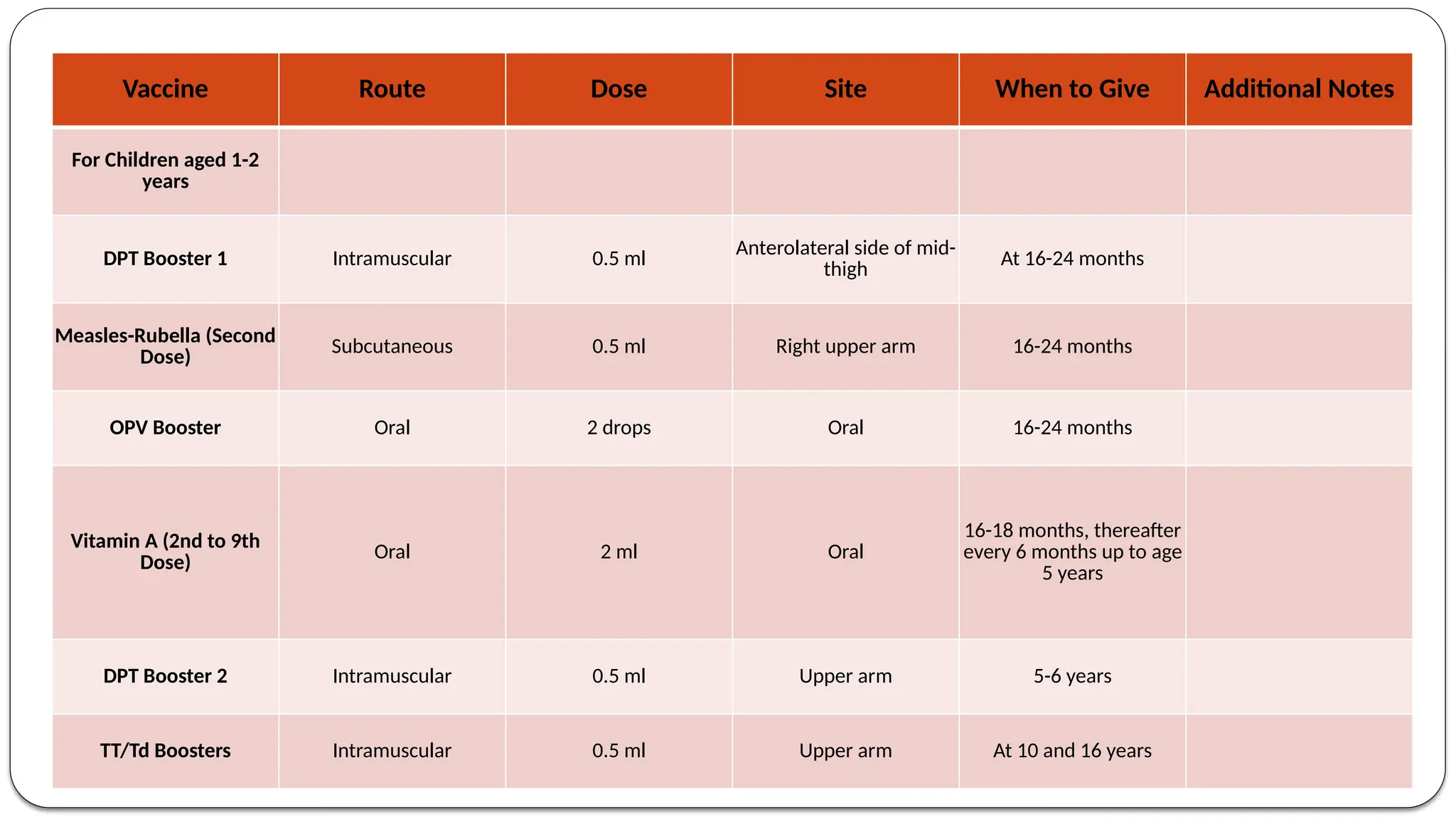
Vaccine Route Dose Site When to Give Additional Notes
For Children aged 1-2
years
DPT Booster 1 Intramuscular 0.5 ml
Anterolateral side of mid-
thigh At 16-24 months
Measles-Rubella (Second
Dose)
Subcutaneous 0.5 ml Right upper arm 16-24 months
OPV Booster Oral 2 drops Oral 16-24 months
Vitamin A (2nd to 9th
Dose)
Oral 2 ml Oral
16-18 months, thereafter
every 6 months up to age
5 years
DPT Booster 2 Intramuscular 0.5 ml Upper arm 5-6 years
TT/Td Boosters Intramuscular 0.5 ml Upper arm At 10 and 16 years

ThankYou

Immunity And Immunizing Agent: Superpower Team of Body

  • 2.
    Did you knowyour body fights off millions of invaders every day—without you even noticing?" "Today,we’re going to explore how this incredible system works inside us and act likes a superhero team working 24/7 to protect us" In the early 1900s,smallpox infected and killed millions worldwide.It was one of the deadliest diseases in human history. Today,thanks to vaccines, smallpox is completely eradicated “In the early 1900s,polio paralyzed thousands of children worldwide. Today, thanks to vaccines,polio is nearly eradicated.
  • 3.
    “Imagine two students.Onegets sick all the time,the other rarely does. What’s their secret? It’s all about immunity!”
  • 4.
    - Dr. JatinChhaya Immunity & Immunizing Agents
  • 5.
    Question can beasked Short Note:  LiveVaccine  KilledVaccine  Live vaccineVs KilledVaccine  Active Immunity  Passive Immunity  Active ImmunityVs Passive Immunity  Herd immunity  Immunizing Agents  Immunoglobulins
  • 6.
    What is Immunityand its Type?  Immunity is the body's defense mechanism against harmful pathogens, such as bacteria, viruses, fungi, and toxins.  It enables the body to identify and eliminate these invaders, preventing infections and maintaining overall health. There are two main types of immunity: innate immunity and adaptive immunity.
  • 7.
    Innate Immunity  Definition:The body's first line of defense, present from birth.  Acts rapidly and non-specifically against pathogens.  Key Components: ✅ Physical Barriers: Skin & mucous membranes – prevent pathogen entry. ✅ Chemical Barriers: Stomach acid, saliva enzymes, & antimicrobial proteins – inhibit infection. ✅ Cellular Defenses:White blood cells (neutrophils, macrophages, NK cells) – attack invaders.
  • 8.
    Adaptive(Acquired) Immunity  Developsover time when the body is exposed to pathogens or through vaccination.  Involves memory cells that recognize and respond faster to the same infection in the future.  Example: Once you get chickenpox, your body “remembers” the virus and prevents reinfection.  This specific defense discuss for the convenience under heading of Active and Passive immunity.
  • 9.
     Active Immunity(Long-Lasting, Self-Developed)  Acquired through exposure to pathogens (e.g., infection or vaccination).  Naturally Acquired Active Immunity  immunity that develops when an individual is exposed to a pathogen in the natural environment.  exposure triggers the immune system to recognize the pathogen and mount a defense, leading to the production of memory cells for long-term immunity.  Artificially acquired active immunity  immunity gained through vaccination.  Vaccines stimulate the immune system by introducing a harmless form of a pathogen (like inactivated viruses or proteins), prompting the body to produce antibodies and memory cells.  This prepares the immune system to fight future infections from the same pathogen effectively.
  • 10.
    Active Immunity Is inthe forms of: 1. Humoral Immunity 🔹 B-cells produce antibodies to neutralize extracellular pathogens (bacteria, viruses, toxins). 🔹 Memory B-cells ensure a faster response upon re-exposure. 2. Cellular Immunity 🔹 T-cells attack infected or abnormal cells (e.g., virus-infected or cancerous cells). 🔹 CytotoxicT-cells destroy infected cells, while HelperT-cells coordinate the immune response. 3. Combined Defense 🔹Humoral immunity targets extracellular threats, while cellular immunity combats intracellular infections. 🔹 Together, they ensure a strong and adaptive immune response.
  • 11.
     Passive Immunity(Temporary, Received from Another Source)  transfer of active immunity in the form of readymade antibodies from one individual to another.  Naturally Acquired Passive Immunity: Acquired by receiving antibodies from another source (e.g., mother-to-child through breast milk or antibody therapy).  Artificially acquired passive immunity is immunity obtained by receiving antibodies directly from an external source, such as an injection of antiserum or monoclonal antibodies. It provides immediate, short-term protection against specific pathogens.
  • 12.
    Passive Immunity: 1. NormalHuman Immunoglobulin (Ig) ✅ Derived from pooled plasma of healthy donors. ✅ Provides general antibody protection for individuals with immune deficiencies or infection risks. 2. Specific Human Immunoglobulin (Ig) ✅ Collected from donors with high antibody levels against specific pathogens. ✅ Used for targeted protection (e.g., post- exposure prophylaxis for hepatitis B, rabies). 3.Animal Antitoxins/Antisera ✅ Obtained from immunized animals (e.g., horses). ✅ Neutralizes toxins (e.g., snake venom, diphtheria toxin). May pose a risk of allergic reactions. ⚠️
  • 13.
    Herd Immunity 13  Levelof resistance of a community or group of people to a particular disease.  Provides an immunological barrier to the spread of disease in population E.g. when an infectious disease is introduced in ‘virgin’ population, with a very low or no immunity, the attack and the case fatality rates tend to be very high involving all susceptible.
  • 14.
  • 15.
    Herd Immunity 15  Occurrenceof Clinical & Subclinical Infections  Both symptomatic and asymptomatic infections contribute to immunity within the herd.  Immunization of the Herd  Vaccination increases overall community protection by reducing disease spread.  Herd Structure  Constantly changing due to births, deaths, and population movement. Example: Polio & Herd Immunity  An immunized child exposed to wild polio-virus neutralizes it via gut IgA.  The attenuated virus spreads to susceptible individuals, indirectly inducing immunity.  This process enhances community-wide protection.
  • 16.
    The immunizing agentscan be classified as 1. Vaccines, 2. Immunoglobulin and 3. Antisera IMMUNIZING AGENTS
  • 17.
    Immunization vs. Vaccination Vaccination🏥  The process of administering a vaccine (usually by injection, but sometimes orally or nasally).  Example: Getting a flu shot is a vaccination. Immunization 🛡  The process by which a person becomes protected against a disease through vaccination or exposure to the disease itself.  It’s the outcome—when the immune system learns to recognize and fight off specific pathogens.  Example:After receiving the flu vaccine, your body develops immunity, making you less likely to get sick. Key Difference  Vaccination is the act of getting the shot 💉  Immunization is the body's response—developing immunity ➡🛡
  • 18.
    Principles of Vaccination Vaccination works by training the immune system to recognize and fight specific pathogens (bacteria, viruses, or toxins) without causing the actual disease.The key principles include: Antigen introduction 🦠  A live weakened foreign substance (e.g., bacteria, viruses, toxins, or vaccine components) that triggers an immune response.  Can be proteins, polysaccharides, lipids, or nucleic acids.  Found on the surface of pathogens or introduced through vaccines.  Stimulates the production of antibodies by B cells. Antibody introduction  A Y-shaped protein made by B lymphocytes (B cells) in response to an antigen.  Also called immunoglobulin (Ig), with different types (IgG, IgA, IgM, IgE, IgD).  Helps neutralize, mark, or destroy pathogens.  Works through mechanisms like neutralization, opsonization (marking for destruction), and complement activation.
  • 19.
    Vaccines & TheirTypes What is aVaccine? An immuno-biologic substance that stimulates the immune system to produce protective antibodies and immunity against specific diseases. Types ofVaccines 1. Live (Attenuated)Vaccines  Contain weakened forms of the pathogen.  Provide strong, long-lasting immunity.  Examples: BCG, Oral Polio, Measles, Mumps, Rubella (MMR). 2. Killed (Inactivated)Vaccines  Contain pathogens killed or inactivated by heat/chemicals.  Safer for immunocompromised individuals but may require booster doses.  Examples: Polio (IPV), Hepatitis B, Rabies, JE,Typhoid, Cholera.
  • 20.
    3. Subunit vaccines: Toxoids ✅Contain inactivated toxins produced by pathogens. ✅ Stimulate immunity against the toxin, not the organism. ✅ Examples:Tetanus, Diphtheria toxoids. Cellular FractionVaccines ✅ Use specific components of a pathogen (proteins or polysaccharides). ✅ Examples: Pneumococcal, Meningococcal vaccines. CombinationVaccines ✅ Contain multiple antigens in a single injection. ✅ Provide protection against multiple diseases. ✅ Example: Pentavalent (Diphtheria,Tetanus, Pertussis, Hepatitis B, Hib).
  • 21.
    Live vaccine:  Livevaccines contain weakened (attenuated) versions of the pathogen that can replicate in the body without causing severe disease. Examples of LiveVaccines  BCG (for tuberculosis)  Measles, Mumps, and Rubella (MMR)  Oral PolioVaccine (OPV)  Varicella (chickenpox)  Yellow Fever  Rotavirus Why Are LiveVaccines Effective?  Stronger Immune Response – The weakened pathogen multiplies inside the body, providing a higher antigenic dose.  Engages Different Tissues – Some vaccines target specific tissues, like the intestinal mucosa in the case of oral polio.  Long-Lasting Immunity – A single dose is often sufficient, but booster doses ensure full immunity.
  • 22.
    Special Considerations &Contraindications 🚨  Not for Immunocompromised Individuals – Avoid in people with HIV, leukemia, lymphoma, or those on immunosuppressive therapy.  Not Recommended During Pregnancy – Unless the risk of infection is higher than the risk to the fetus.  Storage Matters – Live vaccines must be kept at proper temperatures to remain effective. Dosing & Administration  When two live vaccines are needed, they should be given at the same time (different sites) or spaced at least 3 weeks apart.  Some, like measles vaccine, provide 95–98% protection with one dose, but a second dose ensures full immunity.  Polio vaccine needs three or more spaced doses for full effectiveness.
  • 23.
    Inactivated (Killed)Vaccines 🏥 Inactivated vaccines are made by growing viruses or bacteria in culture and then inactivating (killing) them using heat or chemicals (e.g., formalin).These vaccines stimulate an immune response without the risk of causing disease. Examples of InactivatedVaccines  Inactivated PolioVaccine (IPV)  Hepatitis AVaccine  RabiesVaccine  Influenza (Flu Shot, not nasal spray)  Pertussis (Whooping Cough) – part of DTaP vaccine Key Characteristics  ✅ Safe for immunocompromised individuals – Since the pathogen is killed, it cannot replicate in the body. ✅ Cannot cause disease – Unlike live vaccines, they do not multiply, reducing risks. ❌ Less effective than live vaccines –They require multiple doses and booster shots to maintain immunity. Dose & Efficacy  Typically requires a primary series of 2–3 doses to generate a strong immune response.  Booster doses are often required to maintain long-term protection.
  • 24.
    Duration of immunityvaries – Some vaccines last months, others many years.  Example:  Cholera vaccine offers ~50% protection.  Pertussis vaccine (3 doses) is ~80% effective for the first 3 years but declines after 12 years.  IPV has been highly effective in eliminating polio in many countries. Administration  Given via subcutaneous (SC) or intramuscular (IM) injection. Contraindications  The only absolute contraindication is a severe allergic reaction (local or systemic) to a previous dose.
  • 26.
    Characteristic KilledVaccine LiveVaccine Numberof Doses Multiple doses required Fewer doses required (often a single dose) Need for Adjuvant Yes (to enhance immune response) No (adjuvant not needed) Duration of Immunity Shorter immunity Longer immunity Effectiveness of Protection Lower protection (does not mimic natural infection closely) Greater protection (mimics natural infection) Immunoglobulins Produced IgG (predominantly) IgA and IgG Mucosal Immunity Produced Poor Yes Cell-mediated Immunity Produced Poor Yes ResidualVirulentVirus inVaccine No Possible (but rare) Reversion toVirulence No Possible (due to live, attenuated nature) Excretion ofVaccineVirus & Transmission to Non-immune Contacts No Possible (in some cases) Interference by OtherViruses in Host No Possible (especially with live vaccines) Stability at RoomTemperature High Low
  • 27.
    Subunit Vaccines 🏥💉 These vaccines are safer than live or inactivated vaccines because they do not contain infectious agents. 1.ToxoidVaccines  Used for bacteria that produce toxins (e.g., diphtheria, tetanus)  The bacterial toxins are detoxified (toxoid) but still trigger an immune response  Antibodies neutralize the toxin rather than the bacteria itself ✅ Highly effective and safe Examples:  DiphtheriaToxoidVaccine  TetanusToxoidVaccine 2. Protein SubunitVaccines  Contain specific proteins from a pathogen that are enough to trigger immunity Examples:  Acellular Pertussis (aP)Vaccine (used in DTaP)  InfluenzaVaccine (purified Hemagglutinin (HA) and Neuraminidase (NA) proteins)
  • 28.
    3. Recombinant ProteinVaccines Uses genetic engineering (recombinant DNA technology) to produce protective antigens  Requires adjuvants to enhance immune response due to reduced immunogenicity Examples:  Hepatitis BVaccine (produced in yeast cells)  Human Papillomavirus (HPV)Vaccine 4. Polysaccharide-BasedVaccines  Many bacteria have a protective sugar (polysaccharide) capsule  These vaccines stimulate antibodies against bacterial surface polysaccharides, leading to pathogen clearance  Immunity is serotype-specific, meaning different strains require different formulations Examples:  PneumococcalVaccine (23-valent) (PPSV23)  MeningococcalVaccine (MenACWY)  SalmonellaTyphoid PolysaccharideVaccine
  • 29.
    5. ConjugateVaccines  Problem:Youngchildren (under 2 years old) do not respond well to plain polysaccharide antigens  Solution: Polysaccharides are chemically linked (conjugated) to a protein thatT-cells recognize, enhancing the immune response  These vaccines induce stronger and longer- lasting immunity Examples:  Pneumococcal ConjugateVaccine (PCV13)  Haemophilus InfluenzaeType B (Hib) Vaccine  Meningococcal ConjugateVaccine (MenACWY) 6. CombinationVaccines  Contain multiple antigens from different pathogens in a single shot  Advantages: ✅ Fewer injections ✅ Reduced healthcare costs ✅ Easier logistics and storage ✅ No additional risk to the immune system Examples:  DPT (Diphtheria, Pertussis,Tetanus)  MMR (Measles, Mumps, Rubella)  DPT + Polio (DPTP)  DPT-Hep B-Hib (Pentavalent vaccine)  Hepatitis A & B combined vaccine
  • 30.
    Other Components inVaccines (Excipients) 🏥💉  In addition to the active antigen, vaccines contain excipients—substances that improve effectiveness, stability, and safety.  These components help enhance the immune response, prevent contamination, and ensure the vaccine remains effective over time. 1.Adjuvants  Purpose: Enhance the strength and duration of the immune response  Effect: Reduces the amount of antigen or number of doses required Common Adjuvants:  Aluminium salts (Aluminium hydroxide, Aluminium phosphate, Potassium aluminium sulfate)  Squalene-based adjuvants (e.g., MF59 in flu vaccines)  AS04 (used in HPV and Hepatitis B vaccines) 2.Antibiotics  Purpose: Prevent bacterial contamination during vaccine production Commonly Used Antibiotics:  Neomycin (found in MMR and IPV vaccines)  Polymyxin B, Streptomycin, Gentamicin (used in some vaccines)  Safety: Present in trace amounts and do not cause harm, but people with severe antibiotic allergies should be monitored after vaccination
  • 31.
    3. Preservatives  Purpose:Prevent bacterial or fungal contamination in multi-dose vials Common Preservatives:  Thiomersal (Thimerosal) (previously used in some vaccines, now rarely used)  Formaldehyde (used to inactivate viruses and detoxify bacterial toxins) 4. Stabilizers  Purpose: Ensure vaccine potency and effectiveness during storage and transport Functions:  Maintain proper pH levels  Prevent antigen degradation  Stop antigens from sticking to vials Common Stabilizers:  Sugars (Lactose, Sucrose,Trehalose)  Amino acids (Glycine, Human serum albumin)  Gelatin (from bovine or porcine sources)  Sodium or potassium salts
  • 32.
    Immunoglobulins (Antibodies) Immunoglobulins (Ig)are proteins produced by B-cells to fight infections. There are five major classes—IgG, IgM, IgA, IgE, and IgD—each with unique functions.
  • 33.
    Immunoglobulin Preparations forPassive Immunity (1) Normal Human Immunoglobulin (Ig)  Contains IgG from pooled donor plasma  Used for temporary protection (e.g., measles prophylaxis, hepatitis A prevention)  Avoid live vaccines for 12 weeks after injection  If live vaccine already given, NHIg should be deffered for 2 weeks (2) Specific Human Immunoglobulin (Ig)  High levels of antibodies against a specific infection  Collected from recovered patients or vaccinated individuals  Used for immediate post-exposure prophylaxis, e.g.:  Rabies immunoglobulin (RIG) 🦇  Hepatitis B immunoglobulin (HBIG) 🦠  Tetanus immunoglobulin (TIG) 🩸
  • 34.
    Administration & AdverseReactions  Routes: Intramuscular (IM) or Intravenous (IV)  Peak blood levels: 2 days after IM injection  Pain management: Procaine (1%) can be mixed to reduce pain during IM injections Possible Side Effects: Local reactions: Pain, swelling, sterile abscess Systemic reactions (1 in 500-1000 doses)  Rapid:Anaphylaxis, flushing, dyspnea, shock  Delayed: Fever, rash, joint pain, diarrhea  Prevention: Hydrocortisone before IV administration
  • 35.
    Antisera & Antitoxins:Passive Immunization from Non-Human Sources  Antisera (plural of antiserum) and antitoxins are passive immunization methods using antibodies from animals, typically horses.  While human immunoglobulins are preferred, non-human antitoxins remain essential for diseases where human immunoglobulin is unavailable.
  • 36.
    Risks & SideEffects  Animal-derived antisera can cause: 1Serum sickness 🤒 (Delayed allergic reaction with fever, joint pain, rash) 2Anaphylactic shock (Immediate severe allergic reaction) ⚠️ Prevention: ✔️Perform skin sensitivity testing before administration ✔️Give antihistamines/steroids to reduce allergic reactions ✔️Use human immunoglobulin whenever possible
  • 37.
    Vaccine Route DoseSite When to Give Additional Notes For Pregnant Women Td-1 Intramuscular 0.5 ml Upper arm Early in pregnancy Td-2 Intramuscular 0.5 ml Upper arm 4 weeks after Td-1 Booster if 2 doses of Td received in last 3 years For Infants Aged Up to 1 Year BCG Intradermal 0.1 ml Left upper arm At birth or as early as possible till 1 year of age 0.05 ml until 1 month of age Hepatitis B (Birth Dose) Intramuscular 0.5 ml Anterolateral side of mid-thigh At birth or as early as possible within 24 hours Oral Polio Vaccine (OPV) Oral 2 drops Oral At birth or as early as possible within the last 15 days Pentavalent Vaccine Intramuscular 0.5 ml Anterolateral side of mid-thigh At 6, 10, and 14 weeks (can be given until 1 year of age) Immunizes against Diphtheria, Pertussis, Tetanus, Hepatitis B, Hib
  • 38.
    Vaccine Route DoseSite When to Give Additional Notes Pneumococcal Conjugate Vaccine (PCV) Intramuscular 0.5 ml Anterolateral side of mid- thigh Two primary doses at 6 weeks and 14 weeks, Booster at 9-12 months Rotavirus Oral 2.5 ml Oral At 6, 10, and 14 weeks (can be given until 1 year of age) IPV (Inactivated Polio Vaccine) Intradermal 0.1 ml Right upper arm Two fractional doses at 6 and 14 weeks Measles-Rubella (First Dose) Subcutaneous 0.5 ml Right upper arm Completed 9 months to 12 months Can be given until 5 years of age Vitamin A (First Dose) Oral 1 ml Oral Completed 9 months with Measles/MR Japanese Encephalitis (JE)-1 Subcutaneous 0.5 ml Left upper arm Completed 9 months to 12 months
  • 39.
    Vaccine Route DoseSite When to Give Additional Notes For Children aged 1-2 years DPT Booster 1 Intramuscular 0.5 ml Anterolateral side of mid- thigh At 16-24 months Measles-Rubella (Second Dose) Subcutaneous 0.5 ml Right upper arm 16-24 months OPV Booster Oral 2 drops Oral 16-24 months Vitamin A (2nd to 9th Dose) Oral 2 ml Oral 16-18 months, thereafter every 6 months up to age 5 years DPT Booster 2 Intramuscular 0.5 ml Upper arm 5-6 years TT/Td Boosters Intramuscular 0.5 ml Upper arm At 10 and 16 years
  • 40.