IMMUNITY
Dr F.B.Irani
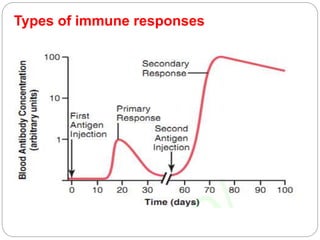
Types of immune responses
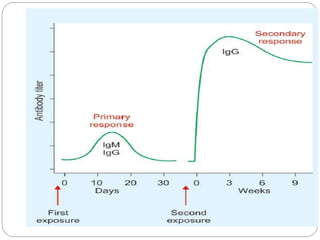
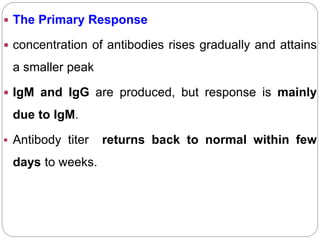
 The Primary Response
 concentration of antibodies rises gradually and attains
a smaller peak
 IgM and IgG are produced, but response is mainly
due to IgM.
 Antibody titer returns back to normal within few
days to weeks.
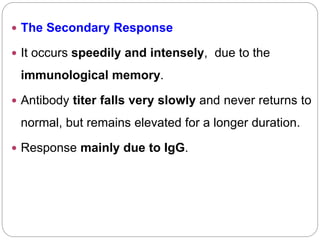
 The Secondary Response
 It occurs speedily and intensely, due to the
immunological memory.
 Antibody titer falls very slowly and never returns to
normal, but remains elevated for a longer duration.
 Response mainly due to IgG.
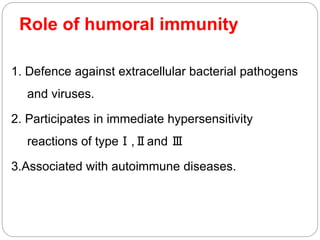
Role of humoral immunity
1. Defence against extracellular bacterial pathogens
and viruses.
2. Participates in immediate hypersensitivity
reactions of typeⅠ,Ⅱand Ⅲ
3.Associated with autoimmune diseases.
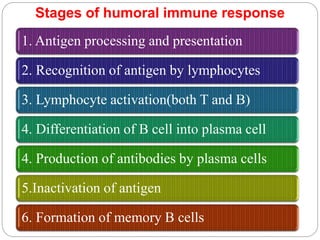
Stages of humoral immune response
1. Antigen processing and presentation
2. Recognition of antigen by lymphocytes
3. Lymphocyte activation(both T and B)
4. Differentiation of B cell into plasma cell
4. Production of antibodies by plasma cells
5.Inactivation of antigen
6. Formation of memory B cells
v
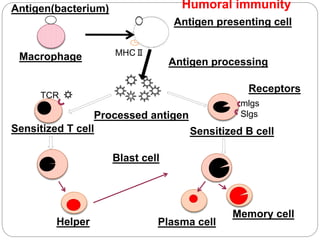
Antigen(bacterium)
Macrophage MHCⅡ
Antigen presenting cell
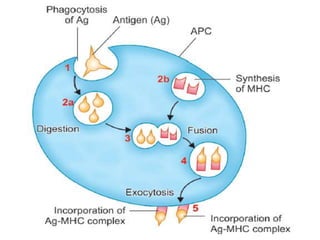
Antigen processing
TCR
Sensitized T cell
Processed antigen Slgs
mlgs
Sensitized B cell
Receptors
Blast cell
Helper Plasma cell
Memory cell
Humoral immunity
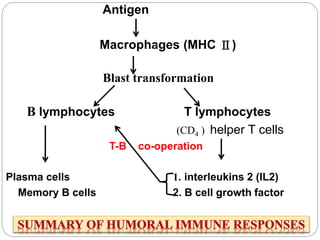
Antigen
Macrophages (MHC Ⅱ)
Blast transformation
B lymphocytes T lymphocytes
(CD4 ) helper T cells
T-B co-operation
Plasma cells 1. interleukins 2 (IL2)
Memory B cells 2. B cell growth factor
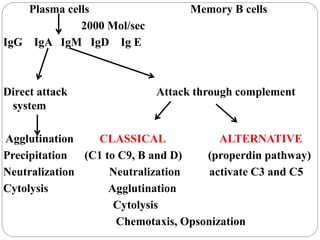
Plasma cells Memory B cells
2000 Mol/sec
IgG IgA IgM IgD Ig E
Direct attack Attack through complement
system
Agglutination CLASSICAL ALTERNATIVE
Precipitation (C1 to C9, B and D) (properdin pathway)
Neutralization Neutralization activate C3 and C5
Cytolysis Agglutination
Cytolysis
Chemotaxis, Opsonization
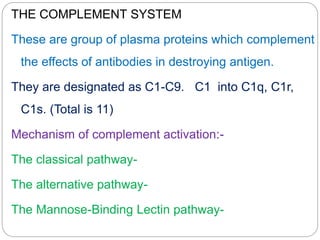
THE COMPLEMENT SYSTEM
These are group of plasma proteins which complement
the effects of antibodies in destroying antigen.
They are designated as C1-C9. C1 into C1q, C1r,
C1s. (Total is 11)
Mechanism of complement activation:-
The classical pathway-
The alternative pathway-
The Mannose-Binding Lectin pathway-
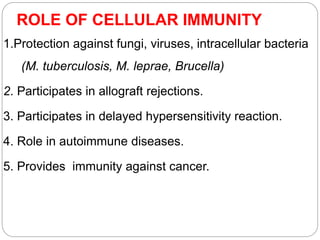
ROLE OF CELLULAR IMMUNITY
1.Protection against fungi, viruses, intracellular bacteria
(M. tuberculosis, M. leprae, Brucella)
2. Participates in allograft rejections.
3. Participates in delayed hypersensitivity reaction.
4. Role in autoimmune diseases.
5. Provides immunity against cancer.
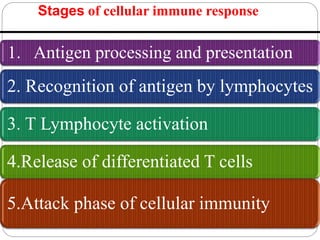
1. Antigen processing and presentation
2. Recognition of antigen by lymphocytes
3. T Lymphocyte activation
4.Release of differentiated T cells
5.Attack phase of cellular immunity
Stages of cellular immune response
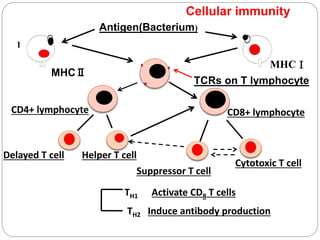
Antigen(Bacterium)
MHCⅡ
MHCⅠ
TCRs on T lymphocyte
CD4+ lymphocyte CD8+ lymphocyte
Delayed T cell Helper T cell
TH1 Activate CD8 T cells
TH2 Induce antibody production
Suppressor T cell
Cytotoxic T cell
Cellular immunity
1
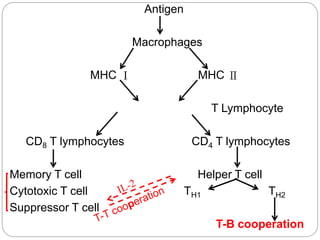
Antigen
Macrophages
MHC Ⅰ MHC Ⅱ
T Lymphocyte
CD8 T lymphocytes CD4 T lymphocytes
Memory T cell Helper T cell
Cytotoxic T cell TH1 TH2
Suppressor T cell
T-B cooperation
Cytotoxic T cells- have receptor protein to bind with
antigen and destroy them by –
1. Perforin (hole-forming protein)mediated killing- in
presence of extracellular calcium.
. 2. Lysis through release of cytotoxic substances
3. Induction of apoptosis by secreting tumour necrosis
factor B (TNF-B)
Helper T cell Two types:- TH1 and TH2 .
- Helper T1 cells - secretes cytokines:
1. Interleukin2( IL-2)- activates the CD8+ cells to
differentiate into cytokines T cells and
suppressor T cells (T-T co- operations) .
2.γ interferon ( IFN-γ)- direct ability to kill antigen
bearing cells.
3. Tumour necrosis factor-B (TNF-B)- induces
apoptosis
Helper T2 cells secrete interleukins 4, 5, 6, 10 and
13. activate B lymphocytes to produce antibodies
(T-B co-operation)
Suppressor T cells-
- Regulate the activity of Cytotoxic T cells.
- Prevent the Cytotoxic T cells from destroying the
body's own tissue along with invading organism.
- It also suppress the activities of helper T cells
AUTOIMMUNITY
Immune response to self- antigen.
Mechanism-
1. Forbidden clones
2. Hidden antigen or sequestrated antigen
3. Neoantigen or altered antigen
4. Cross- reacting antigen
5. Mutations
6.Unbalanced activity of helper & suppressor T cells
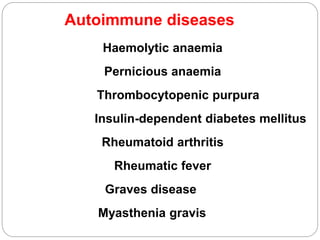
Autoimmune diseases
Haemolytic anaemia
Pernicious anaemia
Thrombocytopenic purpura
Insulin-dependent diabetes mellitus
Rheumatoid arthritis
Rheumatic fever
Graves disease
Myasthenia gravis
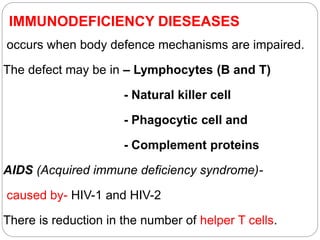
IMMUNODEFICIENCY DIESEASES
occurs when body defence mechanisms are impaired.
The defect may be in – Lymphocytes (B and T)
- Natural killer cell
- Phagocytic cell and
- Complement proteins
AIDS (Acquired immune deficiency syndrome)-
caused by- HIV-1 and HIV-2
There is reduction in the number of helper T cells.
SAQ:-
1.Active immunity, 2. Passive immunity
3. Innate immunity, 4.Cellular immunity,
5. Acquired immunity, 6. Immunoglobins,
7. Functions of lymphoctes,
8. Humoral immunity 9.. Autoimmunity,
LAQ:-
1. Describe role of T lymphocytes/ B lymphocytes in immunity
2. Describe different types of immunoglobins.
Immunity 2

Immunity 2

  • 1.
  • 2.
    Types of immuneresponses
  • 4.
     The PrimaryResponse  concentration of antibodies rises gradually and attains a smaller peak  IgM and IgG are produced, but response is mainly due to IgM.  Antibody titer returns back to normal within few days to weeks.
  • 5.
     The SecondaryResponse  It occurs speedily and intensely, due to the immunological memory.  Antibody titer falls very slowly and never returns to normal, but remains elevated for a longer duration.  Response mainly due to IgG.
  • 6.
    Role of humoralimmunity 1. Defence against extracellular bacterial pathogens and viruses. 2. Participates in immediate hypersensitivity reactions of typeⅠ,Ⅱand Ⅲ 3.Associated with autoimmune diseases.
  • 7.
    Stages of humoralimmune response 1. Antigen processing and presentation 2. Recognition of antigen by lymphocytes 3. Lymphocyte activation(both T and B) 4. Differentiation of B cell into plasma cell 4. Production of antibodies by plasma cells 5.Inactivation of antigen 6. Formation of memory B cells
  • 9.
    v Antigen(bacterium) Macrophage MHCⅡ Antigen presentingcell Antigen processing TCR Sensitized T cell Processed antigen Slgs mlgs Sensitized B cell Receptors Blast cell Helper Plasma cell Memory cell Humoral immunity
  • 10.
    Antigen Macrophages (MHC Ⅱ) Blasttransformation B lymphocytes T lymphocytes (CD4 ) helper T cells T-B co-operation Plasma cells 1. interleukins 2 (IL2) Memory B cells 2. B cell growth factor
  • 11.
    Plasma cells MemoryB cells 2000 Mol/sec IgG IgA IgM IgD Ig E Direct attack Attack through complement system Agglutination CLASSICAL ALTERNATIVE Precipitation (C1 to C9, B and D) (properdin pathway) Neutralization Neutralization activate C3 and C5 Cytolysis Agglutination Cytolysis Chemotaxis, Opsonization
  • 12.
    THE COMPLEMENT SYSTEM Theseare group of plasma proteins which complement the effects of antibodies in destroying antigen. They are designated as C1-C9. C1 into C1q, C1r, C1s. (Total is 11) Mechanism of complement activation:- The classical pathway- The alternative pathway- The Mannose-Binding Lectin pathway-
  • 13.
    ROLE OF CELLULARIMMUNITY 1.Protection against fungi, viruses, intracellular bacteria (M. tuberculosis, M. leprae, Brucella) 2. Participates in allograft rejections. 3. Participates in delayed hypersensitivity reaction. 4. Role in autoimmune diseases. 5. Provides immunity against cancer.
  • 14.
    1. Antigen processingand presentation 2. Recognition of antigen by lymphocytes 3. T Lymphocyte activation 4.Release of differentiated T cells 5.Attack phase of cellular immunity Stages of cellular immune response
  • 15.
    Antigen(Bacterium) MHCⅡ MHCⅠ TCRs on Tlymphocyte CD4+ lymphocyte CD8+ lymphocyte Delayed T cell Helper T cell TH1 Activate CD8 T cells TH2 Induce antibody production Suppressor T cell Cytotoxic T cell Cellular immunity 1
  • 16.
    Antigen Macrophages MHC Ⅰ MHCⅡ T Lymphocyte CD8 T lymphocytes CD4 T lymphocytes Memory T cell Helper T cell Cytotoxic T cell TH1 TH2 Suppressor T cell T-B cooperation
  • 17.
    Cytotoxic T cells-have receptor protein to bind with antigen and destroy them by – 1. Perforin (hole-forming protein)mediated killing- in presence of extracellular calcium. . 2. Lysis through release of cytotoxic substances 3. Induction of apoptosis by secreting tumour necrosis factor B (TNF-B)
  • 18.
    Helper T cellTwo types:- TH1 and TH2 . - Helper T1 cells - secretes cytokines: 1. Interleukin2( IL-2)- activates the CD8+ cells to differentiate into cytokines T cells and suppressor T cells (T-T co- operations) . 2.γ interferon ( IFN-γ)- direct ability to kill antigen bearing cells. 3. Tumour necrosis factor-B (TNF-B)- induces apoptosis
  • 19.
    Helper T2 cellssecrete interleukins 4, 5, 6, 10 and 13. activate B lymphocytes to produce antibodies (T-B co-operation) Suppressor T cells- - Regulate the activity of Cytotoxic T cells. - Prevent the Cytotoxic T cells from destroying the body's own tissue along with invading organism. - It also suppress the activities of helper T cells
  • 20.
    AUTOIMMUNITY Immune response toself- antigen. Mechanism- 1. Forbidden clones 2. Hidden antigen or sequestrated antigen 3. Neoantigen or altered antigen 4. Cross- reacting antigen 5. Mutations 6.Unbalanced activity of helper & suppressor T cells
  • 21.
    Autoimmune diseases Haemolytic anaemia Perniciousanaemia Thrombocytopenic purpura Insulin-dependent diabetes mellitus Rheumatoid arthritis Rheumatic fever Graves disease Myasthenia gravis
  • 22.
    IMMUNODEFICIENCY DIESEASES occurs whenbody defence mechanisms are impaired. The defect may be in – Lymphocytes (B and T) - Natural killer cell - Phagocytic cell and - Complement proteins AIDS (Acquired immune deficiency syndrome)- caused by- HIV-1 and HIV-2 There is reduction in the number of helper T cells.
  • 23.
    SAQ:- 1.Active immunity, 2.Passive immunity 3. Innate immunity, 4.Cellular immunity, 5. Acquired immunity, 6. Immunoglobins, 7. Functions of lymphoctes, 8. Humoral immunity 9.. Autoimmunity, LAQ:- 1. Describe role of T lymphocytes/ B lymphocytes in immunity 2. Describe different types of immunoglobins.