Downloaded 488 times
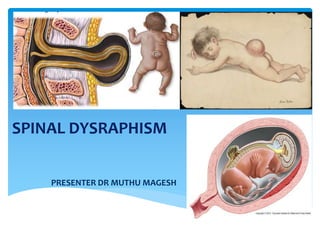
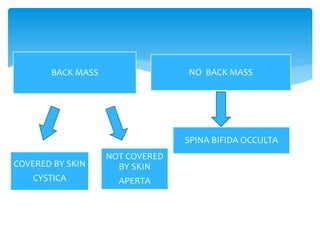
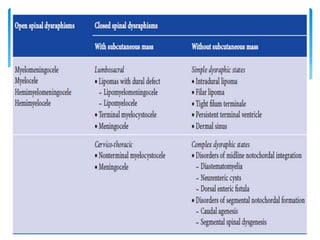
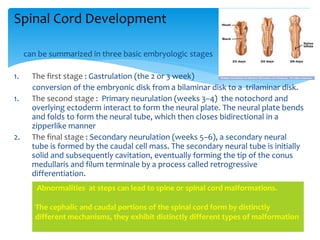
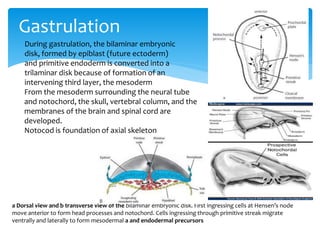
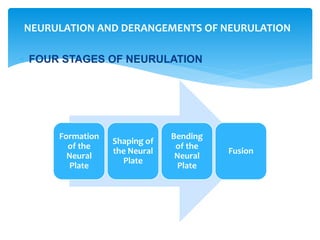
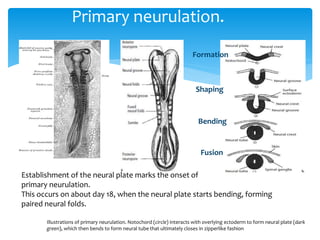
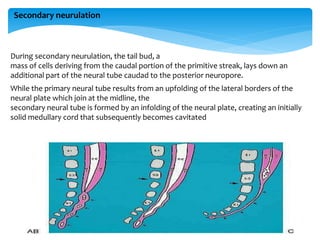
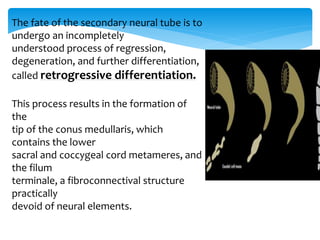
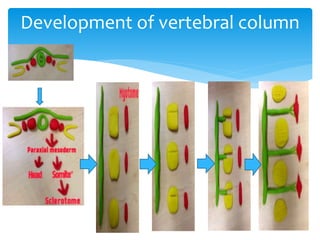
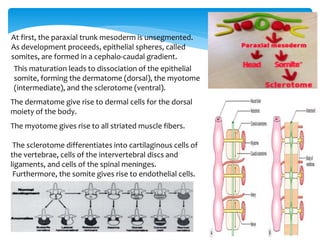
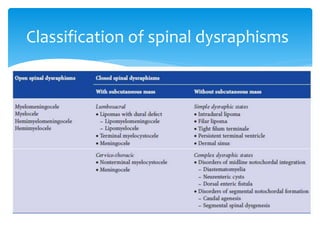
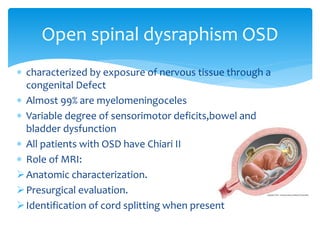
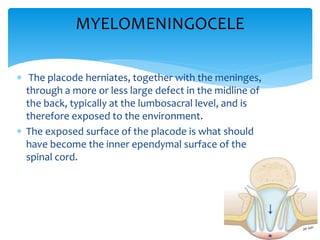
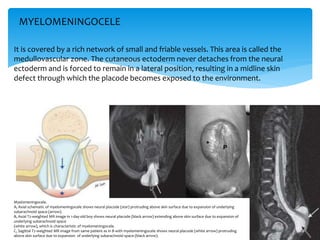
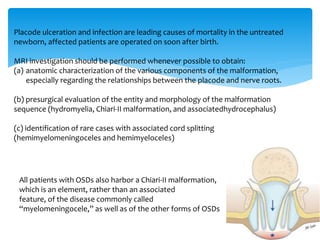
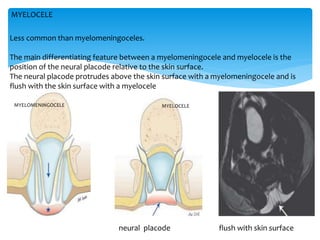
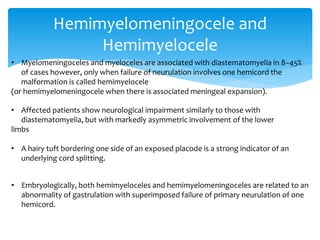
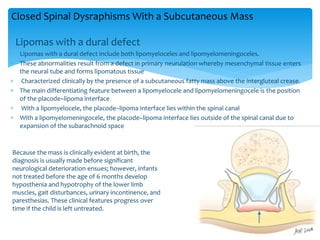
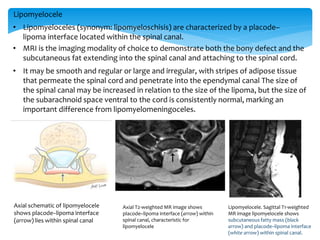
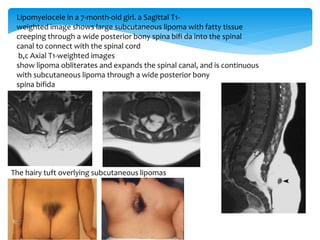
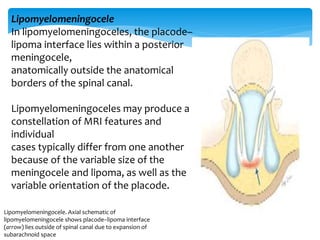
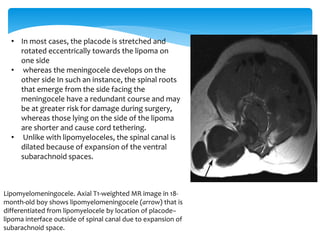
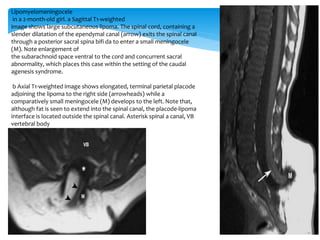
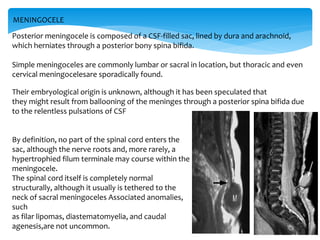
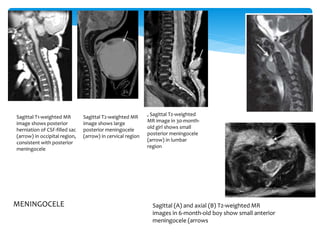
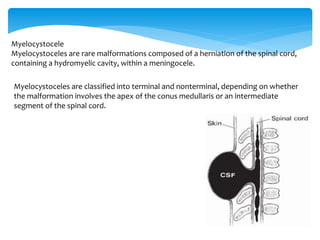
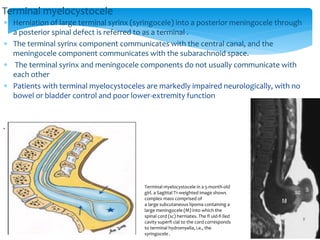
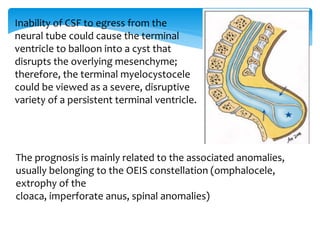
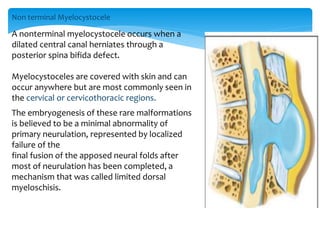
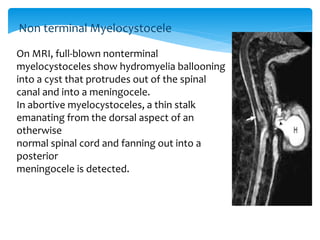
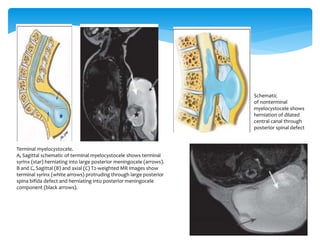
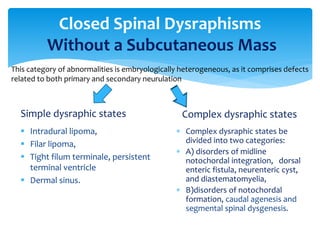
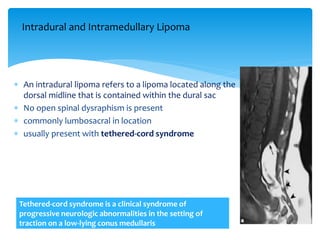
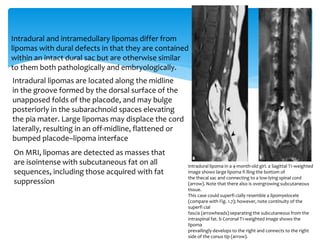
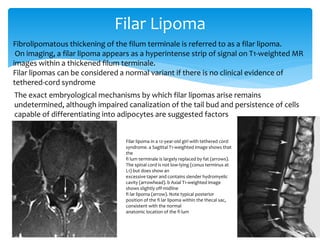
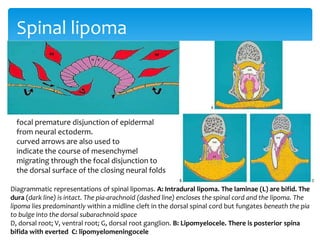
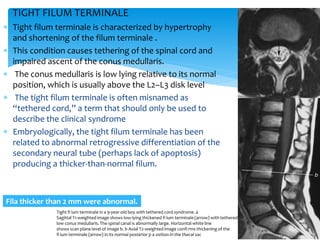
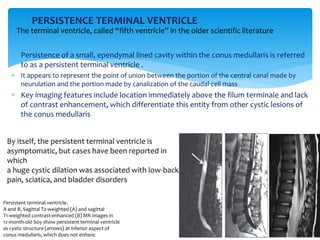
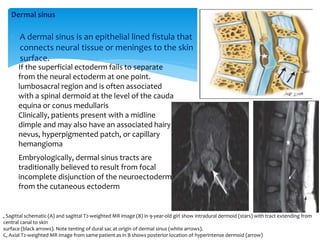
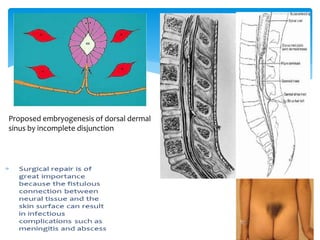
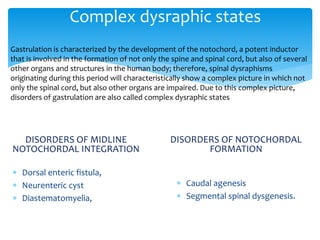
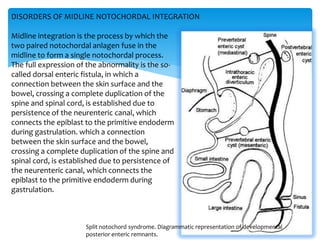
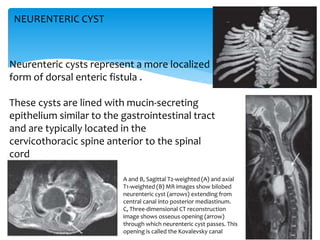
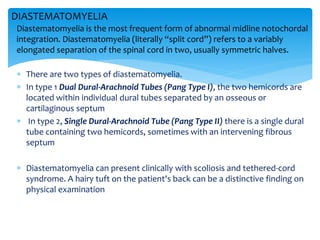
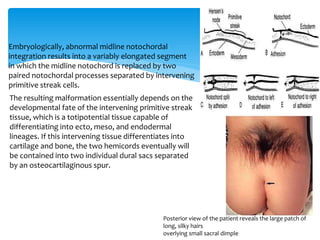
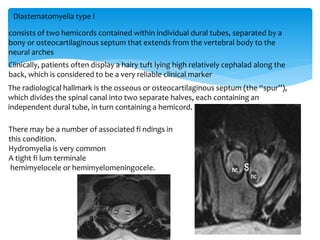
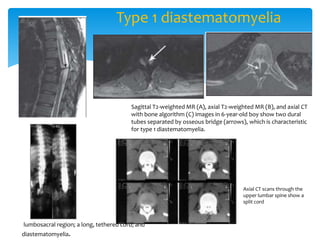
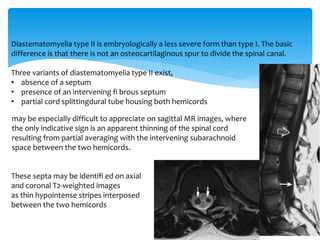
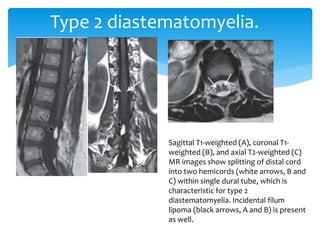
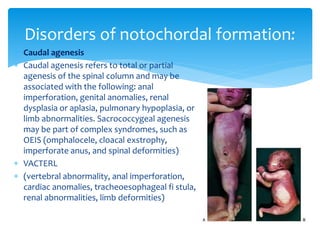
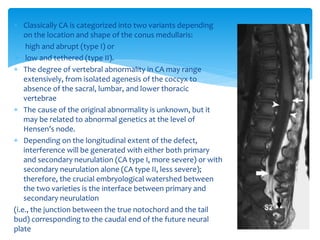
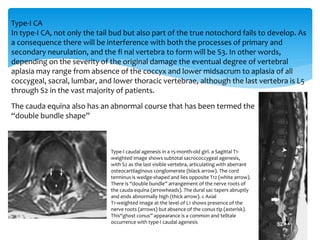
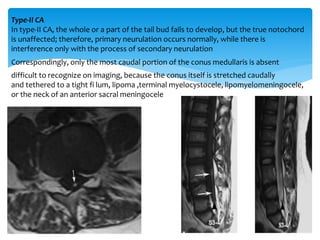
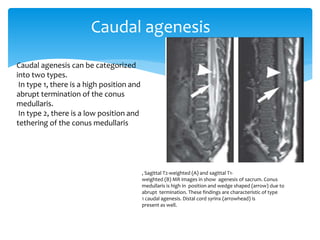
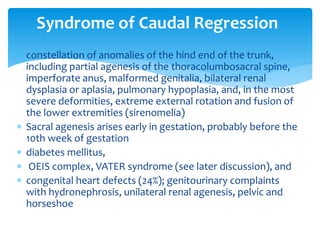
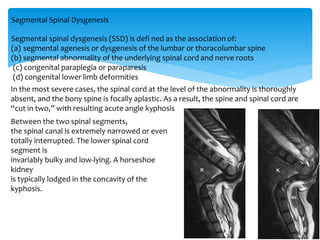
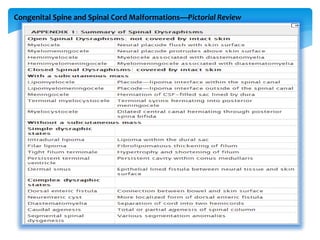



1. Spinal dysraphisms are congenital malformations of the spine and spinal cord. They result from abnormalities during embryological development, particularly during the stages of neurulation. 2. They are classified as open or closed spinal dysraphisms. Open dysraphisms involve exposure of neural tissue through the skin, while closed dysraphisms involve a skin-covered mass or lipoma. 3. Common types include myelomeningocele (most common open type), lipomyelocele, and lipomyelomeningocele (closed types with lipomas). They can cause varying degrees of neurological impairment depending on location and severity.


