ENROLLMENT NO. :-140170116001 
NAME: - Absar Ahsan
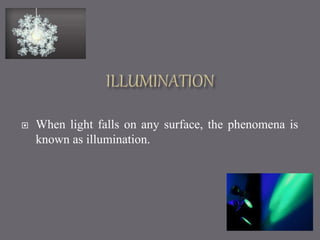
 When light falls on any surface, the phenomena is 
known as illumination.
TYPE OF LAMPS 
Incandescent 
Discharge lamp
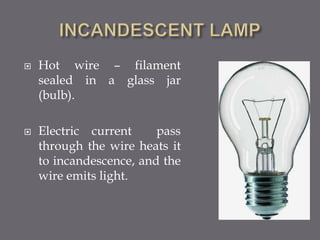
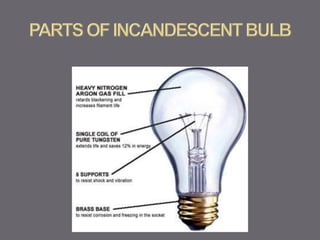
 Hot wire – filament 
sealed in a glass jar 
(bulb). 
 Electric current pass 
through the wire heats it 
to incandescence, and the 
wire emits light.
1. Less expensive 
2. Easier to dim with rheostats 
3. Warmer color than fluorescent and tungsten-halogen 
lamps 
4. Light output is relatively high
1. Energy inefficient 
2. Short lamp life time 
3.Warm source
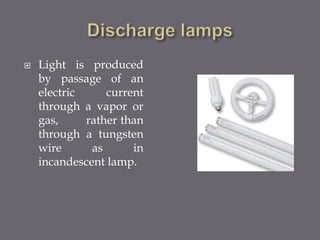
 Light is produced 
by passage of an 
electric current 
through a vapor or 
gas, rather than 
through a tungsten 
wire as in 
incandescent lamp.
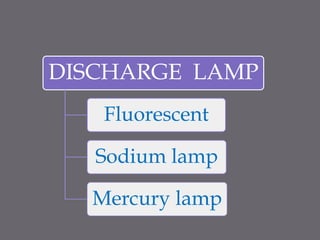
DISCHARGE LAMP 
Fluorescent 
Sodium lamp 
Mercury lamp
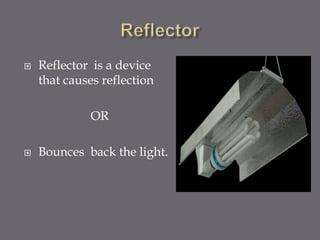
 Reflector is a device 
that causes reflection 
OR 
 Bounces back the light.
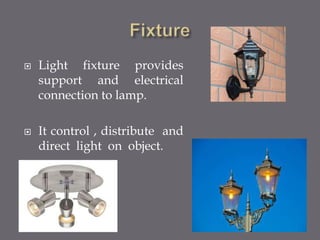
 Light fixture provides 
support and electrical 
connection to lamp. 
 It control , distribute and 
direct light on object.
Lighting schemes are classified according 
to the location, requirement and purpose 
are as under : 
1. Direct lighting 
2. Indirect lighting 
3. Semi direct lighting 
4. Semi indirect lighting 
5. General lighting
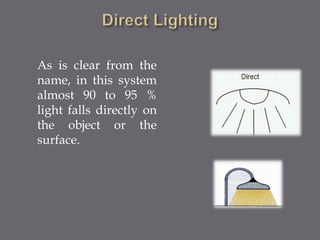
As is clear from the 
name, in this system 
almost 90 to 95 % 
light falls directly on 
the object or the 
surface.
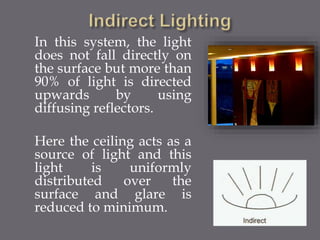
In this system, the light 
does not fall directly on 
the surface but more than 
90% of light is directed 
upwards by using 
diffusing reflectors. 
Here the ceiling acts as a 
source of light and this 
light is uniformly 
distributed over the 
surface and glare is 
reduced to minimum.
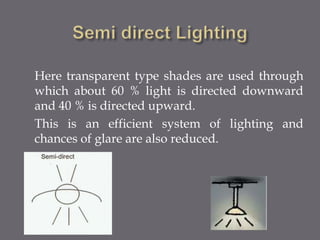
Here transparent type shades are used through 
which about 60 % light is directed downward 
and 40 % is directed upward. 
This is an efficient system of lighting and 
chances of glare are also reduced.
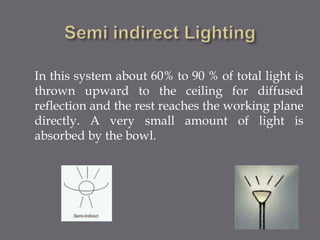
In this system about 60% to 90 % of total light is 
thrown upward to the ceiling for diffused 
reflection and the rest reaches the working plane 
directly. A very small amount of light is 
absorbed by the bowl.
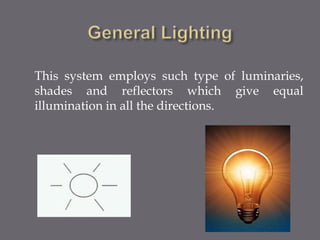
This system employs such type of luminaries, 
shades and reflectors which give equal 
illumination in all the directions.
Iilumination by absar ahsan

Iilumination by absar ahsan

  • 1.
    ENROLLMENT NO. :-140170116001 NAME: - Absar Ahsan
  • 2.
     When lightfalls on any surface, the phenomena is known as illumination.
  • 4.
    TYPE OF LAMPS Incandescent Discharge lamp
  • 5.
     Hot wire– filament sealed in a glass jar (bulb).  Electric current pass through the wire heats it to incandescence, and the wire emits light.
  • 7.
    1. Less expensive 2. Easier to dim with rheostats 3. Warmer color than fluorescent and tungsten-halogen lamps 4. Light output is relatively high
  • 8.
    1. Energy inefficient 2. Short lamp life time 3.Warm source
  • 9.
     Light isproduced by passage of an electric current through a vapor or gas, rather than through a tungsten wire as in incandescent lamp.
  • 10.
    DISCHARGE LAMP Fluorescent Sodium lamp Mercury lamp
  • 12.
     Reflector isa device that causes reflection OR  Bounces back the light.
  • 13.
     Light fixtureprovides support and electrical connection to lamp.  It control , distribute and direct light on object.
  • 14.
    Lighting schemes areclassified according to the location, requirement and purpose are as under : 1. Direct lighting 2. Indirect lighting 3. Semi direct lighting 4. Semi indirect lighting 5. General lighting
  • 15.
    As is clearfrom the name, in this system almost 90 to 95 % light falls directly on the object or the surface.
  • 16.
    In this system,the light does not fall directly on the surface but more than 90% of light is directed upwards by using diffusing reflectors. Here the ceiling acts as a source of light and this light is uniformly distributed over the surface and glare is reduced to minimum.
  • 17.
    Here transparent typeshades are used through which about 60 % light is directed downward and 40 % is directed upward. This is an efficient system of lighting and chances of glare are also reduced.
  • 18.
    In this systemabout 60% to 90 % of total light is thrown upward to the ceiling for diffused reflection and the rest reaches the working plane directly. A very small amount of light is absorbed by the bowl.
  • 19.
    This system employssuch type of luminaries, shades and reflectors which give equal illumination in all the directions.