Our Safety Resources
Background
 Created in 2006
 Established goal to reduce
worldwide civil helicopter
accident rate by 80% by 2016.
 Will work beyond 2016 to
reduce accidents and enhance
safety.
 Represents leading worldwide
safety initiative.
2
0
100
200
300
400
500
600
700
800
1995 1996 1997 1998 1999 2000 2001 2002 2003 2004 2005 2006 2007 2008 2009 2010 2011 2012 2013 2014 2015 2016
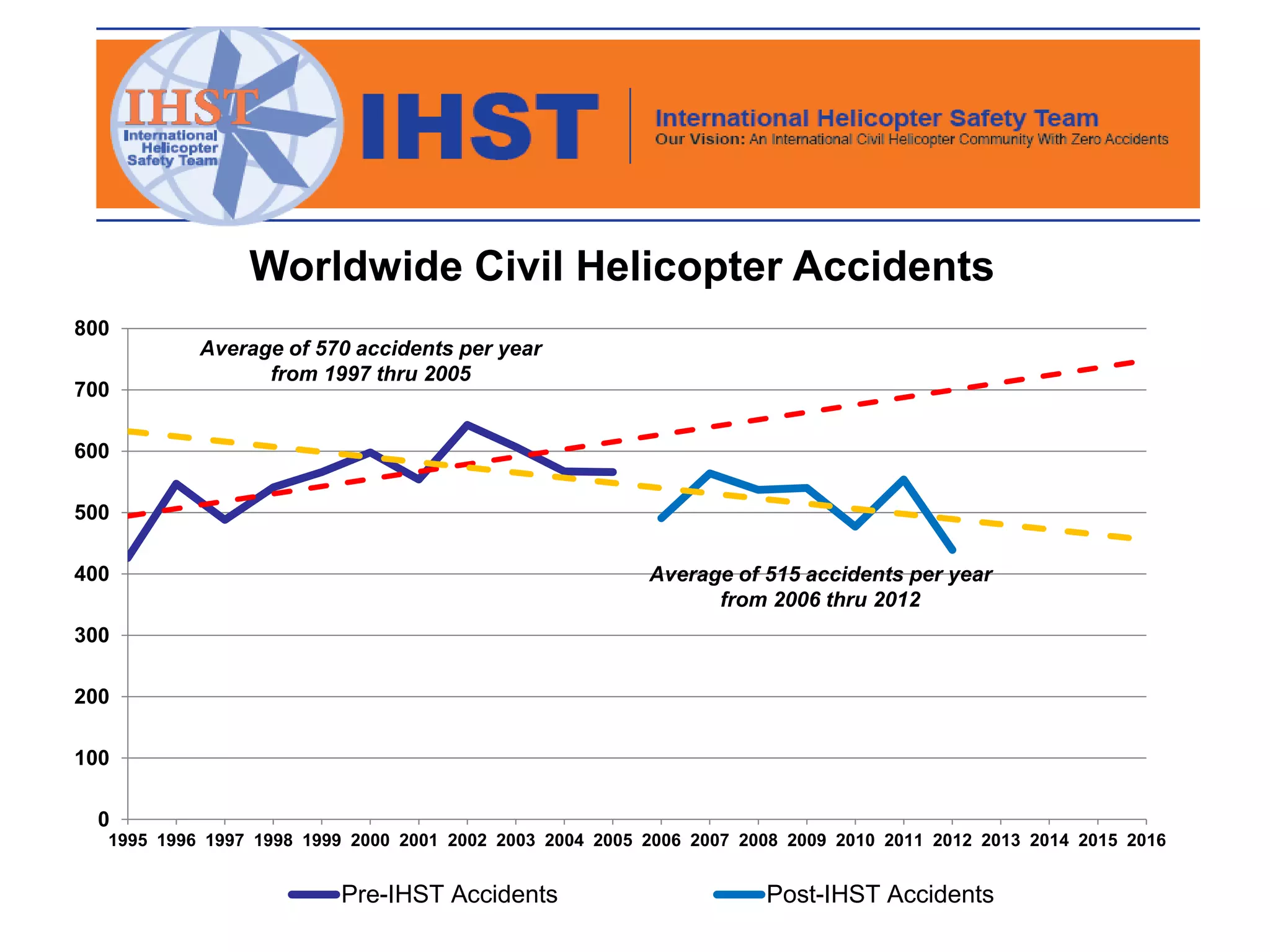
Worldwide Civil Helicopter Accidents
Pre-IHST Accidents Post-IHST Accidents
Average of 570 accidents per year
from 1997 thru 2005
Average of 515 accidents per year
from 2006 thru 2012
Vision and Goals
 Vision: zero accidents
 Improve helicopter safety
 Create global partnerships
4
Strategy and Initiatives
 A Worldwide Effort of 500 Volunteers in 28
countries: U.S., Canada, Europe, India, Japan,
Brazil, Middle East, etc.
 Gather and analyze accident data and dig deep
into accident causes
 Determine ways to reduce accidents and
develop safety toolkits, bulletins, fact
sheets, etc.
 Change attitudes and safety culture
5
How Helicopter Accidents and Fatalities Occur
Most Predominant Occurrences During Fatal Helicopter Accidents
1. Loss of Control
2. Visibility issues
3. Fire (post-impact)
4. Wire Strike
5. System Component Failure
Other Frequent Occurrences During Fatal Helicopter Accidents
 Autorotation (in practice & emergency)
 Controlled Flight Into Terrain
 Fuel issue
 Abrupt Maneuver
 Icing
6
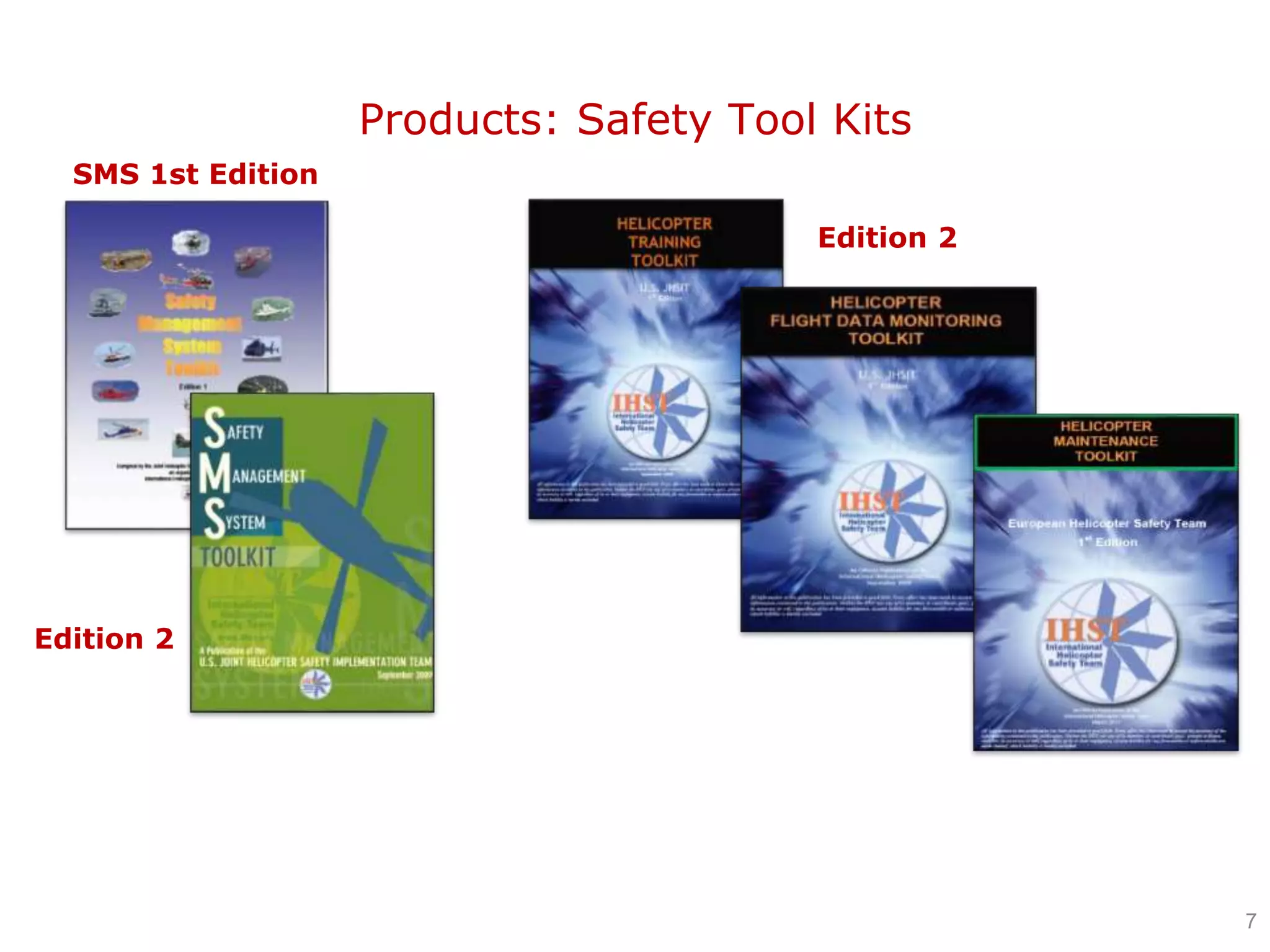
Products: Safety Tool Kits
SMS 1st Edition
Edition 2
Edition 2
7
Products: Safety Bulletins
 Precautionary Landings
 SMS for Certificated Flight Instructors
 SMS: How to Get Started for the Small Operator
 Hazard Identification – If You See Something . . . Say Something
 A Defensive Strategy for Helicopter Pilots
 Controlled Flight into Terrain Prevention with HTAWS
 How to Train to Survive a Real Autorotation
 Inadvertent Entry into Cloud or Fog
 Instructional Safety: Training Safety or Training Safely?
 Recurrent Training: Are You Current and Proficient?
 Controlled Flight into Terrain: How Does it Happen?
 Density Altitude – The Invisible Factor of Helicopter Performance
 Emergency Decision Making: What Happens When You Lose a Critical System?
 Energy in Autorotations – Using Energy for our Benefit
 Gaining Control over Loss-of-Control Accidents
 Rotor Rooter – Autorotation Acronyms
 Visibility: The Minimum You Should Know
8
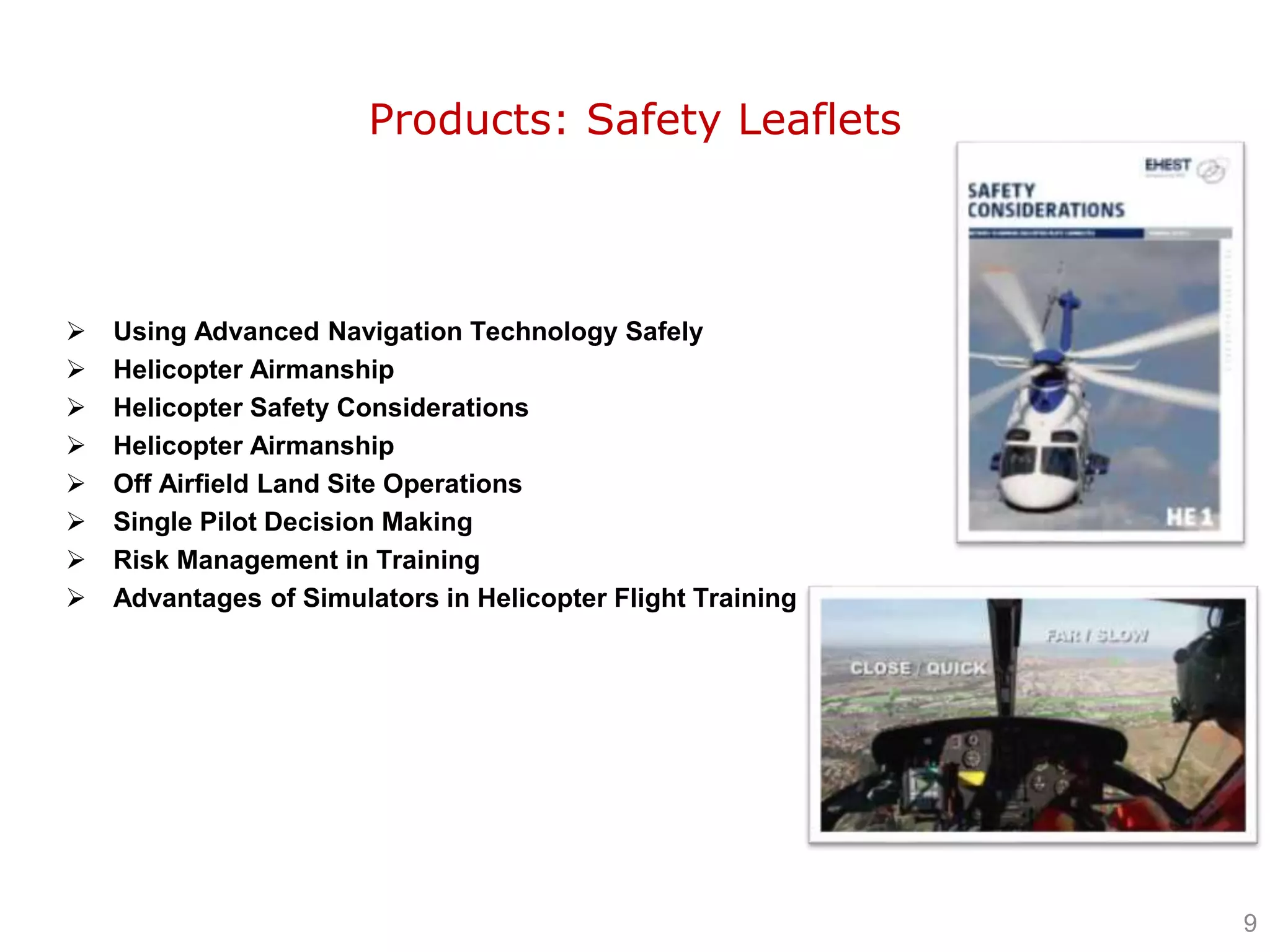
Products: Safety Leaflets
 Using Advanced Navigation Technology Safely
 Helicopter Airmanship
 Helicopter Safety Considerations
 Helicopter Airmanship
 Off Airfield Land Site Operations
 Single Pilot Decision Making
 Risk Management in Training
 Advantages of Simulators in Helicopter Flight Training
9
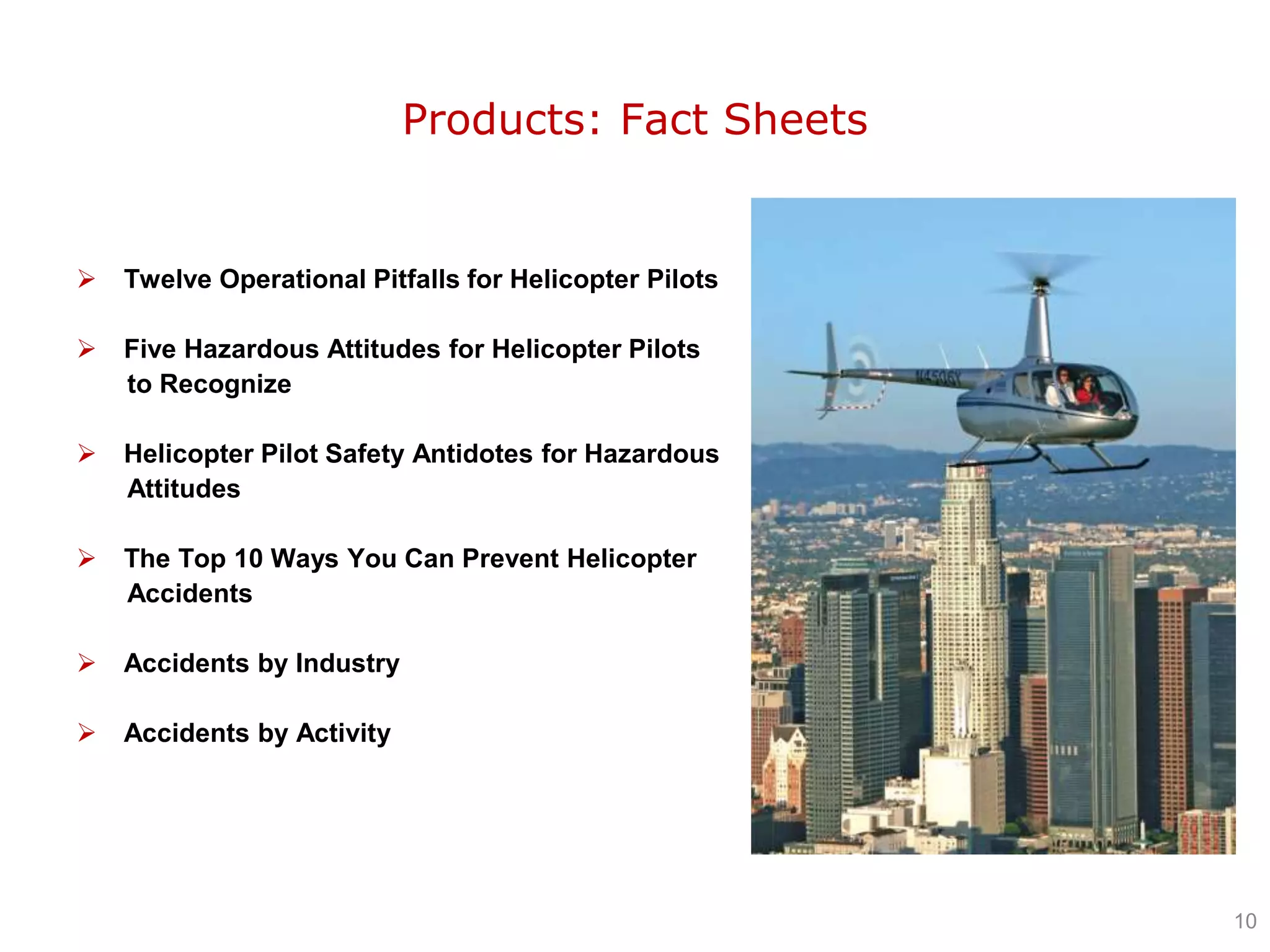
Products: Fact Sheets
 Twelve Operational Pitfalls for Helicopter Pilots
 Five Hazardous Attitudes for Helicopter Pilots
to Recognize
 Helicopter Pilot Safety Antidotes for Hazardous
Attitudes
 The Top 10 Ways You Can Prevent Helicopter
Accidents
 Accidents by Industry
 Accidents by Activity
10
Where to Find IHST
www.ihst.org
IHST on Facebook
IHST on Twitter
We encourage you to add the www.ihst.org link to your company website.
11
ANY QUESTIONS?
WWW.IHST.ORG

IHST Safety Resources for Helicopter Pilots and Operators

  • 1.
  • 2.
    Background  Created in2006  Established goal to reduce worldwide civil helicopter accident rate by 80% by 2016.  Will work beyond 2016 to reduce accidents and enhance safety.  Represents leading worldwide safety initiative. 2
  • 3.
    0 100 200 300 400 500 600 700 800 1995 1996 19971998 1999 2000 2001 2002 2003 2004 2005 2006 2007 2008 2009 2010 2011 2012 2013 2014 2015 2016 Worldwide Civil Helicopter Accidents Pre-IHST Accidents Post-IHST Accidents Average of 570 accidents per year from 1997 thru 2005 Average of 515 accidents per year from 2006 thru 2012
  • 4.
    Vision and Goals Vision: zero accidents  Improve helicopter safety  Create global partnerships 4
  • 5.
    Strategy and Initiatives A Worldwide Effort of 500 Volunteers in 28 countries: U.S., Canada, Europe, India, Japan, Brazil, Middle East, etc.  Gather and analyze accident data and dig deep into accident causes  Determine ways to reduce accidents and develop safety toolkits, bulletins, fact sheets, etc.  Change attitudes and safety culture 5
  • 6.
    How Helicopter Accidentsand Fatalities Occur Most Predominant Occurrences During Fatal Helicopter Accidents 1. Loss of Control 2. Visibility issues 3. Fire (post-impact) 4. Wire Strike 5. System Component Failure Other Frequent Occurrences During Fatal Helicopter Accidents  Autorotation (in practice & emergency)  Controlled Flight Into Terrain  Fuel issue  Abrupt Maneuver  Icing 6
  • 7.
    Products: Safety ToolKits SMS 1st Edition Edition 2 Edition 2 7
  • 8.
    Products: Safety Bulletins Precautionary Landings  SMS for Certificated Flight Instructors  SMS: How to Get Started for the Small Operator  Hazard Identification – If You See Something . . . Say Something  A Defensive Strategy for Helicopter Pilots  Controlled Flight into Terrain Prevention with HTAWS  How to Train to Survive a Real Autorotation  Inadvertent Entry into Cloud or Fog  Instructional Safety: Training Safety or Training Safely?  Recurrent Training: Are You Current and Proficient?  Controlled Flight into Terrain: How Does it Happen?  Density Altitude – The Invisible Factor of Helicopter Performance  Emergency Decision Making: What Happens When You Lose a Critical System?  Energy in Autorotations – Using Energy for our Benefit  Gaining Control over Loss-of-Control Accidents  Rotor Rooter – Autorotation Acronyms  Visibility: The Minimum You Should Know 8
  • 9.
    Products: Safety Leaflets Using Advanced Navigation Technology Safely  Helicopter Airmanship  Helicopter Safety Considerations  Helicopter Airmanship  Off Airfield Land Site Operations  Single Pilot Decision Making  Risk Management in Training  Advantages of Simulators in Helicopter Flight Training 9
  • 10.
    Products: Fact Sheets Twelve Operational Pitfalls for Helicopter Pilots  Five Hazardous Attitudes for Helicopter Pilots to Recognize  Helicopter Pilot Safety Antidotes for Hazardous Attitudes  The Top 10 Ways You Can Prevent Helicopter Accidents  Accidents by Industry  Accidents by Activity 10
  • 11.
    Where to FindIHST www.ihst.org IHST on Facebook IHST on Twitter We encourage you to add the www.ihst.org link to your company website. 11
  • 12.