SCLY1: Culture & IdentityPostmodernism – A New Way of Looking at Identity
IDENTITY:Refers to the sense that someone has of who they are, of what is most important about them
Significant sources of identity are likely to include nationality, ethnicity, sexuality, gender and classIdentity:Personal identity – refers to how a person thinks about themselves
Social identity – refers to how they are perceived by others
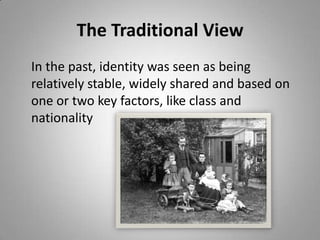
NB: Personal and social identities do not necessarily match – a person perceived by others to be female may see themselves as a man trapped in a woman’s bodyThe Traditional View	In the past, identity was seen as being relatively stable, widely shared and based on one or two key factors, like class and nationality
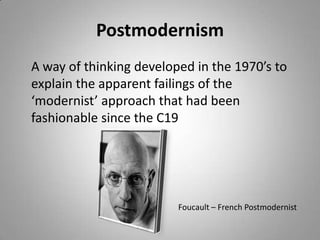
Postmodernism	A way of thinking developed in the 1970’s to explain the apparent failings of the ‘modernist’ approach that had been fashionable since the C19Foucault – French Postmodernist
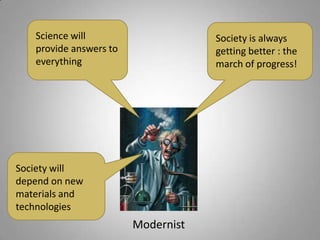
Modernism?A belief that the future is necessarily better than the past
An emphasis on new materials
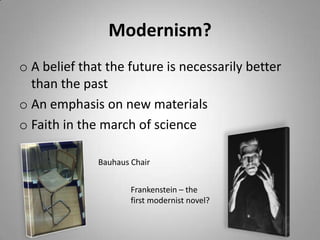
Faith in the march of scienceBauhaus ChairFrankenstein – the first modernist novel?
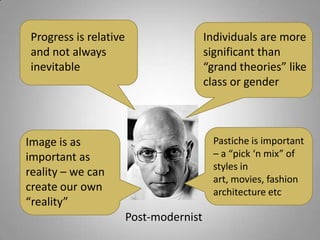
Postmodernism?Much less certainty about ‘progress’
Emphasis on the individual rather than the group
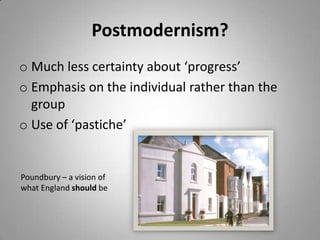
Use of ‘pastiche’Poundbury – a vision of what England should be
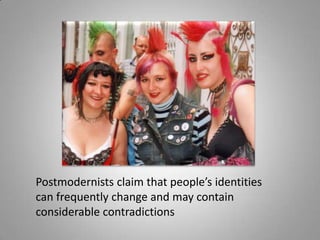
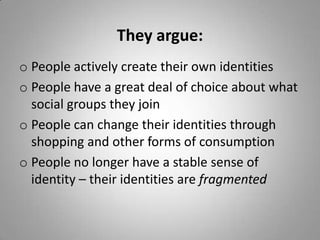
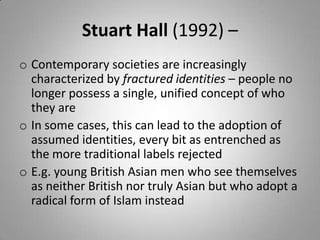
Postmodernists claim that people’s identities can frequently change and may contain considerable contradictions

Identity

  • 1.
    SCLY1: Culture &IdentityPostmodernism – A New Way of Looking at Identity
  • 2.
    IDENTITY:Refers to thesense that someone has of who they are, of what is most important about them
  • 3.
    Significant sources ofidentity are likely to include nationality, ethnicity, sexuality, gender and classIdentity:Personal identity – refers to how a person thinks about themselves
  • 4.
    Social identity –refers to how they are perceived by others
  • 5.
    NB: Personal andsocial identities do not necessarily match – a person perceived by others to be female may see themselves as a man trapped in a woman’s bodyThe Traditional View In the past, identity was seen as being relatively stable, widely shared and based on one or two key factors, like class and nationality
  • 6.
    Postmodernism A way ofthinking developed in the 1970’s to explain the apparent failings of the ‘modernist’ approach that had been fashionable since the C19Foucault – French Postmodernist
  • 7.
    Modernism?A belief thatthe future is necessarily better than the past
  • 8.
    An emphasis onnew materials
  • 9.
    Faith in themarch of scienceBauhaus ChairFrankenstein – the first modernist novel?
  • 10.
  • 11.
    Emphasis on theindividual rather than the group
  • 12.
    Use of ‘pastiche’Poundbury– a vision of what England should be
  • 13.
    Postmodernists claim thatpeople’s identities can frequently change and may contain considerable contradictions