Impact of COVID-19 on Livestock Value Chain in
Kenya
Esther Omosa, Senior Nutrition Specialist
USAID-Accelerated Value Chain Development Program, Kenya
ICTforAg 2020 ‘Advancing Resilience, Nutrition, and Agriculture-led
Growth in a Digital World’ Global Online Conference, 18 November
2020
Using Data and Digital Technology to
Facilitate COVID Recovery in
Livestock Markets
Background
• 5-Year Feed the Future Program, in 21/47 counties in Kenya
• The livestock value chain, implemented by ILRI in 5 counties
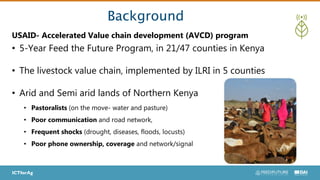
• Arid and Semi arid lands of Northern Kenya
• Pastoralists (on the move- water and pasture)
• Poor communication and road network,
• Frequent shocks (drought, diseases, floods, locusts)
• Poor phone ownership, coverage and network/signal
USAID- Accelerated Value chain development (AVCD) program
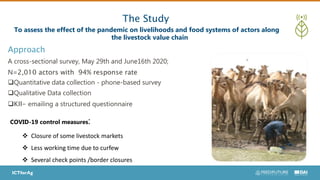
The Study
A cross-sectional survey, May 29th and June16th 2020;
N=2,010 actors with 94% response rate
Quantitative data collection - phone-based survey
Qualitative Data collection
KII- emailing a structured questionnaire
To assess the effect of the pandemic on livelihoods and food systems of actors along
the livestock value chain
Approach
COVID-19 control measures:
 Closure of some livestock markets
 Less working time due to curfew
 Several check points /border closures
Findings
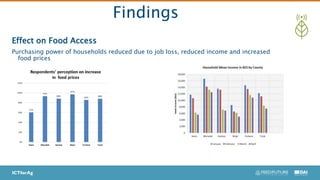
Effect on Food Access
Purchasing power of households reduced due to job loss, reduced income and increased
food prices
Findings
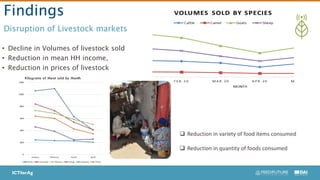
• Decline in Volumes of livestock sold
• Reduction in mean HH income,
• Reduction in prices of livestock
Disruption of Livestock markets
 Reduction in variety of food items consumed
 Reduction in quantity of foods consumed
How has the data helped us
recover?
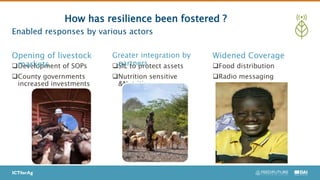
How has resilience been fostered ?
Development of SOPs
County governments
increased investments
Enabled responses by various actors
Opening of livestock
markets SIL to protect assets
Nutrition sensitive
&Nutrition
Greater integration by
partners Food distribution
Radio messaging
Widened Coverage
Opportunities for data to further support livestock
markets
Data on pasture- where it has recharged and where it is
depleted
Livestock Disease outbreaks- for timely response
Livestock prices – more location disaggregation
E-livestock trading
Data on consumption and Nutritional status
Impact of COVID-19 on Livestock Value Chain in Kenya

Impact of COVID-19 on Livestock Value Chain in Kenya

  • 1.
    Impact of COVID-19on Livestock Value Chain in Kenya Esther Omosa, Senior Nutrition Specialist USAID-Accelerated Value Chain Development Program, Kenya ICTforAg 2020 ‘Advancing Resilience, Nutrition, and Agriculture-led Growth in a Digital World’ Global Online Conference, 18 November 2020
  • 2.
    Using Data andDigital Technology to Facilitate COVID Recovery in Livestock Markets
  • 3.
    Background • 5-Year Feedthe Future Program, in 21/47 counties in Kenya • The livestock value chain, implemented by ILRI in 5 counties • Arid and Semi arid lands of Northern Kenya • Pastoralists (on the move- water and pasture) • Poor communication and road network, • Frequent shocks (drought, diseases, floods, locusts) • Poor phone ownership, coverage and network/signal USAID- Accelerated Value chain development (AVCD) program
  • 4.
    The Study A cross-sectionalsurvey, May 29th and June16th 2020; N=2,010 actors with 94% response rate Quantitative data collection - phone-based survey Qualitative Data collection KII- emailing a structured questionnaire To assess the effect of the pandemic on livelihoods and food systems of actors along the livestock value chain Approach COVID-19 control measures:  Closure of some livestock markets  Less working time due to curfew  Several check points /border closures
  • 5.
    Findings Effect on FoodAccess Purchasing power of households reduced due to job loss, reduced income and increased food prices
  • 6.
    Findings • Decline inVolumes of livestock sold • Reduction in mean HH income, • Reduction in prices of livestock Disruption of Livestock markets  Reduction in variety of food items consumed  Reduction in quantity of foods consumed
  • 7.
    How has thedata helped us recover?
  • 8.
    How has resiliencebeen fostered ? Development of SOPs County governments increased investments Enabled responses by various actors Opening of livestock markets SIL to protect assets Nutrition sensitive &Nutrition Greater integration by partners Food distribution Radio messaging Widened Coverage
  • 9.
    Opportunities for datato further support livestock markets Data on pasture- where it has recharged and where it is depleted Livestock Disease outbreaks- for timely response Livestock prices – more location disaggregation E-livestock trading Data on consumption and Nutritional status