Oscar del Estal
Escola Splai
oestal@xtec.cat
blocs.xtec.cat/anglesceipsplai
www.facebook.com/anglesceipsplai
First Cycle 2 sessions (1 half group)
Second Cycle 3 sessions (1 half group)
Third Cycle 3 sessions (1 half group)
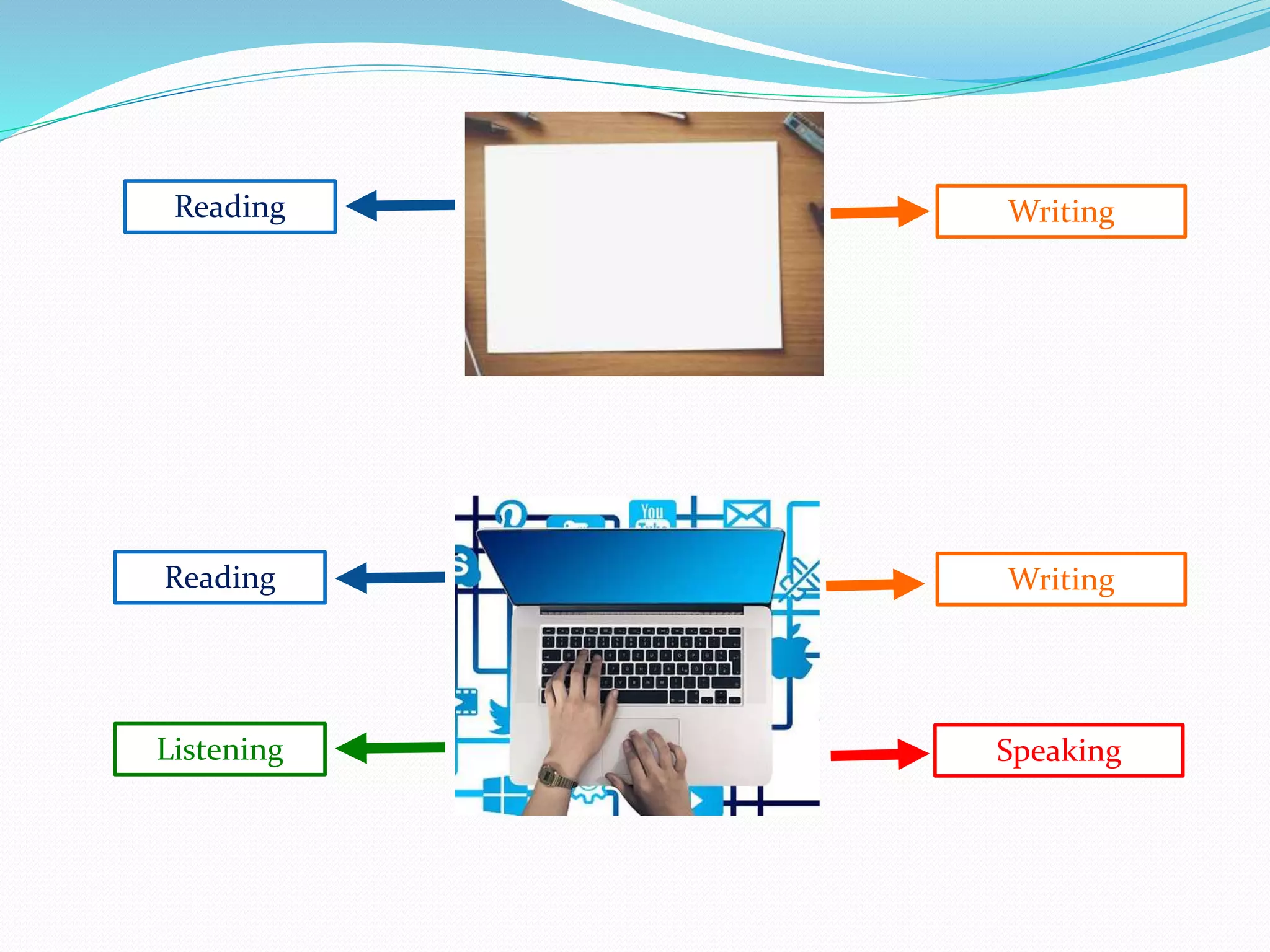
Reading Writing
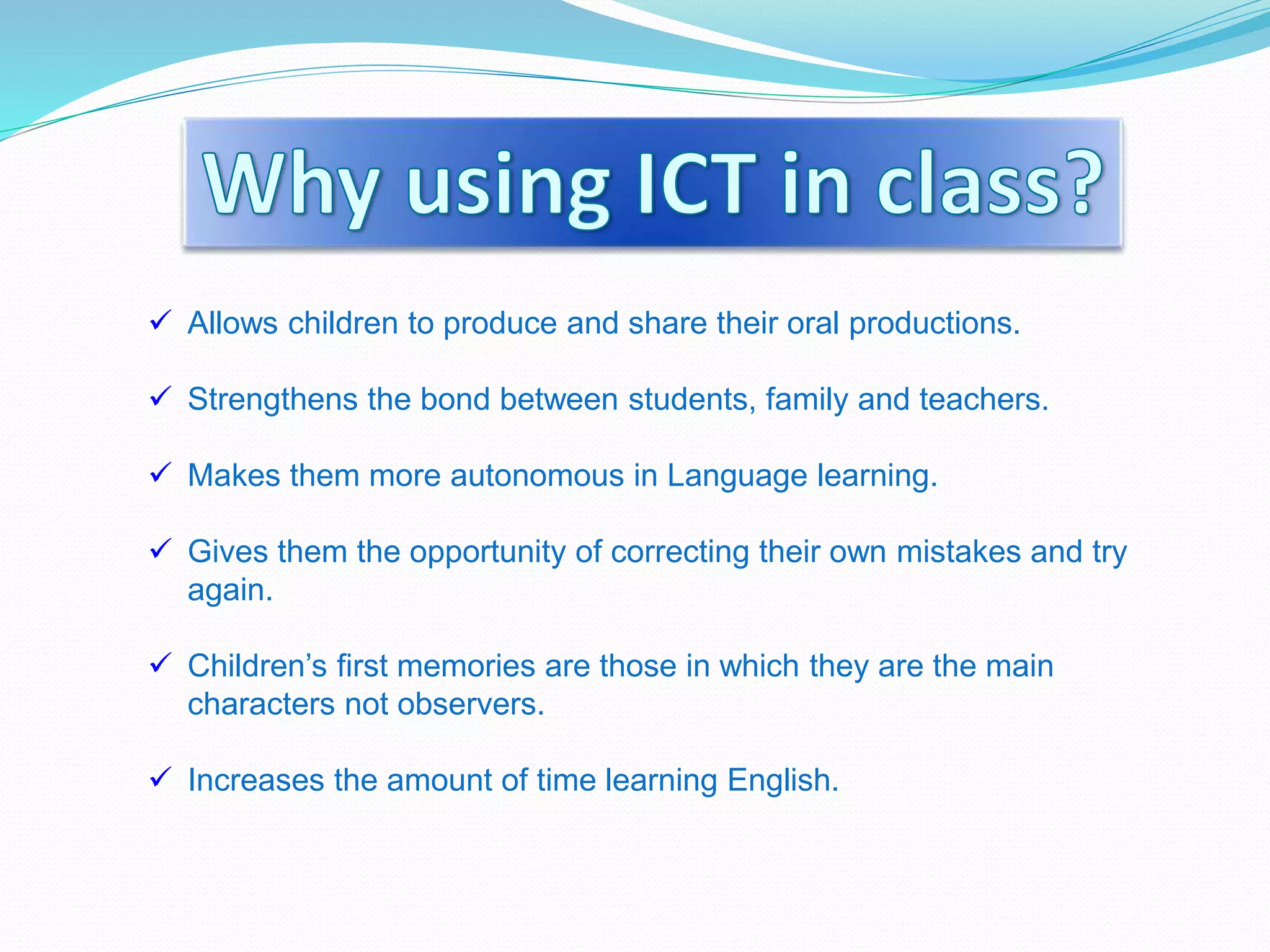
Reading Writing
SpeakingListening
 Allows children to produce and share their oral productions.
 Strengthens the bond between students, family and teachers.
 Makes them more autonomous in Language learning.
 Gives them the opportunity of correcting their own mistakes and try
again.
 Children’s first memories are those in which they are the main
characters not observers.
 Increases the amount of time learning English.
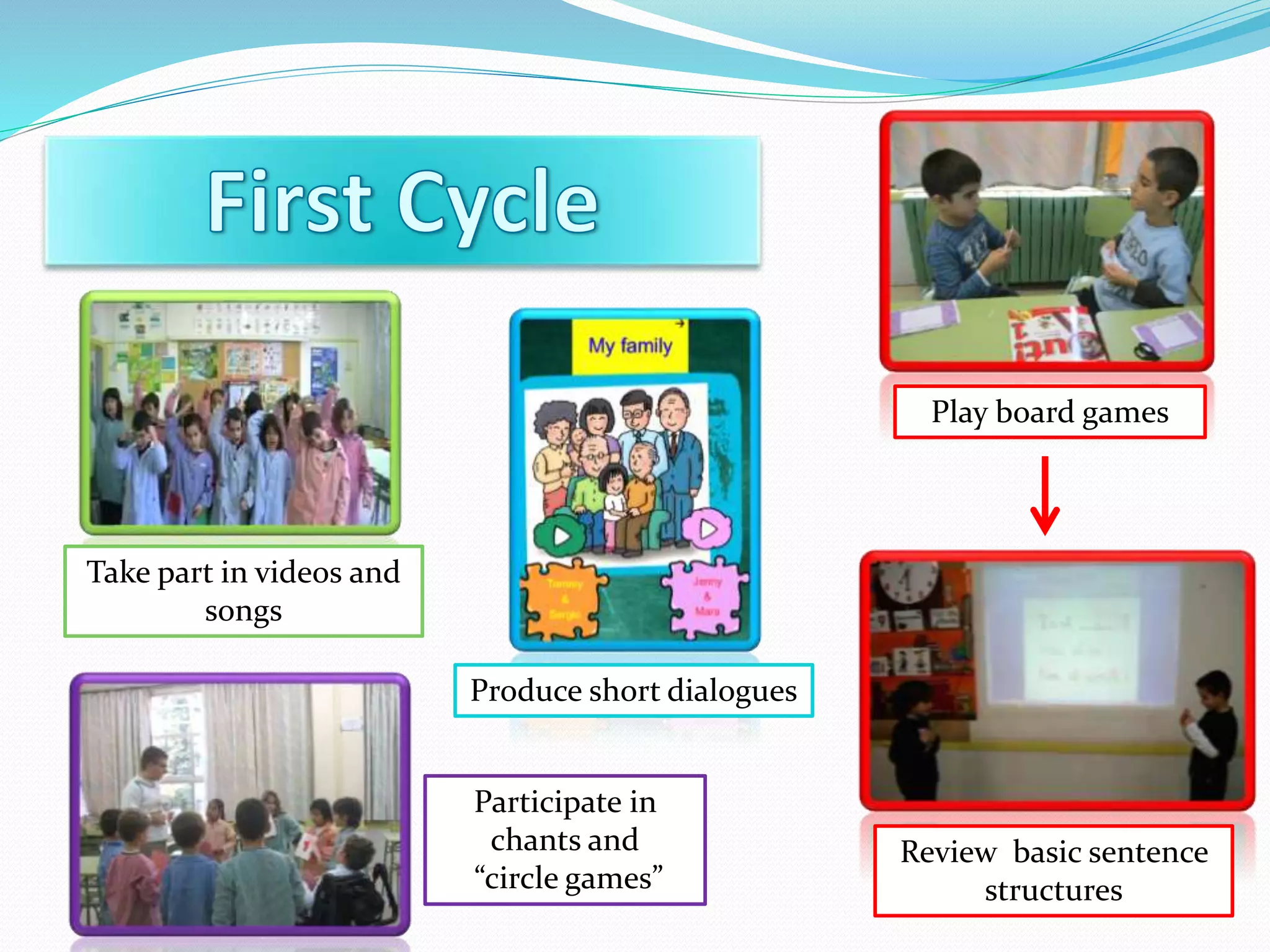
Take part in videos and
songs
Produce short dialogues
Review basic sentence
structures
Play board games
Participate in
chants and
“circle games”
 Miming the song and teaching the song using body language and
flashcards as a support.
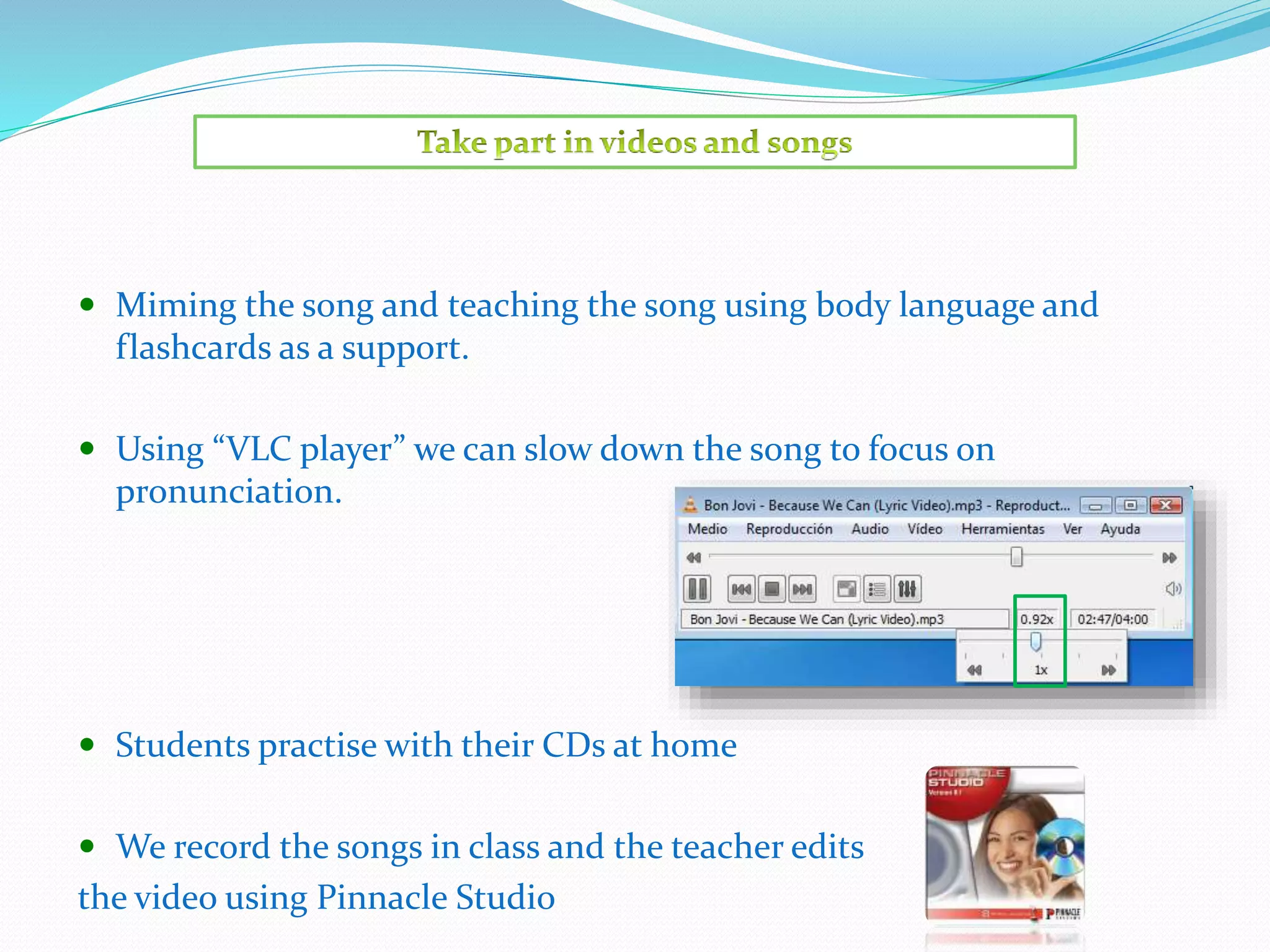
 Using “VLC player” we can slow down the song to focus on
pronunciation.
 Students practise with their CDs at home
 We record the songs in class and the teacher edits
the video using Pinnacle Studio
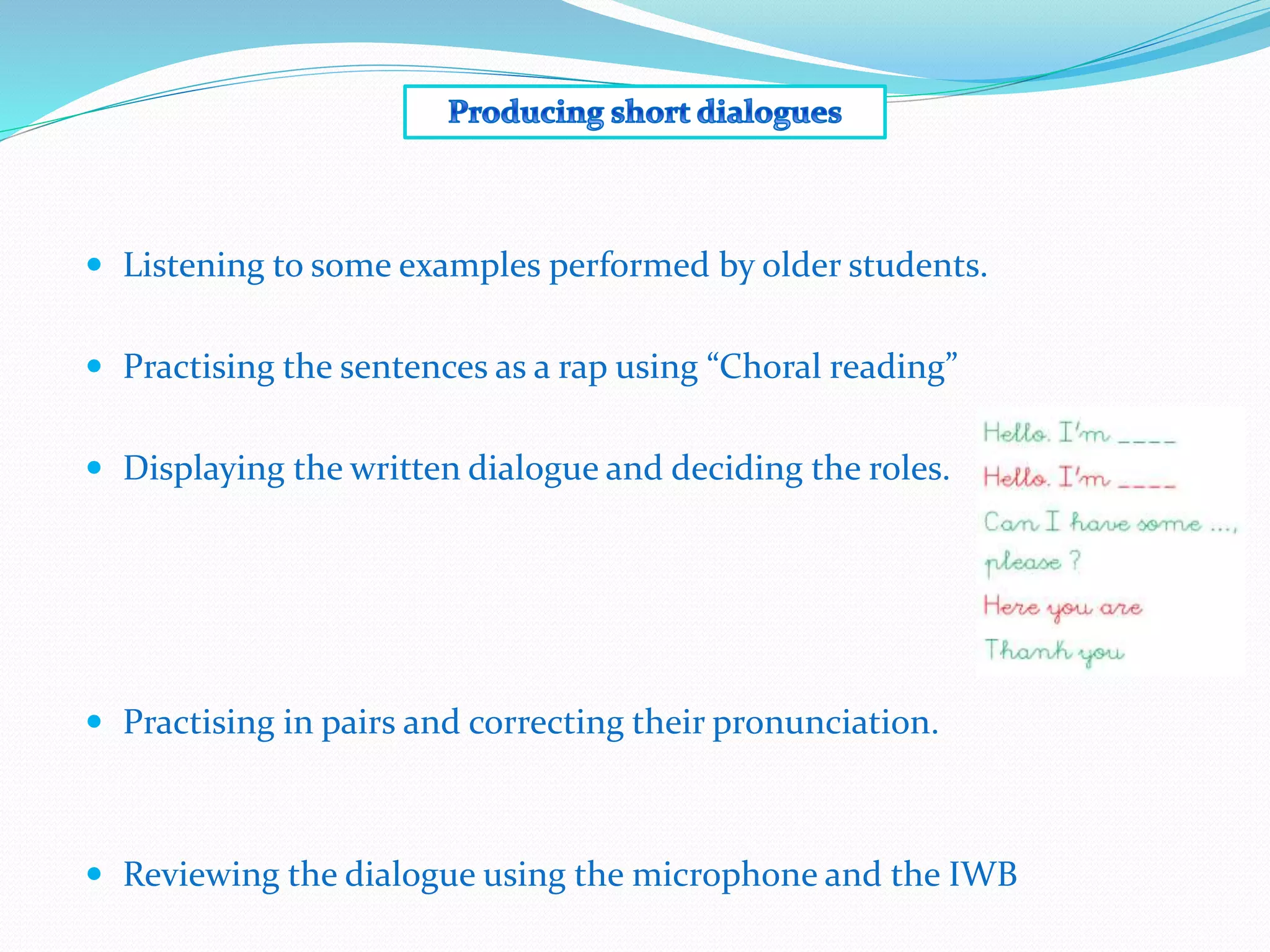
 Listening to some examples performed by older students.
 Practising the sentences as a rap using “Choral reading”
 Displaying the written dialogue and deciding the roles.
 Practising in pairs and correcting their pronunciation.
 Reviewing the dialogue using the microphone and the IWB
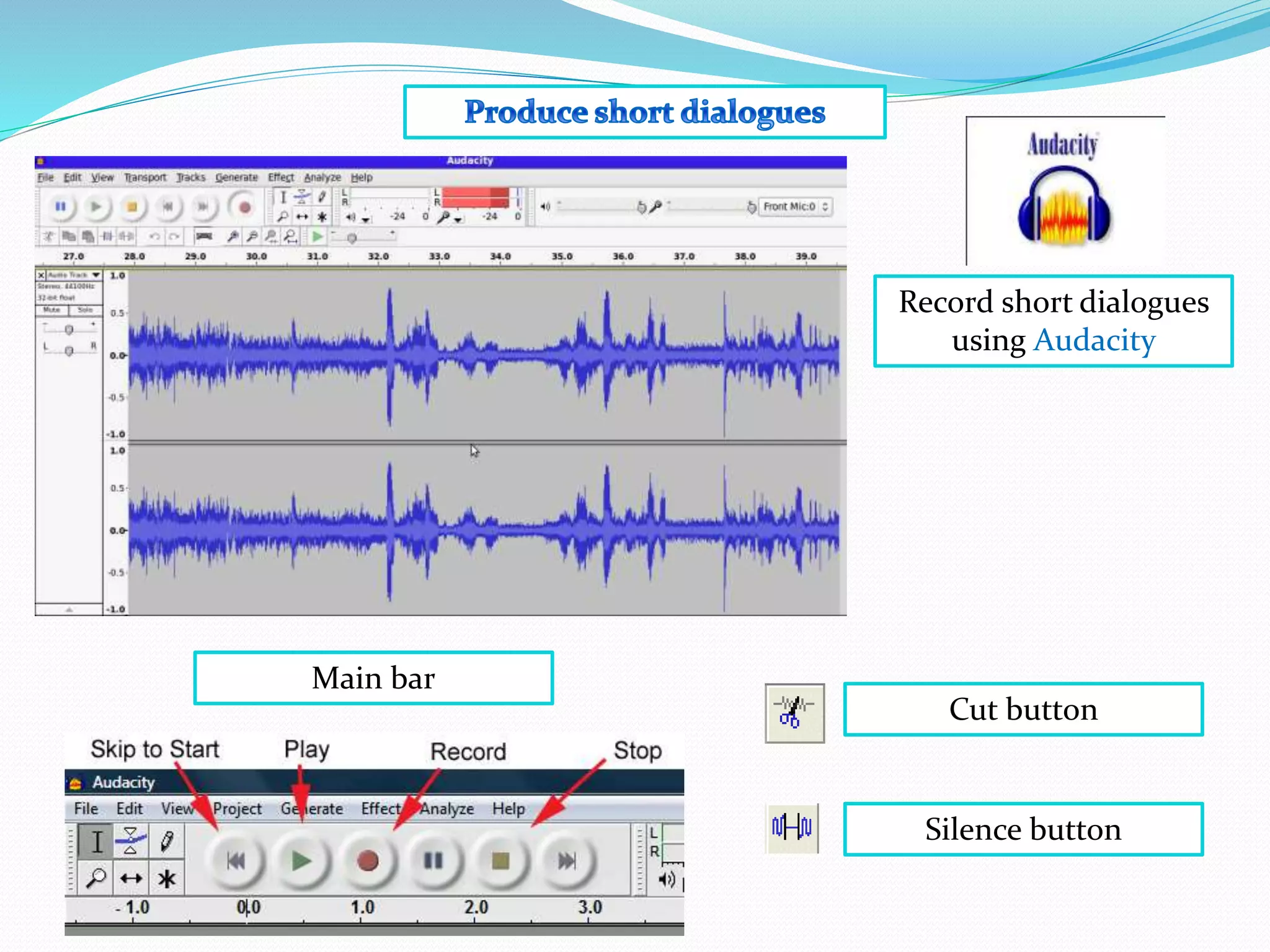
Record short dialogues
using Audacity
Main bar
Cut button
Silence button
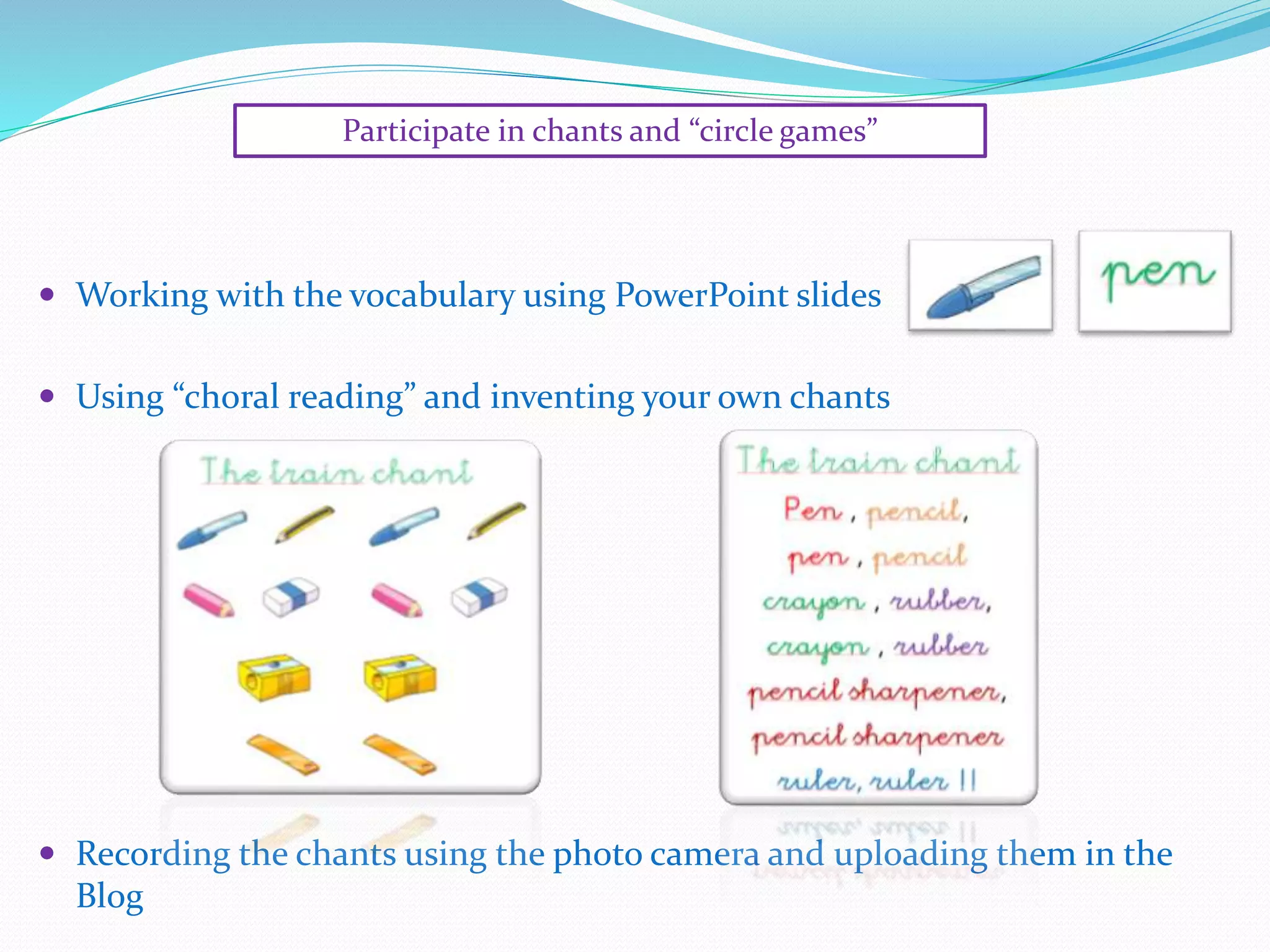
 Working with the vocabulary using PowerPoint slides
 Using “choral reading” and inventing your own chants
 Recording the chants using the photo camera and uploading them in the
Blog
Participate in chants and “circle games”
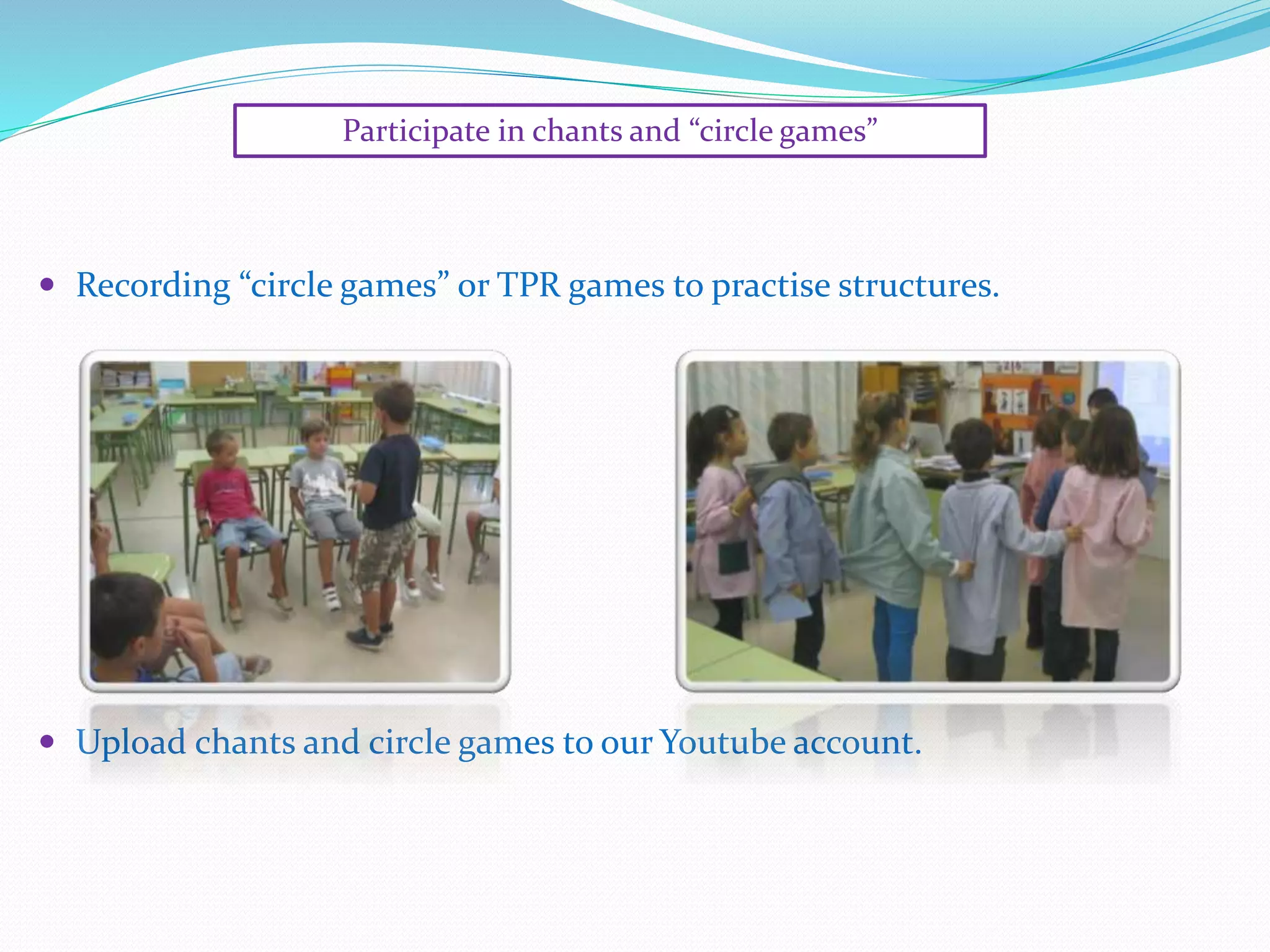
 Recording “circle games” or TPR games to practise structures.
 Upload chants and circle games to our Youtube account.
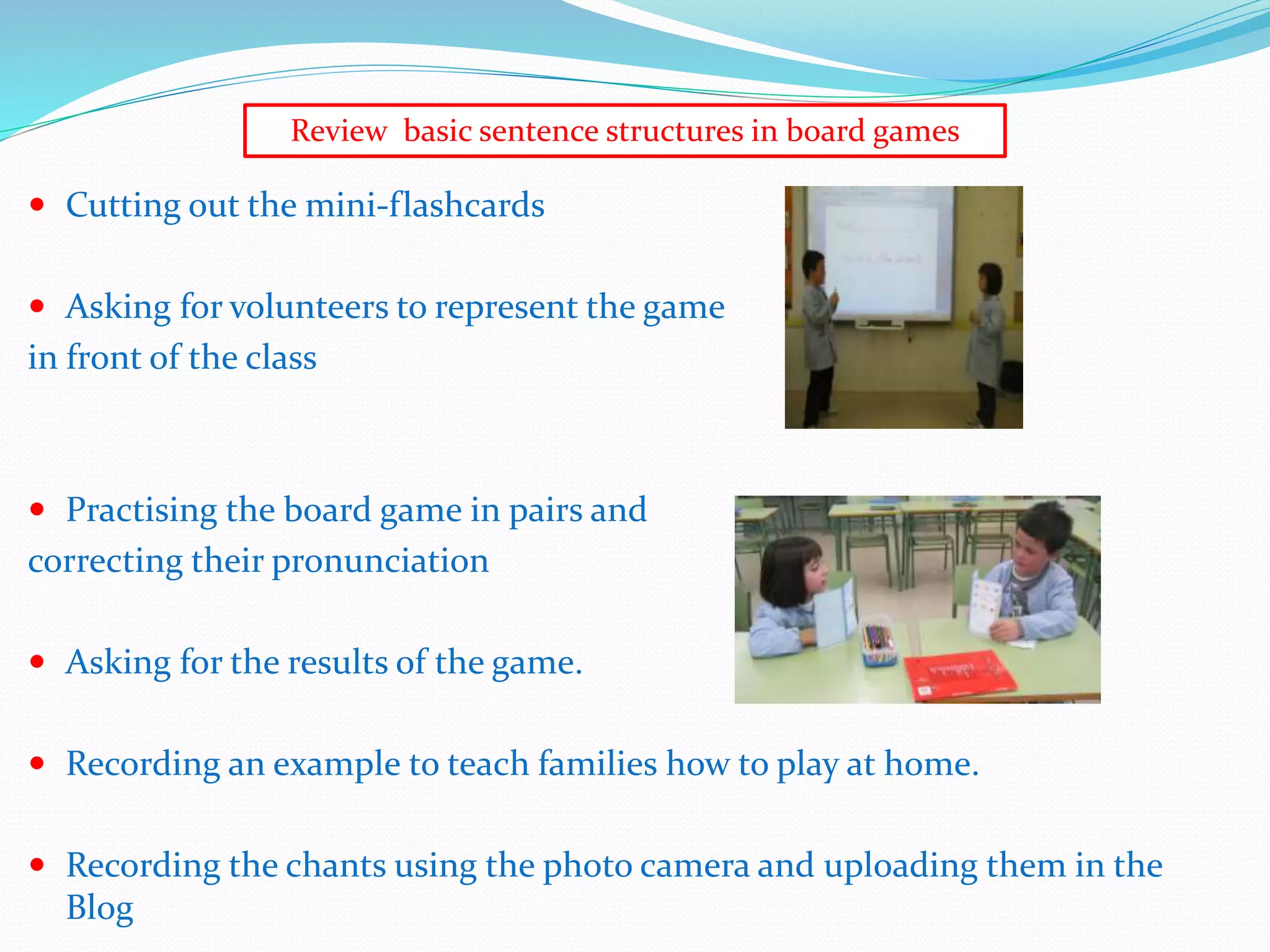
 Cutting out the mini-flashcards
 Asking for volunteers to represent the game
in front of the class
 Practising the board game in pairs and
correcting their pronunciation
 Asking for the results of the game.
 Recording an example to teach families how to play at home.
 Recording the chants using the photo camera and uploading them in the
Blog
Review basic sentence structures in board games
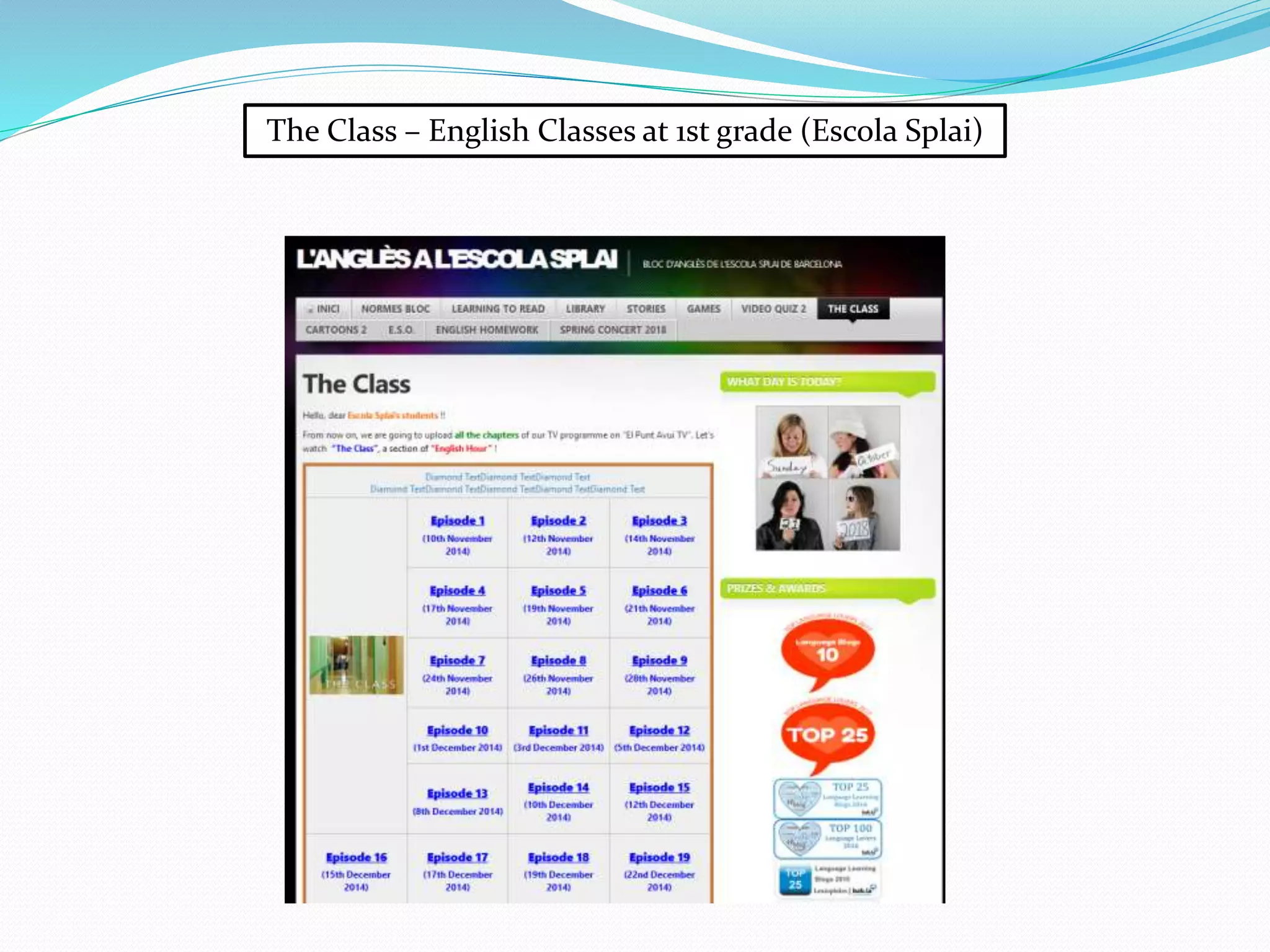
The Class – English Classes at 1st grade (Escola Splai)
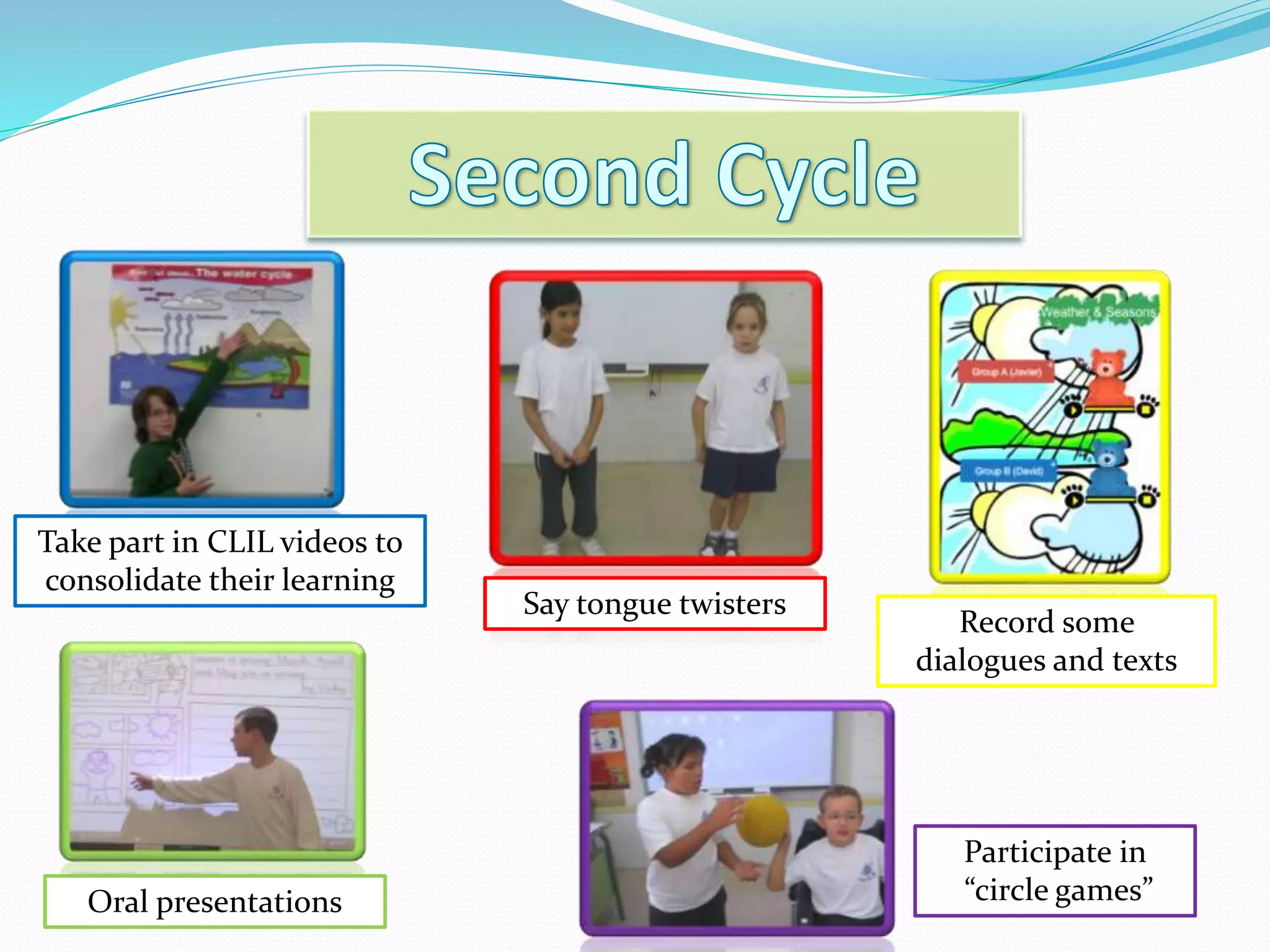
Take part in CLIL videos to
consolidate their learning
Record some
dialogues and texts
Say tongue twisters
Participate in
“circle games”Oral presentations
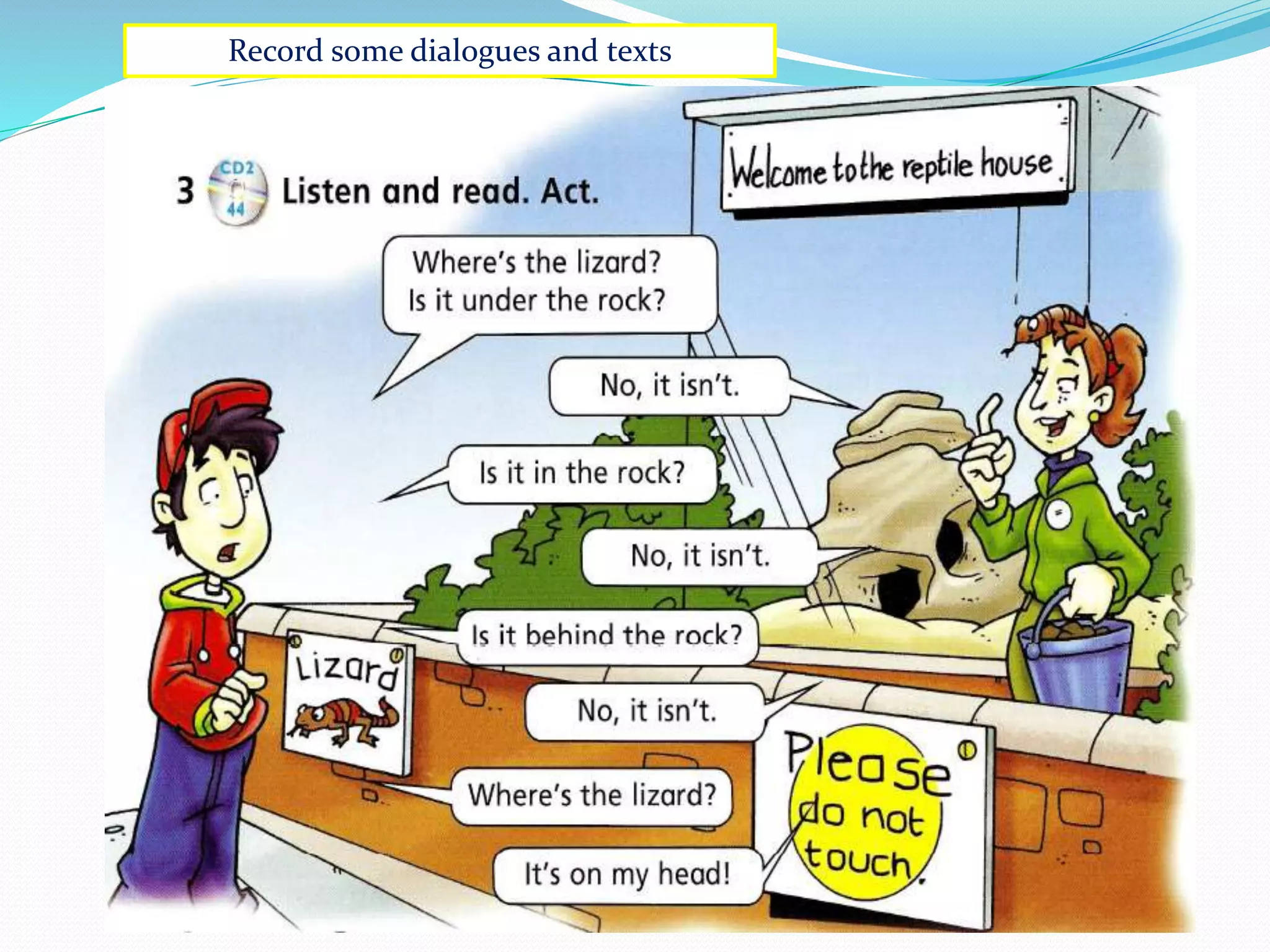
Record some dialogues and texts
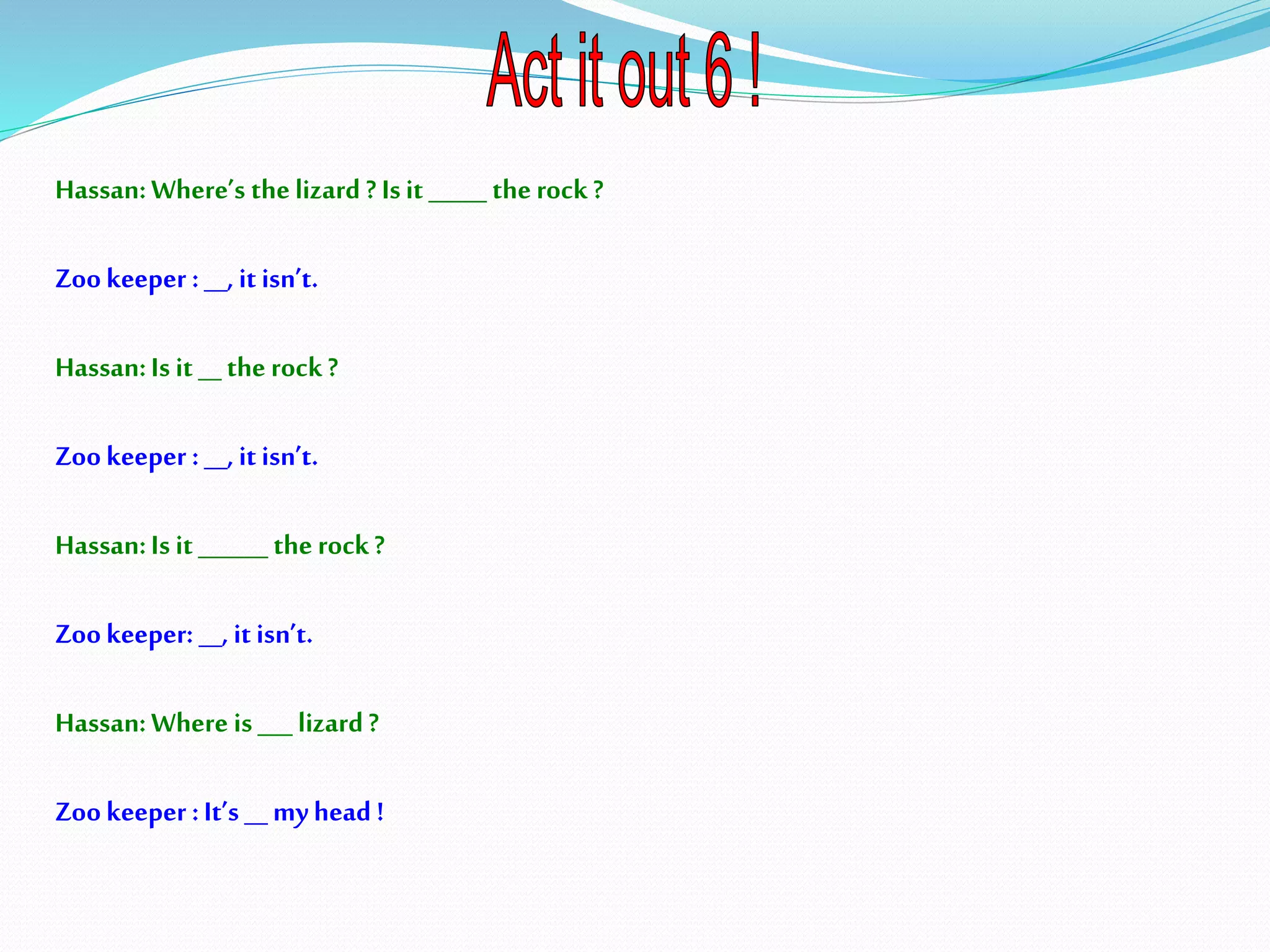
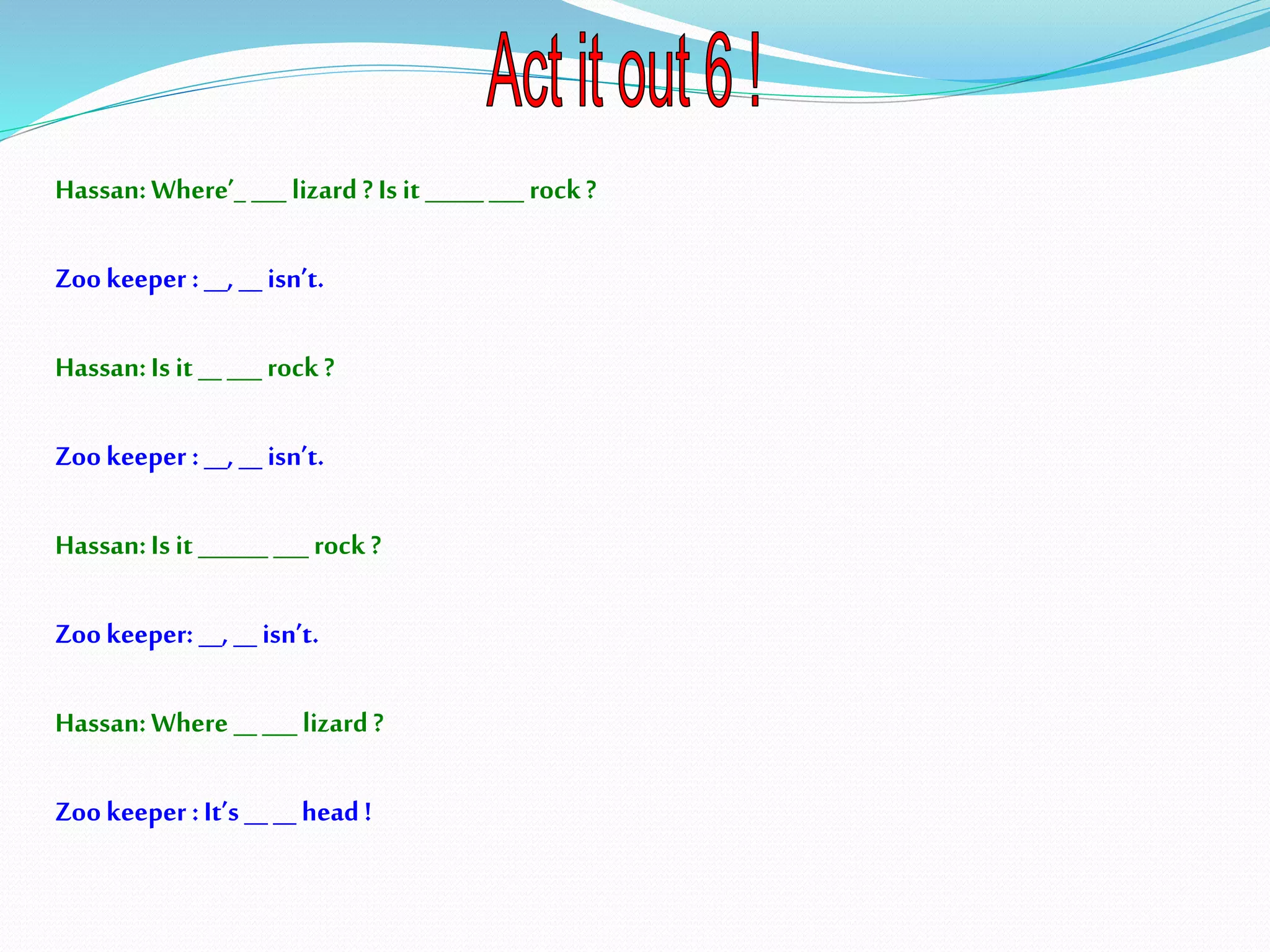
Hassan:Where’s thelizard ? Isit _____ therock?
Zookeeper :__, it isn’t.
Hassan:Is it __ the rock?
Zookeeper :__, it isn’t.
Hassan:Is it ______ the rock?
Zookeeper: __, it isn’t.
Hassan:Where is___ lizard?
Zookeeper :It’s __myhead !
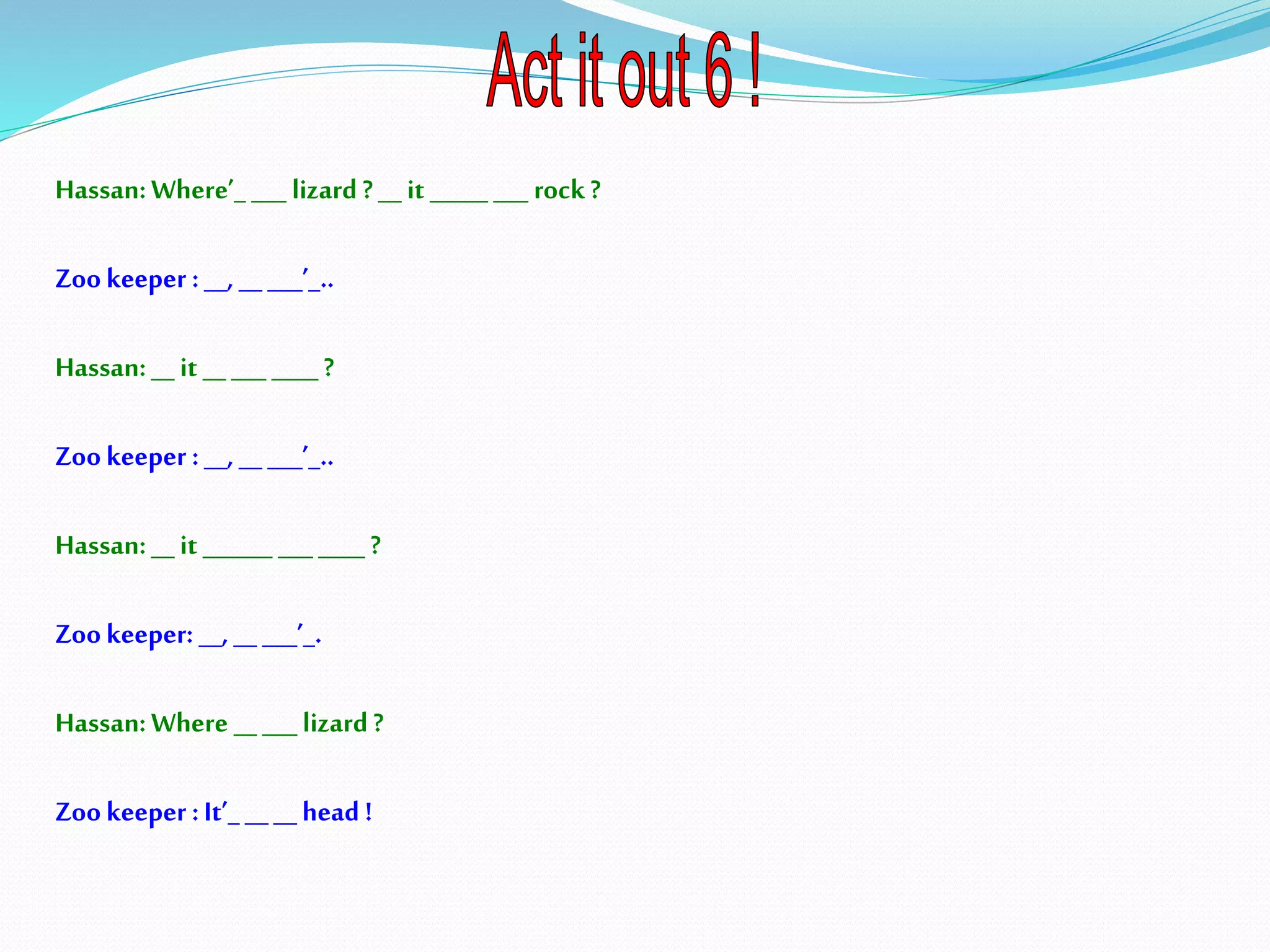
Hassan:Where’_ ___ lizard ?Is it _____ ___ rock?
Zookeeper :__, __isn’t.
Hassan:Is it __ ___ rock ?
Zookeeper :__, __ isn’t.
Hassan:Is it ______ ___ rock ?
Zookeeper: __, __ isn’t.
Hassan:Where _____ lizard?
Zookeeper :It’s ____head!
Hassan:Where’_ ___ lizard ?__ it _____ ___ rock?
Zookeeper :__, _____’_..
Hassan:__ it __ ___ ____ ?
Zookeeper :__, __ ___’_..
Hassan:__ it ______ ___ ____ ?
Zookeeper: __, __ ___’_.
Hassan:Where _____ lizard?
Zookeeper :It’_ ____head !
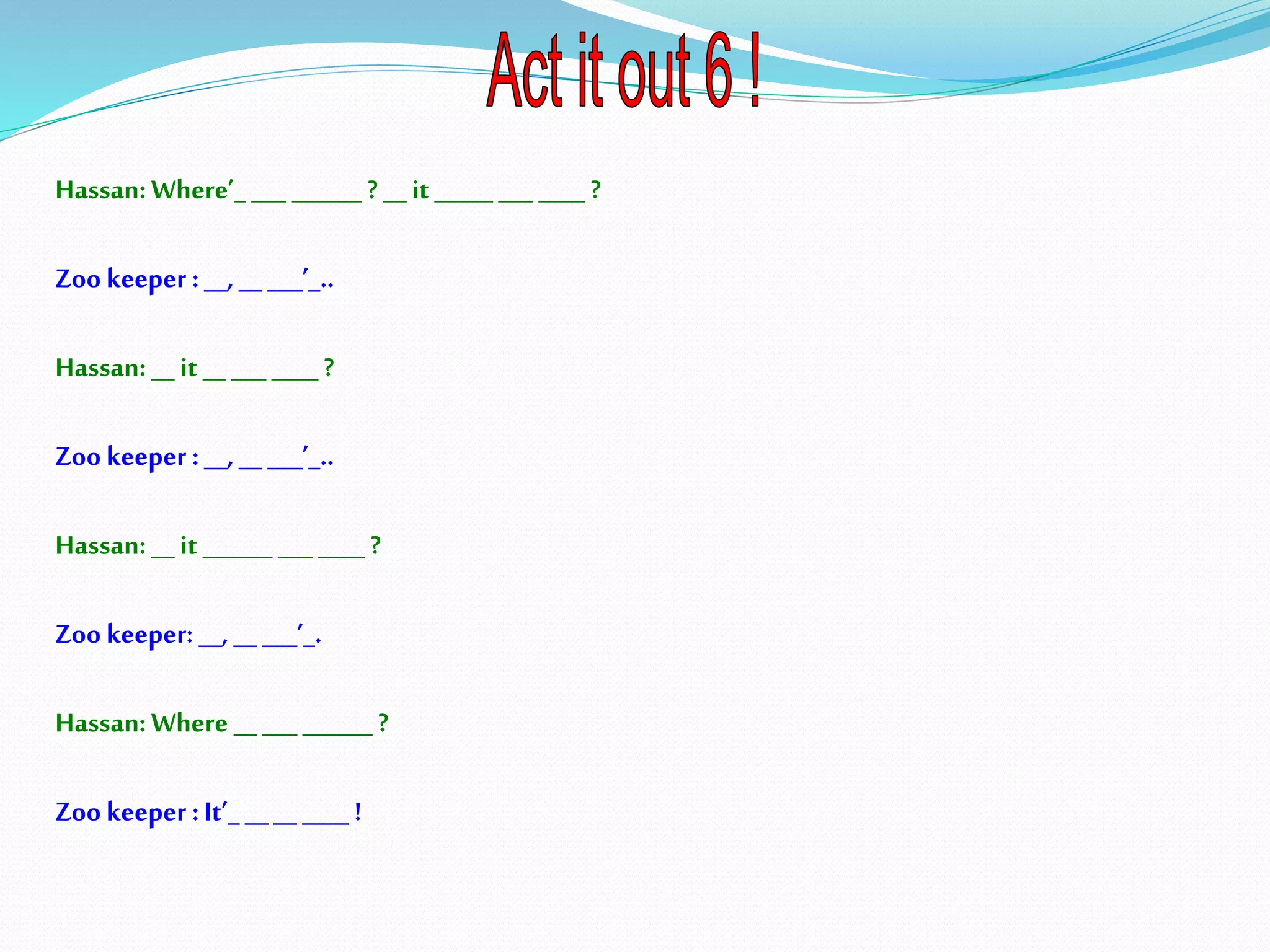
Hassan:Where’_ ___ ______ ? __it _____ ___ ____ ?
Zookeeper :__, _____’_..
Hassan:__ it __ ___ ____ ?
Zookeeper :__, __ ___’_..
Hassan:__ it ______ ___ ____ ?
Zookeeper: __, __ ___’_.
Hassan:Where _____ ______ ?
Zookeeper :It’_ ________ !
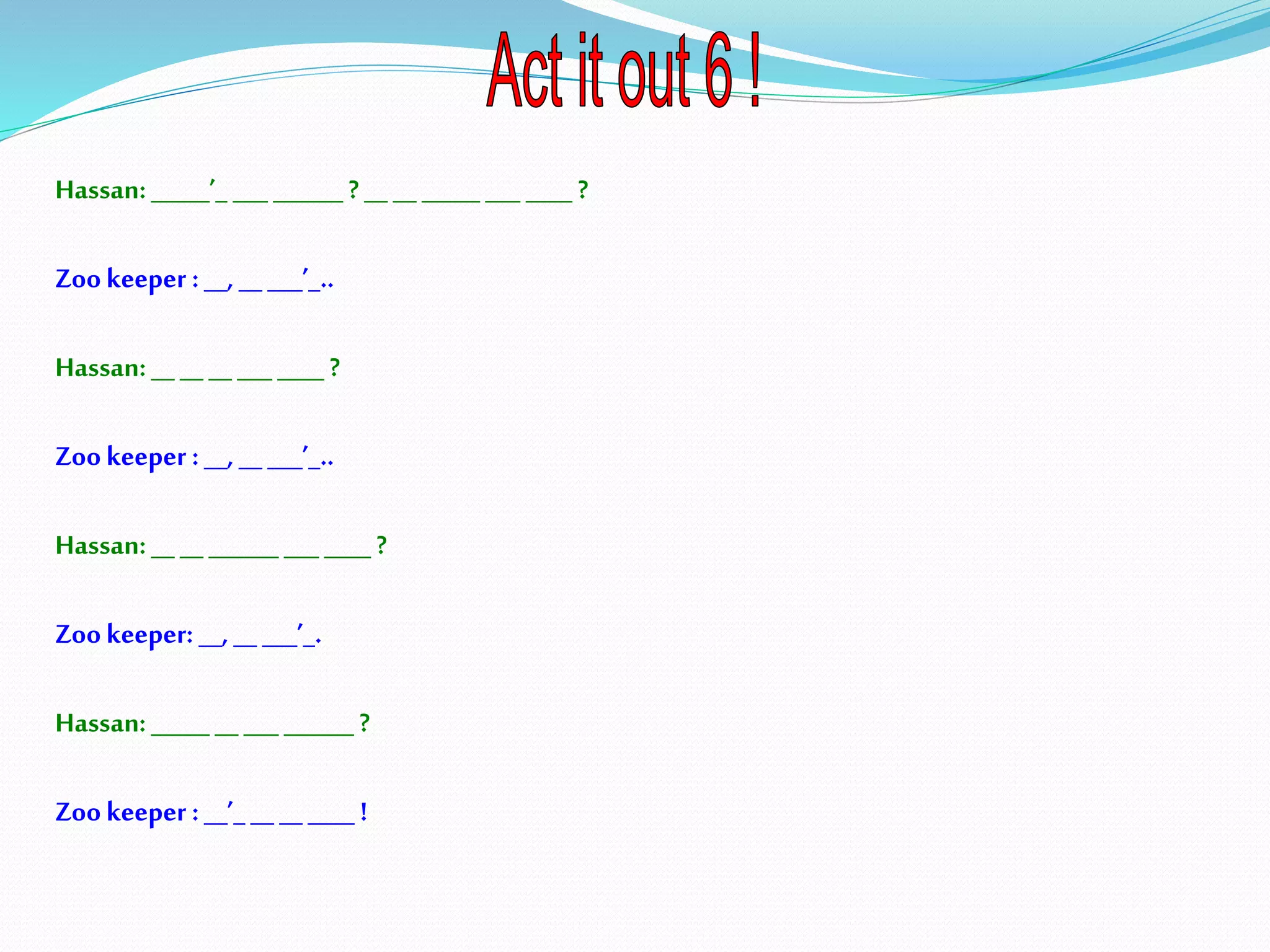
Hassan:_____’_ ___ ______ ? __ _______ ___ ____ ?
Zookeeper :__, _____’_..
Hassan:__ _______ ____ ?
Zookeeper :__, __ ___’_..
Hassan:__ ________ ___ ____ ?
Zookeeper: __, __ ___’_.
Hassan:_____ __ _________ ?
Zookeeper :__’_ ________ !
 Display the videos of the communicative situation
recorded by older students (brothers or sisters if
possible).
 Presentation of the useful language
to create the dialogue.
 Writing the dialogue
 Checking and correction of the dialogues created.
 Practising in pairs to prepare gestures and checking
pronunciation.
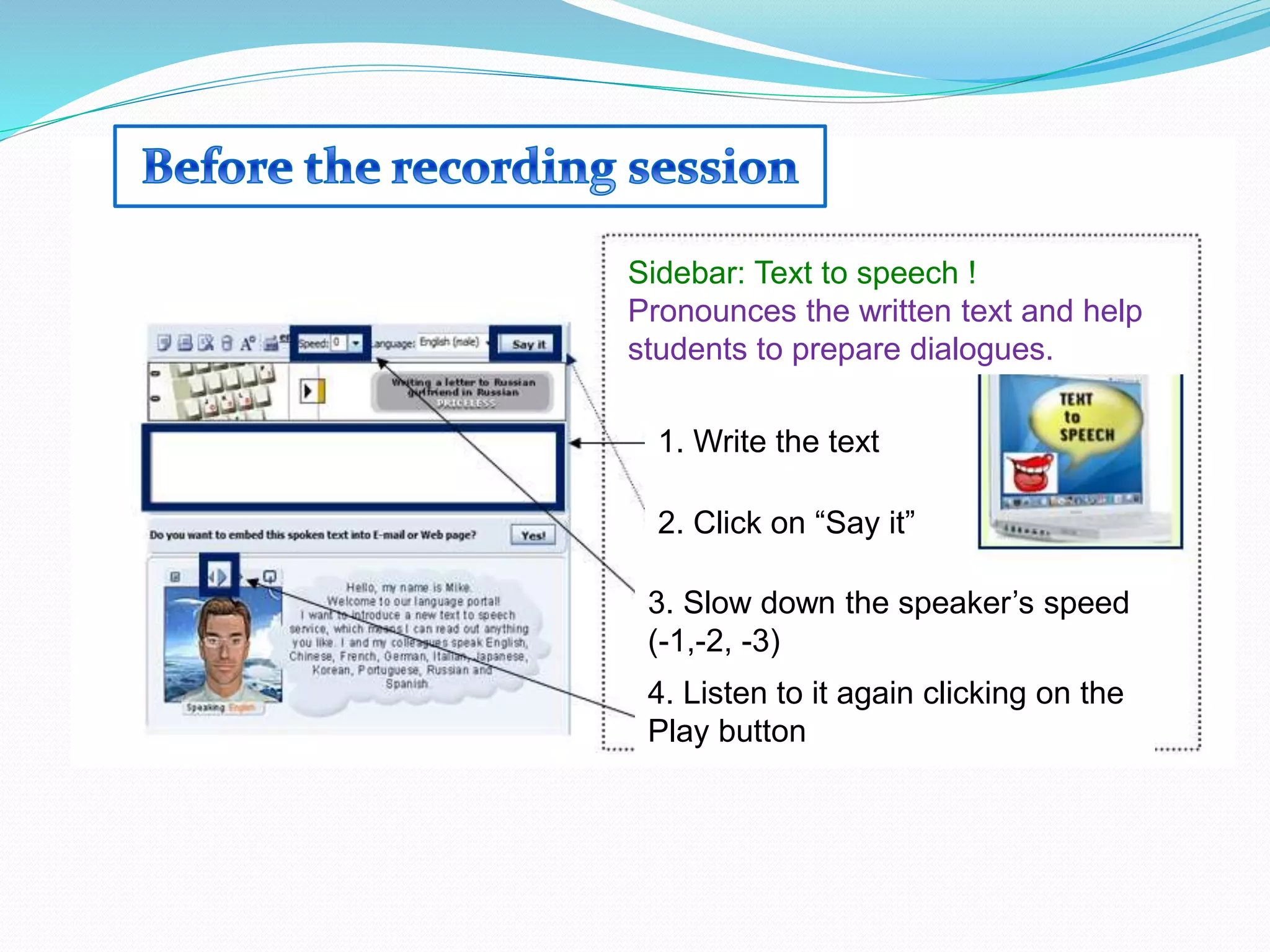
Sidebar: Text to speech !
Pronounces the written text and help
students to prepare dialogues.
1. Write the text
2. Click on “Say it”
3. Slow down the speaker’s speed
(-1,-2, -3)
4. Listen to it again clicking on the
Play button
 Acting out in pairs.
 Feedback about the mistakes observed.
 Recording the video of the communicative situation.
 Listening-Comprehension about their partners’
recordings.
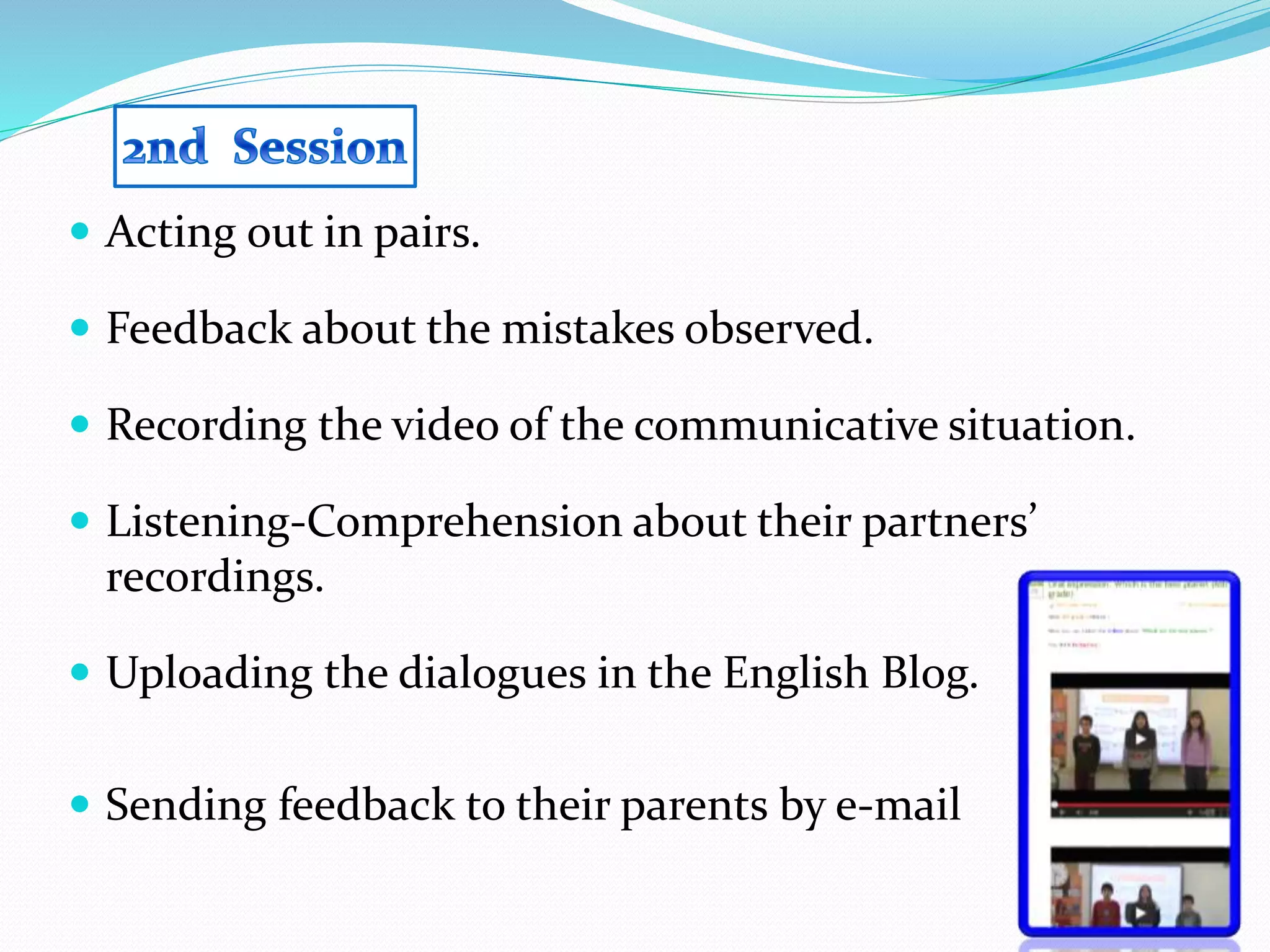
 Uploading the dialogues in the English Blog.
 Sending feedback to their parents by e-mail
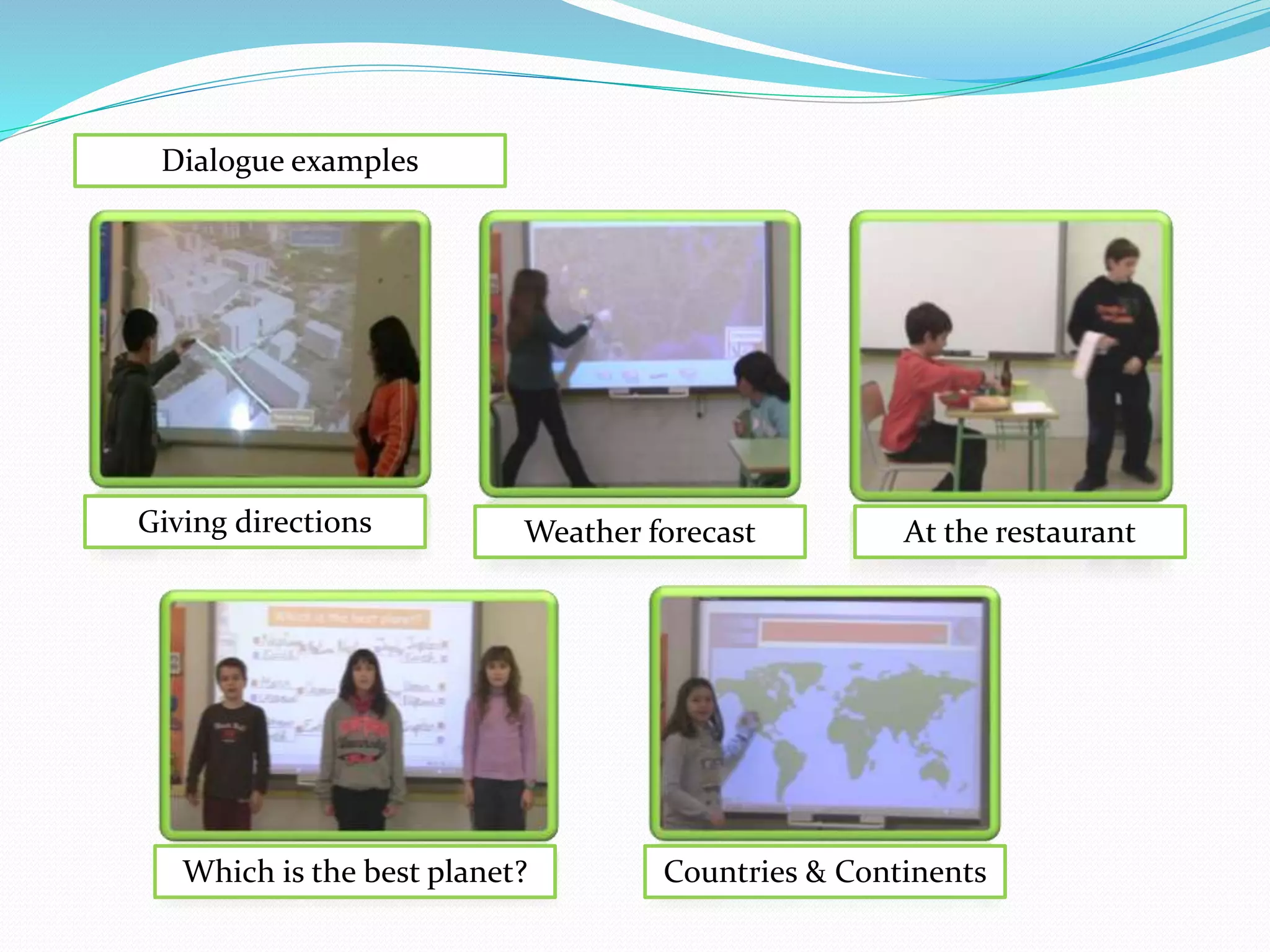
Dialogue examples
Giving directions Weather forecast At the restaurant
Which is the best planet? Countries & Continents
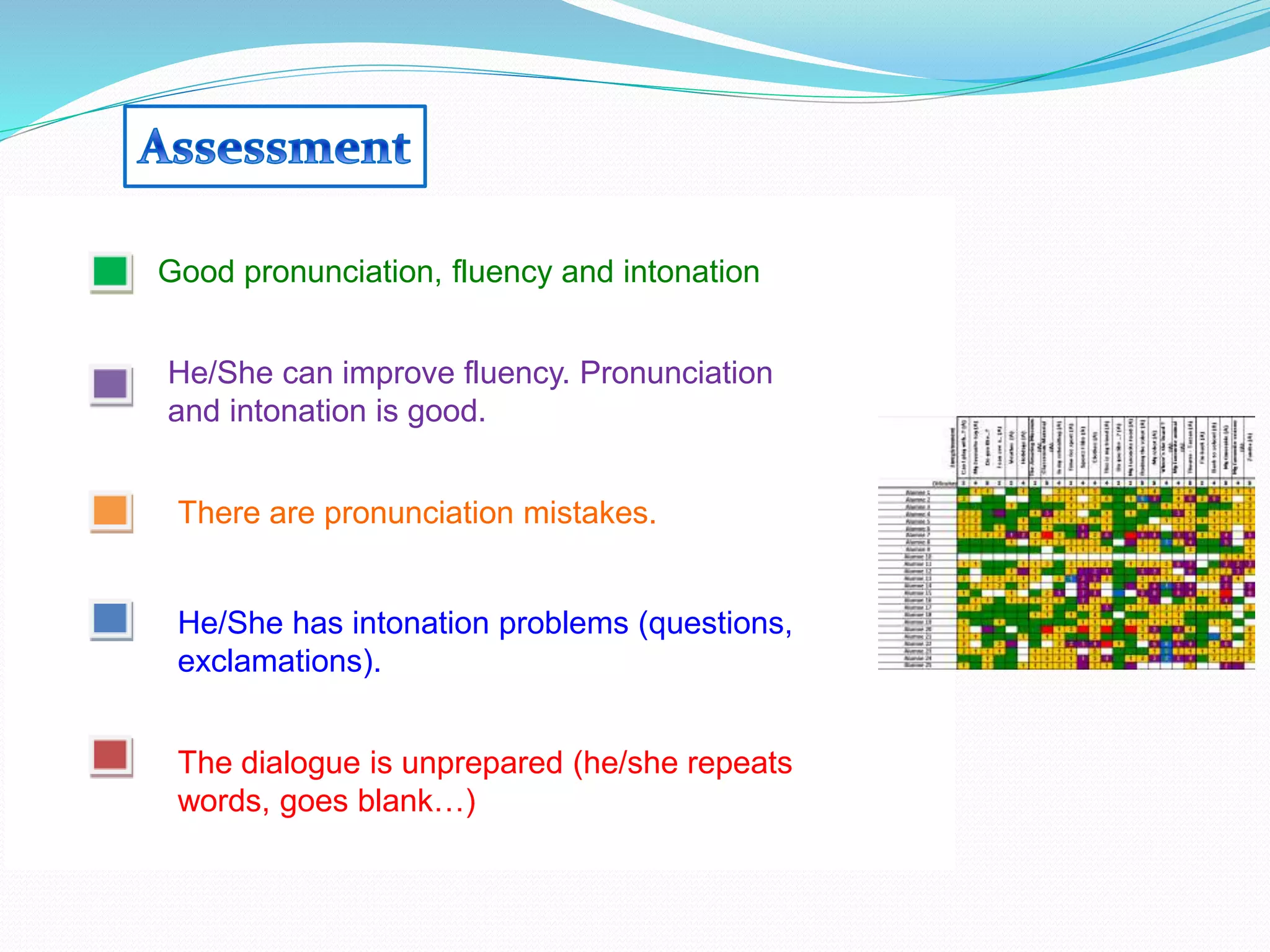
Good pronunciation, fluency and intonation
He/She can improve fluency. Pronunciation
and intonation is good.
There are pronunciation mistakes.
He/She has intonation problems (questions,
exclamations).
The dialogue is unprepared (he/she repeats
words, goes blank…)
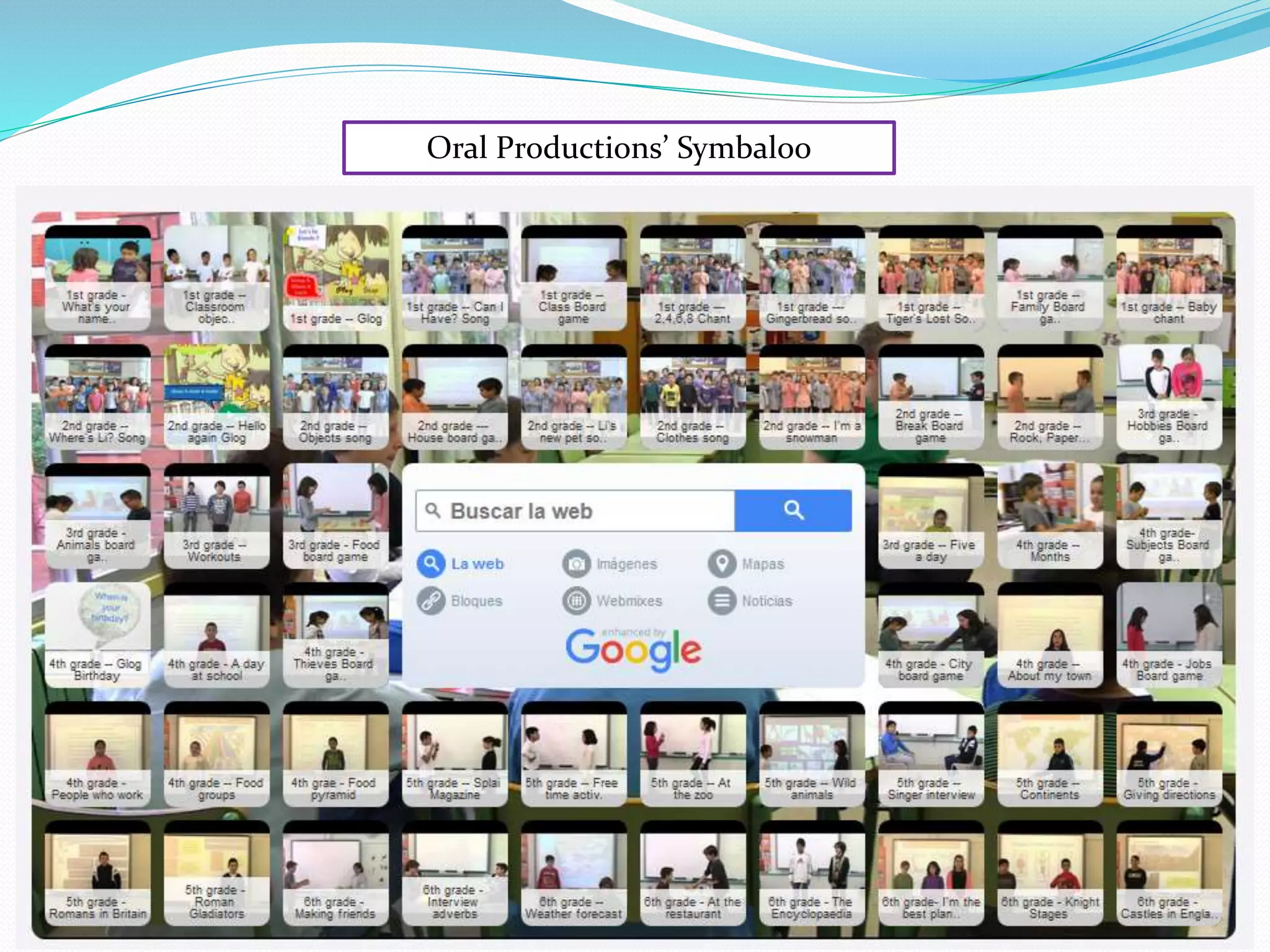
Oral Productions’ Symbaloo
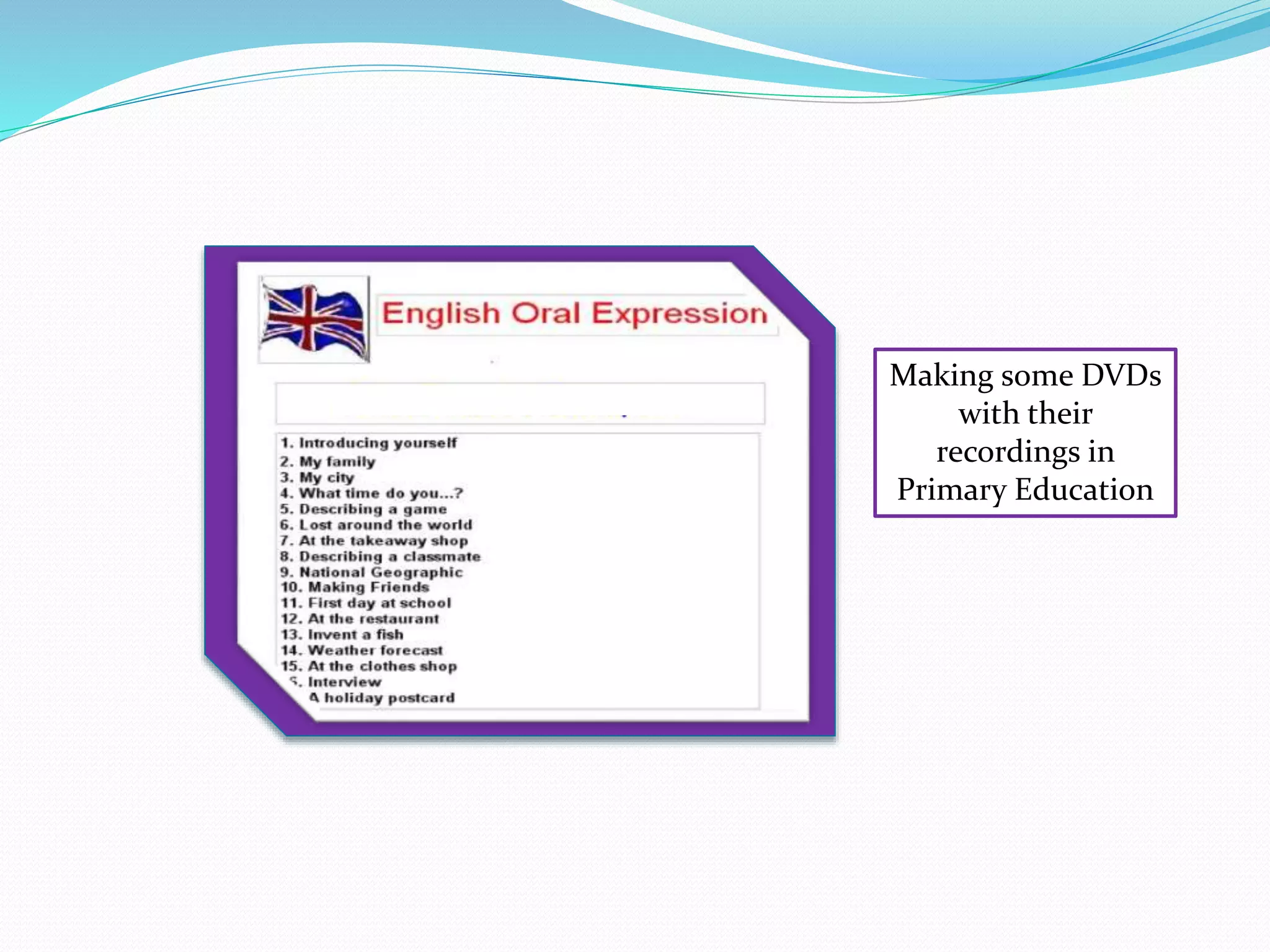
Making some DVDs
with their
recordings in
Primary Education
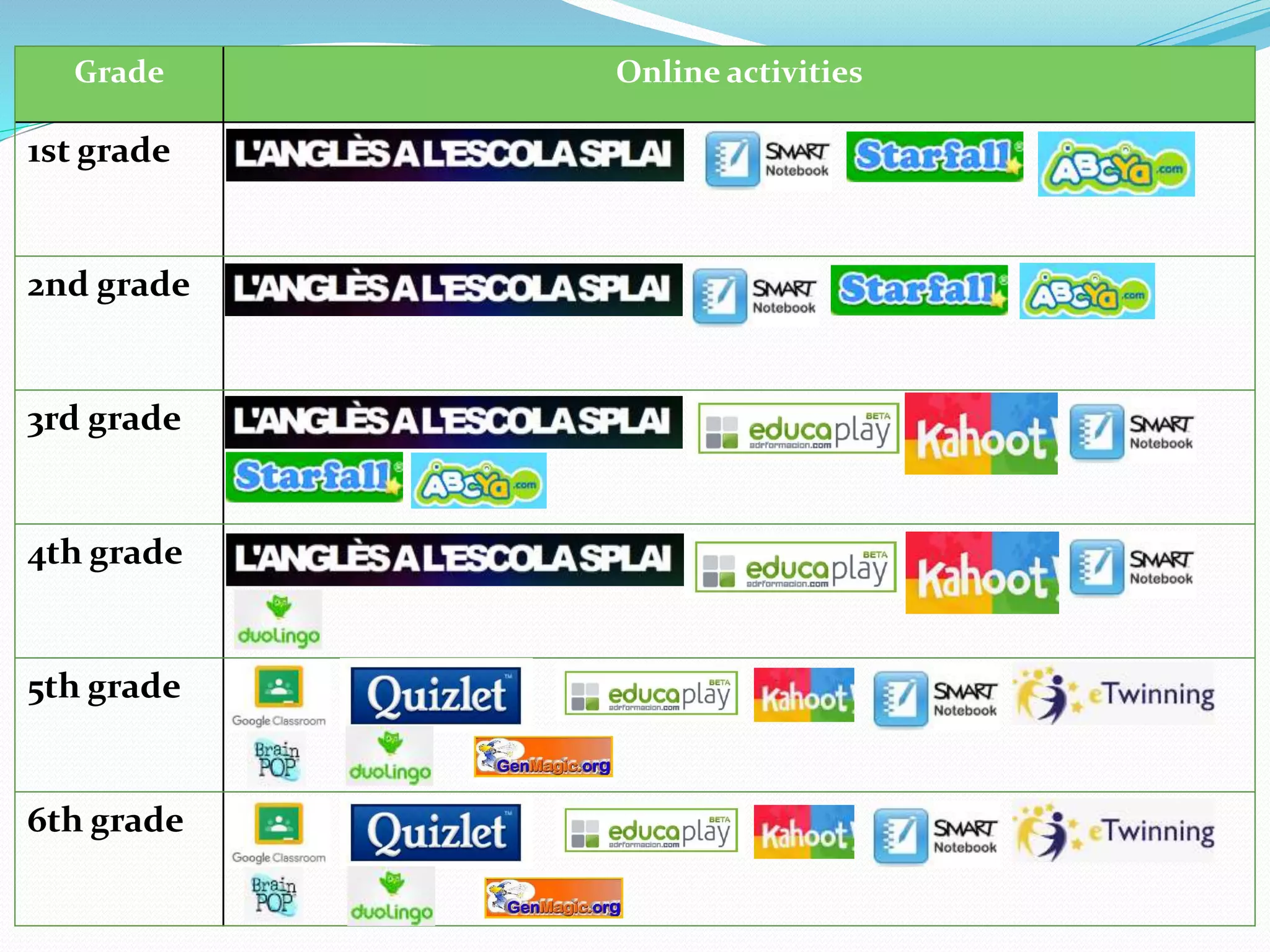
Grade Online activities
1st grade
2nd grade
3rd grade
4th grade
5th grade
6th grade
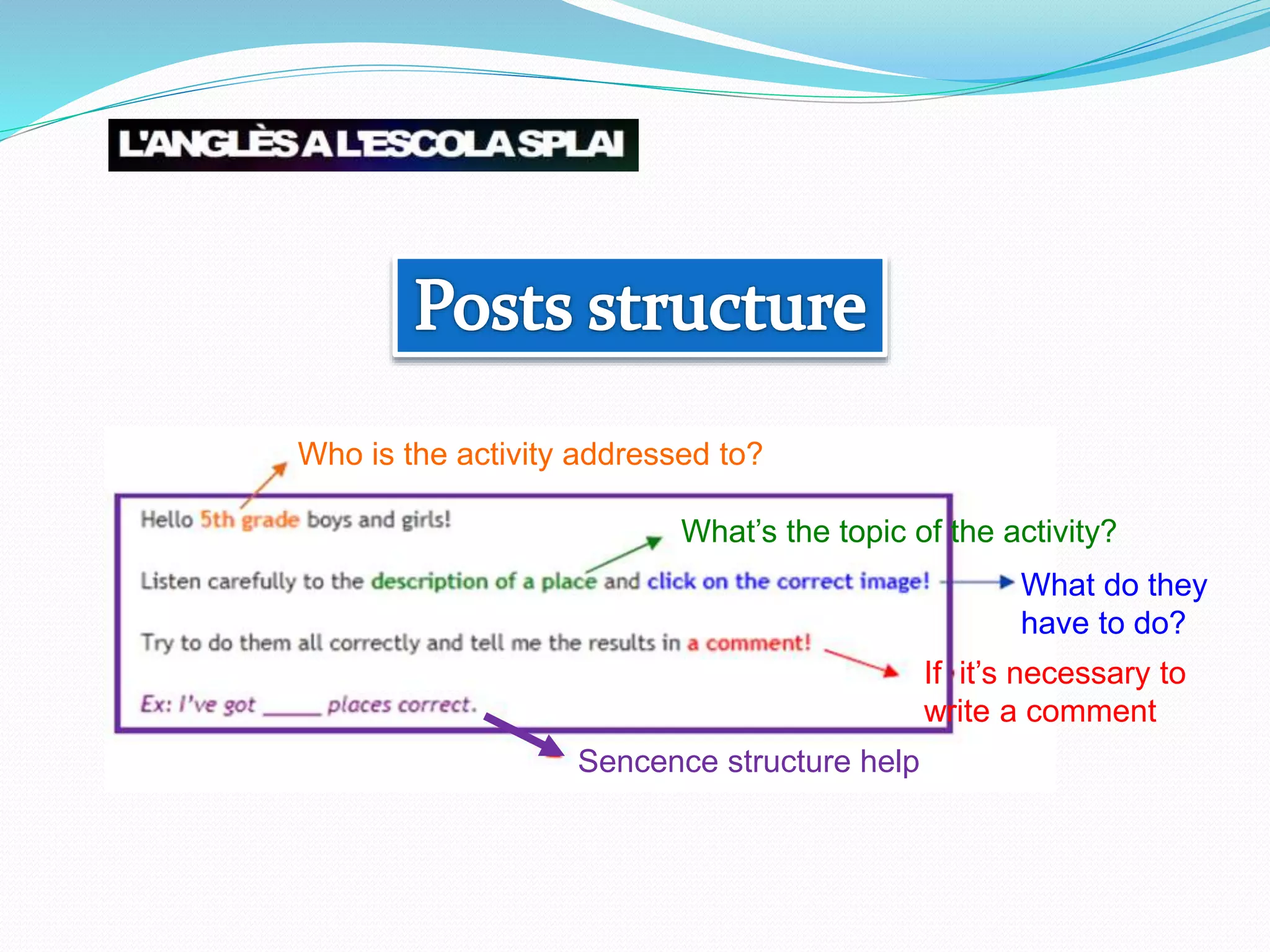
Who is the activity addressed to?
What’s the topic of the activity?
What do they
have to do?
If it’s necessary to
write a comment
Sencence structure help
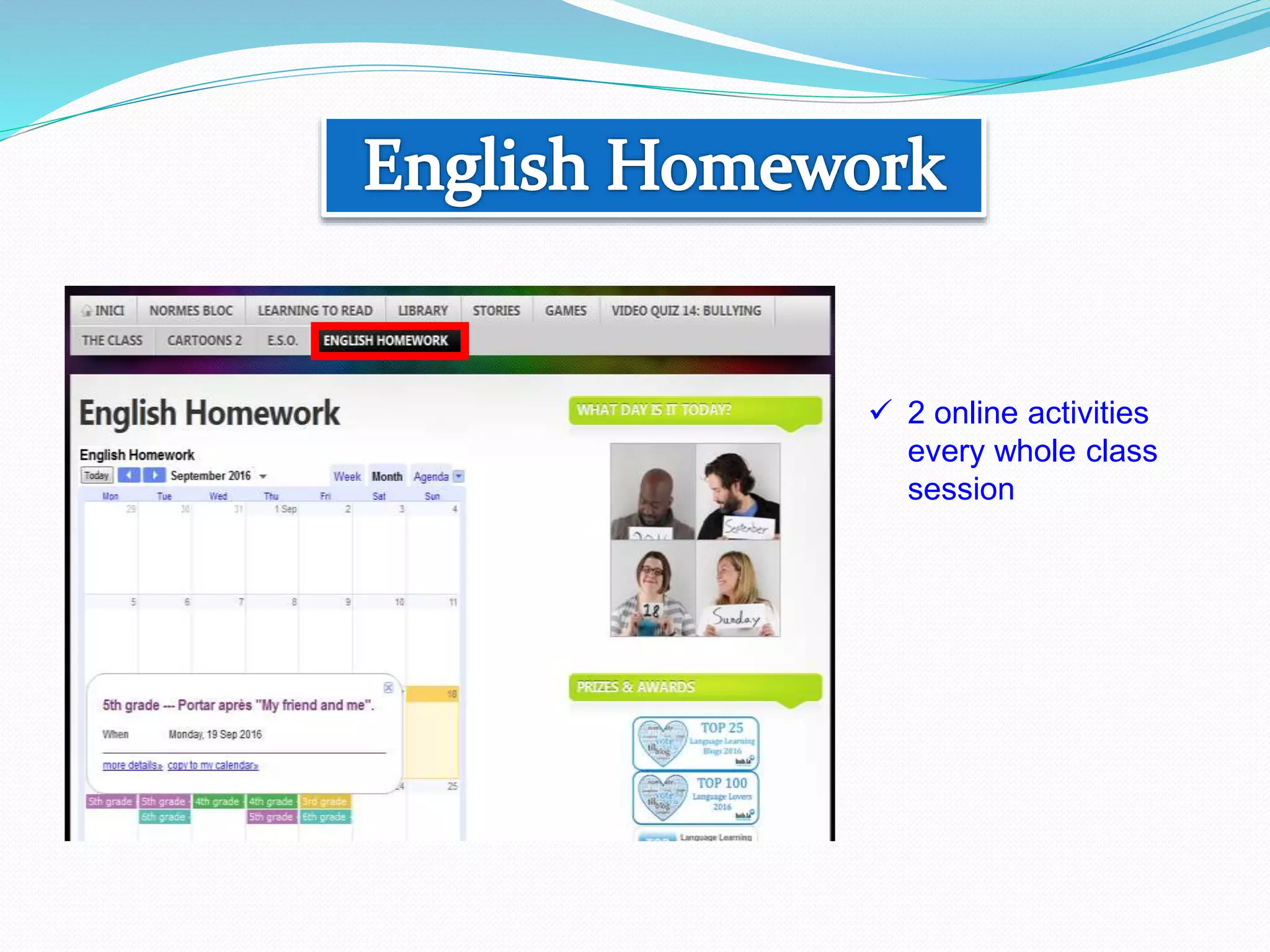
 2 online activities
every whole class
session
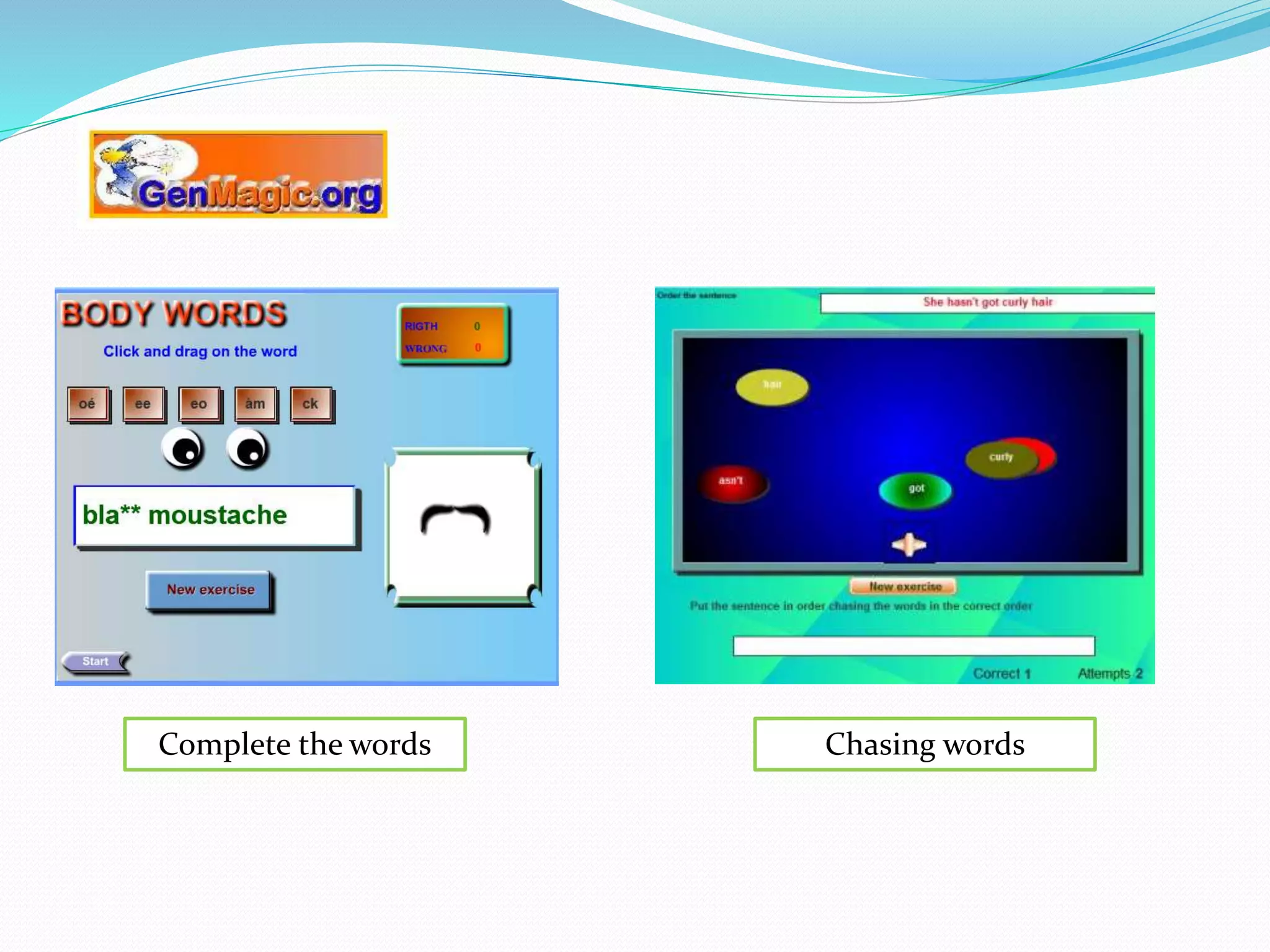
Complete the words Chasing words
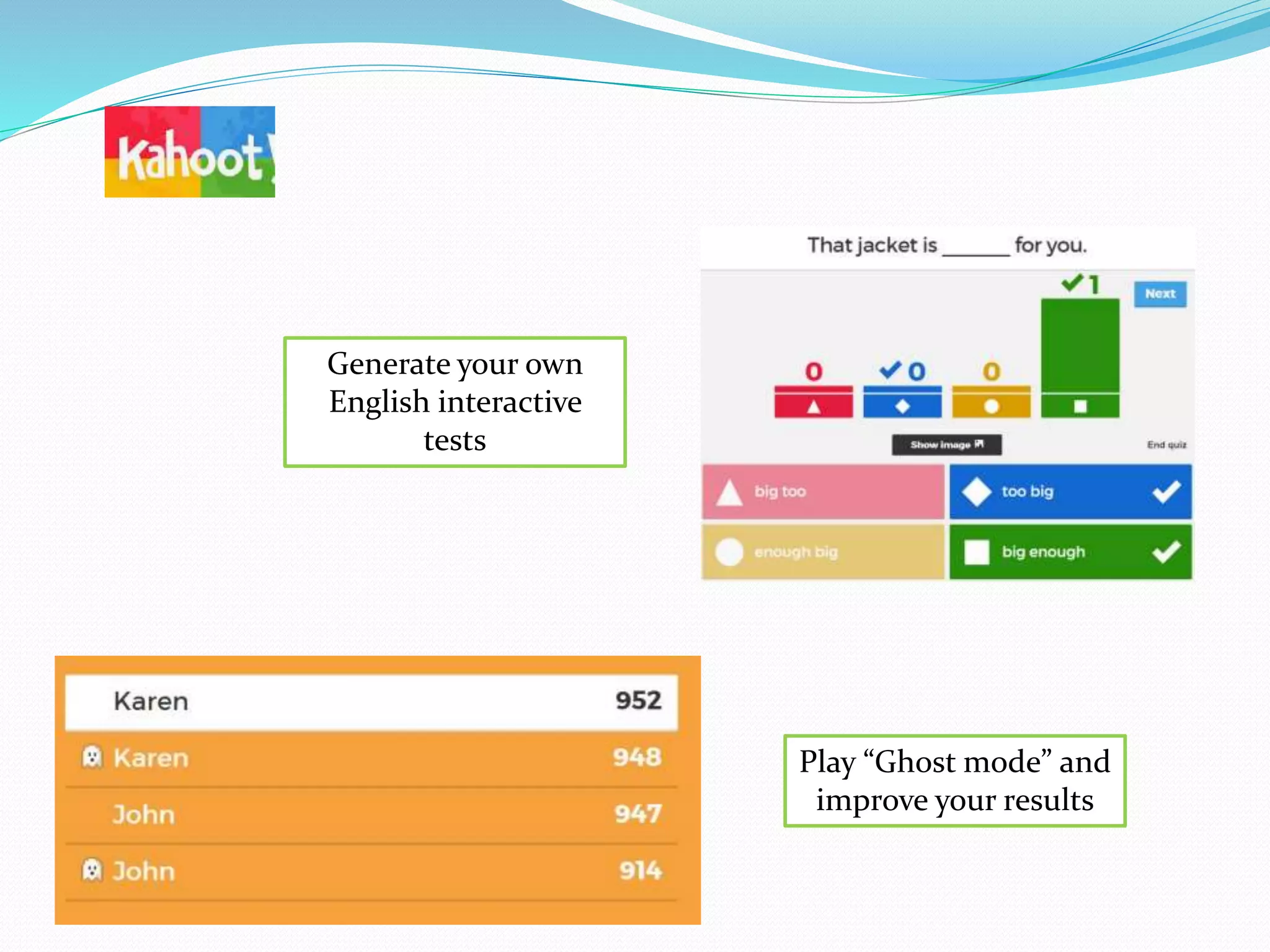
Generate your own
English interactive
tests
Play “Ghost mode” and
improve your results
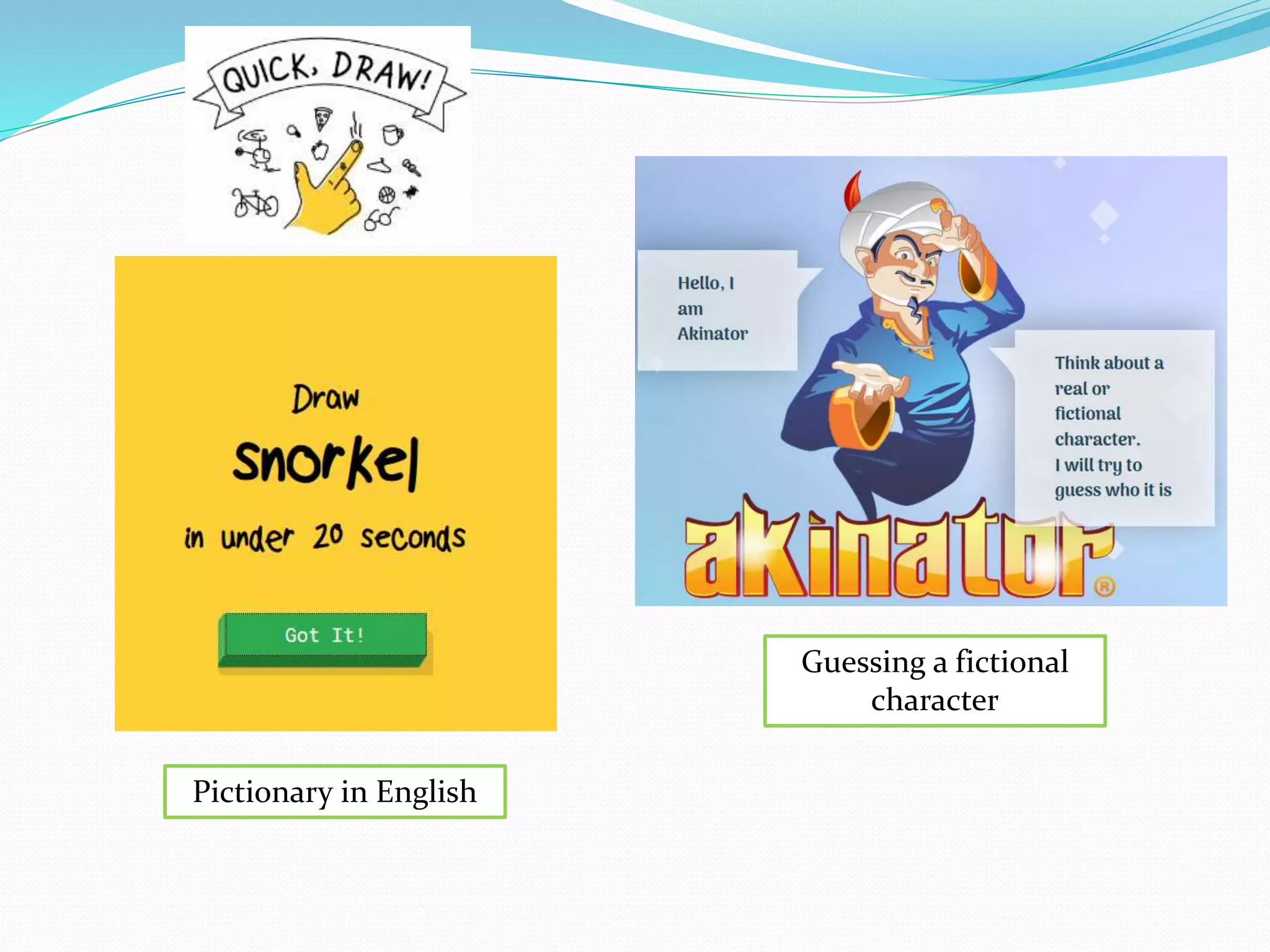
Pictionary in English
Guessing a fictional
character
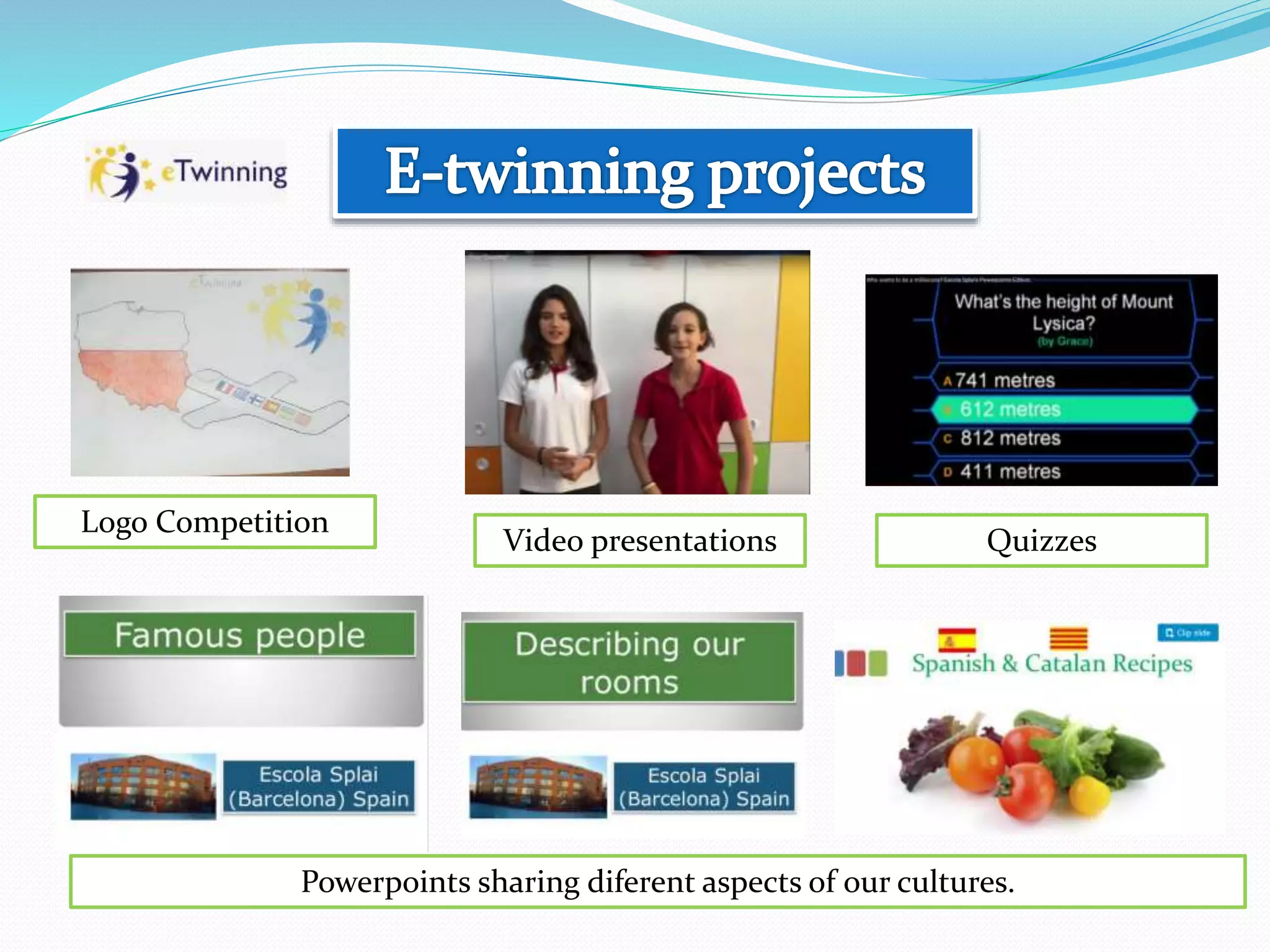
Logo Competition
Video presentations Quizzes
Powerpoints sharing diferent aspects of our cultures.
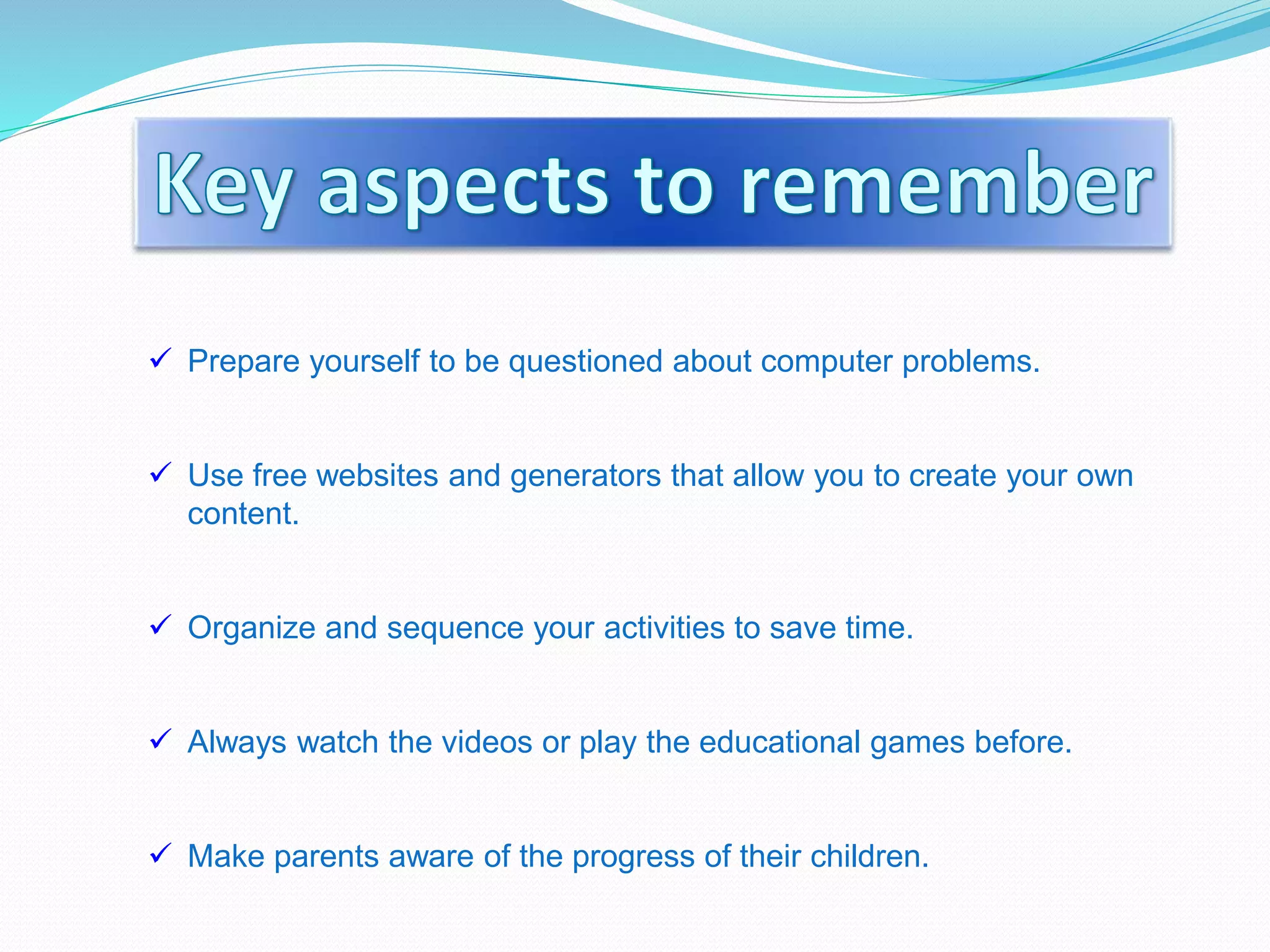
 Prepare yourself to be questioned about computer problems.
 Use free websites and generators that allow you to create your own
content.
 Organize and sequence your activities to save time.
 Always watch the videos or play the educational games before.
 Make parents aware of the progress of their children.

ICT Tools for Creativity in Primary

  • 1.
    Oscar del Estal EscolaSplai oestal@xtec.cat blocs.xtec.cat/anglesceipsplai www.facebook.com/anglesceipsplai
  • 2.
    First Cycle 2sessions (1 half group) Second Cycle 3 sessions (1 half group) Third Cycle 3 sessions (1 half group)
  • 3.
  • 4.
     Allows childrento produce and share their oral productions.  Strengthens the bond between students, family and teachers.  Makes them more autonomous in Language learning.  Gives them the opportunity of correcting their own mistakes and try again.  Children’s first memories are those in which they are the main characters not observers.  Increases the amount of time learning English.
  • 6.
    Take part invideos and songs Produce short dialogues Review basic sentence structures Play board games Participate in chants and “circle games”
  • 7.
     Miming thesong and teaching the song using body language and flashcards as a support.  Using “VLC player” we can slow down the song to focus on pronunciation.  Students practise with their CDs at home  We record the songs in class and the teacher edits the video using Pinnacle Studio
  • 8.
     Listening tosome examples performed by older students.  Practising the sentences as a rap using “Choral reading”  Displaying the written dialogue and deciding the roles.  Practising in pairs and correcting their pronunciation.  Reviewing the dialogue using the microphone and the IWB
  • 9.
    Record short dialogues usingAudacity Main bar Cut button Silence button
  • 10.
     Working withthe vocabulary using PowerPoint slides  Using “choral reading” and inventing your own chants  Recording the chants using the photo camera and uploading them in the Blog Participate in chants and “circle games”
  • 11.
    Participate in chantsand “circle games”  Recording “circle games” or TPR games to practise structures.  Upload chants and circle games to our Youtube account.
  • 12.
     Cutting outthe mini-flashcards  Asking for volunteers to represent the game in front of the class  Practising the board game in pairs and correcting their pronunciation  Asking for the results of the game.  Recording an example to teach families how to play at home.  Recording the chants using the photo camera and uploading them in the Blog Review basic sentence structures in board games
  • 13.
    The Class –English Classes at 1st grade (Escola Splai)
  • 14.
    Take part inCLIL videos to consolidate their learning Record some dialogues and texts Say tongue twisters Participate in “circle games”Oral presentations
  • 15.
  • 16.
    Hassan:Where’s thelizard ?Isit _____ therock? Zookeeper :__, it isn’t. Hassan:Is it __ the rock? Zookeeper :__, it isn’t. Hassan:Is it ______ the rock? Zookeeper: __, it isn’t. Hassan:Where is___ lizard? Zookeeper :It’s __myhead !
  • 17.
    Hassan:Where’_ ___ lizard?Is it _____ ___ rock? Zookeeper :__, __isn’t. Hassan:Is it __ ___ rock ? Zookeeper :__, __ isn’t. Hassan:Is it ______ ___ rock ? Zookeeper: __, __ isn’t. Hassan:Where _____ lizard? Zookeeper :It’s ____head!
  • 18.
    Hassan:Where’_ ___ lizard?__ it _____ ___ rock? Zookeeper :__, _____’_.. Hassan:__ it __ ___ ____ ? Zookeeper :__, __ ___’_.. Hassan:__ it ______ ___ ____ ? Zookeeper: __, __ ___’_. Hassan:Where _____ lizard? Zookeeper :It’_ ____head !
  • 19.
    Hassan:Where’_ ___ ______? __it _____ ___ ____ ? Zookeeper :__, _____’_.. Hassan:__ it __ ___ ____ ? Zookeeper :__, __ ___’_.. Hassan:__ it ______ ___ ____ ? Zookeeper: __, __ ___’_. Hassan:Where _____ ______ ? Zookeeper :It’_ ________ !
  • 20.
    Hassan:_____’_ ___ ______? __ _______ ___ ____ ? Zookeeper :__, _____’_.. Hassan:__ _______ ____ ? Zookeeper :__, __ ___’_.. Hassan:__ ________ ___ ____ ? Zookeeper: __, __ ___’_. Hassan:_____ __ _________ ? Zookeeper :__’_ ________ !
  • 21.
     Display thevideos of the communicative situation recorded by older students (brothers or sisters if possible).  Presentation of the useful language to create the dialogue.  Writing the dialogue  Checking and correction of the dialogues created.  Practising in pairs to prepare gestures and checking pronunciation.
  • 22.
    Sidebar: Text tospeech ! Pronounces the written text and help students to prepare dialogues. 1. Write the text 2. Click on “Say it” 3. Slow down the speaker’s speed (-1,-2, -3) 4. Listen to it again clicking on the Play button
  • 23.
     Acting outin pairs.  Feedback about the mistakes observed.  Recording the video of the communicative situation.  Listening-Comprehension about their partners’ recordings.  Uploading the dialogues in the English Blog.  Sending feedback to their parents by e-mail
  • 24.
    Dialogue examples Giving directionsWeather forecast At the restaurant Which is the best planet? Countries & Continents
  • 25.
    Good pronunciation, fluencyand intonation He/She can improve fluency. Pronunciation and intonation is good. There are pronunciation mistakes. He/She has intonation problems (questions, exclamations). The dialogue is unprepared (he/she repeats words, goes blank…)
  • 26.
  • 27.
    Making some DVDs withtheir recordings in Primary Education
  • 29.
    Grade Online activities 1stgrade 2nd grade 3rd grade 4th grade 5th grade 6th grade
  • 31.
    Who is theactivity addressed to? What’s the topic of the activity? What do they have to do? If it’s necessary to write a comment Sencence structure help
  • 33.
     2 onlineactivities every whole class session
  • 39.
    Complete the wordsChasing words
  • 40.
    Generate your own Englishinteractive tests Play “Ghost mode” and improve your results
  • 41.
    Pictionary in English Guessinga fictional character
  • 44.
    Logo Competition Video presentationsQuizzes Powerpoints sharing diferent aspects of our cultures.
  • 45.
     Prepare yourselfto be questioned about computer problems.  Use free websites and generators that allow you to create your own content.  Organize and sequence your activities to save time.  Always watch the videos or play the educational games before.  Make parents aware of the progress of their children.