ICDE Lillehammer Lifelong
Learning Summit
Partner meeting 1 September, Oslo, Noway
Gard Titlestad, Secretary General
International Council for Open and Distance Education
Member of the Governing Board
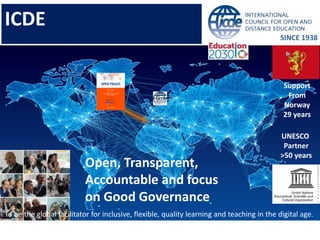
Open, Transparent,
Accountable and focus
on Good Governance
Support
From
Norway
29 years
UNESCO
Partner
>50 years
SINCE 1938
To be the global facilitator for inclusive, flexible, quality learning and teaching in the digital age.
ICDE
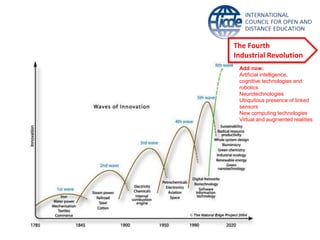
The Fourth
Industrial Revolution
Add now:
Artificial intelligence,
cognitive technologies and
robotics
Neurotechnologies
Ubiquitous presence of linked
sensors
New computing technologies
Virtual and augmented realities
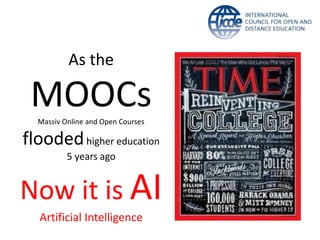
As the
MOOCsMassiv Online and Open Courses
floodedhigher education
5 years ago
Now it is AI
Artificial Intelligence
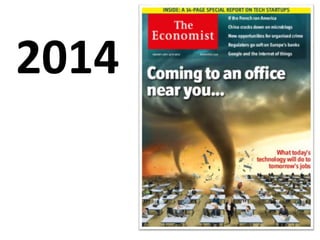
2014
2017
2017
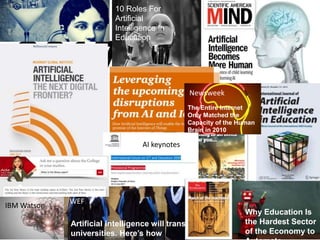
Why Education Is
the Hardest Sector
of the Economy to
10 Roles For
Artificial
Intelligence In
Education
IBM Watson
Artificial intelligence will transform
universities. Here’s how
WEF
Newsweek
The Entire Internet
Only Matched the
Capacity of the Human
Brain in 2010
AI keynotes
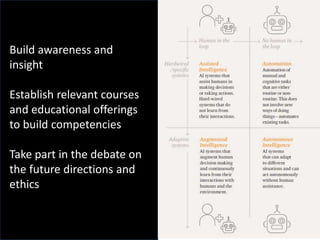
Build awareness and
insight
Establish relevant courses
and educational offerings
to build competencies
Take part in the debate on
the future directions and
ethics
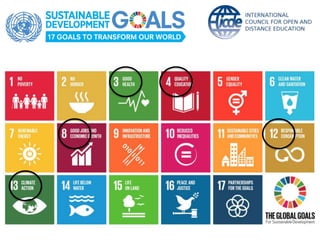
• On 25 September 2015, the United Nations
General Assembly formally adopted the
universal, integrated and transformative 2030
Agenda for Sustainable Development, along
with a set of 17 Sustainable Development
Goals and 169 associated targets.
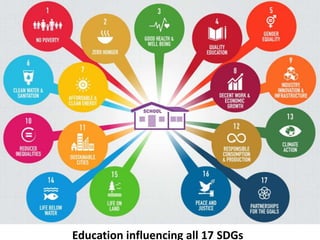
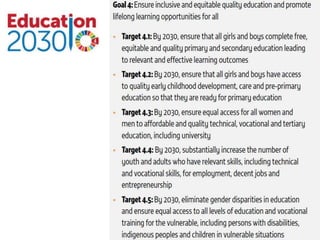
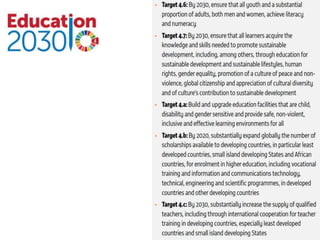
Education influencing all 17 SDGs
Goal 4: Ensure inclusive
and equitable quality
education and promote
lifelong learning
opportunities for all
Main principles
• Education is a fundamental human right and
an enabling right.
• Education is a public good, of which the state
is the duty bearer.
• Gender equality is inextricably linked to the
right to education for all.
Target 3, point 43.:
A well-established, properly-
regulated tertiary education system
supported by technology, Open
Educational Resources (OERs) and
distance education modalities can
increase access, equity, quality and
relevance, and narrow the gap
between what is taught at tertiary
education institutions and what
economies and societies demand.
The provision of tertiary education
should be progressively free, in line
with existing international
agreements.
Where are we now?
One year after………..
http://gem-report-2016.unesco.org/en/home/
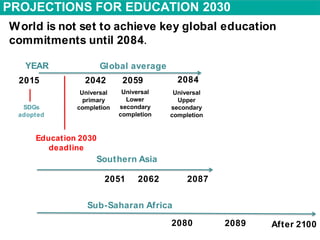
World is not set to achieve key global education
commitments until 2084.
PROJECTIONS FOR EDUCATION 2030
2030 2042 2059 2084
Universal
primary
completion
Universal
Upper
secondary
completion
Universal
Lower
secondary
completion
YEAR
Education 2030
deadline
Education 2030
deadline
2042 2059 2084
YEAR Global average
Universal
primary
completion
Universal
Upper
secondary
completion
Universal
Lower
secondary
completion
2015
SDGs
adopted
20872051 2062
Southern Asia
After 21002080 2089
Sub-Saharan Africa
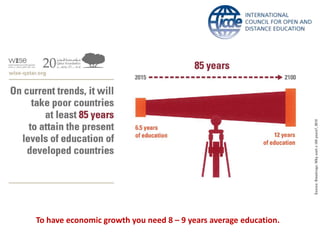
To have economic growth you need 8 – 9 years average education.
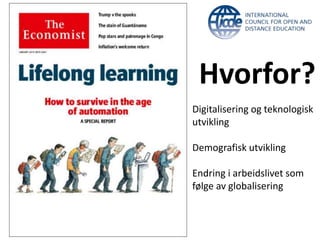
Digitalisering og teknologisk
utvikling
Demografisk utvikling
Endring i arbeidslivet som
følge av globalisering
Hvorfor?
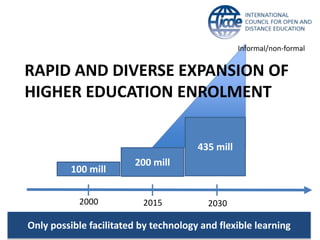
Informal/non-formal
RAPID AND DIVERSE EXPANSION OF
HIGHER EDUCATION ENROLMENT
100 mill
200 mill
2000 2015 2030
435 mill
Only possible facilitated by technology and flexible learning
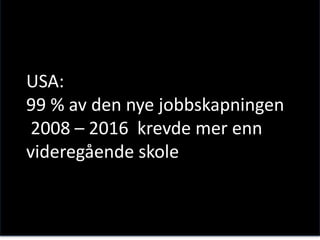
USA:
99 % av den nye jobbskapningen
2008 – 2016 krevde mer enn
videregående skole
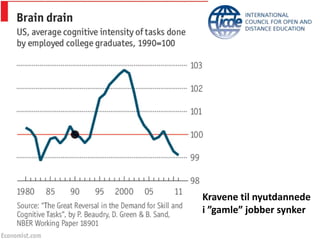
Kravene til nyutdannede
i ”gamle” jobber synker
Litt om Norge
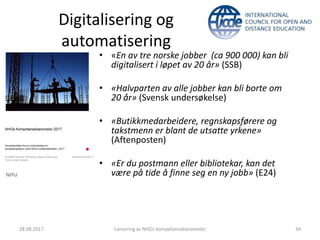
Digitalisering og
automatisering
28.08.2017 Lansering av NHOs kompetansebarometer 34
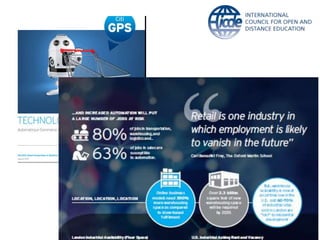
• «En av tre norske jobber (ca 900 000) kan bli
digitalisert i løpet av 20 år» (SSB)
• «Halvparten av alle jobber kan bli borte om
20 år» (Svensk undersøkelse)
• «Butikkmedarbeidere, regnskapsførere og
takstmenn er blant de utsatte yrkene»
(Aftenposten)
• «Er du postmann eller bibliotekar, kan det
være på tide å finne seg en ny jobb» (E24)
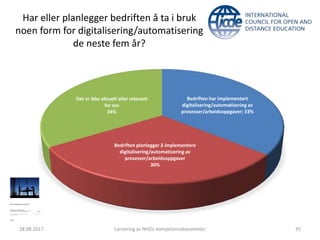
Har eller planlegger bedriften å ta i bruk
noen form for digitalisering/automatisering
de neste fem år?
28.08.2017 Lansering av NHOs kompetansebarometer 35
Bedriften har implementert
digitalisering/automatisering av
prosesser/arbeidsoppgaver; 33%
Bedriften planlegger å implementere
digitalisering/automatisering av
prosesser/arbeidsoppgaver
30%
Det er ikke aktuelt eller relevant
for oss
34%
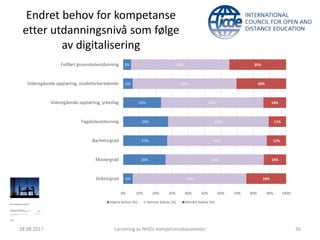
Endret behov for kompetanse
etter utdanningsnivå som følge
av digitalisering
28.08.2017 Lansering av NHOs kompetansebarometer 36
6%
26%
27%
28%
23%
6%
5%
70%
60%
61%
62%
63%
64%
60%
24%
14%
12%
11%
14%
30%
35%
0% 10% 20% 30% 40% 50% 60% 70% 80% 90% 100%
Doktorgrad
Mastergrad
Bachelorgrad
Fagskoleutdanning
Videregående opplæring, yrkesfag
Videregående opplæring, studieforberedende
Fullført grunnskoleutdanning
Større behov (%) Samme behov (%) Mindre behov (%)
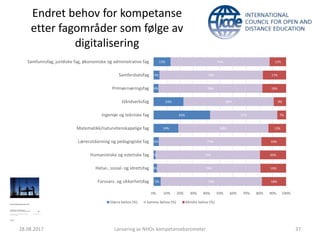
Endret behov for kompetanse
etter fagområder som følge av
digitalisering
28.08.2017 Lansering av NHOs kompetansebarometer 37
5%
3%
2%
4%
19%
43%
23%
4%
4%
13%
76%
78%
79%
77%
68%
51%
68%
78%
78%
75%
18%
19%
20%
19%
13%
7%
9%
18%
17%
12%
0% 10% 20% 30% 40% 50% 60% 70% 80% 90% 100%
Forsvars- og sikkerhetsfag
Helse-, sosial- og idrettsfag
Humanistiske og estetiske fag
Lærerutdanning og pedagogiske fag
Matematikk/naturvitenskapelige fag
Ingeniør og tekniske fag
Håndverksfag
Primærnæringsfag
Samferdselsfag
Samfunnsfag, juridiske fag, økonomiske og administrative fag
Større behov (%) Samme behov (%) Mindre behov (%)
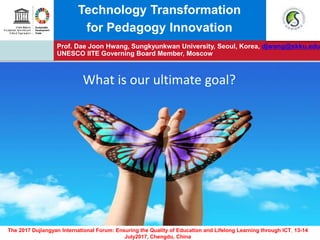
Prof. Dae Joon Hwang, Sungkyunkwan University, Seoul, Korea, djwang@skku.edu
UNESCO IITE Governing Board Member, Moscow
The 2017 Dujiangyan International Forum: Ensuring the Quality of Education and Lifelong Learning through ICT, 13-14
July2017, Chengdu, China
Technology Transformation
for Pedagogy Innovation
What is our ultimate goal?
”TOWARDS INCLUSIVE AND EQUITABLE
QUALITY EDUCATION AND LIFELONG
LEARNING FOR ALL”
Sustainable Development Goal 4: Education 2030
TAKK!
titlestad@icde.org
www.icde.org

ICDE lillehammer lll summit

  • 1.
    ICDE Lillehammer Lifelong LearningSummit Partner meeting 1 September, Oslo, Noway Gard Titlestad, Secretary General International Council for Open and Distance Education Member of the Governing Board
  • 2.
    Open, Transparent, Accountable andfocus on Good Governance Support From Norway 29 years UNESCO Partner >50 years SINCE 1938 To be the global facilitator for inclusive, flexible, quality learning and teaching in the digital age. ICDE
  • 3.
    The Fourth Industrial Revolution Addnow: Artificial intelligence, cognitive technologies and robotics Neurotechnologies Ubiquitous presence of linked sensors New computing technologies Virtual and augmented realities
  • 4.
    As the MOOCsMassiv Onlineand Open Courses floodedhigher education 5 years ago Now it is AI Artificial Intelligence
  • 5.
  • 6.
  • 7.
    2017 Why Education Is theHardest Sector of the Economy to 10 Roles For Artificial Intelligence In Education IBM Watson Artificial intelligence will transform universities. Here’s how WEF Newsweek The Entire Internet Only Matched the Capacity of the Human Brain in 2010 AI keynotes
  • 9.
    Build awareness and insight Establishrelevant courses and educational offerings to build competencies Take part in the debate on the future directions and ethics
  • 10.
    • On 25September 2015, the United Nations General Assembly formally adopted the universal, integrated and transformative 2030 Agenda for Sustainable Development, along with a set of 17 Sustainable Development Goals and 169 associated targets.
  • 13.
  • 15.
    Goal 4: Ensureinclusive and equitable quality education and promote lifelong learning opportunities for all
  • 16.
    Main principles • Educationis a fundamental human right and an enabling right. • Education is a public good, of which the state is the duty bearer. • Gender equality is inextricably linked to the right to education for all.
  • 19.
    Target 3, point43.: A well-established, properly- regulated tertiary education system supported by technology, Open Educational Resources (OERs) and distance education modalities can increase access, equity, quality and relevance, and narrow the gap between what is taught at tertiary education institutions and what economies and societies demand. The provision of tertiary education should be progressively free, in line with existing international agreements.
  • 20.
    Where are wenow? One year after………..
  • 21.
  • 22.
    World is notset to achieve key global education commitments until 2084. PROJECTIONS FOR EDUCATION 2030 2030 2042 2059 2084 Universal primary completion Universal Upper secondary completion Universal Lower secondary completion YEAR Education 2030 deadline Education 2030 deadline 2042 2059 2084 YEAR Global average Universal primary completion Universal Upper secondary completion Universal Lower secondary completion 2015 SDGs adopted 20872051 2062 Southern Asia After 21002080 2089 Sub-Saharan Africa
  • 23.
    To have economicgrowth you need 8 – 9 years average education.
  • 24.
    Digitalisering og teknologisk utvikling Demografiskutvikling Endring i arbeidslivet som følge av globalisering Hvorfor?
  • 25.
    Informal/non-formal RAPID AND DIVERSEEXPANSION OF HIGHER EDUCATION ENROLMENT 100 mill 200 mill 2000 2015 2030 435 mill Only possible facilitated by technology and flexible learning
  • 26.
    USA: 99 % avden nye jobbskapningen 2008 – 2016 krevde mer enn videregående skole
  • 27.
    Kravene til nyutdannede i”gamle” jobber synker
  • 29.
  • 34.
    Digitalisering og automatisering 28.08.2017 Lanseringav NHOs kompetansebarometer 34 • «En av tre norske jobber (ca 900 000) kan bli digitalisert i løpet av 20 år» (SSB) • «Halvparten av alle jobber kan bli borte om 20 år» (Svensk undersøkelse) • «Butikkmedarbeidere, regnskapsførere og takstmenn er blant de utsatte yrkene» (Aftenposten) • «Er du postmann eller bibliotekar, kan det være på tide å finne seg en ny jobb» (E24)
  • 35.
    Har eller planleggerbedriften å ta i bruk noen form for digitalisering/automatisering de neste fem år? 28.08.2017 Lansering av NHOs kompetansebarometer 35 Bedriften har implementert digitalisering/automatisering av prosesser/arbeidsoppgaver; 33% Bedriften planlegger å implementere digitalisering/automatisering av prosesser/arbeidsoppgaver 30% Det er ikke aktuelt eller relevant for oss 34%
  • 36.
    Endret behov forkompetanse etter utdanningsnivå som følge av digitalisering 28.08.2017 Lansering av NHOs kompetansebarometer 36 6% 26% 27% 28% 23% 6% 5% 70% 60% 61% 62% 63% 64% 60% 24% 14% 12% 11% 14% 30% 35% 0% 10% 20% 30% 40% 50% 60% 70% 80% 90% 100% Doktorgrad Mastergrad Bachelorgrad Fagskoleutdanning Videregående opplæring, yrkesfag Videregående opplæring, studieforberedende Fullført grunnskoleutdanning Større behov (%) Samme behov (%) Mindre behov (%)
  • 37.
    Endret behov forkompetanse etter fagområder som følge av digitalisering 28.08.2017 Lansering av NHOs kompetansebarometer 37 5% 3% 2% 4% 19% 43% 23% 4% 4% 13% 76% 78% 79% 77% 68% 51% 68% 78% 78% 75% 18% 19% 20% 19% 13% 7% 9% 18% 17% 12% 0% 10% 20% 30% 40% 50% 60% 70% 80% 90% 100% Forsvars- og sikkerhetsfag Helse-, sosial- og idrettsfag Humanistiske og estetiske fag Lærerutdanning og pedagogiske fag Matematikk/naturvitenskapelige fag Ingeniør og tekniske fag Håndverksfag Primærnæringsfag Samferdselsfag Samfunnsfag, juridiske fag, økonomiske og administrative fag Større behov (%) Samme behov (%) Mindre behov (%)
  • 38.
    Prof. Dae JoonHwang, Sungkyunkwan University, Seoul, Korea, djwang@skku.edu UNESCO IITE Governing Board Member, Moscow The 2017 Dujiangyan International Forum: Ensuring the Quality of Education and Lifelong Learning through ICT, 13-14 July2017, Chengdu, China Technology Transformation for Pedagogy Innovation What is our ultimate goal?
  • 39.
    ”TOWARDS INCLUSIVE ANDEQUITABLE QUALITY EDUCATION AND LIFELONG LEARNING FOR ALL” Sustainable Development Goal 4: Education 2030 TAKK! titlestad@icde.org www.icde.org

Editor's Notes

  • #26 • What before was in the margins, open and distance learning, is now going mainstream in large parts of the world, materialised as online, blended, open, flexible, technology enhanced and e-Learning. Convergence is here, followed by increasing competition (and collaboration) and diversity in higher education. While this is the main trend, the situation in some regions will provide a different picture, e.g. in parts of the south.
  • #35 I 2013 publiserte to forskere fra Universitetet i Oxford en studie hvilke yrker som sannsynligvis kunne forsvinne som følge av digitalisering. SSB har brukt resultatet fra denne og gjort tilsvarende på norske forhold. De har funnet at så mange som 900 000 jobber kan bli digitalisert bort ila 20 år. En svensk undersøkelse, går noe lenger og har kommer fra til at halvparten av alle jobber kan bli borte om 20. Mediene er interessert i å vite hvilke jobber som er mest usatte og har for eksempel skrevet følgende:
  • #36 Som første større undersøkelse har vi nå spurt bedriftene om dette. 2/3 av bedriftene oppgir at dette er aktuelt. 1/3 sier at ed har implementert digitalising/automatiseing Litt færre planlegger, mens den siste tredjedeler sier at det ikke er aktuelt
  • #37 Så er jo spørsmål om digitalisering/autmatisering av prosesser vil føre til endret behov for kompetanse de neste fem år. Noe overraskende kanskje sier rundt 60 prosent, uavhengig av utdanningsnivåer at de vil ha samme behov for kompetanse. Samtidig sier også flere enn en tredjedel at de vil ha mindre behov for personer med bare grunnskoleutdaning og 30 prosent mindre behov for de som har videregående. I underkant av 30 sier også at de vil få større behov for personer med fagskoleutdanning og høyere utdanning
  • #38 Selv om mange bedrifter oppgir at de vil ha samme behov for utdanning på disse fagområdene, er det tydelige også at mange vi få større behov for håndverksfag og ingeniører og tekniske fag. Oppsummert vil vi si utdanning og kompetanse vil bli enda viktigere når digitalsinegsbølgen kommer for fullt.