Downloaded 31 times



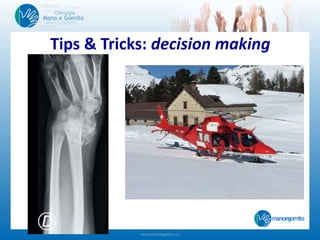
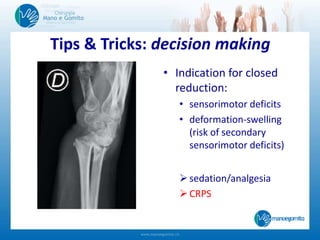
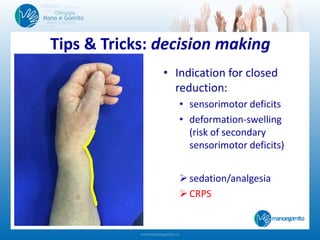
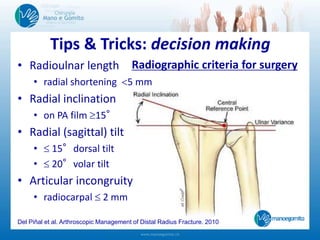
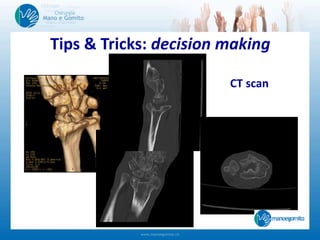

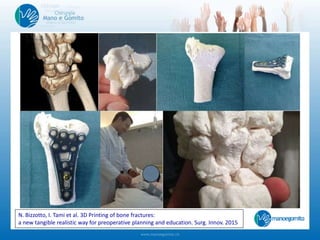
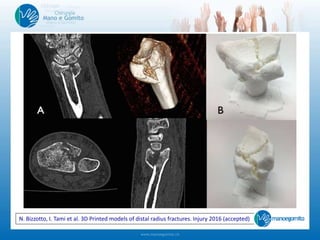
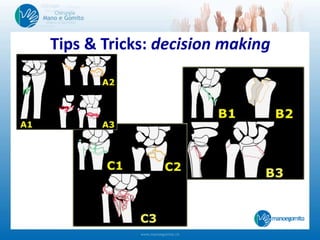
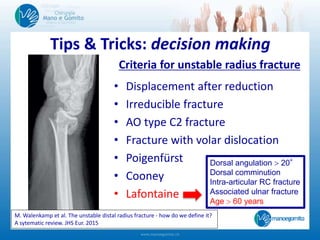

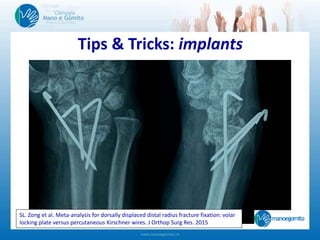
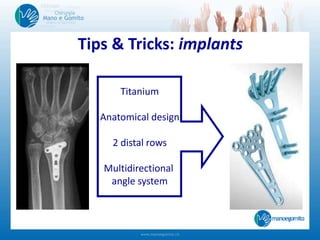
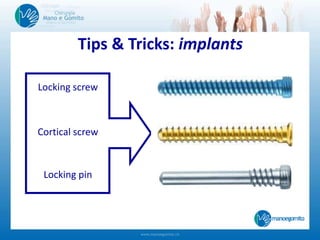
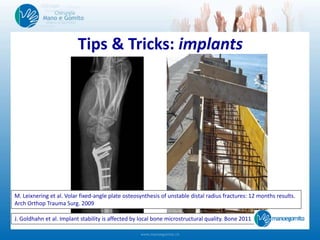
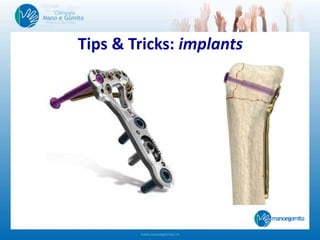
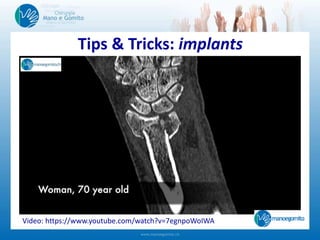
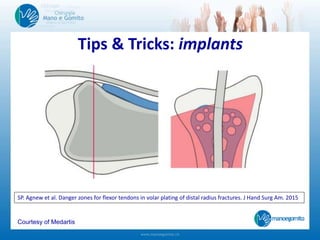
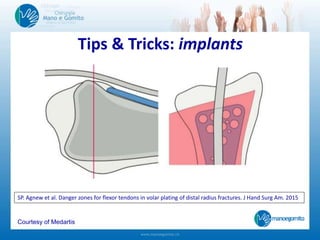
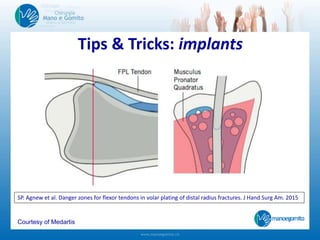
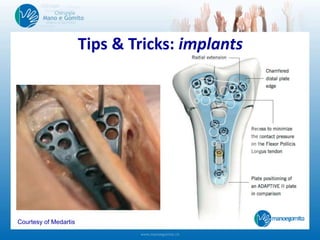
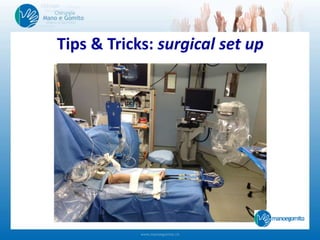
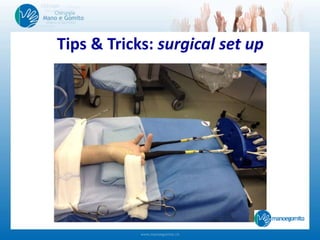
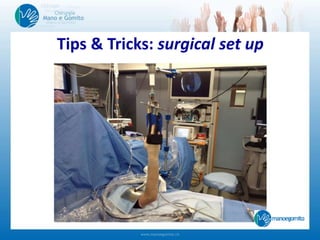
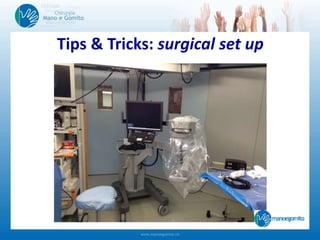

This document discusses tips and tricks for distal radius fixation. It begins by outlining radiographic criteria for determining when surgery is necessary for a distal radius fracture, such as more than 5mm of radial shortening or dorsal tilt over 20 degrees. It then discusses indications for closed versus open reduction, including sensorimotor deficits or risk of complex regional pain syndrome. Techniques and implants for fixation are presented, including use of volar locking plates and screws as well as proper surgical setup. Key points around implant design, placement of screws, and avoiding danger zones near flexor tendons are emphasized.


