HEALTHY LIVING
GROUP
Emma Reid – Health Promotion Team Support Worker
Michael Leadbitter – Health Facilitation Nurse
Housekeeping
FIRE EXITS
TOILETS
MOBILE PHONES
COMFORT BREAK
GROUND RULES
In order to ensure all sessions are enjoyable for everyone we are going to
think about some ground rules that we will recap at the beginning of every
session.
Can you think of one rule that we should follow in each session?
Some important ground rules to follow:
• Be Respectful to others
• Do not talk over other people in the group
• Listen to what others have to say
• Turn off mobile phones
• Arrive to sessions on time
Introductions
Meeting a large group of people who you don't know can be
intimidating for people and it can be very scary for some others.
We are going to play a short ice-breaker game which will help
you to get to know each other.
What will we be covering in this
course?
 Session 1 – Meet and greet & Personal Hygiene
 Session 2 – Oral Hygiene
 Session 3 – Healthy Eating
 Session 4 – Wellbeing and Exercise
 Session 5 – Health check & Evaluation
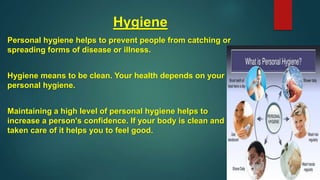
Hygiene
Personal hygiene helps to prevent people from catching or
spreading forms of disease or illness.
Hygiene means to be clean. Your health depends on your
personal hygiene.
Maintaining a high level of personal hygiene helps to
increase a person's confidence. If your body is clean and
taken care of it helps you to feel good.
GERMS
Think about all of the things that you touched today:
• Telephone
• Toilet Handle
• Pet (Cat / Dog / Hamster)
• Blow your nose
• Door Handles
Whatever you have done, you have come into contact with GERMS.
It's easy for GERMS to get onto your hands and then up into your mouth.
GERMS CAN GET EVERYWHERE
GERMS
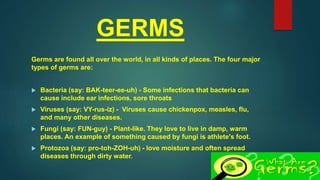
Germs are found all over the world, in all kinds of places. The four major
types of germs are:
 Bacteria (say: BAK-teer-ee-uh) - Some infections that bacteria can
cause include ear infections, sore throats
 Viruses (say: VY-rus-iz) - Viruses cause chickenpox, measles, flu,
and many other diseases.
 Fungi (say: FUN-guy) - Plant-like. They love to live in damp, warm
places. An example of something caused by fungi is athlete's foot.
 Protozoa (say: pro-toh-ZOH-uh) - love moisture and often spread
diseases through dirty water.
BE GERM SMART
We are now going to watch a short
animated video about how we can
be GERM SMART
https://www.youtube.com/watch?v=
yToii3-p-NI
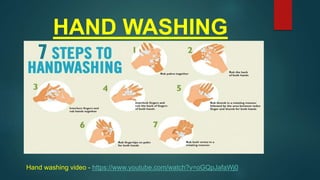
HAND WASHING
Because some germs can live for a short time on something like a
doorknob or countertop, be sure to wash your hands regularly!
When do you think you should wash your hands?
 Before, during, and after preparing food
 Before eating food
 After using the toilet
 After blowing your nose, coughing, or sneezing.
 After touching an animal, animal feed, or animal waste
 After handling pet food or pet treats
 After touching garbage
Keeping hands clean through good hand washing is one of the most important
steps we can take to avoid getting sick and spreading germs to others.
HAND WASHING
Keeping hands clean is one of the most important steps we can take
to avoid getting sick and spreading germs to others.
Handwashing with soap removes germs from hands. This helps stop infections because:
 You touch your eyes, nose, and mouth without thinking. Germs can get into the body
through the eyes, nose and mouth and make you sick.
 Germs from dirty hands can get into foods and drinks and make you sick.
 Germs from dirty hands can move to other objects, like handrails, table tops, or toys
 Handwashing helps prevent sickness and infections
HAND WASHING
Hand washing video - https://www.youtube.com/watch?v=oGQpJafaWj0
Washing and Bathing
Washing and bathing are the most important ways
of maintain good health and protecting ourselves
from infections, illnesses and germs.
Skin care and healthcare professionals recommend
that the face, underarms and genitals are cleaned
once a day.
Washing and Bathing
Bathe or shower daily if possible - Bathing removes the oils, dirt, dead skin
bacteria that you build up every day and is important to having good hygiene.
Scrub your body well. Using soap and a loofah, sponge, or washcloth, wash
your entire body well to scrub off dirt.
Be sure to wash the areas you don't immediately think of - feet, bottom,
genitals, and back.
Use deodorant after shower or bath
FOOT CARE
Your feet take the weight of your whole body, so foot problems can quickly lead to pain.
Here are top tips to keep your feet in good condition:
1. Keep your feet clean by washing them every day in warm soapy water, but
don't soak them, as this might harm your skin's natural oils.
2. Dry your feet thoroughly after washing them, especially between the toes.
3. If your skin is dry, apply moisturising cream all over the foot, except for
between the toes.
4. Trim your toenails regularly using proper nail clippers.
5. Change your socks daily to keep your feet fresh.
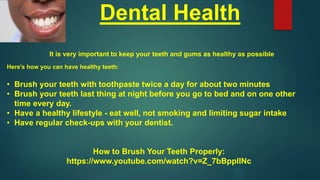
Dental Health
It is very important to keep your teeth and gums as healthy as possible
Here's how you can have healthy teeth:
• Brush your teeth with toothpaste twice a day for about two minutes
• Brush your teeth last thing at night before you go to bed and on one other
time every day.
• Have a healthy lifestyle - eat well, not smoking and limiting sugar intake
• Have regular check-ups with your dentist.
How to Brush Your Teeth Properly:
https://www.youtube.com/watch?v=Z_7bBppIINc
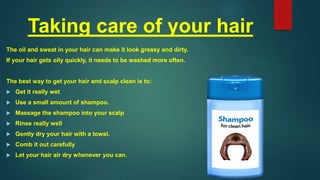
Taking care of your hair
The oil and sweat in your hair can make it look greasy and dirty.
If your hair gets oily quickly, it needs to be washed more often.
The best way to get your hair and scalp clean is to:
 Get it really wet
 Use a small amount of shampoo.
 Massage the shampoo into your scalp
 Rinse really well
 Gently dry your hair with a towel.
 Comb it out carefully
 Let your hair air dry whenever you can.
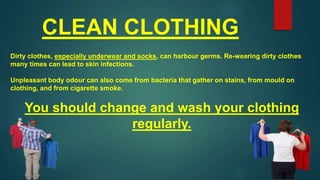
CLEAN CLOTHING
Dirty clothes, especially underwear and socks, can harbour germs. Re-wearing dirty clothes
many times can lead to skin infections.
Unpleasant body odour can also come from bacteria that gather on stains, from mould on
clothing, and from cigarette smoke.
You should change and wash your clothing
regularly.
Wash your bedding
Wash and change your bedding every week
Body oil can build up on the sheets and cause
irritations.
Dead skin cells, dirt from your feet and body, and
bugs can also hang around in your sheets if you
don't take the time to wash them.
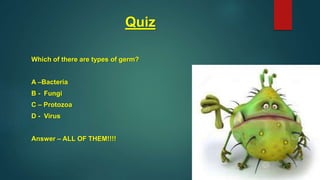
Quiz
Which of there are types of germ?
A –Bacteria
B - Fungi
C – Protozoa
D - Virus
Answer – ALL OF THEM!!!!
Quiz
Why is hand washing important?
A – Keeps hands smelling nice
B – Keeps skin on hands feeling soft
C – Helps to avoid getting sick and spreading germs to others
Answer - C - Helps to avoid getting sick and spreading germs to others
Hand Washing Video - https://www.youtube.com/watch?v=TGddyTW5eMc
Quiz
Why is good personal hygiene important?
A – Good personal hygiene helps to prevent people from catching or
spreading forms of disease or illness
B - Good personal hygiene helps you to feel better about yourself
C – Good personal hygiene makes it easier to make friends
Answer - All of them.
Maintaining personal hygiene is necessary for many reasons; personal,
social and health.
Quiz
How often should you have a bath or shower?
A – Once a month
B – Once a week
C – Once a day
D – Every other day
Answer – C - Bathe or shower daily if possible - Bathing removes the
oils, dirt, dead skin bacteria that you build up every day and is important
to having good hygiene
Quiz
How often should you brush your teeth?
A – Once a week
B – Twice a day
C – Once a day
D – Never
Answer – B – Twice a day.
Good oral hygiene is very important. Not only does brushing your teeth
help prevent tooth decay, it also helps prevent gum disease.

Healthy-Living-Group-Session-Session-One.pptx

  • 1.
    HEALTHY LIVING GROUP Emma Reid– Health Promotion Team Support Worker Michael Leadbitter – Health Facilitation Nurse
  • 2.
  • 3.
    GROUND RULES In orderto ensure all sessions are enjoyable for everyone we are going to think about some ground rules that we will recap at the beginning of every session. Can you think of one rule that we should follow in each session? Some important ground rules to follow: • Be Respectful to others • Do not talk over other people in the group • Listen to what others have to say • Turn off mobile phones • Arrive to sessions on time
  • 4.
    Introductions Meeting a largegroup of people who you don't know can be intimidating for people and it can be very scary for some others. We are going to play a short ice-breaker game which will help you to get to know each other.
  • 5.
    What will webe covering in this course?  Session 1 – Meet and greet & Personal Hygiene  Session 2 – Oral Hygiene  Session 3 – Healthy Eating  Session 4 – Wellbeing and Exercise  Session 5 – Health check & Evaluation
  • 6.
    Hygiene Personal hygiene helpsto prevent people from catching or spreading forms of disease or illness. Hygiene means to be clean. Your health depends on your personal hygiene. Maintaining a high level of personal hygiene helps to increase a person's confidence. If your body is clean and taken care of it helps you to feel good.
  • 7.
    GERMS Think about allof the things that you touched today: • Telephone • Toilet Handle • Pet (Cat / Dog / Hamster) • Blow your nose • Door Handles Whatever you have done, you have come into contact with GERMS. It's easy for GERMS to get onto your hands and then up into your mouth.
  • 8.
    GERMS CAN GETEVERYWHERE
  • 9.
    GERMS Germs are foundall over the world, in all kinds of places. The four major types of germs are:  Bacteria (say: BAK-teer-ee-uh) - Some infections that bacteria can cause include ear infections, sore throats  Viruses (say: VY-rus-iz) - Viruses cause chickenpox, measles, flu, and many other diseases.  Fungi (say: FUN-guy) - Plant-like. They love to live in damp, warm places. An example of something caused by fungi is athlete's foot.  Protozoa (say: pro-toh-ZOH-uh) - love moisture and often spread diseases through dirty water.
  • 10.
    BE GERM SMART Weare now going to watch a short animated video about how we can be GERM SMART https://www.youtube.com/watch?v= yToii3-p-NI
  • 11.
    HAND WASHING Because somegerms can live for a short time on something like a doorknob or countertop, be sure to wash your hands regularly! When do you think you should wash your hands?  Before, during, and after preparing food  Before eating food  After using the toilet  After blowing your nose, coughing, or sneezing.  After touching an animal, animal feed, or animal waste  After handling pet food or pet treats  After touching garbage Keeping hands clean through good hand washing is one of the most important steps we can take to avoid getting sick and spreading germs to others.
  • 12.
    HAND WASHING Keeping handsclean is one of the most important steps we can take to avoid getting sick and spreading germs to others. Handwashing with soap removes germs from hands. This helps stop infections because:  You touch your eyes, nose, and mouth without thinking. Germs can get into the body through the eyes, nose and mouth and make you sick.  Germs from dirty hands can get into foods and drinks and make you sick.  Germs from dirty hands can move to other objects, like handrails, table tops, or toys  Handwashing helps prevent sickness and infections
  • 13.
    HAND WASHING Hand washingvideo - https://www.youtube.com/watch?v=oGQpJafaWj0
  • 14.
    Washing and Bathing Washingand bathing are the most important ways of maintain good health and protecting ourselves from infections, illnesses and germs. Skin care and healthcare professionals recommend that the face, underarms and genitals are cleaned once a day.
  • 15.
    Washing and Bathing Batheor shower daily if possible - Bathing removes the oils, dirt, dead skin bacteria that you build up every day and is important to having good hygiene. Scrub your body well. Using soap and a loofah, sponge, or washcloth, wash your entire body well to scrub off dirt. Be sure to wash the areas you don't immediately think of - feet, bottom, genitals, and back. Use deodorant after shower or bath
  • 16.
    FOOT CARE Your feettake the weight of your whole body, so foot problems can quickly lead to pain. Here are top tips to keep your feet in good condition: 1. Keep your feet clean by washing them every day in warm soapy water, but don't soak them, as this might harm your skin's natural oils. 2. Dry your feet thoroughly after washing them, especially between the toes. 3. If your skin is dry, apply moisturising cream all over the foot, except for between the toes. 4. Trim your toenails regularly using proper nail clippers. 5. Change your socks daily to keep your feet fresh.
  • 17.
    Dental Health It isvery important to keep your teeth and gums as healthy as possible Here's how you can have healthy teeth: • Brush your teeth with toothpaste twice a day for about two minutes • Brush your teeth last thing at night before you go to bed and on one other time every day. • Have a healthy lifestyle - eat well, not smoking and limiting sugar intake • Have regular check-ups with your dentist. How to Brush Your Teeth Properly: https://www.youtube.com/watch?v=Z_7bBppIINc
  • 18.
    Taking care ofyour hair The oil and sweat in your hair can make it look greasy and dirty. If your hair gets oily quickly, it needs to be washed more often. The best way to get your hair and scalp clean is to:  Get it really wet  Use a small amount of shampoo.  Massage the shampoo into your scalp  Rinse really well  Gently dry your hair with a towel.  Comb it out carefully  Let your hair air dry whenever you can.
  • 19.
    CLEAN CLOTHING Dirty clothes,especially underwear and socks, can harbour germs. Re-wearing dirty clothes many times can lead to skin infections. Unpleasant body odour can also come from bacteria that gather on stains, from mould on clothing, and from cigarette smoke. You should change and wash your clothing regularly.
  • 20.
    Wash your bedding Washand change your bedding every week Body oil can build up on the sheets and cause irritations. Dead skin cells, dirt from your feet and body, and bugs can also hang around in your sheets if you don't take the time to wash them.
  • 21.
    Quiz Which of thereare types of germ? A –Bacteria B - Fungi C – Protozoa D - Virus Answer – ALL OF THEM!!!!
  • 22.
    Quiz Why is handwashing important? A – Keeps hands smelling nice B – Keeps skin on hands feeling soft C – Helps to avoid getting sick and spreading germs to others Answer - C - Helps to avoid getting sick and spreading germs to others Hand Washing Video - https://www.youtube.com/watch?v=TGddyTW5eMc
  • 23.
    Quiz Why is goodpersonal hygiene important? A – Good personal hygiene helps to prevent people from catching or spreading forms of disease or illness B - Good personal hygiene helps you to feel better about yourself C – Good personal hygiene makes it easier to make friends Answer - All of them. Maintaining personal hygiene is necessary for many reasons; personal, social and health.
  • 24.
    Quiz How often shouldyou have a bath or shower? A – Once a month B – Once a week C – Once a day D – Every other day Answer – C - Bathe or shower daily if possible - Bathing removes the oils, dirt, dead skin bacteria that you build up every day and is important to having good hygiene
  • 25.
    Quiz How often shouldyou brush your teeth? A – Once a week B – Twice a day C – Once a day D – Never Answer – B – Twice a day. Good oral hygiene is very important. Not only does brushing your teeth help prevent tooth decay, it also helps prevent gum disease.

Editor's Notes

  • #5 Getting to Know You Game – This is an excellent game to play when you have a group of people who don't know each other well. Participants stand in a circle. Trainer starts off the game by throwing a beanbag or ball at someone in the circle and asking a question at the same time - such as "What's your name?", "Do you have a brother or sister?", "What's your favourite colour?" and so on. The person who catches the beanbag/ball must answer the question and then throw it on and ask their own question. The game works best if you keep it moving quite quickly, so you may have to step in to prod nervous / unsure participants.