Presented By
Arpit Garg (15ME006)
SCHOOL OF AUTOMATION AND MECHANICAL ENGINEERING
A Presentation On
ELECTRIC VEHICLES
(Sustainable Energy)
What is an Electric Vehicle (EV) ?
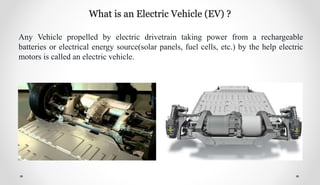
Any Vehicle propelled by electric drivetrain taking power from a rechargeable
batteries or electrical energy source(solar panels, fuel cells, etc.) by the help electric
motors is called an electric vehicle.
History of Electric Vehicles
1832- First EV developed by Robert Anderson using non-rechargeable batteries
1889- In US, an electrified wagon for 6 passengers with top speed of 14mph
1900- Electric Cars gain popularity as they are quiet and have no emissions
1912- Ford introduces Model-T with high driving range & affordability
1930- Complete takeover by Gasoline Vehicles
1970- Government recommends the use of EV’s to reduce air pollution &
gas prices were soaring
2001- REVAi was launched with 50 miles range in India
2006- Tesla unveils roadster which was the first EV with >200 miles range
(2010-2016)- Nissan Leaf, Model-S, Model-T, some hybrids were unveiled
and massive drop in Lithium ions batteries led several EV’s
launched commercially
(2017-Present)- More than 2 million electric cars are already on the road
Globally
Thomas Edison and an
electric car in 1913
Electric car built by
Thomas Parker in 1895
What is the Need Of Electric Vehicles ?
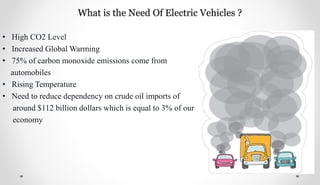
• High CO2 Level
• Increased Global Warming
• 75% of carbon monoxide emissions come from
automobiles
• Rising Temperature
• Need to reduce dependency on crude oil imports of
around $112 billion dollars which is equal to 3% of our
economy
Benefits of Electric Vehicles
Sustainability Efficiency
EconomicsConvenience
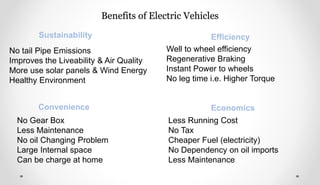
No Gear Box
Less Maintenance
No oil Changing Problem
Large Internal space
Can be charge at home
No tail Pipe Emissions
Improves the Liveability & Air Quality
More use solar panels & Wind Energy
Healthy Environment
Well to wheel efficiency
Regenerative Braking
Instant Power to wheels
No leg time i.e. Higher Torque
Less Running Cost
No Tax
Cheaper Fuel (electricity)
No Dependency on oil imports
Less Maintenance
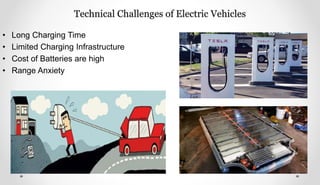
Technical Challenges of Electric Vehicles
• Long Charging Time
• Limited Charging Infrastructure
• Cost of Batteries are high
• Range Anxiety
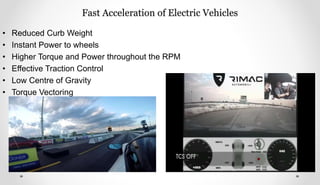
Fast Acceleration of Electric Vehicles
• Reduced Curb Weight
• Instant Power to wheels
• Higher Torque and Power throughout the RPM
• Effective Traction Control
• Low Centre of Gravity
• Torque Vectoring
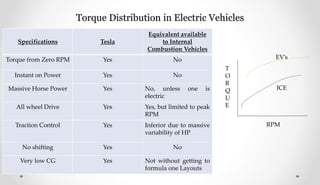
Torque Distribution in Electric Vehicles
Specifications Tesla
Equivalent available
to Internal
Combustion Vehicles
Torque from Zero RPM Yes No
Instant on Power Yes No
Massive Horse Power Yes No, unless one is
electric
All wheel Drive Yes Yes, but limited to peak
RPM
Traction Control Yes Inferior due to massive
variability of HP
No shifting Yes No
Very low CG Yes Not without getting to
formula one Layouts
T
O
R
Q
U
E
RPM
EV’s
ICE
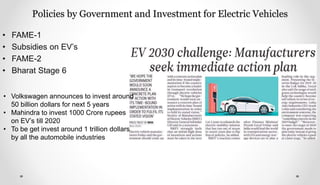
Policies by Government and Investment for Electric Vehicles
• FAME-1
• Subsidies on EV’s
• FAME-2
• Bharat Stage 6
• Volkswagen announces to invest around
50 billion dollars for next 5 years
• Mahindra to invest 1000 Crore rupees
on EV’s till 2020
• To be get invest around 1 trillion dollars
by all the automobile industries
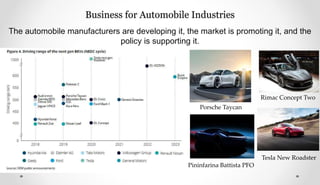
Business for Automobile Industries
The automobile manufacturers are developing it, the market is promoting it, and the
policy is supporting it.
Porsche Taycan
Rimac Concept Two
Pininfarina Battista PFO
Tesla New Roadster

Electric Vehicles

  • 1.
    Presented By Arpit Garg(15ME006) SCHOOL OF AUTOMATION AND MECHANICAL ENGINEERING A Presentation On ELECTRIC VEHICLES (Sustainable Energy)
  • 2.
    What is anElectric Vehicle (EV) ? Any Vehicle propelled by electric drivetrain taking power from a rechargeable batteries or electrical energy source(solar panels, fuel cells, etc.) by the help electric motors is called an electric vehicle.
  • 3.
    History of ElectricVehicles 1832- First EV developed by Robert Anderson using non-rechargeable batteries 1889- In US, an electrified wagon for 6 passengers with top speed of 14mph 1900- Electric Cars gain popularity as they are quiet and have no emissions 1912- Ford introduces Model-T with high driving range & affordability 1930- Complete takeover by Gasoline Vehicles 1970- Government recommends the use of EV’s to reduce air pollution & gas prices were soaring 2001- REVAi was launched with 50 miles range in India 2006- Tesla unveils roadster which was the first EV with >200 miles range (2010-2016)- Nissan Leaf, Model-S, Model-T, some hybrids were unveiled and massive drop in Lithium ions batteries led several EV’s launched commercially (2017-Present)- More than 2 million electric cars are already on the road Globally Thomas Edison and an electric car in 1913 Electric car built by Thomas Parker in 1895
  • 4.
    What is theNeed Of Electric Vehicles ? • High CO2 Level • Increased Global Warming • 75% of carbon monoxide emissions come from automobiles • Rising Temperature • Need to reduce dependency on crude oil imports of around $112 billion dollars which is equal to 3% of our economy
  • 5.
    Benefits of ElectricVehicles Sustainability Efficiency EconomicsConvenience No Gear Box Less Maintenance No oil Changing Problem Large Internal space Can be charge at home No tail Pipe Emissions Improves the Liveability & Air Quality More use solar panels & Wind Energy Healthy Environment Well to wheel efficiency Regenerative Braking Instant Power to wheels No leg time i.e. Higher Torque Less Running Cost No Tax Cheaper Fuel (electricity) No Dependency on oil imports Less Maintenance
  • 6.
    Technical Challenges ofElectric Vehicles • Long Charging Time • Limited Charging Infrastructure • Cost of Batteries are high • Range Anxiety
  • 7.
    Fast Acceleration ofElectric Vehicles • Reduced Curb Weight • Instant Power to wheels • Higher Torque and Power throughout the RPM • Effective Traction Control • Low Centre of Gravity • Torque Vectoring
  • 8.
    Torque Distribution inElectric Vehicles Specifications Tesla Equivalent available to Internal Combustion Vehicles Torque from Zero RPM Yes No Instant on Power Yes No Massive Horse Power Yes No, unless one is electric All wheel Drive Yes Yes, but limited to peak RPM Traction Control Yes Inferior due to massive variability of HP No shifting Yes No Very low CG Yes Not without getting to formula one Layouts T O R Q U E RPM EV’s ICE
  • 9.
    Policies by Governmentand Investment for Electric Vehicles • FAME-1 • Subsidies on EV’s • FAME-2 • Bharat Stage 6 • Volkswagen announces to invest around 50 billion dollars for next 5 years • Mahindra to invest 1000 Crore rupees on EV’s till 2020 • To be get invest around 1 trillion dollars by all the automobile industries
  • 10.
    Business for AutomobileIndustries The automobile manufacturers are developing it, the market is promoting it, and the policy is supporting it. Porsche Taycan Rimac Concept Two Pininfarina Battista PFO Tesla New Roadster