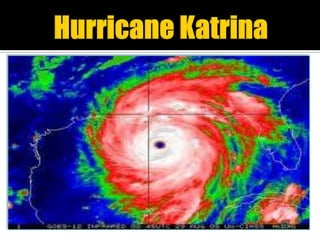
Hurricane Katrina
What’s in a Name?Hurricane– kind of storm scientists refer to as a strong tropical cycloneTyphoon-- when the same kind of storm occurs in the western North Pacific OceanCyclone—  when the same kind of storm occurs in the southwest Pacific Ocean and the Indian Ocean
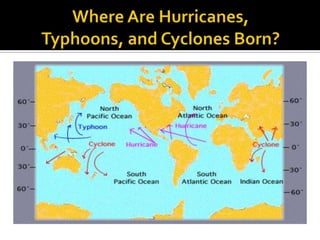
Where Are Hurricanes, Typhoons, and Cyclones Born?
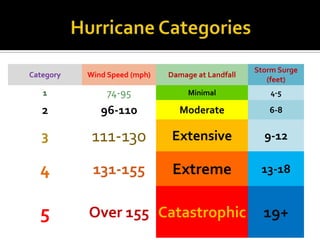
Hurricane Categories
Hurricane Katrina Hits Land
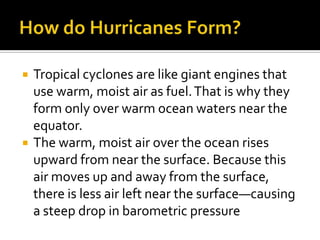
How do Hurricanes Form?Tropical cyclones are like giant engines that use warm, moist air as fuel. That is why they form only over warm ocean waters near the equator.The warm, moist air over the ocean rises upward from near the surface. Because this air moves up and away from the surface, there is less air left near the surface—causing a steep drop in barometric pressure
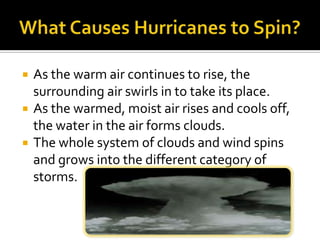
What Causes Hurricanes to Spin?As the warm air continues to rise, the surrounding air swirls in to take its place.As the warmed, moist air rises and cools off, the water in the air forms clouds. The whole system of clouds and wind spins and grows into the different category of storms.
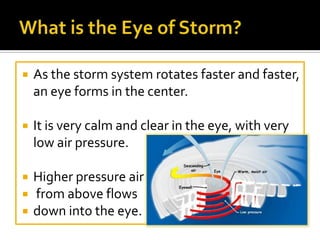
What is the Eye of Storm?As the storm system rotates faster and faster, an eye forms in the center.It is very calm and clear in the eye, with very low air pressure. Higher pressure airfrom above flows down into the eye.
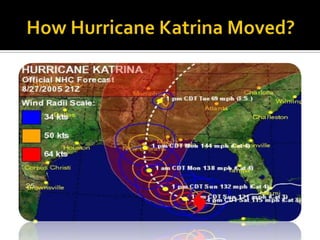
How Hurricane Katrina Moved?
Hurricane Katrina Moves Toward New Orleans, Louisiana
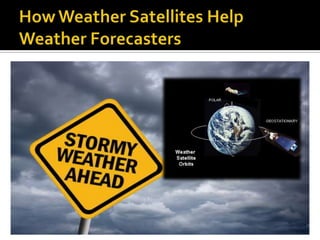
How Weather Satellites Help Weather Forecasters
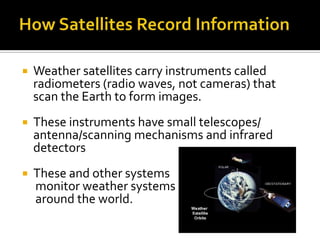
How Satellites Record InformationWeather satellites carry instruments called radiometers (radio waves, not cameras) that scan the Earth to form images. These instruments have small telescopes/ antenna/scanning mechanisms and infrared detectorsThese and other systems     monitor weather systems      around the world.
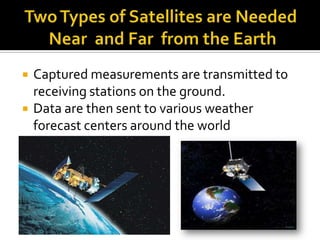
Two Types of Satellites are Needed Near  and Far  from the EarthCaptured measurements are transmitted to receiving stations on the ground.Data are then sent to various weather forecast centers around the world
How do Satellites Work and Help  Everyday
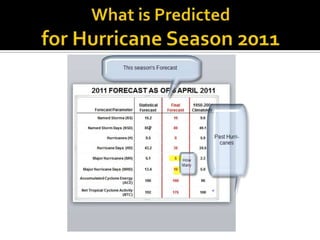
What is Predicted for Hurricane Season 2011
How to Be Prepared for 2011Discuss the type of hazards that could affect your family. Know your home's vulnerability to storm surge, flooding and wind.Locate a safe room or the safest areas in your home for each hurricane hazard. In certain circumstances the safest areas may not be your home but within your community.Determine escape routes from your home and places to meet. These should be measured in tens of miles rather than hundreds of miles.Have an out-of-state friend as a family contact, so all your family members have a single point of contact.
Make a plan now for what to do with your pets if you need to evacuate.Post emergency telephone numbers by your phones and make sure your children know how and when to call 911.Check your insurance coverage - flood damage is not usually covered by homeowners insurance.Stock non-perishable emergency supplies and a Disaster Supply Kit Use a NOAA weather radio. Remember to replace its battery every 6 months, as you do with your smoke detectors.Take First Aid, CPR and disaster preparedness classes.
References

Hurricane katrina absorb activity

  • 1.
  • 2.
    What’s in aName?Hurricane– kind of storm scientists refer to as a strong tropical cycloneTyphoon-- when the same kind of storm occurs in the western North Pacific OceanCyclone— when the same kind of storm occurs in the southwest Pacific Ocean and the Indian Ocean
  • 3.
    Where Are Hurricanes,Typhoons, and Cyclones Born?
  • 4.
  • 5.
  • 6.
    How do HurricanesForm?Tropical cyclones are like giant engines that use warm, moist air as fuel. That is why they form only over warm ocean waters near the equator.The warm, moist air over the ocean rises upward from near the surface. Because this air moves up and away from the surface, there is less air left near the surface—causing a steep drop in barometric pressure
  • 7.
    What Causes Hurricanesto Spin?As the warm air continues to rise, the surrounding air swirls in to take its place.As the warmed, moist air rises and cools off, the water in the air forms clouds. The whole system of clouds and wind spins and grows into the different category of storms.
  • 8.
    What is theEye of Storm?As the storm system rotates faster and faster, an eye forms in the center.It is very calm and clear in the eye, with very low air pressure. Higher pressure airfrom above flows down into the eye.
  • 9.
  • 10.
    Hurricane Katrina MovesToward New Orleans, Louisiana
  • 11.
    How Weather SatellitesHelp Weather Forecasters
  • 12.
    How Satellites RecordInformationWeather satellites carry instruments called radiometers (radio waves, not cameras) that scan the Earth to form images. These instruments have small telescopes/ antenna/scanning mechanisms and infrared detectorsThese and other systems monitor weather systems around the world.
  • 13.
    Two Types ofSatellites are Needed Near and Far from the EarthCaptured measurements are transmitted to receiving stations on the ground.Data are then sent to various weather forecast centers around the world
  • 14.
    How do SatellitesWork and Help Everyday
  • 15.
    What is Predictedfor Hurricane Season 2011
  • 16.
    How to BePrepared for 2011Discuss the type of hazards that could affect your family. Know your home's vulnerability to storm surge, flooding and wind.Locate a safe room or the safest areas in your home for each hurricane hazard. In certain circumstances the safest areas may not be your home but within your community.Determine escape routes from your home and places to meet. These should be measured in tens of miles rather than hundreds of miles.Have an out-of-state friend as a family contact, so all your family members have a single point of contact.
  • 17.
    Make a plannow for what to do with your pets if you need to evacuate.Post emergency telephone numbers by your phones and make sure your children know how and when to call 911.Check your insurance coverage - flood damage is not usually covered by homeowners insurance.Stock non-perishable emergency supplies and a Disaster Supply Kit Use a NOAA weather radio. Remember to replace its battery every 6 months, as you do with your smoke detectors.Take First Aid, CPR and disaster preparedness classes.
  • 19.