Hungarian teachers’
      perceptions of dyslexic
        language learners

Presentation by
Barbi Pál
About the research
Method:
 - 5 schools
 - 19 teachers
 - interviews
 - teachers’ observations

Aim:
 1. identify symptoms
 2. identify personal factors
Recognising the symptoms of


   In the foreign
language classroom
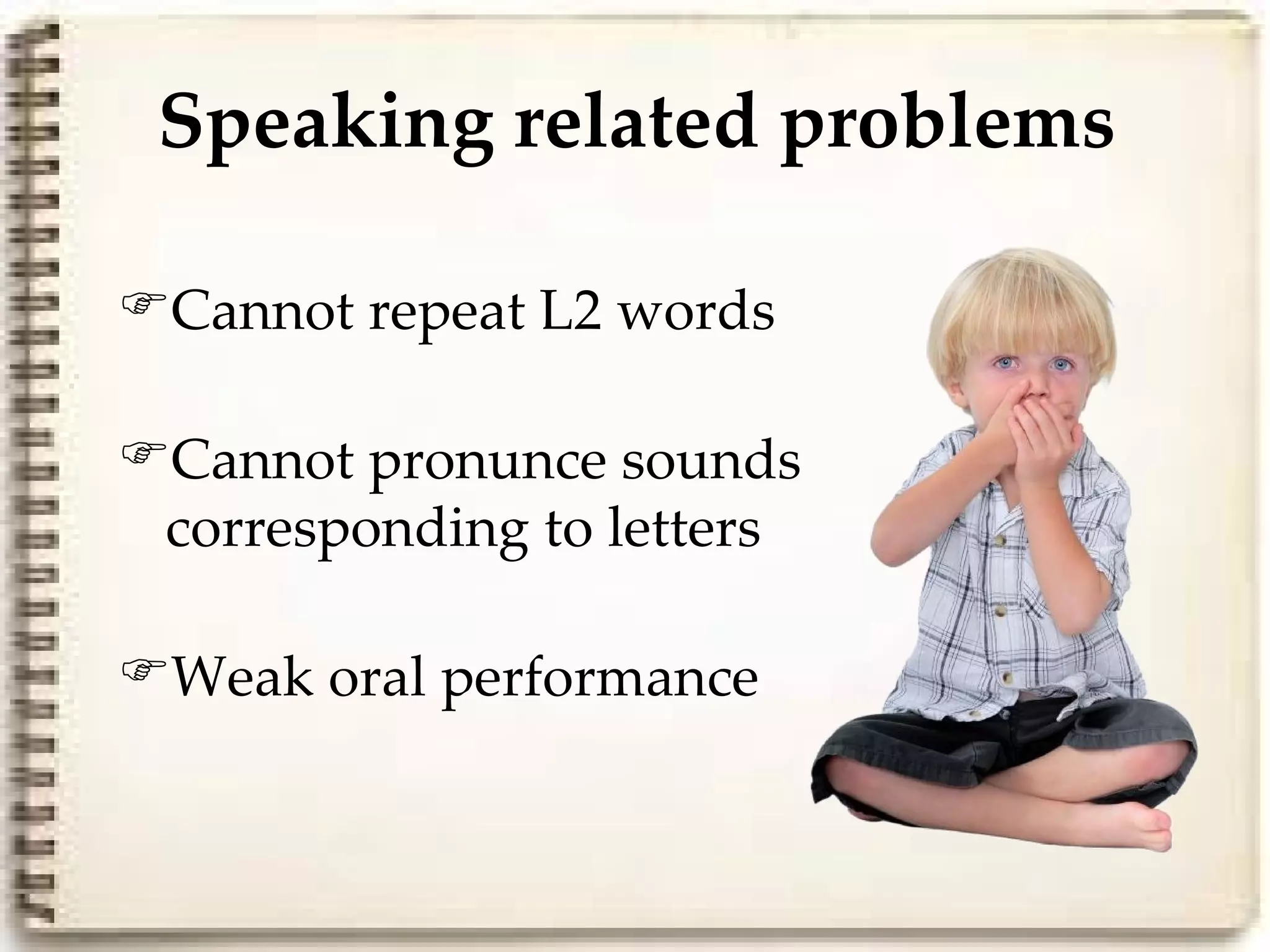
Speaking related problems

Cannot repeat L2 words

Cannot pronunce sounds
 corresponding to letters

Weak oral performance
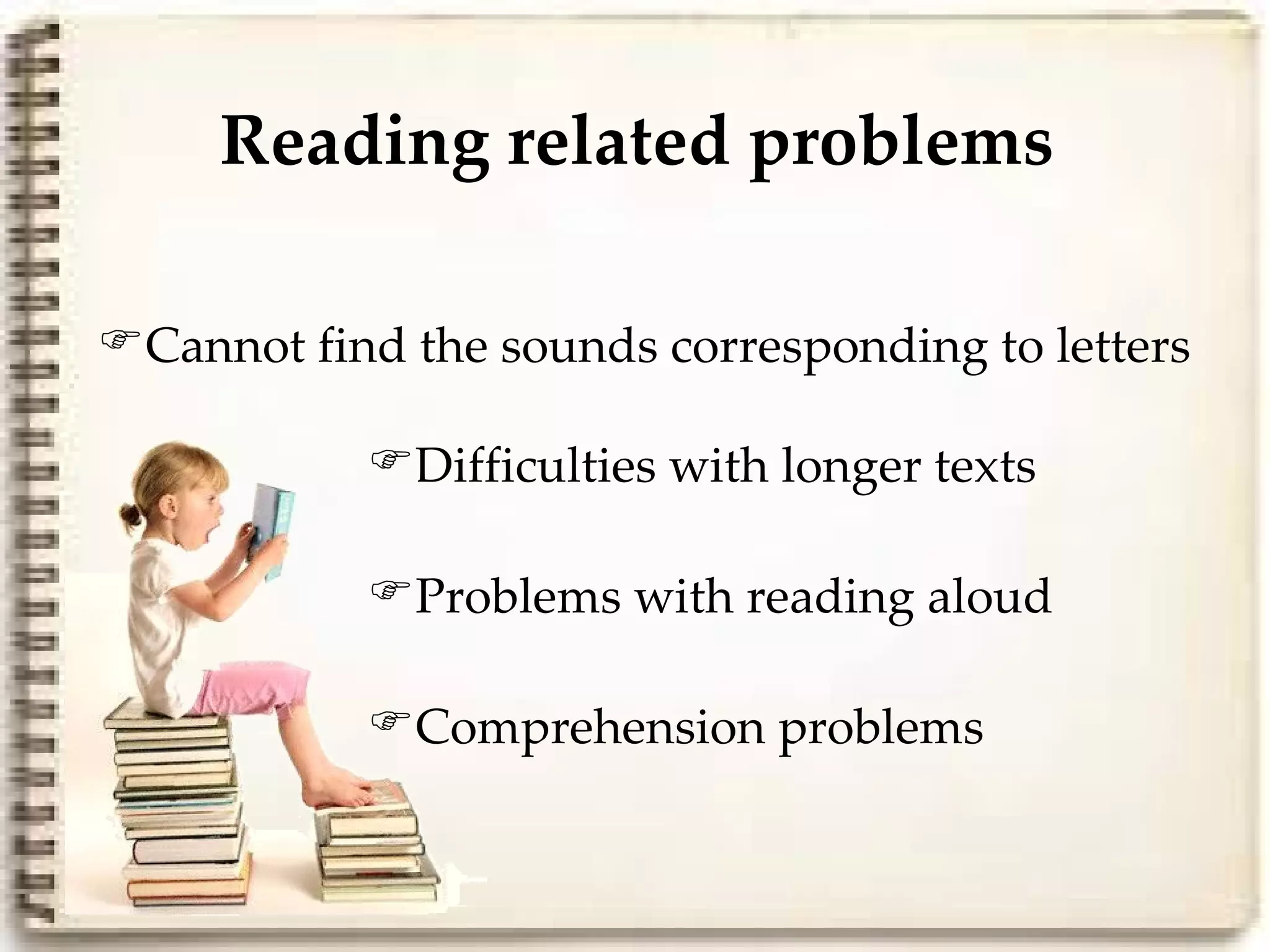
Reading related problems

Cannot find the sounds corresponding to letters

           Difficulties with longer texts

           Problems with reading aloud

           Comprehension problems
Writing related problems
Spelling issues

Cannot copy words from the blackboard

Mix up Hungarian and English spelling

Mix up similarly sounding and looking words
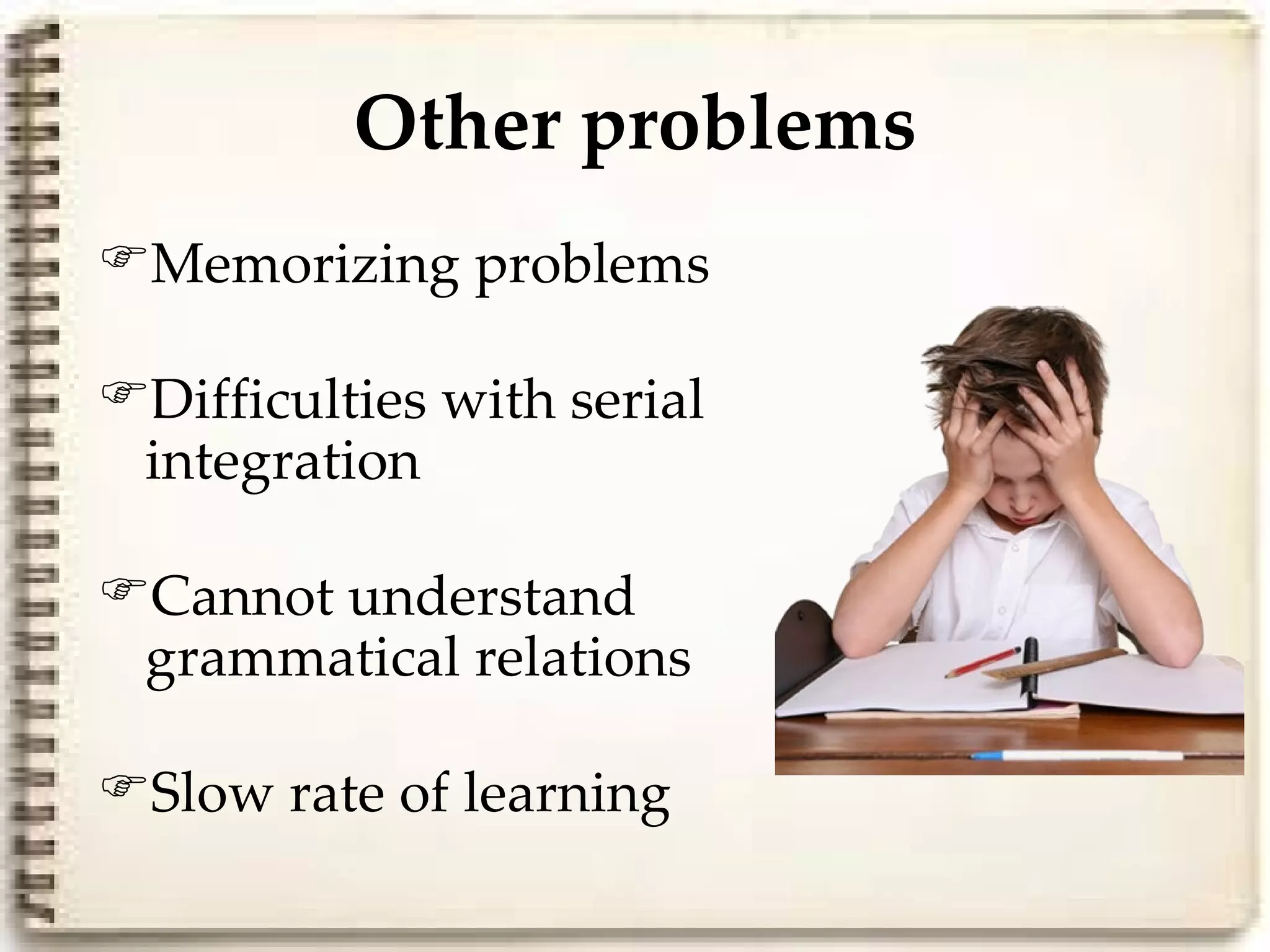
Other problems
Memorizing problems

Difficulties with serial
 integration

Cannot understand
 grammatical relations

Slow rate of learning
Personal factors observed
   as characteristic of
      students with
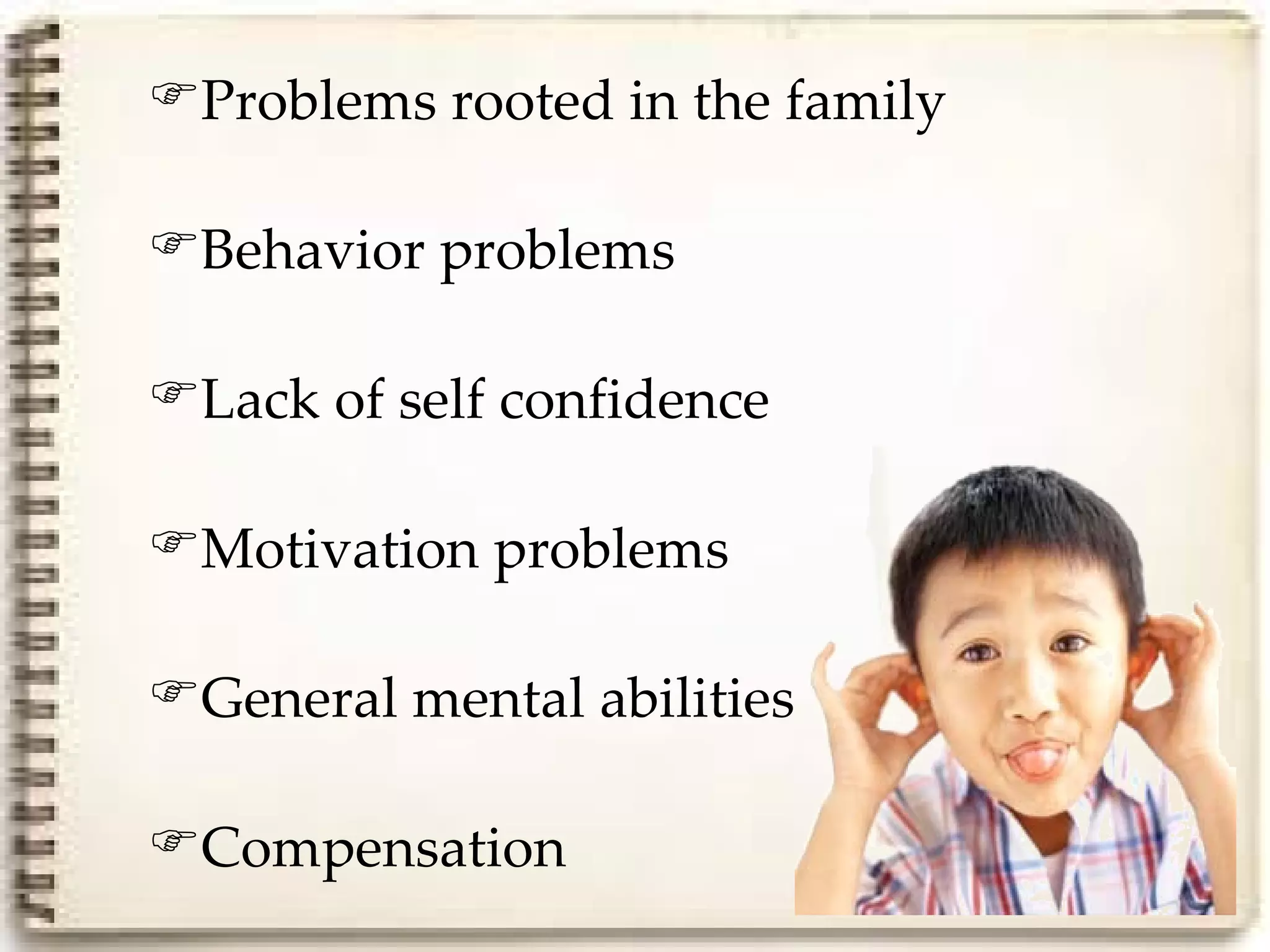
Problems rooted in the family

Behavior problems

Lack of self confidence

Motivation problems

General mental abilities

Compensation
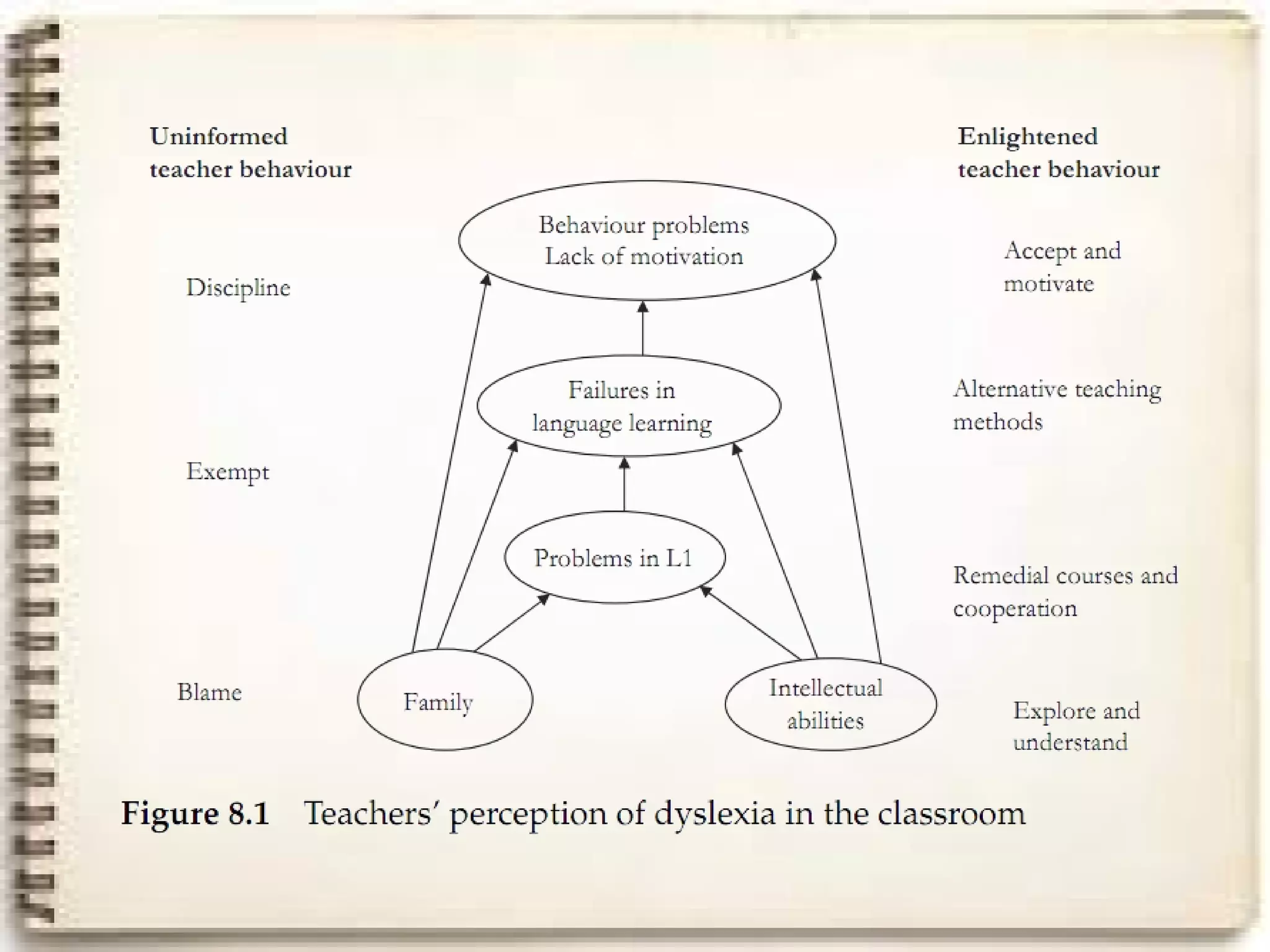
An emerging model of
teachers’ perception of
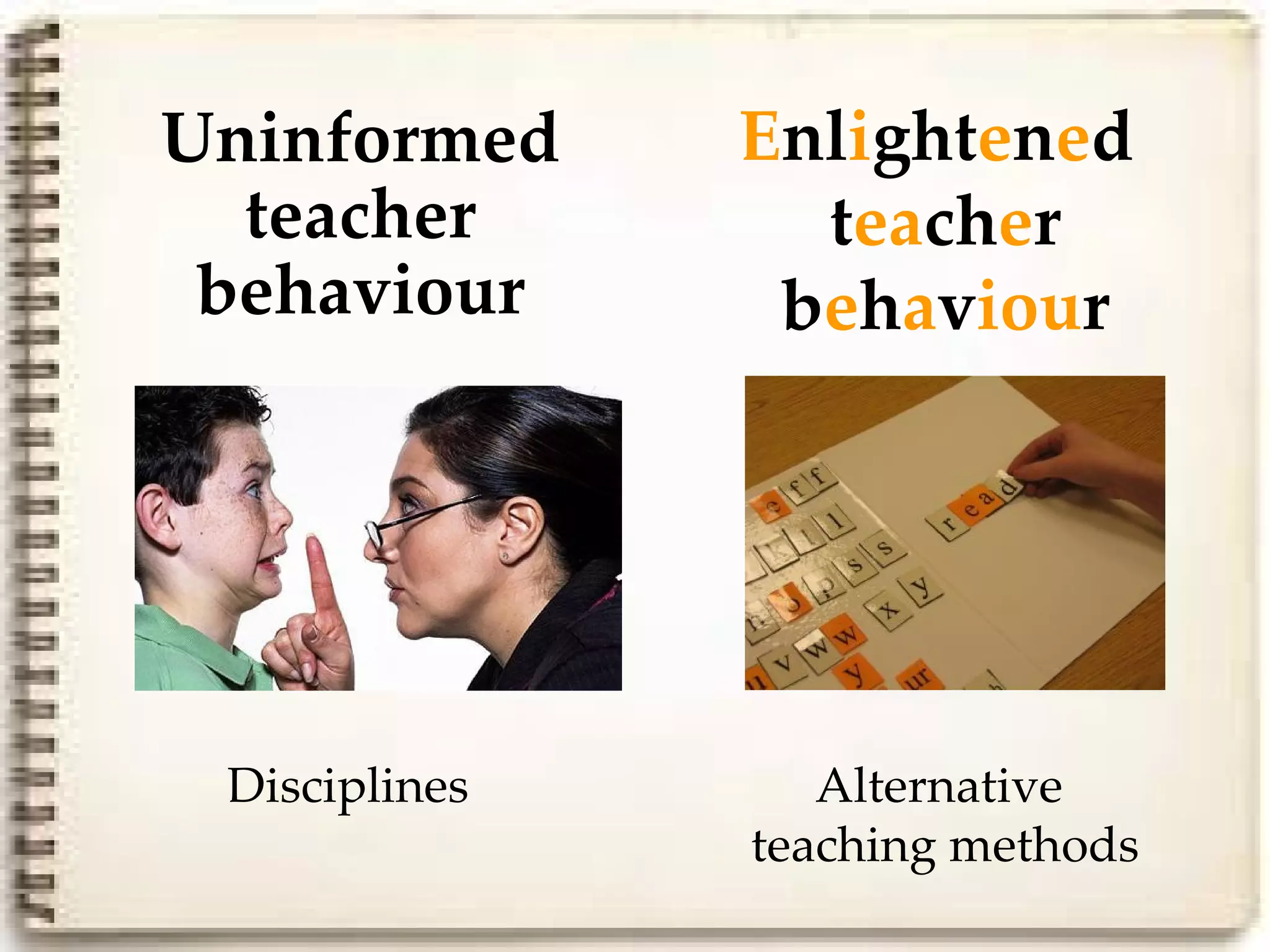
Uninformed     Enlightened
  teacher        teacher
 behaviour      behaviour


 Disciplines      Alternative
               teaching methods
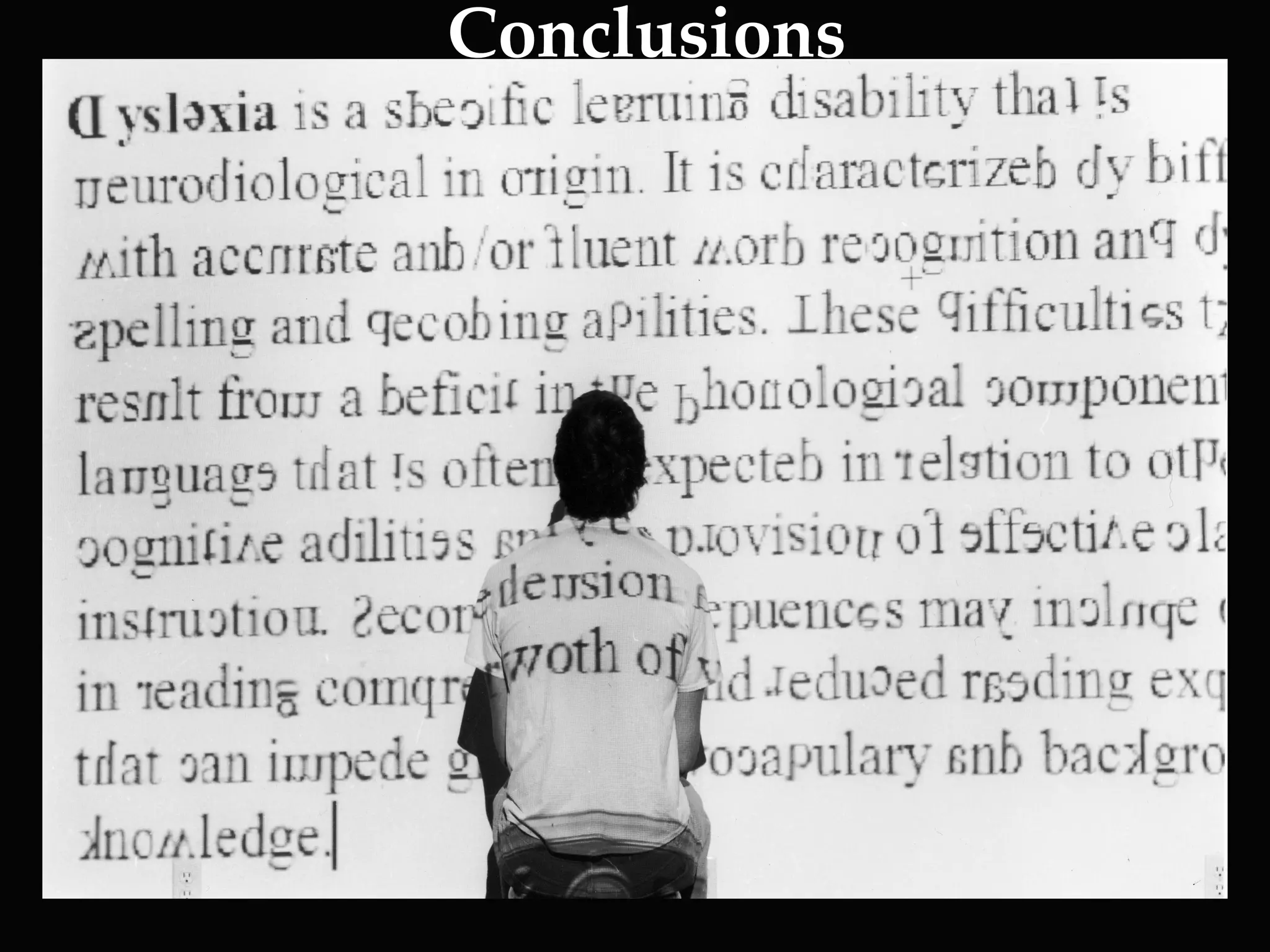
Conclusions
Raising awareness of teachers about:
 - symptoms, problems
 - methods

Cooperation is needed between the:
 - L2 teacher
 - school psychologist
 - speech therapist
 - L1 teacher
Resource      Kormos, J. & Kontra, E. H. (2008).
             Hungarian teachers’ perceptions of
                 dyslexic language learners
             In Kormos, J. & Kontra, E. H. (Eds),
           Language Learners with Special Needs: An
            international perspective, (pp. 189-212).
              Clevendon: Multilingual Matters

Hungarian teachers’ perceptions of dyslexic language learners