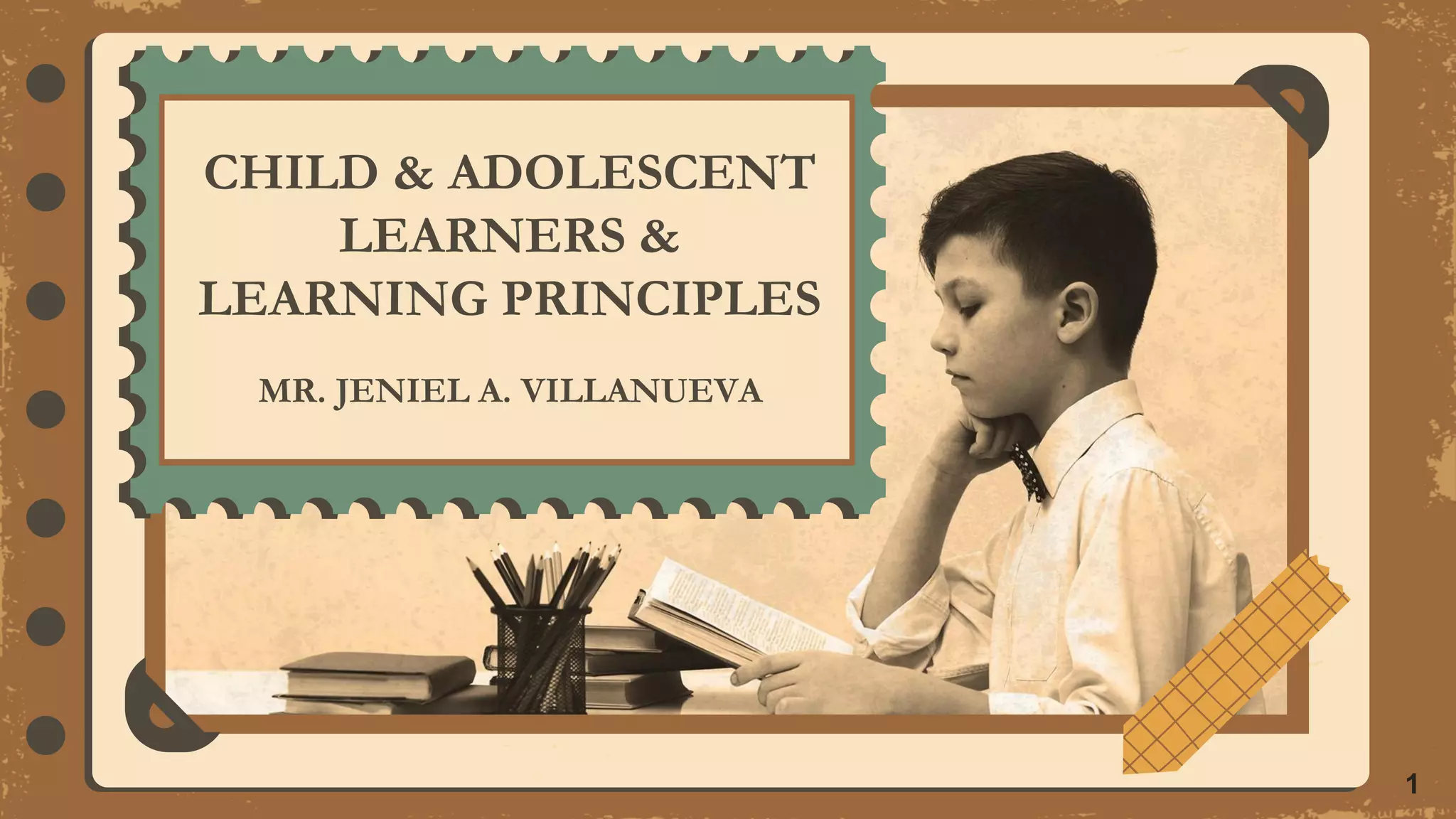
CHILD & ADOLESCENT
LEARNERS &
LEARNING PRINCIPLES
MR. JENIEL A. VILLANUEVA
1
2
DEVELOPMENT
BEGINNING
Every living creature is called
to become what it is meant to
be.
ENDING
3
4
150,00
0
TWO APPROACHES TO
HUMAN DEVELOPMENT
13
A person believes that
even in adulthood,
developmental change takes
place as it does during
childhood
A person shows extensive
change from birth to
adolescence, little or no change
in adulthood and decline in
late old age
TRADITIONAL
APPROACH
TWO APPROACHES
LIFE-SPAN
APPROACH
14
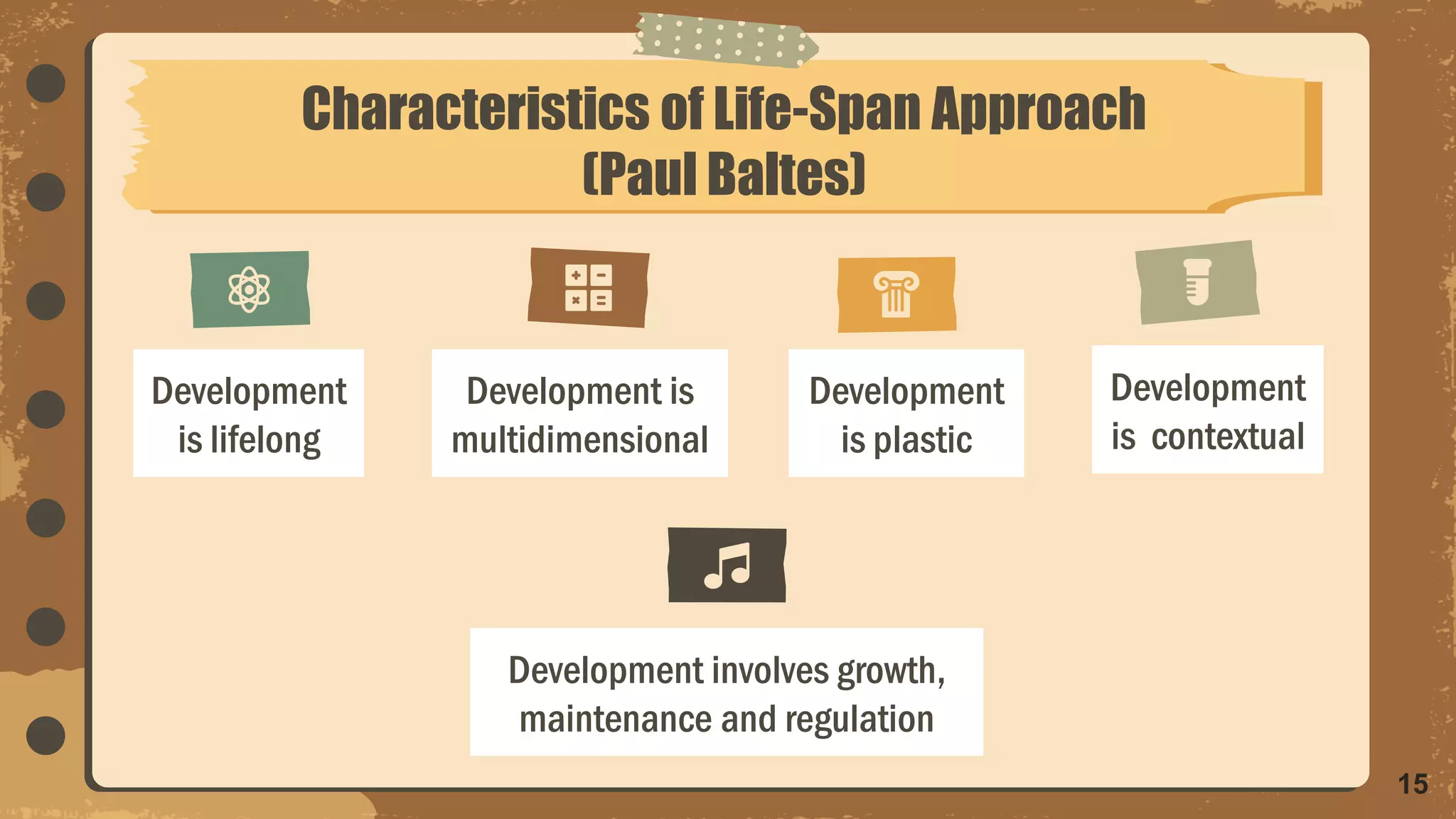
Development
is lifelong
Characteristics of Life-Span Approach
(Paul Baltes)
Development is
multidimensional
Development
is plastic
Development
is contextual
Development involves growth,
maintenance and regulation
15
SOME MAJOR
PRINCIPLES OF HUMAN
DEVELOPMENT
5
Development is relatively orderly
PROXIMODISTAL PATTERN
It occurs from the center or core
of the body in an outward direction.
CEPHALO-CAUDAL PATTERN
It occurs from the head down.
6
While the pattern of development is likely to
be similar, the outcomes of developmental
processes and the rate of development are
likely to vary among individuals
HEREDITY
ENVIRONMENT
7
Development takes place gradually
While some changes occur in a flash
of insight, more often it takes weeks,
months, or years for a person to undergo
changes that result in the display of
developmental characteristics
8
Development as a process is complex
because it is the product of biological,
cognitive and socioemotional processes
BIOLOGICAL PROCESSES
It involve changes in the
individual’s physical nature
9
Development as a process is complex
because it is the product of biological,
cognitive and socioemotional processes
COGNITIVE PROCESSES
It involve changes in the
individual’s thought, intelligence,
and language.
10
Development as a process is complex
because it is the product of biological,
cognitive and socioemotional processes
SOCIOEMOTIONAL PROCESSES
It include changes in the
individual’s relationships with other
people, changes in emotions, and
changes in personality.
11
Development as a process is complex
because it is the product of biological,
cognitive and socioemotional processes
Biological, cognitive and
socioemotional processes are
inextricably intertwined.
12
Principles of Child
Development and
Learning that Inform
Practice
16
1.
All the domains of development and
learning – physical, social and emotional, and
cognitive – are important, and they are closely
interrelated. Children’s development and
learning in one domain influence and are
influenced by what takes place in other
domains.
17
2.
Many aspects of children’s learning and
development follow well documented
sequences, with later abilities, skills, and
knowledge building on those already acquired.
18
3.
Development and learning
proceed at varying rates from
child to child, as well as at uneven
rates across different areas of a
child’s individual functioning.
19
4.
Development and learning result
from a dynamic and continuous
interaction of biological
maturation and experience.
20
5.
Early experiences have profound effects,
both cumulative and delayed, on a child’s
development and learning; and optimal
periods exist for certain types of
development and learning to occur.
21
6.
Development proceeds toward greater
complexity, self-regulation, and symbolic
or representational capacities.
22
7.
Children develop best when they have
secure, consistent relationships with
responsive adults and opportunities for
positive relationships with peers.
23
8.
Development and learning occur
in and are influenced by multiple
social and cultural contexts.
24
9.
Always mentally active in seeking to
understand the world around them, children in
a variety of ways; a wide range of teaching
strategies and interactions are effectives in
supporting all these kinds of learning.
25
10.
Play is an important vehicle for developing
self-regulation as well as for promoting
language, cognition, and social
competence.
26
11.
Development and learning advance when children
are challenged to achieve at a level just beyond their
current mastery, and also when they have many
opportunities to practice newly acquired skills.
27
12.
Children’s experiences shape their
motivation and approaches to learning, such
as persistence, initiative, and flexibility; in
turn, these dispositions and behaviors affect
their learning and development.
28

Human-Development-Meaning-Concepts-and-Approaches.pdf

  • 1.
    CHILD & ADOLESCENT LEARNERS& LEARNING PRINCIPLES MR. JENIEL A. VILLANUEVA 1
  • 2.
  • 3.
    DEVELOPMENT BEGINNING Every living creatureis called to become what it is meant to be. ENDING 3
  • 4.
  • 5.
  • 6.
    A person believesthat even in adulthood, developmental change takes place as it does during childhood A person shows extensive change from birth to adolescence, little or no change in adulthood and decline in late old age TRADITIONAL APPROACH TWO APPROACHES LIFE-SPAN APPROACH 14
  • 7.
    Development is lifelong Characteristics ofLife-Span Approach (Paul Baltes) Development is multidimensional Development is plastic Development is contextual Development involves growth, maintenance and regulation 15
  • 8.
    SOME MAJOR PRINCIPLES OFHUMAN DEVELOPMENT 5
  • 9.
    Development is relativelyorderly PROXIMODISTAL PATTERN It occurs from the center or core of the body in an outward direction. CEPHALO-CAUDAL PATTERN It occurs from the head down. 6
  • 10.
    While the patternof development is likely to be similar, the outcomes of developmental processes and the rate of development are likely to vary among individuals HEREDITY ENVIRONMENT 7
  • 11.
    Development takes placegradually While some changes occur in a flash of insight, more often it takes weeks, months, or years for a person to undergo changes that result in the display of developmental characteristics 8
  • 12.
    Development as aprocess is complex because it is the product of biological, cognitive and socioemotional processes BIOLOGICAL PROCESSES It involve changes in the individual’s physical nature 9
  • 13.
    Development as aprocess is complex because it is the product of biological, cognitive and socioemotional processes COGNITIVE PROCESSES It involve changes in the individual’s thought, intelligence, and language. 10
  • 14.
    Development as aprocess is complex because it is the product of biological, cognitive and socioemotional processes SOCIOEMOTIONAL PROCESSES It include changes in the individual’s relationships with other people, changes in emotions, and changes in personality. 11
  • 15.
    Development as aprocess is complex because it is the product of biological, cognitive and socioemotional processes Biological, cognitive and socioemotional processes are inextricably intertwined. 12
  • 16.
    Principles of Child Developmentand Learning that Inform Practice 16
  • 17.
    1. All the domainsof development and learning – physical, social and emotional, and cognitive – are important, and they are closely interrelated. Children’s development and learning in one domain influence and are influenced by what takes place in other domains. 17
  • 18.
    2. Many aspects ofchildren’s learning and development follow well documented sequences, with later abilities, skills, and knowledge building on those already acquired. 18
  • 19.
    3. Development and learning proceedat varying rates from child to child, as well as at uneven rates across different areas of a child’s individual functioning. 19
  • 20.
    4. Development and learningresult from a dynamic and continuous interaction of biological maturation and experience. 20
  • 21.
    5. Early experiences haveprofound effects, both cumulative and delayed, on a child’s development and learning; and optimal periods exist for certain types of development and learning to occur. 21
  • 22.
    6. Development proceeds towardgreater complexity, self-regulation, and symbolic or representational capacities. 22
  • 23.
    7. Children develop bestwhen they have secure, consistent relationships with responsive adults and opportunities for positive relationships with peers. 23
  • 24.
    8. Development and learningoccur in and are influenced by multiple social and cultural contexts. 24
  • 25.
    9. Always mentally activein seeking to understand the world around them, children in a variety of ways; a wide range of teaching strategies and interactions are effectives in supporting all these kinds of learning. 25
  • 26.
    10. Play is animportant vehicle for developing self-regulation as well as for promoting language, cognition, and social competence. 26
  • 27.
    11. Development and learningadvance when children are challenged to achieve at a level just beyond their current mastery, and also when they have many opportunities to practice newly acquired skills. 27
  • 28.
    12. Children’s experiences shapetheir motivation and approaches to learning, such as persistence, initiative, and flexibility; in turn, these dispositions and behaviors affect their learning and development. 28