

1
2
THE NATURE OF FLUIDS
FLUID
 Fluid is any substance that tend to flow or
continuously deform when acted on by a shear force.
 Substance that flows when subjected to shear stress.
 Both gases and liquids are fluids with similar
mechanical behaviors.
3
THE NATURE OF FLUIDS
 The ability to control the action of fluid forces
differentiate elite from average swimmers.
4
THE NATURE OF FLUIDS
Relative motion
 The velocity of a body relative to a fluid influences
the magnitude of the forces exerted by the fluid on
the body.
 Because a fluid is a medium capable of flow the
influence of the fluid on a body moving through it
depends not only on the body velocity but also on the
velocity of fluid.
5
THE NATURE OF FLUIDS
 PROPERTIES OF FLUIDS
 Density
 Viscosity
 Temperature
 Pressure
 Specific Volume
 Specific Weight
 Specific Gravity
6
THE NATURE OF FLUIDS
Density
 Density is the mass per unit volume of a fluid.
Viscosity
 Viscosity is the fluid property that determines the
amount of resistance of the fluid to shear stress.
Temperature
 It is the property that determines the degree of
hotness or coldness or the level of heat intensity of a
fluid.
7
THE NATURE OF FLUIDS
Pressure
 Pressure of a fluid is the force per unit area of the fluid.
Specific Volume
 Specific volume is the volume of a fluid (V) occupied per
unit mass (m). It is the reciprocal of density.
Specific Weight
 Specific weight is the weight possessed by unit volume of
a fluid
Specific Gravity
 Specific gravity is the ratio of specific weight of the given
fluid to the specific weight of standard fluid
8
THE NATURE OF FLUIDS
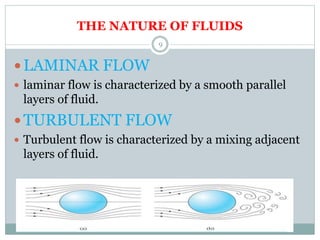
 LAMINAR FLOW
 laminar flow is characterized by a smooth parallel
layers of fluid.
 TURBULENT FLOW
 Turbulent flow is characterized by a mixing adjacent
layers of fluid.
9
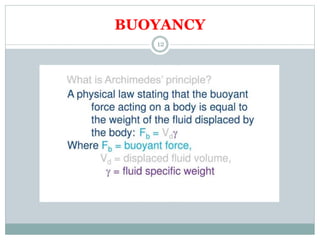
BUOYANCY
BUOYANCY
 is a force on an object making that object rise or
move upward.
 Buoyancy is a fluid force that always acts vertically
upward.
 Three Types of Buoyancy
 Positive Buoyancy
 Negative Buoyancy
 Neutral Buoyancy
10
BUOYANCY
o POSITIVE BUOYANCY
 Positive buoyancy occurs when an object is lighter
than the fluid it displaces.
o Negative Buoyancy
 Negative buoyancy occurs when an object is denser
than the fluid it displaces.
o Neutral Buoyancy
 Neutral buoyancy occurs when an object’s weight is
equal to the fluid it displaces.
11
BUOYANCY
12
BUOYANCY
o WHAT DETERMINES WHETHER A BODY FLOATS
OR SINKS
 Floating occur when the buoyant force is greater
then or equal to the body weight.
 Sinking occur when the body weight is greater then
buoyant force.
13
DRAG
 Drag is a force caused by the dynamic action of a
fluid that acts in the direction of the free stream fluid
flow.
 Generally resistance force caused by the motion of a
body through a fluid, such as water or air.
14
DRAG
Drag Force
 A drag force is the resistance force caused by the
motion of a body through a fluid, such as water or
air.
 A drag force acts opposite to the direction of the
oncoming flow velocity. This is the relative velocity
between the body and the fluid.
15
DRAG
FRICTIONAL DRAG
 Also known as Skin Friction Drag, is drag caused by
the friction of a fluid against the surface of an object
that is moving through it.
 It is directly proportional to the area of the surface
in contact with the fluid and increases with the
square of the velocity.
16
DRAG
FORM DRAG
 Form drag: resistance caused by an object’s shape
and profile as it moves through a fluid.
 A form drags depends on your body types.
 If your body is larger than the persons next to you,
you will have to overcome more drags than the
persons next to you.
17
DRAG
 WAVE DRAG
 Wave drag: Resistance caused by turbulence in a
fluid.
 Wave drag is form when a swimmers is moving in
the water.
 The faster you swim the more wave drag you created.
For example if one person is jumping up and down
in the water quickly and sloppily, you could see a big
wave around the person.
18
LIFT FORCE
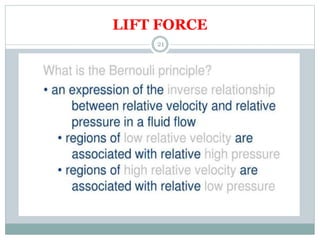
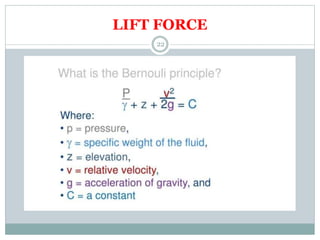
 A force acting on a body in a fluid in a direction
perpendicular to the fluid flow.
 Generally a resistance force that tend to slow the
motion of a body moving through a fluid.
19
LIFT FORCE
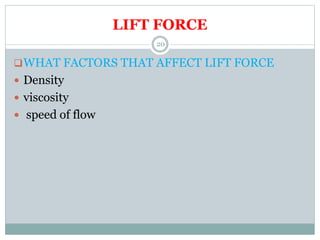
WHAT FACTORS THAT AFFECT LIFT FORCE
 Density
 viscosity
 speed of flow
20
LIFT FORCE
21
LIFT FORCE
22
23

HUMAN MOVEMENT IN FLUID MEDIUM.pptx

  • 1.
  • 2.
  • 3.
    THE NATURE OFFLUIDS FLUID  Fluid is any substance that tend to flow or continuously deform when acted on by a shear force.  Substance that flows when subjected to shear stress.  Both gases and liquids are fluids with similar mechanical behaviors. 3
  • 4.
    THE NATURE OFFLUIDS  The ability to control the action of fluid forces differentiate elite from average swimmers. 4
  • 5.
    THE NATURE OFFLUIDS Relative motion  The velocity of a body relative to a fluid influences the magnitude of the forces exerted by the fluid on the body.  Because a fluid is a medium capable of flow the influence of the fluid on a body moving through it depends not only on the body velocity but also on the velocity of fluid. 5
  • 6.
    THE NATURE OFFLUIDS  PROPERTIES OF FLUIDS  Density  Viscosity  Temperature  Pressure  Specific Volume  Specific Weight  Specific Gravity 6
  • 7.
    THE NATURE OFFLUIDS Density  Density is the mass per unit volume of a fluid. Viscosity  Viscosity is the fluid property that determines the amount of resistance of the fluid to shear stress. Temperature  It is the property that determines the degree of hotness or coldness or the level of heat intensity of a fluid. 7
  • 8.
    THE NATURE OFFLUIDS Pressure  Pressure of a fluid is the force per unit area of the fluid. Specific Volume  Specific volume is the volume of a fluid (V) occupied per unit mass (m). It is the reciprocal of density. Specific Weight  Specific weight is the weight possessed by unit volume of a fluid Specific Gravity  Specific gravity is the ratio of specific weight of the given fluid to the specific weight of standard fluid 8
  • 9.
    THE NATURE OFFLUIDS  LAMINAR FLOW  laminar flow is characterized by a smooth parallel layers of fluid.  TURBULENT FLOW  Turbulent flow is characterized by a mixing adjacent layers of fluid. 9
  • 10.
    BUOYANCY BUOYANCY  is aforce on an object making that object rise or move upward.  Buoyancy is a fluid force that always acts vertically upward.  Three Types of Buoyancy  Positive Buoyancy  Negative Buoyancy  Neutral Buoyancy 10
  • 11.
    BUOYANCY o POSITIVE BUOYANCY Positive buoyancy occurs when an object is lighter than the fluid it displaces. o Negative Buoyancy  Negative buoyancy occurs when an object is denser than the fluid it displaces. o Neutral Buoyancy  Neutral buoyancy occurs when an object’s weight is equal to the fluid it displaces. 11
  • 12.
  • 13.
    BUOYANCY o WHAT DETERMINESWHETHER A BODY FLOATS OR SINKS  Floating occur when the buoyant force is greater then or equal to the body weight.  Sinking occur when the body weight is greater then buoyant force. 13
  • 14.
    DRAG  Drag isa force caused by the dynamic action of a fluid that acts in the direction of the free stream fluid flow.  Generally resistance force caused by the motion of a body through a fluid, such as water or air. 14
  • 15.
    DRAG Drag Force  Adrag force is the resistance force caused by the motion of a body through a fluid, such as water or air.  A drag force acts opposite to the direction of the oncoming flow velocity. This is the relative velocity between the body and the fluid. 15
  • 16.
    DRAG FRICTIONAL DRAG  Alsoknown as Skin Friction Drag, is drag caused by the friction of a fluid against the surface of an object that is moving through it.  It is directly proportional to the area of the surface in contact with the fluid and increases with the square of the velocity. 16
  • 17.
    DRAG FORM DRAG  Formdrag: resistance caused by an object’s shape and profile as it moves through a fluid.  A form drags depends on your body types.  If your body is larger than the persons next to you, you will have to overcome more drags than the persons next to you. 17
  • 18.
    DRAG  WAVE DRAG Wave drag: Resistance caused by turbulence in a fluid.  Wave drag is form when a swimmers is moving in the water.  The faster you swim the more wave drag you created. For example if one person is jumping up and down in the water quickly and sloppily, you could see a big wave around the person. 18
  • 19.
    LIFT FORCE  Aforce acting on a body in a fluid in a direction perpendicular to the fluid flow.  Generally a resistance force that tend to slow the motion of a body moving through a fluid. 19
  • 20.
    LIFT FORCE WHAT FACTORSTHAT AFFECT LIFT FORCE  Density  viscosity  speed of flow 20
  • 21.
  • 22.
  • 23.