Human Molecular Genetics-
Understanding Chromosome Structure
and Function
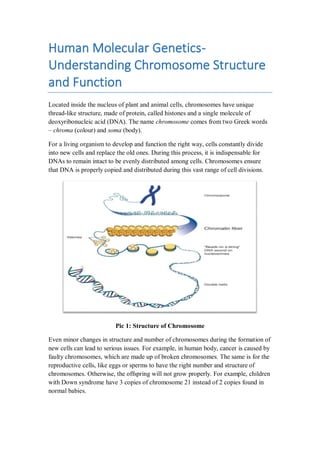
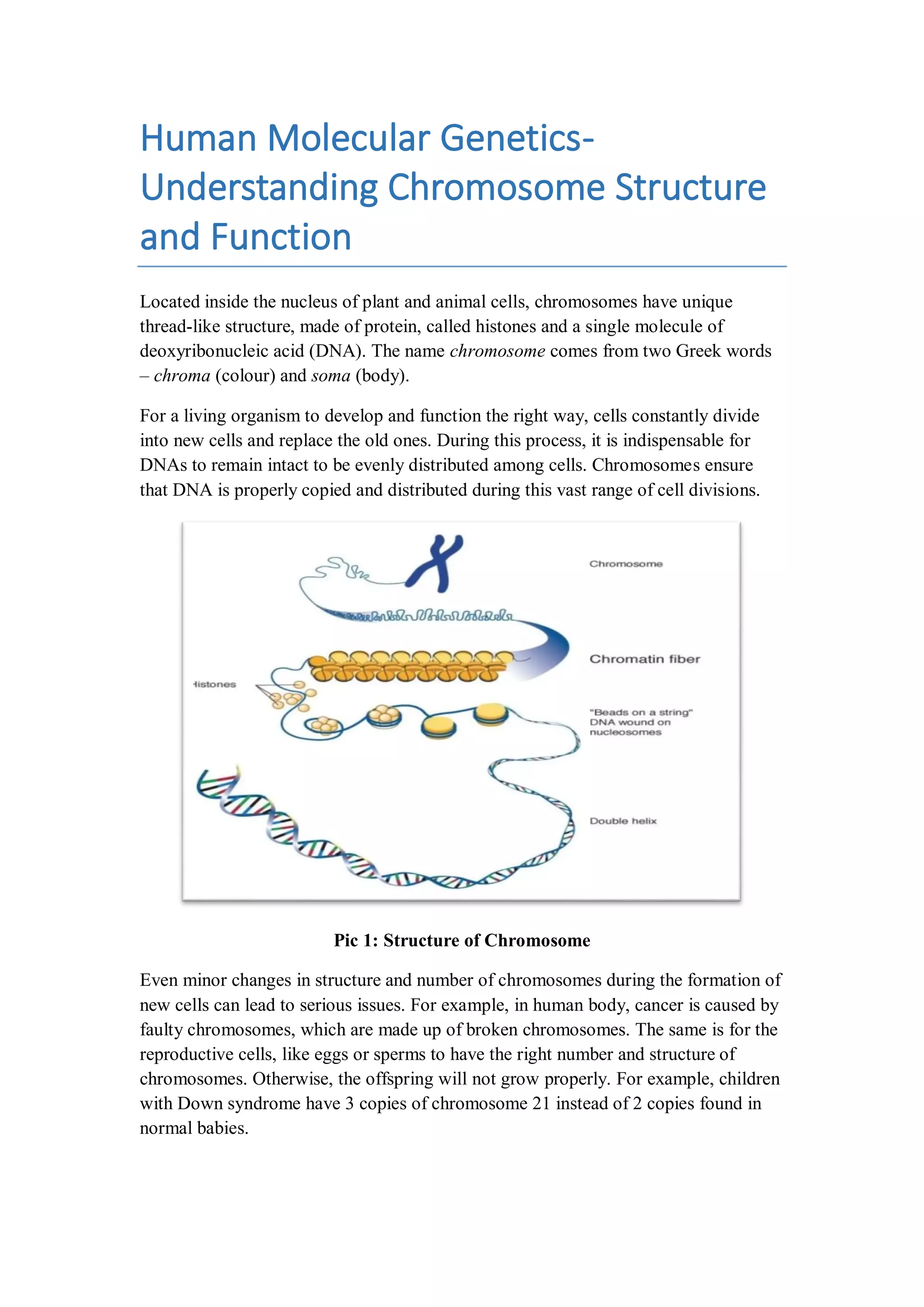
Located inside the nucleus of plant and animal cells, chromosomes have unique
thread-like structure, made of protein, called histones and a single molecule of
deoxyribonucleic acid (DNA). The name chromosome comes from two Greek words
– chroma (colour) and soma (body).
For a living organism to develop and function the right way, cells constantly divide
into new cells and replace the old ones. During this process, it is indispensable for
DNAs to remain intact to be evenly distributed among cells. Chromosomes ensure
that DNA is properly copied and distributed during this vast range of cell divisions.
Pic 1: Structure of Chromosome
Even minor changes in structure and number of chromosomes during the formation of
new cells can lead to serious issues. For example, in human body, cancer is caused by
faulty chromosomes, which are made up of broken chromosomes. The same is for the
reproductive cells, like eggs or sperms to have the right number and structure of
chromosomes. Otherwise, the offspring will not grow properly. For example, children
with Down syndrome have 3 copies of chromosome 21 instead of 2 copies found in
normal babies.
Chromosomes in human, other animals and plants are linear in structure, which is
arranged in pairs inside the cell-nucleus. Only human reproductive cells or gametes
have just one copy of each chromosome that during the reproduction unite with
another reproductive cell and become a single cell, which have two copies of each
chromosome.
Besides the liner structure of chromosomes, human or other organisms also have
much smaller type of chromosome. In mitochondria, there is circular chromosome,
found outside the nucleus and serve as the powerhouse of cells.
There are 23 pairs of chromosomes found in human body, so the total number of
chromosomes is 46.
In human body, one copy of each chromosome is inherited from the male parent and
female parent and is joined into one pair in the child’s cell. The single cell then
divides gradually for numerous times until the production of a mature individual with
a full set of 23 paired chromosomes. As DNA is passed from the parents, children
inherit some traits of their parents.
The study of gene and chromosomes has gained much better understanding since
1990s through the pioneering researches of Thomas Hunt Morgan. In recent past, with
the advent of genetic engineering, biotechnology, and other genomic studies, this has
gained far better momentum.
Brainware University

Human Molecular Genetics- Understanding Chromosome Structure and Function

  • 1.
    Human Molecular Genetics- UnderstandingChromosome Structure and Function Located inside the nucleus of plant and animal cells, chromosomes have unique thread-like structure, made of protein, called histones and a single molecule of deoxyribonucleic acid (DNA). The name chromosome comes from two Greek words – chroma (colour) and soma (body). For a living organism to develop and function the right way, cells constantly divide into new cells and replace the old ones. During this process, it is indispensable for DNAs to remain intact to be evenly distributed among cells. Chromosomes ensure that DNA is properly copied and distributed during this vast range of cell divisions. Pic 1: Structure of Chromosome Even minor changes in structure and number of chromosomes during the formation of new cells can lead to serious issues. For example, in human body, cancer is caused by faulty chromosomes, which are made up of broken chromosomes. The same is for the reproductive cells, like eggs or sperms to have the right number and structure of chromosomes. Otherwise, the offspring will not grow properly. For example, children with Down syndrome have 3 copies of chromosome 21 instead of 2 copies found in normal babies.
  • 2.
    Chromosomes in human,other animals and plants are linear in structure, which is arranged in pairs inside the cell-nucleus. Only human reproductive cells or gametes have just one copy of each chromosome that during the reproduction unite with another reproductive cell and become a single cell, which have two copies of each chromosome. Besides the liner structure of chromosomes, human or other organisms also have much smaller type of chromosome. In mitochondria, there is circular chromosome, found outside the nucleus and serve as the powerhouse of cells. There are 23 pairs of chromosomes found in human body, so the total number of chromosomes is 46. In human body, one copy of each chromosome is inherited from the male parent and female parent and is joined into one pair in the child’s cell. The single cell then divides gradually for numerous times until the production of a mature individual with a full set of 23 paired chromosomes. As DNA is passed from the parents, children inherit some traits of their parents. The study of gene and chromosomes has gained much better understanding since 1990s through the pioneering researches of Thomas Hunt Morgan. In recent past, with the advent of genetic engineering, biotechnology, and other genomic studies, this has gained far better momentum. Brainware University