DNA, Genes, and Chromosomes
The Instructions for Life
Gene
 Segment of DNA that has the information
(the code) for a protein.
 A single molecule of DNA has thousands
of genes.
 Remember:
DNA to RNA to Protein
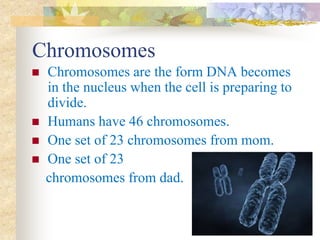
 Chromosomes are the form DNA becomes
in the nucleus when the cell is preparing to
divide.
 Humans have 46 chromosomes.
 One set of 23 chromosomes from mom.
 One set of 23
chromosomes from dad.
Chromosomes
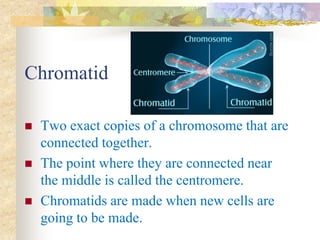
Chromatid
 Two exact copies of a chromosome that are
connected together.
 The point where they are connected near
the middle is called the centromere.
 Chromatids are made when new cells are
going to be made.
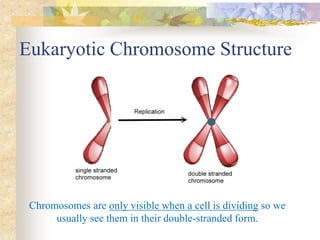
Eukaryotic Chromosome Structure
Chromosomes are only visible when a cell is dividing so we
usually see them in their double-stranded form.
Each species has a specific number of
chromosomes.
Diploid (2n) : two sets of chromosomes
 Found in all the non-sex cells or autosomes
of an organism's body
Haploid (n) one set of chromosomes.
 Only sperm and egg cells(sex cells) have
the haploid number.
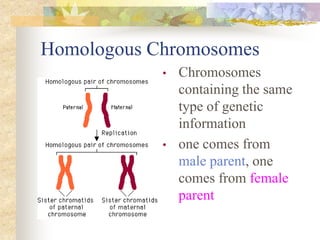
Homologous Chromosomes
• Chromosomes
containing the same
type of genetic
information
• one comes from
male parent, one
comes from female
parent
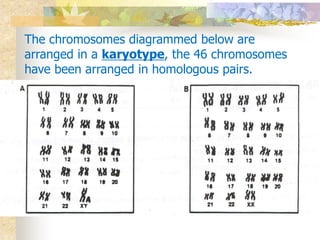
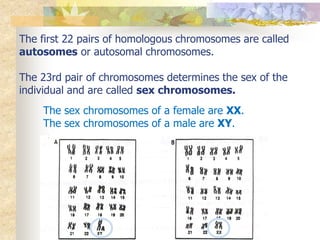
The chromosomes diagrammed below are
arranged in a karyotype, the 46 chromosomes
have been arranged in homologous pairs.
Types of Chromosomes:
 Autosomes: Body chromosomes or non
sex chromosomes (humans have 44 or
22 pairs)
 Sex Chromosomes: XX or XY (23rd
pair for humans) determines the sex of
the offspring
The first 22 pairs of homologous chromosomes are called
autosomes or autosomal chromosomes.
The 23rd pair of chromosomes determines the sex of the
individual and are called sex chromosomes.
The sex chromosomes of a female are XX.
The sex chromosomes of a male are XY.
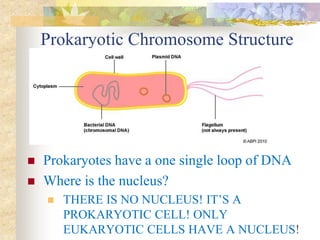
Prokaryotic Chromosome Structure
Structure
 Prokaryotes have a one single loop of DNA
 Where is the nucleus?
 THERE IS NO NUCLEUS! IT’S A
PROKARYOTIC CELL! ONLY
EUKARYOTIC CELLS HAVE A NUCLEUS!

DNA Genes and Chromosomes.ppt

  • 1.
    DNA, Genes, andChromosomes The Instructions for Life
  • 2.
    Gene  Segment ofDNA that has the information (the code) for a protein.  A single molecule of DNA has thousands of genes.  Remember: DNA to RNA to Protein
  • 3.
     Chromosomes arethe form DNA becomes in the nucleus when the cell is preparing to divide.  Humans have 46 chromosomes.  One set of 23 chromosomes from mom.  One set of 23 chromosomes from dad. Chromosomes
  • 4.
    Chromatid  Two exactcopies of a chromosome that are connected together.  The point where they are connected near the middle is called the centromere.  Chromatids are made when new cells are going to be made.
  • 5.
    Eukaryotic Chromosome Structure Chromosomesare only visible when a cell is dividing so we usually see them in their double-stranded form.
  • 6.
    Each species hasa specific number of chromosomes. Diploid (2n) : two sets of chromosomes  Found in all the non-sex cells or autosomes of an organism's body Haploid (n) one set of chromosomes.  Only sperm and egg cells(sex cells) have the haploid number.
  • 7.
    Homologous Chromosomes • Chromosomes containingthe same type of genetic information • one comes from male parent, one comes from female parent
  • 8.
    The chromosomes diagrammedbelow are arranged in a karyotype, the 46 chromosomes have been arranged in homologous pairs.
  • 9.
    Types of Chromosomes: Autosomes: Body chromosomes or non sex chromosomes (humans have 44 or 22 pairs)  Sex Chromosomes: XX or XY (23rd pair for humans) determines the sex of the offspring
  • 10.
    The first 22pairs of homologous chromosomes are called autosomes or autosomal chromosomes. The 23rd pair of chromosomes determines the sex of the individual and are called sex chromosomes. The sex chromosomes of a female are XX. The sex chromosomes of a male are XY.
  • 11.
    Prokaryotic Chromosome Structure Structure Prokaryotes have a one single loop of DNA  Where is the nucleus?  THERE IS NO NUCLEUS! IT’S A PROKARYOTIC CELL! ONLY EUKARYOTIC CELLS HAVE A NUCLEUS!