Employee Education: 
Avoiding a Benefits PR 
Challenge 
Presented by Scott McMurdie, CFP®, QPFC®
Agenda 
• 5 Common Misconceptions 
• What are the signs of an education 
problem? 
• Why should you care? 
• Barriers to improving communication 
• 5 ideas to enhance benefit communication
• 87% of employees say it is important to 
work for a company that cares about their 
well-being.Monster.com survey 
• More than 4 in 5 employees who rate their 
employee benefits education highly also 
rate their benefits package positively and 
say their workplace is an excellent or very 
good place to work. UNUM 2012
5 Common Misconceptions Related 
to Employee Benefit Plans
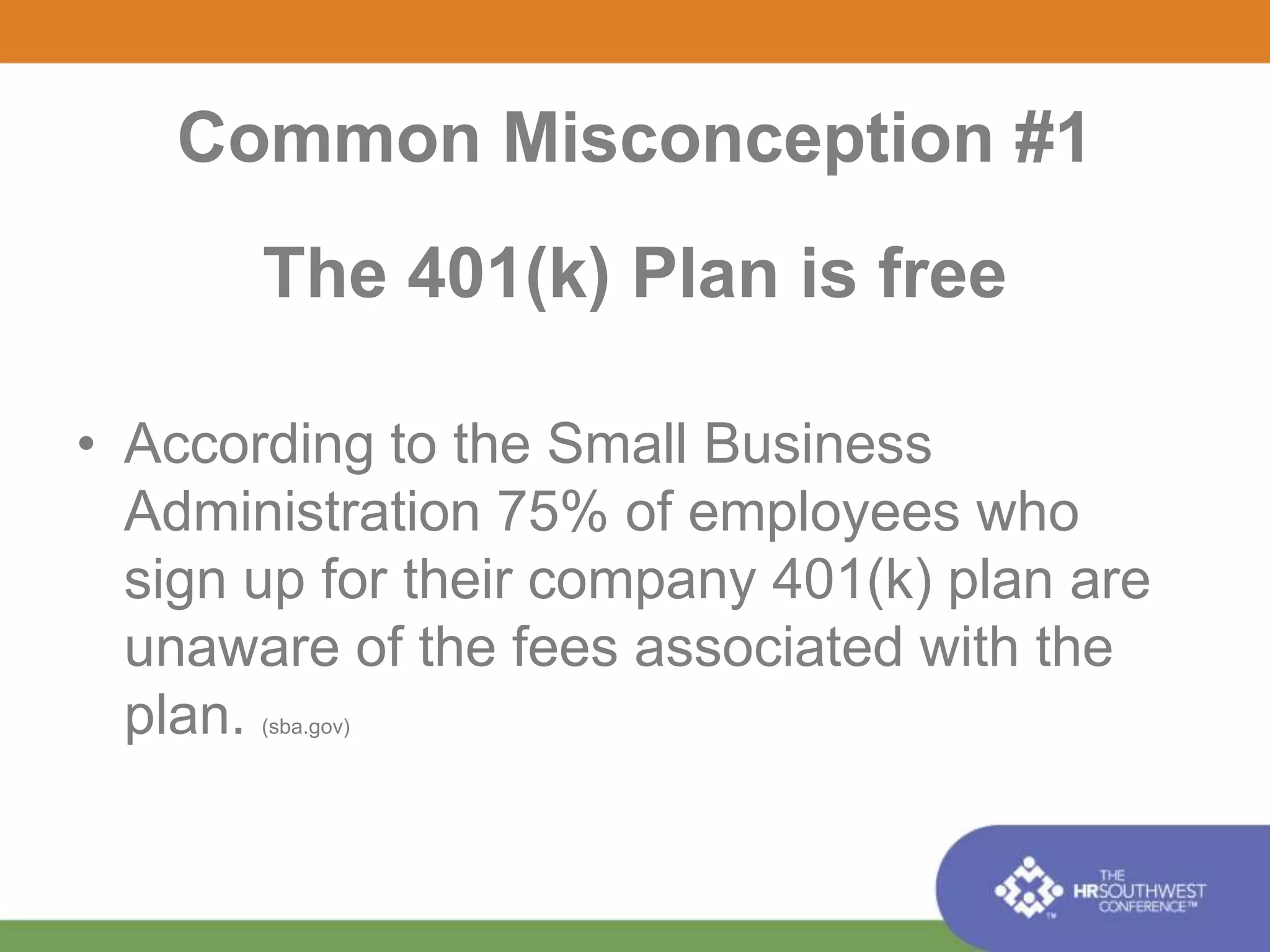
Common Misconception #1 
The 401(k) Plan is free 
• According to the Small Business 
Administration 75% of employees who 
sign up for their company 401(k) plan are 
unaware of the fees associated with the 
plan. (sba.gov)
Common Misconception #2 
Employees know how much the 
medical plan costs
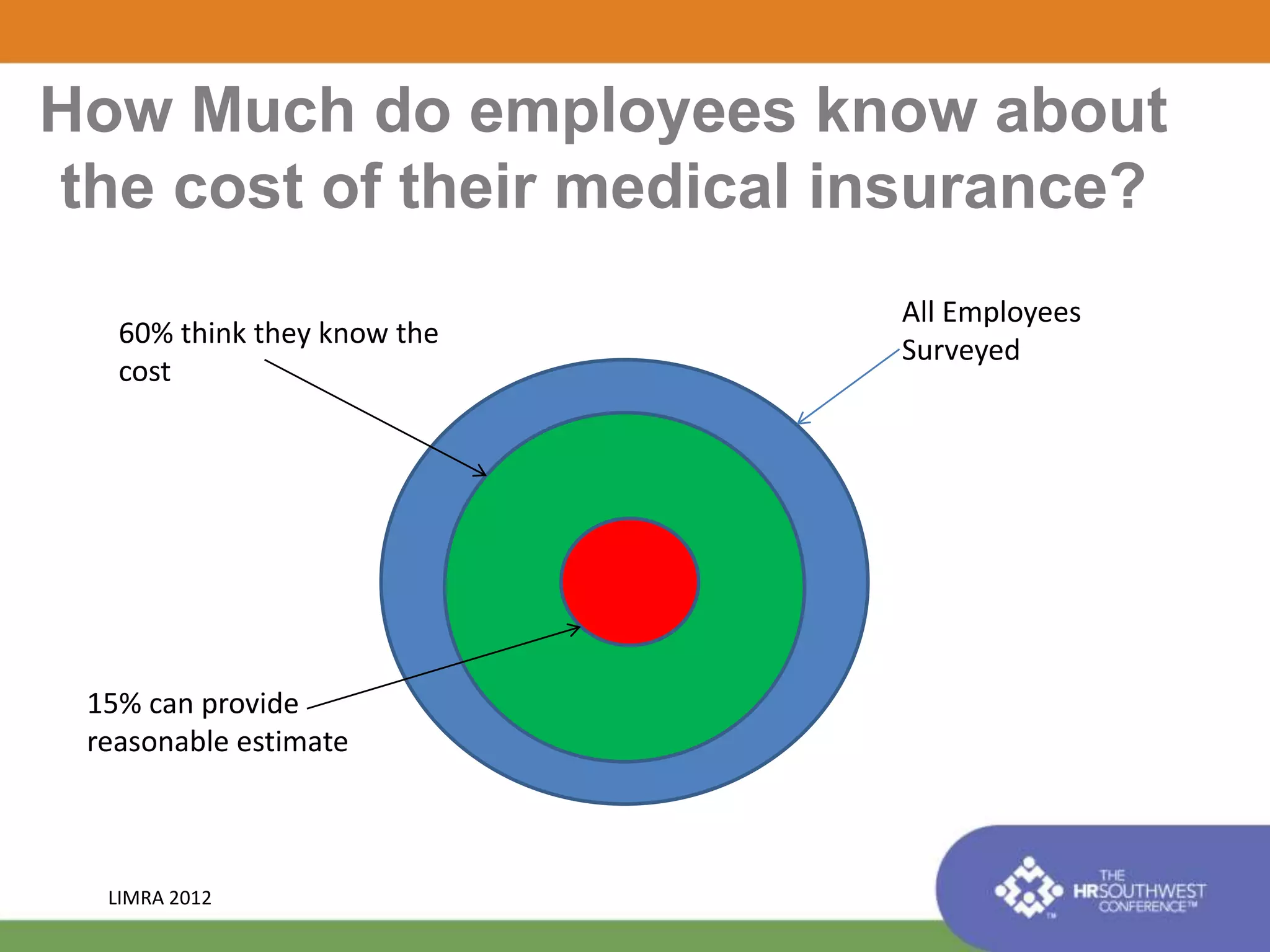
How Much do employees know about 
the cost of their medical insurance? 
All Employees 
Surveyed 
60% think they know the 
cost 
15% can provide 
reasonable estimate 
LIMRA 2012
Common Misconception #3 
Employees appreciate the value 
of employer contributions to 
benefits
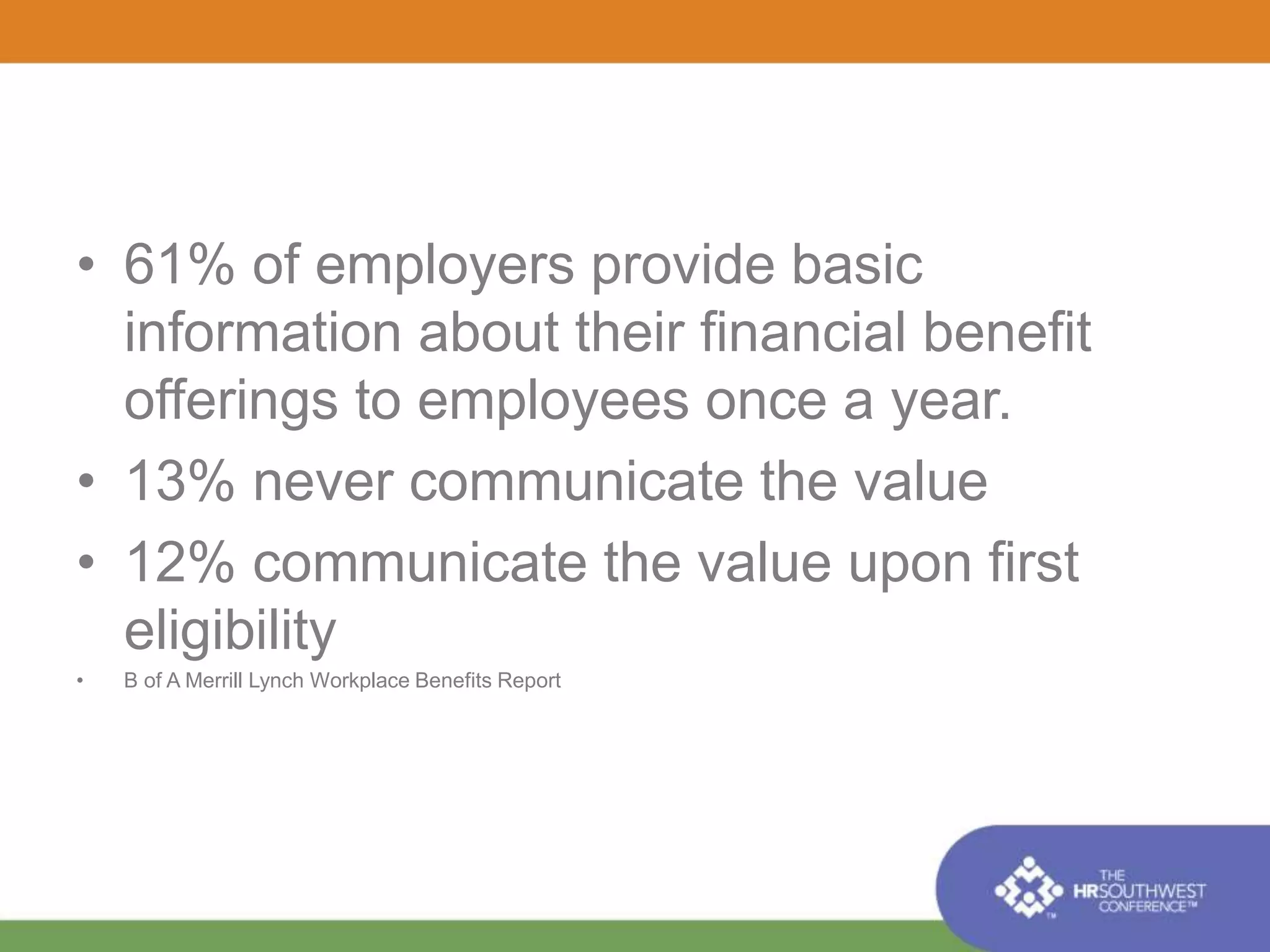
• 61% of employers provide basic 
information about their financial benefit 
offerings to employees once a year. 
• 13% never communicate the value 
• 12% communicate the value upon first 
eligibility 
• B of A Merrill Lynch Workplace Benefits Report
Common Misconception #4 
Employees understand the 
differences in medical plans 
and which one is best suited 
for their specific situation
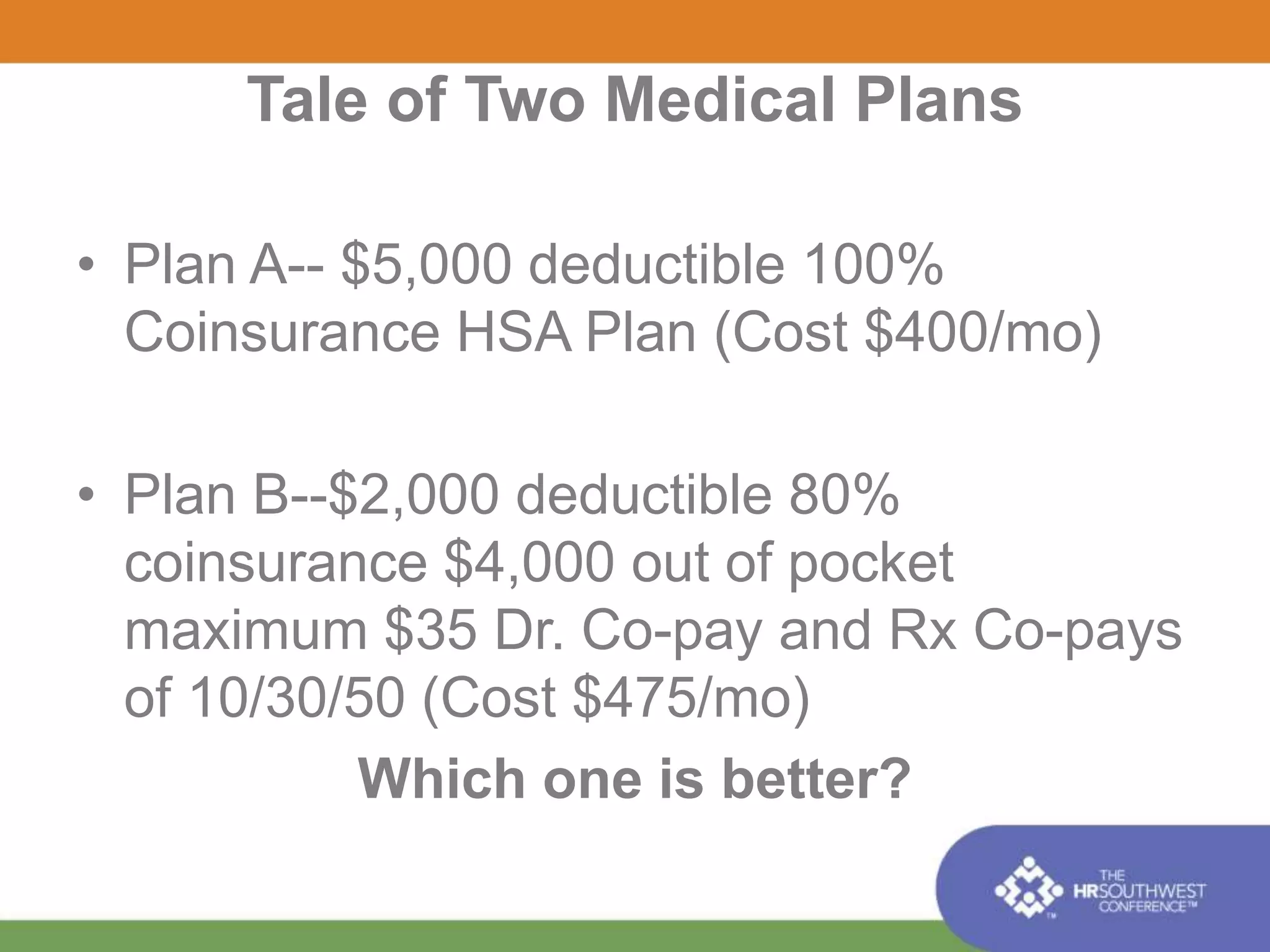
Tale of Two Medical Plans 
• Plan A-- $5,000 deductible 100% 
Coinsurance HSA Plan (Cost $400/mo) 
• Plan B--$2,000 deductible 80% 
coinsurance $4,000 out of pocket 
maximum $35 Dr. Co-pay and Rx Co-pays 
of 10/30/50 (Cost $475/mo) 
Which one is better?
• More than half of employees do not 
understand what their health insurance 
covers. Harris Interactive 2013
Common Misconception #5 
The grass is greener on the other 
side
Flow of News 
• Difference between Millennials, 
Generation X, and Baby Boomers
What are the signs? 
• Low Participation 
• Constant questions/complaints to 
managers or HR 
• Exit interviews 
• High Turnover 
• Reduced Productivity
Why should I care? 
• Cost of Recruiting/Hiring/Firing 
• Loss of Productivity 
• Time Waste 
• Increased Administration Costs
What Keeps Employers From 
Enhancing Education and 
Communication 
• Cost 
• Internal Resources 
• Complexity of benefits 
• Geographic Location of Employees 
• Apathy
5 Ideas For Creating an Effective 
Education and Communication 
Program 
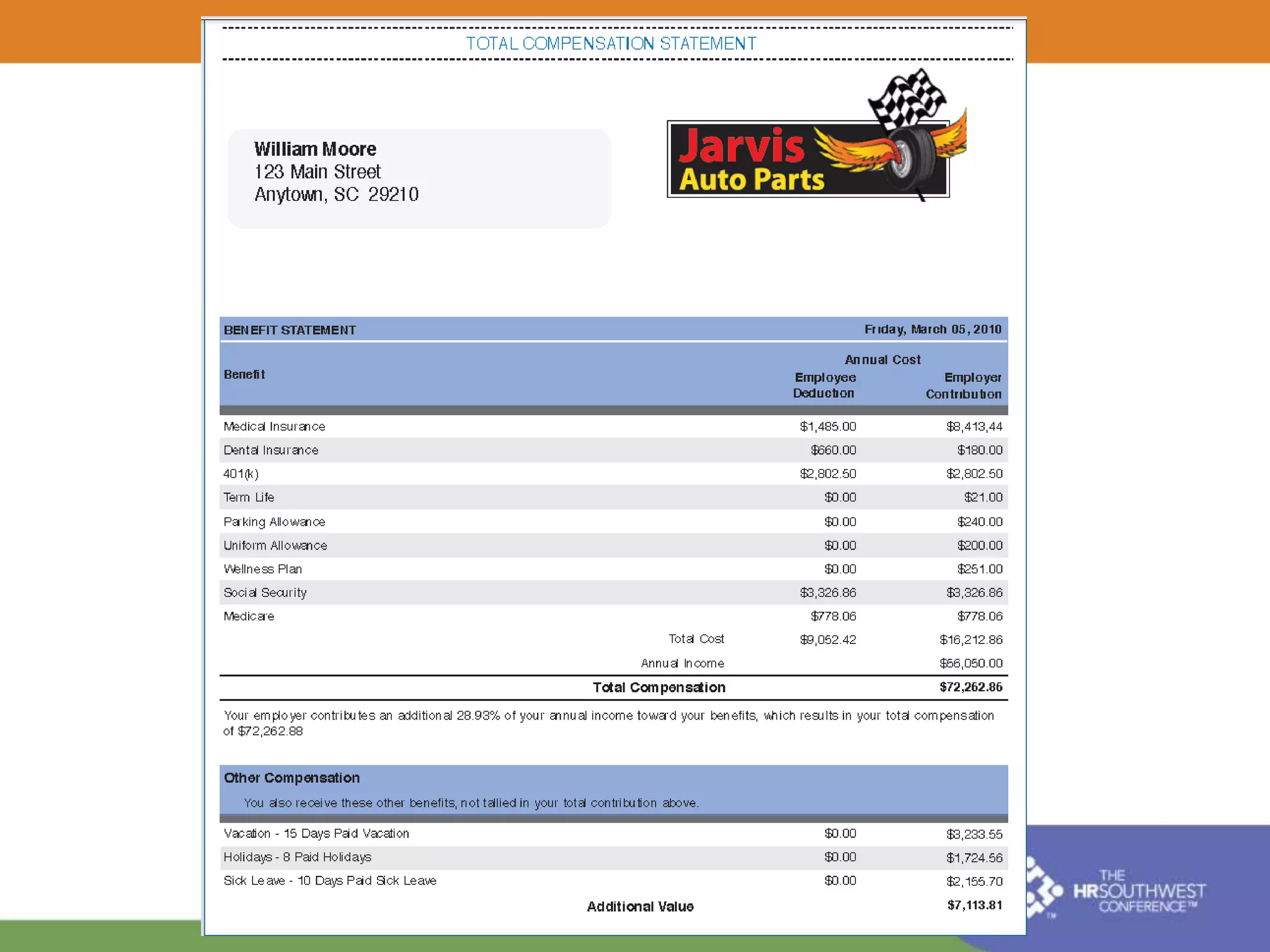
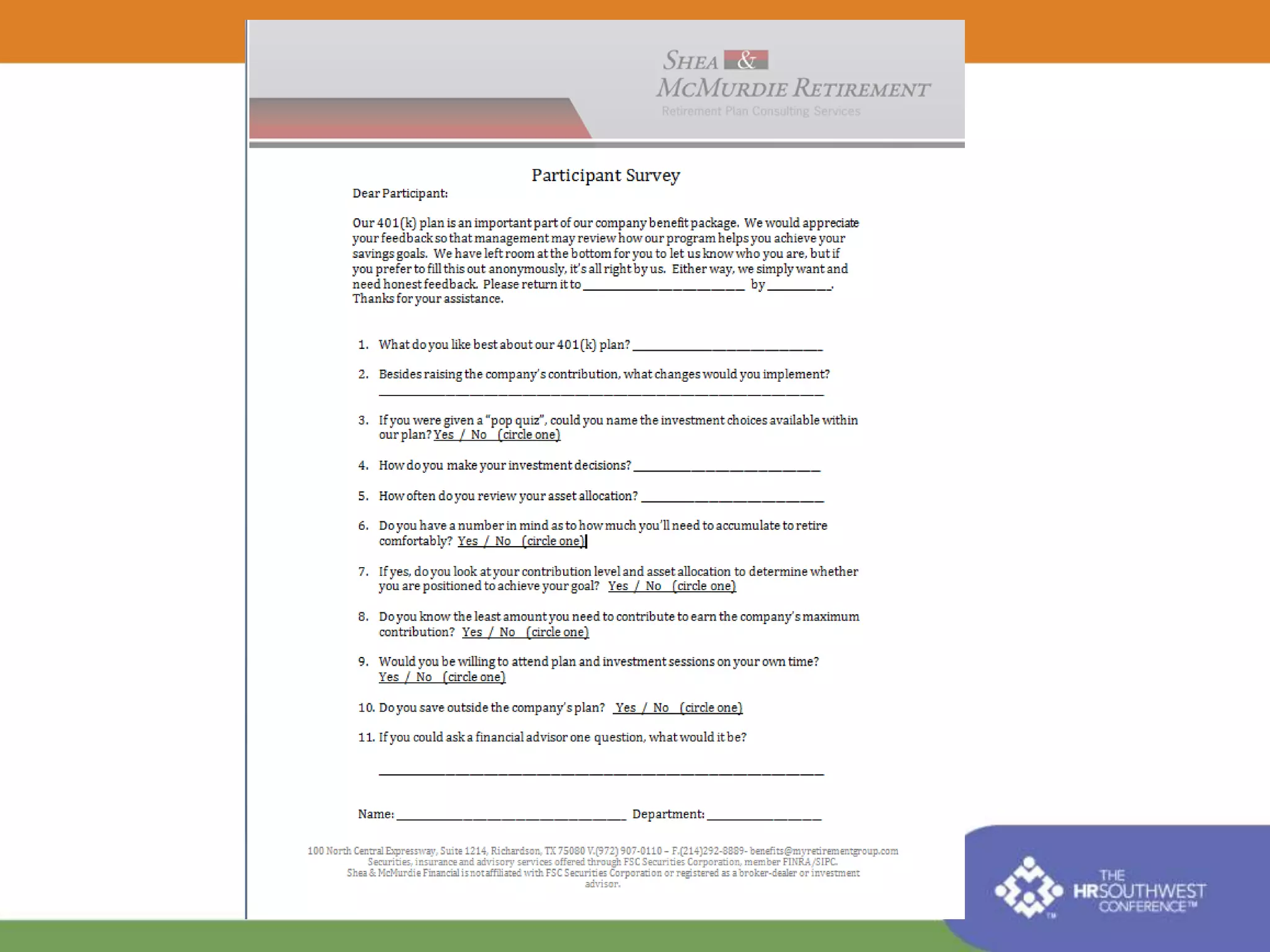
• Personalized Benefit Statements
5 Ideas For Creating an Effective 
Education and Communication 
Program 
• Personalized Benefit Statements 
• Employee Surveys
5 Ideas For Creating an Effective 
Education and Communication 
Program 
• Personalized Benefit Statements 
• Employee Surveys 
• Benefits Fair 
• Regular Education Meetings outside of 
Open Enrollment 
• Utilize Providers
Benefits of a Well Structured 
Education Program 
• Decreased Turnover 
• Enhanced Recruiting 
• Increased Enrollments 
• More Engaged, Loyal Employees 
• Improved Productivity 
• Reduced Benefits Administration
Questions?
Please remember to complete 
the session evaluation 
MOBILE APP 
hrsouthwest.com/mobile 
PRINTED FORM

Employee Education: Avoiding a Benefits PR Challenge

  • 1.
    Employee Education: Avoidinga Benefits PR Challenge Presented by Scott McMurdie, CFP®, QPFC®
  • 2.
    Agenda • 5Common Misconceptions • What are the signs of an education problem? • Why should you care? • Barriers to improving communication • 5 ideas to enhance benefit communication
  • 3.
    • 87% ofemployees say it is important to work for a company that cares about their well-being.Monster.com survey • More than 4 in 5 employees who rate their employee benefits education highly also rate their benefits package positively and say their workplace is an excellent or very good place to work. UNUM 2012
  • 4.
    5 Common MisconceptionsRelated to Employee Benefit Plans
  • 5.
    Common Misconception #1 The 401(k) Plan is free • According to the Small Business Administration 75% of employees who sign up for their company 401(k) plan are unaware of the fees associated with the plan. (sba.gov)
  • 6.
    Common Misconception #2 Employees know how much the medical plan costs
  • 7.
    How Much doemployees know about the cost of their medical insurance? All Employees Surveyed 60% think they know the cost 15% can provide reasonable estimate LIMRA 2012
  • 8.
    Common Misconception #3 Employees appreciate the value of employer contributions to benefits
  • 9.
    • 61% ofemployers provide basic information about their financial benefit offerings to employees once a year. • 13% never communicate the value • 12% communicate the value upon first eligibility • B of A Merrill Lynch Workplace Benefits Report
  • 10.
    Common Misconception #4 Employees understand the differences in medical plans and which one is best suited for their specific situation
  • 11.
    Tale of TwoMedical Plans • Plan A-- $5,000 deductible 100% Coinsurance HSA Plan (Cost $400/mo) • Plan B--$2,000 deductible 80% coinsurance $4,000 out of pocket maximum $35 Dr. Co-pay and Rx Co-pays of 10/30/50 (Cost $475/mo) Which one is better?
  • 12.
    • More thanhalf of employees do not understand what their health insurance covers. Harris Interactive 2013
  • 13.
    Common Misconception #5 The grass is greener on the other side
  • 14.
    Flow of News • Difference between Millennials, Generation X, and Baby Boomers
  • 15.
    What are thesigns? • Low Participation • Constant questions/complaints to managers or HR • Exit interviews • High Turnover • Reduced Productivity
  • 16.
    Why should Icare? • Cost of Recruiting/Hiring/Firing • Loss of Productivity • Time Waste • Increased Administration Costs
  • 17.
    What Keeps EmployersFrom Enhancing Education and Communication • Cost • Internal Resources • Complexity of benefits • Geographic Location of Employees • Apathy
  • 18.
    5 Ideas ForCreating an Effective Education and Communication Program • Personalized Benefit Statements
  • 20.
    5 Ideas ForCreating an Effective Education and Communication Program • Personalized Benefit Statements • Employee Surveys
  • 22.
    5 Ideas ForCreating an Effective Education and Communication Program • Personalized Benefit Statements • Employee Surveys • Benefits Fair • Regular Education Meetings outside of Open Enrollment • Utilize Providers
  • 23.
    Benefits of aWell Structured Education Program • Decreased Turnover • Enhanced Recruiting • Increased Enrollments • More Engaged, Loyal Employees • Improved Productivity • Reduced Benefits Administration
  • 24.
  • 25.
    Please remember tocomplete the session evaluation MOBILE APP hrsouthwest.com/mobile PRINTED FORM

Editor's Notes

  • #6 Can anyone tell me how much their 401k plan actually costs? Either as a percentage of assets or total dollar amount? According to a Deloitte study in 2012 the average plan cost for a retirement plan with $1-10million in assets was 1.27% Why should you care? What if your plan’s expenses were only .75% and an employee saw that and complained that the fees were too high when in reality your plan was well below the average cost. You just lost points because the employee thinks their plan is too expensive. New DOL and IRS regulations have brought this to light.
  • #8 City of Terrell—Example—Employee pays 0 for themselves. For dependents it ranges from 250-600 depending on the dependent coverage type. Actual cost to the company is close to $900 per employee per month. Most employees dont know how much the plan costs. So if they don’t know and you come to them at open enrollment time and tell them their benefits have been cut or deductibles increased, how well do they take that news? Or you raise the deduction from their paycheck? Would it help if employees knew how much the plan actually costs. Another PR problem or eduction and communication problem.
  • #10 Client Example—wanted to do more for the employees. Important to make list of best places to work. Pay for more of the expenses of the plan. Why? Bank client who pays for most of the retirement plan expenses. Employees don’t realize it. Current match 4% could go to a 5% match instaed of paying expenses. Same basic difference but which one would the employees appreciate and understand?
  • #11 How many of you have a dual option or mulitple option medical plan? How many here have the medical plan decisions as part of your job description and have a lot of experience with medical plans? Volunteer
  • #12 Plan A works for the healthy or no kids, or higher income Plan B heavy users may want this. What is the normal process to help employees during open enrollment? Get a booklet listen to a quick presentation and then make a choice.
  • #14 Have you ever had an employee who left because the employer down the street was paying $.50/hr more? Or had 3 days of additional PTO.
  • #15 How fast does bad news travel? How do millenials and Gen Xers get information and communicate Baby Boomer Generation is all about team. Millenials will not value the benefits if they don’t understand how it benefits them specifically.